


In “Habseligkeiten,” the third episode of the fourth season of Industry, just about everyone has some sort of spiel to deliver, some sales pitch to close. And some are more polished than others. “Let Tender help you help the government push through the merger,” new CEO Henry Muck (Kit Harington) tells a politician with a smile, hoping to sway her on a planned merger of his acquisitive fintech payments app with the stodgy Austrian bank IBN Bauer. Somehow, this line works, as does this one: “My real passion lies with finding dead men walking,” says Harper Stern (Myha'la) at a prospective investor breakfast, in an attempt to define her objectives. Before the episode’s end, this description has bagged her new firm, SternTao, a $90 million commitment—although with some pretty big strings attached.
The episode also features Sweetpea Golightly (Miriam Petche) arguing for her short thesis on Tender and journalist James Dycker (Charlie Heaton) trying to convince his FinDigest editor to run his piece on the same subject. And when a handful of Tender employees travel to Austria to make a case for the merger to members of the Bauer family, they find that the best way to persuade the unpleasant scion Moritz Bauer (Sid Phoenix) to do something is to offer to publish his freakish hot takes for the world to see.
Like I said, everyone has a spiel. Even Kenny (Conor MacNeill), a familiar old face from Pierpoint whom Harper and her partner, Eric (Ken Leung), are asking for institutional coverage. At the end of the episode, asked how work is going for him after Goldman Sachs, he whips out what practically sounds like prepared remarks. “The buy side is full of tyrants who deny their tyranny,” he says. “Sell side is full of slaves who deny their servitude. Somewhere in the middle, all of human life.” Me, I’ll cede my time to that.
The Bottom Line
So, what happened in this episode?
“Habseligkeiten” has the cadence of a ping-pong match, bouncing back and forth between Harper, as she builds SternTao, and Yasmin (Marisa Abela), as she marks her territory at Tender. In this recap, though—and in a nod to Gorgeous Jeffrey, humble spreadsheet king—I’ll be collating things a little differently. First, we’ll focus on Harper’s half of the balance sheet. Then we’ll run some numbers, so to speak, with Yasmin.
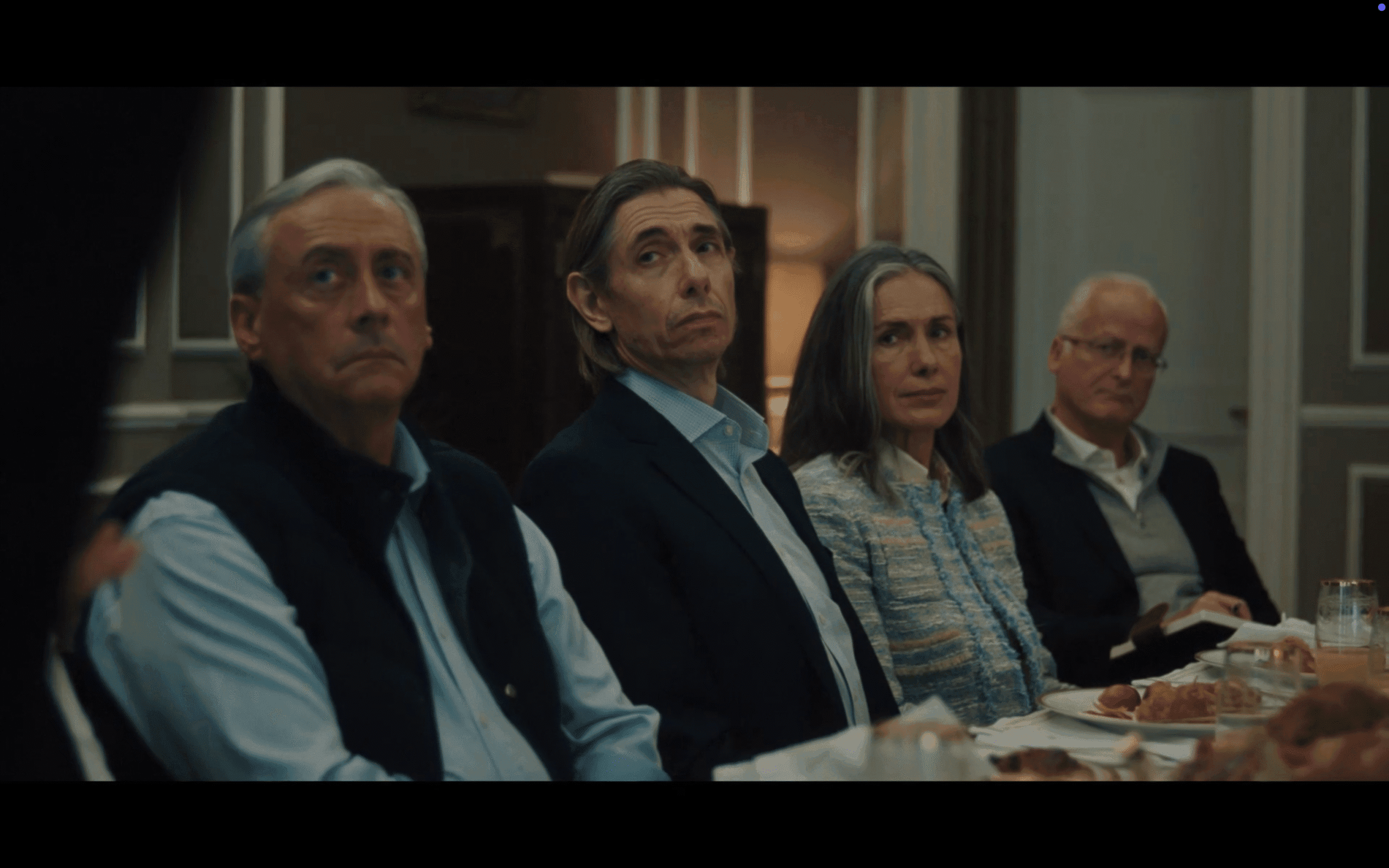
Season 2 of Industry began with Harper working in a robe from a post-COVID-19 hotel room before finally returning to the Pierpoint trading floor. Now we’ve come full circle: She and Eric are not only launching SternTao out of a hotel suite that they’ve filled with Bloomberg terminals, but they’re also hosting prospective investor breakfasts right there in the room. Is it any wonder that the RSVP list for this fly-by-night operation is filled mostly with reps from family offices and high-net-worth individuals? In other words, “dumb money,” Harper says.
The casting of the breakfast scene is great, but the vibe is off, and the pitch is mid. Harper’s attempt to intrigue the attendees with her newest short idea—market darling Tender—is too little, too late. Reactions from the dumb money include:
- “Bonkers!”
- “You've essentially given up before you've even started!”
- “Tell me SternTao isn't just two people. Where's the team? Who's your trader?”
- “What exactly is your thesis?”
- “In truth, I feel a little disappointed. I was very excited to meet you both. But you either got a shot that puts the cat inside the pigeon, or you don't.”
Is … is that good? Later, Eric asks Harper one-on-one where the contrarian Tender idea came from. She says that she’s been in touch with the FinDigest reporter and that he believes the company is still processing illicit payments despite indicating otherwise. Eric warns her that even so, a trade of this nature might not work. “How good a storyteller are you? And how long can you sustain the story?” he asks. “So, can we prove it? And then, can we be loud enough? Short-only work is ugly, hard, investigative. It's anti–status quo, antiestablishment, anti-power.”
“Which part of that is going to be a problem for us?” a defiant Harper fires back.
In an interview last month, I asked Leung, who plays Eric, to describe how he perceived the Season 4 iteration of his character. “Eric the man,” he said, “versus Eric the, you know, finance beast or king of the world or scorched-earth tough guy. He's none of that. He's Eric the man.” (Indeed, Eric and Harper even have a running joke they call “Operation Normal Man.”)
Sweetpea arrives to meet with Harper, looking like a young Juliette Lewis and toting some old Tender annual reports that she thinks suggest aberrations in strategy and reporting. In other words, she’s on board with Harper’s vision! But the spell is broken when Rishi walks in with a Bankers Box filled with reams of Tender transactions that he’s somehow acquired, just like Harper asked. An incensed Sweetpea calls him a “psychotic liar” and a “murderer” and informs Harper that she’d better not see that see-you-next-Tuesday again, or else Harper won’t be seeing her, either.
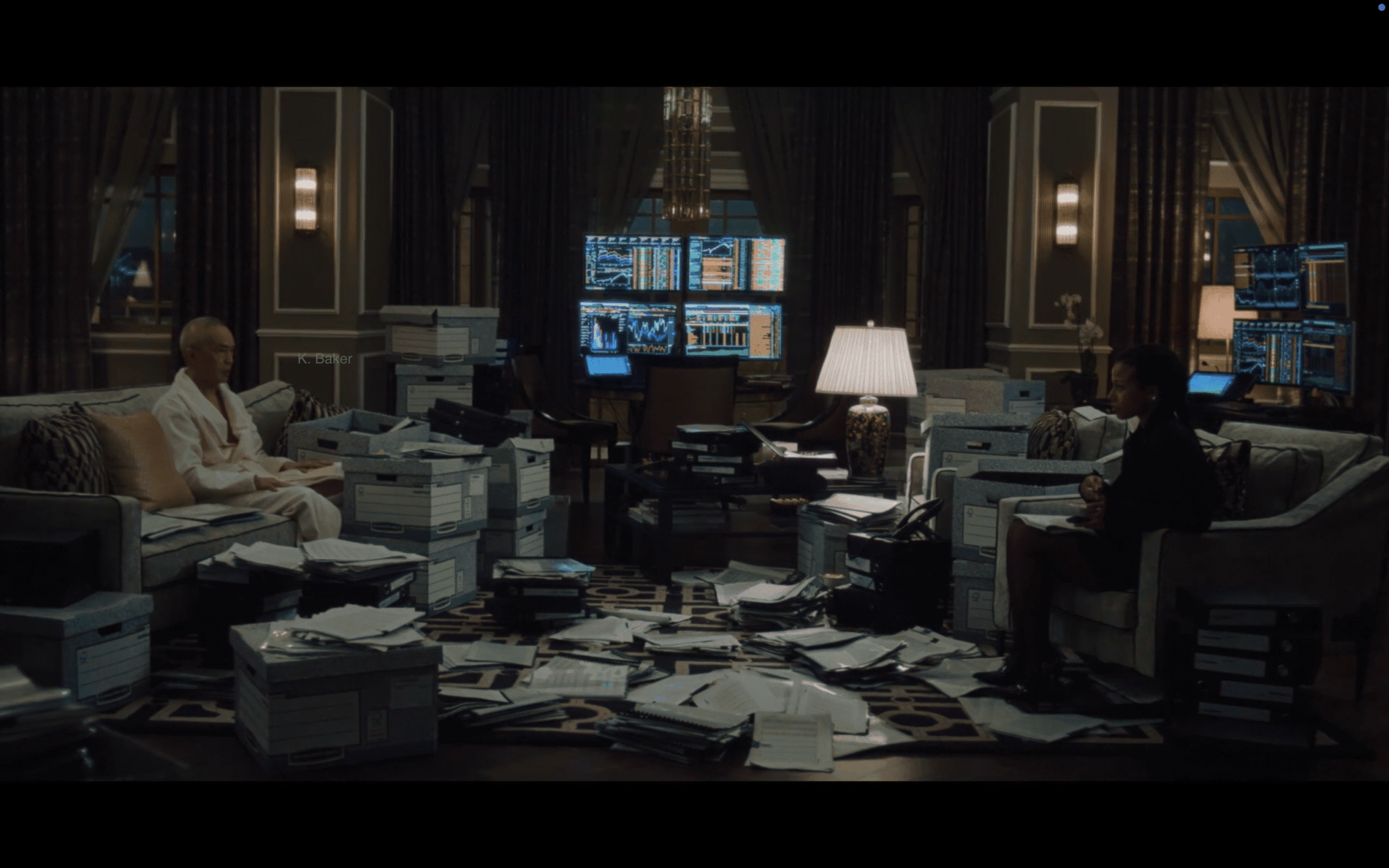
Later that night, Harper sits on the hotel floor surrounded by documents and cigarettes, Enya’s “Orinoco Flow (Sail Away)” blasting on the speakerphone. She’s been trying to call some payment processors that Tender acquired in Africa but is getting nothing but hold music. She’s supposed to go out on the town but is thinking of canceling. “Operation Normal Girl,” Eric reminds her, encouraging her to go, but the mission is a bust. After she’s kept waiting for 15 minutes by her date, Kwabena, Harper picks a fight with him (but also tells him she wants to hire him) and returns to the hotel, where she picks a fight with Eric, too.
Eric tells Harper that one of the investors from the breakfast, Pierre, is interested in committing $90 million to their fund—but that there’s a price. The investor wants to structure his investment with a “first-loss agreement” in which any losses up to the first $10 million are borne entirely by Eric’s personal stake in the fund. “Depending on how our main position performed,” Eric says, “I might have to liquidate my family office—my girls’ inheritance.” Harper tells him she’d never ask him to do that. But she doesn’t have to.
Eric shows Harper something strange on the Tender statements: an address in the northern shore town of Sunderland that on Google Maps is just a run-down house. Harper knows just who to call. She and Sweetpea embark on a procedural-of-the-week (would watch!) field trip to the place, where—pretending to be representatives of the Office for National Statistics—they meet a regular-degular man named Jeffrey who lives with his mother and has a job with “Global Payment Solutions” in which he takes in data from entities like Chinese4Calling and AccraPay and recodes the transaction spreadsheet line items by their amounts rather than their merchant codes. (Work is work, as Sweetpea sweetly says.) The result? Instead of pie charts with slices like “porn” and “gambling,” the pie chart pieces are more like “$10.00 to $19.99.” But to what end?
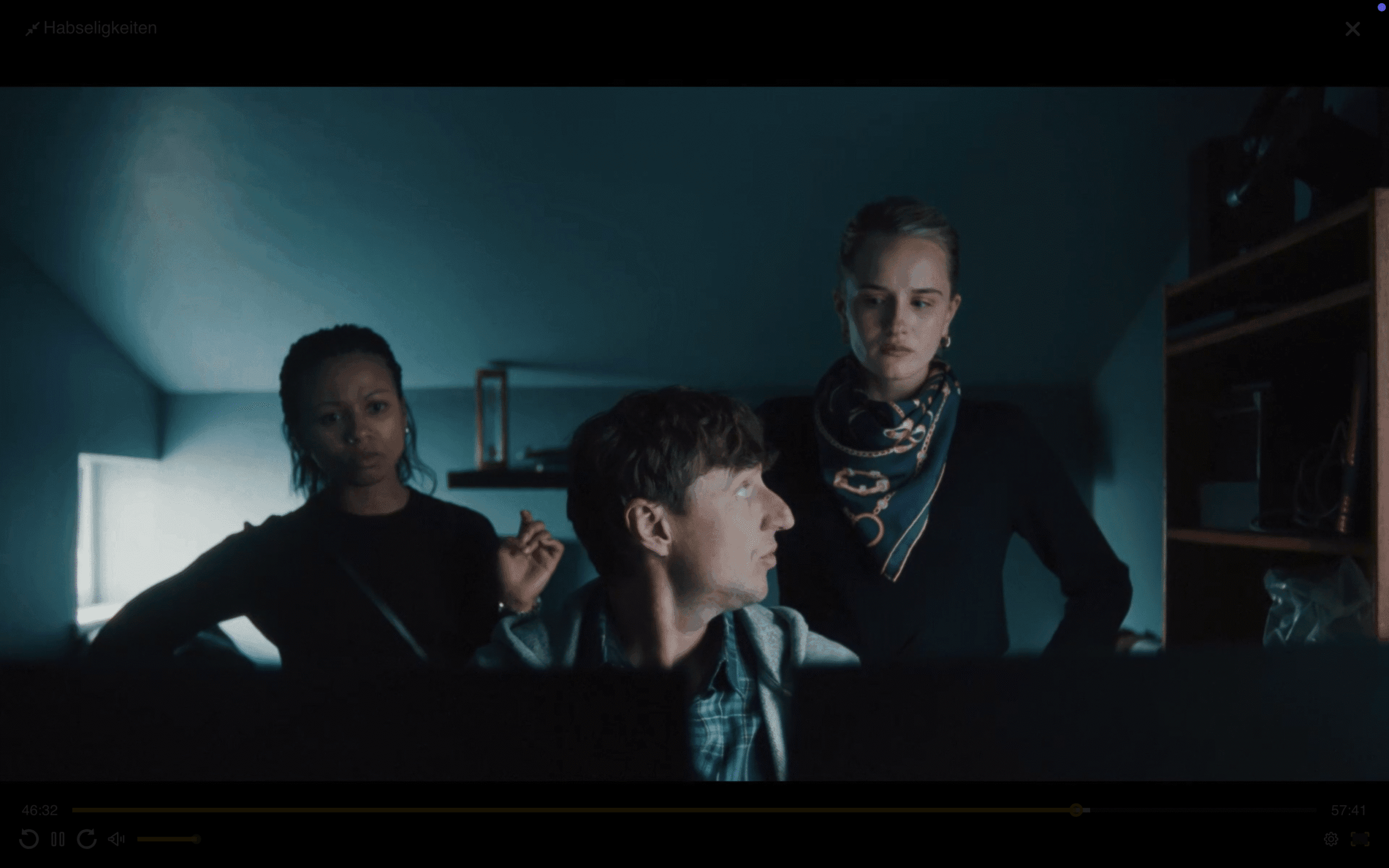
Harper wants Sweetpea to come work with her so that they can find out together. Sweetpea rightly calls out Harper for having now left Petra and Otto in a huff and asks for her word that it won’t happen again. Harper calls Dycker to tell him that he is “100 percent correct on your laundry thesis.” The next time we see her, she’s in the Deutsche Bank lobby with her growing SternTao team, waiting to meet with Kenny. Eric tells her that he accepted the $90 million from Pierre with the first-loss terms, effectively risking his girls’ trust money. A jolly Kenny asks Eric how it feels to be in a position of power these days. “A constant nerve-jangling desire to enshrine it,” Eric says.
Meanwhile, while Harper was takin’ trust funds, Yasmin was in the Tender offices talkin’ tongue thrusts …
Yas and Henry are in his Tender corner office, making out. In praise of his ardor, she adds a new f-bomb to her arsenal, but he’s uneasy with the dirty talk at work. They get down to brass tacks: planning Henry’s pitch to the politician Jenni Bevan (Amy James-Kelly), whom they’re trying to butter up in hopes of pushing through a banking merger. “Narrative is important,” Yas reminds Henry, opining that in addition to talking about “the societal benefit angle of the app,” he should bring up the trajectory of his own mental health. Henry is reluctant to be “weaponizing my trauma.”
The meeting with Bevan goes about as well as it could, weaponized trauma and all. She warns Henry that the business secretary will probably push back on the proposed merger for being too multi-sector, too global, too much. Henry reminds her that she has a chance to position herself as a champion of innovation and growth. But in a meeting with the top dogs at Tender, there are concerns about whether the merger with IBN Bauer will go through. It’s not just the government—although getting an OK from business minister Lisa Dearn is going to be much harder than convincing Bevan. It’s also that the calls are coming from inside the house. Key members of the Bauer family are getting cold feet about what was assumed to be a done deal.
“Didn't the Bauers finance the Reich?” Tender’s comms guy asks. Whit gives his assessment of the key holdup, Moritz: “This guy's an alpine fuccboi with an outside sense of his own relevance and recourse.” Yasmin puts her old stint in private wealth management to good use: “Testy family members respond well to a bit of face time,” she suggests. “An ego massage.” Put another shrimp on the barbie: Looks like we’re goin’ to Austria, baby!
First, though, one more meeting, this one about a pending FinDigest article that says, “Tender continues to process illicit transactions thru African jurisdictions.” What if that threatens the merger? The team decides to downplay it with a blanket statement. “The story ends where we say it ends,” Whit says. Afterward, Hayley pulls Yas aside with a confession: She’d gone home with the FinDigest journo, and he’d been asking questions. “I hate when men try to take something that isn’t theirs,” Yas says evenly. (Hayley, rightly, is a little bit “?” at this reax.) It’s not not giving me flashbacks to Yasmin’s early days with Celeste. One gets the sense that the story of these two women is only just beginning.
Grüß Gott, Austria! The Tender gang arrives chez Bauer, an imposing stony castle built into a mountainside. They are greeted by Moritz and his mother, Princess Johanna (Susanne Wuest), who looks younger than he does. Moritz is a snobby loose cannon who within seconds of saying hello is already going on about homosexuals in British boarding schools. Mommy, is it good to inspire reaction shots like this?
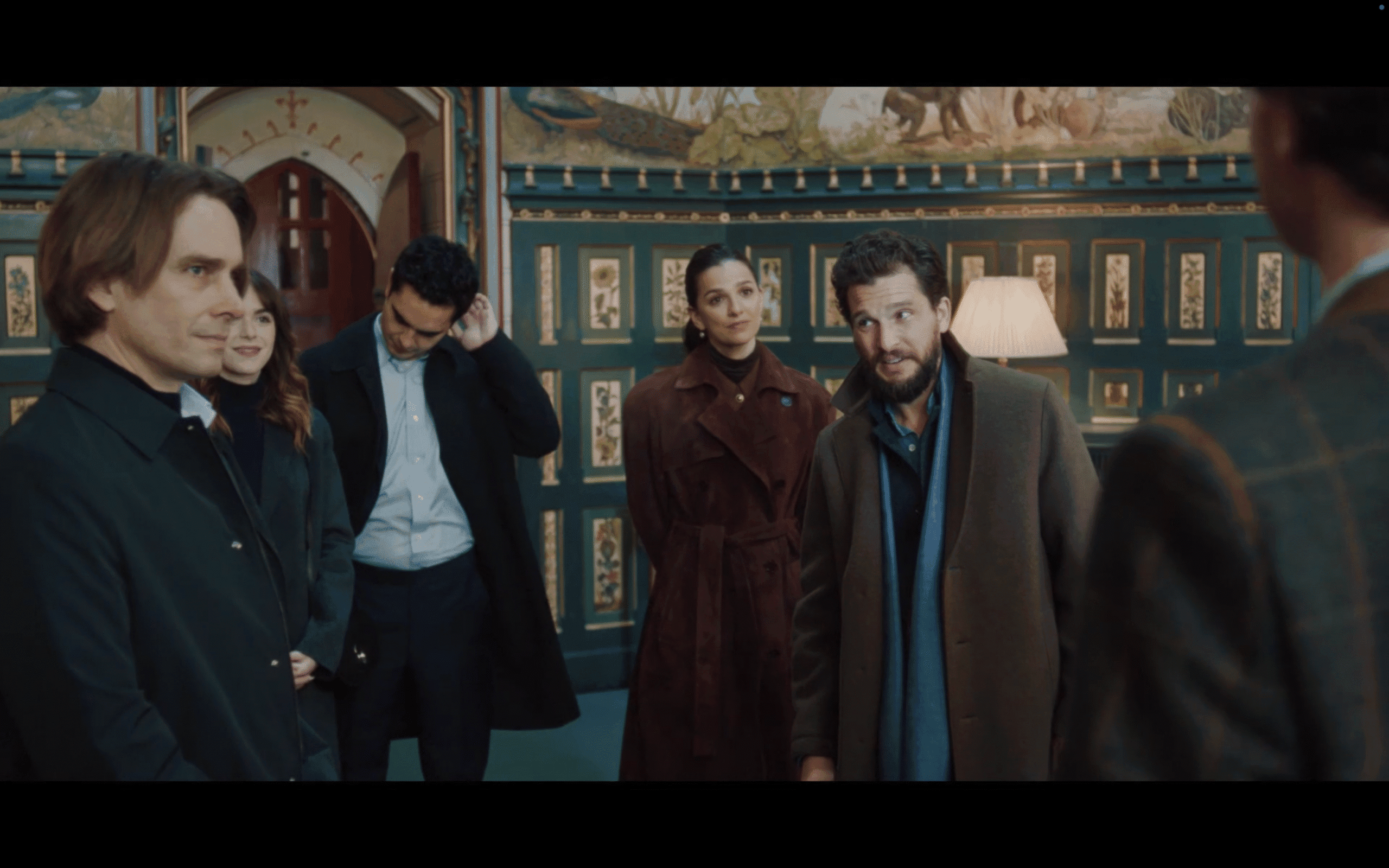
“Happiness is a full stomach,” Moritz says, promising more business talk at the dinner table. But no one really leaves feeling good about the state of affairs. Moritz isn’t just an eccentric or an “intellectual pseud"; guy’s a straight-up Austrio-Substack racist and fascist! (He also thinks this Louis XIV the Sun King guy had some great ideas.)
That night—well, you can read alllll about it below in “Mergers and Acquisitions.” The next morning, with the Tender men having departed for a make-or-break meeting with regulators, Yasmin takes negotiations into her own hands. On a hot girl dog walk in the woods with Johanna, Yas floats a deal to give Moritz the attention he so desperately craves: an op-ed piece on whatever he’s always on about in Lord Norton’s finest paper. Later, we’ll see the headline: “The Case for Benevolent Dictatorship.”
Packing her bags to leave, Yasmin looks around her guest bedroom. Earlier in the episode, Johanna had told her that it’s her favorite room in the castle and that it’s filled with the family’s Habseligkeiten. “Do you know this word?” Johanna says. “Literally translated, it means: possessions closest to your soul.” Now, Yasmin peers closer at one of these possessions, a painting on the wall of another castle set into a craggy hill. It’s signed by the artist: A. HITLER, natch.



More on ‘Industry’ Season 4
Turns of Leverage
On Industry, characters love borrowing trouble—and are always up to double down. Whose bets are paying off big time this week, and who is in the midst of a downward spiral?
Leveling up: Hell yeah, Sweetpea Golightly! “You can see when someone has enough spark and enough weight and enough charisma and enough talent to basically carry that much story,” co-showrunner Konrad Kay told me last month. He was talking about Petche’s performance, but the same goes for her character in this episode, too.
This isn’t the first time Sweetpea has potentially blown the cover off something big thanks to a little bit of moxie and an open—yet skeptical—mind. (It was her analysis in Season 3, after all, that eventually domino toppled Pierpoint & Co. and led to its takeover by Egyptian sovereign wealth fund Al-Miraj.) Now, in “Habseligkeiten,” Sweetpea has again fixed her analytical eye on numbers that strike her as off. Already, her questions have yielded professional dividends.
Credit crunched? I don’t think that the Tender team’s final meeting wound up going quite how Dearn envisioned it would. It’s bad enough to get big-timed by political bigwig Ricky-Martyn-with-a-y right in the midst of rattling Henry with a reminder of his Lumi failures and personal transgressions. But the newspaper feature? Headlined “Jennifer Bevan—Labour’s Next Leader in Training?,” dramatically dropped on the table within Lisa’s eyesight? I don’t know how anyone recovers from that.
On the watch list: Is Dycker on the cusp of a journalistic coup—or is his cachet about to die quietly by a thousand paper cuts? Either way, I’ll always salute him for the line “My article isn’t a cotillion for your new venture.”
Tender Offers
Is that a “private banker in your pocket,” or are you just happy to see me? Here’s the latest haps at Tender, the most ambitious “bank killer” in Canary Wharf.
Imagine being a random low-level employee at Tender over the past few months. First, your CEO gets dramatically fired in full view of your desk. Then, a new CEO comes in, whom you recognize from the news, and he’s fine and all, but his wife is always around and feeling him up all day. That reminds me, what do we even do at this company again?
For those at the helm, on the other hand, Tender put up one heck of a run over the course of Sunday night’s episode, playing nimble zone defense and smug offense. The FinDigest piece? So far, successfully hand waved away with words like “market manipulation.” The obstructive elected officials? Charmed into alignment or disarmed by surprise. The IBN Bauer merger? Signed, sealed, delivered—and with it, a sweet, sweet banking license and Tender’s inclusion in the blue-chip index FTSE 100.
Mergers and Acquisitions
Activist investor? I hardly know’r! This is a judgment-free zone to discuss emerging corporate synergies in Industry and do our due diligence on who’s doin’ it.
“It was definitely one of those jobs,” Kiernan Shipka told me with a laugh during a recent interview about her role as executive assistant Hayley Clay, “where I go: Oh my gosh, like, there was a me before this, and then there's a me after this.” And personally, after observing young Hayley join … forces and share … spirits with Lord and Lady Muck in the inner sanctum of a stone-cold Austrian castle, I think I can speak for a sizable portion of the Industry viewing public when I say: hard same!

Sure, we’d already heard Hayley talk dirty about pink bubblegum in the Season 4 premiere. And yes, Yasmin already attempted a ménage à trois in Industry’s first season; she’s been bossing people around in the sack (and in front of the mirror) practically since we first met her. But this was even darker and seedier, a tryst in which everyone seemed to be frowning and Yas was more puppeteer than participant. Debriefing about the dalliance in the Tender offices later, Henry remarked to his wife: “What you did with Hayley didn't feel right. You know I'm an addict. It felt very, like, enabler, babe.” It also seems pretty careless: There’s no telling how Hayley might ultimately process the experience involving her boss and his wife. Yasmin’s idea of fun and games may yet start a new war.
Watch Watch
Time is a flat circle, ideally powered by quartz. Here, we examine Industry’s tick-tocking timepiece(s) of the week.
Bracelet and bangle watches have made a resurgence over the past year or so, according to the style icons at Grazia and Vogue. So leave it to Yasmin to be simultaneously up-to-date and timeless: I’m thinking the slim gold piece she sports in this episode, atop the sleeves of her various cashmere turtlenecks, is a Gucci 1500L, which was mostly made back at the turn of the millennium.

The watch features an “iconic horse-bit closure,” perfect for our favorite stable girl. (Sorry, sorry, I’m trying to delete—don’t hurt me, Henry!) Speaking of Henry, I couldn’t help but notice that he’s still wearing his old man’s Rolex. He may be running a tech company, but there’s no sign of that Apple Watch from the Lumi days.
Get Me the Comps!
On the one hand, past performance neither guarantees nor predicts future results, as the SEC requires investment firms to remind clients. On the other hand, plus ça change! Here are some of the real-world stories that might be relevant to Industry’s fictional realm.
On Industry: Dycker frets to his editor that if FinDigest doesn’t run his Tender exposé soon, “Paddy Radden Keefe or someone will get the scent, and a serious outlet with budget will beat us to it.”
IRL: He’s right to be worried! Patrick Radden Keefe, the dogged, inquisitive New Yorker writer, author of six books and a J. Crew model, might be the most prolific investigative reporter working today. His upcoming book, London Falling: A Mysterious Death in a Gilded City and a Family's Search for Truth, is about a young striver who posed as an oligarch’s son in hopes of getting a taste of the otherwise unattainable.
On Industry: Harper says that she read the FinDigest journo’s personal essay about “getting fleeced from FTX.”
IRL: For more on the crypto exchange that went bust, you can read my articles about Sam Bankman-Fried’s FTX fraud trial and conviction from October 2023! I also enjoyed this more recent Mother Jones look at the latest on SBF and his FTX victims.
On Industry: Previously, story time with Eric was about Ray Dalio; this week, he’s regaling Harper about the time Bill Ackman, the New York financier, tried and failed to convince the world that Herbalife was a pyramid scheme. One reason he was unsuccessful? “You got Carl Icahn talking up the other side of the trade,” Eric says.
IRL: Here’s a little primer on BILLIONAIRE ACTIVIST MAN!! Also, wouldn’t Harper already know about Herbalife?! Also also, Eric really undersells it with the Icahn mention. Catching this catfight live on CNBC was one of the happiest days of my life.
On Industry: A contractor working for a shadowy subsidiary of Tender spends his days recategorizing spreadsheets of transactions to blend “emotional content” (a.k.a. porn- and gambling-type payments) in with more mundane payment flows.
IRL: In 2019, complaints were filed against the cannabis delivery app Eaze alleging that it was diverting transactions through phony companies to fool strict credit card providers and “make it look like customers are buying pet supplies or outdoor gear” and not a half ounce of that dank Alaskan Thunder Fuck. (And in the crypto realm, this kind of thing is offered as essentially a whole service: “Mixer” or “tumbler” apps like Tornado go ahead and throw it all in the wash.)
On Industry: “Part of the depredations of neoliberal capitalism is there is no central authority to appeal,” complains Moritz about the impending bank merger. “Just a patchwork of economic zones to facilitate capital flight.”
IRL: There’s a chapter named “There’s no central exchange” in Mark Fisher’s book Capitalist Realism, which the Industry showrunners shouted out in The New Yorker late last year. “The closest that most of us come to a direct experience of the centerlessness of capitalism is an encounter with the call center,” Fisher writes in that chapter. “What exemplifies the failure of the neoliberal world to live up to its own PR better than the call center?” (Somewhere, that Enya hold music intensifies …)
Open Interest
What are we left wondering?
- For OG Pierpoint heads, this episode contained some unexpected delights: Not only did we see Kenny, but Eric also tried and failed to raise capital from that old so-and-so Hilary Wyndham from the “Pierpoint killing floor.” I’ve basically given up on reuniting with DVD at this point, but I’m still hoping and praying for a Daria cameo. I’d even take Valentina or Jackie.
- Who is Bevan close enough with to successfully execute that Survivor-style blind side in the regulatory meeting? Squinting at the newspaper article about her, I see that it highlights her decidedly unprivileged roots, and she’s clearly a rising star even without Norton’s media boost. Was this her doing directly, or did someone else make some calls?
- Dycker alludes to a still-in-process source of his who has inside knowledge about Tender’s operations but is still too spooked to speak unless FinDigest really gets the ball rolling with a splashy piece. Have we met this character yet? (Asking because I hope it’s, like, the legal lady Louisa.)
- Even if I theoretically understand why Yasmin belched (twice?!) in Johanna’s presence—experiencing a sort of emotional roiling from the events of last night that’s manifesting as shellfish indigestion?—I don’t quite get how Yasmin seemed so completely caught off guard by both of them. What kind of Chekhov’s burp …
- Discussion question: In the world of this show, is Sally Draper canon? Because we know that Kendall Roy is, but maybe that’s more of an intra-HBO thing. I posed the question to Shipka. “I love how the show does feel influenced by Mad Men in some serious ways,” she said. “And I feel like not its final form, but one of its final forms being me in it, is very—there is sort of like a meta layer to that. I don't know if Sally also exists in the world, but look, if they want to put me in some age makeup? I'll do it.” Sally Draper would be roughly 72 years old in this universe, but I feel like she’d vibe with Harper’s “dead man walking” investment philosophy—if you could only get her in the room to listen to the spiel.