‘Resident Evil’ Has Always Been Horrifying—and Hilarious
And the latest sequel, ‘Resident Evil Requiem,’ continues (and even elevates) the tradition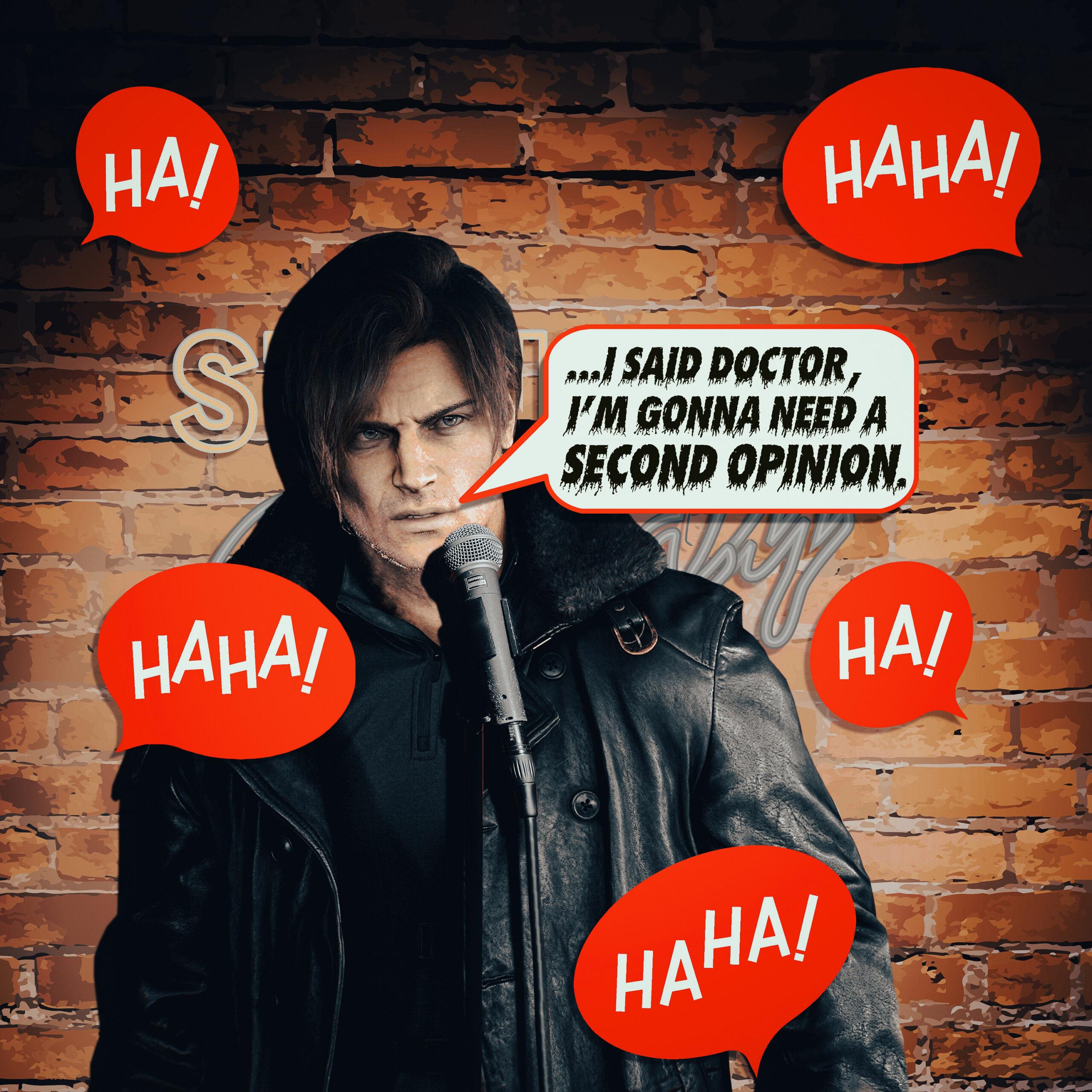
Resident Evil is a funny series of video games. Hilarious, even. Perhaps this is surprising to you. That's understandable. Resident Evil games are certainly not sold as funny. The franchise is not called Resident Comedy. (Still pretty ominous.) They're horror games! The preeminent horror franchise in video games, as definitive as A Nightmare on Elm Street or Friday the 13th is in film, and full of just as many wild shifts in tone and quality. Resident Evil Requiem, the ninth proper Resident Evil game—and the 31st if you count the various spinoffs and remakes—continues this tradition. The game is very funny. On purpose, even! It is also wonderfully frightening. These two qualities are not in conflict: The presence of hilarity doesn’t undermine the horror.
This is an easy premise to accept in 2026, at least in the world of cinema. A number of the hottest names in horror cut their teeth in comedy, proving just as adept at inducing scares as laughs, often in the same project. Zach Cregger, for instance, is merely two films into his career as a horror filmmaker, but Barbarian and Weapons were among the funniest and scariest movies released in their respective years. His next project? Resident Evil.
It is a shame, then, that in the context of Resident Evil as a video game franchise, the relationship between humor and terror comes with a bit of baggage. Among Resident Evil fans and YouTube scholars (behold this nearly eight-hour video essay on the franchise from longtime critic Noah Caldwell-Gervais), it has long been held that there are two Resident Evils: a tense, frightening one that is true to the "survival horror" genre that the first game popularized and a more campy, action-packed Resident Evil that arises from time to time, usually just before a dip in quality in the franchise. The funny business, while not necessarily shunned by the audience, is generally seen as beside the point—the best games (2002's Resident Evil remake and Resident Evil 2, 4, and 7) are the scary ones. This is reductive: All of these games are hilarious; all of these games revel in camp as Susan Sontag describes it—"a love of the unnatural, of artifice and exaggeration."
Consider for a moment the very first thing the player sees when booting up a copy of 1996's Resident Evil: a cheaply shot, compressed-to-hell video of badly costumed, badass supercops running scared from mutant dogs that were unseen because they were, without question, never in the budget.
Camp! Of course, in 1996, few were thinking about it in these terms. The Sony PlayStation was less than a year old in North America, and 3D graphics were still new and exciting. Contemporary reviews focused on how atmospheric and scary the game was, although some noted its notorious English translation from Japanese, performed without a lick of dynamism. It's tempting to think that this campiness was just another rough edge to be improved on, as the game's next two sequels would render even more stomach-churning horror with a more sober script and a 2002 remake would solidify the original as a horror masterpiece—ditching that campy charm entirely.
Or did it? 2002's Resident Evil no longer opens with a sweded version of itself, but it does go out of its way to add a whole section to the game in which the player is inexplicably accosted by sharks and chased up and down a hallway by bees. We have met the makers of the T-virus, and they are not serious people.
One way of thinking about video games as a medium is to consider them an extended practical joke, an elaborate way to subject a captive audience to a series of pranks and japes that the designer has prepared. The player is, after all, at the game maker’s mercy from start to finish—the designer decides how quickly the player can move and with how much ease, how much they can see in a given moment, and even how gravity itself works, if at all.
Resident Evil is something of an innovator in this space, with its notorious "tank" control scheme, where the player character only ever moves in one direction—forward—and it's up to the player to make sure they are pointed the right way first. This is tedious, but a tedious task done with a zombie shambling your way? That's scary. That's the language of video games, finding their own way toward Alfred Hitchcock's famous explanation of the difference between surprise and suspense. This is, effectively, the same trick all Resident Evil games pull, up through Requiem: giving the player an easily understood, menial task to do and then telling them they have to do it in a room full of monsters. With maybe a toothpick to defend themselves with.
Again: What an incredible prank. What a mean thing to do to the player! Those scamps at Capcom!
Admittedly, this kind of clownishness operates at a pretty cerebral level. Few people have a pleasant time sitting on a couch and think to compliment the crafter of the experience. Most prefer to viscerally react to the thing in front of them.
Fair enough. Perhaps the gonzo nature of these games—particularly in their latter halves, when the initial pretense of a relatively grounded experience of surviving one horrible night among grotesquely mutated humans almost always gives way to B-movie creatures like lizard people, evil plants, or giant bugs—doesn't register to you as particularly funny, but as a respectable escalation in tension. How, then, do the constant action-movie one-liners, the theatrically homoerotic knife fights, and Resident Evil Village's Karl Heisenberg—a guy who is, for all intents and purposes, the X-Men villain Magneto—suit you?
Perhaps the greatest obstacle to recognizing Resident Evil games for what they are (funny) is their deadly seriousness. As a rule, the games do not lead with their strangeness—the gleeful oddity of Resident Evil 4's Ramón Salazar or the Evil Dead–esque body-horror absurdity that 7 and 8 protagonist Ethan Winters endures in his struggle against some evil mold. While the games are not above cracking wise, they never play to the camera or break. Resident Evil's funniest jokes are often environmental details or text tucked away in notes; Requiem has a good one in which a doctor diagnoses a particularly memorable zombie with "main character syndrome."





More on ‘Resident Evil’
None of this is easy to sell in a trailer. Scares, however, are. And so Resident Evil games, even the aforementioned action-oriented ones, are advertised as scary, even if the frightening parts eventually give way to considerable gunfire and explosions. Outside of these occasional dips into over-the-top action, their silliness is not foregrounded but discovered, over and over again. The horror lures you in. The hilarity keeps you coming back. Real heads know that the games have always been like this—which is why the franchise’s many existing screen adaptations have happily keyed into schlock. Doing so is not a betrayal of the material; it is the material. The tense, frightening Resident Evil that players remember is the work of incredible game design, not the Umbrella Corporation. Considering Cregger’s absurdist streak, he’ll likely lean into the laughs in his own indelible way.
Not only has Resident Evil always been like this, but its stewards at Capcom have also displayed an astonishing commitment to never once rebooting its story, even when it would have made tremendous sense to. Instead, Capcom has provided another great vector for comedy in its stubborn insistence on continually adding to that first game's story with every entry, thereby stumbling into a sort of deranged horror soap opera. A handful of characters are shuffled around a world that—because every sequel must escalate—doesn't ever seem to get better because of their efforts, as a scourge of "bioweapons" created by the franchise’s pharma-company villains continues to proliferate. Each game needs to appear more menacing than the one before it, after all.
In Resident Evil Requiem, this means zombies that still hold on to some aspect of their former lives, performing deep-set habits from their jobs and uttering phrases that they might have said often when at work. These new zombies service both ends of Resident Evil's comedy-horror continuum quite nicely. It is genuinely disquieting to see people stripped of their humanity yet still attempting to chop away in a kitchen or check in on a patient—perhaps the closest Resident Evil has come to overtly saying something new in its expression of zombie horror, a blunt metaphor for what it's like to hold down a job in an economic environment that is literally rotting.
It is also very funny for a zombie to yell at you about forgetting to turn off the lights or keeping the noise down. Of course these games are funny. By accident or on purpose, it doesn't really matter. Laughing is just how you show you're not scared anymore.