

Robert Redford is gone, and so is Sundance as we know it. Sunday brought an understandably bittersweet edition of America's biggest film festival. Redford—who founded the fest in the late 1970s, stepped away from it a few years ago, and died last summer—was the posthumous guest of honor: Every screening this past week began with his words of wisdom and encouragement. The late Hollywood legend’s presence even in absence wasn’t the only cause for sentimentality. This was, after all, the final Sundance in Park City, the Utah mountain town that’s hosted the event (and the thousands who come to enjoy it) for more than four decades. Next January, the festival decamps to Boulder, Colorado, in pursuit of tax incentives, more space, and maybe a cultural reset of sorts.
But Sundance was still Sundance in 2026. Even at a moment of wistful transition, it delivered the signature experience: long lines, short shuttle rides, parkas, Main Street pizza, waves of hype, and the elation that seems to greet any movie with a hint of heart. No melancholy about the end of an era could silence the indiscriminate applause.
The movies, overall, were a mixed bag, but that’s pretty much always the case at Sundance. There were duds aplenty in this vast, typically eclectic lineup. As usual, there were also films worth seeing, discussing, and—for those who didn’t make the trip or snag an online ticket—hotly anticipating. The following nine either made a splash this past week or should have. They were the peaks of the nostalgic, quasi-final Sundance. Long after Park City’s ritziest hotels and lodges shed their festival logos for the last time, we’ll still be talking about these movies.
Josephine
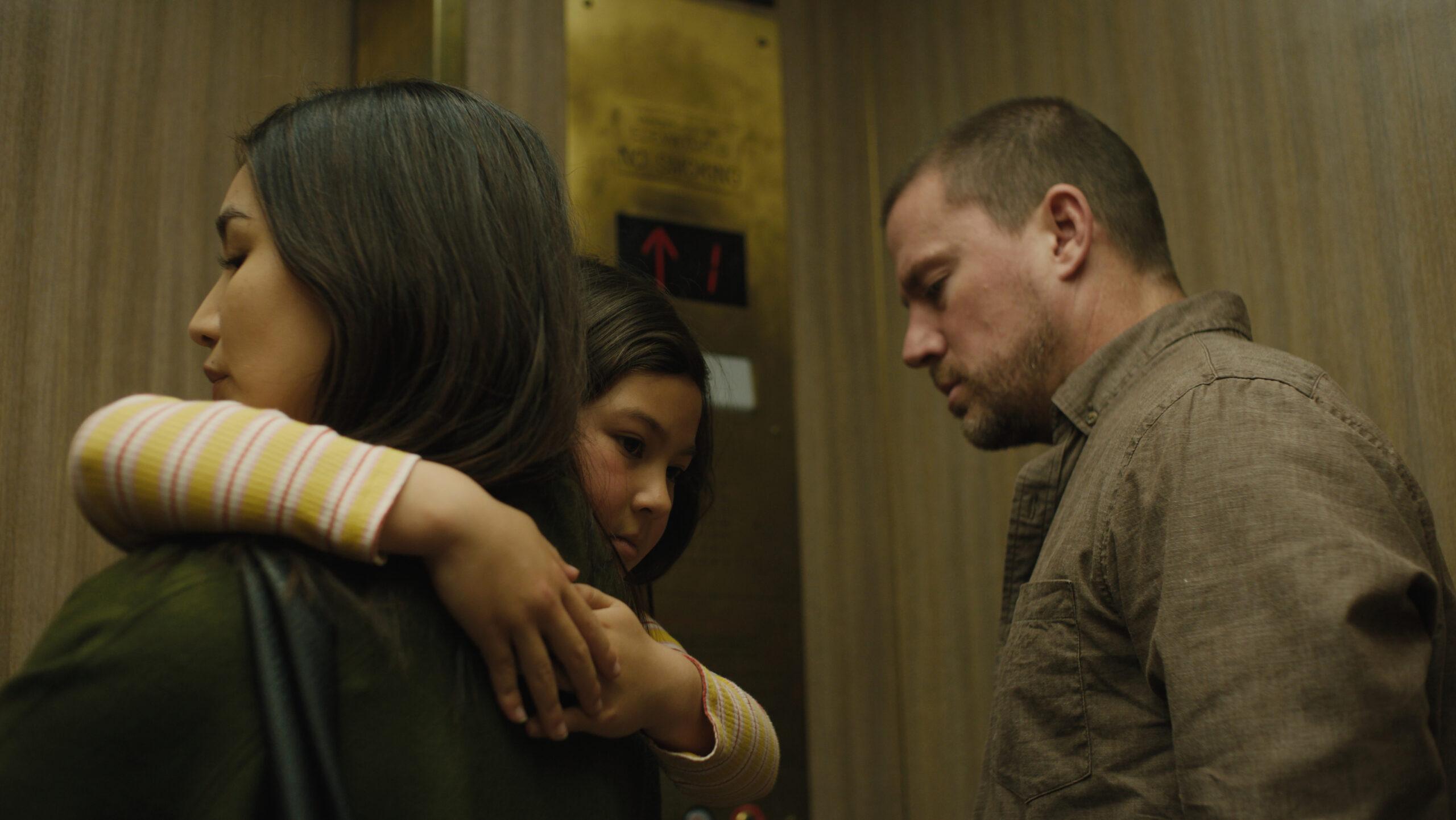
It was not a banner year for the U.S. Dramatic program, Sundance’s annual selection of first and second features by American filmmakers. So it’s hardly a surprise that Beth de Araújo’s devastating Josephine—a film that earned stunned praise from the moment it premiered—ended up taking home the top jury prize, joining past recipients like Winter’s Bone, Whiplash, and recent Oscar victor CODA. But this difficult, sobering drama would stand out even against less ho-hum competition. The title character is an 8-year-old girl (remarkably unaffected child actor Mason Reeves) who witnesses an act of sexual violence in Golden Gate Park. Channing Tatum and Gemma Chan—both never better—play her parents, ill-equipped in their own separate ways to help her process what she’s seen and restore a sense of safety and normalcy. While the film’s POV is often preadolescently narrow (we experience the story through Josephine’s clouded emotional state), its insights into how the world tries but often fails to shelter kids from trauma are unflinchingly adult—especially once the matter of testifying in court complicates things further. There are times when Josephine’s style veers more melodramatic than its story, but even its broader choices (like its use of slow motion during a few moments of emotional intensity) don’t diminish its power. Somehow, no distributor has snatched up the film yet, though maybe that’s not so unusual given the tough subject matter.

The Friend’s House Is Here
The other highlight of this year’s U.S. Dramatic program is much breezier, if hardly frivolous. It’s also only marginally “American”—chiefly a financing distinction, perhaps, for a drama set and shot in Tehran, then smuggled out of the country to premiere in Park City. Though the title mirrors that of an early masterwork by Iranian director Abbas Kiarostami, there are equal traces of Greta Gerwig in this story of fostering creative community in the shadow of an oppressive government. That’s explored largely through the odd-couple friendship between two artistically hungry women—one an Instagram-famous dancer (Hana Mana), the other an adventurous theater director (Mahshad Bahram). The same theocratic forces currently attempting to quell historic protests in Iran eventually enter the picture, dampening the celebratory mood set by writer-directors Maryam Ataei and Hossein Keshavarz. But The Friend’s House Is Here remains light on its feet, unfolding as a slice of ordinary bohemian life; its scenes of effervescent connection tell a different story of the country than the one our own saber-rattling regime is promoting as we inch closer to armed conflict.
Everybody to Kenmure Street
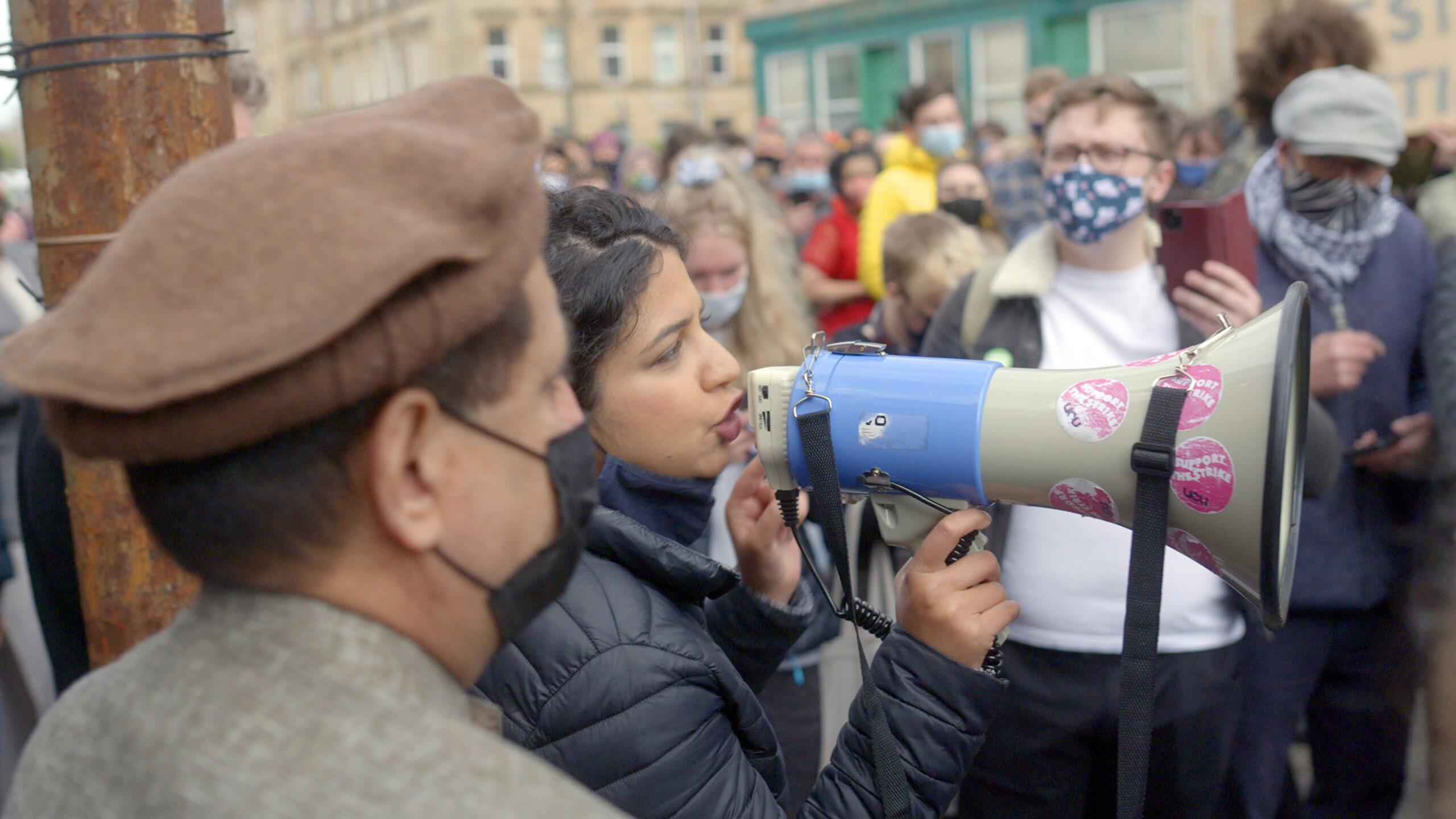
Though Sundance has a history of programming up-to-the-minute documentaries, there was no film in the lineup this year that tackled the nightmare unfolding beyond the borders of the festival—that is, the campaign of terror that ICE is currently waging against America. But one movie did seem to commune with our dark national moment, even as it threw a ray of optimistic sunlight on it. Everybody to Kenmure Street revisits a stirring true story of collective action, looking back on a morning in Glasgow when hundreds of locals dropped everything to try to stop two neighbors from being cruelly deported by the U.K. Home Office. Pretty conventional in approach (it’s mostly just talking heads recounting the events of the day in question), the film nonetheless functions as an inspiring lesson in peaceful but disruptive protest. At Sundance, it couldn’t help but echo the rousing spirit of the people in Minnesota, showing up in droves for each other as those of us in Park City merely showed up for movies. It would strike quite the crowd-pleasing chord right now, should any brave company step forward and roll it out into American theaters.
I Want Your Sex
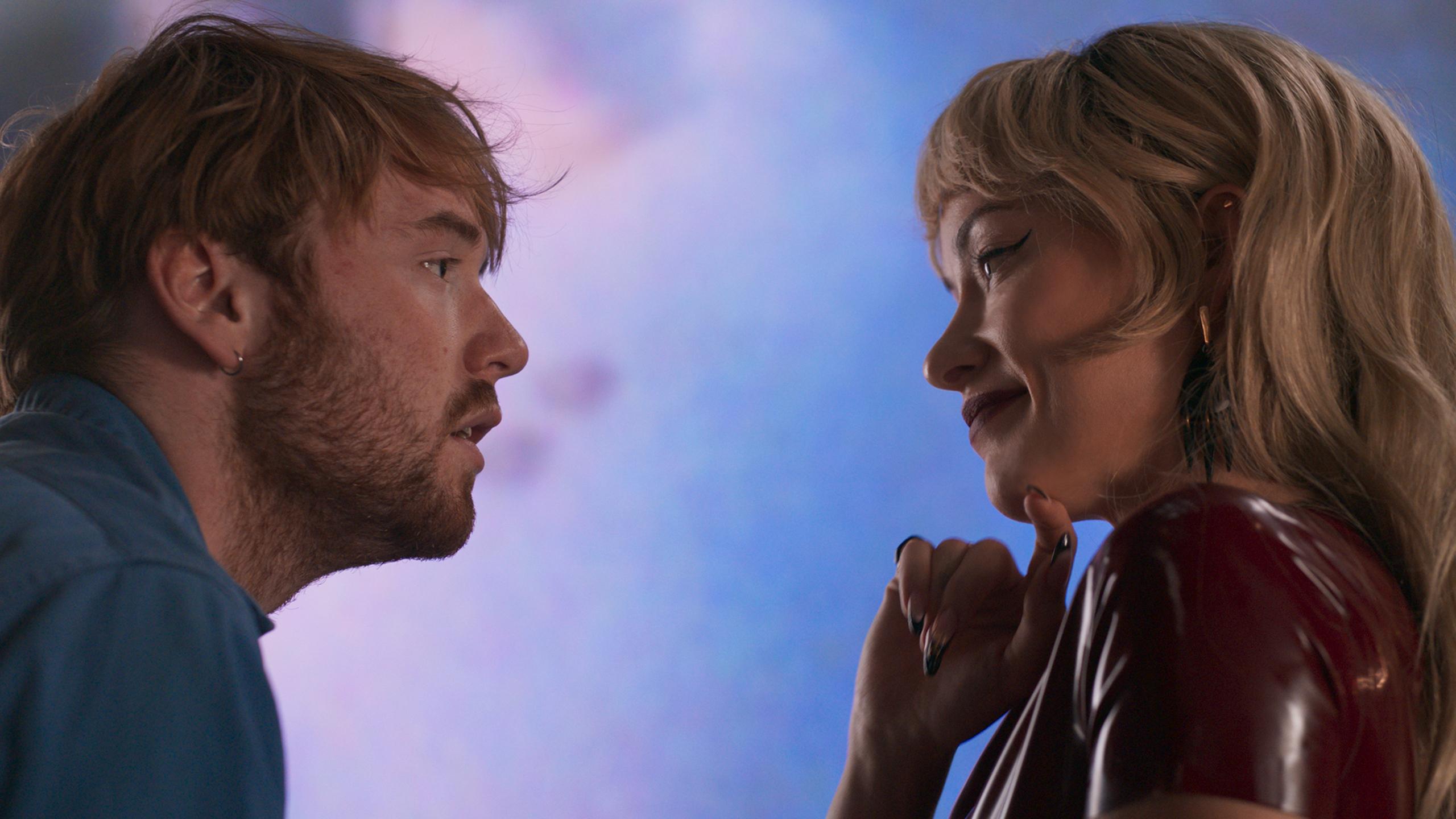
Sex sells, but who’s buying? So far, no bites for the amusing, kinky romp from indie mainstay and Sundance royalty Gregg Araki (Mysterious Skin, The Doom Generation). This brightly irreverent comedy casts Cooper Hoffman as the new office boy toy of a voracious modern artist played, with spectacular camp aplomb, by Olivia Wilde. For all the talk (and brief glimpses) of S&M action, I Want Your Sex is more tame than transgressive, at least by the standards of a filmmaker once renowned for his edgy visions of counterculture. But it’s also mostly a hoot, riffing on Sunset Boulevard one minute, supplying Charli xcx with literal cartoon knockers the next. And there’s real charm to its May-December conversations about sex—including one scene where Hoffman’s plucky 20-something hero thoughtfully responds to every critique of his “prudish” generation lobbed by the girlboss pegging him.
The Invite
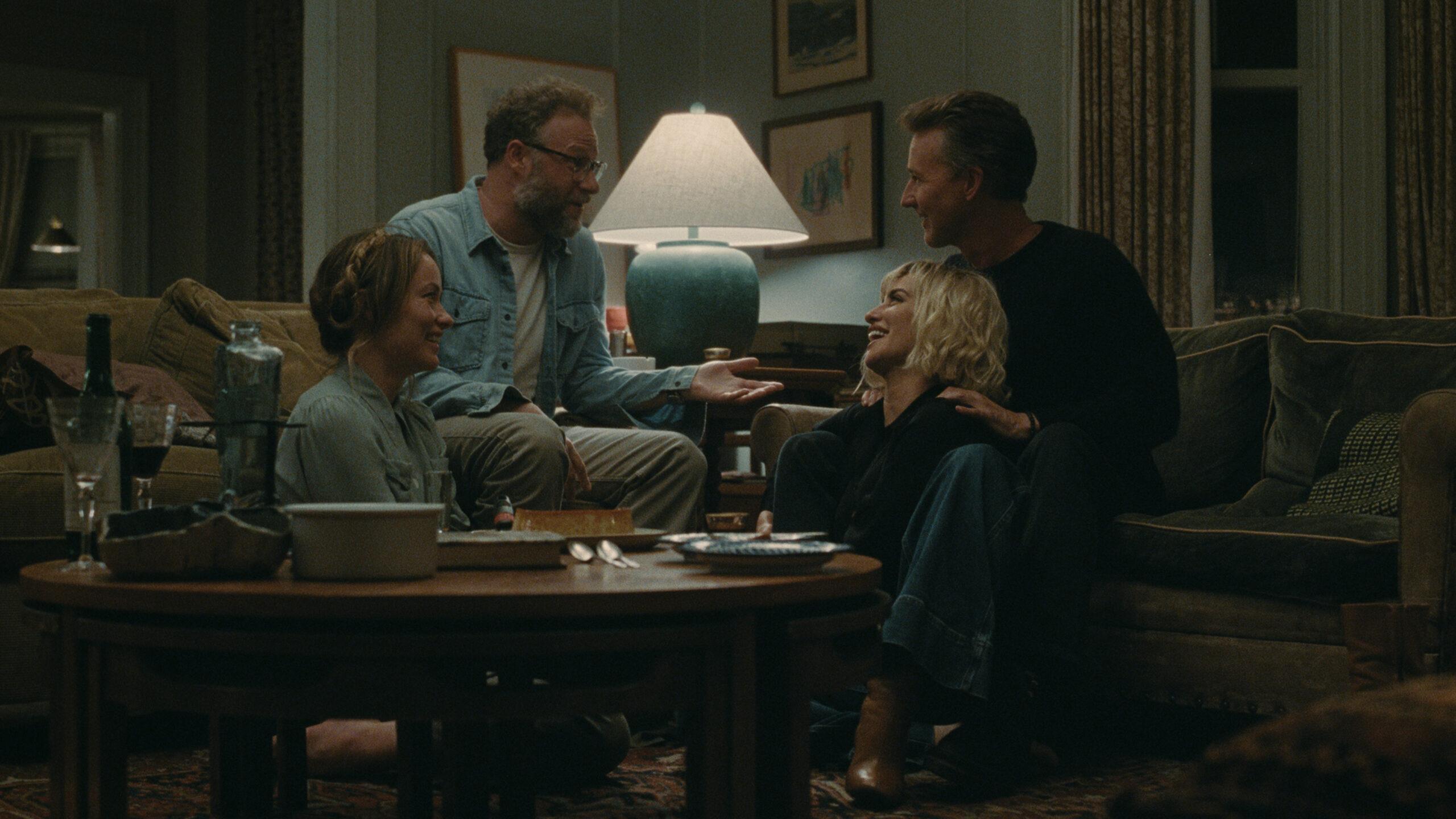
Charli xcx may have popped up in three different movies in Park City, but if anyone truly “won” the festival this year, it was Olivia Wilde. Beyond her uproarious vamping in I Want Your Sex, the actor/filmmaker also directed and starred in what turned out to be the hot ticket of Sundance: a four-hander comedy about venomously dissatisfied spouses (Wilde and Seth Rogen) who host their loudly amorous “free spirit” neighbors (Edward Norton and Penélope Cruz) over an evening that takes several surprising turns. Some of the critical reaction was a bit disproportionately rapturous for a quippy spin on Who’s Afraid of Virginia Woolf? that starts at an 11 on the caustic sniping scale. But at a fest that often felt light on laughs and star power, Wilde’s stagey double-date scenario went over like gangbusters, officially freeing her from director jail after the disastrous Don’t Worry Darling. No wonder it inspired an old-fashioned Sundance bidding war, with A24 securing the rights for $12 million following 72 hours of competing offers.
Undertone
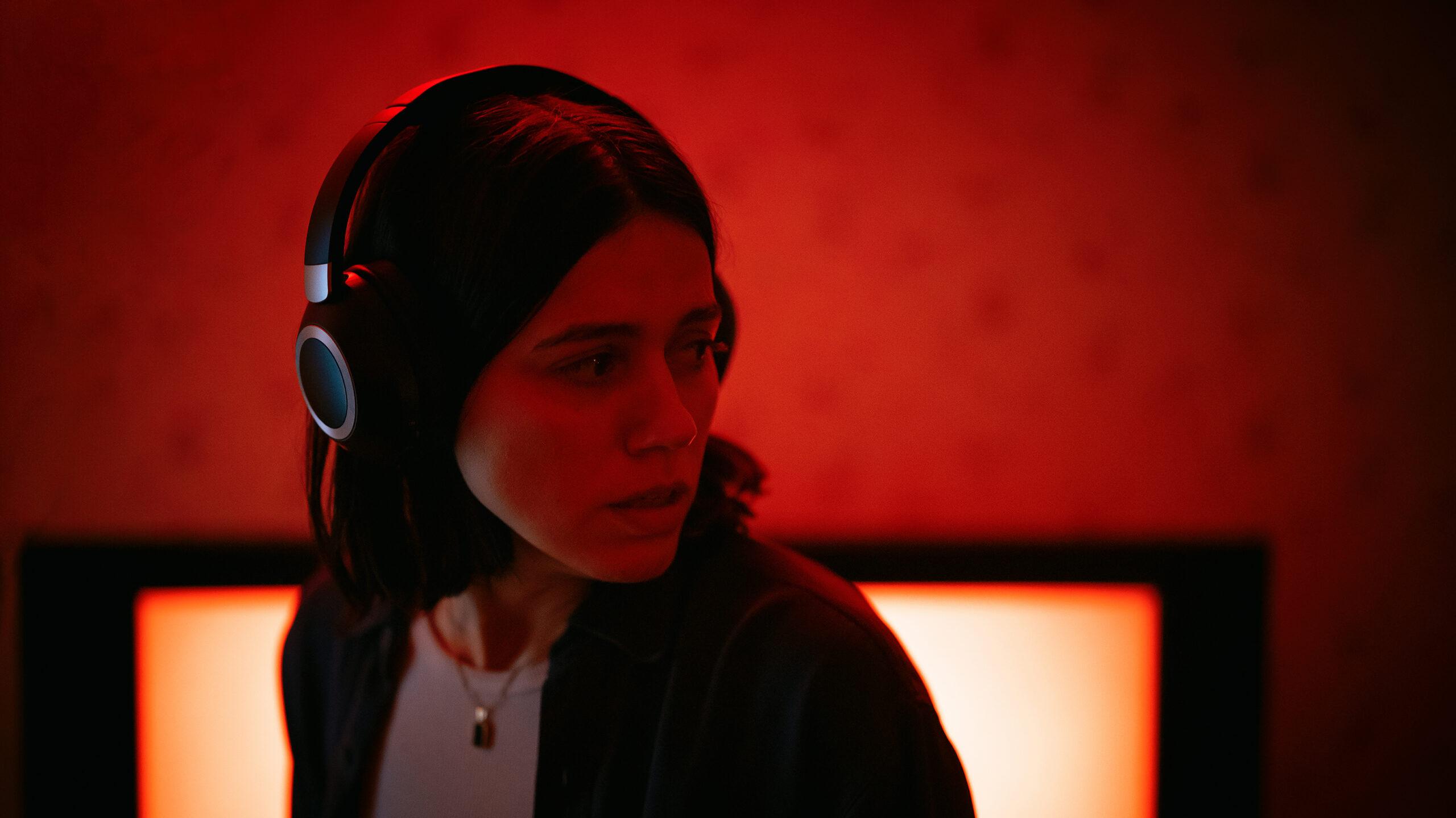
I sadly missed my opportunity to see the other major acquisition out of Sundance this year, the queer horror movie Leviticus, which inspired some enticing comparisons to It Follows before Neon grabbed it. I did, however, catch A24’s addition to the midnight program: a genuinely spooky Canadian chiller about a podcaster (Nina Kiri) caring for her dying mother while unwisely sifting through some mysterious audio files. Undertone, which A24 picked up last summer at Fantasia Festival, doesn’t break a lot of new ground for the genre in the scares department. But it’s rather expertly crafted, from director Ian Tuason’s patient exploitation of off-screen space—lots of ominous pockets of suburban darkness that draw our nervous eyes—to an impressively immersive sound mix that creates the sensation of experiencing the horror as the heroine does, in a noise-canceling cone. The film hits theaters in March but might actually play best at home, curled up alone on the couch, headphones on.
The Shitheads
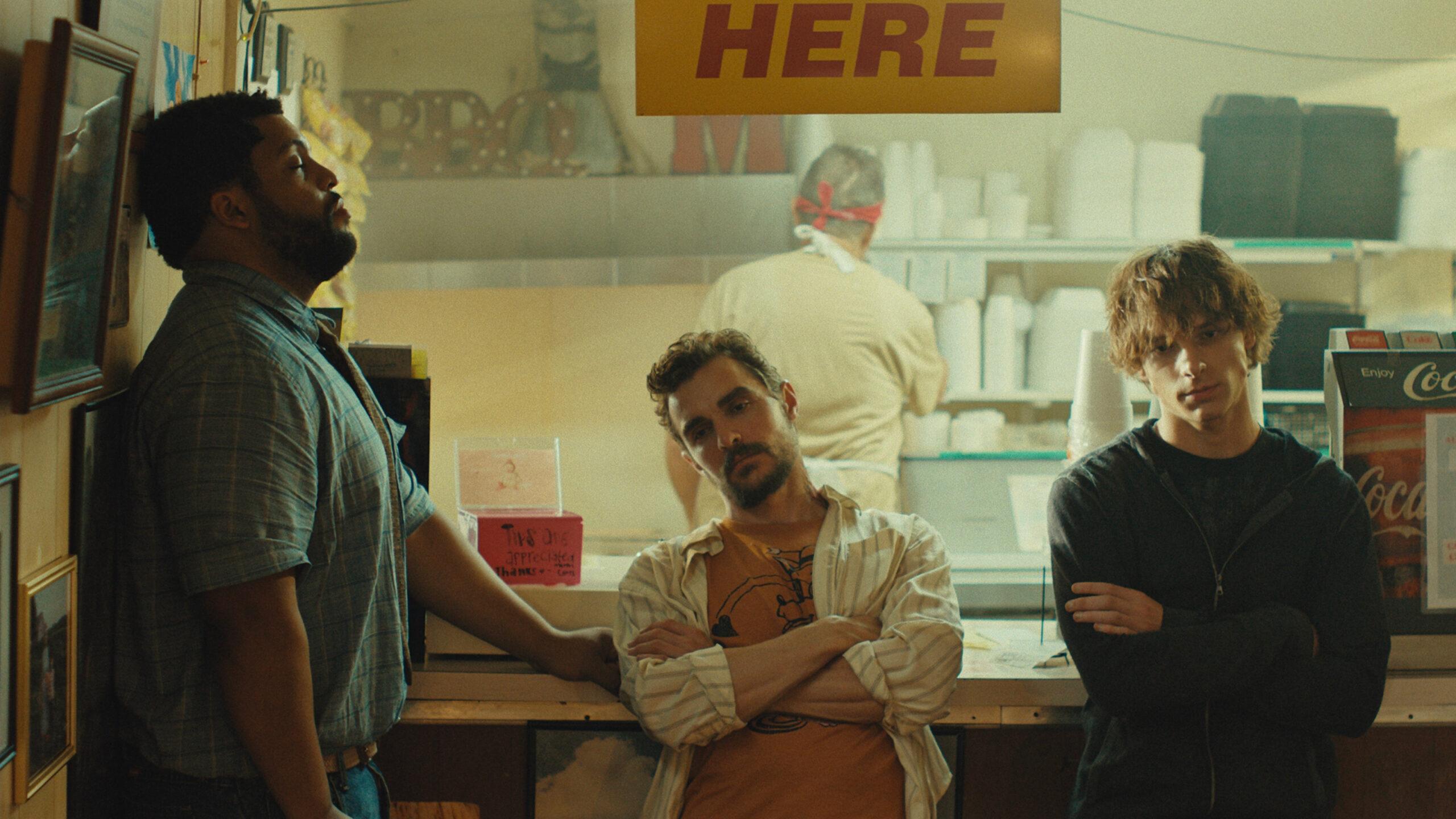
Critics seemed mixed on the new film from Sundance alum Macon Blair, in which two down-on-their-luck dudes (O’Shea Jackson Jr. and Dave Franco) get more than they bargained for when hired to drive a “troubled” teen (How to Train Your Dragon’s Mason Thames) to a rehabilitation facility. As in Blair’s 2017 U.S. Dramatic winner, I Don’t Feel at Home in This World Anymore, the characters are funnier than the violently slapstick developments of the surrounding plot. All the same, there are plenty of inspired gags in a comedy that often plays like a vintage Rogen-Franco vehicle (with Dave giving his most James performance yet) with a vaguely Coen-ish dumbfuck-noir vibe. And Blair’s unsentimental but sympathetic class politics give The Shitheads a touch of poignancy and relevance. Here’s hoping it makes it to theaters, if almost certainly under a less inflammatory title.
How to Divorce During the War
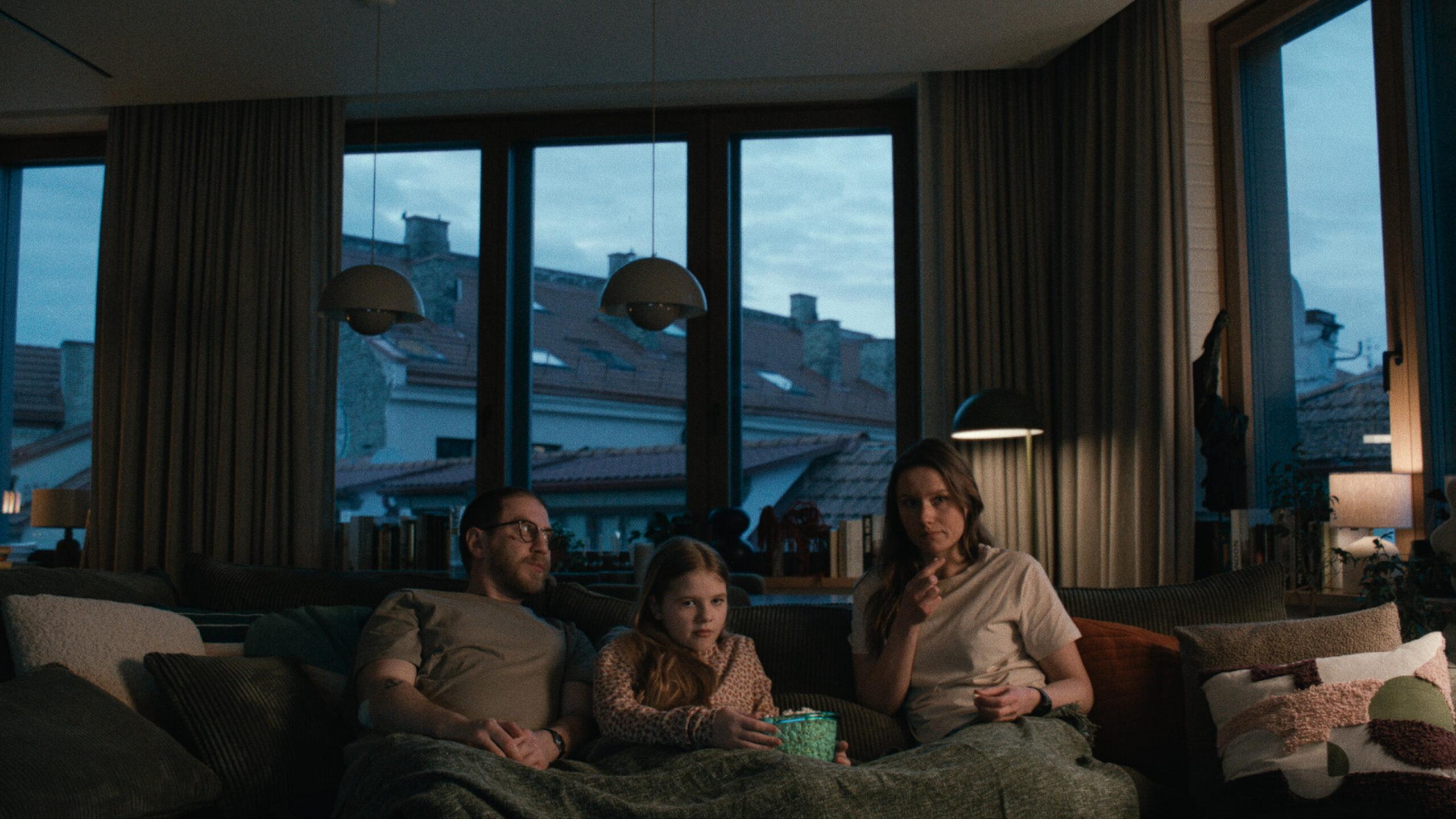
Likewise, American audiences deserve a chance to cringe through this witheringly satirical drama, the best of the World Cinema titles yours truly caught in Park City. The inciting incident unfolds over an extended single take in the front seat of a car, as a Lithuanian content creator (Zygimante Elena Jakstaite) ends her marriage to a washed-up filmmaker (Marius Repsys)—a scene much more lacerating in its depiction of “irreconcilable differences” than anything in The Invite. But filmmaker Andrius Blazevicius, who won the World Cinema program’s Best Director jury prize on Friday, is more interested in the difficulty of staying true to your values when they threaten your creature comforts: The couple’s bumpy separation unfolds against the backdrop of Russia’s invasion of Ukraine, and the movie is downright surgical in its dissection of the ways sociopolitical conviction can falter over time and under the weight of inconvenience and petty irritation. Like the like-minded, slightly broader films of Ruben Ostlund, How to Divorce During the War is a bitter pill to swallow, yet it boldly stuck in the craw of a festival that generally prefers to raise spirits rather than exquisitely dampen them.
Once Upon a Time in Harlem
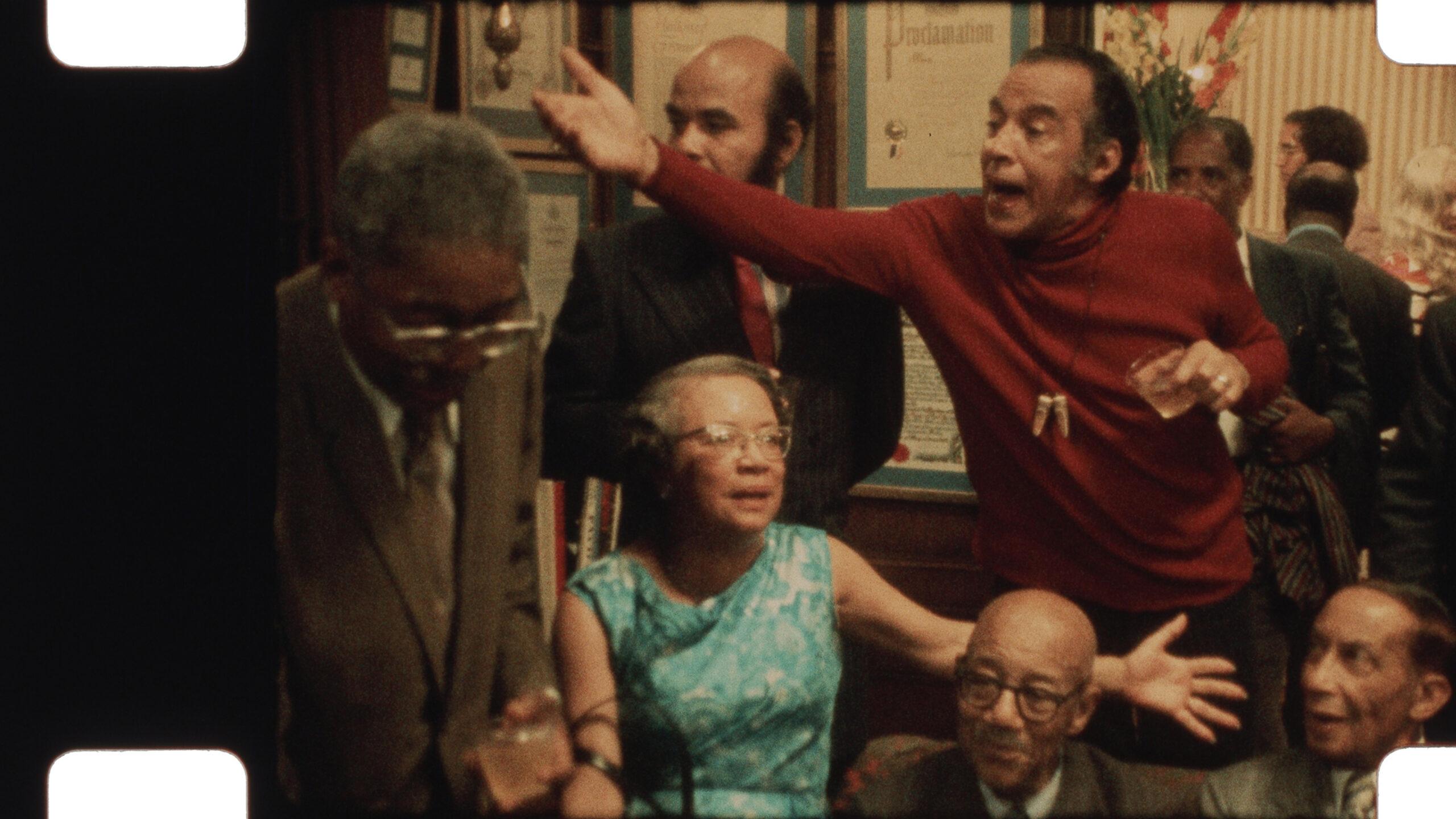
Nothing at Sundance garnered more enthusiastic acclaim than this miraculous discovery: a recovered treasure trove of celluloid shot by the late documentarian William Greaves, who in 1972 reunited the living luminaries of the Harlem Renaissance for a party at Duke Ellington’s house. What he captured with his camera was a lively conversation among legendary artists and big personalities, regaling each other with memories but also hashing out the importance (and the legacy) of their seismic cultural movement. Assembled by Greaves’s son, David, Once Upon a Time in Harlem trusts the inherent power and significance of its footage; the film makes little attempt to build a history lesson around this meeting of minds. Regardless, a lesson does emerge in the space between its impassioned debate: More than bringing the past to life, Harlem keeps the conversation open; the renaissance continues in the way its leading figures refuse to reduce it to a resolved event or a nostalgic touchstone of past triumphs.