 Van Lathan
 Van Lathan
 Rachel Lindsay
 Rachel Lindsay
About the episode
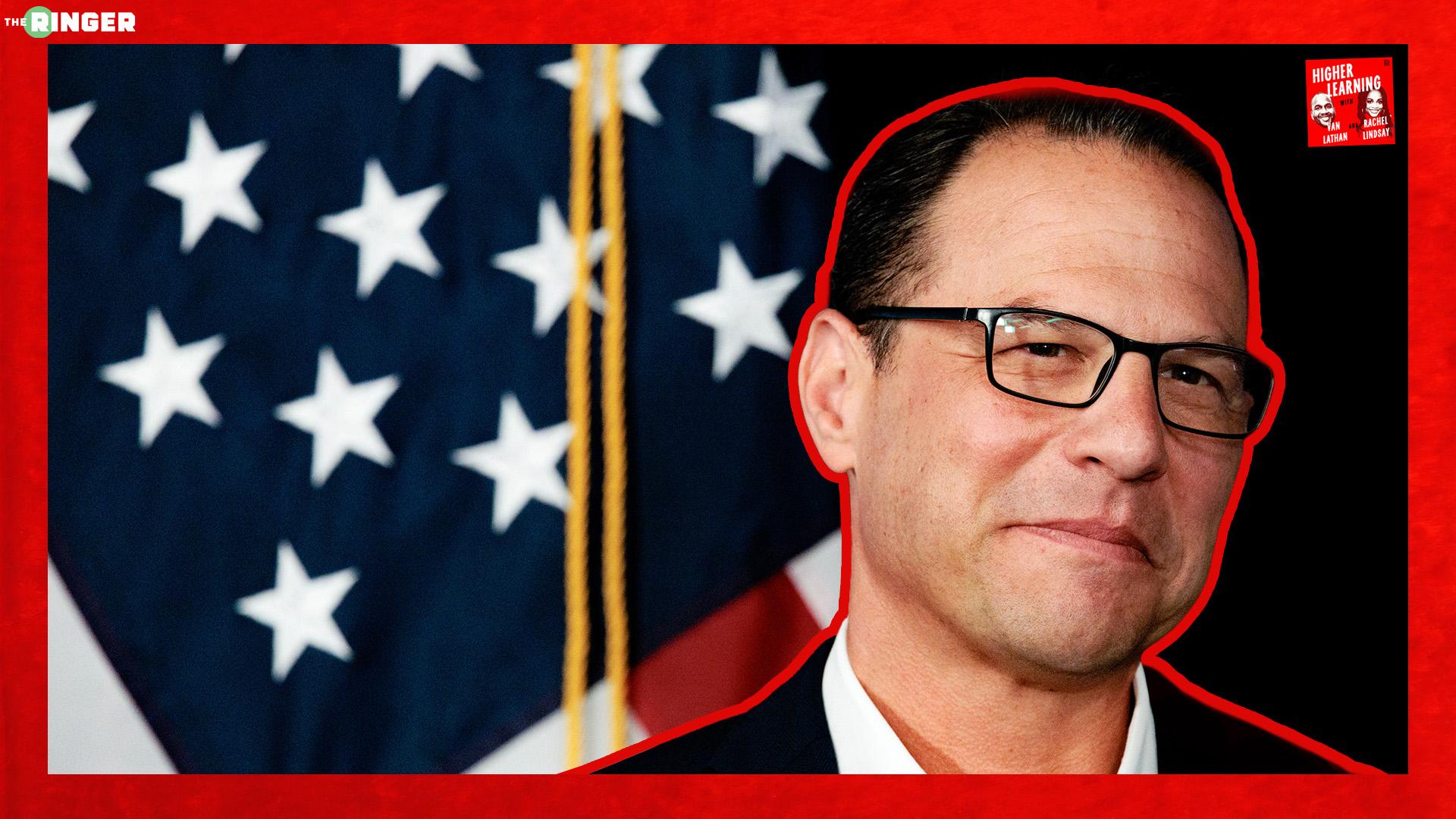
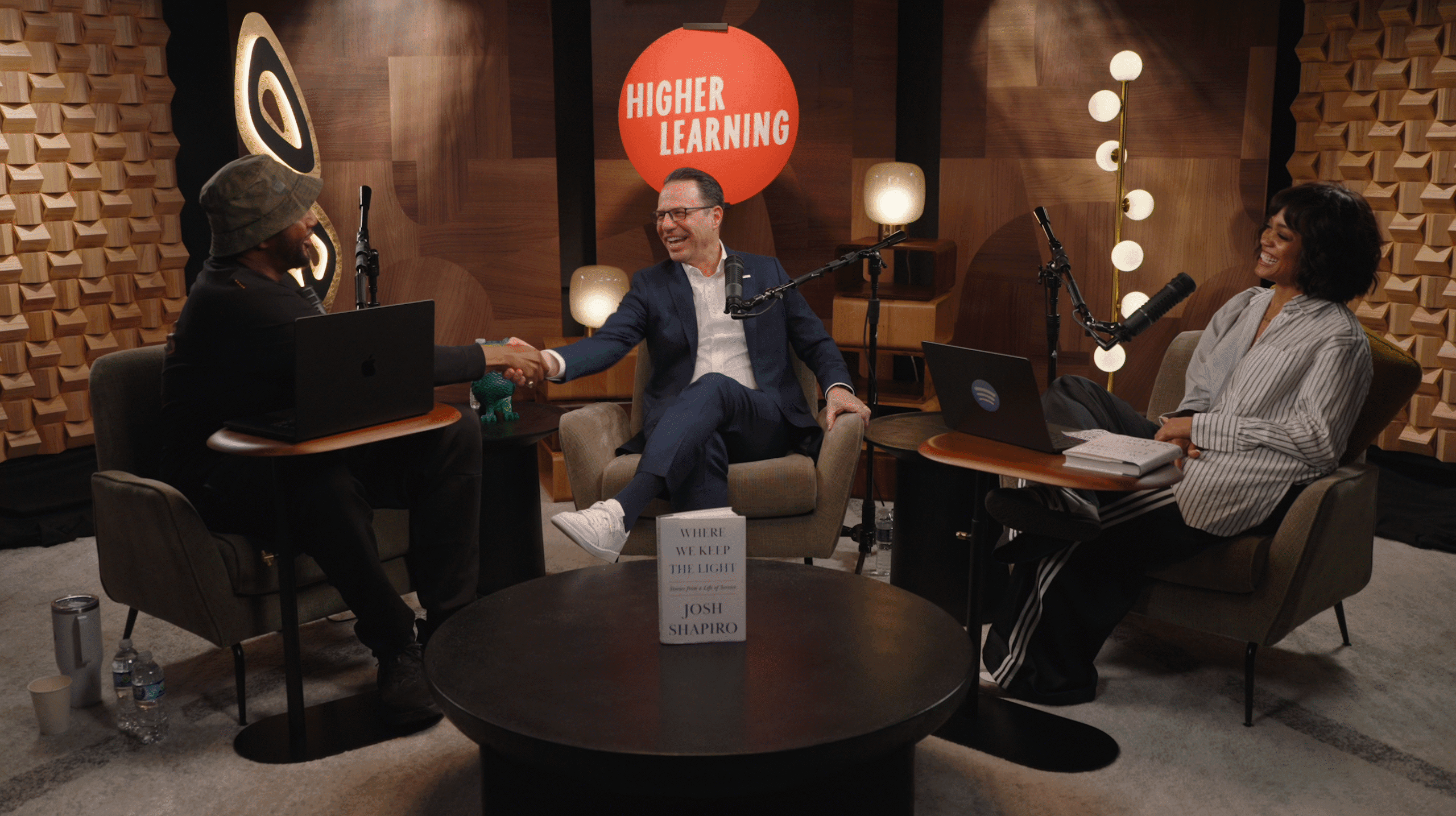
Van and Rachel welcome Pennsylvania Governor Josh Shapiro to discuss his memoir, Where We Keep the Light, working across the aisle in the MAGA age, and community policing. Plus, they address the rise in antisemitism and approaching division on the Israel-Gaza conflict.
Hosts: Van Lathan and Rachel Lindsay
Guest: Gov. Josh Shapiro
Producers: Donnie Beacham Jr. and Jade Whaley
Social Producer: Bernard Moore
Video Supervision: Chris Thomas
In the following excerpt, the Higher Learning hosts ask Shapiro about whether his Jewish identity helps or hinders his chances on the national political stage.
Van Lathan: We got to talk a little bit about national politics here. So you hit on something earlier when you were talking about your faith, which is very important to you. And you said it might not be the smartest political move for you to talk as—
Josh Shapiro: Some people have said that. Yeah.
Lathan: Some people have said that. To talk as much about your faith because it might hinder you in the realm of national politics. I was talking to a friend of mine who reached out to a bunch of people when you were coming on. And a friend of mine was like, he talked about how much he liked you. I got two different responses.
Shapiro: Oh boy.
Lathan: We were talking about both of these, but I’m going to talk about the first one first. He goes, “Love that guy.” Then he goes, “Too bad a Jew can’t be president.” This guy is Jewish and he’s feeling a lot of weight right now. He’s feeling, it’s heavy for him. And we talked a little bit more about how he was feeling, how he was feeling after what happened yesterday. How he’s been feeling.
Shapiro: In Michigan, you mean?
Lathan: In Michigan, yes, of course. We talked a little bit about it on the podcast, how he’s been feeling. But he seemed to share some of the skepticism that you maybe intimated. People have told you about your rise and whether or not your faith would hold you back from being a national political figure. Do you think that what my friend said is correct, that a Jewish man cannot be the president, a Jewish person cannot be the president?
Shapiro: So one, I’m sorry your friend feels that way. I’m sorry there are people who said to me, “Hey, be careful about sharing yourself and your faith, because that could be bad for you politically.” I’m sorry that that exists in our society.
Lathan: Certainly.
Shapiro: Let me sort of break down your question and a few things. First, my experience on this. Again, coming from the perspective of being in Pennsylvania, which I think we can all agree, the toughest swing state, biggest swing state in the entire country. And by the way, I think Republicans, Democrats would agree if you want to win a national election, you got to win Pennsylvania.
When I was running for governor and we were putting our first ad out there, sometimes you run an ad about your policy views, sometimes you run an ad attacking your opponent for their policy views. I decided I wanted to run an ad that was deeply personal. And that is to tell the people of Pennsylvania why I wanted to serve, what motivates me to serve. And to me, the central things that caused me to serve are family and faith. And so we ran an ad showing where I am pretty much near every Friday night, which is sitting around the dinner table with my family, celebrating our Sabbath, having our Sabbath dinner.
Being open about yourself and your faith, I think, has the effect of actually allowing people to see you at a deeper level. And then share of themselves at a deeper level than what you might normally share with your governor or with your mayor or something like that.
And there were a bunch of political folks who were like, “I don’t think you want to run that ad. People are going to know you’re Jewish.” I’m like, “I think they know I’m Jewish at this point, right?” But I wanted people to know who I am and what motivates me. Here’s why I’m sharing that story with you. After we ran that ad, I’d show up in North Philly and people would tell me about their iftar after Ramadan, and how special that was for them. And they loved reading about my family meals. I’d show up in some rural communities where there weren’t many Jews and people would want to tell me what lunch is like after church on Sunday. Tell me about their Christmas Eve traditions.
Being open about yourself and your faith, I think, has the effect of actually allowing people to see you at a deeper level. And then share of themselves at a deeper level than what you might normally share with your governor or with your mayor or something like that. So it’s actually allowed me to connect deeper with folks. And not only did I win the election, I got more votes than anybody in the history of Pennsylvania running for governor. Not just Democrats, but Republicans, independents as well.
As for a broader conversation about America, I think America—they elect a woman, a black person, a gay person, a Jewish person, whatever. What America wants is someone who’s going to get shit done for them, who’s going to make their lives better. And they don’t care what they look like or how they worship or what their gender is. They just want to know you’re on their side and you’re going to fight for them.
I think it is a tired conversation that we can’t elect someone like X because of their characteristic. I think instead we have to understand the American people, and this has been my experience in Pennsylvania are a lot better than what our shallow politics suggests. And so I believe the American people will elect anybody who’s ready to fight for them, who’s got a track record of delivering and who has to know how to get shit done.
Rachel Lindsay: That’s interesting. Do you think we’re past as a country identity politics or even weaponizing identity? Or maybe even becoming the victim of it when it comes to politics?
Shapiro: No, I don’t think we’re past it.
Lindsay: OK.
Shapiro: I just think people are better than it. Look, Barack Obama’s election victory was historic. But what I thought was even more historic and more extraordinary about it is the diverse coalition he pulled together in order to win. And he won, and people voted for him because they felt that he was hopeful, and he was going to bring change and he was going to deliver for them. And he was a history-making candidate. My point in sharing that is I think America is ready for all of the above when it comes to people of different characteristics, different walks of life.
But what America really needs is someone who’s going to go bat for them every day, fight for them every day and be able to get stuff done for them every day. That is the central thing people want. There is still identity politics, it’s still incentivized in our social media, it’s still used as a weapon. I just don’t think that weapon is as strong as the will of the American people.
This excerpt has been edited for length and clarity.