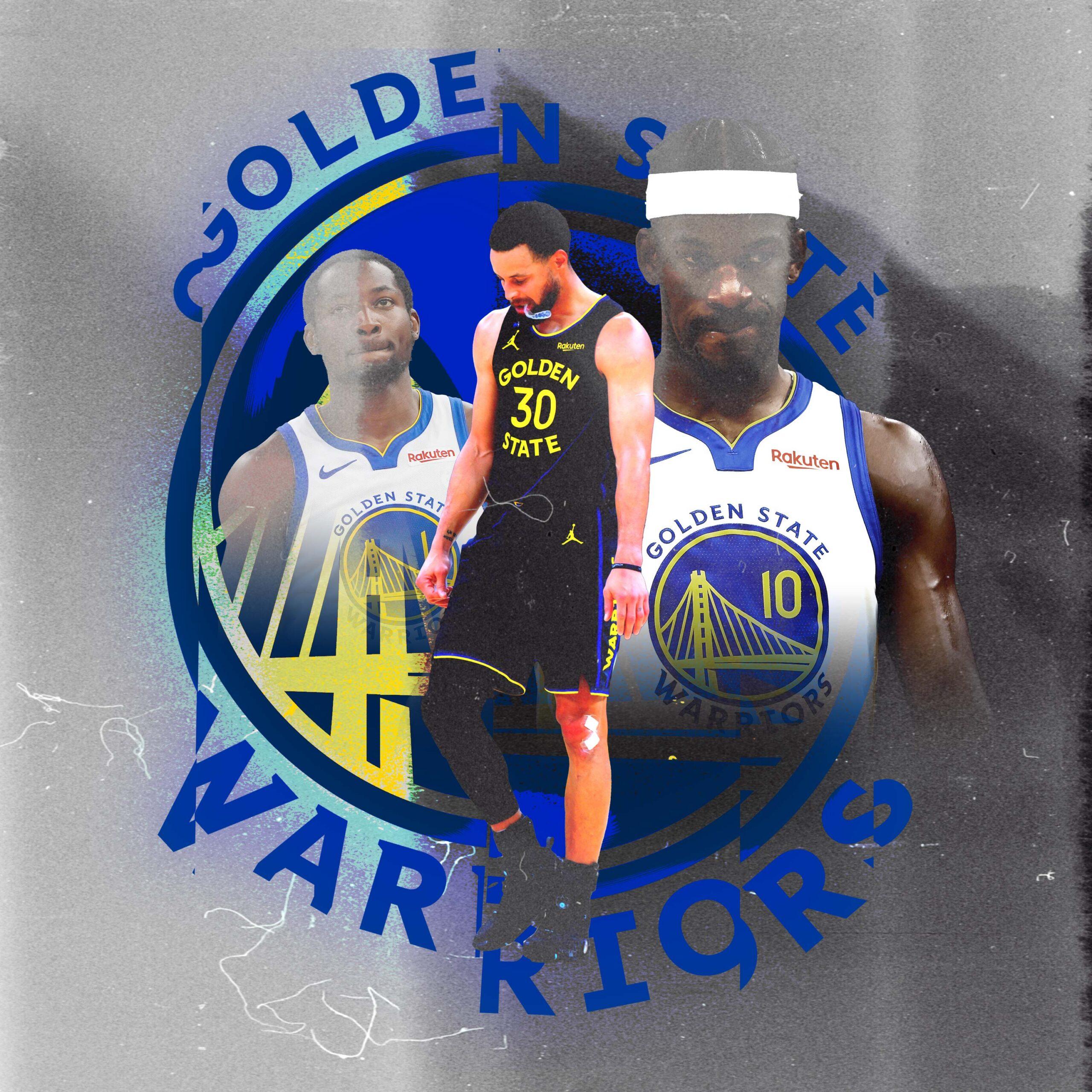

Mike Dunleavy wore a somber look of resignation as he spoke to the press before the Golden State Warriors hosted the Toronto Raptors on Tuesday night. Less than 24 hours earlier, Jimmy Butler had torn his ACL, effectively ending any last measure of hope for this Warriors season. Dressed in a dapper gray suit jacket and black slacks, the Golden State general manager looked the part of a man readying for a state funeral. Seconds after taking his seat, he began to speak for an organization in peril.
“I don’t have a positive twist on the news,” Dunleavy said. “It’s not good. But this will all come out well in the end, and we’ll move forward.”
The situation quickly devolved from bad to worse, as the Raptors routed the Warriors 145-127. Without the threat of a secondary scoring option, Toronto was able to blitz Stephen Curry, often relegating him to the wing as it built a 30-point lead in the third quarter. The performance laid bare the Warriors’ grim reality as they stare down the February trade deadline, the remainder of the season, and the final years of Curry’s career.
Last February, on the eve of the trade deadline, Dunleavy engineered a trade for Butler and signed him to a two-year extension, hoping to breathe new life into Curry’s career twilight. It worked. Butler meshed immediately with Curry and Draymond Green, and the Warriors went 23-7 with Butler in the lineup down the stretch. They finished seventh in the Western Conference, advanced through the play-in and past the 2-seed Houston Rockets in the first round, and eventually lost in the second round of the playoffs—a series Curry missed after suffering a hamstring strain in Game 1.
This season started slow and uneven, but over the past month, Butler and the Warriors were playing their finest basketball of the year. Prior to Tuesday night’s game, Golden State had won 12 of 16 games, climbing to the 8-seed in the West. Butler was in the midst of a typically excellent season, averaging 20 points, six rebounds, and five assists on lights-out efficiency. All of it came to a halt in the third quarter of Monday’s win over Miami, when Butler’s knee buckled on landing after he jumped to catch a pass.
Butler’s injury is at once clarifying and confounding for the Warriors. Any hopes that Dunleavy and the front office harbored about making noise in the playoffs are dashed. Even a splashy trade deadline acquisition wouldn’t do enough to elevate a team that relies on Butler’s defense and secondary playmaking. Bigger picture, Golden State now finds itself in a hole so deep—with an old roster, a series of misses in the draft, and now a devastating injury—that it may be impossible to dig out of.
When Joe Lacob and Peter Gruber purchased the team in 2010, Lacob aimed to re-create the Celtics dynasties he watched as a child in New England. He installed luminaries like Jerry West and Rick Welts into leadership roles and hired a young Bob Myers. Those decisions paid off, as Myers rounded out the roster around Curry and Klay Thompson by drafting Draymond Green and acquiring complementary veterans like Andre Iguodala, Leandro Barbosa, and Shaun Livingston. The Warriors won the title in 2015. After the 2016 season, Golden State added Kevin Durant, and he helped them add two more titles to the trophy case.
In recent years, Lacob’s grip on basketball decisions has clouded Golden State’s future around Curry. In 2020, he grew enamored of James Wiseman after a predraft workout, pushing the team to draft the 6-foot-11 center instead of flipping the no. 2 pick for an established player. The following year, he pushed his front office to draft Jonathan Kuminga over Trey Murphy III, whom many on the staff pushed for, seeing the 18-year-old as a potential star who could both help Curry in the short term and then fill the seats of Chase Center long after Curry was gone.
Now in his fifth season, Kuminga’s career has been defined by tension with the coaching staff and an inability to hold down a role within the Warriors’ system. And despite the star power Golden State still possesses, its season has been defined by Kuminga’s discontent. Over the summer, the team and Kuminga’s representatives engaged in an intense negotiation before reaching a two-year pact during training camp. But that détente was short-lived. Another clash with Steve Kerr left Kuminga on the bench for 16 straight games entering Tuesday evening. And last week, Kuminga officially demanded a trade.
The Warriors have been trying to offload Kuminga’s contract since last summer, to no avail. “When you make a demand,” Dunleavy said on Tuesday, “there needs to be a demand on the market. So we’ll see where that unfolds.”
In Butler’s absence against the Raptors, Kuminga did his best to fill the void and audition for the rest of the league, scoring 20 points in 21 minutes, including a buzzer-beater to end the third quarter, prompting a Lacob fist pump. The performance, which happened mostly during garbage time, helped Golden State whittle Toronto’s lead to 11 before the Raptors rebounded to hold on to the win and snap a two-game skid.
Following the defeat, Kerr remained positive. “We’re well-equipped with our depth to continue to play at a high level,” he said, citing the offseason signings of guard De’Anthony Melton and veteran big Al Horford, who didn’t play Tuesday evening to preserve his 39-year-old body, as reasons to be hopeful. “I think we have enough to compete,” Kerr added.
But Kerr’s future is still up in the air. This is the final year of his contract, and as of Wednesday, he has yet to sign a new deal. Though Kerr has publicly been mum about his future, multiple assistant coaches have been operating under the premise that he will not return next season, according to team sources, with some surveying the league to secure jobs next season. Last month, longtime assistant Chris DeMarco left the staff to be the head coach of the WNBA’s New York Liberty.
Butler’s future is also up in the air. Last spring, he entered a marriage of convenience with Golden State, which offered him a two-year extension that lined his contract length up with Curry’s. The injury marks a devastating turn for one of the game’s great players and one of its most compelling personalities. Butler will turn 37 in September; the team has yet to offer a timetable for his return, but his recovery could keep him out for part of next season, as well.
The Warriors will have more options over the summer than they will between now and the trade deadline next month. Still, on Tuesday evening, Dunleavy seemed open to any possibility, including parting with draft picks to salvage another shot at contention with Curry. At 25-20, the Warriors sit eighth in the West, 2.5 games out of the 6-seed and five games over the Clippers in 10th.
Time is ticking. Curry will turn 38 in March. He’s still capable of greatness, but his team has no road map back to the league’s mountaintop.
It’s been a long time coming, but it’s still striking to see the Warriors like this. Butler’s injury feels like yet another body blow to a dynasty that rose to power with a joyful, unbridled swagger. Even during lean times, the Warriors projected optimism about the future. But late Tuesday night, as they prepped for a four-game winter road trip, the cold reality of NBA purgatory set in.
“We’ve got to get through it,” Green said. “Injuries happen, and that’s why you got 15 guys on a roster. Somebody else or collectively got to step up. But I believe we can figure it out. What does that mean for us long term? I don’t know.
“If I had all the answers right now, I would gladly give them to you. But I just don’t.”