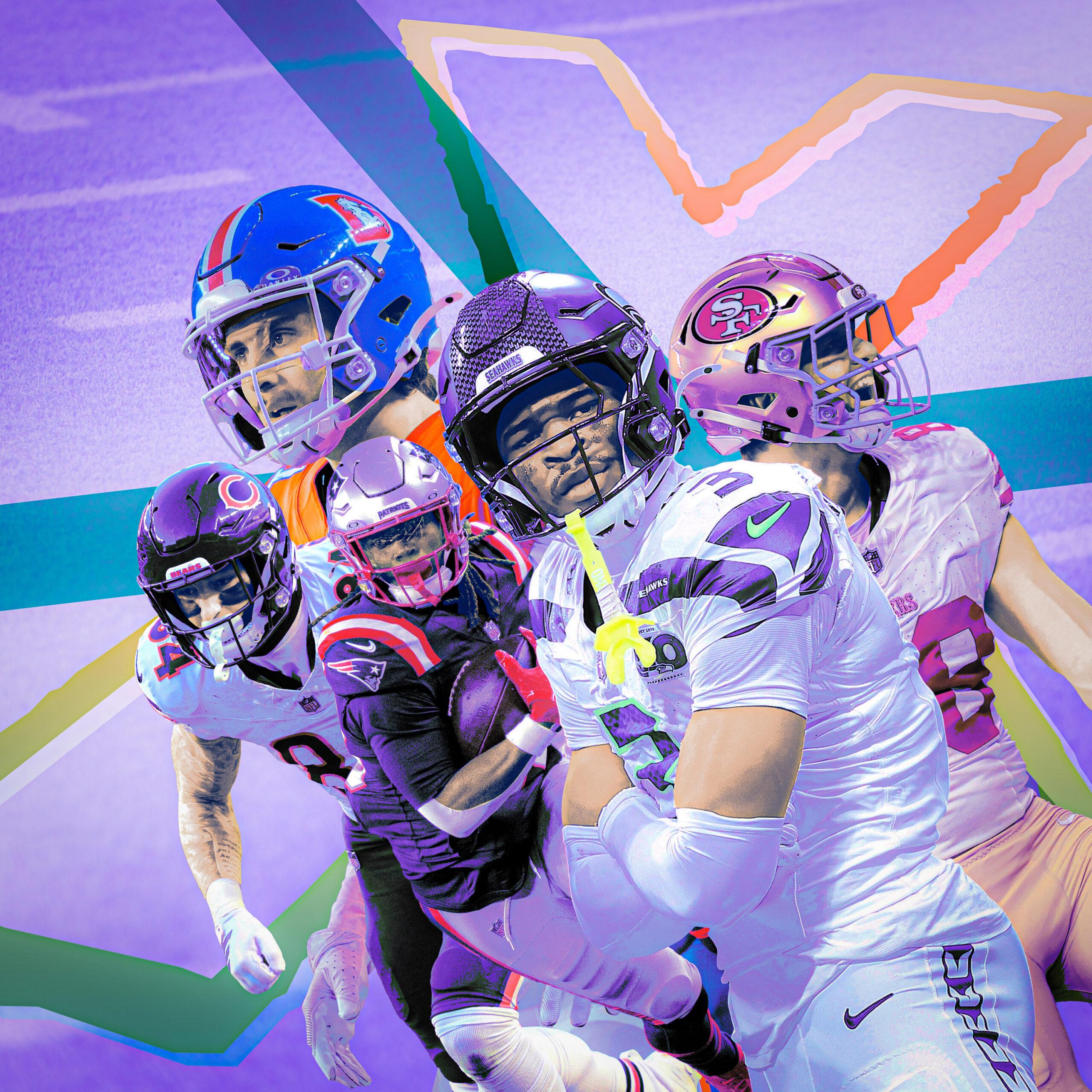

The NFL playoffs are not usually decided by the matchups everyone is looking at most closely. In Round 1 alone, the Packers' kicker cost them seven points. The Patriots won with a dominant defense, not Drake Maye heroics. Chicago lost the turnover battle but won anyway. The Eagles won the turnover battle but lost anyway.
Those moments are reminders of how thin the margins can be when obvious advantages are canceled out and the game tilts on hyper-specific matchups, miscues under pressure, and the ability to exploit the tiniest of weaknesses.
Here are the potential pressure points remaining for each of the eight teams left competing for the Super Bowl:
Seattle Seahawks: Nick Emmanwori’s Versatility
Emmanwori’s physical profile isn’t one you can easily typecast into a role on a traditional NFL defense. He was seen as too big and too vulnerable in deep coverage areas to truly be a safety, but too small to serve as an every-down linebacker. The Seahawks took a chance on him early in the second round anyway and immediately found ways to maximize his impact as a true disrupter on the field. The 6-foot-3 220-pounder has found a home at safety, where he frequently blitzes, fitting the run and covering tight ends out of the backfield. Given that Seattle has a rubber match lined up with San Francisco on Saturday night, Emmanwori will be featured often as the 49ers try to involve Christian McCaffrey in their offense as much as possible.
Emmanwori is not likely to win Defensive Rookie of the Year—Browns linebacker Carson Schwesinger is a heavy favorite for that award—but he’s certainly had an impact in turning Seattle into a top-tier defense. And that defense is the reason the Seahawks broke the franchise record for regular-season wins and why the NFC playoffs run through Lumen Field.
Emmanwori still has flaws in coverage and can be exposed for his overaggressive nature at times. He relies heavily on his instincts and his athleticism, which Kyle Shanahan will be sure to try to exploit on Saturday. But his ability to make game-changing plays is rare for a rookie, and he's the perfect Kyle Hamilton–esque piece for Mike Macdonald to play with.
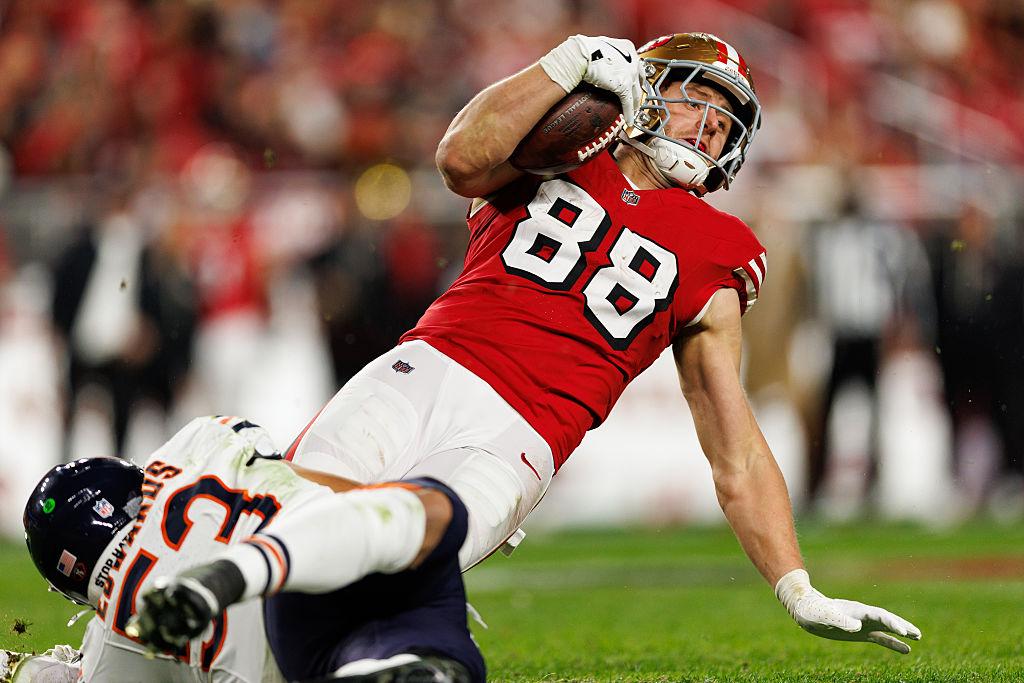
San Francisco 49ers: Jake Tonges Replacing George Kittle
Kittle’s torn Achilles leaves San Francisco dangerously understaffed on reliable and healthy skill position players. Without Kittle, Brandon Aiyuk, and probably Ricky Pearsall, Kyle Shanahan will have to plunge even further into the depth chart. The Niners pulled off the upset in Philly on Sunday thanks to a Jauan Jennings passing touchdown and 111 yards on six catches from journeyman DeMarcus Robinson. If the Niners are going to knock off another top NFC contender on the road, Tonges could be the difference maker. The Seahawks don’t have a lot of weaknesses defensively, but they do allow the sixth-most yards per game to opposing tight ends.
Tonges caught the game-winning touchdown in Week 1 in Seattle and grew into a bigger role when Kittle was sidelined by injury earlier this season. In the last three games that Kittle hasn’t played, Tonges has seen his production skyrocket.
Week 5 vs. Rams: seven receptions, 41 yards, one TD
Week 6 vs. Buccaneers: six receptions, 58 yards
Week 17 vs. Bears: seven receptions, 60 yards, one TD
In some ways, it’s very fitting that an offense led by a seventh-round draft pick quarterback is now turning to an undrafted tight end to help fill in the gaps.
Chicago Bears: Colston Loveland’s Late-Season Emergence
When rookie tight end Tyler Warren was filling up the stat sheet for Indianapolis early in the season, it was fair to wonder whether the Bears had made the wrong choice by selecting fellow tight end Loveland four spots earlier in the 2025 draft.
Loveland wasn’t necessarily absent from the Bears’ passing game, but for much of the year, he was far from a focal point. He didn’t record a single game with more than seven targets over the first 16 weeks of the season, operating more as a complementary piece than a featured option. But as Chicago’s offense has matured, Loveland’s role has expanded within it.
Caleb Williams has targeted Loveland at least 10 times in each of the past three games, culminating in a breakout performance in the wild-card round. Loveland finished with a career-high 137 yards on eight catches and 15 targets in the Bears’ comeback win over Green Bay.
Chicago still wants to be a run-first team at heart, but defensive issues have forced it into shoot-outs. To keep pace with the high-powered offenses remaining in the NFC playoffs, the Bears will need to score—and score often—which makes Loveland’s emergence even more critical.
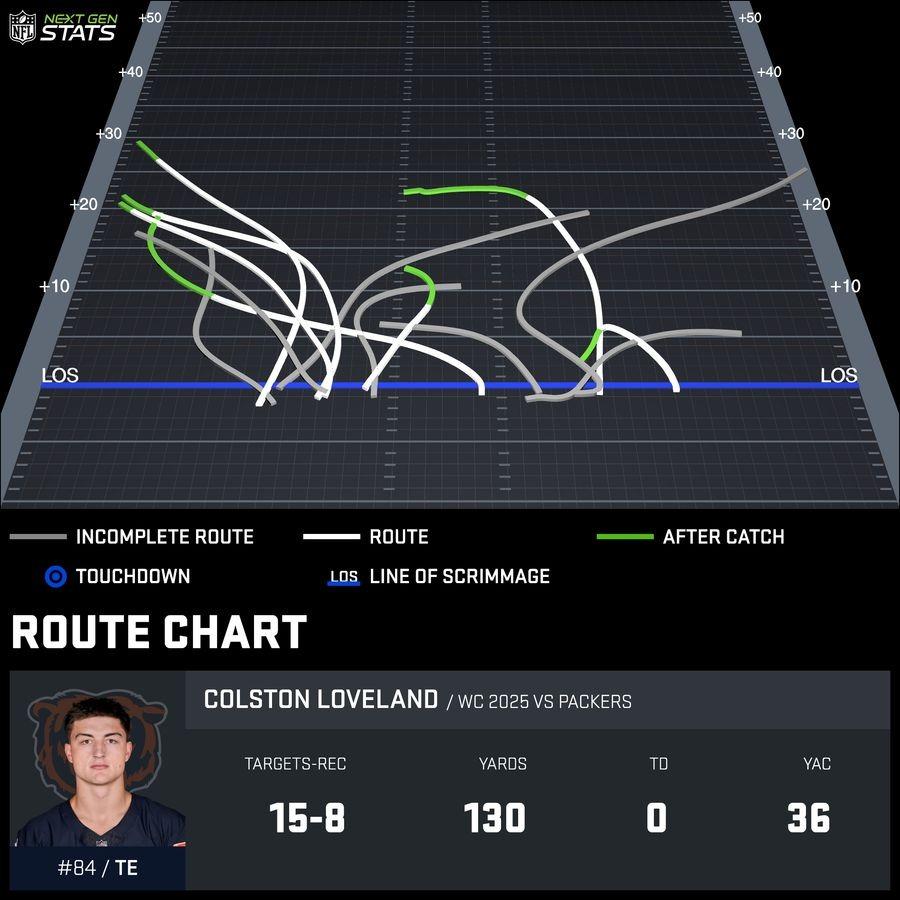
What stood out most in his wild-card performance was the versatility of his route running. Chicago moved Loveland all over the formation, and he consistently won both over the middle and outside the numbers. His late-season breakout is a major reason the Bears are still alive, and if this improbable run of comebacks and late-game heroics is going to continue, Loveland will need to remain a focal point of the offense.
Los Angeles Rams: The Entire Special Teams Operation
Special teams are the monster hiding under the bed in football. You never know when they’re going to show up and ruin your night. It’s never going to lead the game preview discussions in the television studio, and it’s likely only going to lead the postgame show when something goes terribly wrong.
For the Rams, special teams woes have been the underlying dread in an otherwise awesome season. Miscues cost the Rams the division and home-field advantage. On Saturday, a blocked punt by the Panthers nearly bounced L.A. out of the playoffs. Multiple blocked kicks cost it a win against the Eagles in Week 4. The Rams then fired special teams coordinator Chase Blackburn in December after Rashid Shaheed’s punt return touchdown led to a blown fourth-quarter lead against Seattle in an instant-classic Thursday night thriller.
The errors have eliminated the Rams’ margin for error and turned up the difficulty sliders to the highest setting, considering they’ll likely need to win three consecutive road games to reach the Super Bowl.
The Rams finished the regular season 31st in EPA from special teams. And it’s not a problem specific to this season. Since 2021, only the Packers are worse in EPA lost from special teams than the Rams. The gap between those two teams and everyone else is significant, and it's pretty ominous given how Green Bay’s season just ended.
Houston Texans: The Non–Nico Collins Wide Receivers
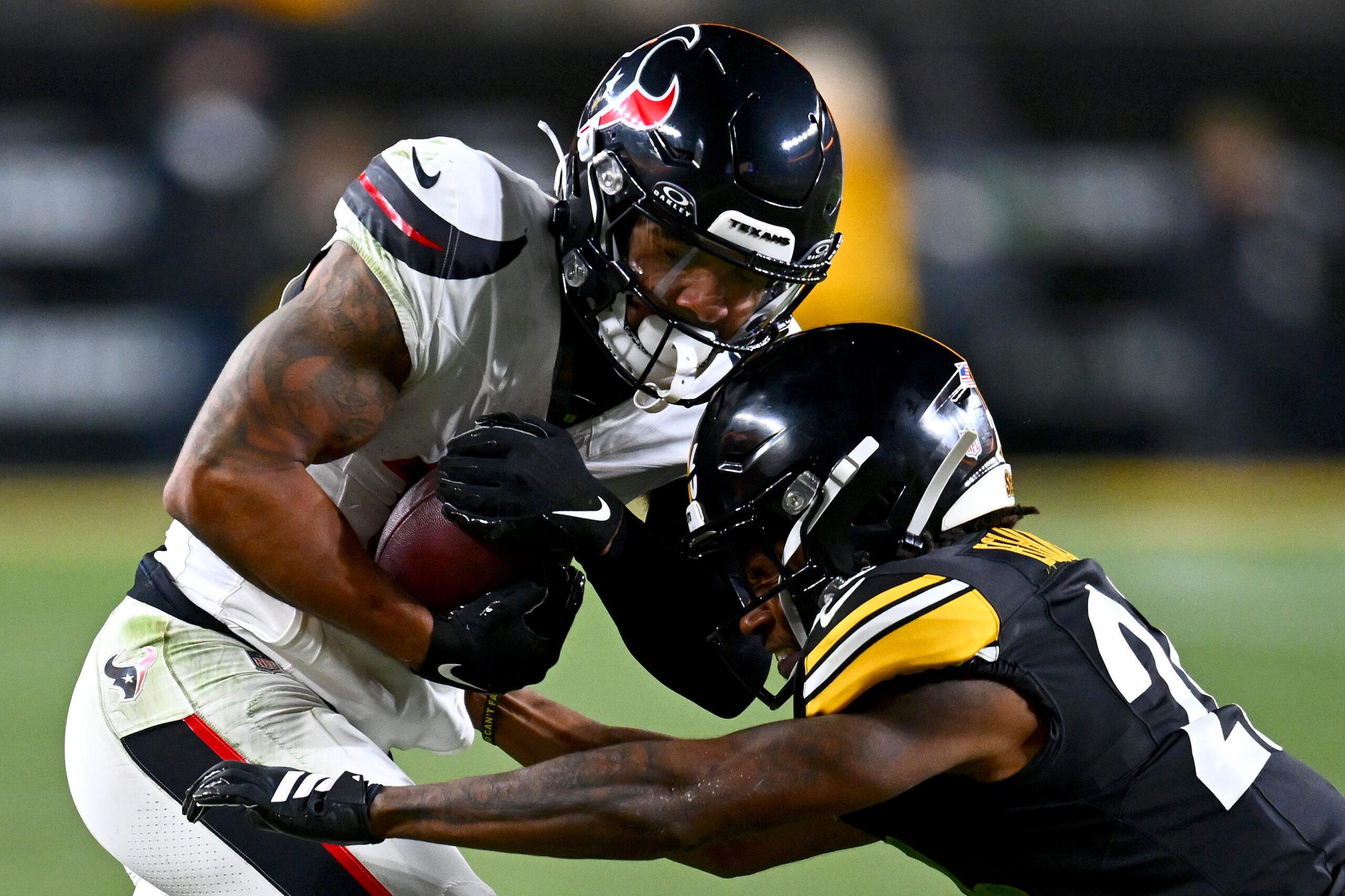
After Collins was carted off the field with a concussion on Monday night, it seems highly unlikely that he’ll play on Sunday in New England. The Texans’ passing offense has been extremely dependent on Collins: He had more than double the receiving yards of every other wide receiver on the roster in the regular season.
If you were expecting a big playoff breakout from a Houston receiver not named Collins, you probably would have picked Jayden Higgins. If not him, maybe Xavier Hutchinson. Or maybe even rookie Jaylin Noel, who has made the occasional downfield splash at various points this season. The point is that you’d have picked just about any of the young receiving options on this roster and not veteran journeyman Christian Kirk. The 29-year-old, now on his third team, was barely a factor for the Texans this season, yet he turned in a career-high 144 yards on Monday night to help propel Houston into the divisional round.
Houston’s offense isn’t consistent or reliable from down to down, but it really doesn’t have to be to win football games. The Texans, bolstered by an immense defense, just need someone to step up and produce a handful of explosive plays. With the Patriots’ top corner Christian Gonzalez also in concussion protocol, opportunity is lurking.
New England Patriots: Rhamondre Stevenson and TreVeyon Henderson as Pass Catchers
Houston’s defense is built to hunt the football. It’s one of the league’s most aggressive and physical units, constantly moving downhill both in coverage and in the pass rush.
Drake Maye has been as successful as any quarterback in the league pushing the ball downfield this season, but that may not be where this game is decided. The clearest path to neutralizing an elite Houston defense may be using its aggression against it—forcing linebackers and safeties to step forward before slipping the ball underneath.
If Houston stays in attack mode, the Patriots’ running backs in the passing game become less of a checkdown and more of a pressure point. And if New England can consistently flip that aggression into manageable gains, it can keep Houston from fully dictating the terms of the game. The Steelers and Aaron Rodgers failed to do that on Monday night, but Maye is better equipped at this stage of his career to navigate the pocket, buy time, and create with his legs when plays break down.
Stevenson’s 48-yard catch-and-run out of the backfield on Monday directly led to a Patriots field goal. Henderson hasn’t always been reliable snap to snap, but he’s the type of home-run hitter who has found success generating explosive plays from time to time. With the Patriots potentially needing to beat two elite defenses on the road to Santa Clara, Stevenson and Henderson in the passing game may be less a luxury and more a necessity—an extension of an inconsistent running game and a way to keep Houston from playing downhill all night.
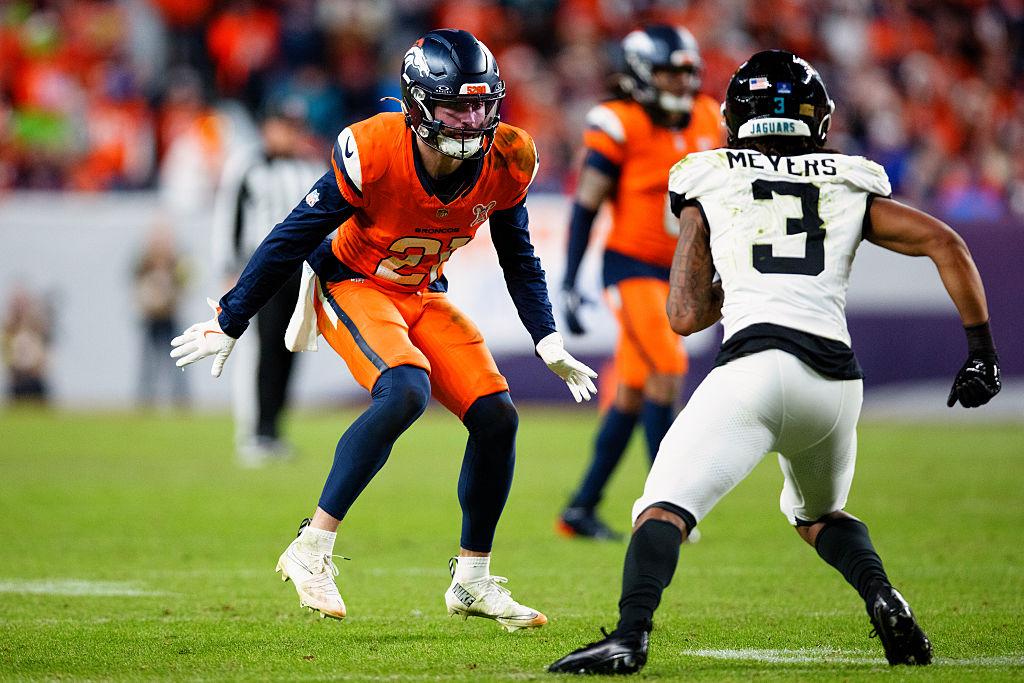
Denver Broncos: The Enigmatic Riley Moss
Whatever your opinion of Moss as a corner, you can find a statistic to prove you’re right. He finished the season with the most passes defended in the NFL. Is that a positive because he was constantly in position to make plays on the ball? Or is it a negative because opposing offenses felt comfortable throwing at him over and over?
There might not be a single CB2 who inspires more words, film breakdowns, and debate than the corner playing opposite Patrick Surtain II on one of the NFL’s best defenses. Denver ranks eighth worst in DVOA against no. 2 wide receivers, yet the Broncos also finished top eight in open coverage rate, per FTN—a combination that perfectly captures the ambiguity of Moss’s season.
Evaluating Moss is one of the most complicated exercises in the NFL right now, and it’s a puzzle Denver’s playoff opponents will have to solve when putting together their game plan. And if you’re Denver, would you have Surtain shadow the Bills top receiving option, when it’s almost certainly tight end Dalton Kincaid?
Buffalo Bills: The Safety Playing Next to Cole Bishop
Buffalo’s safety depth was already thin. After the wild-card round, it’s a glaring potential liability. Jordan Poyer left the game with an aggravated hamstring injury, leaving the Bills without a clear option to play next to Bishop. Taylor Rapp is out for the year. Damar Hamlin hasn’t played since Week 6. There isn’t an established replacement waiting behind them.
The back seven of the Bills defense has struggled all season to get off blocks. It’s an undersized group to begin with, and those limitations have left them as vulnerable as any Bills defense in the Josh Allen era.
The safety issue shows up in the numbers, too. Buffalo finished the regular season bottom-eight in explosive play rate allowed and bottom-eight in big runs allowed. Bishop stepped up with a crucial interception to seal the win against the Jaguars in the wild-card round, but Sean McDermott will need to get creative schematically to deal with a Denver offense that is constantly hunting and chasing explosive plays to make up for their down-to-down inconsistency.