The first chapter of the 12-team College Football Playoff era began last December in Notre Dame Stadium, an appropriately hallowed setting for the most recent expansion of the sport’s postseason. The second chapter of this era began when Notre Dame was excluded from this year’s field, as the Fighting Irish were edged out for the final at-large playoff berth in favor of Miami. Notre Dame did not take this slight in stride, choosing to skip the postseason entirely rather than go to the Pop-Tarts Bowl. (How dare they disrespect the Pop-Tarts Bowl?)
If anything, the drama only added to the anticipation for this year’s playoff, for which the field is completely wide open. Indiana is the top seed, but several teams have a real chance to win it all, from defending champion Ohio State to an Ole Miss squad that would love to stick it to departed coach Lane Kiffin. There are familiar faces (Georgia, Oregon), party crashers (James Madison, Tulane), and Texas programs on the rise (Texas A&M, Texas Tech). And that’s not to mention Alabama—which could soon be enveloped in a coaching drama of its own.
Who has the edge? Who could fall flat? Which factors will determine what happens over the next month? Let’s meet the playoff participants and identify the biggest question facing each team.
1. Indiana: How will the Hoosiers deal with being hunted?
Two years ago, Curt Cignetti was making the rounds on his first full day as Indiana’s new head coach. Before his introductory press conference, he made a point to swing by the Big Ten Network’s set at Indianapolis’s Lucas Oil Stadium, which was the site for the conference championship game between Michigan and Iowa. “I figured I had to make this trip up here,” Cignetti cracked, “since we’ll be playing in this game next year.”
Cignetti was bursting with the confidence of a man who had never registered a losing record in his 13 seasons as a head coach, most recently at James Madison. He simply couldn’t relate to the historic futility of his new school, which had finished with losing records in three straight seasons and 15 of the previous 17. To call his shot at a program that hadn’t won a Big Ten title since 1965 seemed foolhardy.
But Cignetti was only off by a year.
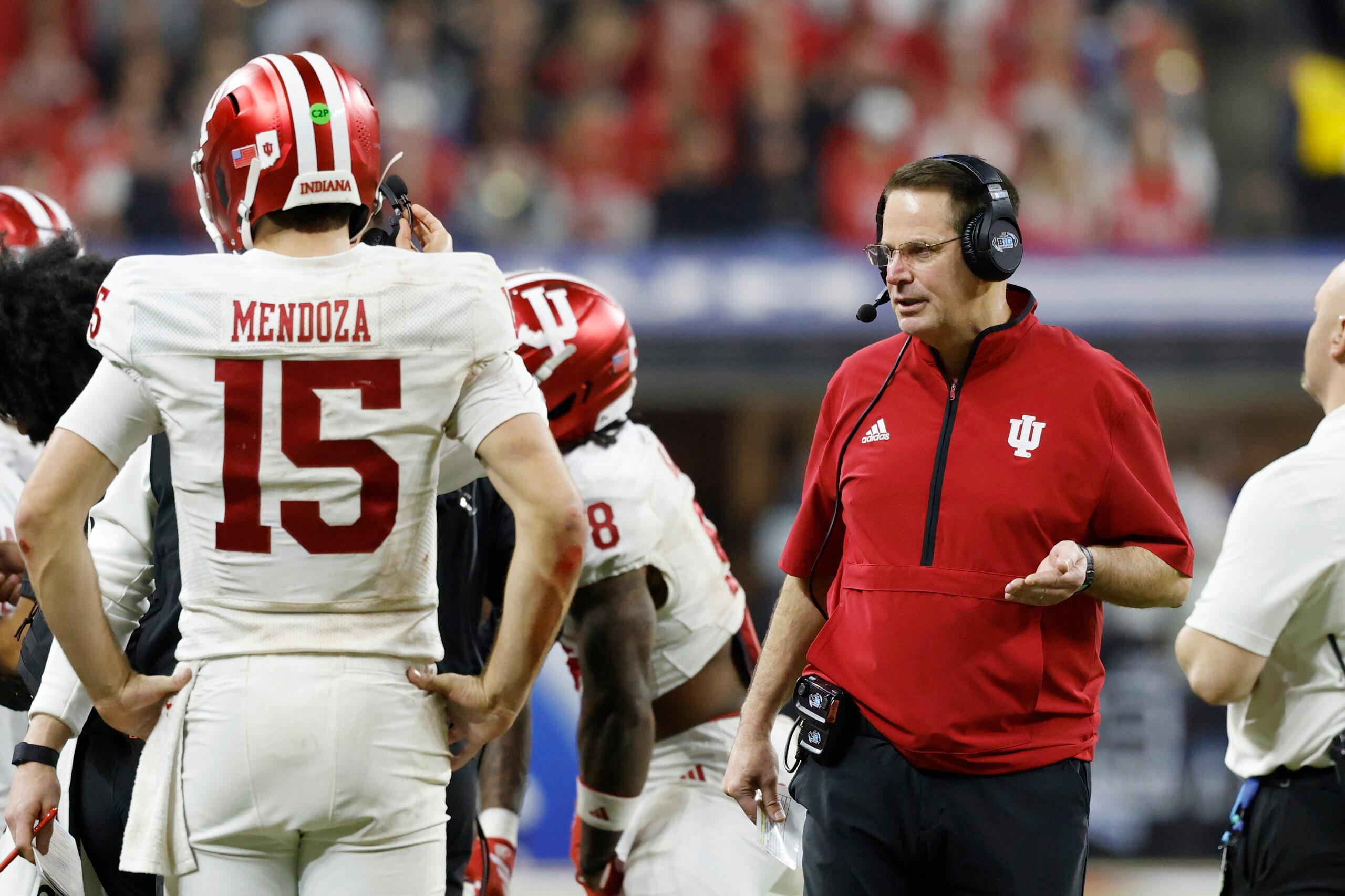
In just 26 games, Cignetti has transformed the Hoosiers’ entire football identity. He led them to their first double-digit-win seasons and their first no. 1 ranking in history. They enter the playoff as the top seed and the nation’s only undefeated team following their 13-10 win over previously top-ranked Ohio State in the Big Ten championship game. Improbably enough, everyone in college football is looking up at Cignetti and Indiana.
The Hoosiers will look to defend that ranking in the Rose Bowl against the winner of the opening-round matchup between Alabama and Oklahoma, a pair of traditional powerhouses whose rosters both boast more talent and pedigree than Indiana’s. It will be up to Cignetti to convince his squad—led by Heisman Trophy–winning quarterback Fernando Mendoza—that they’re still underdogs even though everyone is now gunning for them.
Already, Cignetti has been a man of his word. Indiana is the Big Ten champ, and got to that point by wresting away the title from the defending national champion. But he’s been dreaming and talking big ever since he arrived in Bloomington. Google him. If he wins a couple games in the playoff, go ahead and commission the statue and Hall of Fame speech.
2. Ohio State: Has the Buckeyes’ offense been exposed?
The Buckeyes had their chances.
Down 13-10 late in the third quarter against Indiana on December 6, Ohio State sophomore quarterback Julian Sayin stumbled at the snap and came up short on a fourth-and-1 from the Indiana 5-yard line. Still down by three points in the fourth quarter, the Buckeyes marched 81 yards on 14 plays to set up a 27-yard game-tying field goal attempt. But Jayden Fielding’s kick hooked wide left, preserving Indiana’s lead. The Hoosiers ran out the clock to clinch their Big Ten championship win.
It was a humbling denouement for the defending national champion Buckeyes, who had sat atop the polls since Week 2 and were widely seen as the overwhelming favorite to repeat. And it’s not just that they lost; it’s that their offense showed reason for concern, mustering just 58 rushing yards on 26 carries (2.2 yards per carry) in that game.
Obviously, all isn’t lost: The Buckeyes shook off a much more humiliating loss to Michigan in their 2024 regular-season finale before going on a dominant four-game run to claim their first national title since the 2014 season. But that Ohio State team was more talented, accounting for seven of the first 45 picks in the 2025 NFL draft. It was also more battle-tested, having lost by one point at Oregon earlier that fall.
This is a different—albeit still very gifted—team. Yet the question marks are clear. The Buckeyes were rarely challenged this season outside of a Week 1 win over preseason no. 1 Texas; that result didn’t reveal much, since Ohio State limited its playbook to protect Sayin in his first college start. The Buckeyes also have struggled at times to establish their running game, even if freshman Bo Jackson has come on down the stretch. As stunning as it might seem, Indiana controlled the line of scrimmage in the Big Ten title game. And the playoff field won’t get easier for Ohio State in that regard.
Georgia, Miami, and Texas A&M are all capable of pushing the Buckeyes around. Their road to a repeat will rest on how well the team can push back.
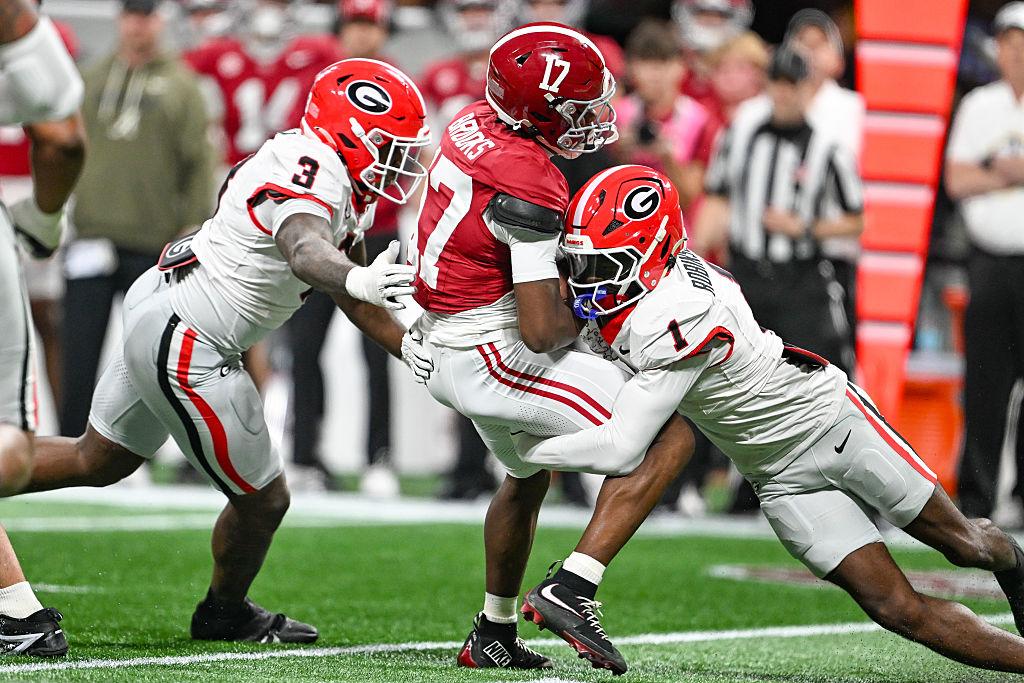
3. Georgia: Are the Bulldogs returning to elite defensive form?
The whispers earlier this season that Georgia was in decline were obviously premature. But the Bulldogs played poorly enough in big games to merit skepticism; if nothing else, it was clear that things weren’t the same as they once were in Athens, especially on defense.
Georgia surrendered 41 points and 496 total yards in a comeback win over Tennessee on September 13. Two weeks later, it allowed nearly 400 yards in a 24-21 loss to Alabama at home. And Ole Miss scored touchdowns on its first five possessions on October 18 before Georgia clawed back for a 43-35 victory. Given those uncharacteristic breakdowns and the failure of a star like Roquan Smith or Jalen Carter to emerge, it was reasonable to wonder if the Bulldogs were slipping under defensive coordinator Glenn Schumann.
Head coach Kirby Smart reminded everyone of those doubts after the Bulldogs’ 28-7 rout of Bama in the SEC championship game on December 6. “There’s a lot of naysayers out there for Schumann and his staff … and probably with good reason,” Smart said. “We had a couple of defensive games midseason and later that we didn't play up to our standard, and a lot of that had to do with the team we were playing. But I do think we’re getting better.”
Check the film from the past four games, a stretch during which the Bulldogs haven’t allowed more than 10 points in a game and have rolled through a schedule that included Texas, Georgia Tech, and Alabama. The improvement is unmistakable, and really showed up in the rematch against the Crimson Tide. Georgia held Bama to 209 total yards, including –3 rushing yards, in becoming the first team to take a shutout into the fourth quarter of an SEC title game.
It may be unreasonable to expect the Bulldogs to return to the defensive standard that powered them to national championships in the 2021 and ’22 seasons, but they certainly seem to be rounding back into a familiar form. That’s scary for everyone else in the playoff.
4. Texas Tech: How will the Red Raiders handle opponents with more talent?
Texas Tech reportedly spent $28 million on its roster last offseason, enough to give it On3’s top-ranked transfer portal class. All of that West Texas oil money lifted the Red Raiders into rarefied air, building a team that won a school-record 12 games and its first outright conference title since 1955. (Tech won shares of the now-defunct Southwest Conference in 1976 and 1994.)
And Tech was dominant the whole way through, joining 2018 Alabama as the only other team in FBS/FCS history whose first 12 wins of the season came by 20 or more points. The Red Raiders’ only defeat was a 26-22 loss at then-defending Big 12 champion Arizona State on October 18—and Tech was playing that game without injured starting quarterback Behren Morton (knee).
But how will the Red Raiders fare when they line up against an opponent that can match or surpass them in roster talent? BYU and Utah were both good, but limited. Arizona State finished with eight wins, but clearly lost a lot of talent from last year’s playoff team. Outside of those three, Houston was maybe the next-best team Tech played this season. Tech’s defense graded out as the nation’s best in virtually every major category by Pro Football Focus, but its schedule wasn’t especially challenging.
The difficulty will escalate in the playoff: Tech will face the winner between James Madison and Oregon in the Orange Bowl. That means the Red Raiders will likely have to keep pace with Ducks quarterback Dante Moore, who Todd McShay has listed at no. 3 overall on his Big Board for the 2026 NFL draft. It also means that Tech will need to see Morton reach another level. While he’s been solid to this point, he hasn’t needed to keep pace in a high-scoring nail-biter, and has only thrown for 300-plus yards once in his last six games.
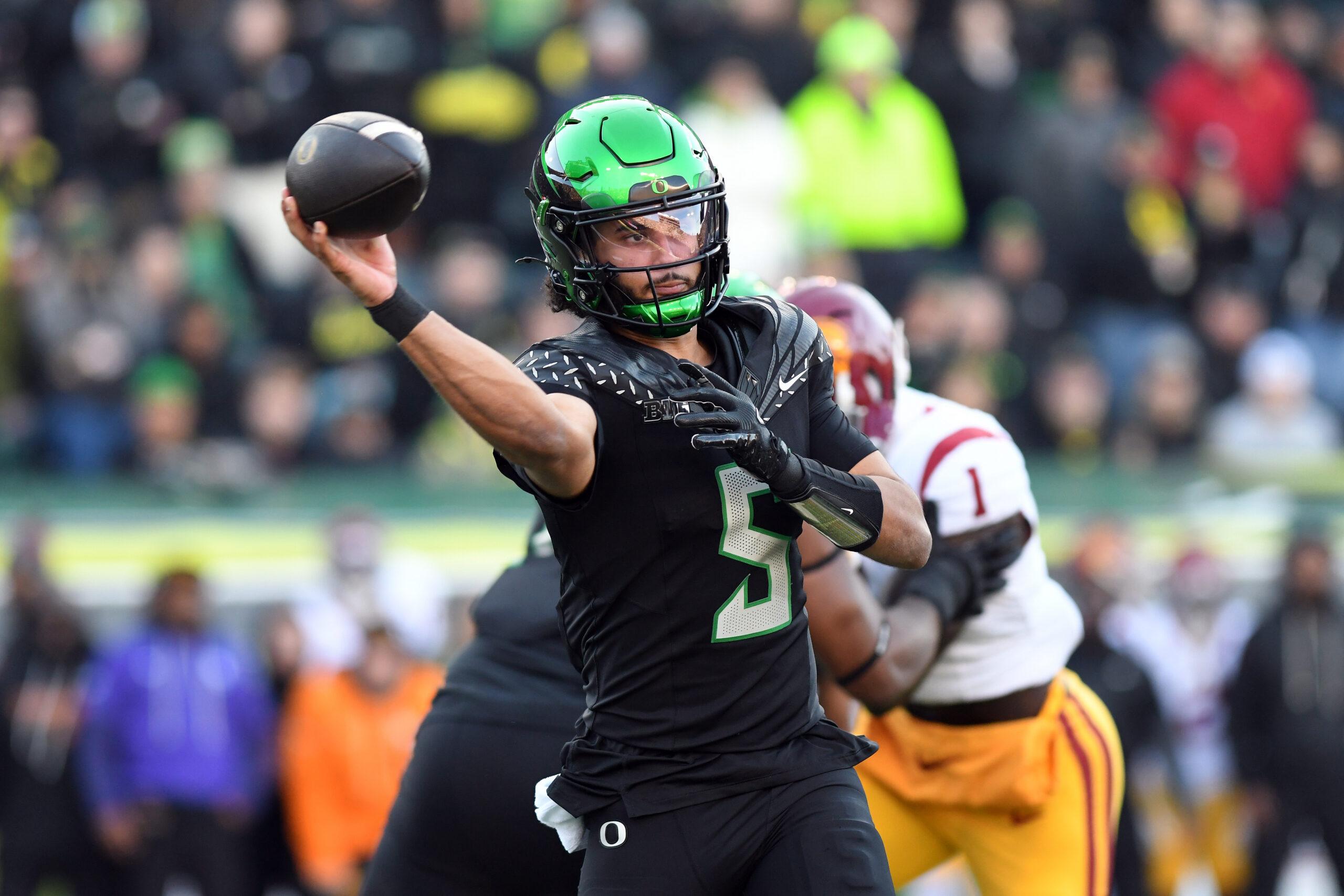
5. Oregon: How much can Dante Moore do by himself?
Dante Moore was waiting on the sideline in 2024, taking as many mental reps as possible while Dillon Gabriel led the Ducks to an undefeated regular season, Big Ten championship, and no. 1 seed in the playoff. Most players of Moore’s caliber wouldn’t have willingly signed up to spend a season on the bench, but he thought it was important to reset after a tough freshman year at UCLA. He wanted to study under Gabriel. “I would get to learn, see how a vet quarterback moves and takes control of the offense,” Moore told ESPN. “And I got to see him every day.”
Once Ohio State knocked Oregon out of the playoff, Moore became the presumptive starter in Eugene. He hasn’t looked back since. He finished sixth nationally in passing efficiency and third in completion percentage (72.5), becoming the most dependable part of an offense that ranked among the top 13 in both points per game (38.2) and yards per game (465.2).
More importantly, Moore showed his poise and toughness in big spots. He shined in a 30-24 double-overtime win at Penn State in September and again in a dramatic 18-16 win at Iowa in November, the latter of which happened in a driving rainstorm. And he’s done a lot of his best work without his full complement of receivers; Oregon has been limited this season by injuries to Evan Stewart, Gary Bryant Jr., and Dakorien Moore.
All three of those wideouts went through practice drills earlier this week. Head coach Dan Lanning was coy when asked if they’re on track to play in the first-round matchup against James Madison. But if Moore can get at least one—maybe even two—back for the playoff, he’ll have the help he needs to potentially lead the Ducks on a deep run.
6. Ole Miss: What will the Rebels look like without Lane Kiffin?
Ole Miss’s first-round game against Tulane on Saturday will double as the start of the Pete Golding era. Golding, of course, was named the team’s permanent head coach after Lane Kiffin left for LSU and athletic director Keith Carter prevented him from leading the team through the conclusion of the playoff. The Kiffin drama was the defining story of the season’s final month, and now that it’s subsided, Ole Miss has to push forward amid an incredibly messy transition.
Both LSU and Ole Miss agreed to let offensive coordinator Charlie Weis Jr.—who followed Kiffin to Baton Rouge—return to Oxford to serve on the Rebels’ staff during the playoffs. That seems like a positive for Ole Miss, as at least some of the offensive brain trust that helped produce the program’s best season will be on the sideline as it tries to close things out. The Rebels have built their identity on offensive innovation since Kiffin’s arrival in 2019, finishing the regular season as the SEC’s top unit in total yards for the second consecutive year. Yet while Weis’s presence will ensure continuity, there’s no denying that Ole Miss will feel different without Kiffin calling the shots.
It stands to reason that Ole Miss will want to lean on tailback Kewan Lacy, who finished second nationally in rushing touchdowns (20) and second in the SEC in rushing yards (1,279). That could open things up for quarterback Trinidad Chambliss, who has been careful to avoid drive-killing turnovers and sacks.
Maybe the offense will lack its typical polish and creativity, but Ole Miss is still heavily favored against Tulane at home. A rematch against Georgia in the Sugar Bowl? We’ll see.
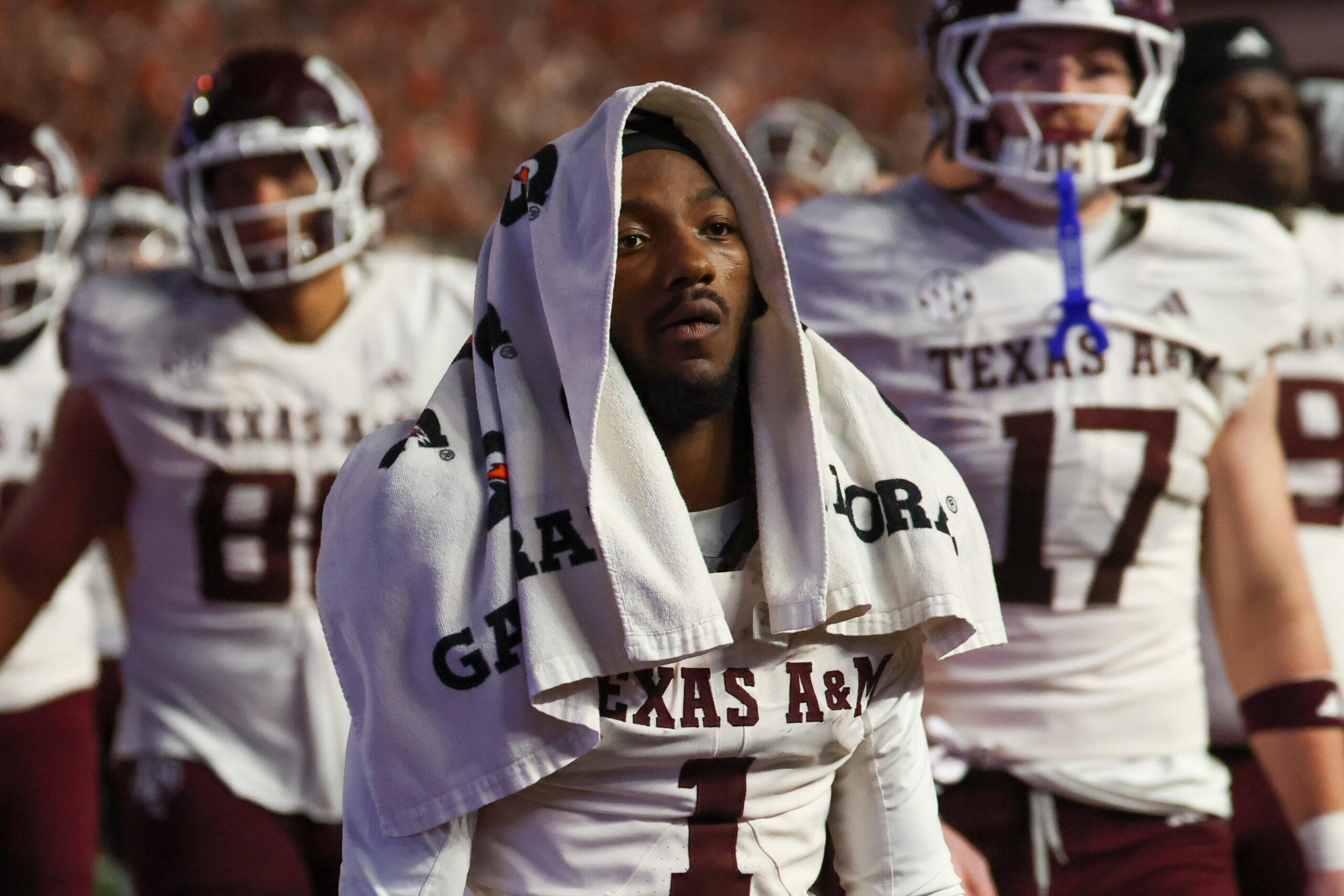
7. Texas A&M: Can the Aggies recover from their embarrassment in Austin?
Poor Aggies. Of course they fumbled their chance at an undefeated regular season and their first-ever berth in the SEC championship game with a 27-17 loss to archrival Texas on November 28.
That has long been the luck of Texas A&M, a program desperate to assert itself as a perennial power through the validation that comes with those types of wins. As it is, the Aggies haven’t won a conference championship since 1998. Before this season, they’d won at least 10 games in a season just once this century.
“You want to have the in-state rivalry bragging rights, but it wasn’t our time,” linebacker Taurean York told reporters after the defeat. Said head coach Mike Elko: “Maybe we'll regroup and figure out moving forward what the positives are of 11-1. Right now, it just hurts that we lost to our rival.”
Texas A&M will get a chance to make amends Saturday in a playoff opener against Miami at the always-raucous Kyle Field. Perhaps the Aggies can follow the blueprint set by Ohio State last season: Lose to your most hated rival, get hot in the playoff, and walk away with the trophy.
Remember: Things are different in the 12-team playoff era. Losing to your biggest enemy doesn’t have to define your season the way it once did. But are the Aggies over what happened in Austin? If not, a bad end to the regular season will become a bitter end to the postseason.
8. Oklahoma: Will the real John Mateer please stand up?
Three months ago, coming off a 24-17 win over Auburn that left him with a broken bone in his right (throwing) hand, Oklahoma’s John Mateer looked like the best quarterback in the country. He was the Heisman front-runner after leading the Sooners to a 4-0 start and a no. 7 ranking in the AP poll, and the Washington State transfer had more than lived up to his preseason billing as a dynamic, if occasionally reckless, dual-threat passer. With the help of Ben Arbuckle, his former offensive coordinator at Wazzu, Mateer remade a Sooners’ offense that rated among the FBS’s worst in 2024.
Then Mateer underwent surgery, sat out a blowout win over Kent State, and went into a bye week before Oklahoma’s big rivalry game against Texas. He hasn’t looked the same since. Mateer threw three interceptions and was sacked five times in a 23-6 loss to the Longhorns, forcing passes into coverage and being careless with the ball outside of the pocket.
In his final six games of the regular season, Mateer threw for more than 225 yards in a game only once—a total he easily surpassed in each of his first four games. He averaged 38 rushing yards a game down the stretch, at a little more than 3 yards per carry. His season-ending slump has obliterated the Sooners’ offense, which ranks 99th nationally in yards per play, 30 spots behind the second-worst offense in the playoff—Alabama.
With a couple weeks off to heal and review film, Mateer will try to recapture the form that had some believing he was better than Fernando Mendoza. If he can’t, Oklahoma’s stay in the playoffs probably won’t be for long.
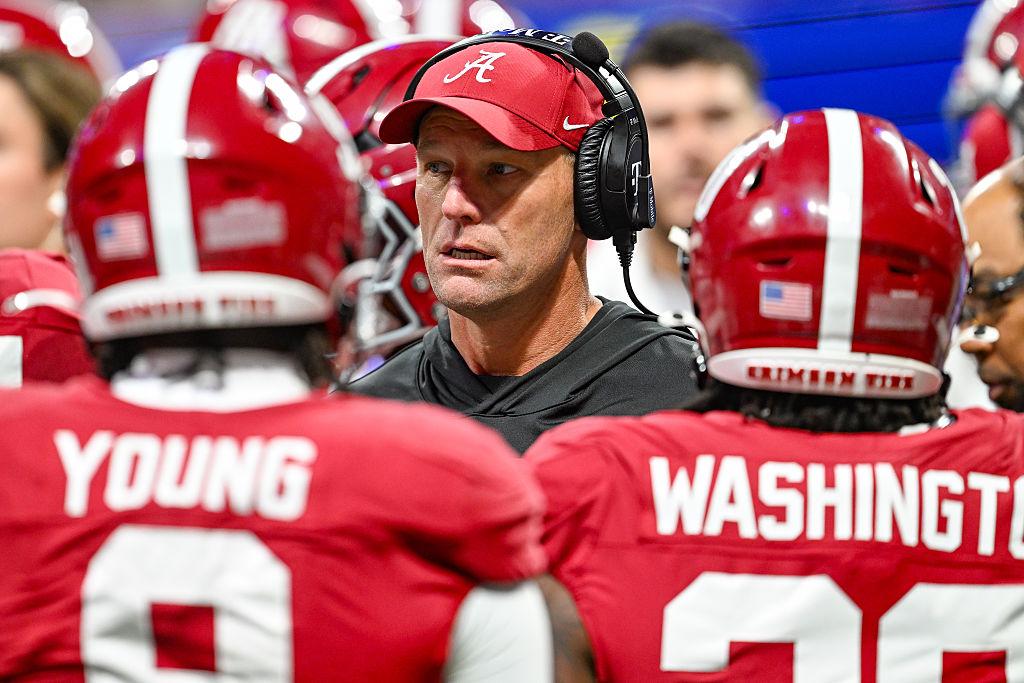
9. Alabama: Which job will Kalen DeBoer be coaching for?
Crimson Tide head coach Kalen DeBoer released a statement Sunday in an attempt to quell rumors about him being the primary target of Michigan’s coaching search. “I have not spoken and have no interest in speaking with anyone else about any other job,” DeBoer said. “I am fully committed to this program and look forward to continuing as the head football coach at the University of Alabama.”
Nice try, but he’s going to have to do a lot more than that to silence speculation that Michigan is waiting on DeBoer’s playoff run at Alabama to end before making its move on him.
The subtext is that if DeBoer and the Tide come up short against Oklahoma in their first-round matchup on Friday, the relationship between the coach and Alabama might deteriorate to the point that he’d consider a reported “blank check” offer from Ann Arbor. It’s quite a conundrum: DeBoer remains a highly desired football coach at Michigan (and other programs like Penn State when it still had a vacancy, if those reports were to be believed), but Alabama fans have never quite warmed to Nick Saban’s even-keeled successor.
And it’s not like DeBoer has failed in Tuscaloosa. He’s 19-7 in two seasons since coming over from Washington, with four losses last season and three so far this season, which would be fine almost anywhere else. But Alabama is not anywhere else. The Crimson Tide lost more than two games in a season only twice in Saban’s 17-year tenure. Before DeBoer’s arrival, they hadn’t experienced a three-loss season since 2010.
The issue is also how and when the losses have happened. Bama dropped its 2025 season opener to a bad Florida State team that went on to win only four more games. It faceplanted in a 28-7 loss to Georgia in the SEC championship game two weeks ago. Neither was the kind of performance that Tide fans want to accept, nor get used to.
ESPN’s Paul Finebaum, who knows the pulse of the Bama program better than almost anyone in college football, said DeBoer and his family like Alabama, but “he also knows, out in the hinterlands, the fans are not crazy about him, especially with another loss on Friday night.”
If that happens, Michigan will be waiting.
10. Miami: Can Mario Cristobal’s coaching meet the moment?
Under head coach Mario Cristobal, Miami is as close as it’s ever been to recapturing the glory days of The U. After opening his tenure with five- and seven-win seasons, Cristobal has won 10 games in consecutive years. The Hurricanes have almost certainly been the best team in the ACC during that stretch, but because of some funky tiebreakers they haven’t advanced to the conference championship game. That didn’t hurt the Canes this season, as the playoff selection committee still voted them in as the last at-large team in the bracket, ahead of a Notre Dame team they beat 27-24 in Week 1.
That’s a good thing, because Miami has the look of a title contender, if you don’t dwell on its midseason flops against Louisville and SMU. The Canes have a potential first-round NFL draft pick in quarterback Carson Beck; they have maybe the nation’s top freshman in wide receiver Malachi Toney; and they have perhaps the best offensive and defensive line pairing in the playoff. That last point is especially resonant, because for all of the hype and trash talk of The U’s golden age, those great Canes teams were built along the lines of scrimmage with the likes of Russell Maryland, Warren Sapp, and Bryant McKinnie.
Accordingly, Cristobal—himself a former lineman on two national championship Canes teams—built this roster around offensive tackle Francis Mauigoa and defensive end Rueben Bain Jr., both of whom were All-American selections along with Toney.
Miami has enough talent to win it all. Its biggest concern is whether Cristobal can overcome his gameday coaching struggles, from timeout management to in-game adjustments. That looms large entering a game against Texas A&M counterpart Mike Elko, who is known for his sideline acumen and ability to diagnose and fix problems on the fly.
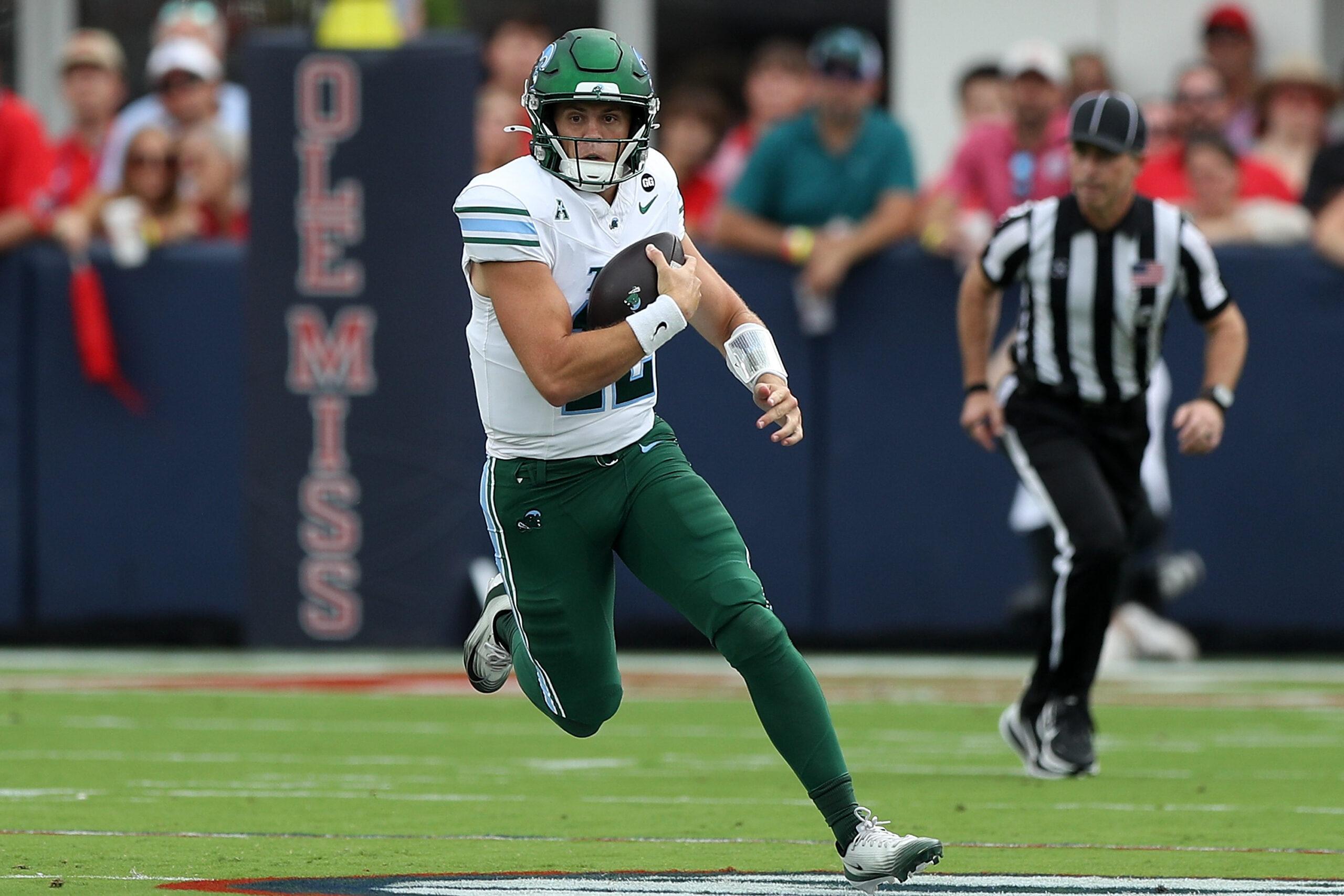
11. Tulane: Why will this matchup against Ole Miss be different?
The Green Wave visited Oxford on September 20 for a game that was decided almost immediately. Ole Miss scored 23 points on its first five possessions, effectively putting the contest out of reach by halftime. It was only the second start for transfer quarterback Trinidad Chambliss, who rolled up 419 total yards and two touchdowns in cementing his grip on the position. The Rebels were superior by every metric: They racked up 548 yards to Tulane’s 282; they were 7-of-11 on third- and fourth-down conversions, where Tulane was 6-of-18.
But a lot has changed since then. The Green Wave won eight of their final nine games, getting enough production out of quarterback Jake Retzlaff. More importantly, they have handled their coaching transition much more amicably than Ole Miss has. Though Tulane lost head coach Jon Sumrall to Florida, Sumrall and his staff stuck around New Orleans to help prepare the team for the playoff. With Ole Miss still reeling from the messy Kiffin departure, Tulane has an opportunity to seize on the chaos.
For the Green Wave to pull the upset, their defense needs to step up in a major way. At least this time Chambliss won’t take them by surprise.
12. James Madison: Who the hell are these guys?
Please don’t blame the Dukes for taking advantage of the ACC’s inane tiebreaker system that allowed five-loss Duke—yes, Duke—to win the conference championship. That set up the scenario in which James Madison was the fifth-highest-ranked conference champion, earning it (and the Group of Five) the final spot in the playoff bracket. It’s now generally being treated as a given that Oregon, a three-touchdown favorite according to most sportsbooks, will wallop James Madison in Saturday’s matchup.
We’re not foolhardy enough to believe the Dukes can pull off an upset of that magnitude, but please don’t confuse those doubts with dismissal. James Madison can hang with almost anyone.
In four years since moving up to the FBS, the Dukes have won at least a share of the Sun Belt three times, including this year’s 8-0 run through the conference. And while critics of the Dukes’ 103rd-ranked strength of schedule have argued that should disqualify them from the playoff, it’s worth noting that the team’s only loss came to Louisville, which also beat Miami. The Dukes’ 24-20 win over Washington State was by a point more than Ole Miss’s victory over the same opponent.
Also, don’t forget that two years ago, when Curt Cignetti was building his fledgling power at Indiana, he brought along a lot of former players from James Madison to build the foundation. Bob Chesney inherited a strong program and made it stronger, using James Madison to earn a bigger opportunity at UCLA.
This isn’t a typical Group of Five entrant, using a gimmicky offense to confuse the blue bloods. The Dukes are defensively dominant, earning the fourth-best grade overall, according to Pro Football Focus. Their top player is senior linebacker Trent Hendrick, who finished with 96 tackles and was named the Sun Belt Defensive Player of the Year.
Hendrick and the Dukes will obviously have their hands full at Autzen Stadium, but that would be true of any team facing Oregon. James Madison earned its way here. The Ducks would do well not to overlook them.