The Lane Kiffin–LSU–Ole Miss Saga Was Only Ever Going to End This Way
After weeks of theatrics, ultimatums, and not-so-quiet contemplation, Kiffin is leaving Ole Miss to take the head coaching job at LSU. And his Oxford departure feels similar to so many of his other professional breakups.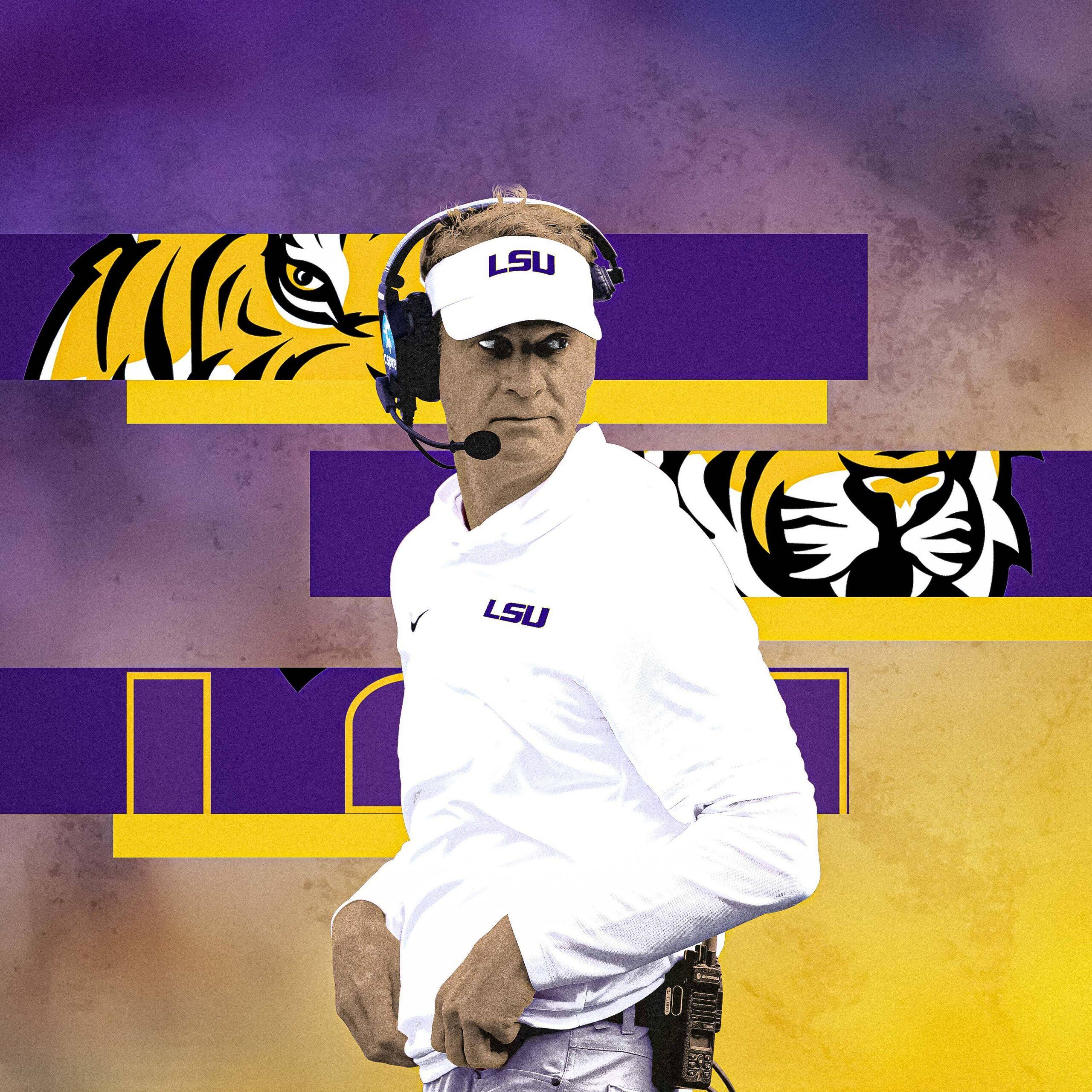

When Lane Kiffin arrived in Oxford, Mississippi, on a Sunday night in December 2019, he was greeted as a savior. Stepping off a private jet at the airport in town, Kiffin was immediately swarmed by giddy fans on the tarmac, including a man who handed him a baby to smooch. “We’re glad you’re here,” the man said as he took the baby back. Kiffin then turned into a couple of waiting high fives as he looked for his escape route.
Kiffin was on his best behavior the following morning at his introductory press conference. The new head football coach of Ole Miss wore the colors of the school—a rumpled navy-blue suit that he’d borrowed from his agent Jimmy Sexton over a powder-blue shirt accented by a red and navy-blue striped tie. He said all the right things, calling Ole Miss a “premier job” and Oxford a “neat place to live.”
Then, a few minutes in, a reporter interrupted the festivities to ask Kiffin whether he thought of Ole Miss as a “long-term job.”
Keith Carter, the university’s athletic director, theatrically leaned into the microphone before Kiffin could answer and said: “Yes.”
The room burst into laughter, and Kiffin cracked a smile. “You didn’t see how big my buyout was, did you?” he said. “I have zero reason to leave here.”
On Sunday, almost six years to the day after he first stepped onto that tarmac in Oxford, Kiffin was showered with boos and treated as a traitor when he returned to that airport. He didn’t stop to acknowledge the crowd of jeering fans as he made his way back to a private jet. Instead, he boarded a plane bound for Baton Rouge and the start of his new adventure as the head football coach of LSU.
In retrospect, it was only ever going to end this way.
For all of its charm, tradition, and untapped potential, Ole Miss has been a dead end for football coaches since the legendary Johnny Vaught retired in 1970. Nine of the 10 Ole Miss coaches who preceded Kiffin were ultimately forced out. Most for poor performance, some for running afoul of the NCAA. Hugh Freeze, who coached there from 2012 to 2016, was some of the latter, and he was also flagged for calling escort services on his university-issued cellphone.
Only Tommy Tuberville—yes, the Alabama senator—left of his own accord. He went to Auburn in December 1998, two days after telling local reporters, "They'll have to take me out of here in a pine box.”
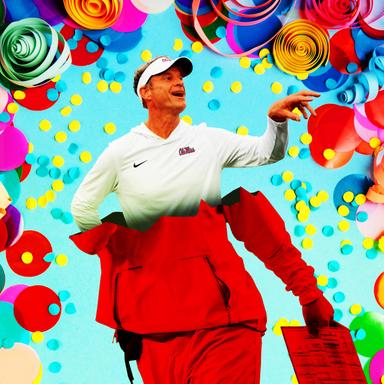
Kiffin and Carter tried to present a united front from the beginning. At that 2019 press conference, they sold themselves as a merciful break from that long tradition of instability and futility. They were going to build a foundation at Ole Miss, which had finished in the top 10 in the rankings just once in the previous 50 years and hadn’t won an SEC title since 1963.
“We talked about locking arms and doing this thing together,” said Carter, a former Ole Miss basketball star who’d gotten the full-time AD job just a couple of weeks before hiring Kiffin.
“I plan on being here a long time. As does he.”
This seemed a little like wishful thinking even then, when Kiffin was only 44 and was coming over from Florida Atlantic. After three years in Boca Raton, Kiffin had emerged as the only head coach in program history to finish with a winning record.
But that was, and today remains, the only time Kiffin has left a job without controversy or without simply pissing off a lot of people who’d previously supported him. Kiffin has always seemingly been on the fast track to coaching success. But a close review of his career shows that neither he nor his bosses can stand each other for very long.
In 2007, Kiffin was hired by Raiders owner Al Davis—who’d grown enamored of Kiffin’s energy and swagger—and became the NFL’s youngest head coach at just 31 years old. He was known then for his confidence, his mother telling the Oakland Tribune, “He is very decisive. He goes for it.”
Remember how that ended? With Davis calling a one-of-a-kind press conference in September 2008 to explain, in great detail, why he’d fired Kiffin. "I think he conned me like he conned all you people,” Davis said. He called Kiffin “a flat-out liar” and a “professional liar.”
Two months after that, Tennessee made the 33-year-old Kiffin the youngest active head coach in major college football. Little more than a year after that, though—following an underwhelming 7-6 season and a raft of accusations that he ran a sloppy, unscrupulous program—Kiffin departed Tennessee to become the head coach at USC.
His shocking departure set off a fiery revolt on campus. Then–Tennessee athletic director Mike Hamilton also claimed that Kiffin’s staff had called some of the Volunteers’ recruits and encouraged them not to enroll there. “I consider it unethical,” Hamilton said.
Once back at USC, where he’d worked as an assistant coach under Pete Carroll from 2001 to 2006, Kiffin found himself in charge of a program that was crippled by NCAA sanctions. He was already in the hot seat by the start of his fourth season, in 2013, and five games into that season, he got fired and left behind at the airport by athletic director Pat Haden. Kiffin later called it the lowest point of his career.
Nick Saban welcomed Kiffin to Alabama three months later, hiring him as his offensive coordinator. Kiffin was grateful for the opportunity, later saying that he didn’t have many other options. “My phone was not ringing very much at the time after USC,” Kiffin said, “and that was a very humbling experience after being let go there and to go through that process.”
Saban-Kiffin was a successful pairing, with Kiffin rejuvenating Saban’s stodgy old offense en route to three SEC titles and a national championship in 2015. By the next season, Kiffin had been redeemed enough that he was a candidate for several Group of Five openings, including roles in Houston and South Florida. He just needed one school to look past his previous failures and ugly breakups. “He’s been an OK head coach,” Houston board of regents chairman Tilman Fertitta said then. “But I can tell you this—it was not a safe hire.”
In December 2016, Kiffin ended up reaching a five-year deal with Florida Atlantic. But on the cusp of another championship game appearance, Saban grew unimpressed with Kiffin’s ability to balance his responsibilities at Alabama with his upcoming position at FAU. Just days before the title game, in an extraordinary measure, Saban sent Kiffin away and made Steve Sarkisian his offensive coordinator. The Crimson Tide went on to lose 35-31 to Clemson.


FAU was where Kiffin finally showed that he could run his own team. He took an upstart program that had won 15 games over the previous four seasons to 11-3 in his first year and won a Conference USA championship. He won another CUSA title two years later and stirred the interest of programs further up the college football ladder. Kiffin was mentioned in connection with openings at Arkansas, Florida State, and Missouri, among others.
FAU’s officials seemed to understand that it was time for Kiffin to move on, and they were pleased by the attention—and success—he had brought to the program. Theirs was an amicable breakup, in part because of the mutual understanding that Kiffin was eventually going to field an offer he couldn’t refuse.
“Coach Kiffin deserves our thanks and a great deal of credit for continuing to build our football program to high levels of success,” FAU athletic director Brian White said after the 2019 Conference USA championship game, when Kiffin announced that he’d accepted the job at Ole Miss.
In Oxford, Kiffin was given wide latitude to run the football program and be himself. That freedom allowed him to flourish, both personally and professionally. "I needed Oxford and Ole Miss more than they needed me,” he has said frequently.
Kiffin brought much of his family to Oxford. He hired his brother, Chris, as an assistant. His daughter Landry enrolled at Ole Miss. His ex-wife, Layla, moved into a place downtown, and his son enrolled in the local schools.
He famously dropped a lot of weight, deciding to give up alcohol and attend daily hot yoga classes. He made sure that people knew he was having fun, channeling his knack for mischief into a celebrated reputation for trolling on social media—even going after his coaching rivals. He talked a lot about his growth, sharing books he was reading and posting devotionals on his X account.
And, of course, he led the Rebels to maybe their best stretch of football in program history.
When Auburn came sniffing around in 2022, Kiffin entertained the offer. But in the recently released ESPN documentary E60: The Many Lives of Lane Kiffin, there’s a moment when his daughter Landry and her friends showed him a sappy slideshow of images of their good times in Oxford, hoping to tug at his newly tender heartstrings. “I just moved here to be with you, and you’re going to leave,” Landry said to him.
Kiffin decided to stay, the implication being that he’d finally found himself at peace in the sleepy little college town. He wanted people to know that he no longer needed to climb or chase after the next alluring opportunity.
Of course, that wouldn’t last.
In 2023, Kiffin led Ole Miss to its first 11-win season in program history. The next year, Kiffin was armed with the best transfer portal class in the country, but the Rebels fell short of expectations in a 10-3 season that nonetheless included an upset of second-ranked Georgia. That led to this autumn, when Kiffin and Ole Miss were thought to be in rebuilding mode after losing Jaxson Dart—the winningest quarterback in program history—to the NFL.
But the 2025 season might’ve been Kiffin’s finest coaching job yet. He turned his offense over to Division II transfer quarterback Trinidad Chambliss after highly touted recruit Austin Simmons got injured early in the season. The Rebels went on to finish the regular season 11-1 and positioned themselves to host a first-round game in the College Football Playoff. All of that is heady stuff for a program that has traditionally been a doormat for the Alabamas, Georgias, and LSUs of the world.
Because of that unprecedented success, Kiffin sat atop the wish list for Florida, who fired Billy Napier this season, and LSU, who fired Brian Kelly. And there’s no denying that turning down either one of those programs would have been difficult for anyone to do, let alone Kiffin. They’ve got everything a coach could want, from proximity to high school talent to a history of recent championship success to the financial resources that are necessary to compete in today’s game.
Remember that Kiffin coached for national titles under Carroll and Saban, and they were the men whose advice he sought when his professional dilemma started driving national conversation over the past few weeks. His mentors were nothing if not militantly competitive. They wanted and won championships, something that Florida and LSU could reasonably promise Kiffin. Ole Miss? Not so much.
Kiffin could also see how Indiana’s Curt Cignetti, Arizona State’s Kenny Dillingham, and Vanderbilt’s Clark Lea, among several others, had been loudly applauded for their commitment to their programs and signing lucrative contract extensions. He knew that Ole Miss would eagerly take him back, even after he’d publicly flirted with LSU and Florida. He had to know that no program would ever hold him in such high regard as Ole Miss, which is desperate to maintain this new level of success.
Kiffin dragged out the decision for days, torn between a chance to coach the Rebels in their first playoff appearance and leaving immediately for Baton Rouge. Carter, who had once optimistically staked his future to the famously restless Kiffin, told Kiffin that he wouldn’t be allowed to coach Ole Miss in the playoff if he decided to take another job. Kiffin tried to bargain.
When that didn’t work, he tried threats: Kiffin reportedly said that he’d take staff and players with him when he left if Ole Miss denied him a chance to lead the team in the CFP.
But Carter and other administrators held fast to their decision. So after deciding to take the LSU job, Kiffin turned to his favorite form of communication to get out his side of the story: social media. In a statement released on X, Kiffin said that Carter “denied” his request to lead the team into the playoff “despite the team also asking” for him to finish what he started.
“Unfortunately, that means Friday’s Egg Bowl was my last game coaching the Rebels,” Kiffin said in his post.
And that’s how Kiffin ended up leaving the same way he came in, waiting on the tarmac at that little airport just minutes from campus. This time, though, an angry crowd yelled and cursed at him from a distance, a scene reminiscent of his infuriating departure from Tennessee.
In the end, Kiffin couldn’t help himself or resist that familiar tug. He took a few questions from ESPN’s Marty Smith on his way to the plane, but he notably couldn’t answer why he chose LSU and not Ole Miss.
“I don’t know all that,” he said. “It just was something that I prayed on and made a family decision. Maybe it’s right, maybe it’s wrong.”
A few hours later, before it was even midnight, Kiffin tweeted out a picture of Tiger against a purple and gold backdrop. He was already home again.