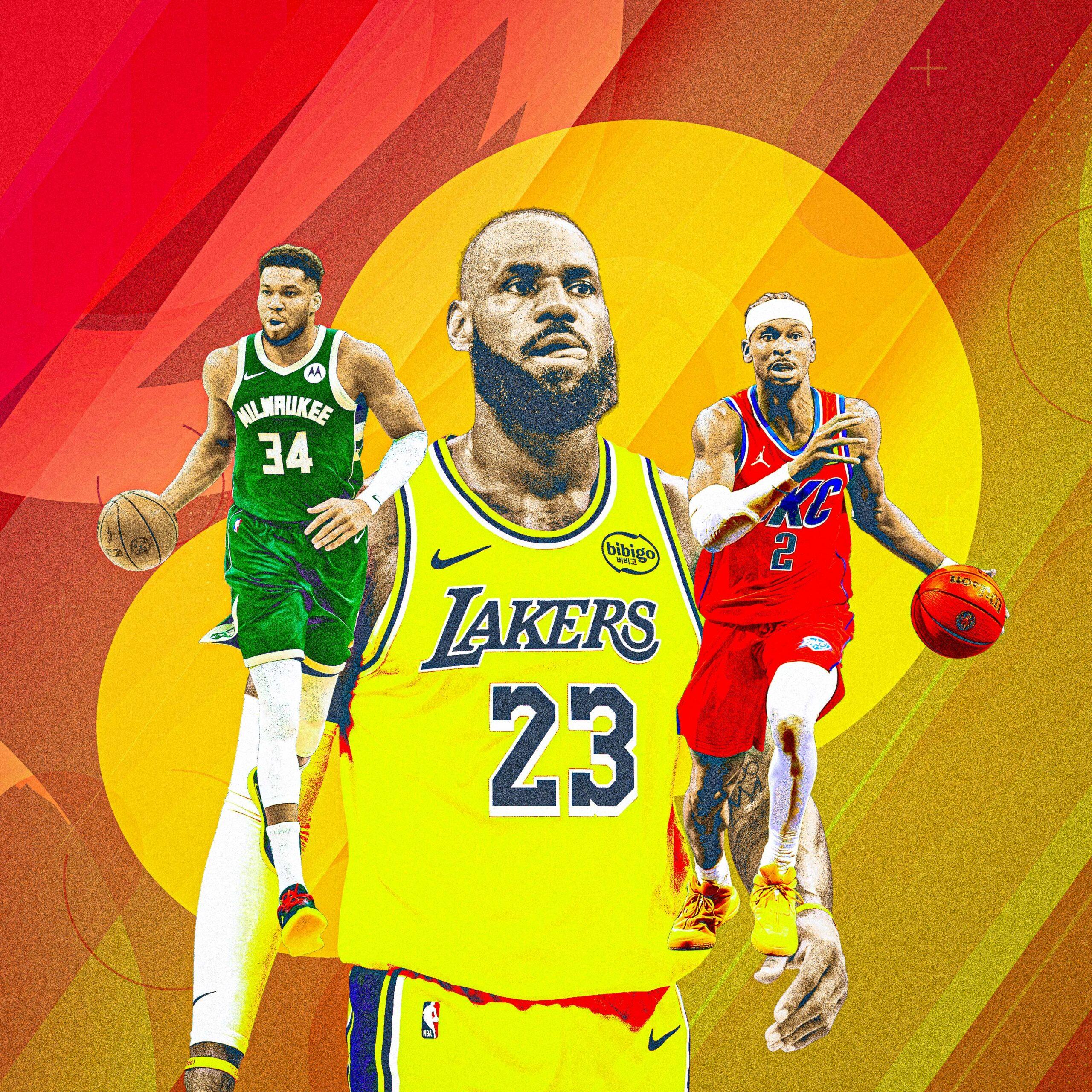

I love asking questions about the NBA almost as much as I enjoy daydreaming them into existence. The process is fundamental to my job and an essential first step toward understanding a season that’s still filled with unknowns. Now, just over a quarter of the way through it, and now that we have a better grasp of what’s real and what’s closer to a mirage, here are five (of the several hundred) questions that have been rattling around my head for the past few days.
Will the Bucks actually trade Giannis Antetokounmpo during the season?
It seems like the Milwaukee Bucks might’ve missed their window. What I mean here is that by dragging their feet, thinking that Myles Turner was a franchise-altering player, and waiting for their flawed roster to predictably implode, the Bucks may not get as much for Giannis Antetokounmpo now as they would have if they'd instead sought the best possible deal before this season began.
This isn’t so much about Giannis as it is about the effect of a collective bargaining agreement that limits potential buyers, restricts creativity, and makes guaranteeing long-term maximum contracts to superstars on the wrong side of 30 much less appealing than it used to be.
It’s also just a lot harder for teams to part with their most attractive assets in the middle of the season. Example: If I were the Atlanta Hawks, Jalen Johnson and swap rights for a New Orleans/Milwaukee first-round pick in the 2026 draft are chips I would’ve been willing to toss into a negotiation five months ago. Today, neither is anywhere close to being on the table. At 23 years old and on one of the best contracts in the league, Johnson has bloomed into a nightly triple-double threat who is about to make his first All-Star team. Meanwhile, the Pelicans are 3-21, and this year’s draft has several franchise-altering prospects in it.
Should the Spurs accelerate their timeline and get Giannis? Maybe. They’re also in very good shape if they don’t do anything, which gives them leverage in any negotiation (i.e., now that they’ve watched Dylan Harper play NBA games, there’s no chance that they’re putting him into any trade package). Same goes for the Rockets, who can absolutely win the title as presently constructed and shouldn’t be in a rush to move on from Alperen Sengun, Amen Thompson, or even Reed Sheppard.
Antetokounmpo is a top-five player, and almost any team should explore the possibility of trading for him. But he also can’t be maximized on every roster. Spacing is particularly important when dealing with a player who lives at the rim and doesn’t threaten defenses from the perimeter himself. Do you have a center who can space the floor? Do you have 3-point shooting galore? An All-Star-caliber secondary ball handler? Versatile defenders who will relentlessly navigate a pick-and-roll? No? Then maybe acquiring Giannis won’t be the ticket to a Finals appearance that you’re hoping for.
More trade opportunities may pop up over the summer, when the sting of postseason disappointment combines with more flexibility and information for teams to work with. But the number of suitors is also limited by the fact that Antetokounmpo will be on an expiring contract, which pretty much lets him handpick his destination. That doesn’t mean the Bucks can’t get something great to jump-start their inevitable rebuild, but the return won’t be as generous as it could’ve been.
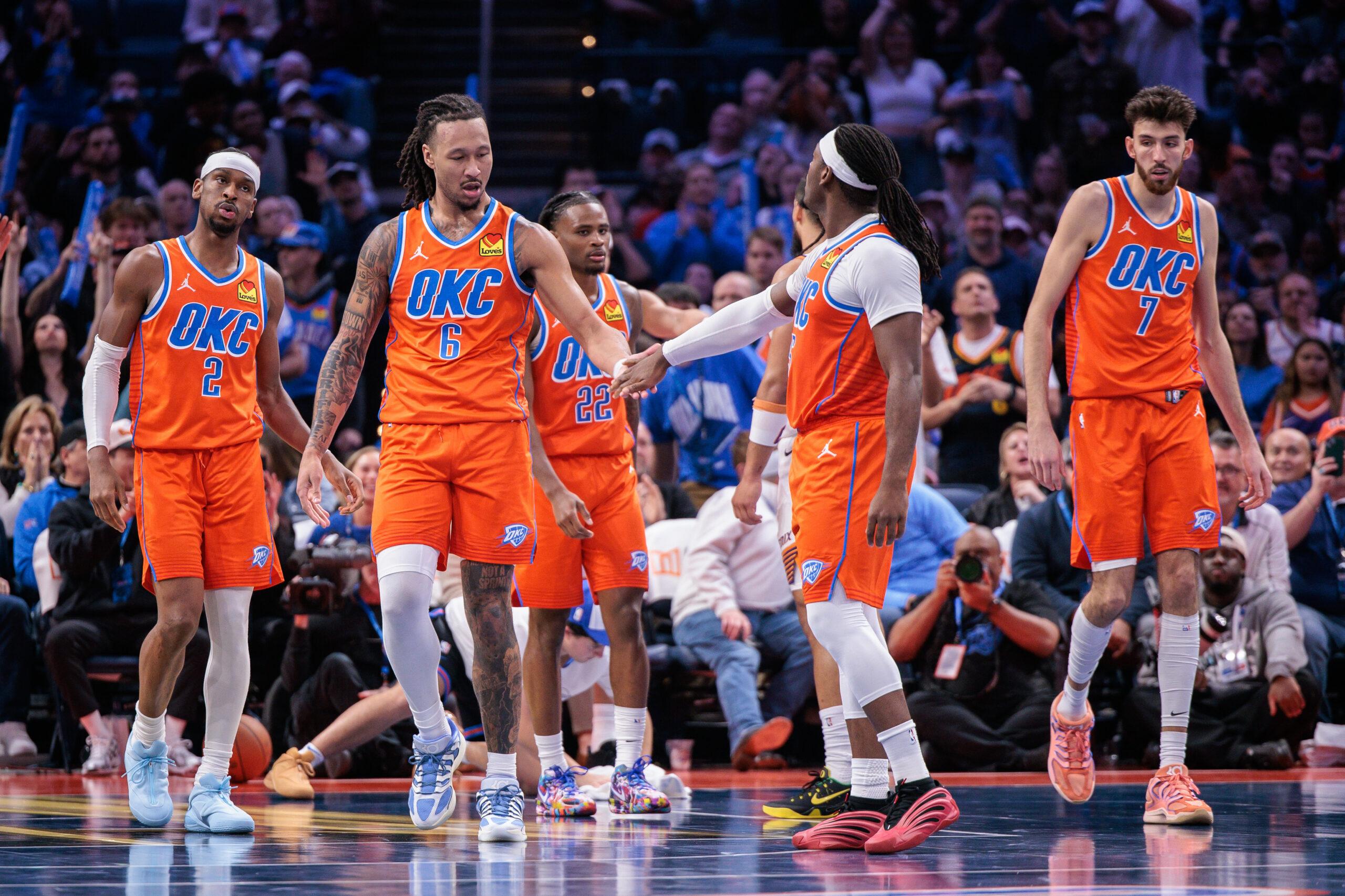
Should we go ahead and crown the Oklahoma City Thunder?
Nobody can refer to these current NBA times as an “age of parity” when the Oklahoma City Thunder exist. We’re talking about a team that has outscored its opponents by a league-record 358 points over the season’s first 23 games, of which it's lost only one.
The Thunder boast an MVP candidate who’s basically averaging a point per minute, plus the most tenacious defense that professional basketball has ever seen. Every game is pure evisceration in countless ways. Here’s an example: Just over 18 percent of all Oklahoma City’s minutes this season have been with a 20-plus-point lead. Stop and think about that for a second. Nearly one out of every five minutes they play is a blowout, somewhat largely due to the fact that they basically don’t make mistakes. Shai Gilgeous-Alexander is a precisionist who’s currently the only player in NBA history with a usage rate above 30 percent and a turnover rate below 7 percent.
Everything about the Thunder feels more like a race against history than an effort to defeat 29 other teams right now. OKC’s defense is allowing fewer points relative to league average (11.5!) than any team in the play-by-play era. The second-best defense on that list is the 2004 San Antonio Spurs. The gap between those Spurs and these Thunder is the same as the gap between those Spurs and the team ranked 36th on this list. THIRTY … SIXTH!!! There’s a good chance their best is yet to come: SGA, Jalen Williams, and Chet Holmgren have played only 48 minutes together this season. None of this is fair. Basketball teams are not supposed to regenerate severed appendages, but when the Thunder aren’t at full strength, their response is for Ajay Mitchell to emerge as a real contender for Sixth Man of the Year.
It’s probably an understatement to say that the Thunder are a prohibitive favorite to win it all this year, but they also haven’t actually achieved anything yet. An NBA season can be turned on its head in the blink of an eye. They’re unpredictable and unforgiving, susceptible to curveballs and fertile ground for adversity. All this is to say that I would still give either the Denver Nuggets or Houston Rockets more than a puncher’s chance to win the title. I also think that the San Antonio Spurs (with a healthy Victor Wembanyama) can give OKC legitimate fits much sooner rather than later.

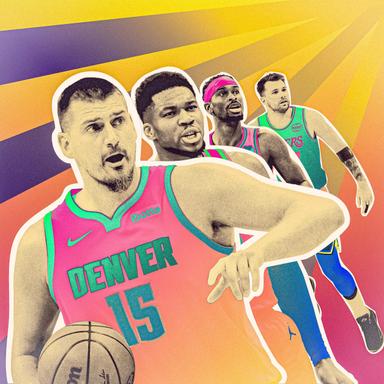
Yes, the Thunder are more polished than last year. They’ve also enjoyed a cupcake schedule and quite a bit of luck when it comes to facing compromised opponents. That isn’t to say they aren’t great. They are. But as defending champs, the Thunder also weren’t exactly the most dominant playoff team in history, barely escaping a bear hug from Nikola Jokic in Round 2 before another seven-game battle against the Indiana Pacers in the NBA Finals. Poorly timed injuries suffered by Aaron Gordon and Tyrese Haliburton helped them get over the hump.
Again, this doesn’t take anything away from Oklahoma City’s title run. Luck is a prerequisite for success at the highest level, and the fact that they made only 33.8 percent of their 3-pointers in four playoff rounds can be seen as either a testament to their resilience or a foreboding vulnerability. Every team can be beaten, which brings us to a looming debate about how aggressive rival front offices should be before February’s trade deadline. Every other potential contender has two options: surrender or improve.
This isn’t a call for delusionary organizations to convince themselves that they can be anything more than first- or second-round roadkill. But a team like the Los Angeles Lakers should not be intentionally stagnant over the next couple of months, with Luka Doncic and Austin Reaves playing this well in front of some supplementary pieces—Deandre Ayton has been excellent—that are falling into place. As currently built, Los Angeles turns the ball over a ton, has a flawed defense, and could use another shooter or two. But it shouldn’t use the Thunder’s dominance as an excuse to sit still.
We could see several motivated sellers, too, thanks to the upcoming lottery and race to the bottom that’s already begun. Oklahoma City may very well be the first team since 2018 to win back-to-back championships. But there are very good teams and truly excellent players that will make them earn it.
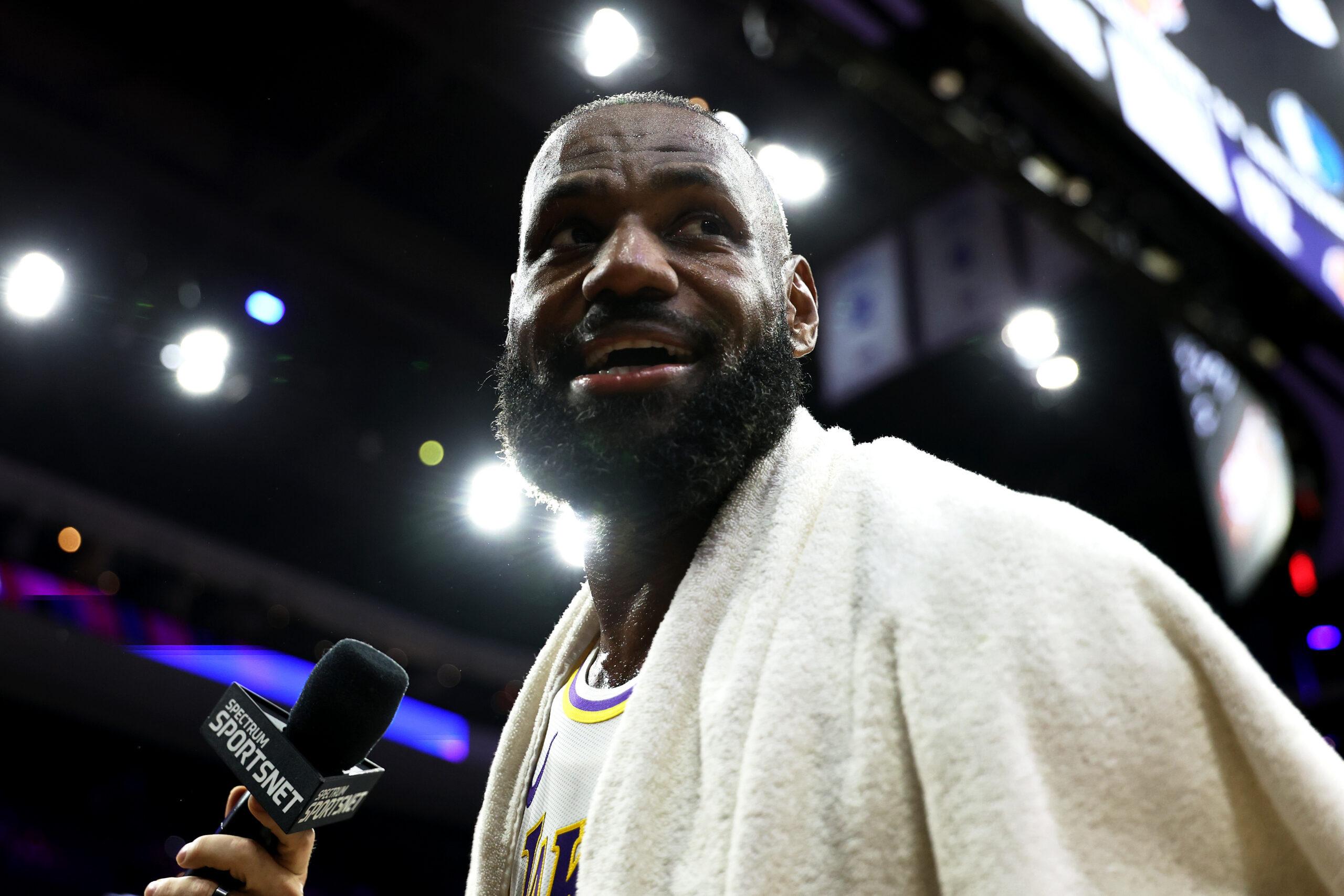
When will Father Time knock LeBron James out?
LeBron James is about to celebrate his 41st birthday, a bit of information that’s impossible to ignore when you watch him play basketball. Physically, it’s been a rough start for James, who saw his 1,297-game streak of scoring in double figures snapped with an eight-point effort (on 4-for-17 shooting) against the Raptors last week.
James had the game-winning assist to Rui Hachimura for a corner 3. Looking back, it’s fascinating to see how the play unfolded. With Luka Doncic out for personal reasons, the Lakers put the ball in Austin Reaves’s hands down the stretch, often with LeBron setting a ball screen. On the final play, Toronto doubled Reaves, put itself in rotation, and essentially said, “We are OK giving one of the greatest playmakers in NBA history a 4-on-3 advantage with the game on the line.” Obviously, it didn’t work out well for them, but it was still so jarring to see a defense take that risk and be willing to live with the result:
LeBron can apparently still summon money-time magic—the vintage crunch-time flurry last night in Philadelphia, where he scored 12 points in the fourth quarter and drilled a stepback jumper to effectively put the Sixers away, was remarkable—and his playmaking genius still exists. He finished the Raptors game with 11 assists, and his 12 potential assists per game are in line with where he’s been the past few years. But that entire crunch-time stretch in Toronto was a stark reminder of what he may or may not be capable of going forward. The days of him being a capable primary initiator, running inverted pick-and-rolls to secure mismatches and force defenses to pick their poison, might be in the rearview mirror. Through his first six games, not only does he look like a shell of himself, but he has also been one of least effective rotation players in the entire league:
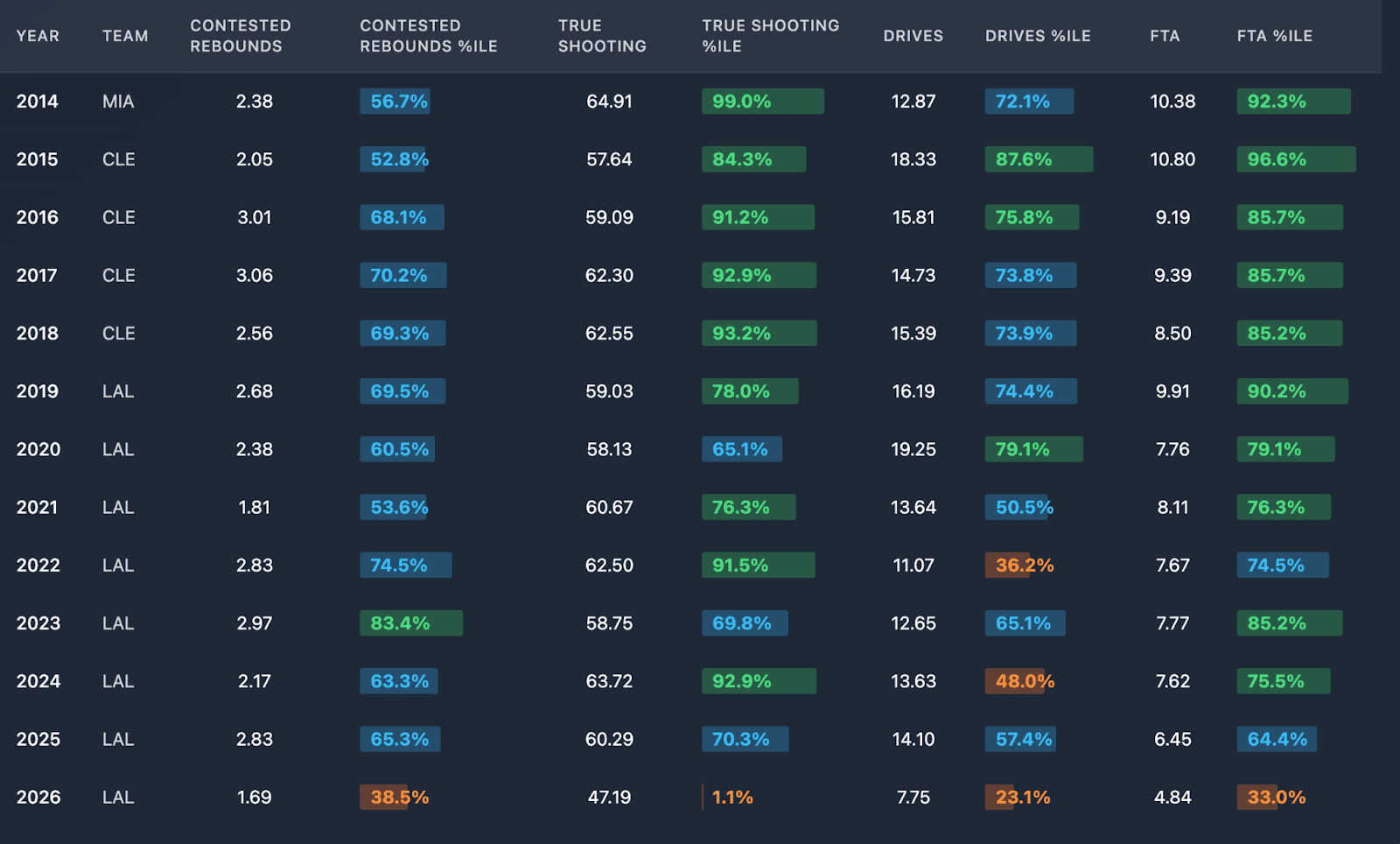
Arthritis and sciatica don’t help, but that’s the aging process for you. There’s a reason players LeBron’s age are forced to accept a diminishing role:
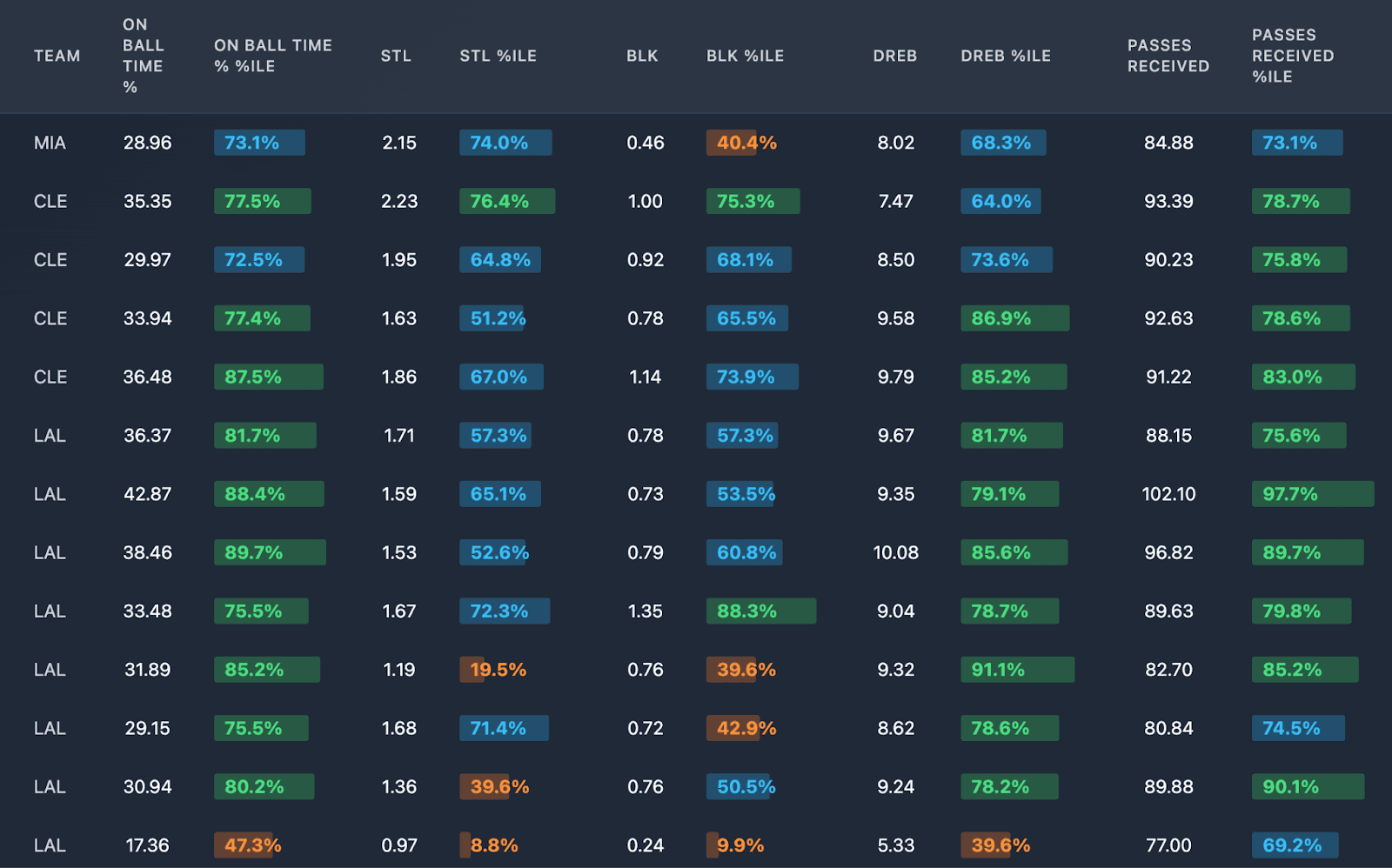
As seen above, James has much less on-ball responsibility than normal. But he’s yet to have a positive impact in other areas—be it steals, blocks, rebounds—while starting out as one of the least efficient scorers in the league. He isn’t attacking the basket, getting to the free throw line, or finishing in the paint like he used to.
Numbers aren’t a primary concern, though. They merely reflect what you see when you watch him move. For the first time in LeBron’s life, his body can no longer always do what his brain wants. Too many of his defensive rotations are a step slow. On offense, he can’t consistently turn the corner off the dribble and doesn’t have anything that even resembles the same second gear, lift, or explosiveness that gave him an upper hand for the past two decades:
Six games is a very small sample size—particularly when they’ve come without the ramp-up of a training camp or preseason—and James is clearly not 100 percent. But that’s kind of the point. Can he ever get where he needs to be while figuring out how he should best function as the third-most important player on his own team? Expectations should probably be tempered a bit. And if this isn’t LeBron’s last season, it’s impossible to justify anything close to max money on whatever deal he signs next.
Are the Cleveland Cavaliers shooting too many 3s?
We’re 25 games into the season, and the prohibitive preseason favorite to win the Eastern Conference currently sits in eighth place, with a 14-11 record. The Cavaliers are 12th in net rating and have yet to sustain a stretch that even closely resembles the buzz saw that tore through last year’s regular season.
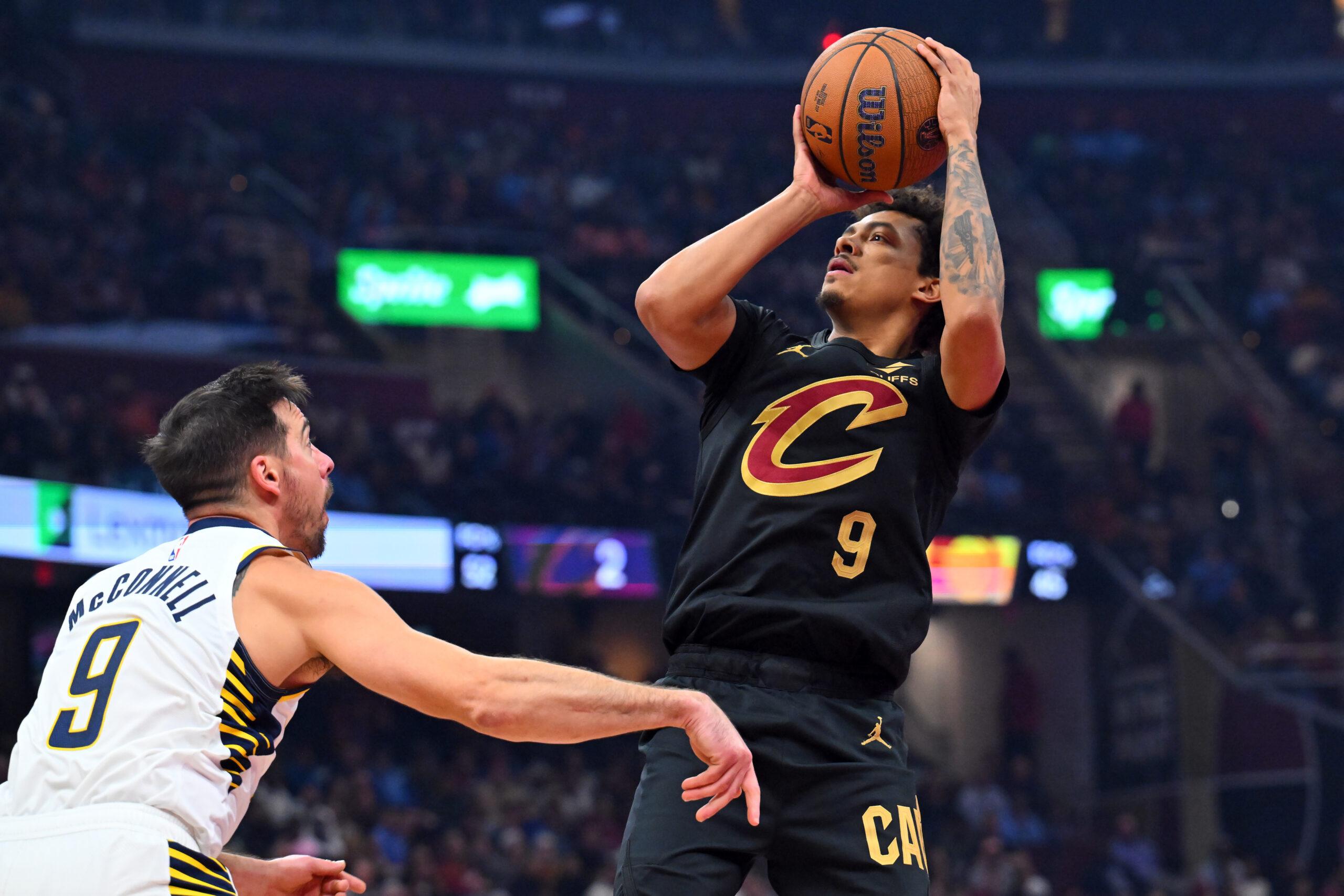
A rash of early injuries to key contributors like Darius Garland, Jarrett Allen, Max Strus, and Sam Merrill gives some hope to the Cavaliers optimists who believe they’ll eventually figure it out. (Donovan Mitchell, Evan Mobley, Garland, and Allen have played only 57 minutes together this season. Those lineups have a net rating of plus-31.0.) I’m probably still more glass half full on this team, but I find myself teetering between panic and patience when I watch them play. Last week’s loss to the Portland Trail Blazers nudged me toward the former, mostly because of Cleveland’s troubling shot selection in a game that saw them finish 13-for-52 behind the 3-point line.
For the season, the Cavaliers are third in 3-point rate despite ranking just 22nd in 3-point percentage.
“I’ll just get ahead of it,” Cavaliers coach Kenny Atkinson said afterward. “Five, six, seven [3s] … I would’ve loved if we go in for layups or drive it. So we’re gonna have to really keep showing [our players]. ‘Hey, this is where we can drive it. This is where in transition, hey, don’t run to the corner, run for a layup.’ I’m not saying it’s 12 of them. But I’m saying five, six, seven where we’re jacking 3s. We can do better. We can get a better shot. They stick in my mind. I can see the ones.”
After that loss to Portland, it’s no coincidence that in their very next game against the San Antonio Spurs, the Cavs took only 26 3s and scored a whopping 80 points in the paint. That’s not just a season best; it’s the most points Cleveland has scored in the paint in the entire play-by-play era!
We’ll see whether it’s the start of something new or an aberration. For the season, Cleveland ranks 25th in drives (last year they were seventh) and 25th in paint points (last year they were 10th). These are two of the largest drops in the league. Not having Garland’s penetration or Allen’s flurry of dunks obviously hurts, as does missing the space Strus and Merrill are able to provide with their movement along the perimeter. Lonzo Ball doesn’t get downhill like his predecessor Ty Jerome, the floater God, did, either.
But that doesn’t excuse Cleveland’s addiction to a shot that isn’t yielding positive results. (It was 10-for-42 in Saturday night’s humiliating loss against a Warriors team that didn’t have Steph Curry, Draymond Green, or Jimmy Butler.) This isn’t a call for the Cavs to abandon outside shots. It’s a plea for some more diversity in an offense that’s shown it can successfully attack in different ways.
Was Joe Dumars right?
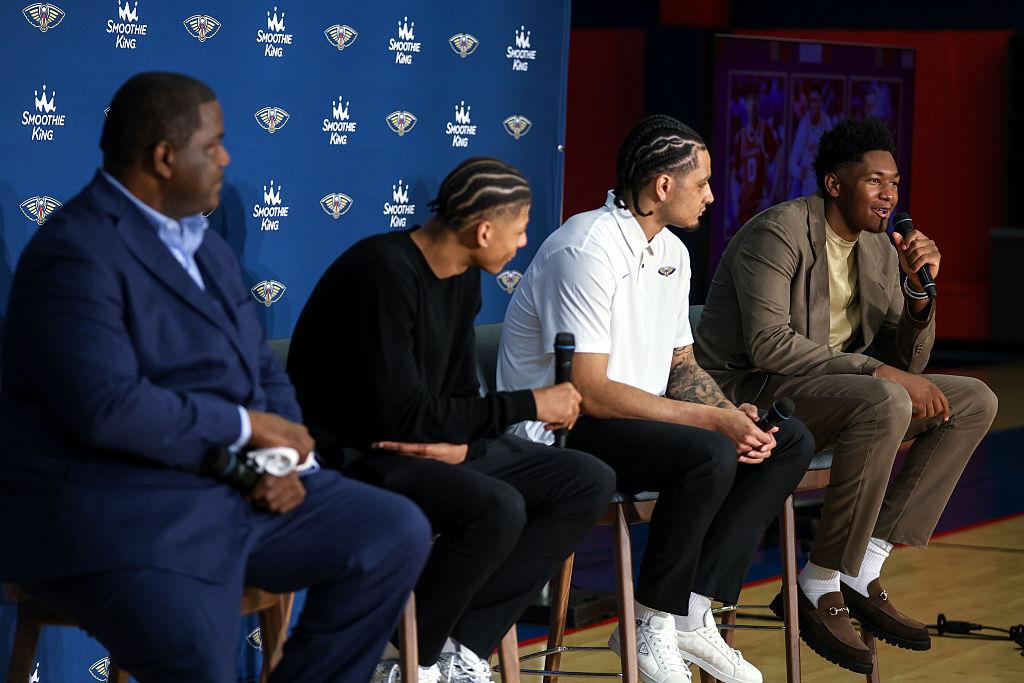
No. Joe Dumars was not right, and it’s still impossible to justify what he did on draft night. The Pelicans are 3-21 and don’t own their first-round pick in next year’s draft because Dumars ignored conventional wisdom and gave it to Atlanta so that he could move up 10 spots to the bottom of the lottery in this year’s draft. It’s a self-screwjob of epic proportions that is likely to haunt New Orleans for years to come.
But … there is some good news. The player Dumars took with that pick, Derik Queen, is shaping up to be a best-case-scenario type of prospect. In 11 starts, New Orleans’s rookie big man is averaging 14.2 points, 6.3 rebounds, and 4.9 assists per game. He had an eye-opening 30-point, nine-rebound performance against the Nuggets and a 20-point, 11-assist, seven-rebound gem against the Mavericks. The 20-year-old plays like a larger, stronger, bolder, more positionally ambiguous version of Kyle Anderson, and he currently leads all rookies in total assists. A true delight:
You don’t really know what’s going to happen next when he has the ball. It’s a wildly adventurous approach that causes plenty of mistakes, but Queen’s angular creativity all over the floor is perfect when it mixes with more conventional, quick decisions. He loves to bully smaller defenders in the post and enjoys making big men feel like they’re trying to box a lava lamp:
I’m willing to overlook inefficiency from a rookie on a terrible team who’s often functioning at an awkward position in lineups that don’t complement him in any way. (Only 40 percent of Queen’s baskets have been assisted, which puts him in the 100th percentile among big men.) I also don’t care that much when Queen is openly coaxed into jump shots, commits silly fouls, or gets caught flat-footed and surrenders blow-bys. Learning from his own gaffes is obviously important, but the consequences that they would normally bring have less meaning in an environment where winning is not possible.
All that matters is what Queen’s game allows you to think he can someday be. At 6-foot-9 and with power, handle, and a sprinkle of Nikola Jokic’s intuition, Queen has a range of offensive flexibility that’s rarely seen in players that size. According to Bball-Index, he ranks fifth in play-type versatility, a metric that essentially weighs the different ways a player is used.
The eye test backs that up. Queen has thrown a lob to Zion Williamson as the ball handler in a pick-and-roll, repeatedly flummoxed elite rim protectors like Rudy Gobert and Donovan Clingan in isolation, and even Euro-stepped around Jrue Freaking Holiday to set up a gorgeous finger roll. Timberwolves color commentator Jim Petersen recently dropped an Along Came Polly reference while watching Queen play. It’s a perfect way to describe how he melds overconfidence with unpredictability. There’s just enough self-awareness missing for this all to work. Between Queen and Jeremiah Fears, New Orleans’s 6-foot-3 lightning bolt, Pelicans fans can use a microscope to spot the silver lining in what’s otherwise been an interminable mess.