

We’re about a quarter of the way through a riveting NBA season that’s already yielded so much uncertainty and excitement. Teams we thought would be pretty good are terrible. Teams we thought would embarrass themselves are humiliating their opponents. It’s been a fun, wild six weeks, and we’ve now seen just enough basketball to present a few major awards. These aren’t predictions. They’re strictly assessments of this season’s first 20-ish games. Let’s dive in.
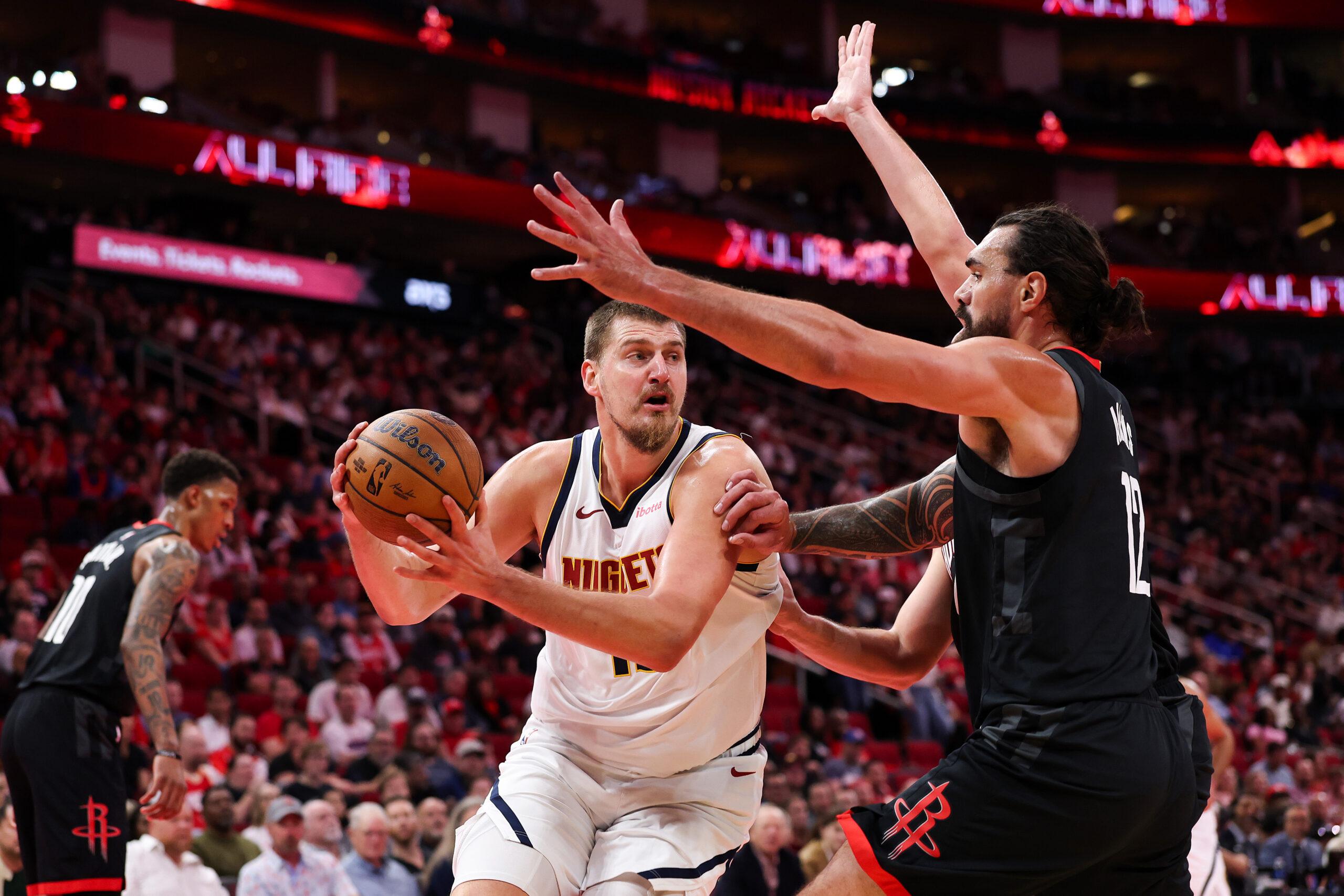
Most Valuable Player: Nikola Jokic
It’s hard to remember a season with more individual greatness floating at the top of the league, with four players—Jokic, Shai Gilgeous-Alexander, Giannis Antetokounmpo, and Luka Doncic—off to unimpeachable, historically brilliant starts. As ever, there’s no use denigrating another candidate to prop up whichever superstar you think deserves this award the most. Each has their own airtight case based on whatever statistics, eye-test observations, and broad understanding of what the word “value” means to you.
To me, it’s Jokic. Here are some of his basic per-game averages and where they rank leaguewide: 28.9 points (seventh), 12.4 rebounds (first), and 10.9 assists (first). For those counting at home, he’s averaging a triple-double and has officially recorded 10 of them. Every other player in the league has 20 combined, and no other team has more than four. He leads the league in PER and true shooting percentage on a club that has the point differential of a 70-win team when he’s on the court and a 27-win team when he’s off it. With Jokic, Denver’s offense generates a mile-high 126.9 points per 100 possessions, which ranks first among all players who average at least 30 minutes per game.
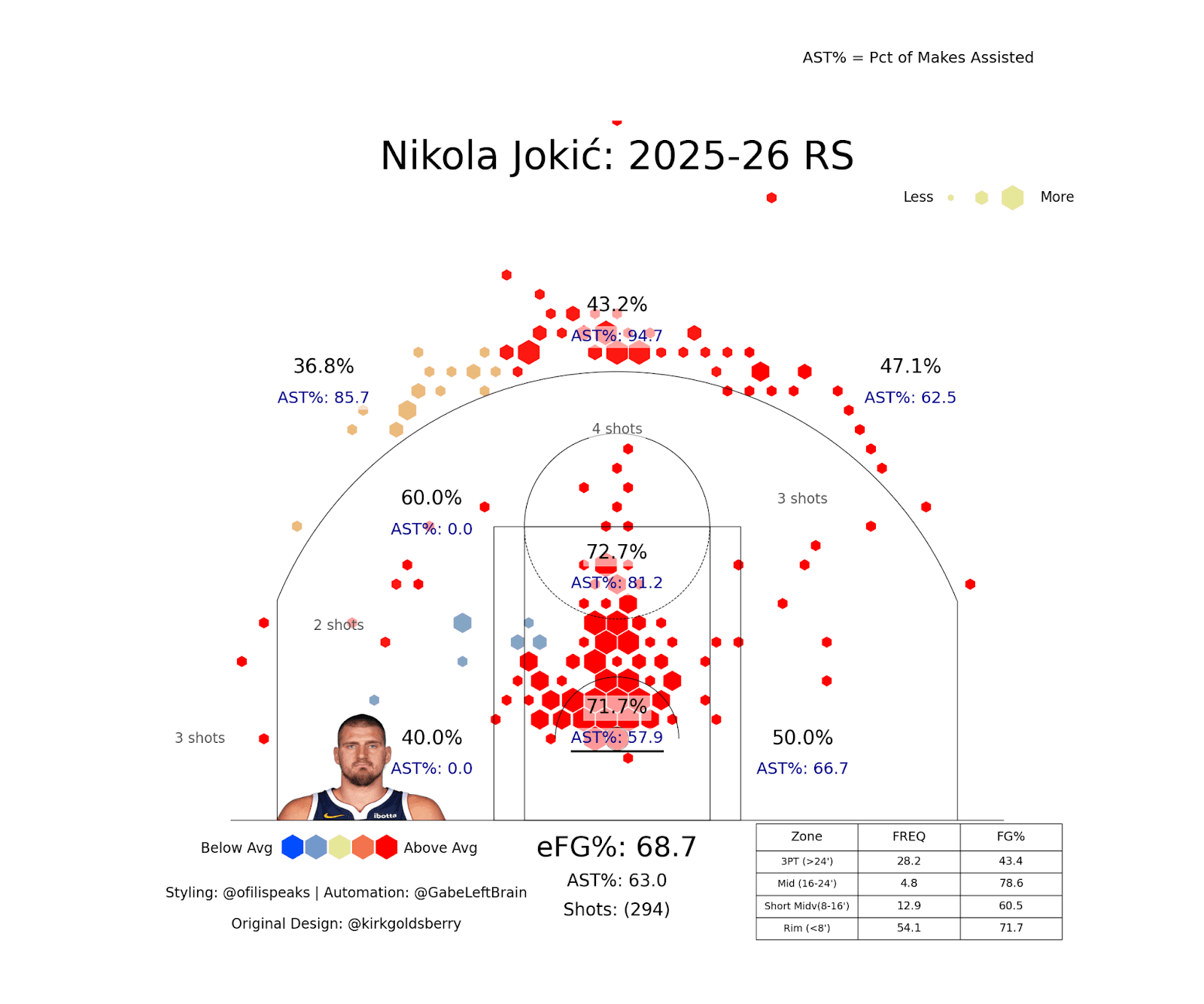
So much of this is due to his own unbelievable efficiency, which has never been better after his first 19 games. Right now, his field goal percentage is 13.9 percent above the expected field goal percentage, which is first in the league by a significant margin and doesn’t in any way, shape, or form seem unsustainable. There’s no spot on the court from which Jokic can’t score effortlessly. He’s the world’s best post player. He’s the world’s most lethal screener out of a short roll. He’s attempting more free throws than ever before and shooting 44.4 percent on catch-and-shoot 3-pointers. Just look at this completely absurd shot chart (via NBA Visuals):
And then there’s the singular playmaking. No one in the history of basketball has ever unlocked and empowered their teammates like Jokic. He not only generates wide-open shots but also shows trust and instills confidence—a superstar who will feed any teammate at any time, so long as it’s what the defense opts to surrender.


What will always separate Jokic from everyone else is the way he asserts total control over the game without dominating the ball. It will never, ever, ever cease to amaze. Right now, his assist rate is a career- and league-high 50.4 percent. Take that and consider how Jokic has 56 more frontcourt touches than anyone else, but 24 players have held the ball more than his 80 total minutes. Let that ridiculousness breathe for a moment—[inhales while stifling hysterical laughter]—and allow me to be reductive: Jokic simply does more to astound his peers than anybody else. Last week, in a win over the Grizzlies, he drilled a half-court buzzer-beater and dropped a spinning no-look bounce pass to Peyton Watson that drew a physical reaction from the opposing bench.
Salute to every other candidate. My honorable mentions here are three of the best players in the world, incredibly valuable and breathtaking in their own way. It’s just hard to surpass Jokic when he’s at the top of his game and on one of the best teams in the league.
Honorable mentions: Shai Gilgeous-Alexander, Giannis Antetokounmpo, Luka Doncic
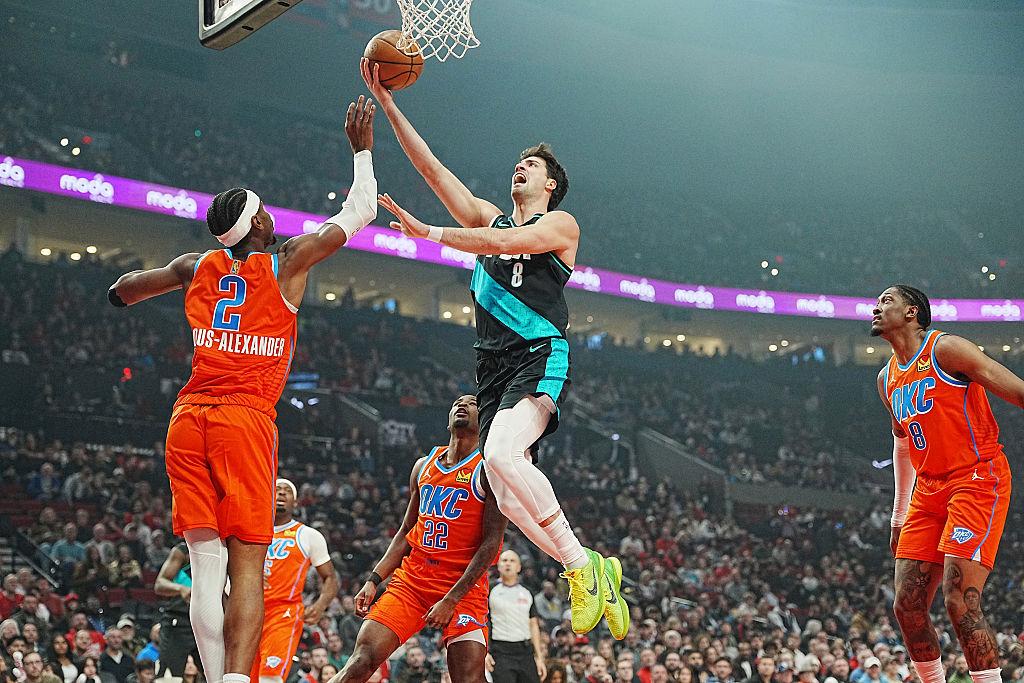
Most Improved Player: Deni Avdija
A quick disclaimer about how I view this award: Only those who’ve played at least three seasons are considered. Anyone under that is disqualified. If you’re a second- or third-year player making a leap, congratulations. All love. This is the natural arc of your career and does not need any special recognition.
Avdija was an honorable mention on my Most Improved ballot in 2023-24, but the numbers we’re seeing now are beyond anything pretty much anyone ever thought possible. He’s averaging 25.5 points, 6.4 rebounds, and 5.5 assists per game, a significant increase from the 16.9 points, 7.3 rebounds, and 3.9 assists that he submitted during a very impressive fifth season that felt like a best-case scenario. Nope. Thanks to his bull-meets-matador mentality in Portland’s turbo-charged offense, Avdija is in the midst of another massive leap.
Avdija not only leads the whole freaking league in drives, but he’s able to get downhill with his right hand almost whenever he wants. Screw a well-executed scouting report—most defenders are simply unable to make the 6-foot-8 wrecking ball do what he doesn’t want to do. Just look at this closeout by Devin Booker that’s clearly intended to force Deni left:
How Avdija’s scoring right now is indicative of someone who’s solved NBA defense: Not to put him on the same level as prime James Harden or DeMar DeRozan, but his rip-through has become one of this season’s most unstoppable moves. Even the best defenders alive will cut off Deni’s right hand and then get beaten when he reacts to the overplay by stepping back in the opposite direction:
The means of his production are more challenging than before, too. Coming into this season, 54.5 percent of Avdija’s 2-point baskets were assisted. This year, it’s all the way down to 35.9 percent. But thanks to a surge in free throws and an improved 3-point shot, his true shooting percentage is 4 percentage points above the league average (a career best).
This dude has gone from an awesome role player on a very good contract to an obvious All-Star who can be the engine of a pretty good offense that doesn’t even surround him with elite 3-point shooting. Let Avdija’s development be a warning sign (hello, Wizards) to organizations around the league who feel inclined to give up on their homegrown prospects. In a league that’s increasingly obsessed with instant gratification, patience is still a virtue!
Honorable mentions: Ryan Rollins, Jalen Duren, Michael Porter Jr.
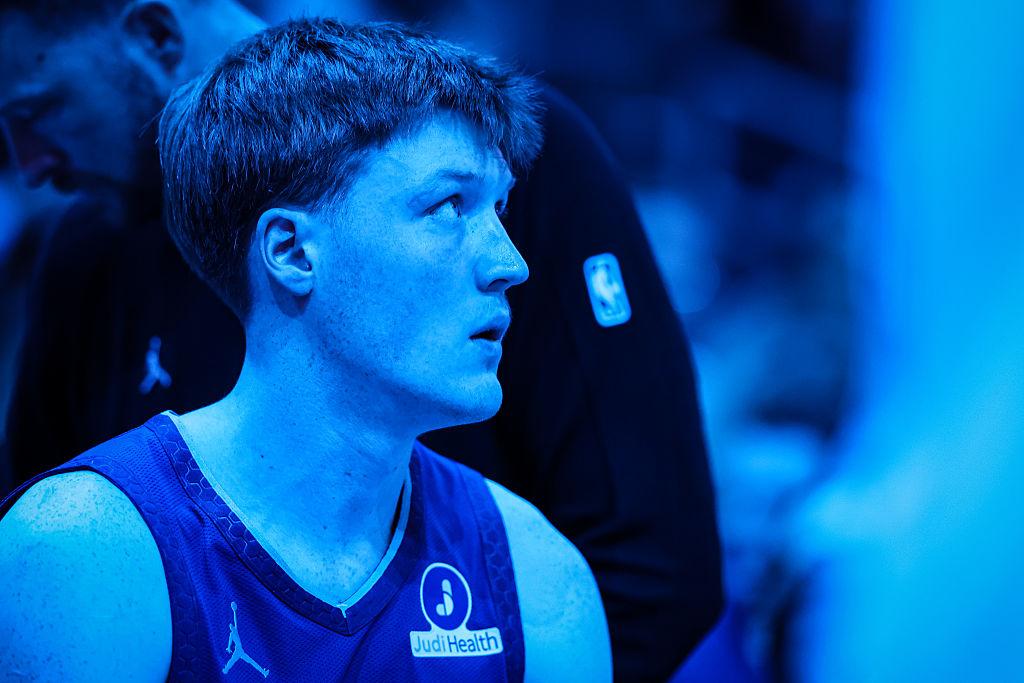
Rookie of the Quarter: Kon Knueppel
The most impressive thing about Kon Knueppel is that I’ve already memorized how to spell his last name. I’m writing it in my notebook over and over and over again, typically at the start of a sentence that ends with a rhetorical question: “How is this a rookie?”
Forget about guys in their first year: Knueppel has made more catch-and-shoot 3s than everyone in the league except Lauri Markkanen! He’s averaging 18.4 points, 5.7 rebounds, and three assists per game and has a true shooting percentage that’s 5.2 percent above the league average. In addition to those very impressive statistics, the Hornets’ fourth overall pick also entered the NBA with the self-control of an eight-year veteran, making savvy plays that don’t appear on a stat sheet. In the fourth game of his career, he got Bam Adebayo to bite on a pump fake, took one dribble, recognized Jaime Jaquez Jr.’s help at the nail, and shuffled the ball over to Collin Sexton, who was in position to attack the gap and break down Miami’s defense:
There was a stretch last weekend in a day game against the Clippers when Knueppel briefly put on a one-man show. He changed speeds, showed off his lightning-quick release, and converted a miraculous layup that I’ve watched half a dozen times with no full understanding of how the ball went in:
Hornets forward Miles Bridges recently referred to Knueppel as Charlotte’s “best player,” and, with apologies to LaMelo Ball and the great Moussa Diabate, he probably isn’t wrong. He’s just 20 years old and already a rock-solid pro with feel, anticipation, and ice water flowing through his veins. Why can’t he someday become a real star?
Honorable mentions: Cooper Flagg, Cedric Coward, Derik Queen
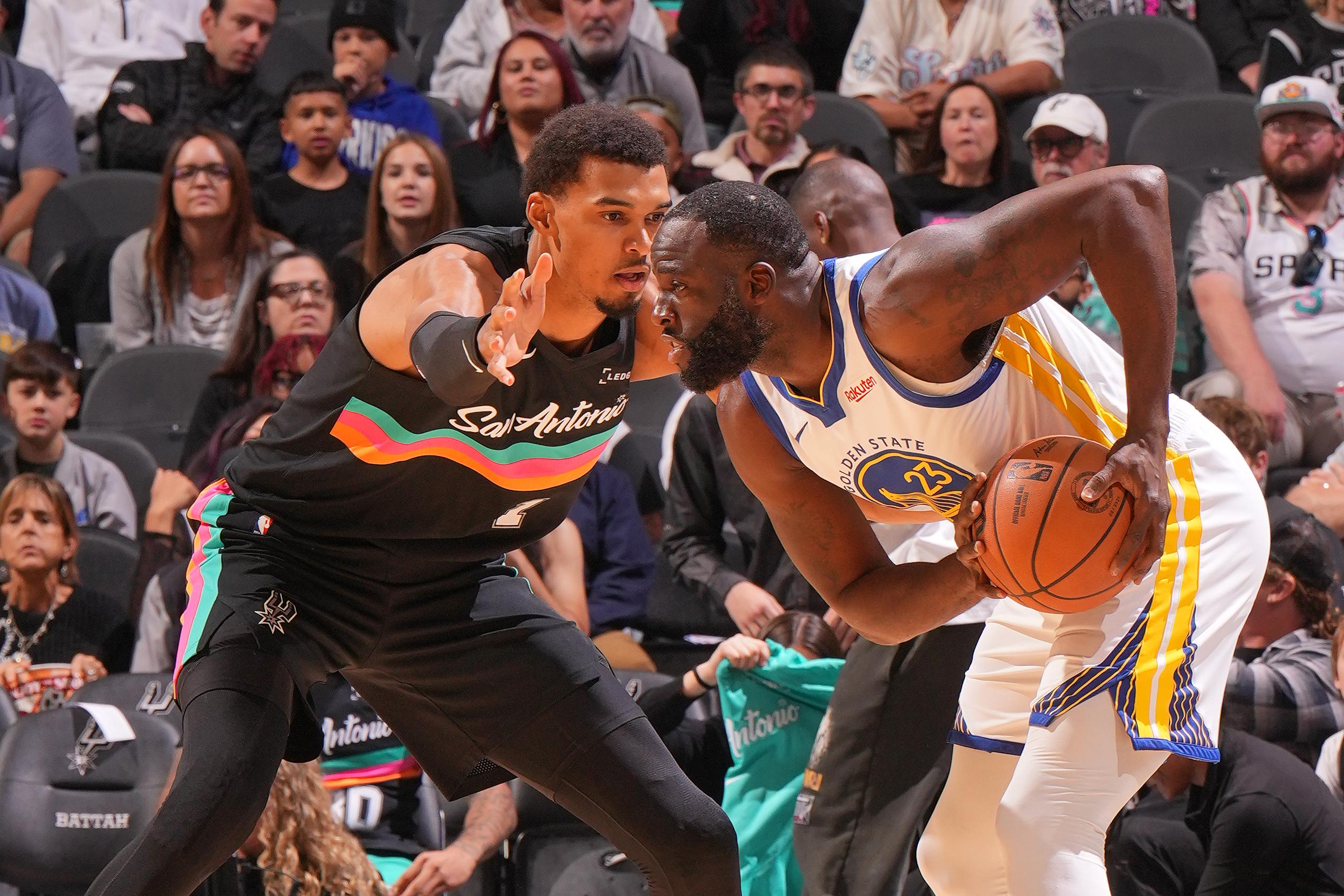
Defensive Player of the Quarter: Victor Wembanyama
This should be Victor Wembanyama’s award to lose every week, month, quarter, and season for the next 10 years. To date, the fact that he’s appeared in only 12 games for the Spurs does not detract from all the ways he confounds and deflates opponents on a scale nobody else can match. Wembanyama currently ranks first in ESPN’s defensive net points per 100 possessions metric, and even though 142 players have played more minutes this season, zero had blocked more shots before this weekend.
What’s different in Wemby’s third year—and might have been learned over the summer after a meeting with Kevin Garnett, someone whose physical advantages were elevated by his obsession for details—is his preparation. This is now someone who better understands tendencies and habits. K.Y.P. Know Your Personnel. He anticipates what’s to come and is increasingly harder to fool. It really hit me a few weeks ago in a game against the Warriors. Wemby starts the possession out on Jimmy Butler and tracks his drive from the top of the arc all the way to the opposite block. When Butler pivots baseline and pump fakes—a move that defenders typically bite on to commit a foul—Wemby effectively shrugs his shoulders:
And when he gets knocked off-balance, Wembanyama’s margin for error might be wider than that of any defender who’s ever lived. Just look at what he does to Deandre Ayton in the play below:
Granted, Ayton doesn’t do himself any favors by hesitating a beat too long, but he’d either draw a foul or finish over the top against any other big man. With Wembanyama, though, Ayton gets to watch his bunny redirected into the crowd. (The block comes after some excellent cat-and-mouse work that keeps Luka Doncic at bay, too.)
Wemby turns the court’s most coveted patch of land into a house of horror: The Spurs allow just 23.8 points per game in the paint when he’s on the floor—the lowest mark in the league among all players who average at least 30 minutes. Not only does he wall off opportunities, but once someone actually pierces that area, they usually get too flustered to make anything good happen. Teams are shooting a measly 55.8 percent at the rim (99th percentile, according to Cleaning the Glass) with Wemby in the game. That’s a whopping 10.7 percent below league average and helps contribute to the 4.1 points per 100 possessions that he saves when contesting a shot.


The most celebrated moments that occur on the defensive end are noted, simply, as blocks and steals. Actions that are often the direct result of a confrontation. But the best defenders punctuate those numbers with a degree of influence that cannot be seen because it doesn’t actually happen. So much of Wembanyama’s impact is felt by what doesn’t happen. Abandoned drives, impatiently run set plays, sudden hesitation in a moment that requires deliberate force.
There’s nobody like him now or ever before. Hopefully Wembanyama will be able to play 65 games and finally win an award that, with apologies to Hakeem Olajuwon, could someday be renamed in his honor.
Honorable mentions: Chet Holmgren, Bam Adebayo, Jalen Suggs
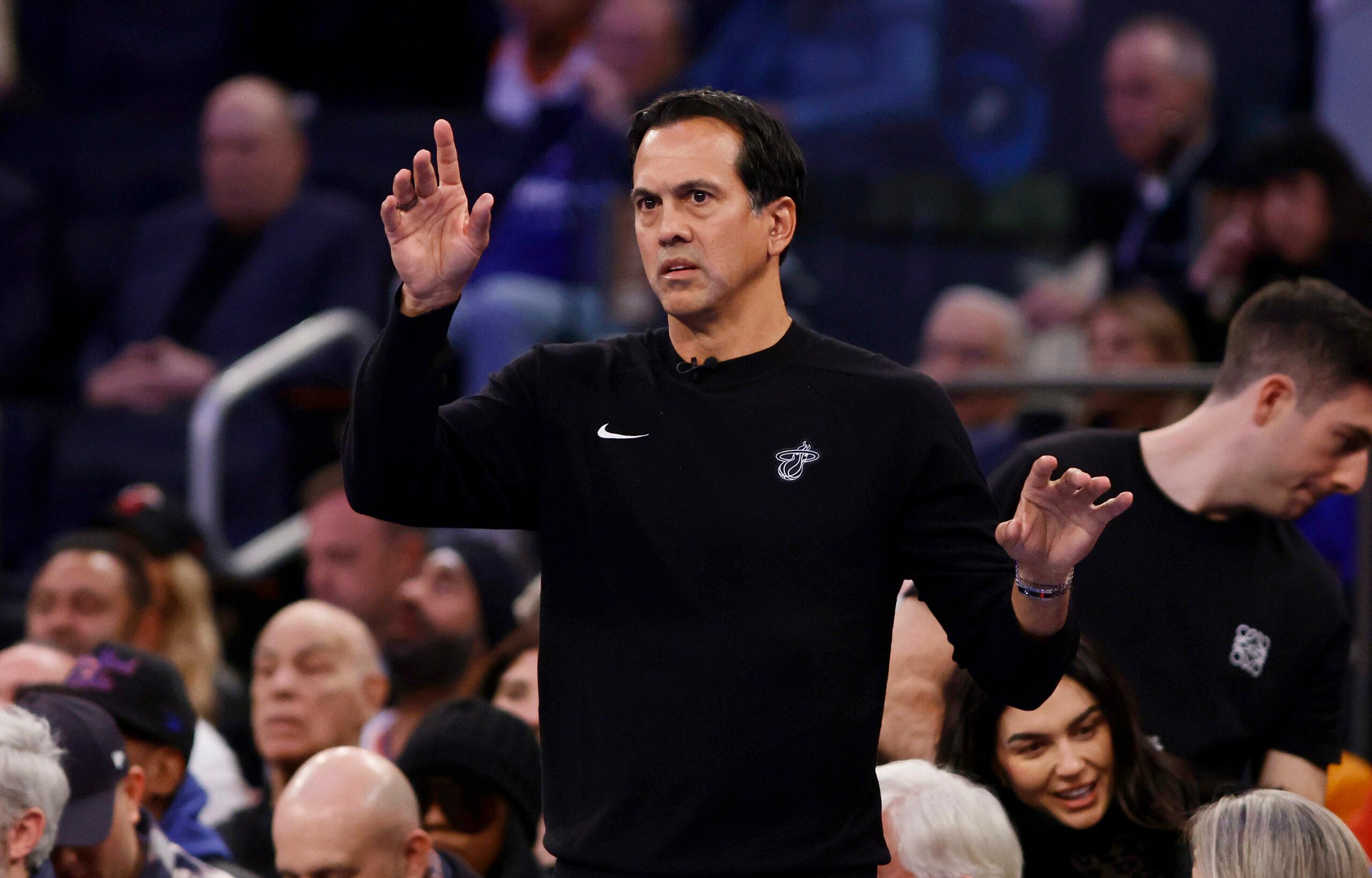
Coach of the Quarter: Erik Spoelstra
Spo was my preseason pick to win Coach of the Year for two reasons: (1) The NBA’s longest-tenured head coach is due, and (2) I was a bit higher on these Heat than most and view this award to be a celebration of those who best exceed expectations. That’s exactly what’s happened. According to Cleaning the Glass, Miami ranks first in spread differential by a decent margin and has deftly handled one of the toughest schedules in the league.
Spoelstra is almost universally viewed as the best coach in the league, a master tactician who’s able to establish a like-mindedness in whatever group he’s leading. But what I didn’t expect was this distinct reinvention of Miami’s playing style. After ranking 23rd in seconds per offensive possession last year, this team now ranks first … by a mile.
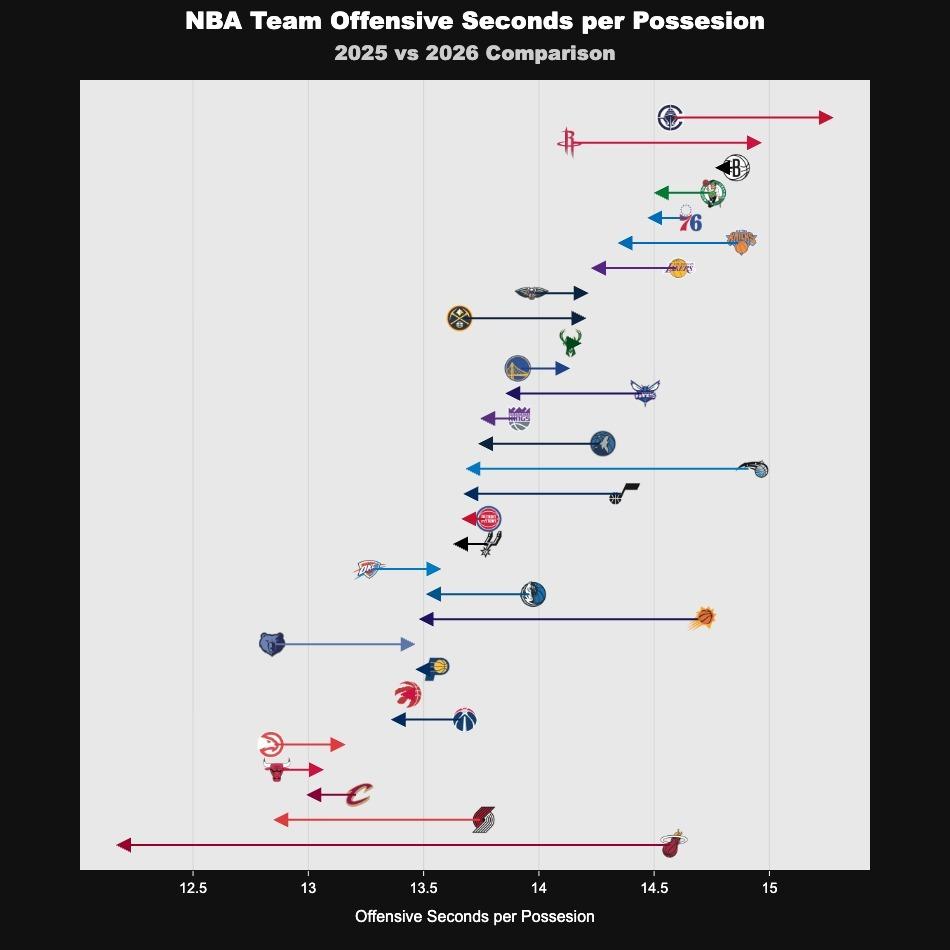
Spoelstra tossed his playbook (and, in a sense, his ego) to the side and instituted an offense that’s all gas and no breaks, with few regular opportunities to call out instructions and put his fingerprint on the action. They’ve jumped from 21st in fast-break points all the way to second. It’s an identity that better fits his superstar-less roster and was introduced on the heels of an epic shellacking against the Cavaliers in last year’s playoffs. The Heat have eschewed pick-and-rolls almost entirely, instead giving pretty much everyone on the court a green light to attack, whether that means launching a 3, driving into the paint, or making a quick one-on-one move that creates some kind of advantage. It’s read, react, pummel. Wash, rinse, repeat.
It’s also exactly what the Grizzlies did last year before Ja Morant’s ire with a new system that removed the ball from his hands led to a coaching change. (Noah LaRoche, a former Grizzlies assistant who’s most responsible for that ball-and-man-movement approach, is currently a consultant for the Heat.)


In addition to being a visual delight, Miami also asserts relentless pressure on defenses that throw up their hands and resort to deploying a zone that, in theory, slows down their permanent downhill mindset. (Spoelstra has his guys averaging the second-most drives per game in the league, up 10 drives from last year.) The Heat are unique in that they complicate the man-to-man responsibilities that allow defenders to put their brain on autopilot (i.e., guarding pick-and-rolls). According to Sportradar, no offense faces zone defense more frequently. It almost feels like surrender. That’s what great coaching can do.
Honorable mentions: Darko Rajakovic, Jordan Ott, and Ime Udoka
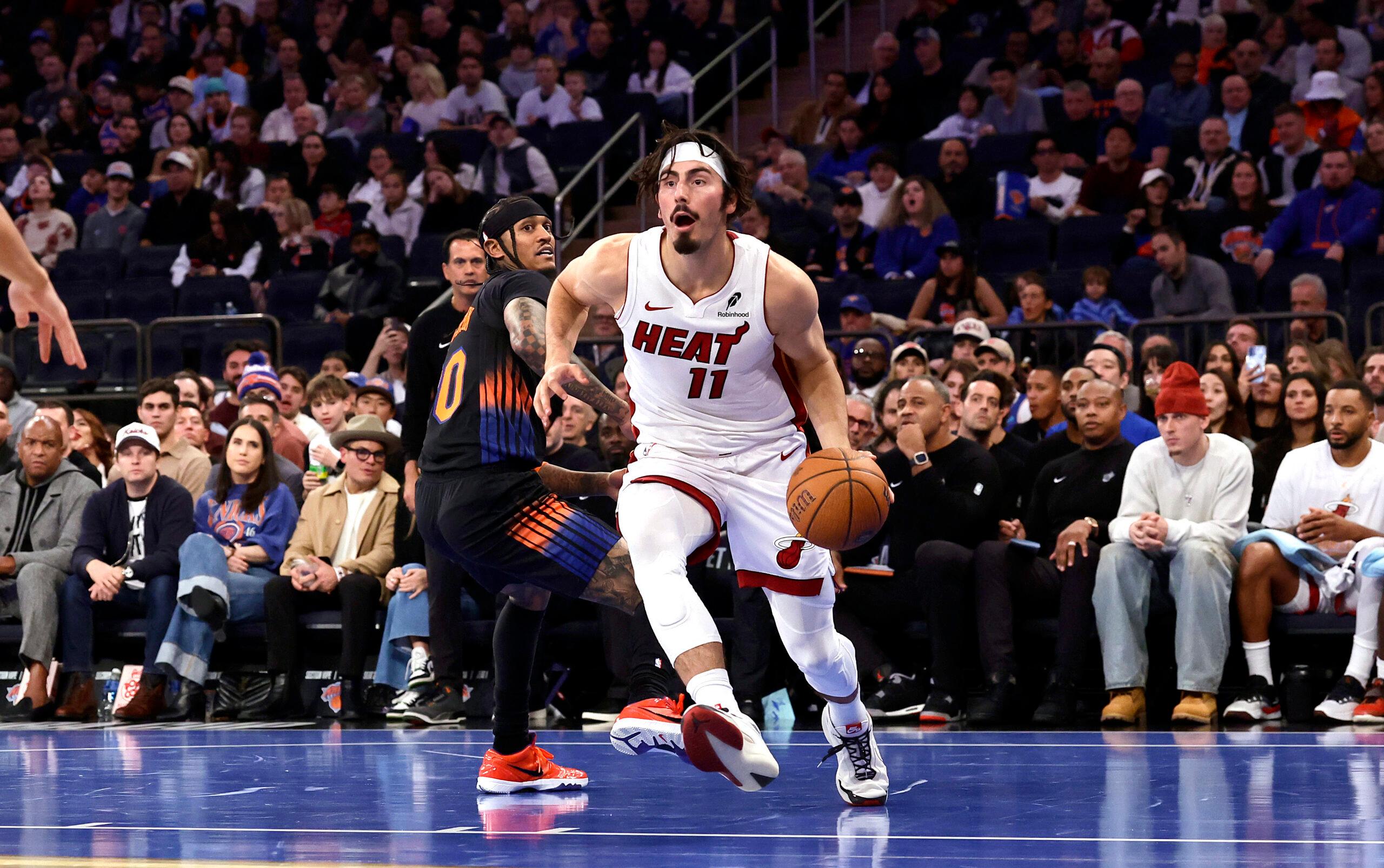
Sixth Man of the Quarter: Jaime Jaquez Jr.
We just covered how fast, random, and unselfish the Heat play. No individual is a more indicative beneficiary of their new style than the Jaime Highway. When he enters a game, Miami's tempo leaps from “pretty fast” to “the reason South Florida needs to film a new PSA about seatbelt safety.” After a season-long sophomore slump that saw his minutes get dramatically cut by Spoelstra, Jaquez is now averaging 16.2 points, 6.3 rebounds, and 5.3 assists in 30 minutes per game.
The man lives around the basket. He’s made the sixth-most layups in the league, and the only non-center who’s scored more points in the paint is Shai Gilgeous-Alexander. Going full speed, even in the half court, yields plenty of advantages. When the game (sort of) slows down, Jaquez unleashes exquisite footwork, handle, and touch, momentarily turning whoever’s on him into a personal butler:
I’m not sure whether there’s anyone in the league who does a better job at keeping defenders on their toes. I am sure there’s no one better doing it off the bench. It’s relentless commotion at full speed. The Heat rarely run set plays, but winding Jaquez up to race 70 feet in a straight line until someone stops him, then watching him solve the obstacle in a second or two, is plenty effective. So far, it’s also nearly unstoppable.
Honorable mentions: Isaiah Stewart, Jerami Grant, Collin Gillespie