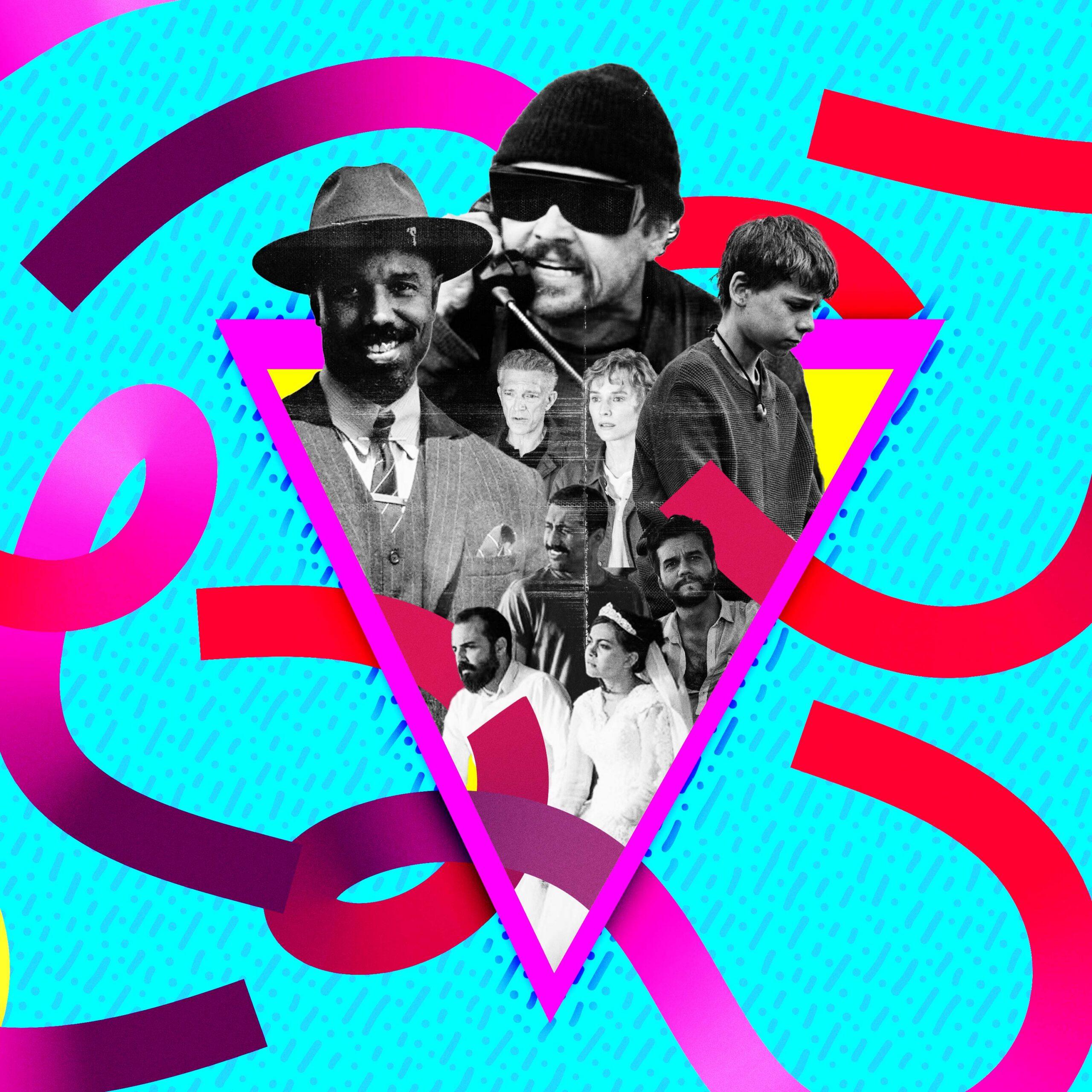
For a while there in the fall, I was getting worried that my year-end inventory of the year’s best movies would look an awful lot like the half-time list. Happily, a few good directors came through in the homestretch. There are, obviously, a few big-ticket titles conspicuously absent, either because I didn’t like them as much as other people did or because I didn’t get around to seeing them in time. There are also plenty of worthy films that didn’t make the cut, including Blue Moon, If I Had Legs I’d Kick You, Wake Up Dead Man, Friendship, The Phoenician Scheme, Sirat, Invention, Marty Supreme, By the Stream, Highest 2 Lowest, and The Woman in the Yard. As for trying to find a thematic through line among the movies below, the best I can come up with is that many of them feature resourceful (if not always upstanding) protagonists trying their best to get away with something in the shadows of institutional or political power. It’s as good a metaphor as any for the challenges facing filmmakers, in the U.S. or elsewhere, who are attempting to craft real, resonant movies in a moment when it seems like fewer people than ever can (or want to) tell the difference between cinema and slop—and when calling attention to these collapsing standards is seen as precious, pretentious, or worse. The best movies of 2025 made the audience come to them. That’s exactly as it should be.
Honorable Mention: Eddington
When Ari Aster’s janky, paranoid thriller premiered at Cannes, a significant percentage of critics complained that it was “too soon” for a movie satirizing COVID-era anxieties. What’s funny is how Eddington has already aged well just a few months later as a movie that’s not solely (or really) about the pandemic at all. Rather, it’s a satire about how easily all-American tribalism can be manipulated by power brokers with no skin in the game: “Your being manipulated,” indeed. Instead of castigating Aster for grasping at low-hanging fruit, it’s worth noting how smartly he’s torqued his fourth feature into a piece of local portraiture. To borrow an observation by filmmaker and programmer Adam Piron, New Mexico is a place shaped by symbols, and Eddington stages an all-out battle royale between myths and legends under the glittering, merciless specter of big tech.


10
Dracula and Sinners (tie)
Early on in Romanian sicko Radu Jude’s latest, a character standing in for the director explains that he would have been better off trying to make a modern version of Frankenstein—a monster with more allegorical muscle than his Transylvanian counterpart. Thankfully, Jude isn’t playing the same game of exquisite corpse as Guillermo del Toro or Robert Eggers. His Dracula is a scrappy, scabrous shape-shifter, encompassing everything from lo-fi documentary to faux–period piece drama to pornographic AI. Like Jude’s excellent previous film Do Not Expect Too Much From the End of the World, it’s demanding and rewarding in equal measure.
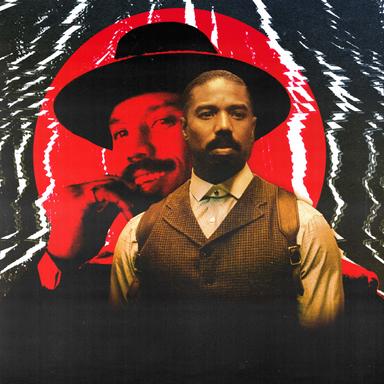
Interestingly, Jude’s underlying thesis about the commodification of folk mythology—and the predatory, bloodsucking relationship between different social and economic classes—proves strangely compatible with Sinners, a vampire movie that most people reading this list are far more likely to have already seen. The highlights of Ryan Coogler’s heavyweight multiplex flex still shine bright many months later, and adventurous (and patient) viewers are advised to seek out Jude’s art-house monstrosity for a perfect double bill.
9
28 Years Later
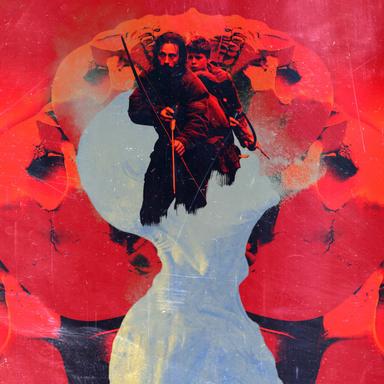
The images here refuse to recede. Danny Boyle’s postapocalyptic vision quest is the best future-shock phantasmagoria since the glory days of John Boorman. I’ve been hard on Alex Garland in the past, but the script for 28 Years Later is terrific stuff, leveraging literary allusions against the sort of pulpy propulsion endemic to great horror movies. All Boyle does, meanwhile, is direct the hell out of the material. The nighttime chase across the Lindisfarne land bridge is astonishing; the climactic set piece at the bone temple stages its confrontation-slash-contemplation of death as poetic spectacle. No modern zombie movie has done more with the theme of mortality: “Remember, you must love” is a potentially clichéd sentiment delivered so simply and powerfully by a genuinely Oscar-worthy Ralph Fiennes that it takes on the weight of a koan.
8
The Testament of Ann Lee
That’s her in the corner / that’s her in the spotlight: Playing the 18th-century Shaker priestess Ann Lee, Amanda Seyfried turns in a tour de force on the theme of a woman finding her religion. The buzz coming out of Venice and TIFF was that Mona Fastvold’s film was basically a wacky B-side to The Brutalist, but it’s actually the better movie: a weirder, wilder reckoning with American history and the pitfalls of assimilation, and a more original cinematic vision. It’s also funnier: There are moments of ye olde melodrama here that suggest a Very Special Episode of Drunk History, and I mean that as a compliment. Watching Seyfried’s Jesus Christ Superstar swaying her malleable, God-fearing flock away from earthly desires toward a doctrine of physical and spiritual purity is fascinating, but also pretty funny, especially given the erotic thrust(s) of the Shakers’ various dance parties. The passion and physicality of her acting suggest a fox in sheep’s clothing; in a year featuring several notable evocations of maternal fury and angst (Rose Byrne in If I Had Legs I’d Kick You, Jessie Buckley in Hamnet), Seyfried delivers the mother of all master classes.
7
Caught by the Tides
I already blurbed Jia Zhangke’s magisterial work of repurposed auteurism back in July; at the risk of repeating myself a bit, I’ll say that Caught by the Tides is most amazing for the way it collapses real and cinematic time, using bits and pieces of older Jia films to create something new. But, then, recurrence and repetition are encoded into the project’s DNA, and as a result, Caught by the Tides demands and rewards repeat viewings. Because Jia is such an adroit documentarian, his background keeps revealing layers of incident and meaning; because he’s such a clever conceptualist, there are echoes and connections across the various sections that come into focus slowly, the same way the grainy textures of the early passages eventually give way to the hyper-clarity of digital video.
6
The Mastermind
The title of Kelly Reichardt’s ’70s-set thriller is wryly ironic, of course: James (Josh O’Connor) may fancy himself an intellectual heavyweight, but it becomes clear that he’s not nearly as smart as he thinks he is. In fact, he’s a rebel without a clue, and the same oblivious, social-climbing hubris that motivates our antihero to risk his neck—and his cozy status as a suburban family man—on a smash-and-grab museum robbery pervades the film even after James is forced to go on the lam. The farther he gets from the scene of the crime, the more it’s clear he’s his own worst enemy. Reichardt excels in such running-on-empty scenarios, and O’Connor comes through with an excellently unsympathetic performance, effectively inverting and weaponizing his very real charisma against itself. (It’s the flip side to his terrific work in Wake Up Dead Man, in which he believably essays a role as a man of faith.) In lieu of salt-of-the-earth humanism, we get salt-in-the-wound satire, culminating in a wry final twist that comes out of nowhere only if, like James, you haven’t been paying attention.
5
The Secret Agent
The Brazilian director Kleber Mendonça Filho occupies a small group of filmmakers who manage to be enjoyably playful and deadly serious at the same time; his new thriller, The Secret Agent, is a dark story with a light touch. Set in Recife, Brazil, circa 1977—a “time of great mischief,” per the opening title card, alluding to the shameless and dangerous corruption of the country’s authoritarian government—the film centers on a political refugee (Wagner Moura) trying to finesse a new identity under the nose of corrupt government officials who want him dead. The cloak-and-dagger story line is marked by detours into social portraiture, as the protagonist intermittently hunkers down with the residents of an apartment complex whose proprietors are determined to shelter dissidents. There are also multiple sequences set in Recife’s movie palaces, where the imported horror movies on-screen (including Jaws) serve as giddy, supersized reflections of the population’s paranoia. The meticulously re-created period setting, all sweat-stained shirtsleeves and saturated local colors, suggests the work of a master filmmaker making the most of his resources. Moura’s soulful performance cuts through the deluxe nostalgia and ensures that Mendonça Filho’s affectionate and unsentimental fable about the bad old days resonates in the present tense.
4
Cloud
Kiyoshi Kurosawa’s caustic portrait of the scam artist as a young man opens on a crowded warehouse floor and ends with a nightmare at 30,000 feet—a trajectory mirroring the way the Japanese director can take an essentially grounded premise and elevate it into the stratosphere. Yoshii (Masaki Suda) is a frustrated factory worker trying to make a killing as an internet reseller; his online alias, “Ratel,” marks him as a human honey badger who doesn’t give a fuck whom he swindles along the way. That is, until his ripped-off clients decide to meet up and hunt him down, vigilante-style, with masks and weapons and plans to livestream his demise. In interviews, Kurosawa has talked about Cloud as a conceptual sequel of sorts to his millennial masterpiece Pulse; both movies deal with the idea of the internet as a portal for dark forces. But in lieu of ghosts yearning to be human, Cloud surveys a cluster of frustrated flesh-and-blood characters trying to indulge virtual-reality revenge fantasies IRL. While not technically a horror movie, Cloud is creepy and insinuating from the first frame to the last. Kurosawa is a superfan of John Carpenter, and he’s equally adept at peeling away the surfaces of modernity to expose—and wink at—the demonic forces that lie beneath.
3
One Battle After Another
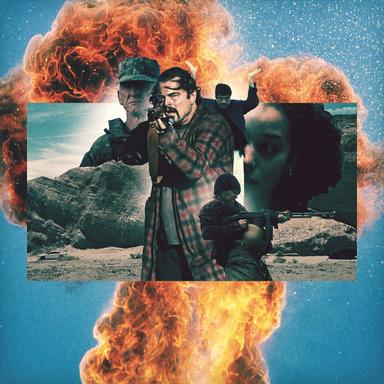
The sheer size and scope of Paul Thomas Anderson’s state-of-the-union address mean that the ecstatic early consensus has given way to a wave of multidirectional and in some cases rather damning critiques—as it should when a movie this big and ambitious (and expensive and politicized) plunks itself down in the center of a discourse with an insatiable appetite for de(con)struction. One Battle After Another isn’t perfect by any means, yet even its ostensible flaws are fascinating; the question is whether the fact that writers identifying at both the far-left and hard-right ends of the ideological spectrum seem ticked off by its contents means that the movie’s take on resistance and revolution is nuanced or irresponsible or wishy-washy. Maybe it’s all of the above: After multiple viewings, I take OBAA as the work of a filmmaker at the controls of the industrial equivalent of an 18-wheeler, swerving swiftly between images and ideas, refusing to stay in his lane. The serene velocity of the action sequences—and the sincerity of Leonardo DiCaprio’s girl dad anxiety—combine into something basically undeniable. But as a fan who typically enjoys Anderson’s films for the fissures and cracks in their immaculate surfaces, I’ll admit that the slightly anodyne textures of One Battle After Another have me squinting harder than usual. I also think that the visual rhyme between the final close-ups of Sean Penn’s and DiCaprio’s characters—two dads kicking back and relaxing while the future rushes up to meet the subject of their cross-country custody battle—is complex and provocative in a way that complicates the seemingly good vibes of the coda. Those little slivers of doubt are why I’m a believer.
2
The Shrouds
One of the saddest and funniest movies ever made about grief and all the wormy, insidious ways it burrows under our skin and into our brains. If I had a Best Actor vote for 2025, I’d give it to Vincent Cassel for his note-perfect evocation of a lonely, middle-aged tech bro rotting from the inside out (and looking good doing it, draped in Saint Laurent). There are so many stinging, vital, contemporary issues at play in The Shrouds—everything from digital surveillance to data mining to AI to climate change to the perils of self-driving cars—that it’s easy to miss how devastatingly romantic it is. Leave it to David Cronenberg to create an unholy trinity of femmes fatales (one living, one dead, one virtual) and to craft a narrative that strands its characters—and the viewer—in the uncanny valley between love and death. The simplicity of the film’s style isn’t a bug, it’s a feature; Cronenberg leaves the showing off to his acolytes and distills the horror (and humor) of mortality to its essence. In a moment when so many ascendant genre filmmakers are eager to profess their love for Cronenberg’s stringently visceral cinema—and to claim themselves as part of his brood—it’s vital to recognize and celebrate the real thing.
1
It Was Just an Accident
Turnabout is fair play: After stumbling across a man who looks and sounds uncannily like the government operative who spent several years torturing him in prison, an Azerbaijani mechanic kidnaps the stranger and subjects him to some vicious verbal and physical abuse of his own. He’s on the verge of murdering his captive when he decides he’d better get a positive ID, at which point Jafar Panahi’s Palme d’Or winner mutates—unsettlingly and hilariously—from a terse, stripped-down revenge thriller into a piece of existential slapstick wherein a group of former and present dissidents debates whether they’ve actually managed to get their hands on the enemy and what to do if they have. It’s impossible to watch It Was Just an Accident without thinking of Panahi’s own periods of incarceration, but it’s not as if the filmmaker is trying to efface such resonances—this is a deeply personal piece of work. But even for viewers unaware of Panahi’s long-running battles with Iranian authorities, his film’s inquiry into the quality of mercy—and how far it can be strained before breaking—is powerful enough to smash through cultural barriers. No movie this year feels more ferocious or forceful from beginning to end. The coda, meanwhile, follows you out of the theater.