
The Making of “Connor’s Wedding,” the Culmination of ‘Succession’
‘Succession’ creator Jesse Armstrong revisits Logan Roy’s death and walks us through the making of “Connor’s Wedding,” the best episode of the seriesThe Making of “Connor’s Wedding,” the Culmination of ‘Succession’
‘Succession’ creator Jesse Armstrong revisits Logan Roy’s death and walks us through the making of “Connor’s Wedding,” the best episode of the series
The title of Succession was a promise. At some point, media mogul Logan Roy had to die. The question for Jesse Armstrong, the creator of the HBO series, was when. Should he kill him in the pilot? At the end of the first season? Or what about with 20 minutes left in the finale?
Doing it too early, Armstrong tells me, would’ve been like when Mr. Burns tried to block out the sun on The Simpsons. “It would be foolish to destroy our sun,” he says. Doing it too late wouldn’t give people in Logan’s orbit enough time to react. Ultimately, the showrunner decided that the death should come in the third episode of the last season. “It was a card I had to play and that I thought I wanted to play because I wanted to see what would happen in the aftermath,” Armstrong says.
To preserve the surprise, Armstrong and the show’s writers hid the earth-shattering event inside a more … festive premise: Ultimately, Logan Roy, 84, unceremoniously croaks in “Connor’s Wedding.”
“I find it exciting in a TV show when something you don’t expect happens,” Armstrong says. “And putting it around there in the season—especially with the misdirect that Connor’s wedding was coming up—felt like another way of replicating the way that these things happen to you when you least expect them.”


The Best TV Episodes of the Century
After hearing the news about their father, Logan’s power-grabby children temporarily stop jockeying for position to process what the hell just happened. Everyone, including the deceased, is at their most vulnerable. The billionaire expires in the bathroom of a private jet, alone and miles above humanity. There’s no teary bedside goodbye to family and friends, just several futile rounds of chest compressions.
This was Succession at its tragicomic best. “Connor’s Wedding” is the highest-ranked addition to The Ringer’s Best TV Episodes of the 21st Century list, right at home with classics like “Pine Barrens” and “Ozymandias.” It was a Logan-centric world for three-plus seasons. Then he burned out. His demise was so seismic that, after the episode aired on April 9, 2023, the Los Angeles Times wrote a fake obituary for him.
“The king on the toilet, the death in the unexpected place, which is so often how it happens, and the physical indignity of medical interventions later on all felt like the stuff of a modern-day courtly drama,” Armstrong says. “It felt like good food for us to feast on.”
Writing a show filled with story lines that felt ripped from the pages of Bloomberg Businessweek sometimes made Armstrong anxious. “Real night sweats and kind of losing my shit,” he says. “Not knowing whether it was working or not and how much we had to get in.”
“Connor’s Wedding” was different. When Armstrong was piecing it together, he didn’t feel the weight of the show’s overall narrative arc. All he thought about was the Roys’ grief. And Armstrong had a pretty good idea of what Kendall, Siobhan, and Roman (oh, and Connor) were going through. “I have one thing I know that I am able to do,” Armstrong says. “I can sometimes, when I’m writing, go into a mode where I kind of know what everyone’s thinking. … It was sort of an emotional write, but it wasn’t a tough write in the way that sometimes those finale episodes and the tightly plotted business episodes with legal maneuvers and lawyers need to be.”
The episode did come with a bout of heartsickness, though. After all, he was snuffing out a character played by a colleague he adored. As soon as he and the other writers reached a consensus on the placement of Logan’s death, Armstrong knew that the first person he had to tell was Brian Cox, the actor who’d made Logan a megalomaniacal icon. Even before he told HBO CEO Casey Bloys.
“It’s respectful,” Armstrong says. “But he’s a professional. I wasn’t expecting it to be fireworks. But it was a great role. And I loved working with him, and I think he enjoyed working on the show, so it felt like a significant thing. So yeah, I felt a bit like a little boy going off for his first day of school.”
Armstrong broke the news to Cox, who’s never been afraid to share his strong opinions publicly, at a restaurant in London. “I was nervous because I’m very fond of him,” Armstrong says. “I knew how important he is to the show. And there was a chance, I thought, that we would fuck up the end of the season because once you take the sun away, maybe the gravitational force would no longer work. And this sort of coup de théâtre of killing him off might have been a really dumb idea, which would’ve been additionally embarrassing.”
To Armstrong’s great relief, Cox was on board. “He took it fine,” Armstrong says—even if the actor wasn’t exactly jumping for joy. “I don’t think he loved it. I think he could have seen a couple more good episodes and we could have written a couple for him. But I think it was for the good of the show. So yeah, it was tough.”
Armstrong wanted the death to be profoundly jarring, for both Logan’s kids and the audience. “The most radical version was we never went to the plane where it happens,” he says. “I did consider whether that would be interesting. It felt to me that that started to become tricksy and also might raise the question in the viewers’ minds of whether what we would be telling them was real, and I didn’t want to get into those particular games. As it happens, something I wasn’t really expecting was a number of people I’ve spoken to have said that they wondered if it was a fake out. I didn’t intend to lay the breadcrumb trail of a fake out, but often you don’t even realize what you’re doing in your own show, I’ve discovered.”
The only look we get of Logan’s face in the episode is when he’s receiving chest compressions. Posthumously. It’s a composite shot; Cox’s face is overlaid onto a stunt double’s. The actor has said he couldn’t bring himself to watch the scene.
“I have no interest in watching,” Cox told the BBC. “My own death will come soon enough.”
With the manner and time of Logan’s death settled, there was one lingering question for the Succession writers: How would his semi-estranged brood learn that their father was gone? Which prompted one more question: “How would this really happen?” Armstrong says. “Which is sort of a tenet of the whole show.”
The most likely scenario wasn’t exactly cinematic. The Roy kids would probably find out via a cellphone call. But that’s what Armstrong went with. The drama begins when Tom Wambsgans rings Roman from the air. “In history, you often get an execution for being the one who brings the bad news,” Armstrong says. “As a good courtier, I think [Tom] knows it’s not always good to be the person who delivers the very bad news. You somehow get besmirched by it.”
If there’s anyone who can take the hit, though, it’s Tom. He is Waystar Royco’s “pain sponge.” When Roman picks up, Tom gets to the point—without being a dick. “Roman, your dad is very sick,” he says. “He’s very, very sick.”
It’s the kind of moment that Matthew Macfadyen always played perfectly as Tom. “Matthew is an actor with such a delicate dial of calibrating his performance,” Armstrong says. “So to be able to be humane and then tougher, it’s great to see.”
Macfadyen wasn’t on the plane set that day. He actually made that cellphone call live, from his home in England. “So that the cast could react with him,” Armstrong says. “Stuff like that just is so valuable for getting performances on both ends.”
Armstrong and director Mark Mylod wanted the action to unfold in real time. “Especially the breaking of the news to each of the siblings,” Armstrong says. That meant, if possible, trying to orchestrate an unbroken scene that ended up running close to half an hour long. “The feeling was sort of an emotional one-take,” Armstrong says. “We wanted to be able to cut around for different stuff, but we wanted to stick with emotions, rather than valorizing the technical achievement of a oner. But there is undeniably something that happens when you don’t cut, which we utilized.”


More on ‘Succession’
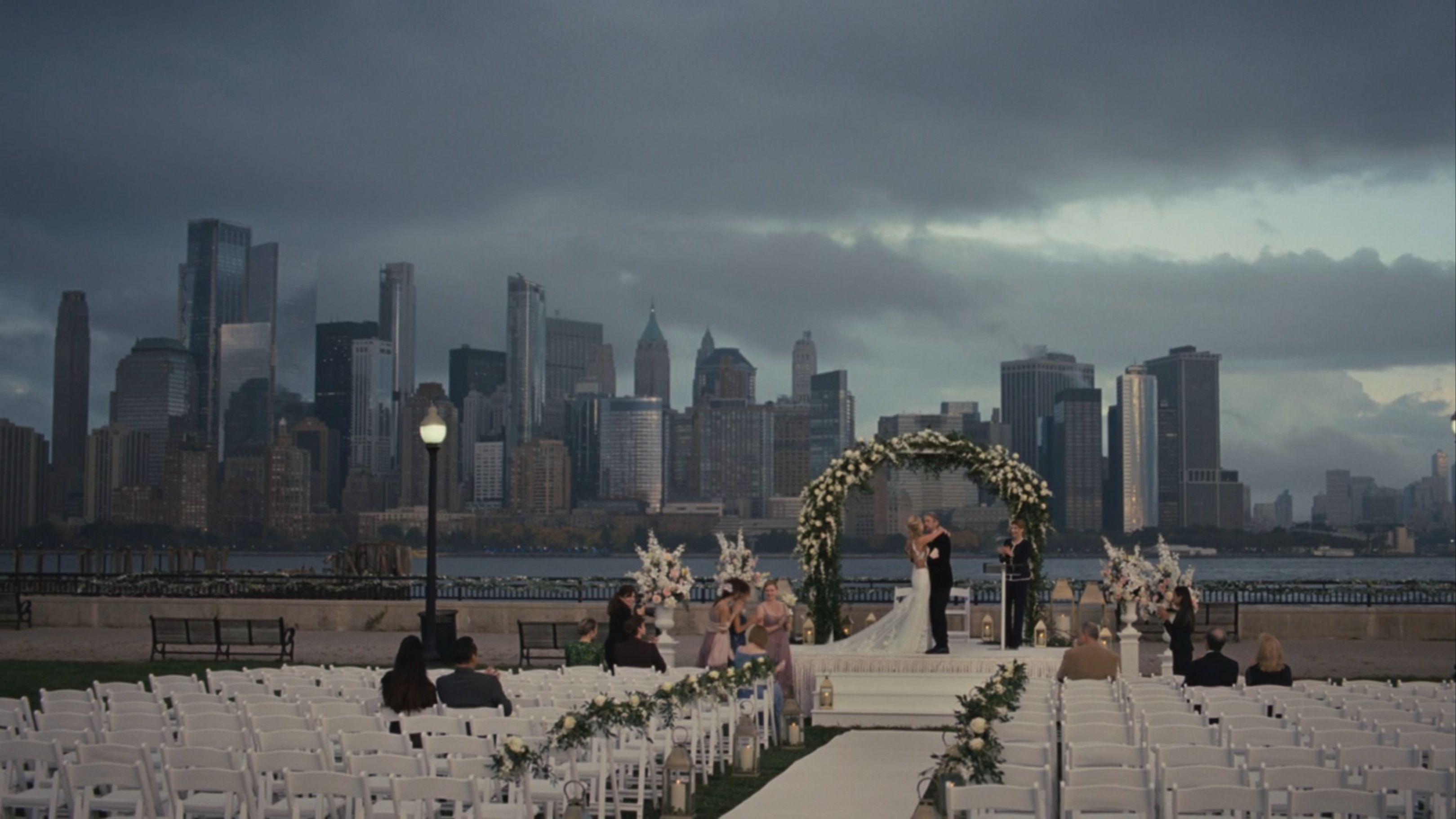
Because a reel of the 35-millimeter film that they used lasted only about 10 minutes, Mylod and his crew had to reload on the fly. Staging Connor’s wedding on a 210-foot yacht sailing through New York Harbor only added to the chaos. None of the characters on the Hornblower Infinity knew what was about to happen. Armstrong hoped that no one watching at home would find out ahead of time, either.
“We never had Game of Thrones viewer numbers, but I was really keen for us to keep it a secret,” he says. “Warner Bros. have some pretty scary people who show up to talk to the supporting artists. And I think in the end, we took the view of ‘You’re professionals; we can’t hide this from you.’ There’s 200 people or something, and we made a sort of plea to fellow professionals. ‘It’d be so fun …’—fun is a weird word to use—‘It’d be so nice for this to be a surprise when it goes out.’ And they were brilliant. I don’t think there was any whiff of a leak.”
Armstrong is thankful for that. The element of surprise is crucial. “I knew that I wanted to see the news hit with no sense for the audience of what was coming,” he says. “And then I knew I wanted to be with the kids as they each absorbed the striking of the information into their mainframes.”
During Tom’s initial call, Roman puts the phone on speaker so that Kendall can hear. Right away, the brothers seem bewildered. They start to finally digest how dire things are when Tom tells them they should speak to their dad—and he puts the phone to Logan’s ear.
Roman is clearly in denial. When he addresses his father, all the petulance and snark that Kieran Culkin usually infuses him with melts away. “You’re going to be OK,” he says, sounding like a scared little boy. “Because you’re a monster. And you’re gonna win. ’Cause you just win. And you’re a good man. You’re a good dad. … You did a good job.”
Kendall, on the other hand, can’t fully shake his bitterness. “I love you, Dad. I do. I love you. OK? And it’s OK,” he says. “Even though you fucking—I don’t know. I can’t forgive you.” Jeremy Strong allows just the right amount of sadness to poke through his stoicism. Particularly when he calls Logan’s longtime confidant Frank Vernon and asks to talk to the pilot. “He’s flying the plane, son,” Frank says, before managing to gently confirm to Kendall that Logan is gone.
“Peter Friedman gives a very memorable performance [as Frank],” Armstrong says. “I think that sort of paternal toughness, you just get a sense of a dad who would’ve been, maybe, a better dad for Kendall and been able to put things in perspective or sort of hold his world for him in a way which Logan never was.”
Like Roman, Shiv isn’t ready to accept what Kendall and Roman have told her. “No. No,” she says through tears. “I can’t have that.”
Sarah Snook’s wrenching performance in the scene shook up Armstrong and Mylod. “Sarah made me and Mark Mylod both cry at the monitor, which is not something that happens very often to me,” Armstrong says. “We didn’t repeat it tons, but to be able to do that three or four times even for those long takes was pretty remarkable. The rawness was extraordinary.”
Like so much of real life, on Succession there was often something funny to be found in morbid situations. Naturally, “Connor’s Wedding” has no shortage of gallows humor—like when Shiv and Kendall, after the shock starts to wear off, tell their older half brother that their father is dead. After processing what he’s heard, Connor blurts out, “He never even liked me.” The perennial afterthought quickly takes back that proclamation, but it’s the most clear-eyed realization in the entire series.
Back on the plane, Logan’s traumatized assistant/mistress Kerry is unnervingly smiley. It’s a subtly hilarious bit of acting by Zoë Winters. “One of those things you write and it’s easy enough to write, like, ‘Oh, she comes in and she’s freaked out and she’s got an inappropriate smile or laugh,’” Armstrong says. “But it’s a razor’s edge for an actor to walk. And if you don’t get it, the whole soufflé doesn’t rise. We knew by then how brilliant Zoë was, but that was brilliant.
“Sometimes people have those odd reactions to deaths, don’t they? … And Kerry seemed like the perfect person for that. And I guess as soon as you have that, it’s like, ‘How do you get within this bleakness?’ We all know that in the darkest moments that some funny things happen. With your siblings or your close friends, you’re able to acknowledge those. And she was like that crack of light that let us do a tonal swerve.”
Tom, like usual, immediately takes the piss. “Judging by her grin,” he says, “it looks like she caught a foul ball at Yankee Stadium.” To Armstrong, that was actually foreshadowing. “I guess you saw a little glint of what becomes evident at the very end of the season: Tom’s ability to recalibrate and switch his codes from a pretty decent, caring delivery of the news to the one who’s got a little harder heart.”
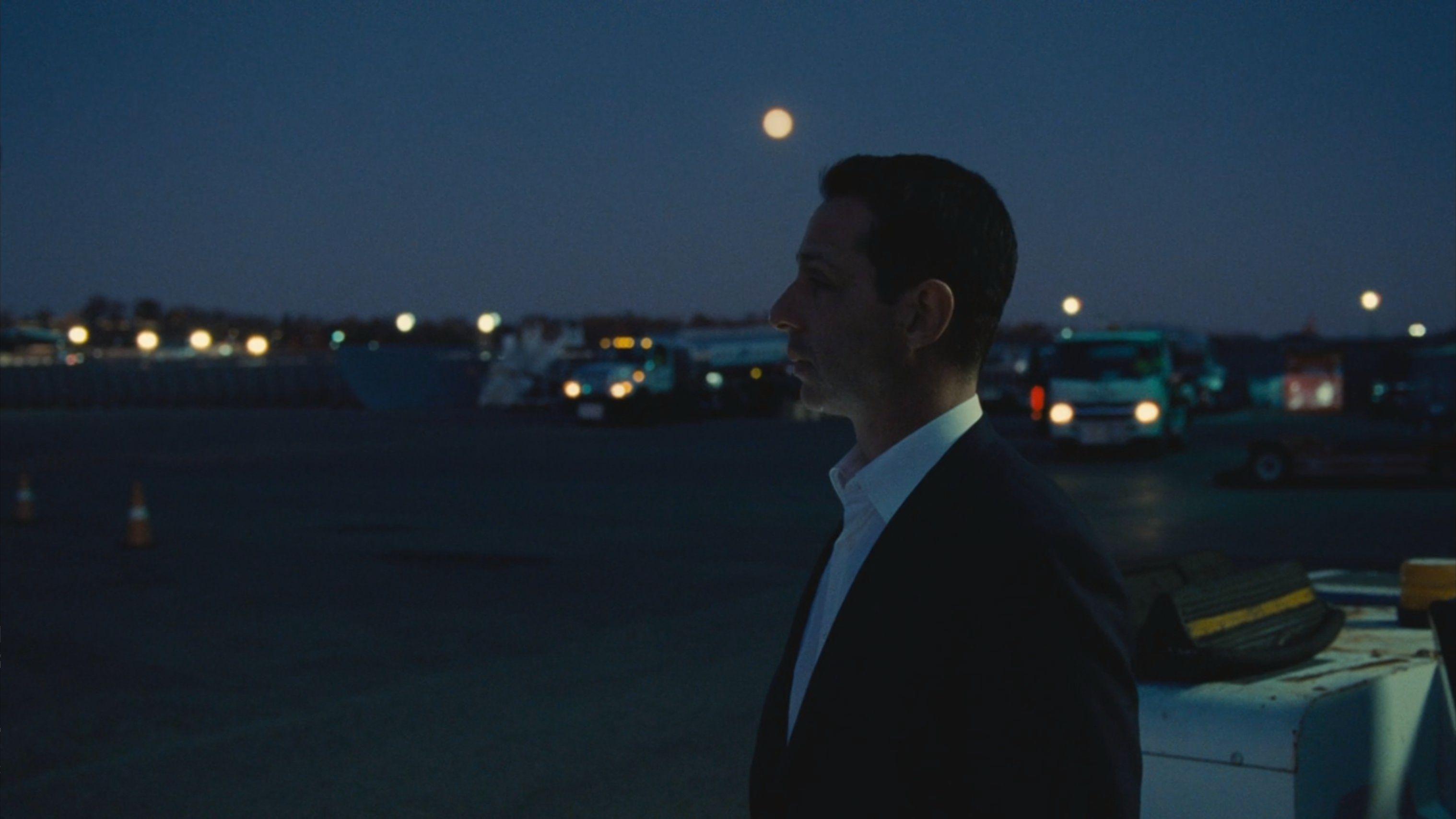
As “Connor’s Wedding” draws to a close, the tone swerves toward earnestness. With Logan out of the picture, Tom realizes he might be up shit’s creek. “I lost my protector,” he tells Cousin Greg. Connor and Willa have a sweet exchange in which she says she won’t back out of their marriage. And the rest of the Roy children, even the still in denial Roman, start to realize that they’d better steel themselves for what’s coming. “What we do today,” Kendall says, “will always be what we did the day our father died.”
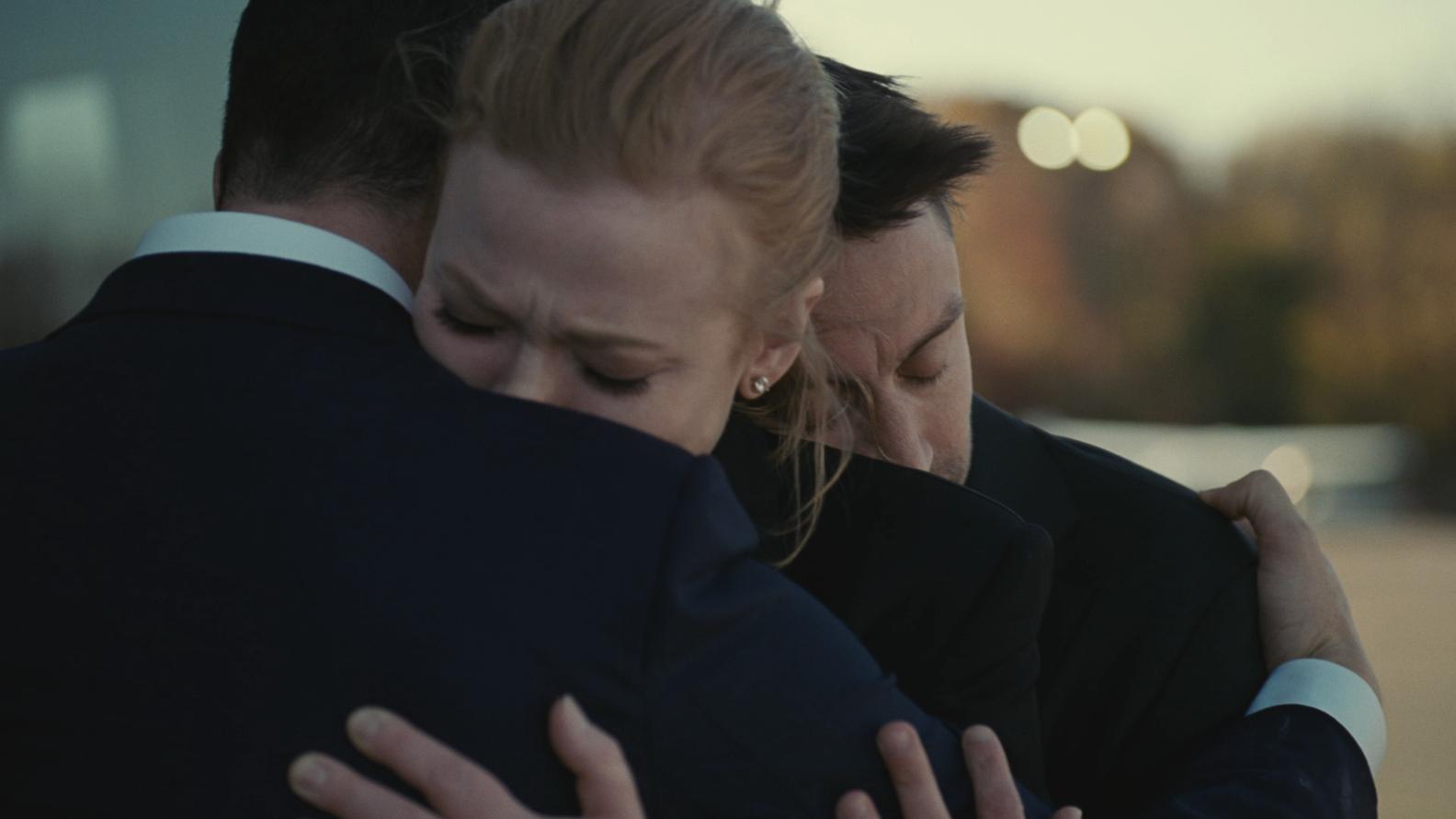
After addressing the press at Teterboro Airport, where Logan’s plane has just landed, the Roys gather and try to decide whether they should go see their father’s body. “I mean, he’s not gonna get angry if we don’t,” Shiv says. At that point in his script, Armstrong wrote this: “Shiv looks at them. Almost a smile. He’s gone. He doesn’t get to be angry anymore. She kisses or touches or hugs her brothers.”
Thanks to Snook, Strong, and Culkin, the moment is even more affecting than it is on the page. With the sun setting behind them, Shiv hugs Kendall, and Roman hugs her. The Roy sandwich stays together for only a few seconds before it abruptly breaks apart. Maybe forever.
“I remember a certain amount of time pressure on the actors, which I don’t think we had on the boat,” Armstrong says. “So that was tough. But that was another day I remember thinking, ‘I’ll try and remember this because you don’t get tons of these moments in a career.’”
Both Armstrong and Mylod received Emmy Awards for “Connor’s Wedding.” These days, looking back on how that episode came together makes the creator of Succession a little emotional.
“It’s still pretty recent when the show ended, but for me, it’s starting to feel like quite awhile ago,” Armstrong says. “And it feels rather dreamlike now as I live here in London doing my normal life, the constellation of talents that were brought together for the show. I can feel pretty misty-eyed when I think about how brilliant they were and the feeling of watching it come together. And you don’t always know if things are going to work, but it really felt like it was working—just dramatically, being able to see it in that play-like fashion. There have been other big scenes in the show where I haven’t been sure we’ve got it until you get to the editing room. But that one, me and Mark were just very excited about the stuff we were capturing. It was emotionally grueling, and no one was high-fiving or lighting big cigars because it wasn’t the vibe. But it felt like: We’re doing the best we can.”