Discover
anything

THE 100 BEST EPISODES of the Century

Presented by

More than seven years ago, in July of 2018, The Ringer published its ranking of The 100 Best TV Episodes of the Century. The list came at a quasi-end of an era for television, which made its timing apt, and we as a staff sought to encapsulate the medium in all of its genre-spanning, highbrow-to-lowbrow glory. About a year later, both Disney+ and Apple TV+ launched, kicking off the streaming era in full and redefining the term “Peak TV.” (In 2018, 495 scripted shows were produced, a number that continued to rise annually, peaking in 2022 with 600 shows.)

You could say we’re now at another quasi-end of an era for television: The Streaming Wars have been settled, the number of produced scripted shows has plateaued, and consolidation is approaching. Considering that, and the fact that we’re officially a quarter of the way through the 21st century, the timing feels right to update and rerelease The 100 Best TV Episodes of the Century for 2025. 

The process this go-around was almost identical to the first time: The entire Ringer staff was asked to submit their favorite episodes since July 2018, the first time this ranking was published. The list was then assembled with those submissions in mind. There were a few stipulations:

  • As with the 2018 list, only one episode per show could make the cut. 
  • We also didn’t want to get bogged down in relitigations, so only episodes released after July 2018 were considered to be added to the list. Furthermore, only shows that released episodes after July 2018 were eligible to have their entry on the list changed. For example, we did not argue over The Sopranos’ “Pine Barrens” versus “Long Term Parking,” but we did debate whether Better Call Saul’s “Chicanery” should be replaced by an episode from later in that show’s run. (Keep reading to see where we landed.)
  • We took great pains not to be weighed down by recency bias, which was hard because the explosion of the streaming era means that there was a lot of TV to pore over—there legitimately may have been more television made over the past seven years than in the first 18 years of the century. All in all, 27 episodes were added to the top 100, which feels spiritually and mathematically correct (seven years is 28 percent of a quarter century, etc.).
  • Finally, we were determined to maintain the spirit of the original undertaking, whose mission was to encapsulate all of television, not just the prestige dramas and buzzy comedies. 

The result is a list of 100 episodes of TV that covers the medium’s vast variety of genres and greatness while also bringing the original list into the modern day. (But don’t worry; if you want to see the original ranking from 2018, just click the toggle in the overhead toolbar. For better and worse, it’s quite the blast from the past.) Without further ado, here are The 100 Best TV Episodes of the Century. —Andrew Gruttadaro

100

“She Lied to Me”

Love Is Blind S6 E5

Directed by Brian Smith
Watch on Netflix

After only 10 days of getting to know her through a wall, Jimmy gets down on one knee and proposes to Chelsea. He insists that he’s a changed man after realizing that physical attraction is not a prerequisite to falling in love. Importantly, however, as he’s “blindly” fallen in love with Chelsea, she has heavily implied that she looks like Megan Fox, the straight-man-mind’s-eye equivalent of MDMA. So when the doors open on their first in-person meeting and it is revealed that Chelsea doesn’t really look like Megan Fox, like, at all, we watch Jimmy unpack all he thought he’d learned about love and attraction—and expectations—until he hits us with the titular line: “She definitely lied to me on some, uh, how she looks.”

What is the episode’s most iconic moment?
This episode of television is exactly why I say that if you watch reality TV, then anything Nathan Fielder or Tim Robinson has ever made is basically child's play. Take the part when the door opens and Chelsea squeals, “I can’t run” but still attempts to in a dress that is very fitted around her knees and, in doing so, moves toward Jimmy kind of like … a T. rex on a balance beam. In this moment, Jimmy and Chelsea are certainly dealing with a lot of thoughts and feelings—but as is most often the case with reality TV, it’s the editors who construct our thoughts (“no!”) and feelings (“nooo!”) at home. Like when they capture Jimmy looking directly into the camera like Jim from The Office as Chelsea excitedly hugs him, or when they cut from Jimmy skeptically saying, “Chelsea told me she looks like Megan Fox” in his testimonial to Chelsea exclaiming, “I’m so sweaty!” These are all completely understandable private reactions … and are all a wonder and horror to publicly behold.

How did this episode influence the future of TV?
Netflix made an entire genre out of doing pseudoscience experiments with Love Is Blind, The Ultimatum, The Circle, and more. And while they have absolutely never proved whether love is or is not blind, Chelsea did prove that you have to allow the pseudoscientific method to do its pseudo-work in a pseudo-situation like this one. If you try to skirt the system, the system will likely skirt you. To my knowledge, since Megan Fox–gate, celebrity doppelgängers haven’t been invoked, on Love Is Blind or any other reality show. —Jodi Walker

99
Season Finale

“The Verdict”

Jury Duty S1 E8

Directed by Jake Szymanski
Written by Lee Eisenberg, Gene Stupnitsky, Marcos Gonzalez, Mekki Leeper, Evan Williams, Kerry O’Neill
Watch on Prime Video

For an experimental TV show whose basic premise was “Yo, let’s warp the reality of an innocent rando, The Truman Show style,” Jury Duty delivered a surprisingly wholesome final verdict: that there really are still good-hearted people out there, just doin' their best in a world full of actors!

What is the episode’s most iconic moment?
The one that we’d all been waiting for since the beginning of the series, of course: the big reveal that everything Ronald Gladden thought he knew about his weeks-long civic duty as a sequestered juror was a big orchestrated lie. The trial? The judge? The documentary about the judicial process that Gladden thought he was in? All his extremely hectic fellow jurors, including that asshole James Marsden? Fake, fake, fake, fake! (Marsden, while real, is reportedly much nicer than that.)

What is the best behind-the-scenes anecdote about this episode?
In a CBC interview, Jury Duty director Jake Szymanski spoke of one late-season stunt—in which Marsden narcissistically smashes someone else’s birthday cake—that appeared to distress dear sweet Gladden deeply enough that the production crew had to call an audible and scramble to patch things up. “When you're dealing with a real human person with real emotions,” Szymanski said, “that's where it gets tricky.” —Katie Baker

Honorable Mentions for the Best TV Episodes of the Century Update

There’s been so much TV since The Ringer first published this list in July 2018. It was not easy to keep the additions to this Hall of Fame to a reasonable number. We probably could’ve made an entirely new ranking of 100 episodes. But difficult decisions were made—these are the episodes that just barely missed the cut.

  • “Illusions,” Mare of Easttown (S1E5)
  • “Pilot,” Yellowjackets (S1E1)
  • “Filmed Before a Live Studio Audience," WandaVision (S1E1)
  • “Bisquik,” Fargo (S5E10)
  • “German Week,” The Great British Baking Show (S12E5)
  • “Episode 4,” Baby Reindeer (S1E4)
  • “Anna Ishii-Peters,” Pen15 (S1E9)
  • “The Rescue,” The Mandalorian (S2E8)
  • The Saquon Barkley episode of Hard Knocks: Offseason (S1E1)
  • “Green Queen,” The Curse (S1E10)
  • “Man on Fire,” Formula 1: Drive to Survive (S3E9)
  • “What I Know,” The Boys (S2E8)
  • “Elora’s Dad,” Reservation Dogs (S3E9)
  • “The First Book of Taylor,” The Secret Lives of Mormon Wives (S1E1)
  • “End Game,” The Queen’s Gambit (S1E7)
  • “Episode 8,” Normal People (S1E8)
  • “Half the Money,” Yellowstone (S4E1)
  • “The Tale of the Ronin and the Bride,” Blue Eye Samurai (S1E5)
  • The Timothée Chalamet episode of College GameDay
98

“What Happens in Cabo”

Laguna Beach S1 E5

Directed by George Plamondon
Executive Producers Julie Auerbach
Watch on Paramount+

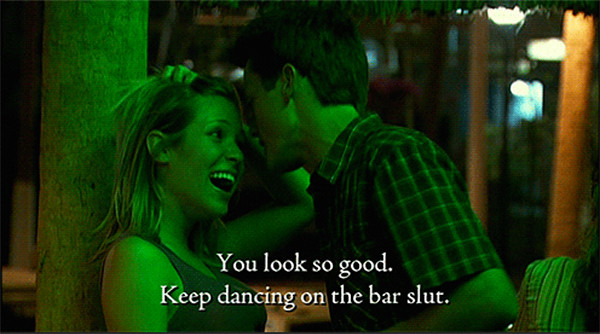
When it’s spring break in Laguna Beach, you go to Cabo, the magical land of drama and underage drinking. With Kristin and Stephen broken up, L.C. sees an opportunity. Kristin, meanwhile, acts like a completely normal single girl, while Stephen has a breakdown and vigorously slut-shames her for it.

What is the most memorable line from this episode?
“What happens in Cabo stays in Cabo.” It’s a line that so efficiently lays down the rules of spring breaks across the globe—one that is so good that seemingly everyone in the Laguna Beach cast says it at least once in a 26-minute span.

What is the episode’s most iconic moment?
“Iconic” might be the wrong word, but Stephen’s freakout over seeing Kristin dancing on a bar is at least one of the most memorable scenes in reality TV history. Shockingly (at least on rewatch), the show depicts Kristin—a teenage girl with free will, unbound by any commitments—as the villain, and Stephen as the hero, as he shouts “Slut!” across a Mexican bar like a sentient Twitter egg. The framing of Laguna Beach certainly hasn’t aged well, but they should still get some credit for, in one shot alone, showing us such a clear depiction of toxic masculinity before the phrase was even popularized. —Andrew Gruttadaro

97

“Blink”

Doctor Who S3 E10

Directed by Hettie Macdonald
Written by Steven Moffat
Watch on Prime Video

Sally Sparrow (Carey Mulligan!) discovers that the Doctor, a time-traveling Gallifreyan stuck in the past, has left a series of messages in her DVD collection warning her about the Weeping Angels, monsters who appear frozen in angelic statue when looked upon but who attack in an instant if you even blink. Hence the episode title.

What is the best behind-the-scenes anecdote about this episode?
The episode falls into a category of “Doctor-lite” scripts for the BBC series, in which the Doctor is relegated to what amounts to a guest-starring role in someone else’s story. (Imagine an episode of Curb that focuses on Marty Funkhouser and features Larry David via Skype.) “Blink” allowed showrunner Russell T. Davies to work on two episodes simultaneously: one prominently featuring the Doctor (David Tennant) and his companion Martha Jones (Freema Agyeman) and CGI effects, and “Blink,” which barely featured the protagonists and whose main villains were statues with spooky lighting.

How did this episode influence the future of TV?
Doctor Who has been on the air in various forms since 1963 and, like Batman, has a rogues’ gallery of recurring villains. The show has been criticized for playing those hits too often—every season has to have some appearance by the plunger-armed murderous BBQ smokers known as the Daleks—so the creation of a new and rather frightening adversary in the Weeping Angels was noteworthy. They made six other appearances and played a pivotal role in the departure of Doctor companions Amy and Rory, who—spoiler—blinked. —Rubie Edmondson

96

“Episode 46.5”

The Price Is Right S46 E5

Directed by Adam Sandler
Written by Mike Richards, Evelyn Warfel

Celebrating Drew Carey’s 10th anniversary as Price Is Right host, the show raised the stakes, awarding contestants $10,000 if they hit a dollar on the wheel and $25,000 if they hit a dollar again on their additional spin. In a sequence of sheer madness and impossible chance, three people hit a dollar five times in a row, and a record-setting $80,000 was given out.

What is the most memorable line of this episode?
“We’ve given away $80,000 just on this wheel spin,” Carey says in a fit of laughter, partially stunned and perhaps partially considering if this could bankrupt the show.

Who stole the episode, and why?
The wheel itself? The odds of hitting the dollar five times in a row are apparently 1 in 3.2 million, and the stakes were already raised to begin with. We talk about impossible-to-beat sports records—Cal Ripken’s consecutive games played, Wilt Chamberlain’s 100 points—but barring an extreme rewriting of the Price Is Right rules, the odds of this moment being topped are nearly impossible. —Miles Surrey

95

“Episode III”

The Last Dance S1 E3

Directed by Jason Hehir
Watch on Netflix

The Dennis Rodman episode. A peek under the soil at the Worm, a Hall of Fame enigma and X factor. We get the full story arc of an all-time character, from his days with the Bad Boys Pistons to his peak with Michael Jordan’s Bulls (and Madonna).

What is the episode’s most iconic moment?
Maybe the coolest hatchet burying in history and the turning point in Michael Jordan and Dennis Rodman’s relationship. It was 1995, and Jordan was furious with Rodman for foolishly getting kicked out of a game. Rather than just apologize, Rodman extended an olive branch in a way he knew Jordan would appreciate: He showed up to MJ’s hotel room that night and asked, “Man, you got an extra cigar?” Jordan did, of course, and recognized that it “was [Rodman’s] way of saying, ‘I fucked up.’” From there, the two Hall of Famers got on the same page and went on to win, oh, wow, this can’t be right … the next three titles.

What is the most memorable line from this episode?
“You don’t put a saddle on a mustang.” Words of wisdom from former Pistons coach Chuck Daly. And the Zen master himself understood that, too: Phil Jackson got the most out of Rodman not by controlling him after his burnout with the Spurs, but by letting him loose in all the right ways. Before there was ever Manny being Manny or Russ being Russ, there was let Dennis be Dennis. —Matt Dollinger

94
Season Finale

“11:00 P.M – 12:00 A.M.”

24 S1 E24

Directed by Stephen Hopkins
Written by Joel Surnow, Michael Loceff, Robert Cochran, Howard Gordon
Watch on Hulu

How’s that for a happy ending? After successfully rescuing his daughter from terrorists and foiling an assassination plot, Jack Bauer gets to the end of the longest day of his life (one of many to come), only to find out that his ex, Nina Myers, is a double agent. In the final seconds of the episode, we find out that Nina has murdered Jack’s wife, Teri.

How did this episode influence the future of TV?
24 paved the way for shows like Game of Thrones. There had been twists in television before, but 24 weaponized them. Audiences generally came to television to be comforted, knowing that everything would eventually work out. 24 was an assault on the senses, and the final episode of the first season changed what we thought the rules of mainstream TV entertainment were. The hero might “win,” but at great personal cost. 

What is the episode’s most iconic moment?
Teri Bauer noticing the blood on the floor in the tech room with Nina. It’s a wrap for you, sis. —Chris Ryan

93

“The Theater and Its Double”

Euphoria S2 E7

Directed by Sam Levinson
Written by Sam Levinson, Ron Leshem, Daphna Levin
Watch on HBO Max

The hard-living teens of Euphoria High get the school play they deserve as Lexi breaks out of her shell, debuts her melodrama master class, and puts on a production that would bankrupt even the richest academic institution’s theater department.

Who stole the episode, and why?
It brings me no pleasure to declare that “The Theater and Its Double”—and truthfully, most of Euphoria Season 2—is largely a showcase for America’s most infamous jean model, Sydney Sweeney. It’s further proof that when she’s given down-the-middle, “prestige” material, like Christy, Sweeney is largely forgettable. But when she’s able to go full gonzo mode—like in Immaculate or the unhinged mirror scene from this episode—there are very few actors you’d rather have hamming it up.

What is the most memorable line from this episode?
“Wait, is this fucking play about us?” Yes, it is, Maddy, right down to the Kat stand-in gyrating in front of a webcam. It’s only right that the characters got to experience the same surreality that we viewers have enjoyed throughout Euphoria’s run, even if it bears no resemblance to how you remember high school. —Justin Sayles

92

“The Balmoral Test”

The Crown S4 E2

Directed by Paul Whittington
Written by Peter Morgan, Jonathan Wilson, Malcolm McGonigle
Watch on Netflix

Margaret Thatcher and Diana Spencer visit the queen's country estate in Scotland, Balmoral Castle, where they have to prove that they can hang with the royals by walking around with dogs and shooting stuff. The future Princess Di nails it. Thatcher, not so much.

What is the episode's most iconic moment? 
Diana and Prince Philip are stalking around in their Barbour coats looking for something to shoot when, lo and behold, Diana spots a noble stag at the top of a ridge. They stare at it significantly for a while, and Diana proves that she's a natural aristocrat by correctly guessing which way the wind is blowing so that Philip can shoot it. Philip shoots it. Diana has passed the Balmoral Test. The family, having done all the due diligence anyone needs to do when selecting a future monarch, will now encourage Charles to marry her. Nothing can possibly go wrong.

Who stole the episode, and why? 
Gillian Anderson, as Thatcher, excruciatingly embodies the fish-out-of-water prime minister's mounting horror as her visit to the castle reaches heights of social awkwardness even Great Britain has never seen before. Her sour-faced combination of humiliation and distaste as she puts every conceivable foot wrong in an environment she loathes will be recognizable to everyone who's ever face-planted in slow motion over a long weekend. Or, wait, is that just me? —Brian Phillips

91

“The Girl Who Pushes Tyra Over the Edge”

America’s Next Top Model S4 E7

Written by Tyra Banks, Kenya Barris, Ken Mok
Executive Producers Tyra Banks, Anthony Dominici, Ken Mok
Watch on Hulu

The contestants complete a silly challenge (do cockney accents next to Boris Kodjoe) and pose for an uncomfortable photo shoot (pillow fight with a male model while being sprayed with feathers). But the true stuff of memes goes down when Tyra eliminates underdog model Tiffany Richardson, Richardson responds flippantly, and Tyra just snaps.

What is the episode’s most iconic moment?
If you’re a citizen of the internet it’s probably already playing on loop in your head: the typically composed Tyra, in a black tube-top dress, standing before two girls onstage, her fiery red hair bouncing as she screams, “I WAS ROOTING FOR YOU! WE WERE ALL ROOTING FOR YOU. HOW DARE YOU?”

The scene has since been chopped apart and memed to no end, becoming a go-to mode of expression in online vernacular. An episode of Family Guy even memorably portrayed Tyra as a model who, mid-angry speech, transforms into a lizard and swallows a contestant.

What is the best behind-the-scenes anecdote about this episode?
In a BuzzFeed News feature published in 2017, Richardson alleged that Tyra also took digs at her socioeconomic status, yelling, “You can go back to your house and sleep on your mattress on the floor with your baby,” but that line was edited out of the episode. Richardson also revealed that Tyra and her mother, Carolyn London, later visited her in her hotel room to smooth things over. Immediately after that meeting, which Richardson says left her feeling “juiced up,” producers filmed an exit interview to capture a more hopeful resolution to the conflict. —Alyssa Bereznak

90

“Preggers”

Glee S1 E4

Directed by Brad Falchuk
Written by Brad Falchuk
Watch on Hulu

Kurt tries out for football after his father catches him dancing to “Single Ladies,” which he claims is a training exercise for the team. He comes out to his father at the end of the episode. Quinn admits to Finn that she’s pregnant, and Will’s wife, Terri, reveals that she’s been faking a pregnancy of her own.

What is the most memorable line from the episode?
“Hi, I'm Kurt Hummel and I'll be auditioning for the role of kicker.”

What is the episode’s most iconic moment?
Many aspects of Glee have not aged well, but the show never went wrong by throwing Lea Michele on a stage and letting her sing her heart out. This episode’s cover of Celine Dion’s “Taking Chances” was a prime example of Glee taking a cult-classic song and endearing it to a new generation through some good old-fashioned belting. —Kate Halliwell

89

“Kardashian Therapy: Part 1”

Keeping Up With the Kardashians S7 E15

Executive Producers Farnaz Farjam, Gil Goldschein, Jeff Jenkins, Kris Jenner, Jonathan Murray, Ryan Seacrest
Watch on Peacock

Somehow, the Oprah cameo is only the third most important thing to happen in this hour of television, because it also features (a) the now-famous cleanout of Kim Kardashian’s closet by one Kanye West and (b) a deeply intimate family therapy session in which Kim, Kris Jenner, and therapist Dr. Nicki make Rob Kardashian cry. (The business dispute over Rob’s forthcoming sock line Arthur George is the fourth most important thing on this episode.)

What is the episode’s most iconic moment?
It is truly jarring, now, with a full knowledge of the tabloid ups and downs and more downs to come, to watch Kanye West remake Kim Kardashian to his specific visual standards. The scene confirms every negative suspicion one might have about their relationship, and also illustrates the remarkable extent to which Kardashian’s appearance, both sartorially and physically, has changed in the last six years. I cannot believe Kris Jenner has not scrubbed this from the internet. It is riveting to watch.

How did this episode influence the future of TV?
Kardashian episodes always involve family squabbles, but some themes are solidified in this episode: Kim as the solo star (with help from Kanye), Rob as the outcast, the sisters as future makeup moguls, Kris as the business mind. This is the configuration that would lead the Kardashians to take over every major media platform — TV included — for the next decade. Blame it on Dr. Nicki. —Amanda Dobbins

88

“Now the Sons of Eli Were Worthless Men”

The Righteous Gemstones S1 E6

Directed by Jody Hill
Written by Grant DeKernion, Danny McBride, Edi Patterson
Watch on HBO Max

The Righteous Gemstones was Danny McBride and his crew’s most ambitious project yet. It had explosive action, elaborate period pieces, and musical numbers that involved jet packs. But some of the show’s best moments came in episodes like this one—a more intimate look into the daily lives of the three funniest failchildren on TV.

Who stole the episode, and why? 
Gemstones episodes always get turned up a notch when Judy’s middle-child energy flares up. Two examples from this installment: She enviously destroys Kelvin’s soda machine and spanks her future husband, BJ, in a futile attempt to seduce him. Thanks to Edi Patterson’s hilariously unhinged performance, Judy steals every scene she’s in.

What is the most memorable line from this episode? 
Jesse spends most of the first season of the show lying to his wife. None of those lies are funnier than the one he tells her to explain why they were involved in a high-speed car chase: “We do elaborate pranks. I mean, we’re like George Clooney or the Impractical Jokers. We go big.” —Alan Siegel

The 20 Best Judy Gemstone Gems, Ranked by Grossness

Momma told her not to but she did it anyway: No one has a way with words quite like Eli Gemstone’s sole daughter. As delivered by Edi Patterson, these rips have been singed into our memories.

  1. “I have regular woman panties where the string goes up my crack. I have tits. I do sex. I'm carvin’ my own path.” —Judy to her father (S1E7)
  2. “Man, shut up, Chuck. You deserve this life, dude! Living in the woods with a bunch of incels, gazing into each other’s dick holes.” —Judy to her cousin (S3E7)
  3. “Beej, you name it, and I will suck it, fuck it, munch it, or punch it. Say the word, dude.” —Judy to her husband (S4E8)
  4. “Goddang, BJ. You're being such a asshole. Guess I'll just have to get somebody from the audience to finger me.” (S1E6)
  5. “Yeah, walk that tight ass away. Go sit on a hot car hood, you cunt.” —Judy, feeling threatened by BJ's pole-dancing instructor (S4E2)
  6. “Them Colombian beans make me panic shit, but I will brew ’em if that’s what you’re drinking.” —Judy, trying to suck up to BJ (S3E6)
  7. “You’re telling me you would not wanna fuck your fine-ass brother? What if I got a big ol’ gun, and I put it right to your head, and I said, ‘Ooh, KJ, I’m gonna kill you unless you get nude right now in this living room and fuck your brother in front of me’—then would you fuck him?” —Judy to BJ's sister (S2E4)
  8. “You know what, Jesse? Puke on yourself and eat it, please.” (S3E7)
  9. “You are gonna come, Miss Lori, so congrats. ’Bout to get that bean flicked good, son. Somebody is gonna be spraying like a whale breaching the surface.” —Judy, attempting to seduce and entrap her father's new girlfriend (S4E4)
  10. “I’m just, like, looking around at all these fit slits, and I’m feeling like, what the fuck?” —Judy, observing BJ's pole-dancing class (S4E2)
  11. “Come on, BJ. And don’t touch anything. Because it’s probably covered in secretions, and there’s probably hep C loads everywhere.” —Judy, after finding her father and his old friend hungover in his house (S2E2)
  12. “And Daddy, whether it be with Ms. Lori or some other skibidi toilet cum guzzler, we support you. I just can’t be responsible if you get an STD, man, because I am not gonna use a wet washrag to get maggots off your dick hole or whatever.” (S4E9)
  13. “You’re family, and the thought of you running away on this bus right now? It’s making my gooch pucker.” —Judy to Uncle Baby Billy's wife, Tiffany (S2E8)
  14. “I like watching Jesse get in trouble. It makes my bird twitch.” —Judy, as a child (S1E5)
  15. “BJ, I need to tell you, part of my pajama pants are drenched right now, and they're not drenched with pee.” (S1E9)
  16. “Ugh, just picture Daddy’s shaft going into Lori’s elderly juice pit.” —Judy, to her siblings (S4E4)
  17. “Whoo, goddang, Beej. Watching you work that pole’s got me slick, boy. ’Bout to start finger dancin’ on my snapdragz.” (S4E2)
  18. “All your dick juices are gone ’cause Mama’s got ’em in a jar up in heaven.” —Judy, to her father (S4E2)
  19. “I’m not tryna be all loose and stretched out like Amber’s played-out pastrami.” —Judy, referring to Jesse's wife (S2E1)
  20. “OK, full lightning bolt through my slit. When class was over, there were snail trails on my chair. Like, no one should have sat in that chair after me.” —Judy, reminiscing to BJ (S1E9)
87

“How to Remember Your Dreams”

How to With John Wilson S2 E5

Directed by John Wilson
Written by John Wilson, Michael Koman, Susan Orlean, Conner O’Malley
Watch on HBO Max

Every How to With John Wilson episode begins with a fragment of an idea before spiraling into something surreal and tangentially connected, so it’s only fitting that the most touching installment of the series focuses on trying to wrap your arms around what your mind conjures while you sleep.

Who stole the episode, and why?
Of all the eccentric characters who have appeared in the John Wilson universe, the Avatar meetup people may be the most human. That may seem like a ridiculous statement early on, as they literally break out the whiteboard to diagram the Naʼvi language. But by the time they start talking openly about escapism and how Avatar saved their lives, you’ll be ready to ditch all your cynicism and book a trip to Pandora as fast as you can.

What is the episode’s most iconic moment?
I mean, John literally made his dreams a reality, opening the stove laundromat to the public. I’m not sure anyone actually used it, but as one passerby declares at the end of the episode, this man’s a genius. —Justin Sayles

86

“Dead Dogs and Gym Teachers”

Freaks and Geeks S1 E14

Directed by Judd Apatow
Written by Judd Apatow, Bob Nickman
Watch on Prime Video

Like many of the high school dramedy’s best episodes, this one concerns the clash of cultures: Millie and Kim Kelly bonding over their dogs; Lindsay torn between her past and present friendships; the Weirs scrutinizing “Squeeze Box”; and Bill (Martin Starr) learning to like and live with his gym teacher outside of school.

Who stole the episode, and why?
Thomas F. Wilson as Coach Fredricks, the ex-jock and gym teacher who’s dating Bill’s mom, much to Bill’s dismay. For an uncoordinated nerd at the precise stage of puberty least suited to gym shorts, there’s no greater torment than phys ed and no greater tormentor than the coach who presides over that period and forces his subjects to run laps, seemingly only for his own sadistic satisfaction. The only solace for Bill is that the torture is contained to the gym, which makes it even more intolerable when Bill’s mom reveals that she’s dating Coach Fredricks and even invites him into their home, where he has the temerity to bad-mouth Bill Murray and drink from a mug labeled “Bill.”

Wilson, famous for playing bully Biff Tannen in Back to the Future, gets to be a good guy here, touchingly subverting the stereotype of the meathead and finding common ground with the geeks. Coach Fredricks prefers simple pleasures like basketball and Carl Weathers’s abs to Bill’s typical pursuits, but their mutual love of Bill’s mom—and an episode of Dallas, which Bill no longer needs to take in by himself—brings them together in classic, subculture-crossing Freaks fashion.

What is the episode’s most iconic moment?
The poignant but beautiful montage of latchkey kid Bill making himself a sandwich and settling in for an afternoon of solitary TV. The contrast between the public Bill—an awkward adolescent who doesn’t smile or emote much more than Starr does as Gilfoyle on Silicon Valley—and the private Bill, who helplessly, joyously laughs at Garry Shandling without worrying about whether there’s cheese stuck in his braces (there is) is one of the series’s many sentimental but insightful and sincere scenes. Freaks reminds us that we’re often closest to our true selves when we’re alone and not performing for our peers, particularly during our painfully self-conscious teen years. And it also drives home how celebrities and popular culture can be a refuge, a strong source of identification, and a bridge to the adult world during a time when our immediate surroundings seem hostile. —Ben Lindbergh

85

“I’m a Staten Island Girl”

True Life S11 E12

Directed by Patrick Lope

Three 20-something women from Manhattan’s misfit borough strive to overcome the stereotypes of their hometown. Lauren wants to move out of her family home; Danielle is hoping to shake her accent; Angela just wants a nice, nonwomanizing boyfriend.

What is the best behind-the-scenes anecdote about this episode?
After the show came out, Staten Islanders were understandably upset about how their kind were represented on TV. But the three girls doubled down and defended themselves. “Not everybody has spiky hair,” Lauren Laner told silive.com. “Not everybody has an orange tint to them. Not everyone does, but the majority of Staten Island does. I don't think that us three gave Staten Island the reputation that it has. It had it before, and we're not the three to do something about it. Everybody has to do something about it."

How did this episode influence the future of TV?
True Life was able to present itself as a somewhat respectable documentary series because it frequently tackled serious topics like self-harm, mental disorders, or sexual identity. To include being “a Staten Island girl” as a life experience worth examining with the same depth was a new way to mock a certain kind of New York local. It also introduced the nation to the concept of the modern-day guido and laid the groundwork for legendary shows like Jersey Shore. —Alyssa Bereznak

84

“The Secret Box/Band Geeks”

SpongeBob Squarepants S2 E15

Directed by Walt Dohrn, Aaron Springer, Paul Tibbitt
Written by Walt Dohrn, Paul Tibbett, Merriwether Williams, C.H. Greenblatt, Aaron Springer
Watch on Paramount+

“The Secret Box” is the SpongeBob universe’s version of the final scene from Se7en. “Band Geeks” is Squidward learning that the best way to impress people you went to high school with is to feign success and happiness.

What is the episode’s most iconic moment?
SpongeBob belting “Sweet Victory” in front of Squidward’s high school rival, Squilliam Fancyson III. For once in Squidward’s miserable life, he’s happy.

What is the most memorable line from this episode?
“Is mayonnaise an instrument?” has inspired memes, dubstep remixes, and even an attempt to prove that mayonnaise is, in fact, an instrument. (Though “The inner machinations of my mind are an enigma” is a close second place.) —Danny Heifetz

83

“Season 6, Episode 22”

Love Island USA S6 E22

Directed by Ben Thursby
Watch on Peacock

After a truly debauched stint at Casa Amor, the men return to the villa and must decide to either stick with their current couples or start new ones. What they don’t know is that their OG girls have already been shown footage of what they’ve been getting up to on holiday. Hearts break, tears flow, curse words fly. At one point, the phrase “get his petey wacker wet” is used.

What is the episode’s most iconic moment?
Somehow it’s not Serena, the utterer of the above phrase, going off on Kordell after he chooses his Casa fling over her. Instead, it’s Aaron—who did not pick a Casa girl but did engage in heavy physical contact with one of them—waltzing back into the villa and prematurely celebrating like he just won an NBA title, not realizing that Kaylor has seen video evidence of him cheating on her. “Not yet, Aaron,” one of Kaylor’s friends says, hilariously. The best moments of reality TV almost always deal in dramatic irony—when the audience knows more than the characters—and this is a peak example of that. Every time I watch him walk in, it’s as good as the first time.

How did this episode influence the future of TV?
This isn’t really a provable statement, but deep in my soul I believe that Season 6 of Love Island USA forced all of the other Love Islands across the globe to get their shit together. At a time when Love Island U.K. was going through its most boring installment ever and the USA iteration was on life support, this season—as exemplified by this episode—was a true shit show (complimentary) full of bonkers decision-making, reckless makeout sessions, and blowout drama. I truly think it saved the show. —Andrew Gruttadaro

82

“Marcia, Marcia, Marcia”

The People v. O.J. Simpson S1 E6

Directed by Ryan Murphy
Written by D.V. DeVincentis
Watch on Hulu

This episode of American Crime Story’s first season zeroes in on Marcia Clark (Sarah Paulson), the prosecutor turned media punching bag. It both advances the plot while taking time to explore the highly sexist, extremely unfair tabloid treatment Clark endured.

What is the episode’s most iconic moment?
When Clark changes her hairstyle and chaos ensues.

Who stole the episode, and why?
This episode belongs to Sarah Paulson, who plays Marcia Clark as tough and heartbroken, doing her job despite absurd scrutiny. Clark was vilified during the O.J. Simpson trial and mocked for her looks. Paulson's entire portrayal is an overdue image rehabilitation, but this episode in particular zones in on how unfair media coverage of Clark's appearance was at the time. Paulson had already proved that she could get Clark's jittery, diligent prosecutorial energy across on screen, but in this episode, she unearths the lawyer's vulnerable side. —Kate Knibbs

81

“Remedial Chaos Theory”

Community S3 E4

Directed by Jeff Melman
Written by Dan Harmon, Chris McKenna
Watch on Peacock

The episode when Community went from a quirky middle-of-the-lineup sitcom to genuine experimental art. Jeff Winger’s decision to roll a die to determine who grabs the pizza delivery splits the study group’s reality into seven drastically different timelines. Mayhem ensues, and eventually everything works out, but not before the creation of the Darkest Timeline.

Who stole the episode, and why?
Community is an ensemble production, but the star in “Remedial Chaos Theory” is Abed. He’s the focal point of the episode, pointing out that rolling the die will splinter reality, and across the timelines, he’s the only one who seems to retain any sense of calm. Plus, he christens the Darkest Timeline with a set of felt goatees for himself and the rest of the crew. Long live Evil Abed.

What is the episode’s most iconic moment?
The presentation of Troy’s timeline. After Troy leaves to collect the pizza, Jeff hits his head on a ceiling fan, Pierce is shot in the leg, Shirley is splattered with blood, and Britta sets the room on fire. When Troy returned with the pies to see the disaster, a million memes were born. —Shaker Samman

80
Season Finale

“Everyone’s Waiting”

Six Feet Under S5 E12

Directed by Alan Ball
Written by Alan Ball
Watch on HBO Max

A series that always started its episodes with a death begins its final one with new life — a fitting theme for a finale all about moving forward. As Claire drives off into her future, the episode does, too, concluding with a joyous, sorrowful montage of what’s ahead for everyone.

Who stole the episode, and why?
Ruth Fisher, who is a fascinating contradiction: prim yet vulgar, sidelined yet central, broken yet whole, a woman grieving her husband and firstborn who encourages her only daughter to move. “Motherhood is the loneliest thing in the world,” she tells Brenda; to Claire, she says: “You gave me life.” Both can be true.

What is the episode’s most iconic moment?
Claire’s drive to New York in the closing minutes of the finale, with Sia’s “Breathe Me” blasting on her car stereo and the future lives and deaths of her loved ones drifting by, is the most emotionally uplifting/draining car commercial I’ve ever seen. —Katie Baker

79
Character Death

“Dramatics, Your Honor”

The Good Wife S5 E15

Directed by Brooke Kennedy
Written by Robert King, Michelle King
Watch on Paramount+

It seemed like such an ordinary episode of The Good Wife: a court case of the week; an accusation of ballot-box conspiracy; Kalinda rockin’ leather and doin’ work. And then the gunshots rang out, dividing the entire seven-season series in two: before Will Gardner’s death, and after.

What is the episode’s most iconic moment?
It’s the one that isn’t shown. When Will’s client snaps and grabs the bailiff’s gun, the camera instead turns to Diane and Kalinda as they hear shots, navigate chaos, and fear the worst. Later, though, there’s a scene that may be the most low-key wrenching of all: a serene Alicia Florrick, in the moments before she learns the news.

What is the best behind-the-scenes anecdote about this episode?
Julianna Margulies helped convince Josh Charles to return for Season 5, enabling showrunners Michelle and Robert King to devise an impactful ending to his character’s arc. “We strongly considered the ‘sending Will to Seattle’ route,” the Kings said then, referring to another time a Margulies love interest — George Clooney in ER — was written off in Season 5. “But it didn’t do much for us dramatically.” —Katie Baker

78

“Top Banana”

Arrested Development S1 E2

Directed by Anthony Russo
Written by Mitchell Hurwitz, John Levenstein
Watch on Netflix

In an attempt to escape the growing sexual tension with his cousin and roommate Maeby Fünke, George Michael clocks extra hours at the banana stand—until his father, Michael, makes Maeby get a job there too. After she doubles their losses, father and son decide that the only thing to do is burn the banana stand to the ground. Spoiler: It’s a huge mistake.

What is the most memorable line of the episode?
“There’s always money in the banana stand.”

Who stole the episode, and why?
Tobias, giving it all during his audition for a South Coast Boutique commercial: “OH MY GOD, WE’RE HAVING A FIRE … sale.” We’d expect no less dramatic flair from the future Frightened Inmate No. 2. —Lindsay Zoladz

77

“Highway to Vail”

The Real Housewives of Salt Lake City S2 E10

Executive Producers Sergio Alfaro, Michaline Babich
Watch on Peacock

As the gals board a party bus hired to take them on a little vacay to Vail, a legit cat-and-mouse game between Jen Shah and federal law enforcement suddenly unfolds in real time. Come for the scenes of mounting confusion, stay for the Meredith Marks bubble bath of glory!

Who stole the episode, and why?
Honestly, what made this episode immediately go down in history is that it is such an ensemble effort! Everyone is firing on all cylinders start to finish, cast and (quick-thinking, never-stop-filming) crew alike. Lisa Barlow and her quiverful of lawyers on speed dial. Jennie scavenging Jen’s abandoned Mint Milanos. (You know what? Respect.) Whitney Rose rattling off an extremely suspicious amount of information re: like, wire fraud loopholes. This is all packed into one episode, along with …

What is the most memorable line from this episode? 
In second place: “Rub-a-dub-dub, get your buns out of that tub!” —Heather to Meredith

First place: “You guys, what if she's on the run? Let’s get her the head start.” —Also Heather, apparently the most head-to-toe ride-or-die friend of all time. —Katie Baker

76

“2013 Teen Tournament Final Game 2”

Jeopardy! S29 E107

Directed by Kevin McCarthy
Executive Producers Harry Friedman
Watch on Hulu

Little Rock high school senior Leonard Cooper pulls off a come-from-behind win to seal his victory in Jeopardy!’s annual Teen Tournament, and he leaves host Alex Trebek in rare hysterics.

Who stole the episode, and why?
Watching Jeopardy! is an exercise in waiting patiently for a glitch. Will Trebek break from the usual script? Does one of the supernerds have a very unusual hobby? What about a propensity for high-stakes betting? Here, we have Leonard dunking repeatedly on his nerdy competitors; in his Final Jeopardy bet, he wagered nothing and won but not before suggesting that the answer might be “some guy in Normandy.” (It was Dwight Eisenhower.) When he briefly described the clavicle as “the neck bone,” Trebek couldn’t stop himself from laughing.

What is the most memorable line from this episode?
“Ooohhhhhh-uuuooooohhhhhhh”: the collective groan of a studio audience recoiling in horror as Leonard wagered $18,000—all but $200 of his total score—on a late Daily Double. (He got it right, natch.) —Claire McNear

75
Season Finale

“The Colonel”

The Americans S1 E13

Directed by Adam Arkin
Written by Joel Fields, Joseph Weisberg
Watch on Hulu

While Philip embarks on a mission he fears is an FBI sting, Elizabeth takes on a seemingly simple task—which, unbeknownst to our protagonists, is actually an FBI sting. Philip rushes to her aid, and although she's shot in the abdomen, she's ultimately rescued from Stan and his fellow badges.

What is the episode’s most iconic moment?
“The Colonel” is 48 minutes of delicious dramatic irony, but the moment when Claudia declares in her best reverse–Admiral Ackbar impression, "This isn't the setup," raises the hairs on audience necks and sets off a gripping and extended climax.

What is the most memorable line of this episode?
"Come home," Elizabeth murmurs in Russian, welcoming Philip back into her personal life after a midseason marital spat. As this spring's series finale proved, The Americans was at its best and most narratively propulsive when the couple was united and facing off against Stan, and this touching moment returns that dynamic and puts a bow on a memorable first season. —Zach Kram

74

“Sense and Sensuality”

Top Chef S2 E11

Executive Producers Dave Serwatka
Watch on Prime Video

After the weekly elimination challenge, a debaucherous, drunken evening turns dark for the cheftestants. Two of the five shave their heads and decide that outcast Marcel should join in the fun—whether he wants to or not. While Marcel mercifully keeps his (very) full head of hair, the ensuing assault leads head judge Tom Colicchio to dismiss Chef Cliff the next morning.

What is the episode’s most iconic moment?
Grainy camcorder footage shot by Chef Ilan (the idiocy is strong throughout this episode, but never stronger than when the chefs self-incriminate by filming themselves) shows a sleeping Marcel being hauled to the ground, pinned, and wrestled into a half nelson by Cliff, who’s easily twice his size. But the most iconic shot of the episode comes later on at Judge’s Table: Padma Lakshmi’s jaw gapes open and Gail Simmons facepalms as newly bald chefs Ilan and Elia walk into the room.

What is the best behind-the-scenes anecdote about this episode?
If Colicchio had his way, the competition would have stopped here—but Bravo’s producers and legal department shut him down. From Tom’s blog post on Bravo: “Any one of [the chefs] could have spoken up and said, ‘This isn't cool, guys. Knock it off.’ But they didn't, so as far as I was concerned they were all to blame and I was ready to send the lot of them home and let Marcel win by default. For the first time all season, the Producers stepped in with a veto.” —Rubie Edmondson

73

“Eps3.5_Kill-Pr0cess.inc”

Mr. Robot S3 E6

Directed by Sam Esmail
Written by Kyle Bradstreet
Watch on Netflix

After the previous episode’s 45-minute tracking shot, Elliot races against the clock to stop the Dark Army from blowing up Evil Corp’s New York recovery building and all the people within it.

What is the most memorable line from this episode?
“I believe the appropriate term is ‘hanging brain.’” Of all the ways Mr. Robot has cleverly tried to incorporate contemporary political figures during its run, Zhang and Price’s discussion of Donald Trump’s ill-fitting swim trunks is the most memorable.

What is the episode’s most iconic moment?
Mr. Robot is one of the most visually distinct TV shows ever, so almost every shot has the potential to be iconic. But the first half of Season 3 was a battle between Elliot and Mr. Robot, and in this episode the battle becomes physical, as Elliot flings himself around hallways and computer labs alternatively trying to stop the explosion and stop himself from stopping the explosion. It’s great work by Rami Malek, great writing, great direction, great cinematography, and it’s great despite being derivative of Fight Club—really, a microcosm for the series as a whole. —Michael Baumann

72
Season Premiere

“Anchors Away”

Sex and the City S5 E1

Directed by Charles McDougall
Written by Michael Patrick King
Watch on HBO Max

Also known as the “New York is my boyfriend” episode: Charlotte read in a ladies’ magazine that women get two great loves per lifetime, but a wild Fleet Week convinces Carrie she has only one—the city. Also, the future governor of New York (Cynthia Nixon) bemoans her gigantic, breast-feeding nipples.

What is the episode’s most iconic moment?
When a (female) cop—played by Chandra Wilson!—tries to stop Samantha from papering a neighborhood with anti-Richard flyers, she explains, “This man said he loved me and I caught him eating another woman’s pussy.” The cop’s response? “Carry on, ma’am.”

What is the best behind-the-scenes anecdote about this episode?
This was the first episode to be filmed after 9/11, a cataclysm that Sex and the City wisely declined to fold into its frothy, fizzy world but still managed to address in poignant, evocative fashion. The real New York City rose to the occasion, so the quintessential New York City show did, too. —Alison Herman

71
Season Finale

“Season 22, Episode 12”

The Bachelor S22 E12

Directed by Ken Fuchs
Executive Producers Bennett S. Graebner
Watch on Prime Video

Typically, The Bachelor ends when the Bachelor proposes, so something was clearly up when Arie got down on a knee in front of Becca with about 40 minutes remaining in the season finale. Then we watched as Arie lured an unsuspecting Becca to a camera-filled house to tell her he was changing his mind, and would rather marry runner-up Lauren. On a show of televised proposals and regularly scheduled breakups, the end of Arie and Becca was stunning.

What is the best behind-the-scenes anecdote about this episode?
When Arie asked Becca to come to Los Angeles, everything seemed normal to her because the engaged couple from The Bachelor does frequently get put up in a house for “happy couple’s weekends”—so the two can spend time together in private without America finding out who won the show. The only thing amiss this time was that there were cameras in the “happy couple” house, because Arie had agreed to dump his fiancée on national TV.

What is the episode’s most iconic moment?
The Bachelor is famous for intense edits that strip most semblance of “reality” from the reality TV. But Arie and Becca’s entire breakup sequence was totally unedited—just a split screen of two raw feeds from cameras filming the disengagement. It was so raw it almost felt wrong to watch it. The two sometimes sat without talking for up to 30 seconds at a time, making each second of silence feel heavier than the last. —Rodger Sherman

70
Character Death

“That’s Too Much, Man!”

BoJack Horseman S3 E11

Directed by JC Gonzalez
Written by Elijah Aron, Jordan Young
Watch on Netflix

Shaken to the core by the havoc he’s caused those around him, BoJack rips his old costar Sarah Lynn out of sobriety for a weeks-long bender that sends them across the country and into the deepest pits of despair. In a show filled with dark moments, it doesn’t get much bleaker than this.

Who stole the episode, and why?
For much of the show’s run, Sarah Lynn is the archetypal former child star turned diva. She had a pop music career, a handful of disastrous relationships with celebrities, and an unfortunate series of drug addictions. In this episode, she becomes a person. We see her deepest fears. And after she misses what should have been the greatest moment of her professional life, we see her pass away.

What is the most memorable line from this episode?
Wanting to console Sarah Lynn after watching her Oscar victory from a dingy motel room, BoJack suggests they go to the planetarium. Even the thought of visiting the dome—Sarah Lynn loves domes—pulls her out of a spiral. As the projections of stars and galaxies pepper the wall, she yawns, and leans on her companion. “I want to be an architect,” she says. They’re the final words she ever speaks. —Shaker Samman

69

“Slap Bet”

How I Met Your Mother S2 E9

Directed by Pamela Fryman
Written by Kourtney Kang
Watch on Netflix

Robin refuses to go to the mall and won’t tell the group why, leaving Barney and Marshall to wildly theorize. They make a Slap Bet: Marshall thinks Robin was previously married; Barney guesses she was a Canadian porn star. Eventually, Robin’s darkest secret is revealed: She was a teenage pop star in Canada, alias Robin Sparkles.

What is the episode’s most iconic moment?
The Robin Sparkles reveal. Robin prefaces the video with a disclaimer: “I was young, I didn’t know any better. It started out as an innocent modeling job!” And when the group crowds around Barney’s laptop to watch the incriminating video on Myspace, the first 10 seconds look just like a stereotypical porno. Barney hits pause to spare Robin’s dignity and delivers a victory slap to Marshall. But when Robin hits play again, the fake-out is revealed: The "porno" is the opening to the music video for her hit single, “Let’s Go to the Mall.” In retribution for Barney’s unjust slap, Slap Bet Commissioner Lily awards Marshall five slaps to be used for eternity (and sets up a running gag throughout the series).

What is the most memorable line from this episode?
“Come on Jessica, come on Tori / Let's go to the mall, you won't be sorry / Put on your jelly bracelets / And your cool graffiti coat / At the mall, having fun is what it's all about!” (Yes, this all rhymes.) —Rubie Edmondson

68

“Gganbu”

Squid Game S1 E6

Directed by Hwang Dong-hyuk
Written by Hwang Dong-hyuk
Watch on Netflix

In a mysterious competition on a secret island, contestants play children's games, and the losers are killed. Today, the survivors are forced to play marbles against a partner. The winners advance; the losers are gunned down by guards wearing, I'm sorry, devastatingly cool pink jumpsuits.

What is the episode's most iconic moment? 
The ending, when player 001, an old man with an unreliable memory, gives his last marble to the protagonist, Seong Gi-hun, saying that he and Gi-hun are gganbu, friends who share everything they have. Gi-hun embraces the old man and walks off, weeping, as the guard raises his gun to the old man's head. Before the shot rings out, the old man tells Gi-hun his real name. (Admittedly, this moment is iconic in part because it sets up Season 1's biggest plot twist: The old man, who is not dead, is actually in charge of the entire game.)

Who stole the episode, and why? 
Can the main character steal an episode? "Gganbu" is one of the most emotionally turbulent episodes in all of Squid Game, and the plot is designed to show all the contradictory facets of Gi-hun's character. He's impulsively loyal (he chooses the old man as his partner to protect him, thinking they'll be teammates against the other players). He's cowardly and dishonest (once he realizes the old man is his opponent, he tries to exploit his partner's senility to trick him out of his marbles). He has a good heart (when the old man, after calling him out on his dishonesty, gives him his last marble and saves his life, Gi-hun is overwhelmed by guilt). Lee Jung-jae, the star of the series, catches every nuance of Gi-hun's conflicted nature. Marbles has never felt so existential. —Brian Phillips

67

“The Freak Book”

Curb Your Enthusiasm S6 E5

Directed by Bryan Gordon
Written by Larry David
Watch on HBO Max

After Larry David’s limo driver gets too drunk at Ted Danson’s birthday party, L.D. has to take over the job, and ends up picking up John McEnroe from the airport. A journey to a cemetery and Staples Center unfolds, as Larry instructs McEnroe to “look at the freak book,” a picture book full of circus freaks that Larry is obsessed with.

Who stole the episode, and why?
McEnroe’s performance as a tired, befuddled passenger is perfect. His back-and-forth with “Charlie the limo driver,” a.k.a. Larry David—especially his retort, “Yeah, I like life!”—is one of the best exchanges in all of Curb Your Enthusiasm. The “What the fuck?” he lets out in the cemetery is fantastic line reading.

What is the most memorable line of the episode?
Larry to John McEnroe: “I admit it—I’m jealous of the gardener. Have you ever been jealous of a gardener?” —Andrew Gruttadaro

66

“Jeffrey’s Birthday Pop-Up”

Barefoot Contessa S6 E7

Executive Producers Rachel Purnell
Watch on HBO Max

It’s Jeffrey Garten’s birthday, but he doesn’t want a party or cake. So Ina makes him a fabulous lunch—a Greek meze platter and raspberry-orange trifles—to eat in a historic East Hampton home.

What is the episode’s most iconic moment?
When Jeffrey, sitting at a tastefully decorated table in an 18th-century house, tells his wife that it’s the best birthday lunch he’s ever had. He says this on every episode, about every meal, and he means it every time. Show me a better marriage on television. 

Who stole the episode, and why?
Credit where credit is due: Ina makes the hummus, spinach pie, and orange pound cake all from scratch, and the end result is a signature elegant, unfussy meal from television’s best home cook. But no homemade treat can outshine Ina’s immaculate kitchen, the supporting star of Barefoot Contessa for 16 years running: that counter space! —Amanda Dobbins

65

“All Adventurous Women Do”

Girls S1 E3

Directed by Lena Dunham
Written by Lena Dunham, Lesley Arfin
Watch on HBO Max

In the rare Girls episode to work as a full-ensemble romp rather than a stand-alone chamber piece, Hannah gets HPV, Marnie flirts with a bad artist, Jessa babysits, and Shoshanna watches a crappy game show. It’s the strongest argument for Girls as the whiny, broke, Brooklyn-based Sex and the City.

What is the episode’s most iconic moment?
Hannah, the consummate self-absorbed, oversharing millennial, obsessively drafting and redrafting a tweet about having an STD to Robyn’s “Dancing on My Own.” Grace note: She has 26 followers.

What is the most memorable line from this episode?
"It was nice to see you. Your dad is gay." —Alison Herman

64
Season Finale

“True Love”

Dawson’s Creek S3 E23

Directed by James Whitmore Jr.
Written by Gina Fattore
Watch on Netflix

After a tantalizing J.Crew catalog from 1998 and an entire season of anticipation, Joey and Pacey finally and literally sail off into the sunset aboard Pacey’s refurbished boat, True Love. The entire course of the show was changed when TPTB acknowledged that Pacey was The One. OTP was not in the parlance yet, but the concept was born.

How did this episode influence the future of TV?
Teen TV, particularly the programming on The WB, required a suspension of disbelief—the plot holes and absurdities throughout the history of the genre are too abundant to recount—and even with a high tolerance for conceits that ignore realism, Dawson’s Creek pushed the boundaries. On this episode, Joey Potter furiously runs down to the Capeside marina to catch Pacey Witter before he sets sail for the summer. She leaves Dawson’s parents’ wedding, presumably makes a stop at home to change into a boho chic top and dark jeans, and then somehow arrives moments before Pacey disembarks. She yells: Pacey! Pacey! Pacey!

She goes on to deliver one of the great saccharine monologues of all time. “I think I’m in love with you … I know,” she tells Pacey. “I've known it since the moment you kissed me and maybe even before that. And scary as it is, I don't want to deny it anymore, Pacey. I don't want to run from it, and I don't want to let it run from me.” She wins him over and asks to come on the boat. He accepts, she climbs aboard, and they leave. At the age of 17, Joey goes on a summer-long sailing trip without any luggage, without any toiletries, without a cell phone (because it’s 2000), and without confirming her whereabouts to her older sister/legal guardian. But who cares! The Joey-and-Pacey love story is a defining tale for a generation of women who learned too late that the only thing more unrealistic than Joey’s ability to go off the grid was the character of Pacey. He was the perfect boyfriend that only a WB show could conjure.

“True Love” was a triumph in neatly tying up a 23-episode arc, in challenging devoted viewers to come along for an absurd ride, and in redefining the central relationship three seasons in. The episode accomplished it all. Just ask any 30-something woman.

Who stole this episode, and why?
The real Dawson’s heads remember this episode for “Days Like These” by Janis Ian playing as Joey and Pacey sail away. Or maybe there’s a contingent still giggling at the meta scene near the end when Jack, Jen, and Andie refuse to let Dawson wallow on his own. Those are important moments.

But most internet denizens know this episode for the now-infamous GIF Crying Dawson. Joey finds the courage to go after Pacey only after a devastated Dawson sends her away. They stand on the dock of the eponymous creek, and Dawson heart-wrenchingly acknowledges that Joey has made her choice, she just hasn’t acted on it. Like her aforementioned love-declaring monologue, this was another all-timer, but in the form of the archetypical display of heartbreak. Thankfully, the internet remembered this moment in GIF form a few years ago. Crying Dawson was revived and immortalized in just a few frames. —Juliet Litman

63
Pilot Episode

“Chapter 1”

Eastbound & Down S1 E1

Directed by Jody Hill
Written by Ben Best, Jody Hill, Danny McBride
Watch on HBO Max

Washed-up John Rocker–esque relief pitcher Kenny Powers seeks renewal and rejuvenation as a substitute gym teacher at his old high school. Crude, rude, and downright disgusting, Powers attempts to acclimate to life minus the sex, drugs, and velocity. He fails. In his own words, he’s fuckin’ out.

What is the episode’s most iconic moment?
The breakneck six-minute opening segment that recaps Powers’s rise, fall, and descent into steroidal panic and bigoted failure.

What is the most memorable line from this episode?
“Undaunted, I knew the game was mine to win. Just like in life, all of my successes depend on me. I'm the man who has the ball, I'm the man who can throw it faster than fuck. So that is why I am better than everyone in the world. Kiss my ass and suck my dick. Everyone.” —Sean Fennessey

62

“Long, Long Time”

The Last of Us S1 E3

Directed by Peter Hoar
Written by Craig Mazin
Watch on HBO Max

As Joel and Ellie travel to Lincoln, Massachusetts, to find Bill (Nick Offerman), The Last of Us goes back in time to recount how Bill met Frank (Murray Bartlett). In a series of flashbacks that span 20 years, “Long, Long Time” tells a postapocalyptic love story.

Who stole the episode, and why?
Well, this answer might be a bit obvious for an episode that is essentially a two-hander, but it’s Bill and Frank. There’s a wonderful contrast between the gruff, unemotional Bill and the affable, romantic Frank—and both actors play their roles perfectly. In particular, Offerman, better known for his comedy work, flexes considerable range. “Long, Long Time” presents Bill’s full evolution, as he begins the episode as a paranoid, repressed loner and ends it as a caring and endlessly loyal partner to Frank. Meanwhile, Bartlett serves as a brilliant counterweight as he instills a gentleness and understanding in Frank that allows both Bill’s transformation and their dynamic together to be so effective. These characters don’t appear in the series again, but their enduring relationship provides a crucial setup for the remainder of the season, as Joel and Ellie become like family to each other.

What is the episode’s most iconic moment?
When Bill and Frank eat strawberries. At this point in the episode, Bill and Frank have been together for six years and have settled into a peaceful life in Bill’s safe haven. As they go for a jog around town, Frank leads Bill to a surprise: a patch of strawberries that he’s planted in secret. With the setting sun peering through the trees in the background, they each take a bite from a strawberry, and Bill—a misanthropic survivalist—lets out an impossibly joyous, childlike giggle. It’s a beautiful, quiet scene that captures the kinds of simple pleasures and acts of love that can still exist in a dying world full of mushroom monsters. Daniel Chin

Hot Take: Bottle Episodes Are Bullshit

Prestige TV killed the bottle episode. It brings me no joy to say this. What was once a vehicle for creative and resourceful storytelling has become an overused formulation that exists for one primary purpose: flexing. Here are just a few of the overwrought bottle episodes that have come out since the prestige TV boom: “Sweet Vitriol,” from the second season of Severance; “White Mischief,” colloquially known as the Rishi episode of Industry; “Beard After Hours,” in Ted Lasso; seemingly every episode of The Bear Season 3; “The Lost Sister,” from Stranger Things; “Long, Long Time,” from The Last of Us … 

These episodes have started to feel like a personal affront. I love your show! I am seated, week after week, popcorn in hand, attention rapt. And you’re taking me to Salt’s Neck for no fucking reason! You’re raising my blood pressure to ungodly levels—and for what? In this (attention) economy?? At their best, bottle episodes are refreshing departures that fill in the edges of a story, but too many of today’s installments feel like wastes of time. Mere badges of prestige. Just because you can make a bottle episode doesn’t mean you should.
TV historians may quibble that many of the episodes I’m referring to aren’t technically “bottle episodes.” Fine. That’s true: The term originally described episodes that take place in one confined setting, making them cheap and easy to produce. But that’s precisely the point. Whatever you want to call them, our current era of big-budget TV has either driven bottle episodes extinct or fundamentally inverted their function. Either way, they’re bullshit. What emerged as a practical way to advance a story despite a limited budget has now mutated into a practically obligatory flex of creative and financial might, often at the expense of story, pacing, and, yes, the audience—essential concepts at the heart of TV’s best episodes, bottle or otherwise.

61
Season Finale

“Michael’s Gambit”

The Good Place S1 E13

Directed by Michael Schur
Written by Michael Schur
Watch on Peacock

In 25 minutes, “Michael’s Gambit” redefined what viewers thought this show was about—and what a modern sitcom can be. Instantly moving into the TV-twist pantheon, it stunned while simultaneously tracking completely, opening a mystery box we didn’t know existed while remaining true to the comedy’s driving force: human connection.

What is the episode’s most iconic moment?
Holy mother-forking shirt balls, can there be any doubt about it? Eleanor’s Bad Place epiphany is the stuff of instant TV legend, a moment that transcends meme-dom to serve as shorthand for brilliance itself: “We’re already here. This is the Bad Place.” With those five words, Eleanor upended everything viewers thought they understood about the show they were watching. But Michael’s ensuing “Oh, man! I can’t believe you figured it out! Oh, God. You ruined everything, you know that?” couldn’t be further from the truth. Far from ruining everything, Eleanor—and her real-life creators—proved that it’s still possible, in the digital era of sleuthing and spoilers, to truly stun the masses. And, more importantly, that it’s possible to do so in a way that delights, energizes, and satisfies rather than fatally burdening a show with the impossible weight of its own ambition and mythology.

In one of the episode’s brilliantly placed strategic flashbacks to Michael’s architect origin story, he hits a fellow demon and viewers alike with this assessment of what it’s like to craft an afterlife: “Do you ever get the feeling we could be doing it all … differently? I mean, it’s always the same: We get the names, come up with the design, they arrive, we move on to the next one. We never even get to be there, to see how fun it is.” That assessment simultaneously serves as metacommentary for the art form of television itself: With Eleanor’s revelation, The Good Place did it differently. And we all got to live in TV heaven as a result.

What is the best behind-the-scenes anecdote about this episode?
Delightfully, viewers weren’t the only ones blown into their fro-yo by Eleanor’s discovery: The bulk of the cast didn’t know the twist was coming, either. As Entertainment Weekly outlined, creator Michael Schur only informed Ted Danson (Michael) and Kristen Bell (Eleanor) in advance. T.M. Scanlon’s book What We Owe to Each Other is basically a major character on the show, and as Schur told EW, he grappled with his decision in philosophy book terms: “In a show about ethics and morality, I did stop and check in with myself every once in a while, like, ‘What is the ethics of this?’ and I decided it wasn’t really an ethical issue. It was a creative issue and that made me feel better about the decision.” In a move that would make Eleanor proud, Bell filmed her castmates learning about the twist. She shared the video with EW for our collective delight and told the publication, “I wanted to see everyone’s unique ability to digest this betrayal.” No word on whether everyone processed the news over shrimp and margaritas. —Mallory Rubin

60
Series Finale

“Season 2, Episode 6”

Fleabag S2 E6

Directed by Harry Bradbeer
Written by Phoebe Waller-Bridge
Watch on Prime Video

In a near-perfect series finale and—fight me—the most grossly underrated episode on this list, Fleabag's cycle of grief, remorse, and redemption reaches its culmination as her father remarries, her sister demands a divorce, and her Hot Priest ends their relationship.

What is the episode's most iconic moment? 
Absolutely the ending, when, after two seasons of frequent fourth wall–breaking asides, Phoebe Waller-Bridge's Fleabag shakes her head at the camera, telling it to stop following her. It's such a lovely way to signal that, while the pain of life is not over, the grief that drove Fleabag as a show has settled into a place of peace. She can live with herself at last. She walks off, then turns around and gives a quick final wave of gratitude and appreciation to the camera. It's one of the most moving and most optimistic moments I've ever seen on television. Every series ends; Fleabag may be the only show in TV history in which the character outgrows the need for an audience.

How did this episode influence the future of TV? 
I don't think it did, and I mean that as a compliment. Fleabag was so rich, deep, funny, weird, beautiful, redemptive, and disturbing that not even Waller-Bridge has tried to copy it. I mean, this is a show that ends with the main character getting dumped by a priest, who is then followed down the street by a mysterious and possibly magical fox, after which the main character walks off tearfully, forbidding the camera to follow her … and somehow the whole thing registers as a 10 out of 10 on the sadness scale and about a 16 out of 10 on the happiness scale? And it makes no sense and perfect sense at the same time? Who else would even try to repeat this? —Brian Phillips

59
Season Premiere

“S3.E1”

Jackass S3 E1

Directed by Jeff Tremaine
Written by Jeff Tremaine, Johnny Knoxville

Johnny Knoxville attempts to don a beard made of leeches; Knoxville and Spike Jonze do their trademark “old people making mischief” routine; and Dave England eats cheese, an onion, and a raw egg, then vomits it all up, then makes an omelet out of it—which he then eats.

Who stole the episode, and why?
It’s Spike Jonze in old-person makeup trying to shoplift a pair of sunglasses—because he literally stole in the episode.

What is the best behind-the-scenes anecdote about this episode?
In 2001, a Connecticut teen, inspired by Jackass, set himself on fire. Joe Lieberman, the then-senator from Connecticut and a former candidate for vice president, denounced the show. “Ideally, I would encourage you to either cancel this exploitative and degrading show or eliminate the stunts that could be dangerous if imitated by children,” he said.

MTV cracked down. The network’s increased vigilance was felt in the production of the “Vomlet” sketch. “Now you have to heat the omelet to this degree, and you have to be in Hazmat suits,” Knoxville recalled in 2010. “At first we were like, ‘What? Fuck that. We’re not gonna get in Hazmat suits.’ It just sucked the funny right out of it.” He quit midseason, effectively ending the show. —Jason Concepcion

58

“Sleepytime”

Bluey S2 E26

Directed by Richard Jeffery
Written by Joe Blumm
Watch on Disney+

A beautifully crafted eight-minute episode of every adult’s favorite children’s show. The youngest child, Bingo, promises her mother she’ll have a “big-girl sleep” and stay in her own bed all night. What follows is an epic sequence, weaving in and out of Bingo’s dream and the Heeler family’s nocturnal movements throughout their home and beds.

How did this episode influence the future of TV?
This episode is proof that children’s television does not have to be trash. In a world of Cocomelon brain rot, Bluey is art. And “Sleepytime” is Bluey at its best—full of heart, tenderness, and laughter, with a perfect score and beautiful animation.

What is the episode’s most iconic moment?
Chilli is the sun. I’m crying just thinking about it. —Lindsay Jones

57

“Part 8”

Twin Peaks: The Return S1 E8

Directed by David Lynch
Written by Mark Frost, David Lynch
Watch on Paramount+

David Lynch imagines the birth of evil via a digressive look at an atomic explosion in New Mexico that unleashes a demonic force, hatches alien creatures, and inspires a phonographic trance. It is convolution as ultradramatic storytelling and a genuinely radical example of arthouse sensibility overwhelming television convention.

What is the episode’s most iconic moment?
A recently hatched moth-toad creature crawls into the mouth of a sleeping child, a symbol of evil being consumed by youth. Or something.

Who stole the episode, and why?
The Polish composer Krzysztof Penderecki, whose horrifying composition “Threnody to the Victims of Hiroshima” scores the ravishing, terrifying atomic bomb sequence. —Sean Fennessey

56

“Chicanery”

Better Call Saul S3 E5

Directed by Daniel Sackheim
Written by Gordon Smith
Watch on Netflix

Better Call Saul is a slow burn, and this episode really simmers: When Chuck tries to get Jimmy disbarred for sabotaging his work for a former client, both brothers pull out all the stops to win. It’s brutal, arresting TV. And none of the characters are the same after it.

Who stole the episode, and why?
Michael McKean, hands down. His character can be hard to root for, thanks to his holier-than-thou demeanor, but this time, Chuck’s right, full stop: Jimmy sabotaged him to help Kim. But when Jimmy uses Chuck’s mental illness against him, he’s helpless. All the old frustrations, jealousies, and outrages burst out, and Chuck winds up humiliated in front of colleagues and the ex-wife he clearly still loves.

What is this episode’s most iconic moment?
There are so many, but it has to be the moment right after Chuck realizes his rant against Jimmy has totally lost the room; when one of the bar members won’t even look at him; when his ex-wife puts her hand over her eyes and purses her lips. The courtroom falls silent, and we just see Chuck’s face—and then a truck drives by outside. It’s such a crushing moment, soundtracked by such a banal thing (one that’s easy to miss if you’re not listening carefully). And it feels real. —Jack McCluskey

55

“White Mischief”

Industry S3 E4

Directed by Zoe Wittock
Written by Mickey Down, Konrad Kay
Watch on HBO Max

A man losing himself completely, first gradually and then all at once. Within the span of about 48 hours, Rishi Ramdani gives the runaround to a gambling collector, holds the line on a trading position his colleagues believe is doomed, belittles an HR investigation into his workplace conduct, and attempts to resuscitate his marriage, which is rapidly disintegrating. Also, things happen at a casino and a countryside pavilion. Somehow, this makes for an installment that’s worthy of a place in the prestige TV Christmas episodes pantheon.

What is the best behind-the-scenes anecdote about this episode?
“White Mischief” drew inspiration from Uncut Gems, and Sagar Radia, the actor who plays Rishi, rewatched the film the night before shooting to prepare himself for the episode. The parallels are obvious: The pace is dizzying, the lead performance is defined by a sense of manic desperation, and the most heartbreaking moment of the episode comes immediately after its greatest relief. “He’s managed to cheat the universe into giving him a second chance,” Industry cocreator Mickey Down told The Ringer of Rishi’s decision at that pivotal juncture, “but he then throws the second chance back in the universe’s face.”
The result is part anxiety dream, part identity crisis, part “Two Boats and a Helicopter,” and part the music video for  Beyoncé’s “Hold Up.” It’s an unforgettable hour of TV.

What is the most memorable line from this episode?
Anraj: “You’re not even a good trader. You’re just lucky.”
Rishi: “Yeah? Tell me … what’s the difference?” —Ben Glicksman 

54
Series Finale

“Split Decision”

The Challenge: Rivals III S28 E14

Executive Producers Lisa Fletcher
Watch on Paramount+

Johnny Bananas secured his place as a reality-TV villain for the ages by winning The Challenge with his partner, Sarah … and then choosing to take all $275,000 of the prize winnings for himself, leaving her with nothing. This was as stunning and devastating as on-air betrayals come. Et tu, Bananas?

What is the best behind-the-scenes anecdote about this episode?
The drama surrounding Bananas’s betrayal didn’t end with the episode’s air date. After the final was broadcast, Susie Meister—a former Challenge cast member who hosts a podcast with Sarah—accused Bananas of cheating by using Adderall to stay awake during a critical moment of the challenge. Johnny later denied it.

What is the episode’s most iconic moment?
This episode makes the list exclusively because of its iconic moment. It’s no secret that Challenge finales are typically boring. The show is a vehicle to display its participants’ politicking, partying, and awful-to-moderately-above-average athleticism; the finals tend to spotlight solely the latter.

However, with one twist—placing competitors in teams of two, with the partner on each squad who fared better in the final given the option of splitting the prize money or keeping it—MTV flipped that notion on its head. The second- and third-place finishers divvied up $50,000 and $25,000, respectively. And then Johnny went full Judas: “I need to look after myself and invest in my future, so I’m gonna go ahead and take the money and run.”

Bananas’s move on an Argentinian mountaintop was a revolutionary moment of nationally televised backstabbing. This was as naked an expression of greed and callousness as I can remember. It made me gasp, feel nauseous, and start pacing around in circles. That’s a sign of good TV! —Ben Glicksman

53
Series Finale

“One Last Ride”

Parks & Recreation S7 E12/13

Directed by Michael Schur
Written by Michael Schur, Amy Poehler
Watch on Peacock

In the show’s series finale, we see the futures of the Pawnee Parks Department gang, told through a series of flash-forwards as they fix a broken swing on their last day in town.

What is the episode’s most iconic moment?
Ben and Leslie, both wearing flag pins and surrounded by Secret Service agents, standing side by side at Jerry’s funeral. It’s implied that at least one of them became president of the United States, and since Ben was a congressman and Leslie governor of Indiana, it could plausibly have been either one.

But Jerry’s flash-forward also illustrates the absurd warmheartedness that made Parks and Rec so special. The show’s spiritual predecessor, The Office, was cynical and frequently cruel—in that show, we’d be laughing at Jerry unsympathetically. But Jerry was so overwhelmingly kind and happy that he was a safe target for the kind of workplace shenanigans that would have driven Dwight Schrute to institutionalization. No matter what happened, Jerry loved his work and his family, and by the time he died, at age 100, after 10 terms as mayor of Pawnee, he’d lived a life anyone would envy. Parks and Rec was funny, and silly, and frequently pointed, but more than anything it was warmhearted, and that quality above all others made it a special show to spend 22 minutes with each week.

How did this episode influence the future of TV?
The last season of Parks and Rec was a master class in how to tell a story set in the near future—subtle tweaks to costuming, technology, and dialogue created a world similar to but distinct from our own and offered opportunities for a near-Airplane-level pace of one-liners and background jokes. The show’s later seasons, and the cult following they inspired, were proof of concept for the Michael Schur Extended Universe (Brooklyn Nine-Nine and The Good Place), a series of silly, colorful half-hour comedies about people who love each other—and aim to inspire us all to become just a little bit better. —Michael Baumann

52

“I’m Wearing One of Their Belts Right Now”

I Think You Should Leave S1 E5

Directed by Akiva Schaffer, Alice Mathias
Written by Tim Robinson, Zach Kanin, John Solomon
Watch on Netflix

Picking the best episode of I Think You Should Leave is a fool’s errand, but this episode is as good a representative as you’ll find. It features one all-time sketch (“The bones are their money”), three solid ones (choking in front Caleb Wendt, Patti Harrison trying to make “Christmas came early” jokes, and “Barry just palmed the dip”), and one sketch that, against all odds, became the thesis statement for modern American politics—and maybe even modern society?

What is the most memorable line from this episode?
“WE’RE ALL TRYING TO FIND THE GUY WHO DID THIS,” says Tim Robinson in a hot dog suit, about a hot dog–shaped car that crashed into a storefront. Countless TV shows have attempted to wrap their arms around our current climate—to explain it, to satirize it—but none have come close to nailing the rampant gaslighting and absurd lack of accountability that we all experience on a daily basis quite like this. I wish I didn’t think that this meme will live on forever, but … it’ll probably live on forever.

How did this episode influence the future of TV?
I don’t know if you’ve heard, but Tim Robinson runs comedy now. When I Think You Should Leave premiered in 2019, he was just that guy who got fired from SNL. Now he’s basically the sole proprietor of quotable comedy, from ITYSL to Friendship to The Chair Company (which was just renewed by HBO for a second season). There are sentences being uttered on television that have never been uttered before, with such incredible syntax—“My life is nothing I thought it should be and everything I was worried it would become because for 50 seconds, I thought there was monsters on the world”—and it’s all thanks to this guy. —Andrew Gruttadaro

51

“911”

Law & Order: Special Victims Unit S7 E3

Directed by Ted Kotcheff
Written by Dick Wolf, Patrick Harbinson
Watch on Peacock

Benson (Mariska Hargitay) gets a showcase episode when she fights to find an abducted, abused little girl. At its best, Law & Order: SVU is a well-acted, well-oiled thriller of the week, and “911” demonstrates what the long-running series looks like when it’s firing on all especially heinous cylinders.

What is the episode’s most iconic moment?
When Benson turns down her date to stay and work—in a body-skimming gown. True dedication!

Who stole the episode, and why?
This is Mariska Hargitay’s episode. In 2006, she finally won an Emmy for her performance as Benson, for the “911” episode, and it was deserved. The premise is as soapy as ever, but Hargitay plays Benson’s escalating panic with nuance. The victim does not appear on-screen until the end of the episode, but Hargitay sells the emergency. —Kate Knibbs

50

“ronny/lily”

Barry S2 E5

Directed by Bill Hader
Written by Bill Hader, Alec Berg, Taofik Kolade
Watch on HBO Max

Detective Loach blackmails Barry so that he’ll kill Loach’s ex-wife’s lover, Ronny. Barry doesn’t want to hurt Ronny, so after breaking into his house, he asks him to relocate for a year. What Barry doesn’t realize is that Ronny is a tae kwon do master with a whole room’s worth of trophies—and that his daughter, Lily, is a feral (superhuman?) fighter when backed into a corner.

What is the episode’s most iconic moment?
Pretty much anytime that Barry and Fuchs are absolutely terrorized by Lily would work here: when she stabs Barry with a knife, when she hangs from the roof of their car, when she bites off a chunk of Fuchs’s face. However, my favorite moment is Fuchs trying to convince Lily to come with them—“Hey, I don't wanna sound like a creep, but do you wanna get in the car with me and my friend?”—before she proceeds to scale the roof of a house like one of the characters from Crouching Tiger, Hidden Dragon.

What is the best behind-the-scenes anecdote about this episode?
The actress who plays Lily, Jessie Giacomazzi, is the daughter of stunt performers, so you could say she was born for the role. In an interview with Vulture, Giacomazzi said she was instructed to behave “like a wild mongoose.” Mission accomplished. —Miles Surrey

49
Character Death
Season Finale

“The Getaway

Dexter S4 E12

Directed by Steve Shill
Written by Scott Reynolds, Melissa Rosenberg
Watch on Paramount+

Dexter stalks the Trinity Killer (John Lithgow), who knows Dexter’s real name. Our hero kills Trinity (finally) with a framing hammer and decides he’s done murdering. But then, Trinity gets the last laugh: Dexter arrives home to find his wife, Rita, dead in their bathtub.

What is the episode’s most iconic moment?
Rita and Dexter's baby, Harrison, crying in a pool of blood in the bathroom perfectly echoes young Dexter, who was deserted in a shipping container after he and his brother watched their mom get slaughtered with a chainsaw. As much pain as Rita’s death may have caused Dexter, the lingering image in his conscience—and ours—is his baby boy, motherless, blood soaked, and forever broken.

What is the best behind-the-scenes anecdote about this episode?
A telling quote that sums up not only the episode but also the show’s confusing expectations comes from Julie Benz, who played Rita. She was afraid viewers wouldn’t care about “The Getaway”: “I think I thought that they just thought [Rita] was expendable, and I was afraid that the audience was just going to go, ‘Oh, finally! Finally she’s gone!’” That, of course, didn’t happen—the gut-churning episode resonated more than anything else in the series. It was just everything after this episode that the cast and crew should’ve been worried about—like, uh, Deb’s attraction to Dex and that whole lumberjack thing. —Julie Kliegman

48

“Pilot’s Code

The Rehearsal S2 E3

Directed by Nathan Fielder
Written by Nathan Fielder, Carrie Kemper, Adam Locke-Norton, Eric Notarnicola
Watch on HBO Max

Nathan Fielder’s attempt to settle the nature versus nurture debate—by embodying pilot Chesley “Sully” Sullenberger and reliving key moments in the American hero’s life—toes the thin line between disturbing and clever. The ending made me gasp.

What is the episode’s most iconic moment? 
It’s very hard to narrow it down to one. There’s Fielder transforming himself into a giant baby Sully. There’s Fielder feeding at the teat of a terrifyingly big mommy puppet. And there’s Fielder supposedly masturbating next to a robot copilot to simulate the “sensual” feelings Sullenberger used to have while flying. But nothing beats the episode’s finale, when Fielder theorizes that Sully made it through his emergency landing in the Hudson River with the help of Evanescence’s “Bring Me to Life.”

What is the most memorable line from this episode? 
“I know so much more than babies do, and it can be hard to forget all that stuff. So I tried not to think about the fact that I was a 41-year-old man and just did my best to be present in the moment.” Fielder says in voiceover, not long before he starts choking on milk gushing out of a puppet’s breast. —Alan Siegel

A Mini Debate About the Best Episode of 'The Rehearsal'

ALAN SIEGEL: Nothing on TV, maybe ever, has consistently surprised me like this show. Every single week I’d think to myself, I can’t fucking believe he’s doing this. But a few episodes really stand out. The first, obviously, is the Season 2 finale, “My Controls.” Nathan Fielder pilots a real 737 full of real passengers! Even though I knew how it was going to end—I’m pretty sure it would’ve made the news if there was a disaster—I sweated through the entire hour. But I still think “Pilot’s Code” is the best thing Fielder’s ever done. Simulating the life of Sully Sullenberger in an attempt to see how he became a hero was an ambitiously deranged proposition. I knew Fielder pulled it off the moment I saw him breastfeeding from a larger-than-life-size puppet. 

JODI WALKER: I’m going to quickly quote one of my favorite writers of all time, Alan Siegel, talking about “My Controls,” The Rehearsal’s iconic Season 2 finale: “Nathan Fielder pilots a real 737 full of real passengers!” Nathan Fielder … a comedian—who prior to making The Rehearsal was predominantly known for Dumb Starbucks, poop-flavored ice cream, and heroically not breaking when a gas station owner told him he drank his grandson’s pee for vitality—learned how to fly a commercial jet, convinced a plane’s worth of people to fly as his passengers, and did it all in secret, all in the name of airline safety.

SIEGEL: OK, I’ll give you this: No comedian on earth commits to the bit like him. Imagine the contracts the actors had to sign before getting on that plane! Still, and you probably think I’m a weirdo for saying this, nothing I saw in “My Controls” blew me away like his Evanescence theory in “Pilot’s Code,” one of the funniest, most inspiring things I’ve ever seen in life. I don’t even care if it’s just a theory. It’s stuck with me ever since I saw it.

WALKER: I acknowledge that “Pilot’s Code” is art. Hilarious, horrifying, uncanny valley–ass art. I stand in awe of its perfect deployment of Evanescence—WAKE ME UP!—and its brazen decision to waterboard an adult man dressed as a baby from the teat of an 18-foot-tall marionette. It is a wild ride that, if you squint, loosely propels one comedian’s mission to radically improve cockpit communications between pilots and copilots and prevent future air-travel tragedies. But if “Pilot’s Code” proves that Fielder is a singular madman, “My Controls” proves that the madness means something.

SIEGEL: I’m going to quickly quote one of my favorite writers of all time, Jodi Walker: “‘Pilot’s Code’ is art. Hilarious, horrifying, uncanny valley–ass art.” “My Controls” is brilliant, hysterical, and tense, but it’s still more stunt than art.

WALKER: Fielder has a vision, one larger than any of us can see. And while he’s willing to take incredible detours to test his hypothesis, the Fielder Scientific Method will reach its conclusion (41,000 feet in the air). And in “My Controls,” Alan, I cannot reiterate enough that Nathan Fielder spent months getting licensed to fly a 737 so that he could truly experience the in-flight headspace of a commercial pilot. His controls, indeed.

47

“Episode 6.30”

The Daily Show With Jon Stewart S6 E30

Directed by Chuck O'Neil
Written by The Daily Show staff
Watch on Paramount+

On September 20, 2001, The Daily Show kicked off with a devastated and resilient Jon Stewart delivering perhaps the greatest Serious Talk-Show-Host Monologue in history, sniffles and choked-up pauses and all. The show-ending Moment of Zen was a puppy.

What is the episode’s most iconic moment?
The rest of the episode is carefree and disposable clips from past episodes, the better to throw Stewart’s introductory nine-minute monologue into stark relief. His teary-eyed optimism—that the United States will truly unite in the aftermath of the 9/11 terror attacks, finally realizing Martin Luther King’s dream—has not aged well. But it is still striking and visceral and admirable all the same.

What is the most memorable line from this episode?
"I wanted to tell you why I grieve. [Chokes up.] But why I don’t despair." —Rob Harvilla

46
Season Finale

“Sold Under Sin”

Deadwood S1 E12

Directed by Davis Guggenheim
Written by David Milch, Ted Mann
Watch on HBO Max

Civilization is not always made by the civilized. The modern world is coming for the frontier, specifically the borderline lawless mining town of Deadwood, in the form of a military presence and impending recognition as a U.S. territory. A new world will be carved out of the mud, but before that can happen, some debts have to be settled and some sides need to be taken.

What is the episode’s most iconic moment?
Ian McShane’s Al Swearengen mercy-killing the Reverend Smith. Doc Cochran badgers and cajoles Swearengen into providing hospice out of his saloon/brothel for the infirm man of the cloth. As the doctor prays to a god that seems largely absent from Deadwood and recounts the terrors of Civil War battlefields still fresh in his memory, a strange kind of angel answers his call.

Who stole the episode, and why?
This one belongs to McShane, and if not him it’s Timothy Olyphant, whose Seth Bullock character returns to the law enforcement role that he left behind in the first episode of the series. But if there is a third-party candidate for this episode, it’s Titus Welliver as the bagman/emissary/hitman Silas Adams. This is what doing a lot with a little looks like. Earlier in the episode, Swearengen questions Adams’s loyalty, but he eventually proves it in a cold-blooded way, staring right into Swearengen’s eyes in a way that even someone as cruel as Al must appreciate. —Chris Ryan

45
Character Death

“Episode 1.03”

Downton Abbey S1 E3

Directed by Ben Bolt
Written by Julian Fellowes
Watch on Peacock

The Crawleys narrowly avoid the scandal of the century after the visiting Turkish diplomat Kemal Pamuk keels over in Lady Mary’s bed. In two considerably less sensational subplots, Gwen aspires to leave the service and become a secretary, and Mr. Bates tries to correct his limp with a leg straightener/medieval torture device.

Who stole the episode, and why?
The ravishing foreigner who stole Lady Mary’s heart also stole this especially soap opera–esque episode. Mary, who tells her habitually neglected sister Edith that she doesn’t read the papers because she’s “too busy living a life,” almost ends up in the papers herself on account of her long-repressed and apparently powerful bedroom abilities. Mr. Pamuk, who made the normally impassive and imperious Mary blush and twist her necklace like a besotted schoolgirl, died doing what he loved, or at least what he lusted after. In the process of exploring Mary’s upstairs and downstairs, he suffered a stroke or a heart attack, forcing Mary and accomplices Anna and Lady Crawley to carry his corpse back to his bedroom to preserve Mary’s social standing.

“Of course it would happen to a foreigner—it’s typical,” the dowager says. “No Englishman would dream of dying in someone else’s house, especially someone they didn’t even know.” Somehow, Julian Fellowes strikes a deft balance between Agatha Christie and P.G. Wodehouse, managing to make the experience seem traumatic for Mary while also inviting us viewers to titter all we want.

What is the most memorable line from this episode?
It’s a tie between two Pamuk come-ons: “The next time you feel a twinge you must come to Istanbul,” and “Sometimes we must endure a little pain in order to achieve satisfaction.” Let’s hope his satisfaction was worth it. —Ben Lindbergh

44
Season Finale

“Ego Death”

I May Destroy You S1 E12

Directed by Sam Miller, Michaela Coel
Written by Michaela Coel
Watch on HBO Max

I May Destroy You shows the splintering effect of sexual assault: the change in your identity, your relationships, your future, your past, and the stories you tell yourself as you come to terms with something unalterable and even unreckonable. But the show is also: funny as hell, unpredictable, fearless and reckless, and lit up like a Roman candle by Michaela Coel. In the finale, “Ego Death,” Arabella (played by Coel) finally remembers and tracks down the man who raped her, and the episode plays like a fantasy/nightmare Groundhog Day as she cycles through the possible outcomes of their reencounter.

How did this episode influence the future of TV?
Before I May Destroy You, conversations about rape on TV mostly revolved around shows like Game of Thrones, which used it as a plot device or, sometimes, not even that—as background tapestry for the world of the series. Viewers were outraged when Sansa Stark seemed almost … happy to have been raped, because where would she be now if that hadn’t happened? When I May Destroy You came out, it set the bar for how a TV show can center sexual assault and treat it with nuance, not just a step on some woman’s journey to empowerment. No series has reached the same heights since. If anything, it might have warned showrunners away from the topic; after all, how could any series hope to rise to the level  I May Destroy You did? But after a decades-long fixation on sensationalized rape narratives, that might not be such a bad thing.

What is the best behind-the-scenes anecdote about this episode?
When I May Destroy You came out in 2020, I fixated on this profile of Coel, which included a story about how she finished writing the series in a rented cabin in northern Michigan (when you’re stuck in a city in the height of a pandemic, a cabin retreat seems like the cure for all ills). The remoteness of the cabin was like an escape route from city life back into Coel’s own brain. But it was coming back together with other people—as she watched a PBS documentary about two owls with her Airbnb hosts in the middle of a rainstorm—that inspired Coel to give Arabella a peaceful ending, too. —Helena Hunt

43
Season Premiere
Character Death

“Good Times With Weapons”

South Park S8 E1

Directed by Trey Parker
Written by Trey Parker
Watch on Paramount+

After the boys buy ninja weapons at a county fair, they’re transformed from schlubby paper-animated fourth-graders to chiseled anime assassins (except Cartman, who’s even schlubbier). They must fight the dastardly Professor Chaos, the super-lame Craig, and the sexual anxiety of South Park’s parents all in one episode.

What is the most memorable line from this episode?
“Let’s Fighting Love,” the ass-kicking chorus of the song that plays as the boys take on Craig, Token, and others in a fight to the (pretend) death. The way this episode cuts between the boys’ vision of themselves as heroic fighters and their actual mundane horseplay perfectly captures the joy of being kids with boundless imaginations. The episode’s commitment to the anime theme, down to a “last time on Dragon Ball Z”–style recap after a commercial break, only makes it more true to the childlike spirit. Try to convince a 10-year-old with deadly Japanese weapons that he’s not a ninja, and you may end up with a shuriken to the eye (poor Butters).

Who stole the episode, and why?
Bulrog, Cartman’s ninja alter ego, who wants to rid the world of hippies and does that annoying thing where you’re playing superheroes and one kid decides he’s going to have five different powers (Bulrog: “I have the power to have all the powers I want”). After the boys impale Butters with a shuriken and seem destined to be grounded, Bulrog bails them out by using his invisibility power to sneak across stage at the county fair auction, naked. The town is much more scandalized by Cartman’s dangling nunchuck than the fact that Butters was left for dead in a discarded oven, bleeding profusely from his eye socket. It wouldn’t be South Park without at least a sprinkling of social commentary, but “Good Times With Weapons” is great because the kids are allowed to be kids the entire time, rather than becoming cynical mouthpieces for show creators Trey Parker and Matt Stone. —Victor Luckerson

42

“Forgive and Forget”

The Hills S3 E14

Directed by Jason Sands
Written by Sean Travis
Watch on Paramount+

Lauren attends an event that turns awkward when Heidi rolls up. Heidi and Lauren are amid a season-long conflict over whether the former spread a rumor that Lauren and her ex had made a sex tape. Heidi visits Lauren to apologize for Spencer (who has copped to starting the rumor), which is when Lauren tells her onetime best friend …

What is the most memorable line from this episode?
“I want to forgive you, and I want to forget you.” With those words, a teary but resolute Lauren Conrad launched an iconic GIF in exchange for losing one friendship. Before think pieces on female friendships and the attendant breakups were in vogue, The Hills provided the best think piece fodder of all.

Who stole the episode, and why?
The crucial conversation featured Lauren and Heidi, but Spencer’s villainy was at the heart of the episode. In fact, his relationship with Heidi hijacked the whole show—albeit in a way that made it more entertaining and emotional—and its legacy to this day. Whitney had a fun but short-lived run on The City, Lauren designs pants for Kohl’s, and Audrina almost appeared in Scary Movie 5, but it’s Speidi who have captivated us for the long haul. Blame the crystals. —Julie Kliegman

41

“International Assassin”

The Leftovers S2 E8

Directed by Craig Zobel
Written by Nick Cuse, Damon Lindelof
Watch on HBO Max

The Leftovers sends Kevin Garvey to what appears to be purgatory, in the form of a high-end hotel. Regardless of whether or not Kevin has messianic qualities, “International Assassin” is far and away the strangest and most engrossing turn in the show since its initial rapture.

What is the episode’s most iconic moment?
If we’re being honest: Justin Theroux crawling out of a bathtub butt naked.

Who stole the episode, and why?
Patti Levin, played by a flawless Ann Dowd. It’s really hard to empathize with the leader of the Guilty Remnant who led a brutal group stoning in Season 1, but through Kevin’s spiritual journey in “International Assassin,” we also learn about Patti’s: how she was abused for most of her life by her husband and how she found strength in silence while going up against a contestant in Jeopardy!—which is a very Leftovers way to have an existential breakthrough. —Miles Surrey

40
Season Premiere

“Season 34, Episode 1”

Saturday Night Live S34 E1

Directed by Don Roy King, Akiva Schaffer, James Signorelli
Executive Producers Lorne Michaels
Watch on Peacock

Michael Phelps hosted, and Lil Wayne performed “Lollipop,” but all you really need to know is: Sarah Palin, as played by Tina Fey, can see Russia from her house.

What is the episode’s most iconic moment?
In 2012, a Public Opinions Quarterly paper found that watching this six-minute opening monologue—in which Tina Fey leans into her remarkable physical resemblance to Sarah Palin, and then eviscerates her—had a measurable effect in dissuading Republicans and independents from voting McCain-Palin. In other words, “I can see Russia from my house” helped elect Barack Obama.

How did this episode influence the future of TV?
In many ways, the Tina Fey effect has made for a weaker Saturday Night Live: The show now relies on high-profile cameos for increasingly ineffective political sketches. But this episode also features solid sketch work from Bill Hader, Amy Poehler, Andy Samberg, Jason Sudeikis, Will Forte, Fred Armisen, and Kristen Wiig, who would move on to BarryParks and RecreationBrooklyn Nine-Nine30 RockThe Last Man on EarthPortlandia, and an upcoming show on Apple. That’s quite a farm team for television as we know it. —Amanda Dobbins

39
Pilot Episode

“Episode #1.1”

Punk’d S1 E1

Written by Rob Cohen, Jason Goldberg, Ashton Kutcher
Executive Producers Billy Rainey, Ashton Kutcher
Watch on Prime Video

Though Ashton Kutcher’s influential celebrity prank show, Punk’d, would span many seasons, it never quite surpassed its first episode. First, Kutcher tells a 17-year-old Frankie Muniz (!) that a valet has stolen his Porsche Speedster (!!!). But that’s just the warm-up for the main event: making Justin Timberlake weep by convincing him that his house and all his valuables have been repossessed by the government. Cry me a river, indeed.

How did this episode influence the future of TV?
Punk’d punctured the sheen of celebrity at a time when stars were still a few steps removed from the rest of us. It debuted in 2003, long before social media created at least the illusion that celebrities were just like us. Punk’d was the precursor to the playfulness of the modern TV talk show (from Ellen scaring people to Jimmy Fallon’s star-studded parlor games), though the show still has considerably more bite than the ones it influenced.

What is the most memorable line from this episode?
Dax Shepard: “The dogs are put in a government pound and they’ll be taken care of.”

Justin Timberlake: “You took my dogs?” —Lindsay Zoladz

38
Pilot Episode

“The Beach

The Night Of S1 E1

Directed by Steven Zaillian
Written by Richard Price
Watch on HBO Max

In The Night Of’s premiere, we’re given a dark and dreamy view of the long, hot, and ultimately bloody evening that Naz (Riz Ahmed) will spend the rest of the series attempting to explain; like Naz, we’re not given any answers about those last, dizzy hours in the brownstone. The Night Of didn't invent anthologies, but it’s fair to credit its success with helping propel the form to its current heights.

What is the episode’s most iconic moment?
Naz wakes up, bleary and hungover, in the kitchen belonging to the woman with whom he spent the previous night. Then he finds blood. Then a body. And then a knife, which he takes with him in a panic. You follow Naz through his thought process. He couldn't have done this. Could he?

What is the best behind-the-scenes anecdote about this episode?
It’s hard to watch John Turturro’s wry, weary, eczema-bedeviled performance as Naz’s down-on-his-luck lawyer, John Stone, and not wonder what might have been. James Gandolfini was originally set to play Stone; he had already filmed the pilot when he died of a heart attack at age 51, one month after HBO picked up the show as a limited series. Robert De Niro was then set to take over the role, before giving it up to Turturro after scheduling conflicts intervened. Turturro’s Stone was instantly iconic. He’s an exhausted veteran of New York’s unfair and unfeeling legal system who serves as the show’s reluctant heart, but it’s also a distinctly Turturro take on the role. Wondering where Gandolfini would have taken the character is a futile exercise, but the tragedy of the actor’s death still looms over the final product. —Claire McNear

37

“Chardee MacDennis: The Game of Games”

It’s Always Sunny in Philadelphia S7 E7

Directed by Matt Shakman
Written by Charlie Day, Rob McElhenney
Watch on Hulu

For once, the gang doesn’t have any schemes to attend to, and so they unearth a board game they invented back in the day that involves emotional battery, physical violence, and a ton of alcohol consumption.

Who stole the episode, and why?
Frank (Danny DeVito) did. Not only does Frank function as an avatar for the audience, asking question after question and allowing the gang to explain the rules of Chardee MacDennis to everyone watching, but he also: eats the ingredients of a cake, nails Dennis’s hand with a dart, is briefly caged in a dog kennel, and figures out that Dennis and Dee have been cheating at the game for years. Mac and Charlie still lose, but they got close because of Frank’s wherewithal (and raw-egg-eating ability).

What is the most memorable line from the episode?
The line “Put my cage on the bar so I can see!” from Frank is, even without context, one of the funniest of the series. That Dennis responds by yelling, “Shut up, dog!,” while throwing beer in Frank’s face is almost as good. —Andrew Gruttadaro

36
Character Death

“Crimson Sky

Shogun S1 E9

Directed by Frederick E.O. Toye
Written by Rachel Kondo, Caillin Puente
Watch on Hulu

On the brink of Toranaga’s defeat, Mariko, Yabushige, and Blackthorne arrive in Osaka to seek an audience with Ishido. While Yabushige and Blackthorne desperately attempt to save their own lives, Mariko faithfully fulfills her duty to her lord, defying their enemies in one courageous act after another before making the ultimate sacrifice that secures Toranaga’s unlikely victory.

What is the episode’s most iconic moment?
When Mariko attempts to escort Toranaga’s family out of Osaka Castle to join Toranaga in Edo. Under Ishido’s orders, Toranaga’s family—along with all of the regents and their families—had been held hostage within the castle’s walls. And so Mariko takes a stand against this injustice, declaring her party’s imminent departure, well aware that their inevitable denial at the gates would lead to her death. She moves with a resolute confidence, never faltering, even as Toranaga’s samurai are cut down and arrows whir past her feet. After swinging her naginata at a swarm of guards in a futile effort to break through Ishido’s barricade, Mariko finally concedes and announces to all the gathered spectators that she’ll die by seppuku at sunset due to her inability to heed her lord’s wishes. The sequence is a powerful showcase of Mariko’s strength, courage, and loyalty, as well as a pivotal step toward sowing division among Toranaga’s rivals. In a previous episode, one of Toranaga’s advisers had described their perilous last-resort plan—“Crimson Sky”—as a “single, violent rush on Osaka Castle.” In the end, Toranaga never had to lead his army into battle to turn the tide in his favor. Mariko achieved that victory all on her own.

What is the most memorable line from this episode?
“Flowers are only flowers because they fall.” Mariko’s greatest weapon was always her words, and she drops one final gem of a line as she says farewell to her childhood friend Lady Ochiba for what they both know will be the last time. Mariko understands the immense impact that her death would have on Toranaga’s cause and the realm at large, and she gracefully embraces it. —Daniel Chin

35
Series Finale

“Daybreak

Battlestar Galactica S4 E19/20/21

Directed by Michael Rymer
Written by Ronald D. Moore
Watch on Prime Video

A year before Lost alienated its fan base with a polarizing finale, Battlestar Galactica … did the same thing! Like Lost, the multipart Battlestar Galactica finale, “Daybreak,” didn’t offer up all the answers fans were seeking, but what’s wrong with letting some of the mystery be? So say we all (... but not really).

What is the episode’s most iconic moment?
Starbuck and Lee’s goodbye—if that even was Starbuck to begin with. (Long story short: She sacrificed herself and had a Christ-like resurrection, and then vanished into thin air.) Given Battlestar Galactica’s heavy religious undertones, the Starbuck mystery is still fiercely debated—even actress Katee Sackhoff doesn’t have a firm stance on what, exactly, she was by the end of the series. For “Daybreak” detractors, this is lighter fluid; for fans, it’s a beautifully cryptic coda.

How did this episode influence the future of TV?
2007, 2009, 2010—the years of the somewhat contentious finales for The SopranosBattlestar Galactica, and Lost, respectively. All ended ambiguously, and all created controversy. Evidently, some corners of TV fandom really want answers to all the mysteries a show presents, and the outcry against finales like “Daybreak” shaped how showrunners would approach endings in the years to come. —Miles Surrey

34

“Anthony Bourdain in Beirut”

Anthony Bourdain: No Reservations S2 E14

Executive Producers Myleeta Aga, Christopher Collins, Lydia Tenaglia
Watch on HBO Max

Israel blockades Lebanon and bombs the nation’s major airport to spite Hezbollah. Bourdain and his crew must drop their meze and flee Beirut.

Who stole the episode, and why?
Anthony Bourdain’s Beirut special, documenting the outbreak of the 2006 war between Hezbollah and Israel, was the defining example of Bourdain’s outlook on food tourism. He and his crew might have reacted to the new war by cutting their production short and revisiting the city’s delicious hot spots at a more favorable time, but instead Bourdain turned his cameras on the city and recorded all the urgency and agony for posterity. Sure, the TV crew’s evacuation makes for some thrilling, shaky-cam television, but the episode is no stunt; Bourdain meant to present Beirut as a full, complicated city, animated by paradoxes of war and peace. In Bourdain’s outlook, no nation is simply a playground, no citizen’s life and identity can be reduced to only their cuisine. In this episode, Bourdain learned — and taught — the hard way. There’s no episode on this list that is as palpably ambitious.

What is the most memorable line of the episode?
"Look at us in these scenes. We're sitting around a pool. We’re sitting around in bathing suits, getting tan, you know? Watching a war. If there's a single metaphor in this entire experience, you know, that's probably it. Not a flattering one."

"Every time we turn on the news, the news is worse. The only thing we saw of any official American reaction was that little clip they kept showing, over and over, of our president eating a buttered roll while Tony Blair tried to get his attention. I cannot tell you how shattering that was." —Justin Charity

33

“Succession

30 Rock S2 E13

Directed by Gail Mancuso
Written by Andrew Guest, John Riggi
Watch on Peacock

“Succession” features a B plot about Tracy Jordan creating a porn video game before answering the question “Salieri?” with, “No thank you, I already ate,” as a segway to a half-hour Amadeus parody actually scored by Mozart. A more 30 Rock sentence has never been uttered.

Who stole the episode, and why?
We’d seen plenty of Dr. Leo Spaceman by this point in the show’s run, but he hadn’t owned an entire episode until now. Maybe it’s the sprint down the hallway in a cape before pausing for a brief moment at the vending machine, or the 411 call for “New York? Diabetes repair, I guess,” but Chris Parnell took over “Succession” in the same way he often would for the rest of the series.

What is the most memorable line from this episode?
“Well, it’s business drunk. It’s like rich drunk. Either way, it’s legal to drive.” Jack explaining the finer points of business drinking to Liz as she begins her climb up the corporate ladder packs their friendship into a single joke. It also brought “business drunk” into actual conversation, and taught us all to be careful what you wear when business drinking. Because you risk getting business sick all over it. —Robert Mays

32

“Once More With Feeling”

Buffy the Vampire Slayer S6 E7

Directed by Joss Whedon
Written by Joss Whedon
Watch on Disney+

Buffy the Vampire Slayer spared no expense with its musical episode, which is packed with over 30 minutes of original songs sung by the cast and three-time Tony winner and guest star Hinton Battle. It’s as glorious and campy as it sounds.

What is the best behind-the-scenes anecdote about this episode?
Alyson Hannigan was so afraid of singing that she begged Joss Whedon to give her as little to do as possible. In the end, Hannigan only has two solo verses in the entire episode, one of which is “I think this line’s mostly filler.”

What is the most memorable line from this episode?
There are a ton of song-and-dance-themed puns in this episode, but the best two come from Giles (Anthony Head). The first is when he explains that he was able to investigate a mysteriously burned corpse because the cops were taking “witness arias.” The second is later on, when Buffy is battling the demon’s minions midsong, and Giles says, “She needs backup” … meaning backup dancers. —Kate Halliwell

31

“Kissing Your Sister”

Veep S5 E9

Directed by David Mandel
Written by Erik Kenward
Watch on HBO Max

In an Office-esque documentary, Catherine Meyer captures the aftermath of her mother’s presidential election and her own budding romance with Secret Service agent Marjorie Palmiotti.

What is the most memorable line from this episode?
Gary: My bowling coach used to say a tie was like kissing your sister.

Selina: Yeah, well this feels like my sister took a shit on my chest.

What is the episode’s most iconic moment?
A brief segment in Catherine’s project includes footage of Jonah Ryan’s New Hampshire congressional campaign. It begins with a tight shot of Jonah on the phone. “How am I doing?” he says. “Eating so much pussy I’m shitting clits, son.” Then the camera zooms out to reveal he’s standing in a classroom full of elementary school students.

Jonah's complete and utter lack of basic self-awareness is a succinct illustration of Veep’s deep cynicism toward politics. And an especially prescient one, considering that, a few years after this aired, our own president out-vulgared Jonah’s pussy-related brag. —Alyssa Bereznak

30

“They Shoot Gilmores, Don’t They?”

Gilmore Girls S3 E7

Directed by Kenny Ortega
Written by Amy Sherman-Palladino
Watch on Disney+

Lorelai and Rory team up for the Stars Hollow dance marathon in order to beat four-time champion Kirk. When Lorelai’s shoe breaks, Dean takes her spot, but Rory can’t keep her eyes off of Jess watching from the bleachers. Dean finally breaks up with Rory in front of everyone, officially ushering in the Jess/Rory era.

What is the episode’s most iconic moment?
The tragic (yet hilarious) final shot shows Lorelai comforting a sobbing Rory in the middle of the dance floor as Kirk performs his victory lap around them to the theme from Rocky.

Who stole the episode, and why?
Lorelai’s fast-talking nature thrives in chaos, and the dance marathon is about as chaotic as Stars Hollow gets. This episode also does a lot of early work setting up the future of Lorelai and Luke, and their chemistry over nothing more than a broken shoe says everything you need to know about their imminent relationship. —Kate Halliwell

29
Series Finale

“Finding Frances”

Nathan For You S4 E7

Directed by Nathan Fielder
Written by Leo Allen, Nathan Fielder, Carrie Kemper, Michael Koman, Adam Locke-Norton, Eric Notarnicola
Watch on Paramount+

The plan? Help an amateur Bill Gates impersonator reconnect with his long-lost love. Like so many of Nathan Fielder’s well-meaning but harebrained schemes, the one in “Finding Frances” began as a search for absurdist, deadpan comedy. But what he ended up creating was a feature-length meditation on love, connection, and the banal tragedy of the American dream.

Who stole the episode, and why?
Maci the escort is so sweetly herself that the viewer—and maybe even Fielder himself—can’t help falling in love with her.

What is the best behind-the-scenes anecdote about this episode?
Oscar-winning documentarian Errol Morris wrote a mash note to “Finding Frances” for The New Yorker shortly after it aired, calling it “my new favorite exploration of love.” The rarely effusive Fielder responded to a Morris tweet: “I can’t believe this I love you this made my year.” —Lindsay Zoladz

28
Season Premiere

“Be Right Back”

Black Mirror S2 E1

Directed by Charlie Brooker
Written by Owen Harris
Watch on Netflix

A woman (Hayley Atwell) grieving over her late boyfriend (Domhnall Gleeson) orders an AI-powered synthetic replica of him. This being a Black Mirror episode, happiness does not ensue. But a devastating meditation on loss definitely does.

Who stole the episode, and why?
Director Owen Harris (who is also responsible for the series's Season 3 standout “San Junipero”) creates a spare, melancholy atmosphere that is both more nuanced and more emotionally devastating than the average Black Mirror episode.

How did this episode influence the future of TV?
This episode influenced something else: Russian engineer Eugenia Kuyda actually built software to imitate her dead best friend and cited “Be Right Back” as inspiration. She clearly drew a very different moral from the story than most people. —Kate Knibbs

27
Season Finale

“#Scandoval”

Vanderpump Rules S10 E15

Executive Producers Douglas Ross, Alex Baskin, Lisa Vanderpump
Watch on Peacock

The Vanderpump Season 15 finale opens up six months after filming on the season had commenced. Production made the decision to begin filming anew when TMZ reported that the show’s strongest couple was no more—Tom Sandoval had cheated on Ariana Madix with one of her best friends, Raquel Leviss. It all started while Season 10 was filming and became public while Season 10 was airing. In the finale, cameras pick back up on very fresh recountings of how Ariana found out, the first on-screen confrontation between Tom and Ariana, and the somehow more haunting first on-screen encounter between a now-coupled Tom and Raquel—and it all ends with equal parts blood and tears shed.

What is the best behind-the-scenes anecdote about this episode?
What happened behind the scenes of Season 10 is precisely what elevates the finale from an otherwise dramatic episode of television to a national news story, worthy of a semi-satirical true crime podcast on the Ringer Podcast Network. On March 3, 2023, four episodes into the VPR season, the TMZ article dropped. Which meant that, moving forward, the audience had knowledge that most of the people on-screen—and even the people behind the cameras—did not: Tom and Raquel were having an affair right under everyone’s noses. The Venn diagram of reality TV watchers and true crime consumers is basically a circle. So, armed with the knowledge of the affair, a voracious internet movement began: scouring Season 10 for evidence, mining social media for clues, and creating a timeline of betrayal more honest—and more salacious—than anything Sandoval and Raquel would cop to. By the night of March 3, the affair and its resulting internet investigation had become known simply by its portmanteau: Scandoval.

How did this episode influence the future of TV?
Reality TV will forever be searching for its next Scandoval—a revelation so huge that it turns an otherwise average season of television into an interactive choose-your-own-adventure true crime investigation. Before Scandoval, Bravolebrities filmed safely within the confines of their seasons. But because of Ariana’s insistence on having the fallout of her betrayal filmed for the episode that ultimately became “#Scandoval,” cameras “picking back up” is now a regular occurrence when something worth filming happens outside a filming season. Sandoval didn’t know then, but he knows now—you’ll never get away from the camera. —Jodi Walker

26
Season Finale
Character Death

“Bloody Harlan

Justified S2 E13

Directed by Michael Dinner
Written by Fred Golan
Watch on Hulu

The Godfather: Part II in Harlan County. The cycle of generational, familial violence that consumed the second season of Justified and the lives of many of its characters comes to a plaintive conclusion. 

What is the episode’s most iconic moment?
Mags Bennett, played by Margo Martindale, poisoning herself with her own bad batch of moonshine. The first season of Justified flitted between serial and procedural storytelling. It was entertaining week to week, but the violence and criminality of the show were treated with borderline flippancy—all one-liners and Wild West quick draws. The second season truly reckoned with the consequences of the characters’ actions.

These were 13 episodes of TV consumed by the decades-running Bennett-Crowder war and the cyclical violence that came from that feud. Bennett’s postconfessional suicide, which occurs while she’s sitting at a table with Timothy Olyphant’s Raylan Givens, a U.S. marshal, somewhat breaks that cycle and, with it, snuffs out a certain way of life. The Bennett matriarch, who had lost some of her own loved ones to the conflict, figuratively vanishes into the past with the parting line “This is the hard part. … I get to see my boys again.”

What is the most memorable line from this episode?
How many characters have lived through movies or shows because their would-be killer wastes time giving a preshooting soliloquy? It’s a trope, and it’s silly, but Justified found a kind of poetry in the moment. Doyle Bennett couldn’t do away with Raylan without getting the last word: “This bullet’s been on its way for 20 years.” He never got to fire it, but his point was well taken: The violence of Justified had been following the characters for most of their lives—and sometimes from before they were even born. —Chris Ryan 

25
Pilot Episode

“Pilot

Friday Night Lights S1 E1

Directed by Peter Berg
Written by Peter Berg
Watch on Prime Video

The best sports movie of all time is actually the very first episode of Friday Night Lights. We learn how the entire town of Dillon, Texas, rests its hopes on the shoulders of perfect quarterback Jason Street—and then watch as an injury leaves him paralyzed for life and everyone else changed forever.

What is the most memorable line from the episode?
“Saracen … quarterback’s a captain.”—Coach Eric Taylor, informing backup quarterback Matt Saracen that he’s in charge of the team now

What is the episode’s most iconic moment?
When Coach Taylor delivers his first (and probably best) speech, telling his team how to handle the tragedy they’ve just witnessed. Meanwhile, we see shots of Jason Street in the hospital, his parents and girlfriend devastated and weeping. After watching the scene, you will never forget the sound of a circular saw cutting into Street’s helmet so that doctors can begin emergency spinal surgery. —Rodger Sherman

24

“The Tom Cruise Episode”

The Oprah Winfrey Show

Executive Producers Ellen Rakieten

Oprah Winfrey meant to have Tom Cruise on her show to promote War of the Worlds. Cruise ended up promoting the idea that he’d lost it, jumping on Oprah’s couch and proclaiming his love for Katie Holmes. The result nearly killed Cruise’s career, although it undoubtedly launched careers of many celebrity public relations experts.

Who stole the episode, and why?
Without a doubt, the couch.

What is the episode’s most iconic moment?
Take a wild guess. —Kate Knibbs

23

“Forks”

The Bear S2 E7

Directed by Christopher Storer
Written by Alex Russell
Watch on Hulu

Cousin Richie is sent to toil and get his mind right at a Michelin-starred manic pixie dream restaurant called Ever. (As one does.) The result is a humbling, transformational side quest involving mushrooms, Unreasonable Hospitality, military efficiency, and forks—soooo many forks! (The better with which to eat that deep dish pizza, I guess.)

What is the episode’s most iconic moment?
That would have to be Richie in the driver’s seat with a renewed lease on life, singing along to “Love Story” by Taylor Swift, looking a lot like the girl dad who is going to be OK.

What is the best behind-the-scenes anecdote about this episode?
The real-life restaurant—a two-Michelin-star joint in Chicago that really is named Ever—shut down for a full week for filming. This interview with cinematographer Andrew Wehde is a fun look into how the production approached the space. “It was really just: how do I make this place look really intimidating and really big, out of [Richie’s] world,” said Wehde. “It’s like he’s in Dune going down the hallways, like he’s in some battleship from Star Wars when he is in the kitchen.” —Katie Baker


The Best Dishes on ‘The Bear,’ Ranked

Amid all of the anxiety, familial strife, and songs by REM and Van Morrison, these guys make some pretty good food. We asked the Ringer staff to rate every dish that’s been cooked through four seasons of The Bear—here are the ones worth Michelin stars. Let it rip. (And don’t get too rattled over the reviews, Carmy.)

  1. Sydney’s Boursin omelet with sour cream and onion chips, made for Sugar (S2E9)
  2. Sydney's Chilean sea bass with tomato confit, made for Marcus (S1E8)
  3. Richie and Carm’s elevated beef sandwich (S4E3)
  4. Carm’s seared Wagyu, thrown in the trash (S3E1)
  5. Sydney’s perfect scallop (S4E3)
  6. Tina’s three-minute cavatelli (S4E9)
  7. Carm’s French Laundry roast chicken, made for Donna (S4E9)
  8. Sydney’s (well-reviewed) cola-braised short rib and risotto (S1E6)
  9. Sydney’s doughnut (after Carm destroyed it like a little bitch), made by Marcus (S2E9)
  10. Carm’s bucatini bolognese, made for Claire (S2E8)
22

“The Dinner Party”

The Office S4 E9

Directed by Paul Feig
Written by Gene Stupnitsky, Lee Eisenberg
Watch on Peacock

The most vital characters from the office go to a dinner party at Michael and Jan's condo. It ends up being a total nightmare for everyone there, while being a total delight for everyone watching.

What is the episode’s most iconic moment?
When Michael tells Pam and Jim that he finally broke down and bought a plasma TV for himself and then the camera zooms out and we see that it’s, at best, 15 inches. And then he tells them that sometimes he’ll just stand there for hours and watch it.

What is the most memorable line from this episode?
There are two, both of which come from Pam. The first one is when Pam, talking to the camera, says, “I don't care what they say, I just want to eat. Which I realize is a lot to ask for … at a dinner party.” And the second is when Pam, talking to the camera again after she’s learned (a) that Jan thinks Pam and Michael had a romantic thing together, and (b) that Michael thinks Jan is poisoning his food, says, “I know Jan didn't poison the food. I know that. But if she was going to poison the food of someone at that table wouldn't it be me? Michael's former lover?” —Shea Serrano

21
Series Finale

“Vichnaya Pamyat”

Chernobyl S1 E5

Directed by Johan Renck
Written by Craig Mazin
Watch on HBO Max

Valery Legasov testifies at the trial of the three workers deemed responsible for the Chernobyl disaster. At great personal risk, Legasov explains that a fatal flaw in the reactor’s design effectively turned the emergency shutdown button into a detonator—the result of the Soviet Union using inferior parts because it was cheaper. Following Legasov’s death by suicide exactly two years after the incident, the U.S.S.R. retrofits its nuclear reactors to meet safety standards.

What is the episode’s most iconic moment?
In a series of flashbacks, Chernobyl deputy chief engineer Anatoly Dyatlov recklessly speeds through a reactor test for the sole purpose of landing a promotion. At every turn, Dyatlov’s subordinates express concern about the test, but the authority he wields over them—the threat that, if they disobeyed, he’d ensure they’d never find work again—leaves them powerless. That we know what everything is building up to—the explosion and the untold number of deaths in the aftermath—makes the flashbacks even more excruciating to watch.

What is the most memorable line from this episode?
“When the truth offends,” Legasov says, “we lie and lie until we can no longer remember it is even there. But it is still there. Every lie we tell incurs a debt to the truth. Sooner or later, that debt is paid.” —Miles Surrey

20

“B.A.N.”

Atlanta S1 E7

Directed by Donald Glover
Written by Donald Glover
Watch on Hulu

Seven episodes into its first season, Atlanta got bored with its own rules and became an entirely different show. “B.A.N.” is nearly a half hour of sketch comedy that belongs, spiritually, on the Lost Episodes DVD of Chappelle’s Show and covers intersectionality, performative masculinity, Dodge Chargers, “Coconut Crunch-O’s,” and the carceral state.

What is the episode’s most iconic moment?
Easily—EASILY—the animated TV spot that started as a cheery, innocuous “Trix are for kids!” spoof and turned out to be a Trojan horse for a police violence PSA. This is Atlanta writ large: giving you something to laugh about, then promptly reminding you what you needed respite from in the first place.

What is the most memorable line from this episode?
“The price is on the can though.” —Micah Peters

19
Pilot Episode

“A New Family

Jersey Shore S1 E1

Directed by Brad Kreisberg
Written by Anthony Beltempo, SallyAnn Salsano
Watch on Paramount+

Eight fairly homogenous strangers were picked to live in a modest beach house to find out what happens when people neutralize the word “guido” and start wearing sweats to the club.

How did this episode influence the future of TV?
Reality TV began as a genre that explored the inevitable collisions that come with sequestering a varied group of people. Then, the genre morphed as MTV continued to mine the power of unbridgeable gulfs in America. Instead of subjecting strangers to each other in secluded spaces, MTV’s programming captured rarefied lives and presented them to viewers who would never experience anything like what they saw on TV. Newlyweds: Nick & Jessica, Laguna BeachThe OsbournesThe Hills, and even shows like 8th & Ocean presented subcultures that most people would never encounter. This iteration also relied on great divides, but the presumption was that one-way cultural exchange was sufficient.

Jersey Shore was revolutionary because it had roots in both of these versions but also inverted them. It rounded up a group of strangers that all belonged to a small but potent subculture, required the eight like-minded young people to live in a semisecluded house, and allowed conflict to ensue. Instead of assuming the magnetic force of difference would lead to feuds, SallyAnn Salsano’s opus was predicated upon the assumption that a subculture itself was enough to engage a broad audience. There was conflict, yes, but Jersey Shore was at its best when the cast indulged in quotidian activities. Early reality TV was built on the conflicts that come from heterogeneity. Jersey Shore ushered in a new era (which Bravo turned into an industry) based on the entertainment value of hyperconformity without a modicum of self-awareness.

What is the most memorable line from this episode?
The shock of the Jersey Shore premiere was so profound that many one-line utterances have gone on to live in infamy. Snooki arrived declaring, “The party’s here!” Jenni (a.k.a. JWoww) explained herself by way of a mission statement: “After I have sex with a guy, I will rip their heads off.” The duck phone cemented its importance with every quack. But the one line that had to be discussed ad nauseam was Mike Sorrentino explaining, “My abs are so ripped up, it’s called ‘The Situation.’” —Juliet Litman

18
Season Finale

“What the Hell Did I Do?”

The Jinx S1 E6

Directed by Andrew Jarecki
Written by Andrew Jarecki, Marc Smerling, Zachary Stuart-Pontier
Watch on HBO Max

There aren’t many series finales that occasion a New York Times push alert—but then there also aren’t many serialized documentaries that attract The Jinx’s cult following.

What is the episode’s most iconic moment?
Robert Durst’s unknowingly mic’d-up admission—that he "killed them all, of course"—is one of the most jaw-dropping moments in recent television history. Durst’s confession—or seeming confession; he has since said that he was on drugs at the time—had real consequences. He was arrested hours before the finale aired on murder charges related to the 2000 death of a friend, Susan Berman, one of three deaths Durst has been linked to. The finale and arrest kicked off debates over art, ethics, and the law. Were The Jinx’s creators, and in particular director Andrew Jarecki, who spent years speaking with Durst about the deaths, obligated to share what they knew with the police sooner, or were they justified in holding on to, and artfully positioning, the “What the hell did I do?” scene? Was The Jinx just entertainment? Was the true crime genre helping or hindering actual investigations—or doing both at the same time? Durst, now 75 years old, is still in prison and awaiting trial.

What is the most memorable line from this episode?
“What the hell did I do? Killed them all, of course.” —Claire McNear

17

“Episode 3”

Adolescence S1 E3

Directed by Philip Barantini
Written by Jack Thorne, Stephen Graham
Watch on Netflix

An almost hour-long two-hander that hardly strays from a table and two chairs in a nondescript room, Episode 3 of Adolescence is an alternately charming and chilling emotional endurance test that leaves the viewer, like clinical psychologist Briony Ariston, shaking, gasping, and gathering the strength to go on.

Who stole the episode, and why?
It’s kind of a cop-out, but … everyone? Both Erin Doherty (as Briony) and Cooper (as accused killer Jamie Miller) won Emmys for this act-off of epic proportions. Because each Adolescence episode was shot in one continuous take, there’s often no camera coverage on the character who isn’t speaking: We focus on one actor at a time. And because the cast of Adolescence is so strong, whoever is on-screen at any given moment invariably starts stealing the episode. Then, whoever reappears when the camera moves steals it right back. Even Victor (Douglas Russell), the overly familiar, mildly menacing security guard who invades Erin’s personal space during her brief respites from the interview room, contributes to the deep disquiet the episode imparts.

What is the best behind-the-scenes anecdote about this episode?Adolescence was Cooper’s first acting job, and Episode 3 was the first episode of the series to be filmed. Which means that oneweek of rehearsing was all it took for the 15-year-old Cooper to transform from an amateur into the youngest-ever male Emmy winner, for a central role in one of the most-watched Netflix shows of all time. Either acting is easy, or Cooper is a prodigy. —Ben Lindbergh

16
Season Finale

“Two Cathedrals”

The West Wing S2 E22

Directed by Thomas Schlamme
Written by Aaron Sorkin
Watch on HBO Max

President Jed Bartlet goes public with the information that he concealed a multiple sclerosis diagnosis in order to win an election or nobly serve the country, depending on your perspective. On the same day, he buries longtime secretary and friend Mrs. Landingham.

What is the episode’s most iconic moment?
Aaron Sorkin is most famous for walk-and-talk dialogue, but he likes a monologue too—and three minutes of President Jed Bartlet (Martin Sheen), dwarfed by the National Cathedral, screaming at his God in intermittent conversational Latin is Peak Sorkin Speechifying. It’s also, for all the melodrama, a Shakespearean expression of doubt, arrogance, guilt, and anger from one of TV’s last great non-antiheroes of the century (unless you’re a Republican). I was struck, when rewatching, by the fact that the cathedral speech only happens about halfway through the episode, meaning that Aaron Sorkin snuck a dead-language meltdown onto network television in 2001 and then still kept audiences for 20 minutes afterward. The further we wade into the current era—of both politics and television—the more dated The West Wing can feel, but “Two Cathedrals” was truly arresting in the moment. And “You get Hoynes” still lands every time.

Who stole the episode, and why?
The downside of “Two Cathedrals” is that it skimps on the ensemble dynamics that made The West Wing so gratifying (and won it so many Emmys.) The grumbling Toby (Richard Schiff) has no great cause to fight for; poor C.J. (Allison Janney, in her best award-winning role) is stuck worrying about subpoenas and asbestos in the East Room. But Kirsten Nelson, in flashbacks as the young Mrs. Landingham, demonstrates what the show could make of even minor, plot-device characters. She walks, she talks, she criticizes, she loves, and she reminds the audience that every person, no matter how brief their cameo, can contribute to the great, still-optimistic hope that was The West Wing’s America. —Amanda Dobbins

15
Season Finale
Character Death

“Losing My Religion”

Grey’s Anatomy S2 E27

Directed by Mark Tinker
Written by Shonda Rhimes
Watch on Hulu

Seattle Grace holds a prom, Denny Duquette dies, Meredith and Derek have sex though they are not together, Izzie quits the surgery program, Cristina sees Burke’s operating-hand tremor, Shonda Rhimes makes her case for being the best writer of season finales, and Snow Patrol’s “Chasing Cars” sends off the sophomore season.

What is the episode’s most iconic moment?
Katherine Heigl mattered once, and it’s because of Izzie Stevens’s heartbreak at the end of Season 2. Clad in a purple prom gown that surely made Jessica McClintock salivate, Izzie climbs into bed with Denny’s body shortly after he has died from a stroke likely caused by a blood clot. The entire second season of Grey’s was an exhilarating ride that propelled its cast to stardom, but Heigl was made in that moment. Alex Karev (Justin Chambers) lifts her from the bed, further showcasing the gown.

Rhimes must have demanded a killer dress, because she wrote its importance into the script. Izzie explains that she changed her dress three times because she wanted to look nice for her fiancé. If she had been there sooner, maybe Denny would have lived, but Heigl would never have gotten her moment.

What is the best behind-the-scenes anecdote about this episode?
2006 was a huge year for Snow Patrol. They provided the signature song of this Grey’s episode, “Open Your Eyes” played in the ER Season 12 finale (May 18, 2006), and “Chasing Cars” was also integral to the One Tree Hill Season 3 finale (May 3, 2006). The song jumped to the top of the iTunes chart after the Grey’s episode. —Juliet Litman

14

“One Way Out”

Andor S1 E10

Directed by Toby Haynes
Written by Beau Willimon
Watch on Disney+

Most shows would settle for one monologue in their entire run that is as riveting as the two Andor crammed into this single episode. “One Way Out” is a spectacular, self-contained sizzle reel of writing, acting, and directing that also encapsulates the themes (and sets up the rest) of the series.

What is the most memorable line from the episode?
It’s cruel to make me pick only one. There’s the titular refrain, which Kino chants and the prisoners pick up as they storm out of the Imperial facility. There’s Cassian’s line to Kino, which the latter repeats over the prison PA: “I'd rather die trying to take them down than die giving them what they want.” And there’s a wide selection of portentous Luthen lines, like “I share my dreams with ghosts” and “I'm condemned to use the tools of my enemy to defeat them.” But I’m going with the one that haunts me most: “I’ve made my mind a sunless space”—a line delivered on a sunless level of Coruscant that pairs perfectly with a later Luthen banger, “I burn my life to make a sunrise that I know I'll never see.”

What is the best behind-the-scenes anecdote about this episode?
Kino Loy lives! In theory. After the first season, both Tony Gilroy and Andy Serkis confirmed that Loy didn’t die—or, at least, didn’t jump to his death—on Narkina 5. Naturally, fans startedspeculating that Loy would return in Season 2. Any other series—especially a Star Wars series—would have brought back a breakout fan favorite like Loy. Yet Andor was so purposeful in its storytelling, and so resistant to fan service for fan service’s sake, that we never found out the fate of the hero who led the prisoners to freedom, only to confess, “I can’t swim,” and look on from captivity as his cellmates splashed down. Gilroy and Serkis suggested that leaving Loy out of the second season was the rightcall for the character, and I agree: The last glimpse we got couldn’t be topped. In my headcanon, though, Kino did die, because the foreknowledge that oblivion would be his only escape makes his “one way out” message all the more heartrending. Unless a future Star Wars story spells out what happened, we’ll never know whether Kino came across a life preserver in the nick of time. —Ben Lindbergh

A Mini-Debate About the Best Episode of 'Andor'

JUSTIN CHARITY: Four generations of fans have spent nearly half a century relitigating the question of what Star Wars should ideally be. A power fantasy about the Force? A soap opera about the Skywalkers? An immersive metaphor for fascism? Rogue One and Andor both represent the third outlook, clearly, and while vehicles for the other approaches—the mainline movies, The Mandalorian—have run aground in recent years, Andor really does seem to be the only thing keeping the dream of this dark and sprawling universe, haunted by endlessly regenerating jackboots, vivid and alive. “Who Are You?” is the proof positive—an episode that renders the empire utterly soul crushing, paranoia inducing, and inevitable, no matter how many jokes we, from the comfort of our galaxy so far away, will continue to make about the aim of its stormtroopers.

BEN LINDBERGH: Far be it from me to find fault with “Who Are You?,” the culmination of the second season’s Ghorman arc and the first and, probably, best burst of Andor’s nothing-but-bangers sprint to the series’ end. You’re right that the massacre in the square makes the Empire appear implacable, but Star Wars is a space opera that starts with A New Hope; its core can’t be soul crushing. The blockade at Palmo Plaza may be impassable, but in a larger sense, there’s always, well, one way out: the hope rebellions are built on. Which is why “One Way Out,” an episode that centers on a more successful uprising, is the essence of Andor: It doesn’t shrink from the darkness, but it still allows space for the light. Even if one of the Rebellion’s builders has to make his mind a sunless space.

Also, come on: the monologues.

CHARITY: What you’re getting at is, I suppose, an age-old tension in the appeal of Star Wars: between the awesome feats of classical heroism in A New Hope and Return of the Jedi, as you say, and the darker notes—the long shots of Star Destroyers, the sunless duel of The Empire Strikes Back, and the palace intrigue of the Galactic Empire and its predecessor Republic. It’s those darker notes that have always drawn me to Star Wars, in so many forms over the years, much as a fool is lured to the tutelage of the Sith.

Perhaps I’m being too much of a stereotypical critic about it—I don’t think that all of Star Wars needs to be a relentlessly demoralizing meditation on the baddies, by any means—but I will note the contrast between the success Andor has found in fleshing out the Empire and the weakness of the sequel trilogy in (among many failures, admittedly) barely attempting to give any coherence to the First Order.

LINDBERGH: About this, there is no conflict: The best Star Wars is definitely dark. Expanded Universe stories about the unsettling or unsavory side of Star Wars—stuff like Dark Empire, Dark Forces, and Shadows of the Empire—helped hook me on the franchise. I’d argue that the darkest movie in each of the Star Wars trilogies—Revenge of the Sith, Empire, and The Last Jedi—is also the best. And I don’t think it’s a complete coincidence that of the five Disney-era Star Wars movies, the one with the highest average user rating on Rotten Tomatoes, Metacritic, and IMDb is Rogue One, in which virtually all of the good guys die.

 
As I detailed back in 2022, there’s been a decades-long debate about whether Star Wars is for kids and what kind of content its family-friendly reputation permits. (It was news when The Force Awakens was rated PG-13.) Andor deepened the franchise’s tolerance for twisted evil: Torture has been part of Star Wars since thestart, but Disney doesn’t get darker than Dr. Gorst. Still, the series resists despair. Take a character like Nemik: His idealism doesn’t save his life, but Andor reinforces that he’s right to have hope—even if that reinforcement manifests in the form of an adversary’s suicide. In “One Way Out,” Kino Loy leads a revolt in a prison he can’t escape, and Luthen Rael fights the fascists by flirting with becoming one. Victory is costly. But that only makes it more inspiring.

13
Season Finale

“The We We Are”

Severance S1 E9

Directed by Ben Stiller
Written by Dan Erickson
Watch on Apple TV+

With Dylan activating the overtime contingency, the innie trio of Mark, Helly, and Irving wakes up in the outside world, where they make startling discoveries about their lives beyond the severed floor. Mark learns that his next-door neighbor is actually his boss, Harmony Cobel, and that his (presumably) deceased wife is the severed floor’s wellness counselor, Ms. Casey; Helly finds out that she’s actually an Eagan; and Irving realizes that his outie self has been investigating Lumon Industries in his own time. Unfortunately, just as the characters get the answers they seek, Seth Milchick deactivates the overtime contingency.

Who stole the episode, and why?
For all the stellar performances in “The We We Are,” this was an impressive showcase for actor-turned-director Ben Stiller. The episode never loses its forward momentum, cutting between Mark’s, Helly’s, and Irving’s experiences with a sense of urgency that reflects the ticking clock the innies are fighting against. I haven’t been this stressed out watching something since Uncut Gems.

How did this episode influence the future of TV?
“The We We Are” didn’t necessarily influence the future of TV, but Severance is one of the defining shows of Apple TV. Alongside Ted Lasso, Severance proved that an Apple series can penetrate the zeitgeist, obsessive internet theorizing and all. Not even a three-year hiatus between seasons could diminish Severance’s cultural cachet—it’s the defining show of Apple TV, and one could argue that “The We We Are” is the very best episode in the streamer’s catalog. —Miles Surrey

12
Pilot Episode

“Pilot

The O.C. S1 E1


Directed by Doug Liman
Written by Josh Schwartz
Watch on Hulu

In a perfect first episode, Ryan Atwood crashes a car, is arrested, and is subsequently abandoned by his family before being taken in by Sandy Cohen, a pro bono attorney living the good life in Newport Beach, California, with his rich wife and nerdy son. A classic fish-out-of-water tale commences.

What is the most memorable line of the episode?
SAY IT WITH ME: “Welcome to the O.C., bitch.”

How did this episode influence the future of TV?
The success of the series premiere of The O.C.—and the series in general—changed the course of young-adult programming. Without The O.C. there is no Gossip Girl; without The O.C. there is no Laguna Beach (subtitled The Real Orange County), and by extension there is no The Hills, or Spencer and Heidi, or The City, that show starring Whitney Port that MTV tried to make happen. With The O.C., Josh Schwartz proved that there was a giant, thirsty, young audience craving soapy melodramas, ushering in a new era of TV on the back of a chain-smoking bad boy from Chino, a nerdy kid who liked Death Cab for Cutie, a literal Abercrombie model, and a pretty girl with predilection for vodka. —Andrew Gruttadaro

11

“This Extraordinary Being”

Watchmen S1 E6

Directed by Stephen Williams
Written by Damon Lindelof, Cord Jefferson
Watch on HBO Max

After Angela consumes an entire bottle of an outlawed, memory-inducing drug called “Nostalgia,” she’s transported back in time to relive the experiences of her grandfather Will Reeves, a survivor of the 1921 Tulsa Race Massacre who became the world’s first costumed vigilante: Hooded Justice.

What is the episode’s most iconic moment?
In the most harrowing scene in the episode, if not the entire season, Reeves is lynched by his fellow police officers. They cut him down just before he chokes to death and warn him to stay out of white folks’ business. As the shell-shocked Reeves walks home—holding the hood that the racist cops blinded him with, the noose still hanging around his neck—he stumbles upon a couple being attacked in an alley. Reeves acts on instinct, tearing eye slits into the hood and wearing it like a mask as he jumps in to dispatch the perpetrators and protect the innocent. In an instant, he’s reclaimed a sense of control that he’d just been robbed of in terrifying, dehumanizing fashion. But the mask—and vigilante persona Reeves soon adopts—conceals his face as much as it does his rageful trauma. And with that, Reeves embarks on a lonely path that will eventually drive his family away.

What is the best behind-the-scenes anecdote about this episode?
One of the challenges that arose late in the process of creating this intricate episode was choosing the right song to accompany that horrific, pivotal scene. Music supervisor Liza Richardson found what showrunner Damon Lindelof thought was the perfect fit—Doris Day’s “Till the End of Time”—but HBO couldn’t clear the rights for them to use it. After fighting to keep the track and then failing to find an ideal replacement for it, they eventually asked series composers Trent Reznor and Atticus Ross to create an original song under a considerable time crunch. The result was “The Way It Used to Be,” an enchanting, nostalgic, and—when paired with the episode’s disturbing visuals—haunting piece of music that would later be nominated for Outstanding Original Music and Lyrics at the Emmys. —Daniel Chin

10
Season Finale

“The Final Four”

Survivor S1 E13

Written by Charlie Parsons
Executive Producers Mark Burnett, Charlie Parsons, Craig Piligian
Watch on Paramount+

The final episode of the first season of the game show-reality hybrid sensation set the template for a new kind of dramatic TV, where ruthless gameplay trumped narrative. Richard Hatch, a scheming, arch citydweller, outwitted, outplayed, and outlasted an octogenarian marine, a truck driver, and an adventuring outdoor guide to reel in the first place prize of $1 million. America, drop your buffs.

What is the most memorable line from this episode?
All of Sue Hawk’s iconic speech during final tribal council:

"I have no questions. I just have statements. Rich, you’re a very openly arrogant, pompous, human being. But I admire your frankness with it. You have worked hard to get where you’re at and you started working hard way before you’d come to the island. So with my work ethic background, I give that credit to you. But on the other hand, your inability to admit your failures without going into a whiny speech makes you a bit of a loser in life.

"Kelly, the rafting persona queen. You did get stomped on, on national TV, by a city boy that never swam, let alone been in the woods or jungle or rowed a boat in his life. You sucked on that game. Anyways, I was your friend at the beginning of this, really thinking that you were a true friend. I was willing to be sittin’ there and put you next to me. At that time you were sweeter than me. I’m not a very openly nice person. I’m just frank, forward, and tell you the way it is. To have you sit there next to me, and me lose $900,000 just to stomp on somebody like this.

"But as the game went along and the two tribes merged, you lied to me, which showed me the true person that you are. You’re very two-faced and manipulative to get where you’re at anywhere in life. That’s why you fail all the time. So at that point of the game, I decided then just to go out with my alliance to my family and just to hold my dignity and values in check and hoping that I hadn’t lost too many of them and play the game just as long as possible and hang in there as long as possible.

"But Kelly, go back to a couple of times Jeff said to you, ‘What goes around, comes around.’ It’s here. You will not get my vote. My vote will go to Richard. And I hope that is the one vote that makes you lose the money. If it’s not, so be it. I’ll shake your hand and I’ll go on from here. But if I were to ever pass you along in life again and you were laying there dying of thirst, I would not give you a drink of water. I would let the vultures take you and do whatever they want with you, with no ill regrets.

"I plead to the jury tonight to think a little bit about the island that we have been on. This island is pretty much full of only two things: snakes and rats. And in the end of Mother Nature, we have Richard the snake, who knowingly went after prey, and Kelly, who turned into the rat that ran around like the rats do on this island, trying to run from the snake. I feel we owe it to the island’s spirits that we have learned to come to know to let it be in the end the way that Mother Nature intended it to be. For the snake to eat the rat."

How did this episode influence the future of TV?
A stunning 51.69 million viewers tuned in to watch the season finale of the first season of Survivor, and that audience immediately observed, along with the contestants, the revolutionary nature of elimination television. The show’s intricate strategy unlocked a layer of viewer involvement and analysis that remains unmatched through 36 seasons. And a legion of imitators tried to recreate the magic of Survivor, building competition around cooking, dating, and American Ninja Warrior-ing. But nothing beats the original. —Sean Fennessey

9
Season Finale
Character Death

“Middle Ground”

The Wire S3 E11

Directed by Joe Chappelle
Written by David Simon, George Pelecanos
Watch on HBO Max

Too many away games. Brother Mouzone and Omar Little come looking for their revenge, and Bell’s partner Avon Barksdale reluctantly helps them find it. The Wire seasons really end with their penultimate episodes, with season finales serving as a coda for what happened and a prologue for what’s to come. I would argue that The Wire itself ended with “Middle Ground.” Amazing stuff happened after it, and there are plenty of people who think Season 4 is the best the show ever was, but Season 3 had the weight of finality, concluding the most compelling plot of the series: the rise and fall of Stringer Bell.

What is the episode’s most iconic moment?
It’s a dead heat between Stringer and Avon’s rooftop conversation (“We ain’t gotta dream no more, man”) and Stringer’s fatal reckoning in the abandoned warehouse with Omar and Brother Mouzone (“Get on with it, motherfuckers”). They go hand in hand, really, the former paving the way -- not just narratively, but emotionally -- to the latter. The Wire largely eschewed the violence we associate with cops-and-robbers shows, so whenever it did happen, it hit like a hammer to the stomach -- sudden, shocking, and knocking the wind right out of you. Before going out in a hail of bullets, Stringer had a moment of closure with Avon. Staring out over the city of Baltimore, they remembered wilding out as youngsters. They saw different things, and in the end that’s what tore them apart.

Who stole the episode, and why?
Wood Harris. This is Idris Elba’s swan song on the show, but Harris is elite in this episode, peaking when his Avon emerges from the shadows to interrupt Stringer’s pleas to Slim Charles to take out a state senator: “You got a fuckin' beef with them? That shit is on you!” Harris is a more expressive, physical actor than Elba, and he lopes around the set, dominating space and mocking Bell’s miscalculations. He glows in scene after scene: his conversation with Levy the lawyer, his intimidation of Cutty, his sad realization with Brother Mouzone about what comes next for Stringer. “Middle Ground” will be remembered for Elba, but it’s a Harris highlight reel. —Chris Ryan

8
Character Death

“Connor’s Wedding”

Succession S4 E3

Directed by Mark Mylod
Written by Jesse Armstrong
Watch on HBO Max

“Connor’s Wedding” is one of the most authentic, evocative depictions of death and grief ever rendered in fiction—and it contains one of the most surprising twists in TV. An episode so accomplished that it makes you feel sad for four callous, stunted siblings as they mourn a manipulative tyrant.

What is the episode’s most iconic moment?
The three-way hug that briefly unites Kendall, Roman, and Shiv—bonded by both sadness and resentment of their dead dad—before they go their separate ways at the end of the episode. Naturally, this embrace was improvised, because a Succession script would never call for such a scene of heartfelt human contact, however brief and awkward. Still, it hit even harder because of how out of place it seems in this series.

What is the most memorable line from this episode?
It’s Succession, so as usual, it’s difficult to narrow this down. Despite the episode’s serious subject matter, it’s full of hilarious lines: Tom telling Greg that he has “like three, four people Gregging for me”; Kendall saying of his father’s funeral, “We can do Reagan’s with tweaks”; Roman learning of his dad’s death immediately after answering the phone with “Hello, fucky-sucky brigade, how can I help you?”; Rome ending his last voicemail to his dad with “So, uh, yeah, that’s the question. Are you a cunt? Give me a buzz!” But there’s plenty of pathos in the Roys’ reactions to the news of their dad’s death, from Shiv’s “I can’t have that” to Connor’s “He never even liked me” to Roman’s “We don’t know, and until we do, it’s not a very nice thing to say, is it?” Kendall takes the cake, though, for a line that captures the blend of private devastation and public posturing that follows Logan’s passing: “What we do today will always be what we did the day our father died. So, let’s grieve and whatever, but not do anything that restricts our future freedom of movement.” —Ben Lindbergh

7

“Episode #2.4”

Chappelle’s Show S2 E4

Directed by Neal Brennan, Andre Allen, Scott Vincent
Written by Neal Brennan, Dave Chappelle
Watch on Paramount+

A vulgar slapstick epic told from the perspective of two unreliable narrators, Charlie Murphy and Rick James, with Dave Chappelle weaving together the most ridiculous moments from both their tales to reveal a greater truth: Cocaine is a hell of a drug.

What is the episode’s most iconic moment?
“What did the five fingers say to the face?” Followed by the slap that nearly knocked all the moisturizer out of Charlie Murphy’s Jheri curl. Followed by the mix of anger, emasculation, and genuine shock on Murphy’s freshly violated mug (peep the way he looks at his hand right after the slap, briefly disbelieving in reality). Followed by Chappelle cementing his legend by declaring for the 10th time of the skit, “I’m Rick James, bitch.” All of this preceded by the actual Rick James essentially confirming that this really happened. There were so many moments on Chappelle’s Show that caused me to jolt upright, or fling backward, or fall off a piece of furniture laughing because they were so ridiculous. This was one of them.

How did this episode influence the future of TV?
In his 2004 stand-up special, Chappelle lamented his 20-hour workdays and the fact that people were calling him a bitch as they recited his own famous declaration back at him, even at Disney World. Rick James transformed Chappelle’s Show into a cultural touchstone, one of the first programs in the age of rapidly fracturing media that felt bigger than its actual audience. It paved the way for sketch comedy shows like Key & Peele and Inside Amy Schumer. But in reducing Chappelle’s brilliance to a meme, the fan reaction to Rick James ultimately robbed us of one of our greatest comics for a decade. Overwhelmed by the pressure to outdo his previous success and the glee white audience members took in his racialized humor, Chappelle never completed another season of his masterpiece. —Victor Luckerson

6
Character Death

“Ozymandias”

Breaking Bad S5 E14

Directed by Rian Johnson
Written by Vince Gilligan, Moira Walley-Beckett
Watch on Netflix

The White family finally and definitively fractures against the backdrop of some gorgeous desert scenery: Hank dies, Flynn finds out what his dad does for a living, Marie calls Skyler out, and Holly gets left in a fire station before Walt skips town. He’s still got things left to do.

What is the most memorable line from this episode?
“WHAT THE HELL IS WRONG WITH YOU? WE’RE A FAMILY!” (Delivered by Walt while his family is cowering in fear of him, after he’d come dangerously close to slashing his wife and son with a knife.)

What is the episode’s most iconic moment?
The phone call where Walt embodies the sentient Reddit comment section he and much of the show’s fan base had become, branding Skyler an ungrateful bitch who’d only ever stood in the way of his manhood—a distillation of toxic, aggrieved-nerd masculinity that only grows more prescient by the day. —Alison Herman

5

“Pine Barrens”

The Sopranos S3 E11

Directed by Steve Buscemi
Written by Terence Winter, Tim Van Patten
Watch on HBO Max

Christopher (Michael Imperioli) and Paulie (Tony Sirico) botch a routine shakedown and end up extremely lost in the New Jersey woods, transforming the mob drama into a demented buddy comedy. The Sopranos’ funniest hour wasn’t directed by the Coen Brothers but feels like it could have been. (Fun fact: Steve Buscemi actually directed!)

Who stole the episode, and why?
Vitali Baganov as Valery, the Russian who just won’t die. Although he wasn’t on-screen for very long, his mind-boggling survival skills and generally surly attitude toward Christopher and Paulie render the duo more pathetic than they’ve ever looked.

What is the best behind-the-scenes anecdote about this episode?
In the documentary James Gandolfini: Tribute to a Friend actor Steve Schirripa discussed a prank he played on James Gandolfini in “Pine Barrens.” In the episode, Tony calls Bobby (Schirripa) to come help him find Paulie and Christopher and starts cracking up when Bobby appears in a hunting costume. “[Gandolfini] said, ‘You better know how to make me laugh tomorrow morning,’” Schirripa recounted. “So I told the prop guy, ‘Listen, do you have any dildos?’ And he found me the biggest dildo, it looked like an Italian bread.” (Schirripa was filmed from the waist up.)

“And I come into the room, which is the scene you see … and you see Jim basically fall over laughing on the counter. —Kate Knibbs

4

“Who Goes There?”

True Detective S1 E4

Directed by Cary Fukunaga
Written by Nic Pizzolatto
Watch on HBO Max

The One With the Tracking Shot.

How did this episode influence the future of TV?
TV has historically been known as a writer’s medium, but “Who Goes There” saw virtuosic filmmaking take center stage. All anyone was talking about after this episode’s airing was the stash house raid sequence, staged in a single, wandering take by Cary Fukunaga and his cinematographer, Adam Arkapaw. Yes, there had been oners before -- ER specialized in dizzying track shots through reception areas and operating rooms -- but Fukunaga’s was like nothing TV audiences had seen. His camera passed through multiple settings -- from exterior to interior, through multiple rooms, and back outside -- while transmitting story through depth of frame. (Note the execution of one of the bikers masquerading as cops in the background as Cohle drags his hostage away.)

The SopranosDeadwood, and The Wire started the conversation about TV being the new movies. We looked to those shows for the kind of complicated adult drama and nuanced characters that we found in the classic cinema of the 1970s. True Detective was where TV became the movies. It showed that anything you could do on a big screen could be ported over to a small one. Directors like David Fincher and Quentin Tarantino had dabbled in television before, but those were either guest gigs (ER, again) or pilot efforts to establish the visual language of a series (House of Cards). Fukunaga was the co-auteur of True Detective, along with writer Nic Pizzolatto, and he was the person responsible for its southern goth noir style. “Who Goes There,” with its fluorescent-lit interrogations, bonfire bike bacchanals, and dim drug dens of violence, became his, and the show’s, calling card.

What is the episode’s most iconic moment?
It’s obviously the Wu-Tang-soundtracked raid sequence, but the moment within the moment is when Cohle realizes the whole thing is getting away from him (turns out meth-dealing bikers are not reliable business partners), and he lets out a guttural “UGH,” because he knows what comes next. —Chris Ryan

3
Character Death

“The Rains of Castamere”

Game of Thrones S3 E9

Directed by David Nutter
Written by David Benioff, D.B. Weiss
Watch on HBO Max

“Rains” was, in many ways, the episode that Game of Thrones was building toward over the previous two seasons. “Getting to the Red Wedding, for us, was such a milestone and such a source of trepidation,” executive producer D.B. Weiss said in 2013. “I remember how it made me feel to read this thing, to have this happen in a book I was reading and not be able to believe what I was reading.”

What makes the scene so shocking, so unforgettable, so heartbreaking, is that it seems to go against the one rule of serialized storytelling: Good must prevail. Robb Stark, the King in the North, eldest surviving son of the late Ned Stark, has returned to the Twins to repair his alliance with the castle’s master, Walder Frey. Robb spurned his marriage pact with the grim Lord of the Crossing after falling in love with the comely foreigner Talisa. After months of war, and in desperate need of troops, Robb strikes a deal with Walder: If the King in the North’s uncle, Edmure Tully, weds one of Frey’s daughters, the Twins will once again swear fealty to the Stark direwolf. But it’s a setup. Frey, with the help of Stark bannerman Roose Bolton, slaughters the attendees. Robb, his mother, Catelyn, Talisa, numerous notable Stark loyalists, and the whole Stark army perish in the slaughter. It’s the series’s most shocking moment.

What is the most memorable line from this episode?
“The Lannisters send their regards.”

How did this episode influence the future of TV?
Along with “Baelor,” the penultimate episode of Season 1, the Red Wedding raised the bar for ruthlessness on television. Since then, no character, no matter how much plot armor he or she wears, has been truly safe. “Rains” also helped spark a trend that has since evolved into a mini cottage industry. Book readers filmed their show-only friends and family watching the episode, and their reactions were nearly as entertaining as the episode itself. —Jason Concepcion

2

“The Suitcase”

Mad Men S4 E7

Directed by Jennifer Getzinger
Written by Matthew Weiner
Watch on HBO Max

While the rest of world watches the 1965 Muhammad Ali vs. Sonny Liston fight, Don and Peggy have a rumble of their own—about Samsonite, office politics, relationships, dead fathers, ambition, and ultimately what they mean to one another.

What is the most memorable line from this episode?
Mad Men had an increasingly obvious habit of planting its major themes in the mouths of its characters; dialogue often turned to pronouncement or to sales pitch. The funny thing about “That’s what the money is for!”—an immortal Don Draper line, yelled near the end of a blistering fight about credit for a Glo-Coat ad—is that it’s a thesis statement in the negative. “The Suitcase,” for all its ’60s references and Duck-shitting-on-a-chair high jinks, is a one-act play about how no amount of financial success or personal happiness will fulfill two people who can only find themselves in their work. Don clings to his job as to a life raft; Peggy uses hers as a speedboat. They’re the alpha and omega of workaholics, a neat summary of the ways in which a professional life can both open the world and keep one from living in it. The money has nothing to do with it.

These days, “That’s what the money is for” pops up on the internet, or among managers in an office, usually in response to someone who does not seem to grasp the transactional nature of employment. It’s hard to argue with it as professional advice, especially in the era of Dream Jobs and Work-Life Balance. But I’ve come to understand it as a winking phrase, meant not for the entitled employee but for the fellow Dons and Peggys of the world—for those who invest a little too much, and for those who can’t imagine having to explain that investment to someone else. A reprimand, but also a reassurance: There are more of us out there.

How did this episode influence the future of TV?
The last Golden Age of television began somewhere around The Sopranos, and it ended, depending on whom you ask, with either True Detective or Game of Thrones, but its peak (and a nice thing about the Golden Age was that it had measurable peaks) was “The Suitcase.” Forty-eight minutes, two actors, some midcentury modern furniture, and one truly excellent Matthew Weiner script—the formula seems almost quaint now in a world of streaming services and $100 million budgets. No mysteries are solved, no buildings explode, and by the end of the episode Don and Peggy are right where they started: at the office, working on concepts for a Samsonite campaign. Are they changed or not? That answer is up to you, though investigating it too thoroughly is another trap of the Antihero Age. “The Suitcase” is about what happens when you put two people in a room: the confessions, the vomiting, the tape of Roger Sterling dictating his autobiography. The finished concept, the open door. The possibility of connection—of briefly getting through to someone else—all contained in one night, on one set. In one episode. It’s the most basic unit of television, and Peak TV is still trying to live up to it. —Amanda Dobbins

1

“The Constant”

Lost S4 E5

Directed by Jack Bender
Written by Carlton Cuse, Damon Lindelof
Watch on Hulu

The Desmond-centric time-travel yarn is a microcosm of everything Lost did expertly, and, just as crucially, it contains none of the pitfalls that hampered later installments. It’s a pitch-perfect modern TV cocktail, one part sci-fi, one part romance, one part reimagining of The Odyssey, with an Easter egg garnish, on freighter rocks.

What is the episode’s most iconic moment?
Do you remember what it felt like to hear that phone ring? To wonder whether Penny, on December 24, 2004, would pick up as Desmond, mad with need, unstuck in time, had begged her to back in 1996? Can you still hear that first crackly “Hello?,” still see Desmond’s brow wrinkle, pulling in on itself as he finds his anchor, fully comprehending at last what one person can be for another?

Lost was never only Desmond and Penny’s show. That, however, is part of the grand achievement of “The Constant”: Great TV doesn’t have to be about the who, but it usually has to be about the why, and in the fifth episode of its fourth season, with its main players largely sidelined or reduced to exposition-seeking roles, Lost found its why with more clarity than it had before or would after or than most shows ever do in their runs. Whether we’re on a mystical island or an ominous freighter or back in the rhythms of our own dreary lives; whether we’re in the past or the present or the future; whether we can even tell the difference; the bonds that matter most will tether us and reveal our true selves. “No matter what,” Penny says, and Desmond answers: “I’ll come back to you.” And so will we, to “The Constant.” I promise.

How did this episode influence the future of TV?
It’s reductive to say that Lost changed television in ways both good and bad, but it’s also true. Part of the magic of “The Constant” is that it buoys the good while rising above the bad. It stands as a testament to the power of mythmaking and world building—of trusting the viewer to trace every thread of an arc, even when the characters can’t. But it also functions shockingly well as an isolated act, capable of serving as a treatise on the power of love, even if you don’t have an encyclopedic knowledge of the show’s ever-expanding mythology. “The Constant” proved that the best episodes of television can simultaneously fortify the series’s mythology and be appreciated independently, unshackled from end-game speculation. Desmond and Penny’s love story reminded us that the most rewarding 20th-century viewing experiences can give us message-board fodder while allowing us to appreciate the work free from the theories and well-actuallying that dictate so much TV discourse these days. The message of “The Constant,” like its protagonist, is timeless: The puzzle may be fun, but heart will always be the heart. —Mallory Rubin