Ranking Every Taylor Swift Song, From 270 to 1
Twenty years of Taylor Swift. One definitive guide to her entire catalog.Ranking Every Taylor Swift Song, From 270 to 1
Twenty years of Taylor Swift. One definitive guide to her entire catalog.
Twenty years ago this week, a young Nashville singer-songwriter released her debut album. Her name, Taylor Swift, was also the title of that record, and I think you may have heard of her. Since dropping her debut, Swift has become many things to many people, but one thing I think we all can agree on is that she is a prolific artist with abnormal staying power.
As early as Speak Now, her third album, which was released in 2010, Swift was writing songs about a deep fear of being replaced by newer, younger artists. It’s a little funny to listen back to those songs now, but it’s also not hard to see where she was coming from. There’s usually a pretty quick half-life for pop stardom. Madonna once said that the most controversial thing she ever did was stick around, and you could say the same of Swift. In the past two decades, she’s grown from a country upstart to a global pop phenom with historic reach. She’s accomplished all that with a healthy appetite for change and a firm grip on the zeitgeist and by cultivating a deep relationship with her fans, who are as fervent as they come. But mostly, she’s done it with her songs, which make up a catalog that’s approaching 300 and still counting—she released four more in the time it took me to put this list together.
You’ll find them here, ranked from worst to first. I’ve covered each song from Swift’s 12 studio albums, including bonus tracks and songs from the vault, plus songs written for soundtracks—and a few others chosen at my discretion. In general, these rankings are based on the originals, although remixes, live versions, notable Taylor’s Versions, and versions with varying quantities of Lana Del Rey are noted where relevant. For each song, I’ve written a few (or more) words about what stands out about it within Swift’s discography. I’ve also identified one feature that makes or, in a minority of cases, breaks the song.
Happy 20th anniversary to Taylor Swift and to Taylor Swift—to paraphrase the closing number of the Eras Tour, so many fade, but she’s still here.
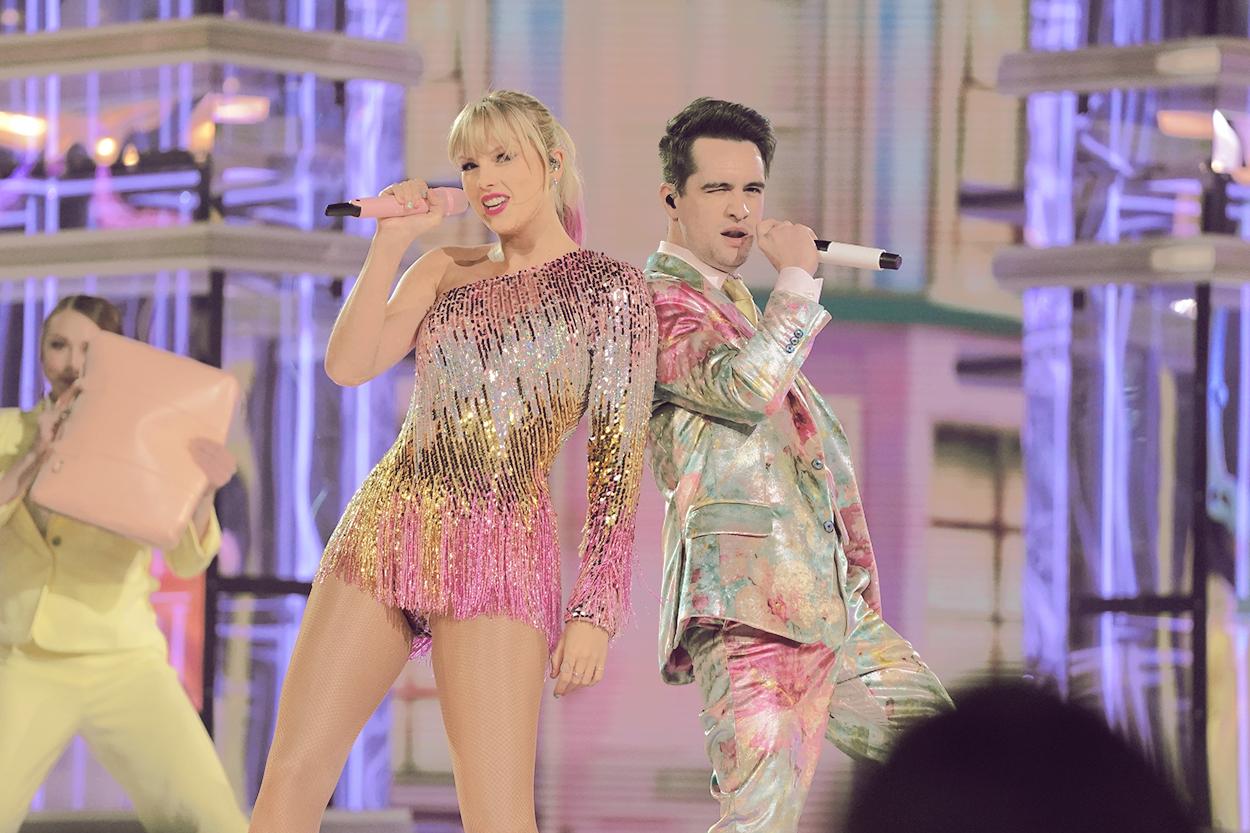
Brendon Urie and Swift perform “ME!” at the 2019 Billboard Music Awards
269
“ME!” (Featuring Brendon Urie)
Never trust a Taylor Swift song with a single exclamation point. Centuries from now, I imagine scholars will sift through the detritus of late 2010s pop culture, still searching for an answer for why, oh why, Swift chose this lead single for Lover when she had “Cruel Summer” in the bag. “ME!” is just really, really corny. That Joel Little, who produced Lorde’s “Royals,” could combine with Hall of Fame songwriter Swift and wind up with “Girl, there ain’t no ‘I’ in ‘team’ / but you know there is a ‘me!’” is a testament to the unpredictability of human chemistry. Those of us wizened enough to remember “HEY KIDS, SPELLING IS FUN!” know that lyric wasn’t the problem.
What breaks it: “Me-hee-heeeeeee! Oh-hoo-hooooooo!”
268
“CANCELLED!”
A melodically strangled Reputation outtake groaning under the weight of its own defensiveness, girlboss.
What breaks it: The credulous attitude toward “cancel culture,” and some unfortunate 2016-isms.
267
“Girl at Home”
The line “Call a cab, lose my number” deserved a better home. Even Elvira couldn’t yassify this tsk-tsking Red bonus track, which got the most aggressive update of any of the Taylor’s Version songs.
What breaks it: There’s a lot of finger-wagging self-righteousness on this anti-cheating PSA. I shudder to think what this narrator would have thought of whatever Swift was up to on April 29. And she says she probably would have gone along with the tryst had she not been in the other girl’s shoes at one point.
266
“Pink Clouding”
A years-later apology to a lover past for using them on the rebound, this gauzy Showgirl extra feels like it could have easily sneaked onto the back half of Lover. Swift paints this story in an array of rosy hues—from magenta to fuchsia to rosewood—but the overall effect leans a bit Pepto-Bismol.
What breaks it: The “Ha! Ha! Ha!” vocal doodad that repeats on the chorus.
265
“Cleveland!”
This jangly Showgirl: Encore track is a funny song without any jokes. Hiding behind that exclamation point is a very Swiftian idea about how new love can give anything—even a less than glamorous American city—luster. But the song itself doesn’t go there. It’s mostly Swift listing off gripes in a way that makes you wonder what corners of the internet she is spending time in. (It’s been awhile since anyone really bothered to criticize her dancing, no?) And the moral of the story, that one need find only a single person who doesn’t find them “completely insufferable,” is a bummer.
What breaks it: The Life of a Showgirl: Encore is plagued by two things present on this song—difficult spoken-word bridges and vocal embellishments that are too close to “Me-hee-hee!” for comfort.
264
“Run” (Featuring Ed Sheeran)
I get why they decided that one spoken-word intro from Ed Sheeran was enough for one album and sent this duet into the Red vault.
What breaks it: It’s far too polite for a tale of outlaw lovers.
263
“Eldest Daughter”
This simple acoustic ballad about the plight of being cringe is unfortunately home to some of Swift’s worst lyrical clunkers. They come via attempts at internet speak, e.g., “I’m not a bad bitch / and this isn’t savage.” A reminder to all of us that it’s important to know when to log off.
What breaks it: I say this as a millennial—cheugy comes for us all.
262
“Slut!”
A great title squandered on an uncharacteristically apathetic 1989 vault track.
What breaks it: “And if they call me a slut / You know it might be worth it for once.”
261
“Santa Baby”
The Christmas album was so all over the place. It’s got an original song about prioritizing the religious sanctity of the holiday over its commercialized aspects … and then they had her cover “Santa Baby,” a song about wanting presents and being kind of horny for Kris Kringle.
What breaks it: “I’ve been an awful good girl.”
259
“Robin”
A plodding piano tune for a child who doesn’t know the luxury of innocence, “Robin” is out of place in the wilder world of TTPD.
What breaks it: This album is just too long, and “Robin” is Track 30. Swift was obviously emptying her notebook, but this song doesn’t feel vital enough to keep going after 29 others.
258
“Timeless”
A song from the Speak Now vault that’s inspired by her grandparents’ love story and takes some weird turns by imagining if they’d met in the 1500s. Swift would write about her grandparents more effectively later.
What breaks it: That 16th-century turn really does come out of nowhere.
257
“Carolina”
An ominous ode to Low-Country secrets, written for the closing credits of Where the Crawdads Sing. Submitted and short-listed, but not nominated, for a Best Original Song Oscar in 2023.
What breaks it: Honestly? I’m holding how terrible the movie was against the song.
256
“Christmas Must Be Something More”
“What would happen if God never let it snow?” Swift asks this question and several other head-scratchers in this chiding plea to focus on what really matters during the holidays.
What breaks it: “So here’s to the birthday boy who saved our lives.”
255
“Sweeter Than Fiction”
This soundtrack offering for the movie One Chance is notable as it’s the first track Jack Antonoff produced for Swift. They’d improve on the form.
What breaks it: It’s aptly named, at least; the whole thing is quite saccharine.
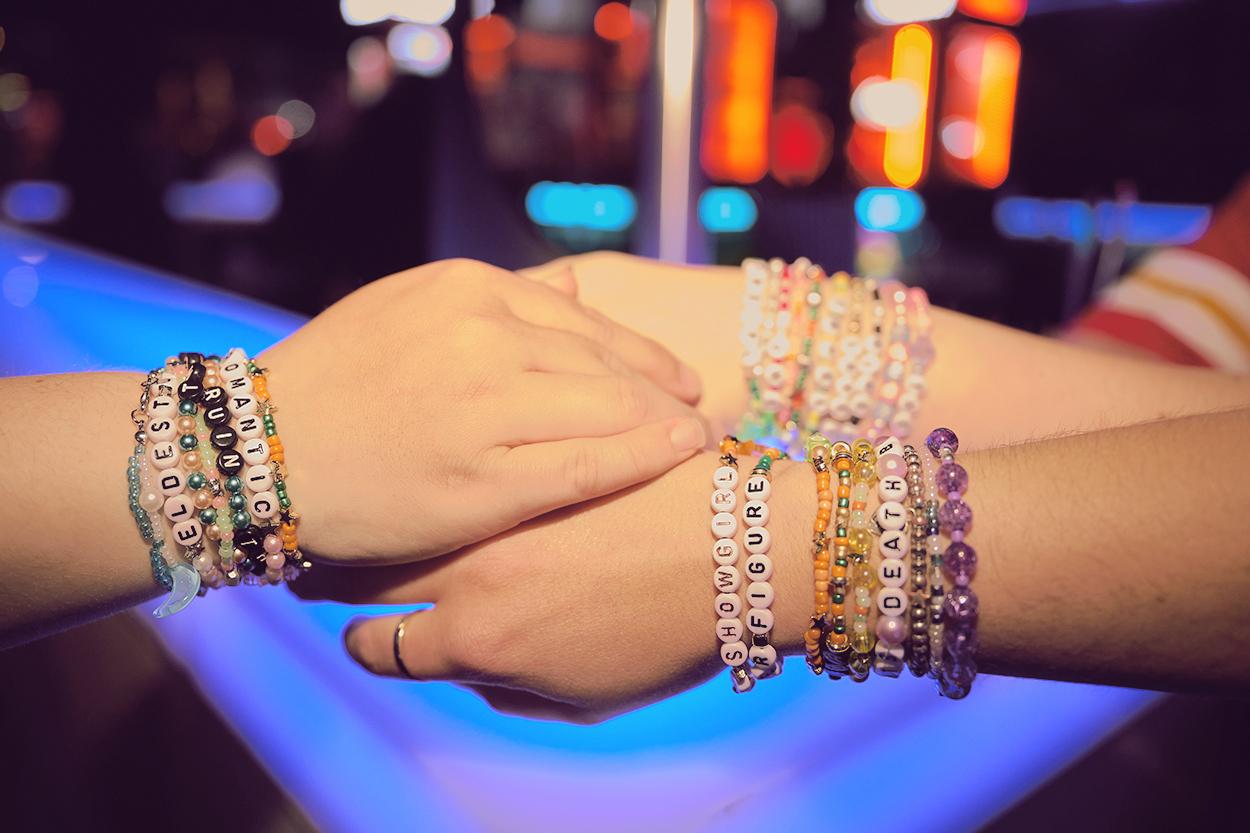
Fans in Germany celebrate the release of ‘The Life of a Showgirl’
254
“Wi$h Li$t”
An ode to simple domesticity that’s hollowed out by the fact that it’s quite easy not to want what you already have access to.
What breaks it: The anonymous “they” Swift presents her desires in opposition to but never defines. Is it society? The WAGs? And what’s so wrong with wanting to play for Real Madrid?!
253
“Macavity”
You really haven’t lived if you haven’t seen Taylor Swift in CGI cat fur doing a slinky, feline Bob Fosse bit. It’s not technically her song, but I will associate her with it forever.
What breaks it: Why did the cats have breasts???
252
“Superman”
A song in which Swift is the one in her relationship with the less busy schedule. I don’t buy it.
What makes it: There’s a total earworm of an ascending three-note motif sneaked in between the end of the verses and the start of the chorus. It sounds like something that could have played during scene breaks on a family sitcom.
251
“The Tortured Poets Department”
“We declared Charlie Puth should be a bigger artist” is patient zero for debates about whether the stoner logic and run-on sentences of this song’s namesake album were products of Swift’s savvy world-building or shoddy craftwork. You could say the same of three lines in this song’s bridge about rings being placed on particular fingers. There’s quite a story here of doomed love between narcissistic artists, but it’s hard to focus on it over the sleepy dirge of a bass line and drumbeat.
What breaks it: I appreciate the Puth line for its randomness and its specificity; the bit about a "tattooed golden retriever” is harder to swallow.
249
“Silent Night”
Another culprit from the Holiday Collection, this time in the form of a countrified acoustic cover.
What breaks it: Many liberties were taken with the melody.
248
“Foolish One”
A Speak Now vault track about having a bad case of delulu-itis.
What breaks it: There’s some decent If he wanted to, he would pop wisdom delivered with a self-effacing touch, but the song loses its charm when it has to find someone else to blame in the end.
247
“White Christmas”
She put the twang back in Christmas with this Holiday Collection cover.
What breaks it: She really lays the accent on thick.
246
“Beautiful Ghosts”
I hadn’t forgotten that Taylor Swift was in Cats, but I had forgotten that she’d adopted, um, a conspicuous British accent for the role of Bombalurina. This original song for the movie, composed with Andrew Lloyd Webber, is very sincere.
What breaks it: Not since Niall Horan have such liberties been taken with the word “chance.”
245
“Bad Blood” (Featuring Kendrick Lamar)
One of those moments when Swift’s battle readiness got the best of her, although this song does kind of go off live.
What breaks it: The “bad blood”/“mad love” rhyme. Ironically, that would have worked only in a Katy Perry song.
244
“Don’t You”
A Fearless vault track in which Swift tries to play it cool when she runs into an ex and then obviously does the opposite. I wonder how this one would have sounded in the original Fearless era—Jack Antonoff’s atmospheric production from the Taylor’s Version recording session feels so distinctly tied to her later work. I do love the breathy backing vocals when she coos, “I don’t wanna pretend.”
What breaks it: It’s a little too mid-tempo, and it’s missing an emotional high.
243
“Eyes Open”
A song for the Hunger Games soundtrack that feels like a Red preview, with a big alt-rock guitar riff that’s also very Avril Lavigne.
What breaks it: There’s not a lot to the melody.
242
“Dear Reader”
There’s a solid argument that this song begins a three-album run of closing tracks (along with “The Manuscript” and “The Life of a Showgirl”) in which Swift asks, even pleads, for her audience to give her some narrative leeway and emotional distance. “You should find another guiding light,” she sings here.
What breaks it: The idea is interesting, but the impenetrable wall of synthesizer is suffocating.
241
“Labyrinth”
An uncharacteristically short-winded Midnights cut, crafted mostly around a single line: “Uh-oh, I’m falling in love.”
What breaks it: There’s something interesting about how this song feels suspended in time—it captures a feeling instead of telling a story, which is something of a zag given its author. But listening to it ultimately feels too static.
239
“Epiphany”
An ambient hymnal tying the experiences of soldiers, particularly her World War II veteran grandfather, to those of frontline health-care workers during the pandemic.
What breaks it: A noble idea, but the military vignettes lean cliché: “Crawling up the beaches now / Sir, I think he’s bleeding out.”
238
“Snow on the Beach” (Featuring Lana Del Rey)
A snowflake-light Midnights entry with just a dusting of Lana, until a later version allowed her to accumulate a bit.
What makes it: “And my flight was awful, thanks for asking.”
237
“Castles Crumbling” (Featuring Hayley Williams)
Swift has two vault tracks in which she wonders fearfully about the shine coming off her star. Both feature female indie icons. “Nothing New” with Phoebe Bridgers, from the Red vault, is superior to this one, but I’ll still take any Hayley Williams appearance I can get.
What breaks it: The melody is repetitive, and the fairy tale, castle, empire imagery doesn’t leave much room for real insight.
236
“I Can Fix Him (No Really I Can)”
Another moment on Tortured Poets where Swift pulls out the slide guitar and takes a turn down a six-lane Texas highway toward the Wild, Wild West. (How curious that this album, mostly inspired by two Brits, presents a particularly seedy version of Americana when it does hop back across the pond.) At 2:36, it’s more of a sketch than a fully rendered song, but the image of Swift, high on love and a savior complex, defending her man to all the Sarahs and the Hannahs in their Sunday best she references earlier on TTPD while he chain-smokes and tells rude jokes from across the bar is a vivid one.
What makes it: The last line realization, not a second too soon: “Whoa, maybe I can’t.”
235
“loml”
A muted piano ballad where Swift laments a love that was supposed to be forever but didn’t even have the decency to go down in flames. It suffers a bit from empty-the-notebook syndrome—it feels like Swift challenged herself to write every compelling image, analogy, or turn of phrase she had in her drafts into the lyrics. Some are gorgeous, especially the two-line elegy “It was legendary / It was momentary,” but they get a bit lost in the shuffle.
What makes it: “And all at once, the ink bleeds.”
234
“Only the Young”
Zohran Mamdani’s favorite Taylor Swift song. Sure!
What makes it: Her heart was in the right place.
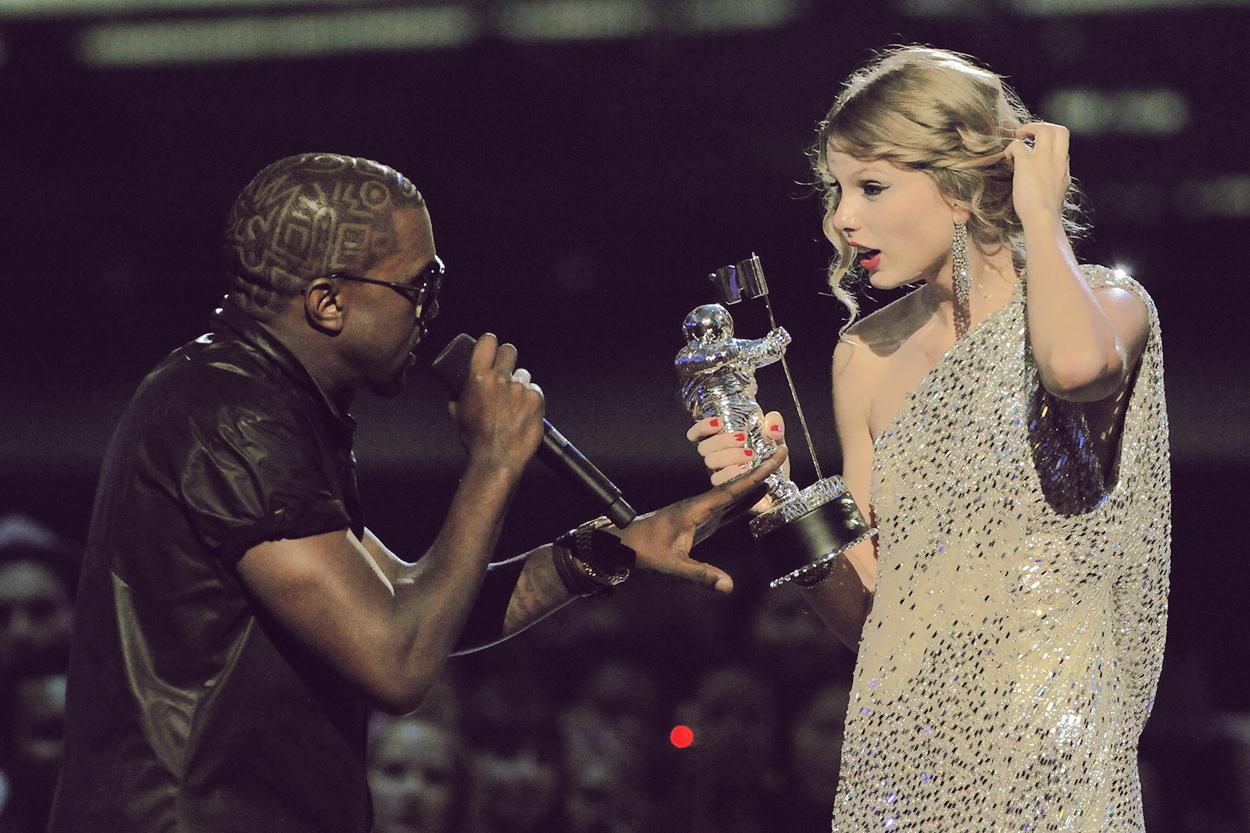
Kanye West jumps onstage as Taylor Swift accepts her award for Best Female Video at the 2009 VMAs
233
“Innocent”
“Thirty-two and still growing up now,” whew. This ballad from Speak Now may still rank as Swift’s most condescending song, which is saying something. What lands bizarrely about it, then and now, is that it was her direct response to Kanye West’s interruption of her speech at the VMAs in 2009. She premiered it at the show the following year, playing video of the incident over the performance. I’m with Barack on this one, but it was a little much. The song also implies that Kanye’s whole issue is that he’s missing his youthful days catching fireflies in the summertime. Sincerely: What the fuck? Her response songs to West got much better once she was willing to get her hands a little dirty. If instead you can imagine that this song is about an old friend who sadly had their life derailed by a DUI or something, there are actually some good lines.
What makes it: “Time turns flames to embers / You’ll have new Septembers.”
232
“All of the Girls You Loved Before”
Swift released this Lover outtake in 2023 after a demo version leaked and went viral online. It’s a good concept—her appreciation for her boyfriend’s ex-girlfriends for making him a strong partner—but it’s a little dispassionate, partly because she isn’t sharing real details from those relationships. There’s one verse where she puts the focus on herself, and that’s much more detailed.
What breaks it: “Now I call you baby / It’s why you’re so amazing.”
231
“That’s When” (Featuring Keith Urban)
A Fearless vault track about reconciliation, likely shelved because of its melodic similarities to “You Belong With Me.”
What makes it: There’s a nice rhythmic snap to the way Swift and Urban both attack the first words of each line of chorus.
229
“Christmases When You Were Mine”
I wonder whether Taylor made a deal about the holiday album: She’d write one song about Jesus if she could also write one about boyfriends. Obviously the boyfriend one is better.
What makes it: “When you were putting up the lights this year / Did you notice one less pair of hands?”
228
“Fresh Out the Slammer”
A freewheeling Poets pit stop, back from across the pond and all the way to the Wild West again. It’s low on structure, ending with a sudden tempo-dropped coda. Perhaps that’s why it doesn’t quite land its punches.
What makes it: “Swirled you into all of my poems.”
227
“A Perfectly Good Heart”
A bonus track from Taylor Swift in which she finds a number of ways to ask about heartbreak, with mixed results.
What makes it: “Why would you want to make the very first scar?”
226
“Stay Beautiful”
“Drew.” “Corey.” Early Tay had a thing for guys with the most basic names. This chipper tune from her debut is kind of a gender-reversed manic pixie dream girl story, about a guy who doesn’t know how much of a big ol’ hunk he is! (Do those exist?)
What makes it: “Corey’s eyes are like a jungle / He smiles, it’s like the radio.”
225
“A Place in This World”
An earnest reflection on tweenhood, with one of the earliest references to a Swiftian obsession: pouring rain.
What makes it: “Got the radio on, my old blue jeans.” This is kind of a non sequitur lyric, but I always like it when early Taylor is singing about the radio.
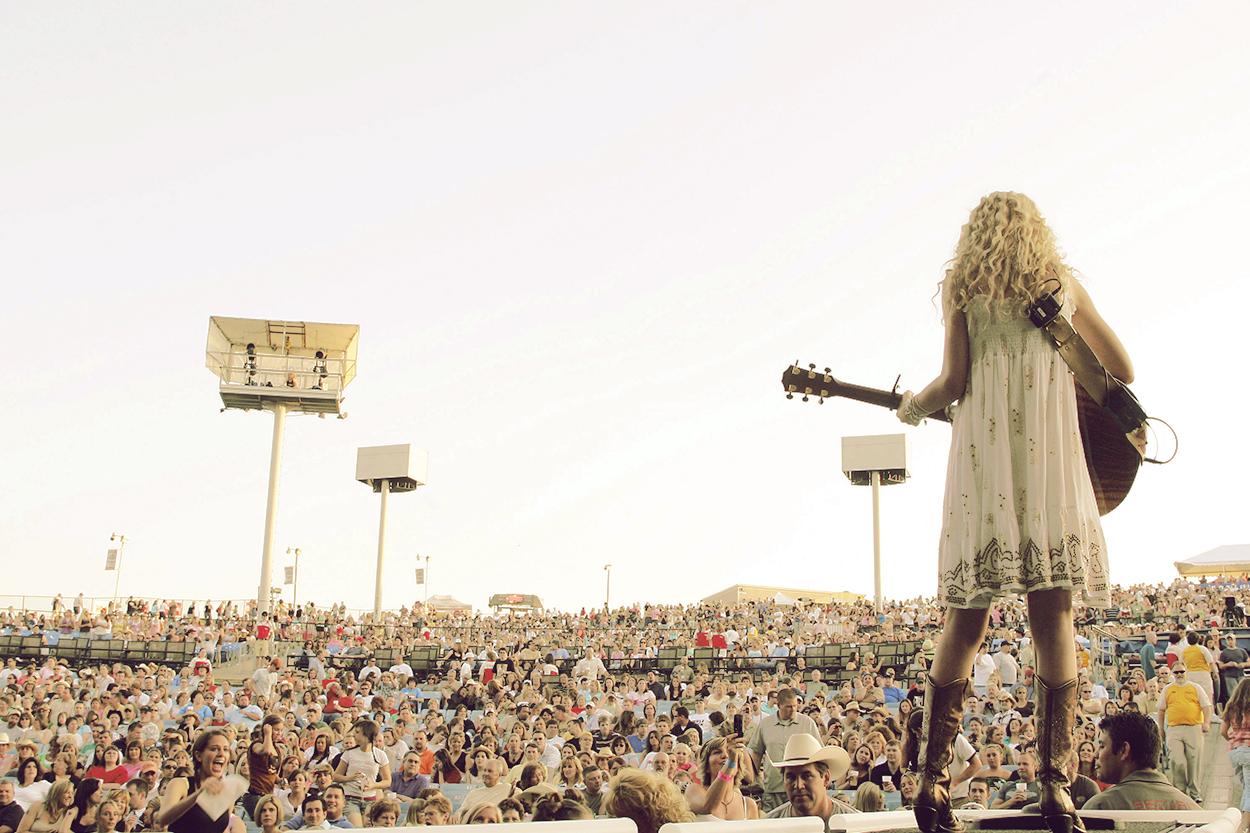
Swift performs in Kansas City in 2007
224
“Invisible”
A story that appears as a bonus track from the debut album, it's like an earlier, more somber version of “You Belong With Me."
What makes it: “Like shadows in a faded light.”
223
“I’m Only Me When I’m With You”
Swift’s twang softens a bit in this rocker from the back half of her debut, but the fiddle keeps it country.
What breaks it: Even at 16, Swift is a little too self-actualized for this sentiment to work.
222
“Tied Together With a Smile”
Another Liz Rose joint from the debut record, with an especially doleful fiddle part.
What makes it: “But he leaves you out like a penny in the rain.”
221
“Suburban Legends”
There’s something about this synthy slow burn that’s weaker than the sum of its parts. Great title. A nod to Generation Ke$ha. “I didn’t come here to make friends,” a line equally at home in Swift’s discography as it is in the old Bachelor mansion. But this song is missing structure and sounds a bit too much like Midnights’ “Mastermind.”
What breaks it: What’s that about a 1950s gymnasium?
219
“Forever Winter”
The type of country-inflected song she could keep making forever.
What makes it: “I pull at every thread / Trying to solve the puzzles in his head.”
218
“The Great War”
Aaron Dessner’s first appearance on the back half of Midnights (3am Edition) comes via this song, a mea culpa for starting fights just ’cause she needs to feel something. There’s a great, sticky melody on the chorus and an awkward set of “uh-huhs” attached to several lines.
What breaks it: The extended WWI metaphor is maybe a little much.
217
“If This Was a Movie”
A Speak Now deluxe track that continues Swift’s preoccupation with rain and storybook conclusions. “Is that the kind of ending you want to see?” she asks.
What breaks it: She’s done this song before, and she’ll do it again; both “White Horse” and “How You Get the Girl” improve on the form.
216
“The Manuscript”
What starts as a companion piece to the stellar Midnights bonus track “Would’ve, Should’ve, Could’ve” becomes a thesis statement for Swift’s basic need to metabolize her life into song. It works best for me as a stand-alone piece of poetry rather than as the Tortured Poets closer, where the distance she creates in the final line—“the story isn’t mine anymore”—feels a bit like a hedge against the album’s wilder admissions.
What makes it: “The professor said to write what you know.”
215
“The Albatross”
As a wise woman once said, “OK, English major!” This one, inspired by Samuel Taylor Coleridge’s The Rime of the Ancient Mariner, feels like an Evermore outtake that wound up on the Poets deluxe edition.
What breaks it: The song doesn’t live up to the high drama of the source material, although I do love learning what’s on the bookshelf.
214
“Say Don’t Go”
A 1989 vault track with a call-and-response chorus and Swift singing near the bottom of her register on the verses.
What breaks it: I like the tightrope image, but between her and cowriter Diane Warren, I’d have expected more than the “Why’d you have to twist the knife?” refrain.
213
“SuperStar”
There are some charming moments on this Fearless bonus track—I especially like when she bleats out, “You played in bars, you played guitar,” like it's the single most glorious thing you could say about a person—it’s just a bit ridiculous to hear Swift identifying as the non-superstar in this pairing.
What breaks it: “I’m no one special, just another wide-eyed girl / who’s desperately in love with you.” Get outta here with this, Taylor!
212
“Stay Stay Stay”
A sprightly jig about dancing with the one who brought you, with instrumentation so performatively country it almost reads as a taunt to the genre she was in the process of ditching.
What makes it: “I’d like to hang out with you for my whole life.”
211
“Last Christmas”
The most natural fit of her Holiday Collection covers.
What makes it: “A crowded room and friends with tired eyes / I’m hiding from you and your soul of ice.” Perfect Taylor Swift lyric.
209
“The Outside”
This up-tempo country-pop song comes by its extra-youthfulness honestly: Swift wrote it when she was 12 years old, the second full song she ever put to paper.
What breaks it: There’s a bit of a plot hole between “nobody ever lets me in” and “I’ve never been on the outside.” But hey, what were you doing at 12?
208
“Coney Island” (Featuring the National)
OK, that’s enough sad dad indie rock for one album, Taylor.
What breaks it: This collab with the National, where Swift trades verses on and off with singer Matt Berninger, might work better on one of their albums. His vibrational baritone commands attention in the mix, but she gets lost in the fog.
207
“Happiness”
A ballad from the perspective of someone trying to move on after a divorce. She really loves a Gatsby reference, doesn’t she?
What breaks it: An awkward melody and a bit too much therapy speak.
206
“Evermore” (Featuring Bon Iver)
On the title (and closing) track of Evermore, Swift revisits the “Exile” playbook, with an even more shivery Bon Iver guest vocal, but it doesn’t reach the same heights.
What breaks it: She left “Right Where You Left Me” off the original album? For this?!
205
“Come In With the Rain”
The Fearless era’s umpteenth song referencing precipitation, relegated to the deluxe edition. It’s one of the album's more minor efforts, but she’s still in her bag melodically.
What makes it: “Talk to the wind, talk to the sky.” An asking-questions-to-the-void line from before she started communicating with streetlights.
204
“Untouchable”
This Luna Halo cover is the only song by another artist to appear on one of Swift’s full albums, although she takes a lot of liberties with the melody, so it does wind up sounding like her own.
What makes it: I love the melody on the chorus.
203
“Renegade” (Big Red Machine Featuring Taylor Swift)
In 2021, Taylor completed a home-and-home with Justin Vernon and Aaron Dessner and gave this single to Big Red Machine for the band’s album How Long Do You Think It’s Gonna Last? Swift wrote this song, about a partner’s mental health challenges, around the time she wrote “Closure” and “Dorothea,” both of which wound up on Evermore. She still takes the lead vocal part, slotting prose and slant rhymes over Dessner’s up-tempo production and Vernon’s harmonies, but this one went to BRM.
What makes it: “Is it insensitive for me to say, ‘Get your shit together, so I can love you’?”
202
“Change”
Swift originally wrote this power-pop ballad about defeating long odds, through the lens of the challenges facing Big Machine as one of Nashville’s smaller labels. But the theme was pretty universal, so her dad wound up suggesting it to the 2008 U.S. Olympic team as a theme for the Beijing Games. They won 112 medals!
What makes it: The production hints at some of the arena rock touches she’d eventually get into on Red, and it absolutely sounds like the type of thing that could play while you accept your gold medal for the decathlon.
201
“Peter”
A piano waltz that comes in the wee-est hours of the Tortured Poets deluxe version, about every lit girl’s favorite manchild.
What makes it: “’Cause love’s never lost when perspective is earned.”
199
“You’re Not Sorry”
A piano ballad in which Swift tells a boyfriend who has betrayed her that he shouldn’t bother calling anymore. It was featured in her guest appearance episode of CSI: Crime Scene Investigation.
What makes it: The high-drama delivery. A little overwrought, but in a good (and very teenage) way.
198
“The Life of a Showgirl” (Featuring Sabrina Carpenter)
A cautionary showtune with a subtle country flair about the sweat under the sequins, with an inexplicable use of the word (?) “legitly.” By the end of the song, Swift has taken listeners from the studio to the stage, perhaps a reminder, or a wish, for the audience to remember the fourth wall between them.
What makes it: Please let me argue for the lyrical content here. The imagery is strong. I love “softer than a kitten” and “do you wanna take a skate on the ice inside my veins.” Still, I know, legitly.
197
“Really Weird” (“All Because of Ellen”) (With Zac Efron)
A “Pumped Up Kicks” parody song performed with Efron on Ellen DeGeneres’s show in 2012, in which Swift lightly chastises the host for her tendency to prank or prod at her guests. Big laugh for the way Swift emphasizes that she fell and “could’ve died” when Ellen hid in her dressing room bathroom during one appearance.
What makes it: The look on DeGeneres’s face as she slowly realizes the tables have turned.
196
“The Other Side of the Door”
A banjo-forward Fearless bonus track about one of Swift’s favorite subjects: overreacting.
What makes it: “Me and my stupid pride / Are sitting here alone.”
195
“Hey Stephen”
A “Stay Beautiful” update with a name that offers more plentiful rhyming opportunities than “Corey.” It also gives us the second references to both streetlights and kissing in the rain on Fearless. She loved a little vocal ad-lib during this era, and they add to the coffeehouse charms of this one.
What makes it: “All those girls, well they’re beautiful / But would they write a song for you?”
194
“I Don’t Wanna Live Forever” (With Zayn)
The vocals on this original song for a Fifty Shades soundtrack are a bridge to Reputation. Would we get the vocoder-tinted whispers of “Dress” without the breathy way she says, “Baby, baby, I feel crazy,” or the belted high note on “Don’t Blame Me” without the similar run here to the top of “I tell ’em where your place is”? Maybe so, but this collab with Zayn Malik serves as an excellent warm-up. They did not need to go this hard on a track for the Fifty Shades sequel!
What makes it: “I’ve been looking sad in all the nicest places,” such a good Swift line, and perhaps an homage to the sad girl on a boat (a different link to a former Directioner).
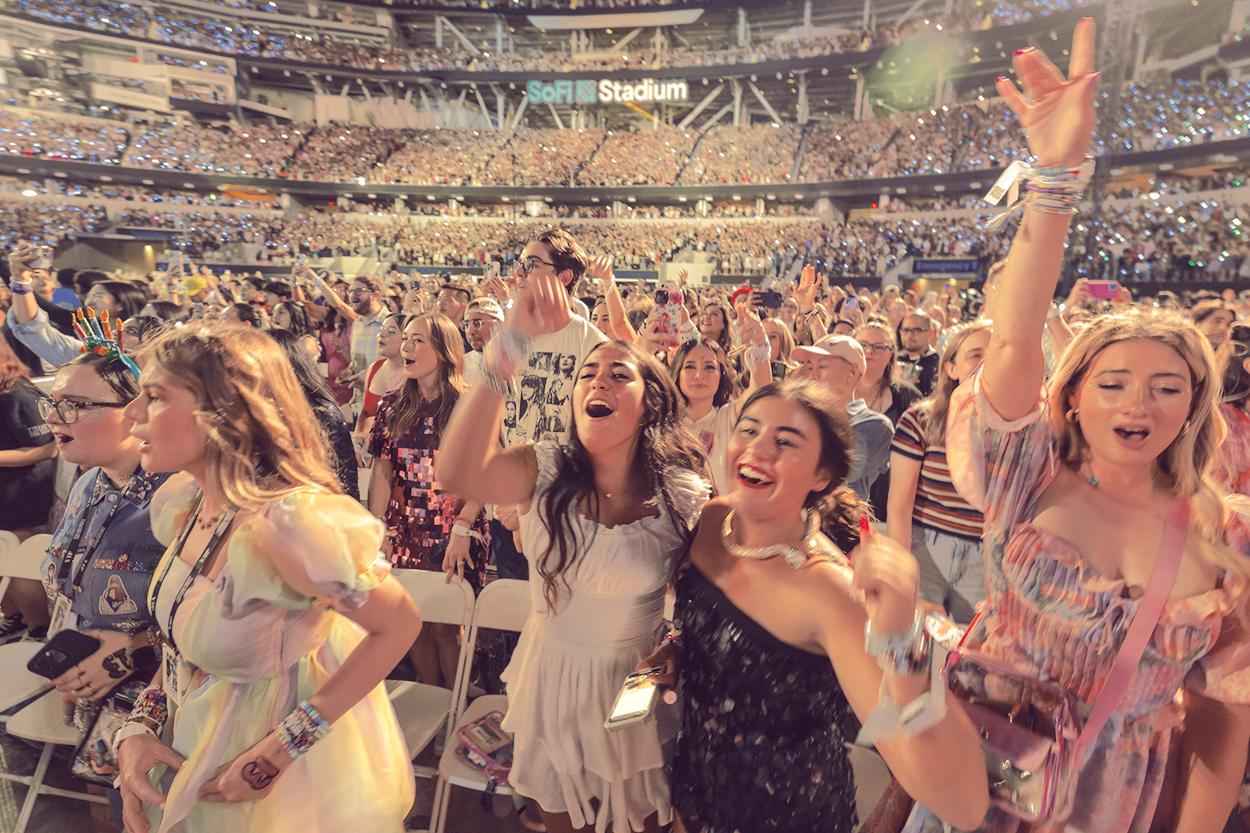
Fans at the Eras Tour at SoFi Stadium in 2023
193
“You Need to Calm Down”
Lover’s second single has more charm than it gets credit for, as its reception suffered from both its proximity to “ME!” and its somewhat clunky music video, which does kind of make it seem like Swift is making gay pride about her. The song itself is fun! Cheeky! Unbothered condescension is a point of view she’s written from many times, and it’s especially effective when she uses it to address a worthy opponent, like a bunch of bigots with ugly signs and worse opinions! Taylor was fully in her city girl era when she wrote it, but there’s a “bless their hearts” quality to her delivery that I bet she learned in Tennessee.
What makes it: The semi-subtle dig at our president’s penchant for late-night posting: “I’m just like damn / It’s 7 a.m.”
192
“Today Was a Fairytale”
A song about a great first date, penned during the Fearless era but released later as a single from the Valentine’s Day film soundtrack.
What breaks it: The lyrics are pretty flat, leaning heavily on clichés: “You were a prince / I used to be a damsel in distress.”
191
“When Emma Falls in Love”
A Tortured Poets lyric sneaked into this chipper piano tune from the Speak Now vault, allegedly about shipping Emma Stone and Kieran Culkin: “Like if Cleopatra grew up in a small town.”
What makes it: The verse melody is especially warm.
189
“Imgonnagetyouback”
A skittering synth-pop sketch built around a double entendre that got lost in the Poets sprawl. Haters will say the concept is aping Olivia Rodrigo. Real ones know the intro and the title stylization seem to reference a certain British band Swift performed with in London the year before this album was released.
What makes it: “A supreme gentleman with a gun in his hand.” Oops, wait, no, that’s the other one!
188
“The Last Time” (Featuring Gary Lightbody)
Generally speaking, featured artists on a Taylor Swift song play supporting roles. But Snow Patrol’s Gary Lightbody got the entire first verse of this one. The song eventually builds to some nice, meaty harmonies. But it’s pretty turgid before it gets there.
What breaks it: If a man’s voice is going to be the first thing we hear, let’s have it be Bon Iver.
187
“The Very First Night”
A reasonable knockoff of the Max Martin stuff, pulled out of the Red vault.
What makes it: “I’m the one on the phone as you whisper / ‘Do you know how much I miss you?’”
186
“Crazier”
Swift’s contribution to the Hannah Montana: The Movie soundtrack. (She performs in a cameo in the film.) The real banger, though, is the Hannah Montana song she wrote but didn’t sing: “You’ll Always Find Your Way Back Home.”
What makes it: “Every sky was your own kind of blue.”
185
“Safe & Sound”
This collaboration with duo the Civil Wars for the Hunger Games soundtrack was an early hint that something like Folklore could be possible. It’s full of eerie harmonies and delicate falsetto.
What makes it: The mix of her voice with Joy Williams’s and John Paul White’s is unexpected, and it works.
184
“This Love”
This gossamer ballad was the only song for 1989 Swift penned without a cowriter. It could have fit in with some of Red’s adventures in soft rock.
What makes it: “I could go on and on, on and on … and I will.”
183
“How Did It End?”
A Poets quill-pen B-side about an unwanted side effect of breaking up—having to tell everyone about it—nestled in a gorgeous bed of Aaron Dessner’s piano arpeggios. What’s worse than the gossip mill churning over why it happened? Having no idea yourself.
What breaks it: There’s something wonderfully adult in how mundane much of this story is. Running into a prying acquaintance at the shops. Friends of friends calling their cousins. But then the bridge starts riffing on schoolyard rhymes—“Sitting in a tree / D-Y-I-N-G”—and it takes me out of it.
182
“The Prophecy”
So much of Poets thrives in the throes of a temporary mania. But this one’s a slow burn, with the type of pleading that can come only from a desperation grown over time. It’s full of stunning line reads, particularly in Swift’s lower register—see “a greater woman wouldn’t beg” in the first pre-chorus or “but I howl like a wolf at the moon” on the bridge.
What breaks it: There’s something to sneaking a song this weighty 90 minutes into a double album, but my ear has grown weary of Aaron Dessner’s arpeggios by this point.
181
“Babe”
Swift originally wrote this mid-tempo ballad—about a guy who really blew it this time—with Train frontman Patrick Monahan. She gave the song to country duo Sugarland when it didn’t make the cut for Red. Swift recorded her own version for the rerelease in 2021, and the way she fills in multiple vocal parts has a nice glee club quality to it.
What makes it: “What about your promises, promises?” with that feather-light touch of reverb.
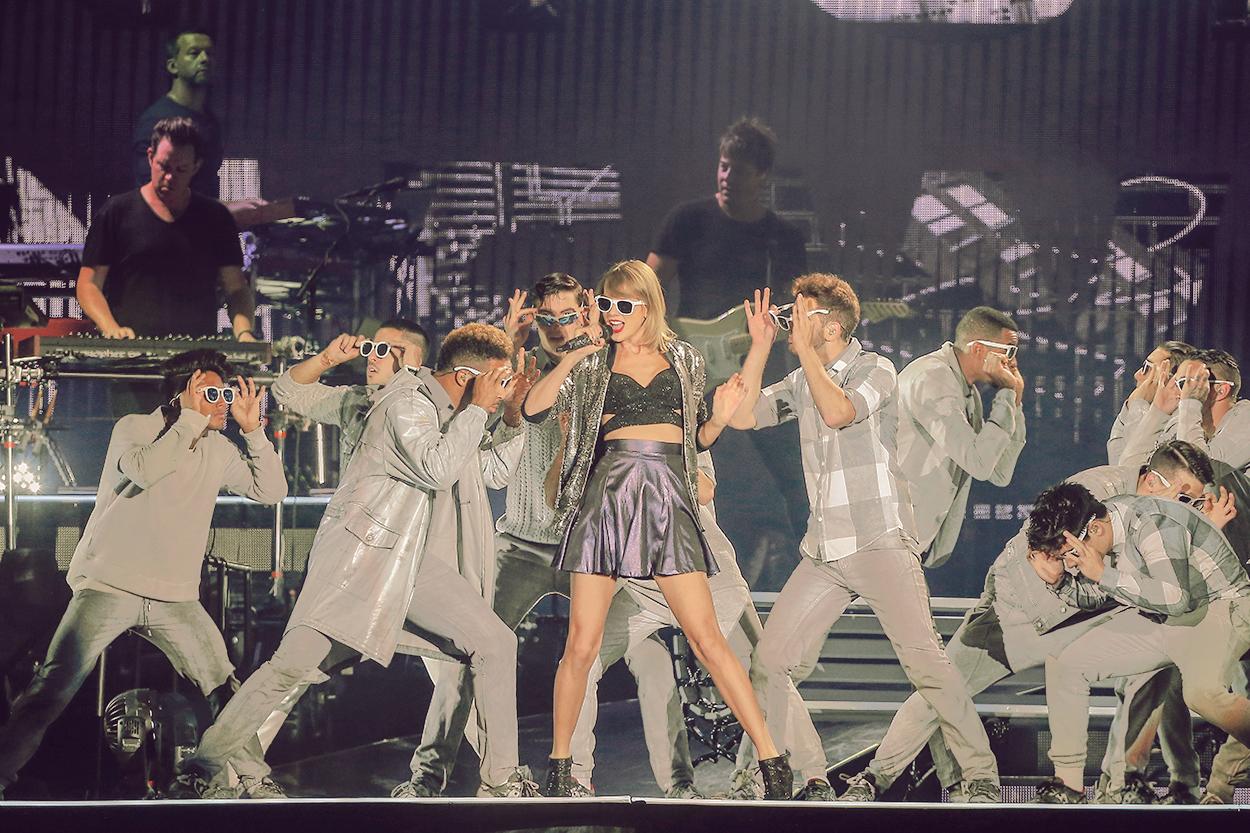
Swift at the Houston tour date for the 1989 World Tour in 2015
179
“Chloe or Sam or Sophia or Marcus”
A lithe piano ballad about wondering “what if” that comes with a doozy of an opening line.
What makes it: “Your hologram stumbled into my apartment.”
178
“It’s Time to Go”
An Evermore bonus track about realizing when something is no longer serving you, including some autobiographical references to her split with her former label, Big Machine. This song may or may not also explain what Karlie Kloss was doing in the 200 section at the Eras Tour.
What makes it: The banjo that sneaks in right as she’s addressing her catalog sale.
177
“Babylon”
The final bonus track from The Life of a Showgirl: Encore is a fractal—a song of stitched-together pieces of older Swift songs and ideas. The broken guitar chord intro of “If This Was a Movie.” The melody from “Champagne Problems.” The hometown wistfulness of “’Tis the Damn Season.” The Babylon metaphor from “Cowboy Like Me.” (This song spiritually belongs to Evermore, doesn’t it?) The descending three-note melody on the chorus she used on “Mean” and “You Belong With Me,” such a signature that the musicologists Nate Sloan and Charlie Harding have christened it “the T-drop.” In some ways, that means Swift is in her bag on this one. But as she writes here, nostalgia is a weapon—and the song suffers by comparison with versions past.
What makes it: That classic melody on the chorus may not be original, but it still hits.
176
“How You Get the Girl”
A fizzy but innessential 1989 deep cut notable for soundtracking Swift’s ad for Diet Coke where the number of kittens in her living room multiplies each time she takes a sip.
What breaks it: “Welcome to New York” sort of gets away with its bubbly naivete because it’s the album’s curtain-raiser. This far into 1989, we know she’s got more interesting things to say.
175
“Wood”
A Jackson 5 rip-off I sort of can’t believe passed legal review, but a fun one. I respect any pop star's right to say, “It’s huge.” Good for you, girl!
What makes it: “All of that bitchin’, wishin’ on a falling star / never did me any good.”
174
“Patient Zero”
One of a few latter-era Swift tracks where she takes a pathologist’s point of view. This commiseration between two victims of the same love-bombing epidemic rests on a track combining melancholy Celtic fiddle and a beatboxy drum line that is, in fact, infectious. Things are going strong until the spoken-word bridge, from which the patient does not recover.
What breaks it: “So let’s get into it.”
173
“Bejeweled”
A warning shot about taking Miss Americana for granted, over a mesh of arpeggiated synthesizers.
What makes it: “Some guy said my aura’s moonstone / just ’cause he was high.”
172
“thanK you aIMee”
Written in the country tradition of a searing takedown with a smile, this is a cheery tune dedicated to the low road. Swift changed all the names and identifying details except for the ones she absolutely didn’t. I understand those weary of hearing about this particular ocean of bad blood, but, hey, I’d be smug, too.
What makes it: “There’s a bronze, spray-tanned statue of you.”
171
“London Boy”
A goofy ode to transatlantic romance. If you don’t like this song, lighten up!
What makes it: “On my scoot-ah!” Thank you, Idris Elba.
169
“Gorgeous”
A Reputation single built around a sparse hip-hop drum loop and the idea that negging is a form of flirting. There’s something very real about crushing so hard that you’re annoyed by it, but the melody here is too constricted, and even though it seems intentional, the awkwardness of “’cause look at your face” doesn’t land right.
What makes it: “I guess I’ll just stumble on home to my cats.”
168
“Wonderland”
A fiendish bonus track for 1989 with vocal cadences borrowed from Rihanna.
What makes it: “It’s all fun and games till somebody loses their MIND.”
167
“Cowboy Like Me” (Featuring Marcus Mumford)
A melancholy country-western song about two con artists who fall in love. The song starts in medias res with the pair dancing at some country club shindig—they’re almost certainly there to case the joint. I do buy that Marcus Mumford could talk himself out of any situation with his velvety vocal harmonies. I tilt my head a little at the line about sitting at an airport bar. Has Swift ever waited out a delay at a Chili’s Too? (I have a similar question about "sitting on a bench at Coney Island.”)
What makes it: “Forever is the sweetest con.”
166
“Mirrorball”
I have the same relationship to this Folklore cut as I do to Lover’s “The Archer.” It’s vivid, vulnerable poetry, but as a song, it feels incomplete.
What makes it: “I’ve never been a natural / All I do is try, try, try.”
165
“The Archer”
There are a half dozen staggering lines in this gauzy self-examination. It just stalls out melodically.
What makes it: “All of my enemies started out friends.”
164
“End Game” (Featuring Ed Sheeran and Future)
Some credit is due, I suppose, for the sheer audacity of Tay x Future x Ed Sheeran. Her verse is the most convincing, especially the line “I bury hatchets, but I keep maps of where I put ’em.” Drake could have made this work with her.
What breaks it: Trust me, I want to say it’s Sheeran, but Future’s verse is so just-here-to-cash-a-check passive.
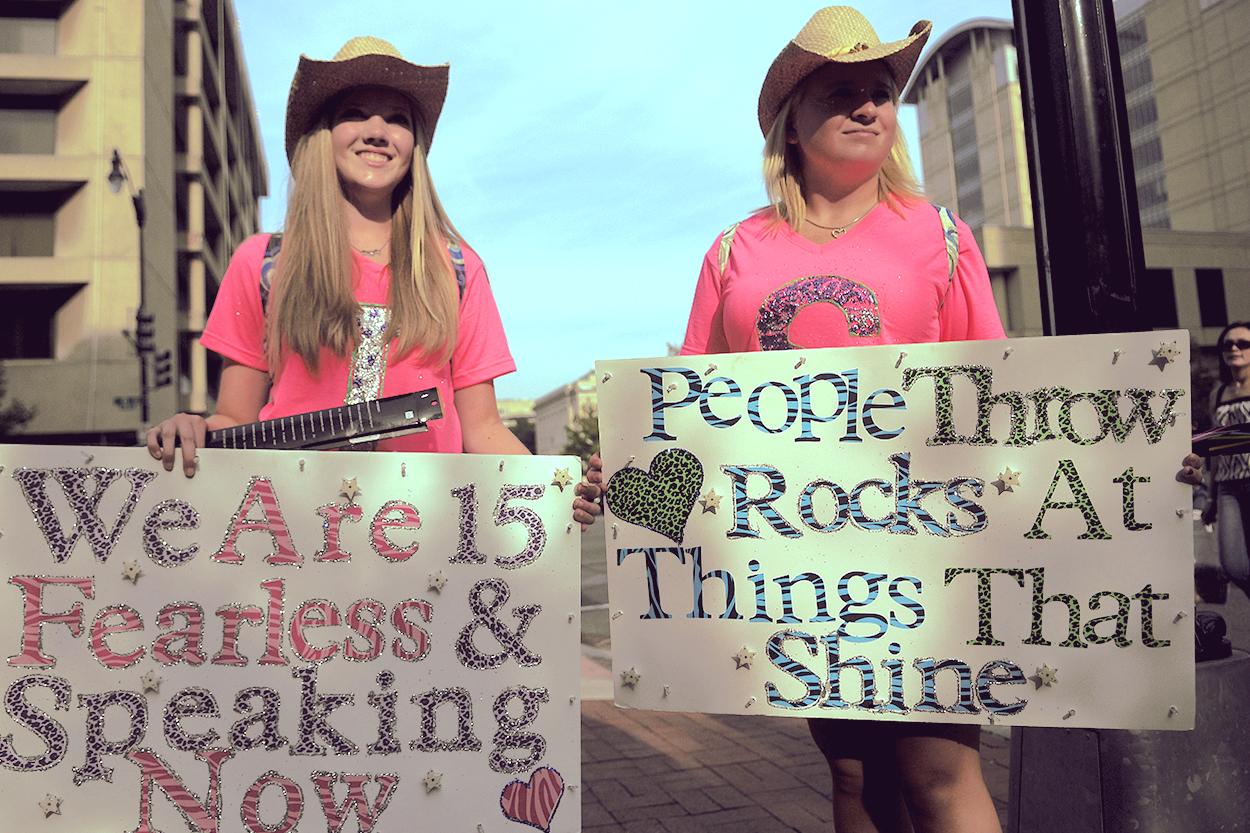
Fans waiting for Swift’s 2011 concert at Verizon Center, part of the Speak Now World Tour
163
“Speak Now”
I was dramatic and hormonal enough when I first heard this song that I thought the premise seemed reasonable enough. Looking back, it’s … unhinged? Swift crashes a wedding and hides in the curtains while fantasizing about running off with the groom, and then she does it and it’s fine. Kind of a gas that this is the title track of the album, but, hey, the woman really can’t help but speak her mind. The way she writes about the uptight wedding crowd is really funny.
What makes it: “Fond gestures are exchanged / And the organ starts to play a song that sounds like a death march.”
162
“So Long, London”
So this Track 5 is what we all thought Tortured Poets would be about—a pissed-off postmortem for a London boy with the blues. There’s beautiful tension between Swift’s half-speed vocals and the racing loop of synthesizers underneath them. It feels like looking back over your shoulder one last time.
What makes it: The layers of harmony that ring like city bells.
161
“Illicit Affairs”
A how-not-to manual for infidelity that examines what happens when the getaway car hits an emotional dead end. There’s a cool trick where Swift jumps her voice an octave at the same point in each verse. It ends with a literal bridge to nowhere, a righteous tantrum that ends with no closure—musical or otherwise.
What makes it: “Don’t call me kid / Don’t call me baby,” particularly the rocked-up Eras Tour version.
159
“The Man”
Beyoncé’s “If I Were a Boy” for former members of the Wing. She’s not exactly wrong, though.
What makes it: “When everyone believes ya, what’s that like?”
158
“Question …?”
This Midnights track opens with a statement: “I remember.” Yet that line is a distortion, a sample of an “Out of the Woods” line that’s pitch dropped and then fuzzed up digitally. In this song, reality is a shifting landscape, with Swift’s daydreams about crowded-room kisses feeling real enough for a few moments for the murmur of an actual party crowd to appear before fading back out.
What makes it: She’s not sure and I don’t know, but I’m certain I love those crispy, clipped drumbeats.
157
“The Lucky One”
A story about a girl named Lucky, only in this case she got out while she could.
What makes it: “Chose the rose garden over Madison Square.” Oh, the irony!
156
“Cold as You”
Taylor’s original Track 5 is this piano ballad from her debut. It contains some withering lines, but it’s also the song where Swift establishes her own tendency to start fights. There’s more rain, too.
What makes it: “So I start a fight, ’cause I need to feel something.”
155
“I Almost Do”
A guitar ballad about nearly reaching out to an ex, with an especially yearning vocal performance.
What makes it: “I bet you’re sittin’ in your chair by the window / Looking out at the city, and I bet / Sometimes you wonder ’bout me.”
154
“Sad Beautiful Tragic”
A sleepy ballad from the back half of Red. This and her Civil Wars collab, “Safe & Sound,” also from around this time, marked a bout of pre-Evermore spookiness.
What makes it: “You’ve got your demons, and darling, they all look like me.”
153
“Fortnight” (Featuring Post Malone)
Credit the Tortured Poets lead single for wrangling some of that album’s manic sprawl into a neat-ish radio hit with a Post Malone feature.
What makes it: “All of this to say”—quite a punch line on what turned out to be Track 1 of 31.

152
“Elizabeth Taylor”
Written in one of Taylor’s classic forms: an expression of love through the imagined melodrama of what would happen if she lost it. This time, she does it over lush strings and through the prism of a different Loudest Woman Tinseltown Had Ever Seen.
What makes it: The bass line crash-out on the first line of the chorus.
151
“King of My Heart”
A love song from Reputation’s tender second half that manages to sound understated, despite heavy vocoder use, finger snaps, and crashing cymbals.
What makes it: The way she says “crush,” with a gust of air.
149
“Closure”
An Evermore experiment in 5/4 time over percussion that sounds like industrial machinery. As with “Tolerate It,” the unbalanced time signature creates a real sense of tension, although this is ultimately more of a writing exercise than a fully rendered song.
What makes it: “Don’t treat me like some situation that needs to be handled.”
148
“Bye Bye Baby”
A Fearless vault track written through the reflection of the rearview mirror, pulling away from something that didn’t work out. Man, did she like writing about rain.
What makes it: You don’t get much sense of what actually went wrong in the relationship that’s at the center of this one, but I doubt you’ll care once the big, sticky sing-alongs kick in on the chorus and the bridge.
147
“Breathe” (Featuring Colbie Caillat)
“Back to December” is frequently credited as Swift’s first recorded apology, but it’s actually found in this song from Fearless about losing a friend—in Swift’s case, an early bandmate. The Colbie Caillat feature is such a perfect time capsule. You know Taylor had “Bubbly” on her iPod.
What makes it: I love the pre-chorus, the ascending and descending melody on “and we know it’s never simple, never easy.”
146
“You Are in Love”
An atmospheric ballad about the minutiae that make up a love story, specifically the one between Jack Antonoff and Lena Dunham. I’d rather read Famesick, but I’m glad Swift gave these two their due in song.
What breaks it: It’s a pretty song, but the ’80s production leans gimmicky.
145
“Out of the Woods”
A transcendent bridge and a reminder of Harry Styles’s limits as a snowmobile operator, stifled by Jack Antonoff’s production, which recalls theme music for a ride at the Magic Kingdom.
What makes it: “Two paper airplanes flying.”
144
“The Moment I Knew”
A Red bonus track that’s set to an appropriately emo strings arrangement and tells the story of a guy no-showing Swift’s 21st birthday party, presumably because he was home with his precious record collection. This incident would come back around in the 10-minute version of “All Too Well.”
What makes it: “And it was like slowwwwwwww motion.”
143
“Glitch”
A talky, loose, and at times dissonant Midnights bonus track written and produced with Kendrick Lamar collaborator Sounwave.
What makes it: I don’t know what they’re doing to those backing vocals that come in on the second verse, but they’re cool as hell.
142
“My Tears Ricochet”
Swift attends her own funeral in this dark ballad about her breakup with Big Machine Records and label head Scott Borchetta. The climax is her ghostly howl on the bridge.
What makes it: “When you can’t sleep at night / You hear my stolen lullabies.”
141
“This Is Why We Can’t Have Nice Things”
Swift’s tendency to be condescending is sometimes held against her, but she clearly has a great time doing it.
What makes it: “And here’s to my mama / Had to listen to all this drama.”
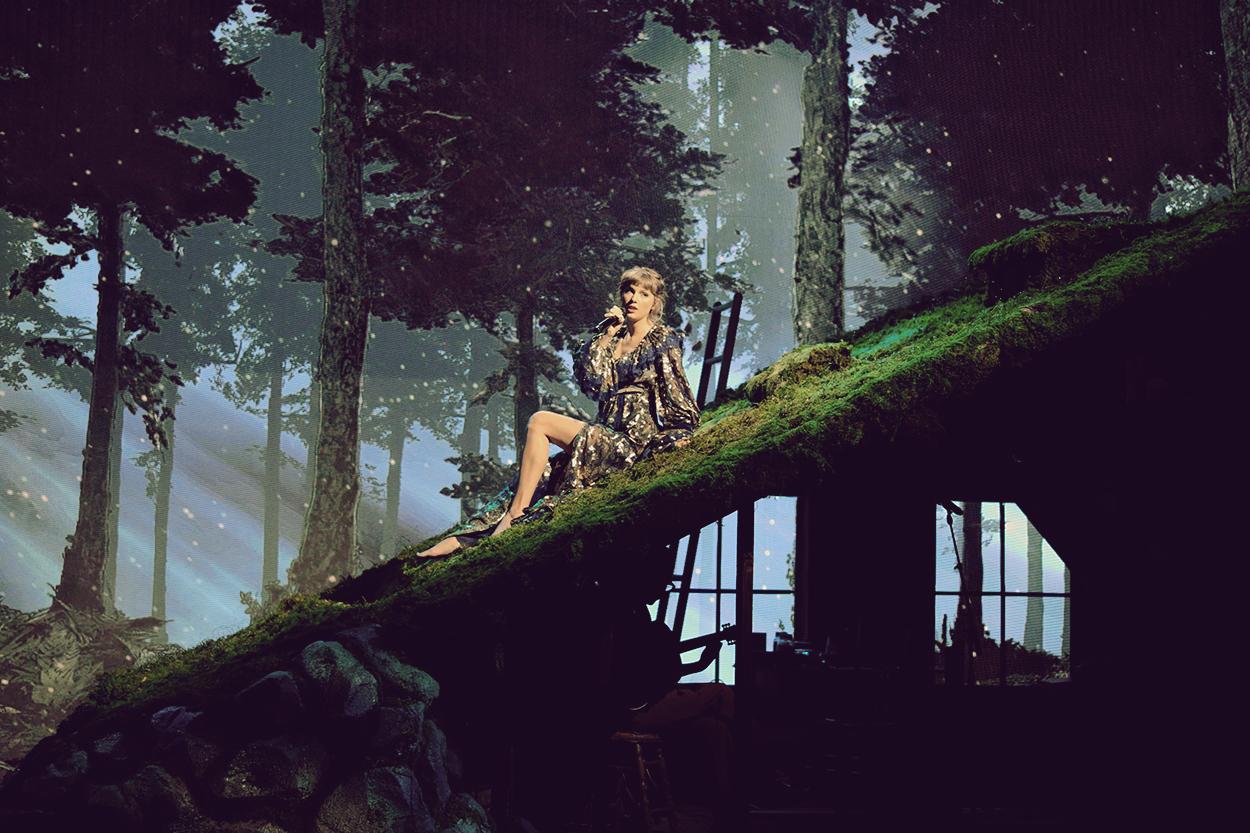
Swift performs “Cardigan” at the 2021 Grammys
139
“Cardigan”
A Folklore single celebrating sweater weather that has one killer line: “When you are young they assume you know nothing.” It’s still the weak link of the “teenage love triangle” songs on the album, though, with Swift’s natural exuberance muffled out.
What makes it: “Leaving like a father / running like water.”
138
“Daylight”
Lover’s closing track makes a mild impression, although there’s a set of call-and-response lines toward the end that’s extremely easy on the ear.
What makes it: “I once believed love could be burning red / but it’s golden.” A pretty, self-referential sentiment of emotional growth.
137
“Midnight Rain”
A moody duet with her own electronically distorted voice. (For the Every Single Album listeners, shout-out to Bev!) Think of this song as the prequel to “’Tis the Damn Season,” where the main character spirals after midnight, probably over a bottle of wine, as she wonders about someone from back home she outgrew.
What makes it: “I broke his heart ’cause he was nice.”
136
“You All Over Me” (Featuring Maren Morris)
A highlight from the Fearless vault tracks, in a softer country mode than the amped-up style of the original album. The wisps of acoustic guitar, harmonica, and Maren Morris’s backing vocals are serene. The writing is full of lovely metaphor and feels sophisticated. She wasn’t done with the idea of getting clean from a trying relationship when she originally shelved this one.
What makes it: The harmonies between Morris and Swift on the second chorus.
135
“The Best Day”
A wholesome tribute to her family with a great, scene-setting opener from childhood: “I’m 5 years old, it’s getting cold, I’ve got my big coat on.” So much of Fearless delivers its emotions via firehose, but this is gentle, tender. But it still packs its punch: You will absolutely think about your mom and get totally emo listening to this song.
What makes it: “I don’t know who I’m going to talk to now at school / But I know I’m laughing on the car ride home with you.”
134
“Bigger Than the Whole Sky”
A stunning elegy tucked away in Midnights 3am Edition.
What makes it: No Easter eggs, no identifying details—just a beautiful song for anyone who needs it.
133
“This Is Me Trying”
A companion to “Mirrorball” from the Jack Antonoff–produced section of Folklore. The combination of digital-sounding synthesizer and saxophone offers a jolt away from the rest of the album’s folk-acoustic sound. There’s a good line about curves and spheres that suggests Swift tried pretty hard in sophomore geometry.
What makes it: "And my words shoot to kill when I’m mad / I have a lot of regrets about that.”


132
“Mad Woman”
In hindsight, this was a bit of a warm-up act for “Who’s Afraid of Little Old Me?” But it was effective in its snarling.
What makes it: “What do you sing on your drive home?” One of her most underrated barbs, likely directed at Scooter Braun while in the thick of the masters battle.
131
“How Bad Do U Want Me” (Lady Gaga)
OK, so Taylor Swift had nothing to do with this song. Yet she has everything to do with it—the crash, the rush, a good girl who’s decided to cause a scene for a bad boy. If Gaga had included pouring rain or something happening at 2 a.m. on this Mayhem track, we’d be having a conversation about the legal definition of parody. It slaps.
What makes it: “’Cause you hate the crash, but you love the rush / And I’ll make your heart weak every time.”
129
“I Wish You Would”
An anthem for the soundtrack of an imaginary John Hughes movie, written from the relationship purgatory of “Out of the Woods” and “Is It Over Now?” The snare drum sample, from the Fine Young Cannibals’ “She Drives Me Crazy,” is one of 1989’s truest and most effective ’80s pulls.
What makes it: “We’re a crooked love / In a straight line down.”
128
“The 1”
“I’m doing good, I’m on some new shit,” a fitting first line for a record that pivots hard away from bright, centrist pop and toward something more sober and indie. Folklore’s opening track offers a decent path for wading into Swift’s wooly pandemic record, which was made mostly by emailing files back and forth with the National’s Aaron Dessner. But this song never gets more than ankle deep.
What breaks it: There’s very little that’s actively unpleasant about this song, but it capitulates to the type of flannel-clad indie snobbery Swift had rolled her eyes at in the past without offering an argument for the about-face.
127
“Karma”
A chrome-coated victory lap that became the closing number, and the thesis statement, of the Eras Tour: “I’m still here.”
What makes it: “Sweet like honey, karma is a cat.”
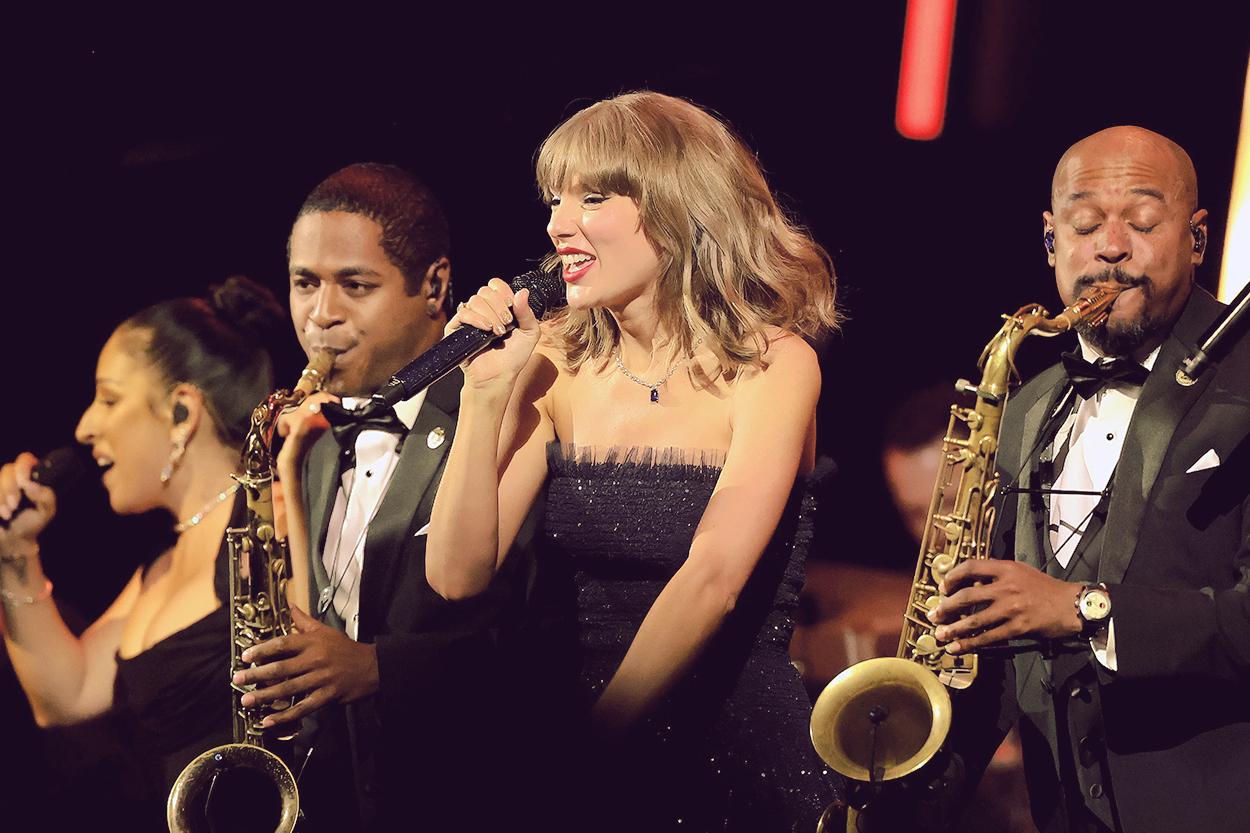
Swift performs at the Academy Museum Gala in 2026
126
“The Fate of Ophelia”
Part of being a showgirl is getting to take some narrative liberties with the Bard’s English. Another part is getting to sing those sweet, sweet Swedish hooks.
What makes it: The snap of the snares over the bass line, borrowed from “Pumped Up Kicks.” Worth the flight to Stockholm.
125
“I Look in People’s Windows”
A testament to Swift’s willingness on Tortured Poets to say things generally kept from polite company. Patrik Berger’s guitar plucks and Jack Antonoff’s cello flicker and glow like candles on the sills of a cozy brownstone, while through her lyrics, Swift has her nose to the glass searching for ghosts. Bonus points for the “deranged weirdo” line.
What makes it: “I attend Christmas parties from outside.”
124
“Now That We Don’t Talk”
A lustrous 1989 vault track that makes use of Swift’s whole vocal register and some very Bleachers backing vocals from Jack Antonoff. It starts wistful, but by the end she’s grateful she’s not stuck listening to the guy’s Hendrix records over and over anymore.
What makes it: “You grew your hair long / You’ve got new icons / And from the outside / It looks like you’re trying lives on.”
123
“All You Had to Do Was Stay”
An underrated 1989 album cut built around a sample of Swift singing “stay!” in a high-pitched tone, an idea that originated in a dream she had about trying to talk to an ex but being able to say only that one word. This might be the brightest of Swift’s Track 5s, but it packs a punch nonetheless.
What makes it: The economical but powerful bridge, especially the finality of the line “This was what you wanted.” Even as a dumpee, she always gets the last word.
122
“Long Story Short”
“Long story short, it was the wrong guy.” You have to crack a smile at the sheer audacity, coming from someone who hasn’t exactly spared details over the years. We heard those long stories long, Taylor! A synth-pop lift from the back half of Evermore, this song sees Swift looking back at past heartbreaks and scandals with a shrug. I think we all know the high was worth the pain, but it’s nice to hear the scars healed over.
What makes it: “And we live in peace,” a romantically settled tieback to Folklore. It was also the right moment to inject some tempo and a brighter sound on this album.
121
“So It Goes …”
A woozy Reputation cut with a head-rush chorus and one truly preposterous notion: “I’m so chill.” Swift was 27 when this album came out, so her sudden willingness to write about drinking and sex wasn’t exactly strange, even if it was a noticeable shift. But chill? No, sorry, I don’t believe that.
What makes it: The layers of vocals on the outro.
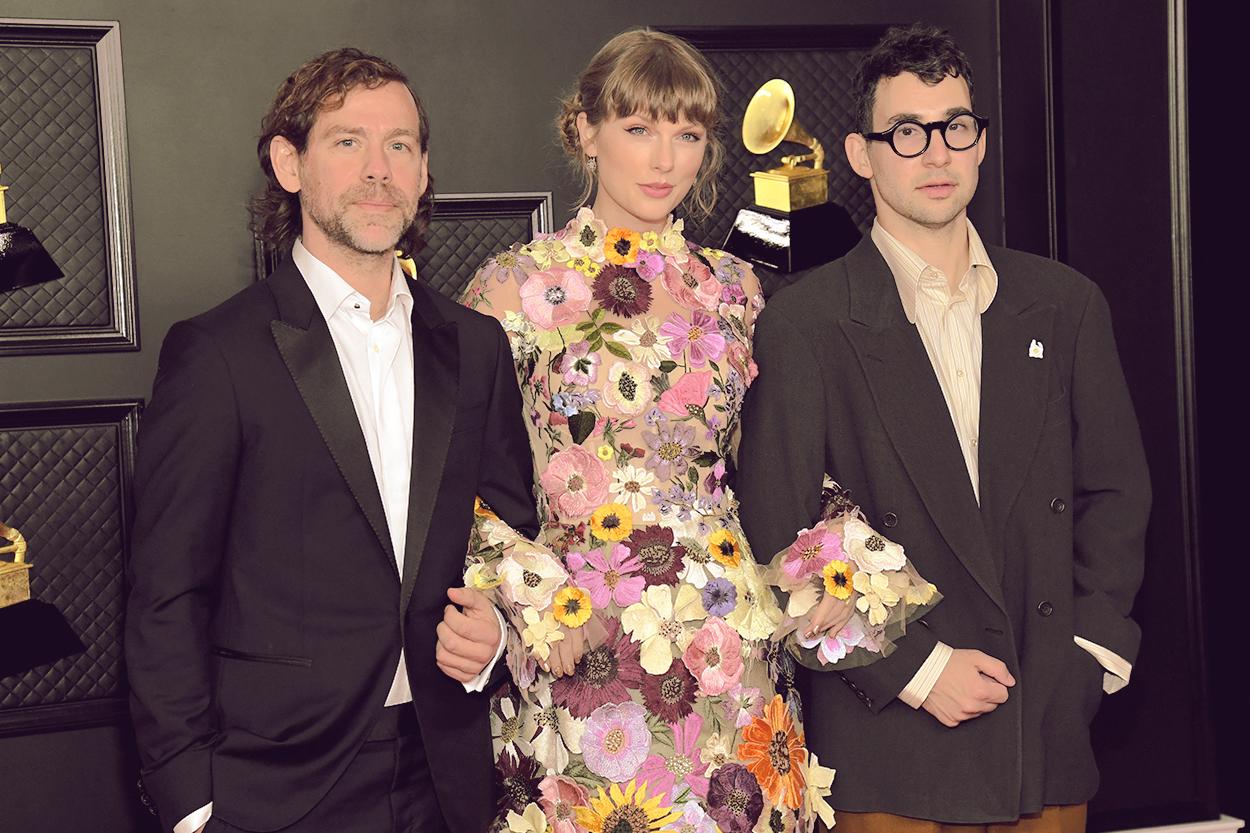
Aaron Dessner, Swift, and Jack Antonoff at the 2021 Grammys
119
“… Ready for It?”
Where were you when you found out that Taylor Swift has flow? It’s all over Reputation’s opening track, from the swaggering staccato verses to the lilting Caribbean-lite chorus.
What makes it: When she clears her throat before the first lines. Baby, let the games begin.
118
“Mastermind”
Taken on its face, this Midnights cut might seem like a story about getting a guy through sly manipulation and making him hers entirely by design—without the poor fellow ever catching on. But—if I may be so bold—it’s us, hi, we’re the object of Swift’s affections and desires and the victims of her schemes. This is the story of her career and the way she wields the fans. And absolutely none of it is accidental. Musically, there’s a monotone quality to this track, with a steady drumbeat and lots of repeated notes in the melody, but there’s also something really juicy about the subtle harmonies and how they bend a few of the tones on the third line of the chorus.
What makes it: “I’m only cryptic and Machiavellian ’cause I caaaaaaare.”
117
“My Boy Only Breaks His Favorite Toys”
An overlooked Poets track that’s a bit mild in comparison with its more unbridled peers. A closer listen reveals a melody that rises and falls like the tides, and it includes the origin story of this album’s affinity for a drum corps.
What makes it: “I’m queen … of sandcastles he destroys.”
116
“High Infidelity”
Do you really want to know where I was April 29? A sneaky sister track to “Renegade,” her Big Red Machine collab released in 2022.
What makes it: “There’s many different ways that you can kill the one you love / The slowest way is never loving them enough.”
115
“Vigilante Shit”
A character study of her own inner revenge fetishist. It’s bombastic, it’s funny, it’s occasionally genuinely creepy, and it made for a great set piece during the Eras Tour.
What makes it: “Draw the cat eye sharp enough to kill a man.”
114
“Electric Touch”
An appropriately booming tribute to her favorite band of the Speak Now era; she pulled this one out of the vault and featured the Fall Out Boys themselves. A rare Swift song with a moment timestamped during normal waking hours: 8:05 p.m.
What makes it: When Swift’s and Patrick Stump’s voices combine to wail out: “Just one time.”
113
“Paris”
Bubbly as Champagne, glittery as the tower at midnight, a Midnights bonus track about blocking out the noise in the City of Love that’s really about a state of mind. There’s one clunky lyric about the kind of shade “under where a tree is grown,” but she makes up for it with a handful of winners, especially the ones where a lovestruck Swift lets herself be so totally extra. “I’m so in love that I might stop breathing,” she gushes. Or: “I wanna brainwash you into loving me forever.” No one ever accused this woman of underemoting.
What makes it: The triad leveling up of “privacy sign on my door … and on my page … and on the whole world.”
112
“Guilty as Sin?”
Waves of vocal melisma, pulsing live drums, and tangles of guitar and synthesizer. It’s an extremely, well, pleasurable track! Let the record reflect that it bears some resemblance to “About You” by the 1975.
What makes it: One of Swift’s strongest vocal performances on Tortured Poets, no question mark needed.
111
“I Can Do It With a Broken Heart”
Lights, camera, bitch, smile! A brighter spin to Swift’s Poets mania, even if it’s actually just as tortured underneath the fishnets and the body glitter. It’s a glimpse behind Swift’s curtain and a takedown of hustle culture; “I cry a lot, but I am so productive” became an instant caption for reformed girlbosses everywhere.
What makes it: Songs like “The Smallest Man Who Ever Lived” provided the high melodrama, but the TTPD section that was added to the Eras Tour’s Euro summer wouldn’t work without the silent film–inspired ICDIWABH set piece. Bonus points for providing the platform for Travis Kelce’s onstage debut.
109
“Honey”
The one time on Life of a Showgirl when Swift addresses the haters and still sounds genuinely unbothered, while safe in the confines of a solid love. We have the Evermore era to thank for the lyrical flow over the surprisingly trappish beat.
What makes it: The firelight flicker of Tomas Jonsson’s flute and clarinet in the background.
108
“Actually Romantic”
A fabulously sneering overreaction to what was an ultimately complimentary Charli XCX song. Swift channels the sound of mid-aughts Weezer and the spirit of Regina George uninviting Janis Ian from her birthday party. It totally bangs.
What makes it: It’s a tie between the way she hams up the evil head cheerleader tone on the bridge and the actually devastating burn “How many times has your boyfriend said, ‘Why are we always talking ’bout her?’”
107
“I Can See You”
In which Swift tries her hand at Maroon 5 cosplay, and it works?! This Speak Now vault track is a total banger, making me wonder whether it got the axe from the original album because it’s just the teeniest bit risqué?
What makes it: The little guitar string windup just before the chorus sprints out of the gates.
106
“So High School”
An ode to her favorite ball knower that proves Swift was a big Sixpence None the Richer fan back in the day. What happens during Grand Theft Auto should maybe stay there.
What makes it: “You know how to ball, I know Aristotle.”
105
“Willow”
Evermore’s witchy lead single suggests that love and trickery can go hand in hand. I found this song a bit unassuming upon first listen, but I come back to it all the time. The songwriting is deceptively tight and structured for this quill pen era, and Aaron Dessner’s lines of fingerpicked guitar tangle like branches in the wind. This song got remixed approximately 47 times—the “’90s Trend” one is pretty good, though.
What makes it: “Wreck my plans / That’s my man.”
104
“Tell Me Why”
A kiss-off track for a boyfriend who could stand to learn some manners, delivered with a tone of I have had it up to here and placed over a juicy melody. Hilariously, the line “Yes, I remember what you said last night” seems to imply, probably accidentally, a booze-soaked argument—something she was definitely not writing about at this teenage, chipper stage of life. Like in “White Horse,” by the end of the song, Swift makes sure you know she’s moved on.
What makes it: “Down here from the ground, I see who you are.”
103
“Jump Then Fall”
A winsome bonus track for Fearless about taking a romantic plunge. I wonder whether it was left off the original release because it has some redundancies with “Hey Stephen,” but this melody is even more soaring.
What makes it: So many little touches in the line deliveries, like the way she pauses for a guitar strum between each word of “I have ever heard.”
102
“Paper Rings”
The highlight of the back stretch of Lover as the album turns into a set of genre exercises; this is a punch of pop punk that reminds us what a big Fall Out Boy fan Swift has always been.
What makes it: “Went home and tried to stalk you on the internet / Now I’ve read all of the books beside your bed.”
101
“Ronan”
Swift wrote this non-album single, the proceeds from which were donated to cancer charities, with lines taken from the blog of Maya Thompson, a mother who had lost her young son to neuroblastoma. It’s a remarkable feat of songwriting, empathetic and unflinching, and almost impossible to listen to.
What makes it: “You were my best four years.”
99
“Dorothea”
The Folkmore era is full of stories about small-town girls who made it big and the relationships and places they left behind. This one comes from the perspective of a friend who stayed home but still holds a candle for the girl she met under the bleachers. (True to Swift canon, important things are always happening on and around bleachers.) It could be read as a possible romantic prequel to “’Tis the Damn Season,” from Evermore, when the shiny star comes back home for the holidays, but I’ve always heard this song as a story about platonic friendship, between two people who took different paths but support each other anyway.
What makes it: The whole song glows, the melody moseying along over layers of piano and guitar without any high drama, instead choosing a steady warmth.
98
“No Body, No Crime” (Featuring Haim)
Everybody wants to be the fourth Haim sister, but only Taylor Swift is willing to kill (a stealin’, cheatin’, dirty bastard husband) for the gig.
What makes it: Este’s “She was with me, dude.” Great alibi.
97
“Everything Has Changed” (Featuring Ed Sheeran)
A folksy duet with her pal Ed Sheeran, whom she had not yet asked to take up rapping. You know what? They sound good together.
What makes it: “Meet me there tonight / And let me know that it’s not all in my mind.”
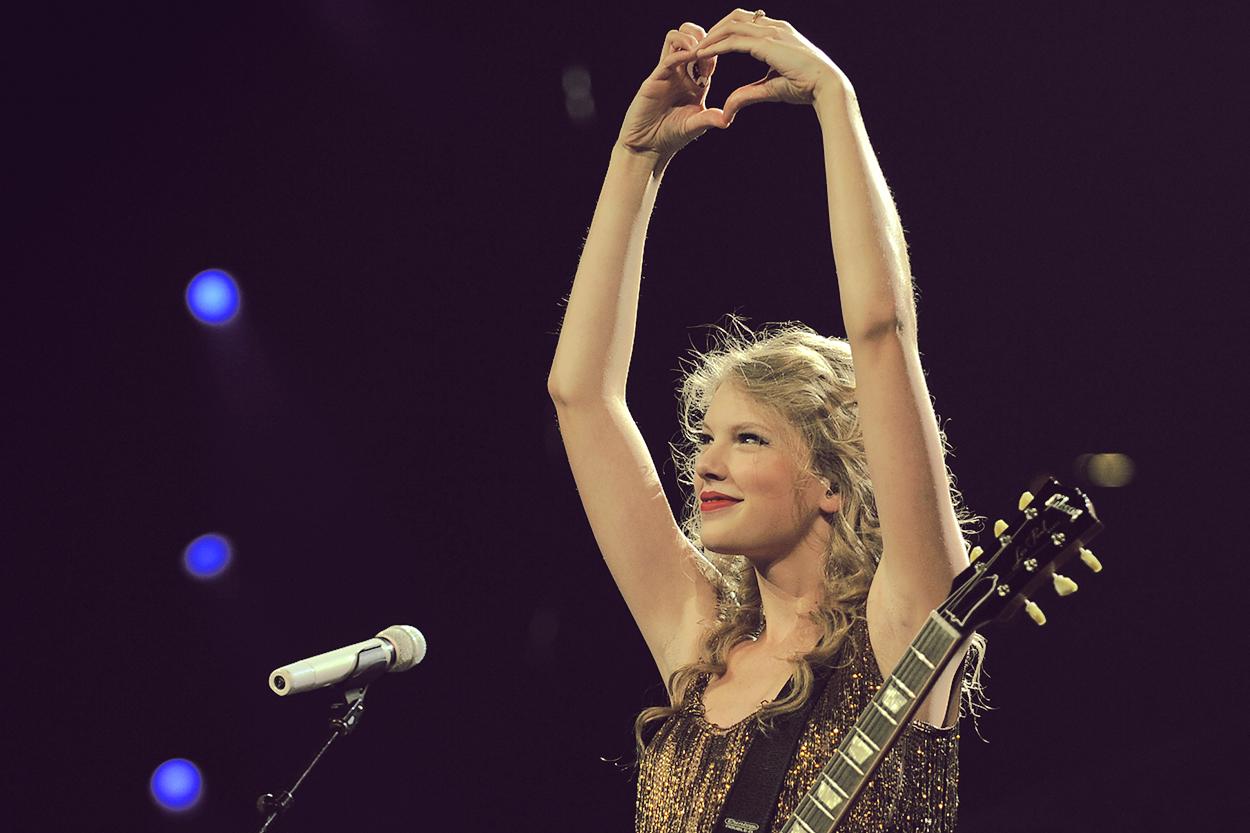
Swift performs at the Verizon Center in 2011 as part of her Speak Now World Tour
96
“The Story of Us”
The other John Mayer song from Speak Now, but with much less venom than “Dear John.” This one is about running into each other at an awards show. It’s a little strange to hear her suddenly seem uncertain about what went wrong when she was so sure just two tracks earlier, but it’s got the slickest guitar solo since Fearless’s title track.
What makes it: “This is looking like a contest / of who can act like they care less.”
95
“Lavender Haze”
She was back in the Reputation vocal booth for this one, flipping from hyperarticulate falsetto to a syrupy low register between lines. An album opener (for Midnights) with attitude.
What makes it: “No deal, that 1950s shit they want from me.”
94
“You’re Losing Me”
Delicate, vulnerable, at her most Is it cool that I said all that as she writes about the downfall of a relationship in real time, although Jack spilled that this one was years in the making.
What makes it: “I wouldn’t marry me either / A pathological people pleaser.”
93
“Better Than Revenge”
A bratty pop-rock track directed at her ex-boyfriend’s new girlfriend, most famous for this line: “She’s an actress / but she’s better known for the things that she does on the mattress, woah.” The barb caused enough of a stir that Swift changed the line for the rerecorded Taylor’s Version: “He was a moth to a flame / she was holding the matches, woah.” But ugliness is part of the human condition, and it’s possible for a lyric to slut-shame and also be effective. I wish she hadn’t changed it; the fun of the song is hearing Swift let herself be a bit nasty.
What makes it: “No amount of vintage dresses gives you dignity.” What a Blair Waldorf–ass insult (complimentary).
92
“Gasoline” (Haim Featuring Taylor Swift)
Is this a feature on a Haim song? Yes. Is it on this list because it’s fucking awesome? Yes.
What makes it: “You needed ass / Well, what’s wrong with that?”
91
“I Bet You Think About Me” (Featuring Chris Stapleton)
A treasure from the Red vault that’s almost the perfect amount of smug—the line about growing up on a farm is the only moment when she lays it on a little too thick. Chris Stapleton joins in as Swift, with a crippling superiority complex, shakes her head at a guy from her past. This song got a really fun music video, directed by Blake Lively, in which Swift sort of reheats the “Speak Now” story and correctly identifies Miles Teller as having a super-punchable face. PSA: A designer couch is a really bad investment, something apparently more than one of her beaus learned the hard way.
What makes it: “I bet you couldn’t believe / When you realized I’m harder to forget / Than I was to leave.”
89
“Lover”
“Can I go where you go? / Can we always be this close?” I love that dash of fragility in this lovestruck waltz, which is otherwise full of a youthful type of domestic contentment—letting your friends crash on the couch, taking the Christmas lights down in January because, well, that’s a super normal time to do it.
What makes it: “Swear to be overdramatic and true.”
88
“Down Bad”
I’ve always had a hard time latching on to the melody of this Tortured Poets cut. Its premise, though—romantic whiplash, imagined as the hazy aftermath of an alien abduction she can’t explain but wished would last forever—is fantastic.
What makes it: “Everything comes out teenage petulance.” It’s the delivery and the cadence of the syllables.
87
“Sweet Nothing”
An intimate lullaby over piano and warm, retro synthesizer, with a writing credit for William Bowery.
What makes it: “To you I can admit that I’m just too soft for all of it.”
86
“Come Back … Be Here”
Taylor and Dan Wilson had a totally great thing going. Why did these two stop working together? You can forgive the confounding pronunciation of “nonchalant” on this one because of the cinematic feeling of this portrait of cross–time zone romance.
What makes it: “But you’re in London / And I break down.”
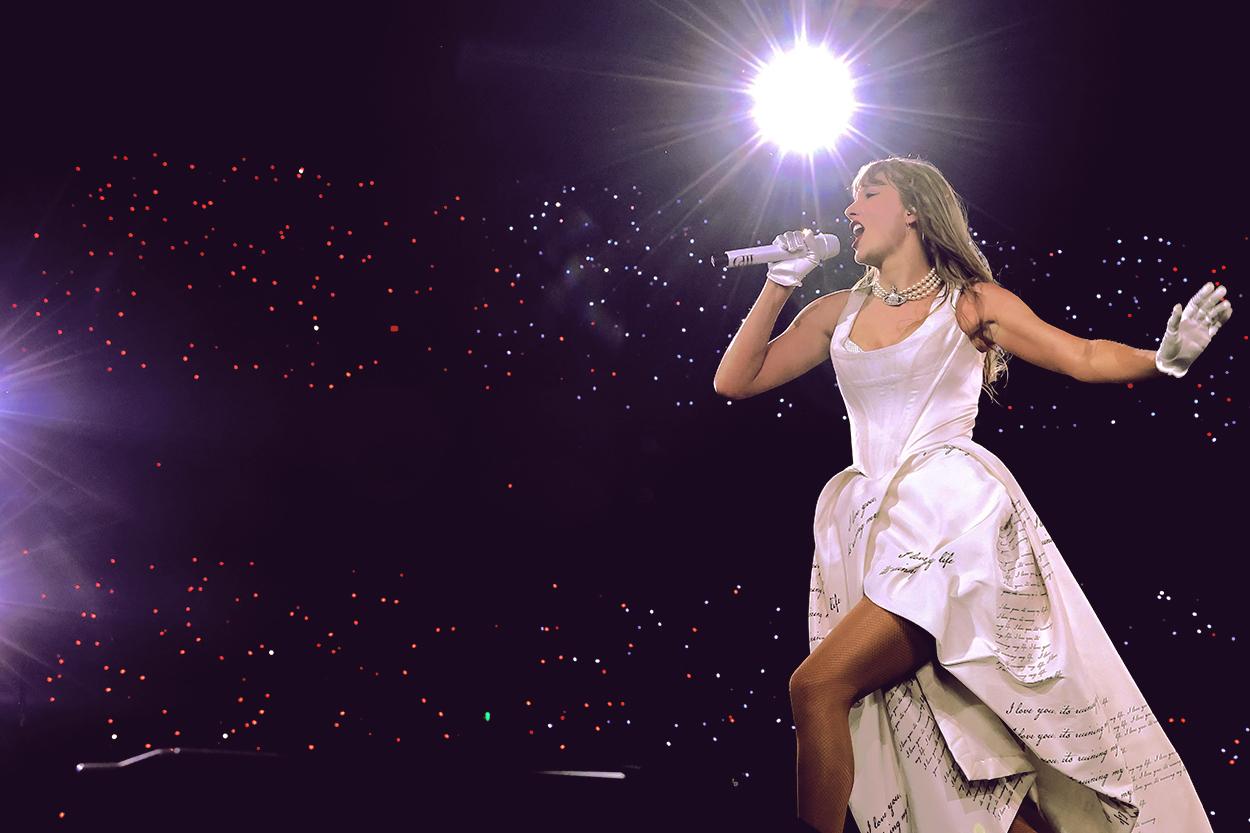
Swift performs the ‘Tortured Poets Department’ segment of the Eras Tour in Vancouver in 2024
85
“Florida!!!”
Fuck me up, Florida!!! Swift marks herself safe from the single-exclamation point curse by adding two more, and she and Florence Welch earn all three of them. It’s vervey and cinematic, and there’s some uncharacteristic grime in this ode to the place people go to flee misdeeds and bad reputations, possibly inspired by Swift’s Dateline habit. We might be down south, but the Western reverb guitar from “Fresh Out the Slammer” gets a stronger feature here. Swift’s vocal softness and Welch’s ghostly warble aren’t the most obvious fit for a duet, but it works because they’re having a hell of a time.
What makes it: “Is that a bad thing to say in a song?”
84
“Who’s Afraid of Little Old Me?”
A Tortured Poets highlight surpassed only by “But Daddy I Love Him” in its snarling antagonism, Taylor howls out this horror story about what we do to famous women. Like a gargoyle perched atop the Hollywood sign, a Mary Shelley invention for the age of Us Weekly, she’s been raised up, torn down, declawed, and left for dead, and now she’s going to haunt our shit for the rest of time. Fair, TBH!
What makes it: “So tell me everything is not about me / But what if it is?”
83
“You’re on Your Own, Kid”
A bildungsroman swaddled in Jack Antonoff’s coziest mellotron, nestled in at Track 5 on Midnights. In a period when Swift seemed a bit preoccupied with writing about Being Taylor Swift, it’s pretty poignant when she flashes through the costs to body, mind, and soul—often self-imposed—it took to get there.
What makes it: “So make the friendship bracelets.” And boy, did we.
82
“Clara Bow”
A song for the sisterhood of artists who have stood the test of time in an industry that treats them as disposable. Swift cycles through three generations of stars: 1920s silent film actress Clara Bow, “Stevie Nicks in ’75,” and then, of course, “Taylor Swift.” She’s told versions of this story in the past on songs like “The Lucky One” and “Nothing New.” But where those other songs are full of genuine worry about being replaced by a shiny new version, this one knows it’s the real thing that lasts. Joke’s on the record label suit who’s pitching the next up-and-comer on reheating Taylor Swift’s nachos.
What makes it: Hearing her say her own full name makes the hair on the back of my neck stand up.
81
“Nothing New” (Featuring Phoebe Bridgers)
The sad girl guitar ballad is in great hands on this tender Red vault cut about the fear of getting left behind for the next big thing. It’s an extremely valid concern for a pop star, although part of this song’s richness comes from knowing we’ve been lucky enough to have both of these women in our musical lives for quite some time. Swift and Bridgers trading lines on the chorus feels like game recognizing game. Pair this one with “Clara Bow” to hear the value of letting careers marinate.
What makes it: “How can a person know everything at 18 / but nothing at 22?”
79
“Ruin the Friendship”
She learned that rising melisma on the last word of “doesn’t mean you should” in the Folkmore era, but every other note of this Showgirl album cut is certified, grade A, OG Swift, right down to the cameo from Abigail. It’s all pretty singing, elegant bass, and nostalgia about 50 Cent playing at prom—until the emotional wallop of the third verse.
What makes it: I love the mundanity of “It was not convenient.” No high drama, just real choices and real regrets.
78
“Invisible String”
Folklore’s most autobiographical track is also its most tender, a glowing meditation on the healing power of love. Swift wonders whether something so transformative could really be the product of random chance. She’s not sure she fully believes in fate, “but isn’t it just so pretty to think?” There are references to Ernest Hemingway and Charlotte Brontë—an American and a Brit—an extra-subtle celebration of transatlanticism.
What makes it: “Cold was the steel of my axe to grind for the boys who broke my heart / Now I send their babies presents.” Folklore came out two days after Joe Jonas welcomed his first child, by the way.
77
“Ours”
“Don’t you worry your pretty little mind / People throw rocks at things that shine” is such a lovely set of lines, you wonder whether this song got left off the standard Speak Now edition simply because it already had a song called “Mine.”
What makes it: Since I already mentioned those opening chorus lines, extra credit for “Any snide remarks from my father about your tattoo will be ignored.”
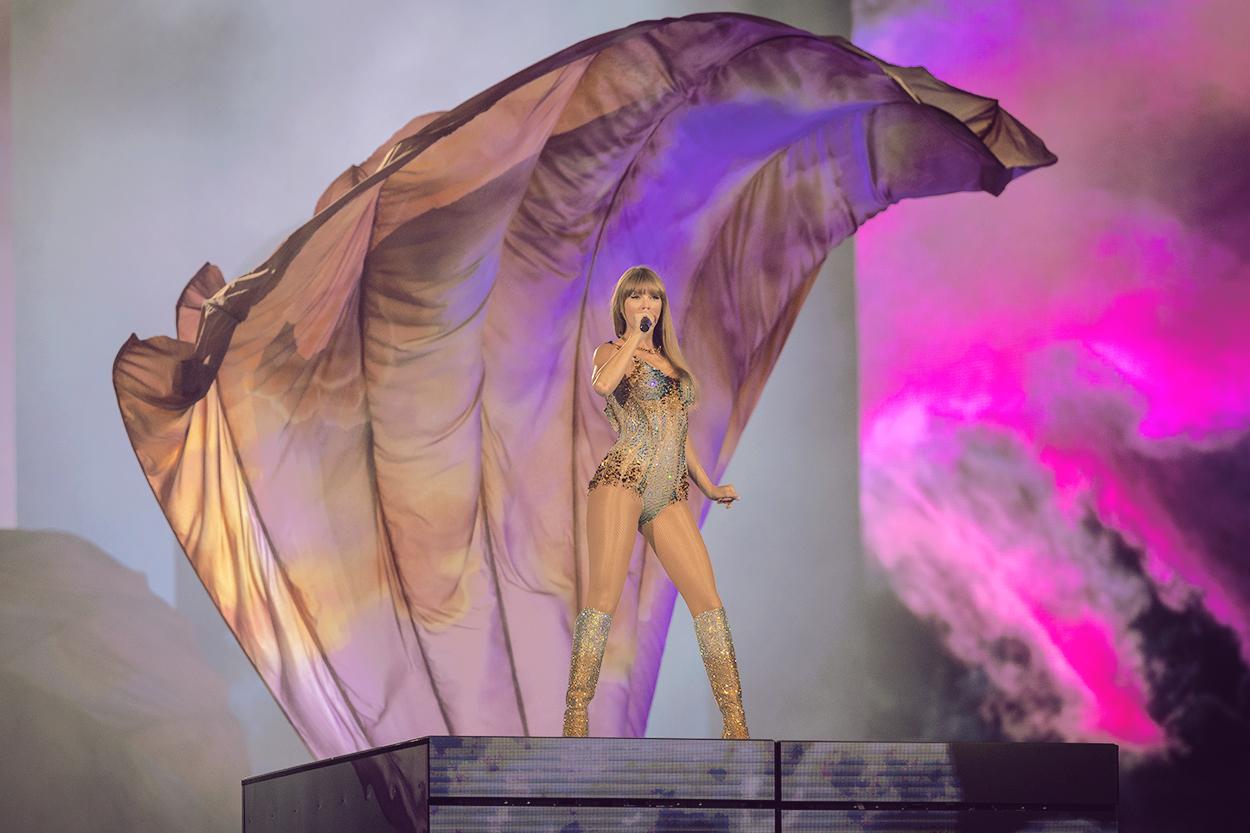
Swift performs “Miss Americana & the Heartbreak Prince” at the SoFi Stadium stop of the Eras Tour in 2023
76
“Miss Americana & the Heartbreak Prince”
The one time Joel Little and Swift really got it right together, with a song that delivered a documentary film title, the Eras Tour opener, and more proof that Swift’s a big Lana Del Rey fan. It’s pricklier and more detached than Swift’s earlier set-in-high-school style of storytelling; the cheerleaders shouting “OK!” and “Go! Fight! Win!” are more Jennifer’s Body than The Breakfast Club.
What makes it: “You play stupid games, you win stupid prizes.”
75
“Teardrops on My Guitar”
A bit of early magic between Swift and cowriter Liz Rose, written for a high school crush. Swift had to fight to keep “Drew” as a named character, since her label thought the song would be better if it were more generalizable. As usual, she was right—Drew is so perfectly normie.
What makes it: When they tweak the lyrics of the last chorus. Not the last time Tay and Liz would find a way to give the knife in your heart one extra twist!
74
“Last Kiss”
A mournful post-split waltz, with an intro the exact length of Joe Jonas’s breakup phone call.
What makes it: “So I’ll watch your life in pictures like I used to watch you sleep.”
73
“Look What You Made Me Do”
I’m sorry, the old Taylor can’t come to the phone right now. Why? Oh, ’cause she’s on the phone with her lawyers clearing a Right Said Fred sample! Swift announced her Reputation heel turn with this camp-gothic red herring full of Kimye digs and that interpolation gag. In 2017, it really sent people into a tizzy wondering whether this was what a Taylor Swift song was like now. That may not have been the best thing for the album in the short term, but, hey, things worked out. With absolutely zero irony: This song is great.
What makes it: “Honey, I rose up from the dead, I do it all the time.”
72
“Haunted”
An effective piece of Evanescence-core from the back half of Speak Now. I really loved running to this song in high school.
What makes it: She has to reach for some of the high notes, but the shrillness in her voice adds to the song’s spookiness.
71
“Starlight”
There’s a genuinely terrifying alternate timeline in which Taylor Swift has a song about Robert F. Kennedy Jr., but thankfully the time she spent hanging around Hyannisport in 2012 yielded this up-tempo pop number about Bobby and Ethel instead. The melody is catchy, and the production is dreamy and appropriately nostalgic. As Kennedy cosplay goes, she could have done a lot worse—but she’s more of a Rhode Island girl, anyway.
What makes it: “The night we snuck into a yacht club party / Pretending to be a duchess and a prince.”
69
“Dancing With Our Hands Tied”
A lite-EDM cut from Reputation, with a versatile vocal performance.
What makes it: “I’d kiss you as the lights went out / Swaying as the room burned down.”
68
“White Horse”
We have Shonda Rhimes to thank for the fact that this tearjerker about empty gestures made the cut for Fearless. Swift was ready to leave it off the album before the Grey’s Anatomy producer said that she wanted to use it in the show’s Season 5 premiere. (The one where Cristina gets impaled by an icicle.) It’s like an inverse “Love Story”; most of the lyrics here come from playing around with familiar fairy-tale clichés. But in both cases, there’s also one line that sticks out as personal and specific. In “Love Story,” it’s “this love is difficult, but it’s real.” Here, it’s about how ego harms relationships: “My mistake, I didn’t know to be in love / You had to fight to have the upper hand.”
What makes it: The classic Swift–Liz Rose third-act twist: “It’s too late for you and your white horse to come around” becomes “too late for you and your white horse to catch me now.” She gets in the car and drives off.
67
“I Knew It, I Knew You”
Of course Taylor’s a Jessie fan. An original for the Toy Story 5 soundtrack that proved she had not yeed her last haw. Filing away for future reference that Jack Antonoff knows his way around a harmonica.
What makes it: The slant rhyming delivery of “through the daze of the blades of the grass in summer.”
66
“Back to December”
Technically speaking, “Breathe,” from Fearless, features Swift’s first recorded apology. But this regretful ballad marked the first time she’d fully adopted the role of the bad guy in a song—that’s growth, baby! It really did feel like a big deal at the time. (And it’s also Exhibit A for my theory that Taylor Lautner may be the only good man in Hollywood.) The weepy strings really sell it.
What makes it: “It turns out freedom ain’t nothing but missing you.”
65
“Shake It Off”
1989’s so-cheesy-it-works lead single is one of a few red herrings she’s put out at the very beginning of an album cycle. It goes down easier knowing the whole album isn’t so confectionary.
What makes it: “’Cause the players gonna play, play, play, play play / And the haters gonna hate, hate, hate, hate, hate.” She’s right!
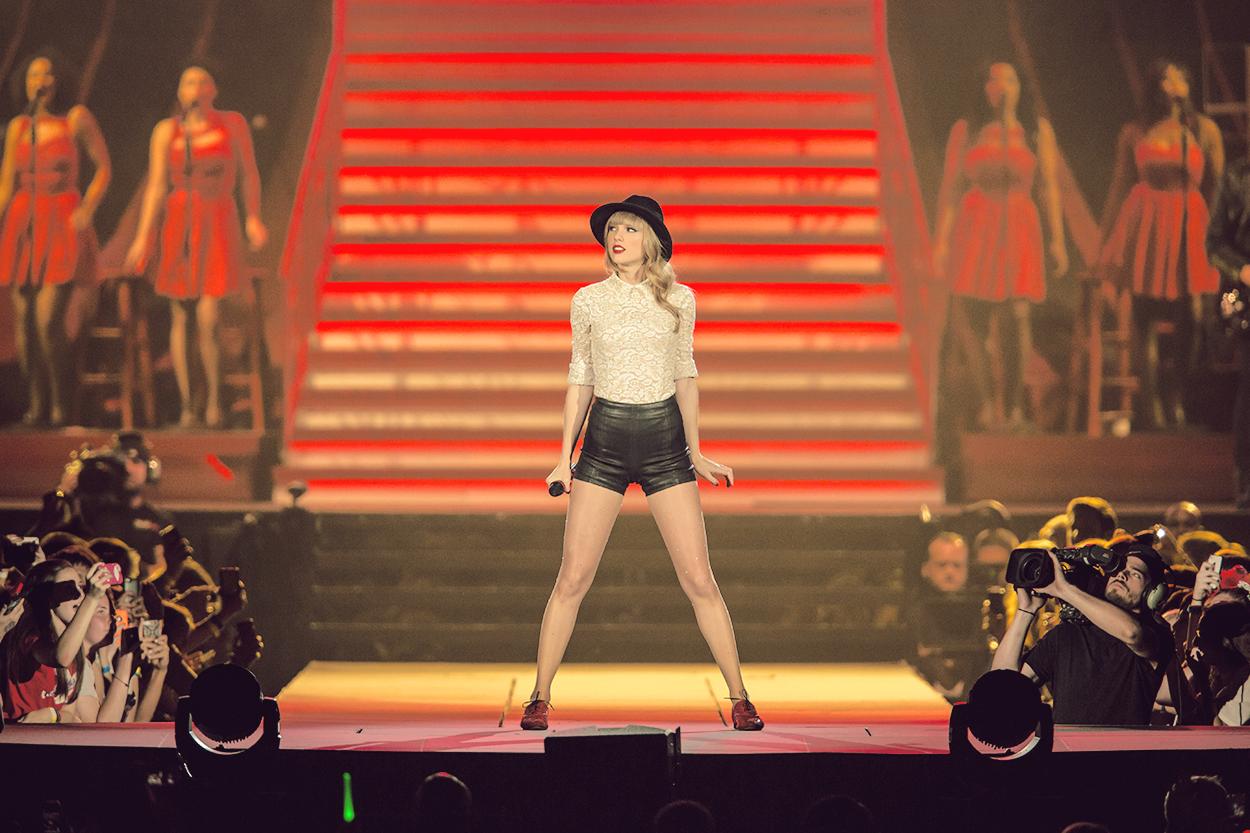
Swift during a Red Tour stop at Cowboys Stadium in 2013
64
“State of Grace”
To open Red, the album that burst her musical world open, a song that sounds like it could fill up the entire sky. (It’s mostly those Joshua Tree drums.) It lives up to its title in how it tells a “touch and go” love story, without any blame to go around.
What makes it: “You were never a saint / And I’ve loved in shades of wrong.”
63
“Opalite”
Shout-out to Austin Swift for the perfect piece of brotherly wisdom that comes early in this sing-along about choosing joy. So many of the qualities of Swift and Max Martin’s best collaborations are present here (even though she primarily worked with Martin’s protégé Shellback on this album). The hooks are sticky, the structure is precise, and her writing brings in just enough idiosyncrasy to that neat casing. The only stumble is the one random shot she takes at her lover’s ex; that section is the turd in an otherwise optimistic punch bowl. Swift is such a classicist that it’s really a surprise she hadn’t tried a ’60s doo-wop thing before this song. It’s totally charming.
What makes it: “I had a bad habit of missing lovers past / my brother used to call it eating out of the trash.”
62
“The Bolter”
If you stayed up to listen to The Tortured Poets Department on its release night and stuck it out for the 2 a.m. double-album surprise drop, you wouldn’t have made it to “The Bolter” until 2:45 a.m. But how splendidly fun for the bleary-eyed to get to know her. Swift is mostly a reactive protagonist in this era, but suddenly, she zeroes in here on why she’s the one who always seems to be holding the keys to the getaway car. The production is lush, Swift performs the whole song with a glint in her eye, and there’s a long list of beautiful small touches, from the breathy backup vocals to the way she draws out “all her fuckinn’ liiives” on the chorus. A fantastic hang, worth the lack of sleep.
What makes it: “Ended with the slam of a door / But she’s got the best stories.” One of her best line reads, thanks to the extra split second she takes to relish that last word.
61
“Treacherous”
Another arena-rock gem sneaked in between Red’s Top 40 hits. It’s cowritten with Semisonic frontman Dan Wilson, who also produced it. (Dan Wilson wrote “Closing Time,” “Not Ready to Make Nice” with the Chicks, and “Someone Like You” with Adele. They should build statues of this man.) It starts as a smolder and builds to a bonfire.
What makes it: “Nothing safe is worth the drive.”
59
“Gold Rush”
This song is like a grown-up version of “Enchanted,” except in this case the narrator may not have even spoken to its magnetic subject before beginning to fantasize about sitting next to them at dinner parties and walking barefoot around their apartment. Jack Antonoff made the most of his sole production credit on Evermore; the restrained, metronomic choruses contrast with the soaring verses in a way that feels like the narrator talking themselves in and out of saying hello. You feel the gleam, the twinkle, the crush-induced sense of vertigo. Swift’s singing is so dextrous here, too. Listen for how she draws out every other word of “walk past” and “quick brush” in the choruses or lands a little extra hard on “contrarian shit” for just a few of her vocal textures.
What makes it: I especially love two lines from this song, for different reasons. “I don’t like that falling feels like flying till the bone crush” is such a satisfying sentence to hear, with its alliteration and the way the final syllable sounds like letting air out of a tire. And then I love the image of the fantasy fading “into the gray of my day-old tea” as the narrator snaps back into reality.
58
“Right Where You Left Me”
A gothic country ballad about a woman frozen in time at the exact moment she got dumped, with an excellent banjo part from Aaron Dessner. This song is part of the Swiftian tradition of leaving some of her best work for the bonus tracks. It also works as a meta-commentary on the idea that celebrities are frozen in time at the age they got famous. There’s a touch of comedy in the way she sings “Help!” and the way she paints a few self-effacing moments—“Breakups happen every day / You don’t have to lose it!”—but there’s also real desperation in the way she throws her voice up to the high notes on the “you left me no” moments.
What makes it: “Help, I’m still at the restaurant.” A perfect hook for someone who, rather famously, doesn’t get over things so easily. (Who can relate!)
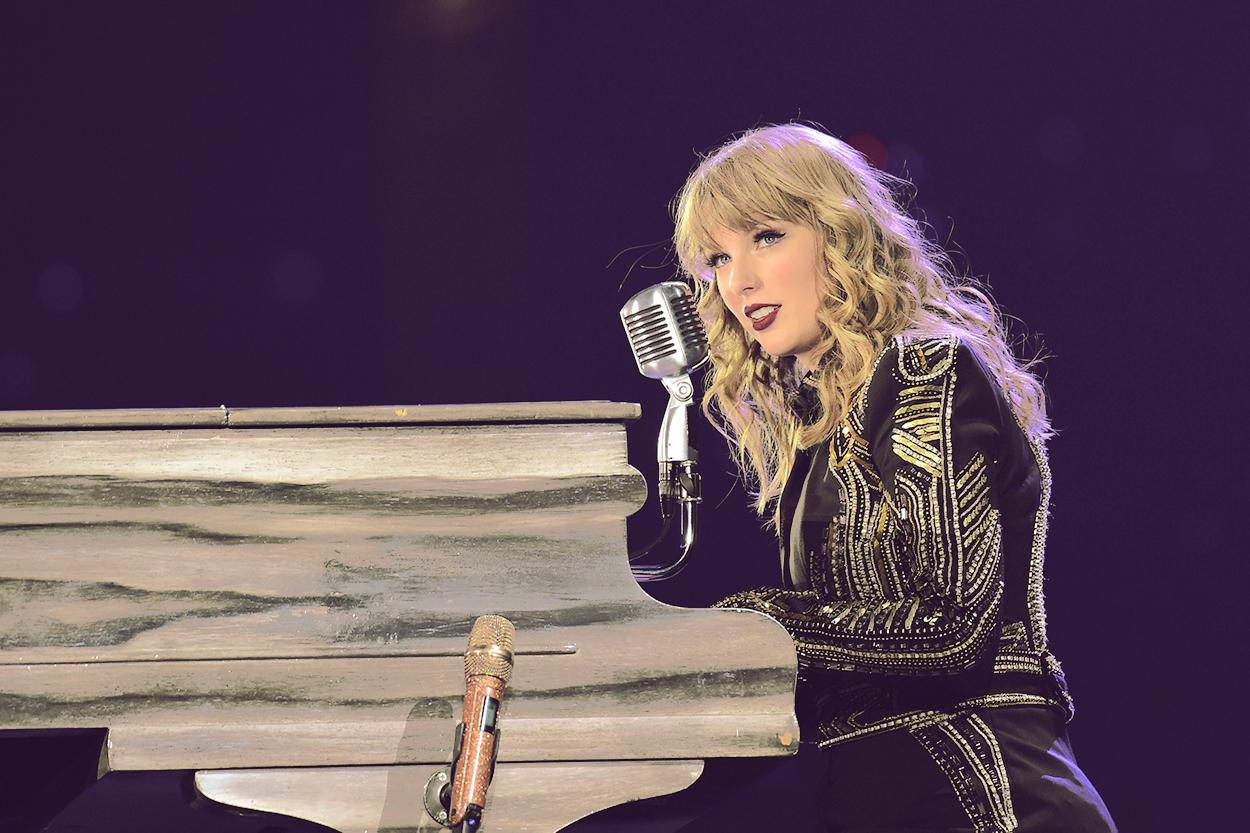
Swift performs during the Reputation Stadium Tour in Japan in 2018
57
“New Year’s Day”
“I want your midnights / But I’ll be cleaning up bottles with you on New Year’s Day.” Proof, for an artist who came up writing fairy-tale love stories, that real, everyday partnership is just as romantic.
What makes it: “Hold on to the memories, they will hold on to you.”
56
“Clean”
1989’s striking closer about new beginnings, cowritten with Imogen Heap. It hints at what’s to come on Reputation with the admission that she drinks wine.
What makes it: “Just because you’re clean don’t mean you don’t miss it.”
55
“Don’t Blame Me”
Is she drunk on love or on getting to play the bad girl for once? This thick blast of electro-gospel is so many things that shouldn’t add up to “Taylor Swift song,” but that’s why Reputation is the best.
What makes it: The soaring half chorus out of the bridge where she hits the high note and holds it, one of her most impressive moments of vocal acrobatics.
54
“Soon You’ll Get Better” (Featuring the Chicks)
Simple and devastating, an acoustic ballad written about her mother’s cancer.
What makes it: “Holy orange bottles, each night I pray to you / Desperate people find faith, so now I pray to Jesus too.”
53
“False God”
A slinky R&B experiment with an allusion to … oral sex?! Taylor! This song pulls off cool in a way that’s often been elusive for pop’s class president, and never more so than when she performed it on Saturday Night Live in 2019, with show bandleader Lenny Pickett smoking the saxophone part.
What makes it: “I’m New York City / I still do it for you, babe.”
52
“Peace”
An anxious love song built around a stark arrangement of finger-plucked acoustic guitar and a simple question: “Would it be enough if I could never give you peace?”
What makes it: “I talk shit with my friends / It’s like I’m wasting your honor.”
51
“Cornelia Street”
Only Mrs. Overdramatic and True could write a song about how she’d swear off a single city block if she ever lost her man and make it sound like epic romance. An all-time fan favorite about time, memory, and the thrills and risks of giving your life to someone.
What makes it: “I hope I never lose you, hope it never ends.” Isn’t it just as simple as that?
49
“’Tis the Damn Season”
Evermore is the undersung Christmas album of the century, and this song—the story of a showgirl revisiting the town (and the man) she outgrew in the season when the cold fogs up windshield glass—is the reason why. Nostalgia is a weapon, and the longing hits like a bazooka, over a background of finger-picked electric and lap steel guitars. Hooking up while home for the holidays never sounded so elegant.
What makes it: “Time flies, messy as the mud on your truck tires.”
48
“I Did Something Bad”
Swift styles herself as a grinning femme fatale on this headbanging Reputation cut, which features her first recorded swear word. (“If a man talks shit, then I owe him nothing.”) She faces off against a firing squad of electro thumps and crashes, burns herself at the stake, and says she’s never had a better time. It’s one of her best songs to listen to at the gym.
What makes it: “Most fun I ever had.”
47
“Holy Ground”
A beloved Red deep cut that’s pure Swift, a song born of her need to commemorate every experience and every feeling she’s ever had. The industrious guitar part is awesome, too.
What makes it: One of her sneakiest punch lines, after she spends several lines building up the connection she had in the relationship: “And that was the first day.”
46
“Mine”
Speak Now’s opening track is a fictional story filled with vignettes from Swift’s imagination about a young couple worried about paying their bills, and Swift draws those scenes in such vivid detail. One of her catchiest melodies, with Nathan Chapman’s backing vocals providing some oomph. This is one of those songs that exists on a level just below the all-time classics. If you haven’t put it on in a while, treat yourself.
What makes it: “You made a rebel of a careless man’s careful daughter.” That’s not even about the central relationship of the song, and suddenly you know everything anyway.
45
“Hits Different”
A breakup song so cheery that Swift’s own mother thought it was about a different guy. I don’t miss the months when this one was available only via Target deluxe CD! Dig the hyperbole in the lyrics; dig the Barenaked Ladies cadence in the bridge.
What makes it: “Now the sun burns my heart / and the sand hurts my feelings.” Overdramatic and true, as ever.
44
“Should’ve Said No”
A pop-country kiss-off supercharged with a lethal dose of banjo. On each verse, she lets the song’s sorry subject grovel for a while, begging for forgiveness for his indiscretions. But then on the chorus, she always gets the last word.
What makes it: The bridge, where she lets herself rub it in. A little juvenile; so satisfying.
43
“Wildest Dreams”
Count on Taylor Swift to understand that the way you remember something matters almost as much as the way it actually was. This power ballad dripping in mellotron asks nothing more of her lover than to be unforgettable. During the 1989 World Tour, she performed a mash-up of this song and “Enchanted,” juxtaposing the latter’s first-glance butterflies with this song’s simmering hindsight. (Toward the end of the performance, she also rips off a massive tutu, Lizzie McGuire–style, and struts down the catwalk in a bejeweled bodysuit. It’s awesome.)
What makes it: The double-timed bridge, with her biggest belt until Reputation.
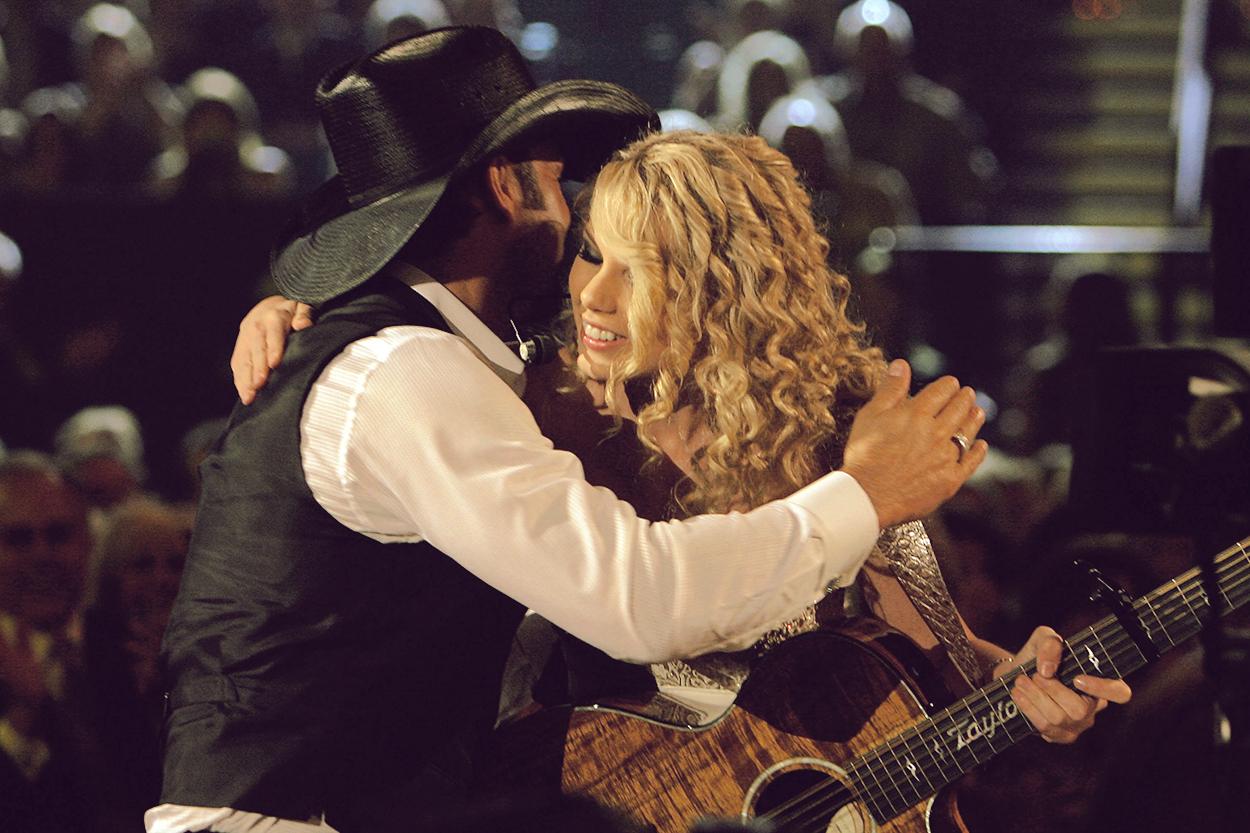
Swift hugs Tim McGraw after performing his namesake song at the 2007 Academy of Country Music Awards
42
“Tim McGraw”
In 2006, 16-year-old Taylor Swift’s voice and the stories she told in her songs were younger than almost anything else on country radio. Yet in a single set of opening lines, she suggested the pitfalls of underestimating her savvy. “He said the way my blue eyes shined put those Georgia stars to shame that night,” she sings. “I said, ‘That’s a lie.’” Two decades later, I’m still uncovering little narrative details in this one, like the Chevy truck that probably didn’t actually get stuck on those back roads late at night. The idea to name her first single after Nashville royalty may have come from her label, but it was one of the first brilliant moves in a career that’s been full of them.
What makes it: That first stanza—the surprise, the confidence, the entire world built into two lines of dialogue.


41
“Is It Over Now?”
Red has the best collective vault tracks; 1989 has the single best vault cut—this situationship postmortem full of lyrical Easter eggs.
What makes it: You know she’s steamed when the country comes out on the bridge: “Oh, Lord.”
39
“Fifteen”
The song that introduced the world to a redhead named Abigail. Is there something a little funny about Swift, who was 18 when this song came out, singing with such a wizened perspective about events three years in the rearview? Of course—she’s always been precocious!—but what makes “Fifteen” so effective is that it’s a high school story told only as a high schooler could. The emotional apex of the song—“We both cried”—shows not just that Swift shares in her friend’s pain, but that the boy who changed his mind punctured her own fantasy of what dating a cute upperclassman might be like. That she hasn’t yet had the experience herself is a feature, not a bug. On an album marked by sweeping fairy-tale singles, “Fifteen” was an essential track, a reminder to her audience that Swift knew the real-life versions of their stories, too.
What makes it: Swift wrote this song around one pair of lines: “Abigail gave everything she had to a boy who changed his mind / And we both cried.”
38
“The Smallest Man Who Ever Lived”
Female Rage: The Musical’s 11 o’clock number starts softly, all bewilderment and quiet piano, but before long it’s a torrent of righteous disgust the likes of which Swift hadn’t unleashed since “Dear John.”
What makes it: It’s the bridge, of course it’s the bridge. It couldn’t be anything but the bridge—as anyone who’s ever screamed, “YOU DESERVE PRISON, BUT YOU WON’T GET TIME” at the top of their lungs knows so very well. But I’d also like to point out that the “Jehovah’s Witness suit” bar might be the most underrated dig in her entire catalog. She really got his ass with that one!
37
“Fearless”
Oh, so you’re following up your debut album of youthful country tunes with something a little bigger, a little more pop, and you need a country-pop banger to kick-start that sophomore effort? I … I really don’t know how it gets better than “Fearless.” Bonus points for how many Swiftisms are jammed into this song—there’s rain, a best dress, and a guy driving a car who can’t keep his eyes on the road on this Liz Rose cowrite.
What makes it: A killer guitar solo, crushed by Paul Sidoti live on the Eras Tour and in studio for the Taylor’s Version edition.
36
“Marjorie”
Evermore’s 13th track is its beating heart, a tribute Swift wrote to her grandmother Marjorie Finlay, an opera singer who died in 2003. “If I didn’t know better,” Swift sings, “I’d think you were singing to me now.” And just then, a sample of Finlay’s silvery soprano floats in, a benevolent haunting.
What makes it: “All your closets of backlogged dreams / And how you left them all to me.”
35
“Forever & Always”
This biting Fearless track has the distinction of being the first song Swift published about a famous boyfriend (Joe Jonas). In an interview on Ellen promoting the album, Swift shared that the two weren’t together anymore and said that she knew when she found the right person she wouldn’t “be able to remember the boy who broke up with me over the phone in 25 seconds.” The feelings were fresh! Swift and Jonas broke up just the month before Fearless was released, and “Forever & Always” was the last song she put on the album, convincing her label to put a rush order on mixing it so that the song could be ready just in time for mastering. The breakup was still a hot tabloid story, and this song cemented Swift’s reputation for writing blistering songs about exes. The deluxe edition of the original Fearless album included a gut-punching piano version, but the rocked-up guitars on the standard version let her stomp and sneer.
What makes it: If you thought Swift was done with lines about pouring rain, not so—she actually turns up the waterworks here with a set of lines that are so perfectly melodramatic: “And it rains in your bedroom / Everything is wrong / it rains when you’re here and it rains when you’re gone.”
34
“22”
“Happy, free, confused, and lonely at the same time.” Has there ever been a better description of being in your 20s, or of a Taylor Swift heroine? It’s her “Party Rock Anthem”; of course her idea of a rager is having pancakes at midnight.
What makes it: “Who’s Taylor Swift anyway? Ew,” a breadcrumb on the way to the self-satirization of “Blank Space.”
33
“Ivy”
It’s a goddamn blaze in the dark, and she started it. This Evermore highlight is a baroque tapestry about a woman in love with a man who is not her husband. They inch closer and closer together over minor chords that ascend step by step before finally running away together on the bridge.
What makes it: Do you hear Justin Vernon’s subtle backing vocals?
32
“Anti-Hero”
Swift has an uneven history with lead singles, but she got it oh so right for Midnights. Insightful, funny, catchy, with a great music video.
What makes it: “Sometimes I feel like everybody is a sexy baby / And I’m a monster on a hill.” And yes, that is a reference to a 2011 30 Rock episode.
31
“Call It What You Want”
The calm after Reputation’s initial storm, a song as comfortable and lived in as a borrowed pair of your boyfriend’s favorite jeans. (The fantasy version of this, though, not the reality where you realize his thighs are skinnier than yours.) This song is about shutting out the world’s dramas and getting wrapped in a warm, true embrace. I love the subtle Britishisms and the flip on “dressed like a daydream” from “Blank Space.”
What makes it: “My baby’s fit like a daydream.”
29
“August”
Oh, Augustine, the summer side piece of the James-Betty-Augustine teenage love triangle trilogy. She’s the only one never even mentioned by name, overlooked like a missed spot of sunscreen. But Taylor wouldn’t leave a girl hanging. Augustine’s reward is Folklore’s best melody—so much better than some guy who ditches you behind the mall.
What makes it: “August slipped away like a bottle of wine.” Folklore isn’t usually about structure, but she sneaked a killer hook in there.
28
“Would’ve, Could’ve, Should’ve”
Tormented and tormenting, this rocker about an age-gap relationship (you probably know which one) rises up from the back half of Midnights and soars. She’s written this story before, but this time she’s looking back with a bit more nuance—and doesn’t pull any punches. The vocals tower. There are single lines—“Memories feel like weapons”—that seemingly explain, God, half her catalog, and maybe life itself, in a handful of words. I cannot operate motor vehicles around this song! Righteous. Powerful. Exhilarating.
What makes it: “Give me back my girlhood / It was mine first.”
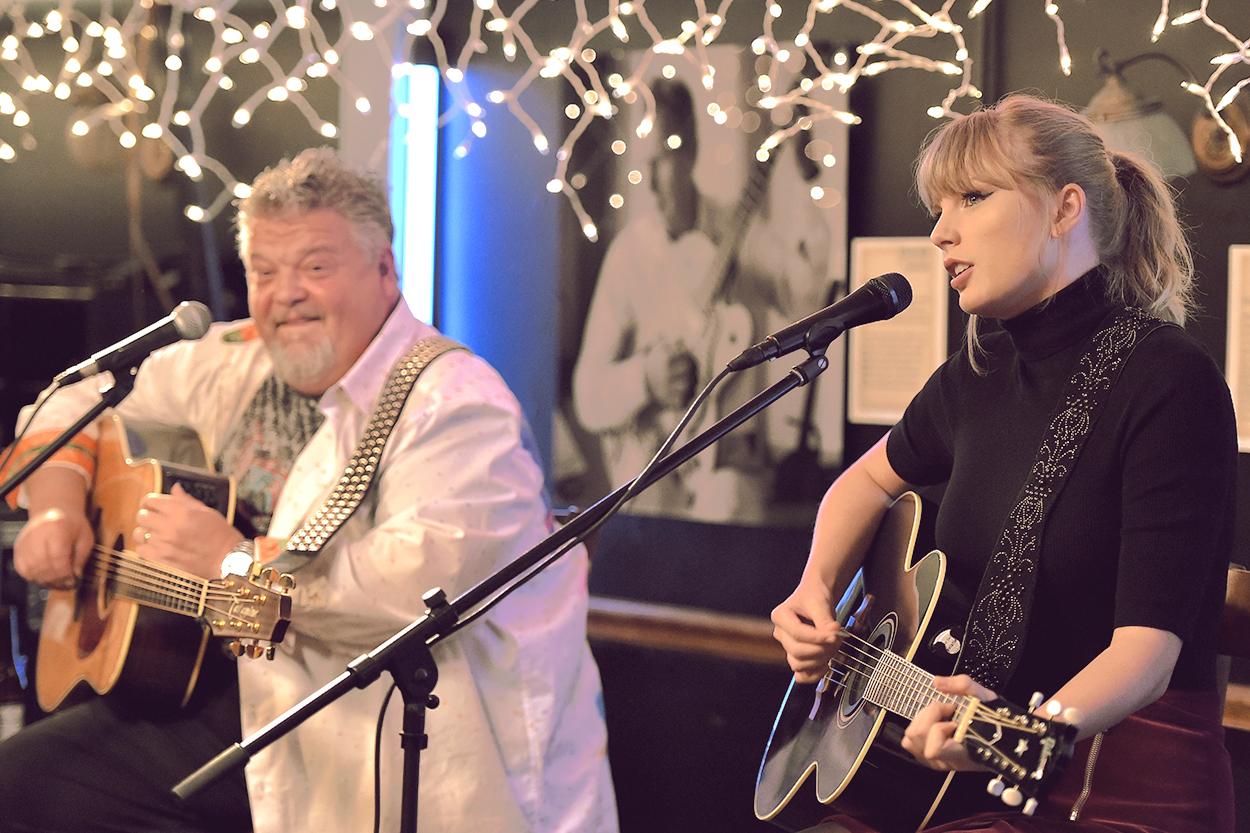
Craig Wiseman and Swift perform “Better Man” at Bluebird Cafe in Nashville in 2018
27
“Better Man”
During the Red sessions, Swift wrote this showstopping country ballad. She shelved it for four years and then gave it away to the Nashville quartet Little Big Town. They released it and immediately scored a no. 1 country radio hit. Huge flex. What’s wild about this song is that its sentiment feels so universal, yet I can’t think of another that expresses it in quite the same way. It’s also cool that Swift got to have the classic Nashville music writer experience of hearing her own song done by someone else. Still, I don’t think I could have parted with “I hold on to my pride because these days it’s all I have.”
What makes it: The Taylor’s Version studio recording is lovely, as is the Little Big Town version. But please just watch this.
26
“Dress”
Sexy does not tend to be Swift’s most natural mode. She activates her carnal side through antagonism more easily than attraction; her affection is given out as reverence or through swoons more often than sighs. But here, in the most sensual track in her catalog, her best dress—so often a symbol of romantic love in her earlier, decidedly chaste work—is left crumpled on the floor.
What makes it: “I don’t want you like a best friend.”
25
“I Know Places”
Taylor Swift knows this song rules. I know this because she played it as a surprise song on the second-to-last night of the Eras Tour’s run of shows in Los Angeles in 2023, and she served only prime cuts to those audiences. Why it wasn’t a single, I’ll never understand. Maybe she thought a track about secret places where you could snog with Harry Styles wasn’t relatable enough. Ryan Tedder creates so much tension between the tight, minor verses and the exploding, major-key chorus, you hear both the dystopian feeling of being stalked by cameras and the thrill of getting away.
What makes it: The shift from major to minor, combined with a soaring vocal, makes the start of each chorus a hit of pure dopamine.
24
“Maroon”
A sensory feast, even beyond the eight different shades of deep red Swift names over the course of this Midnights highlight. There’s the cheap bottle of screw-top rosé, the leftover pile of ash from a stick of incense on a record shelf, the hickey peeking out on a collarbone. So vivid through the thick, hypnotic reverb.
What makes it: When she suddenly breaks into iambic pentameter for the line “Carnations you had thought were roses, that’s us.”
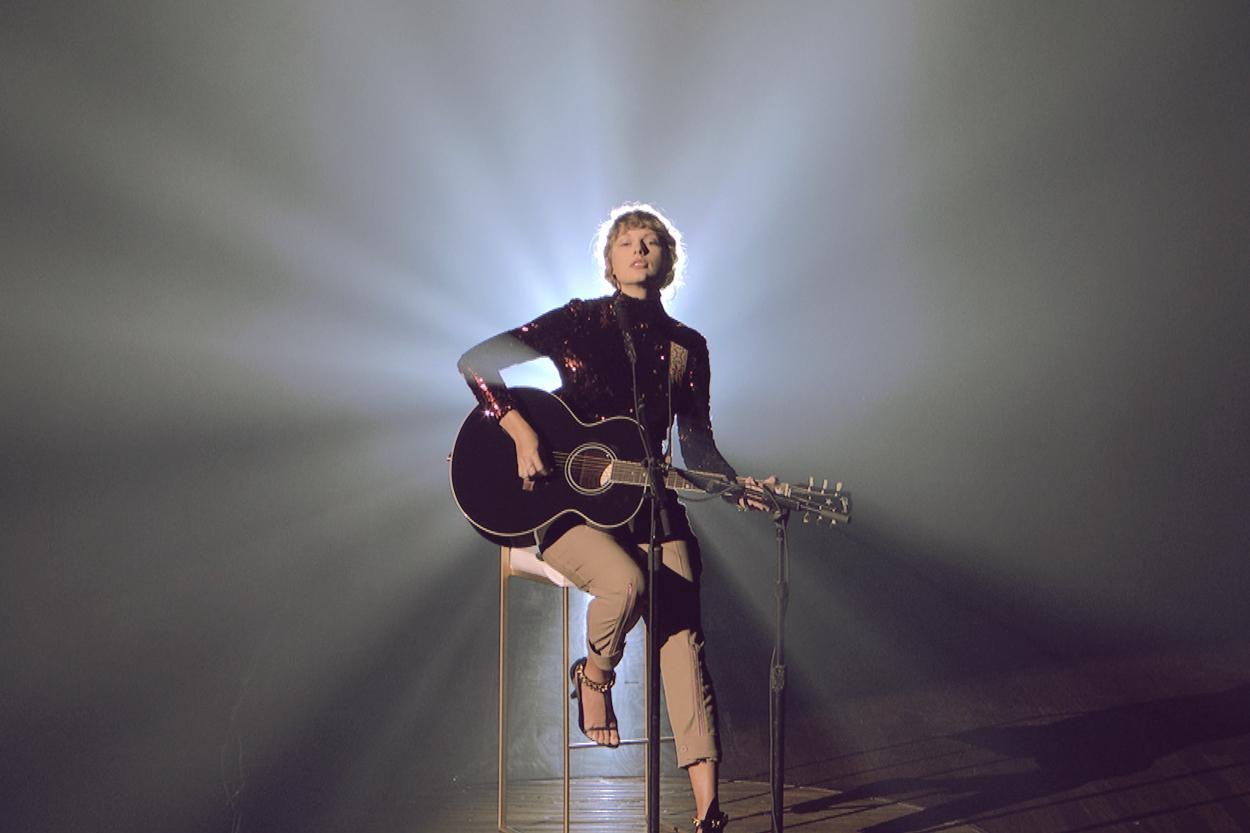
Swift performs “Betty” at the 2020 Academy of Country Music Awards
23
“Betty”
James’s part of the teenage love triangle trilogy should come with its own Say Anything boombox. And I bet Peter Gabriel nodded approvingly when he heard this arena-filling sing-along. The mea culpa is so bursting with big feelings that you can’t help but forgive the kid for spending his summer messing around on his skateboard and behind the mall with Augustine.
What makes it: Sometimes there’s just nothing like a big, sappy key change.
22
“Delicate”
The highlight of Reputation’s soft underbelly, full of all the anxious hope and questions of early love unspooled through the protective gauze of the EMS Vocoder 2000.
What makes it: “Is it cool that I said all that?” A familiar question for anyone who’s been in the throes of a new relationship, and a particularly rich one coming from our most disclosure-happy pop star.
Extra credit:
21
“We Are Never Ever Getting Back Together”
What’s the moment when Taylor Swift became a pop star? You could argue she’s always been one—her first single is all about how a song can make a feeling; what’s more pop than that? By the time Fearless was released, she and her label had already been negotiating the differing needs of pop and country radio formats with specialized versions of songs like “Teardrops on My Guitar” and “You Belong With Me.” After Fearless, she was a household name even for people who didn’t listen to country music, popular in the tabloids and selling albums like hotcakes. Still, Speak Now read as a retreat from being a singles-focused artist. She lived and worked in Nashville, and there sure were a lot of banjos kicking around on that album.
But in 2012, she made a move that erased all counterarguments: She recruited Max Martin, the Swedish pop production savant famous for hits like “... Baby One More Time,” “Since U Been Gone,” and “Teenage Dream.” Together, along with Martin’s protégé Shellbeck, they recorded three songs: this one, “22,” and “I Knew You Were Trouble.” The story behind this track is that their sessions were interrupted when a pal of Swift’s ex-boyfriend stumbled into the recording studio and suggested he thought the pair were getting back together. As legend has it, Swift corrected the record, saw the guest out, and then started strumming this chorus.
A big reason Martin is this century’s greatest hitmaker is his dogmatic approach to structure—his songs deliver almost mathematical musical payoff. Lyrics aren’t that important to him, which is how you get lines like “loneliness is tragical” in “Shape of My Heart,” by the Backstreet Boys (of course they stuck AJ with “tragical”). But with Swift holding the pen, Martin’s persistent bass drumbeat and big pop chorus had a story with real personality to fit inside those precise lines—she delivers the entire song in the lingua franca of a millennial gaggle at brunch. The result is the sound of two greats combining forces. Before this song, singles charts were sort of a lagging indicator for Swift’s popularity—her high-water mark on the Billboard Hot 100 was no. 2, reached by both “You Belong With Me” and “Today Was a Fairytale.” (I didn’t remember that “Today Was a Fairytale,” from the Valentine’s Day soundtrack, was such a big deal, but I also forgot that Julia freakin’ Roberts was in that movie. Wild times!) But it took just one week for “We Are Never Ever Getting Back Together” to become the first no. 1 of Swift’s career. (The song got an extra boost from its music video, which is one of her better ones—in which Swift celebrates her romantic freedom by throwing a pajama party in an apartment decorated with cable-knit wall coverings while her bandmates dance around in fuzzy animal costumes. The whole thing feels like an LSD trip styled by Anthropologie.) Taylor Swift didn’t need Martin to become a pop star. But once they linked up, there was no denying she was one.
What makes it: “And you would hide away and find your peace of mind / With some indie record that’s much cooler than mine,” a lyrical eye roll. (Jake Gyllenhaal was in a Vampire Weekend video in 2010; do with that what you will.)
19
“The Last Great American Dynasty”
Has anyone ever written a song this charming about their vacation house? If so, it would have been of the rustic cabin variety, right? Surely not of the $17.75 million Rhode Island manse variety, specifically the one that Swift purchased (reportedly in cash!) in 2013. Yet, by God, she pulls it off, telling the story of Holiday House through the lens of its former owner, socialite Rebekah Harkness, a.k.a. the Loudest Woman This Town Has Ever Seen, perhaps until its current occupant showed up. (Seriously, don’t get anyone from Watch Hill started on the seawall.)
Over an especially marvelous looping slide guitar from Dessner, Swift tells the story of Harkness, who cuts a perfect Miss Americana, pissing off her hoity-toity neighbors with big parties, bigger feelings, and an eccentric cadre of artistic friends and cocking an eyebrow at the kind of respectability politics that tend to dog women who take up space. Now, who does that sound like?
What makes it: The third-act twist, contained within a note-perfect bridge that’s one of Swift’s all-time best.
18
“Enchanted”
A soaring anthem so coated in sparkling fairy dust that it was the only Speak Now song to permanently make the Eras Tour setlist, and it’s about meeting the Owl City guy—the one who got a thousand hugs from ten thousand lightning bugs as they tried to teach him how to dance. That guy—one time!!! Taylor’s mind really goes to some odd places when she’s up at 2 a.m. Swift played this song on the Eras Tour in a gown so big and poufy that I assume several families of bluebirds nested between the ruffles, which is exactly what this song sounds like. Yet somehow it’s not twee, probably because the mix is so big and expansive, you have to imagine she realized when she wrote it that she’d be playing football stadiums pretty soon. Absolutely flawless, don’t you let it go.
What makes it: The bridge, where her inner monologue jumps out: “Please don’t be in love with someone else.”
17
“Seven”
“I knew everything when I was young,” Swift sings earlier on Folklore. On “Seven,” she finds wisdom in innocence again, drawing on a time “before I learned civility.” There, she’s on the swing set with an old friend whose home life makes her uneasy. “I’ve been meaning to tell you / I think your house is haunted / Your dad is always mad and that must be why,” she blurts. She may not even know to worry; she’s just noticing, unconcerned with implication or politeness. In the present day, she barely remembers the friend’s face but she holds the feeling, and even in the song’s darkness, it’s nostalgic for the simplicity and honesty of the relationship. The sentence structure is a type of text painting. Verses change topics without warning; rhymes resolve erratically, rarely where you expect them to, the captivating non-logic of a little kid. It’s an arresting song and a master class of world-building.
What makes it: The song’s point of view toggles between past and present. The first line is a child’s word: “Pleaseeeee,” delivered with the urgency of a daughter tugging on her mother’s leg with some demand. But it’s actually the adult Swift singing, the desperation transferred to her own longing to recapture that sense of purity.
16
“Getaway Car”
Some words I’ve had to toss into the ole thesaurus more than once to complete this piece: ambient, thick, atmospheric, gauzy. This is Jack Antonoff’s fault. Dunking on Antonoff, the emotional-support producer of late 2010s and 2020s pop girlies, became fashionable around the Midnights era, when his easily identified sound was getting a bit stale. Look, the guy likes to make the drums go boom. But when it works? When his production really, really works? Everyone say thank you to this man.
What makes it: The rant bridge, with the full-step modulation.
15
“But Daddy I Love Him”
One of our most precious natural resources: Taylor Swift in full-throated DGAF mode. She was fresh out on this one, which makes for Tortured Poets’ unbridled peak. She bites the hand that feeds, spits at the stans, and tells the wine moms to fuck particularly far off. Plus, there’s an all-time jump scare in the chorus.
What makes it: “I’m having his baby! … No, I’m not.”
14
“Style”
You’d think Swift tends to be too prim to pull off full Miami Vice sleaze, but she cancels out just enough of the grit to make it sound gleaming and expensive. Simply one of the best-sounding songs she’s ever created.
What makes it: In pure sound, this may be her best song. And it doesn’t work without that guitar riff.
13
“Long Live”
A triumphant arena rocker written for her bandmates and fans that gets some of its enduring power from also being a perfect graduation song. Other than possibly “Getaway Car,” it’s Swift at her most Springsteen, building a legacy over big power chords.
What makes it: This song is over five minutes long, and it just builds and builds and builds, up to the final chorus, where she alters the melody to reach even higher.
12
“Love Story”
Don’t let the fiddle and banjo fool you; this is a song on a path to pop supremacy, with a mix and melody perfectly calibrated to car radio sing-alongs and that oh-so-satisfying key change. It is so incredibly Swift to read Shakespeare and think, “I bet I can top this.”
What makes it: “This love is difficult, but it’s real.”
11
“Red”
Like its namesake album, this song is a patchwork of styles: Its banjo and fiddle are country, its drums and guitars rock, its hooks and the sprinkle of auto-tune on the vocals pure pop. Perhaps because this song is difficult to categorize, it tends to get overshadowed by the razzle-dazzle of the Max Martin singles and the high drama of “All Too Well.” This is a grave mistake—for my money, this tour de force of simile and synesthesia is the most underrated song of Swift’s career.
What makes it: “Loving him is like driving a new Maserati down a dead-end street.”
9
“I Knew You Were Trouble.”
One minute and five seconds into this Red single comes one of the critical forks in the road of Swift’s career. This was originally written as a forlorn piano ballad, but Swift took the suggestion from producers Max Martin and Shellback to pop it up a bit, and then she popped it up some more. When the simple chug of electric guitar gives way and the dubstep beat drops at the end of the first chorus, she’s off on the path of world domination.
What makes it: It’s the period in the title. I think you can hear it.
8
“Dear John”
A nearly seven-minute evisceration of an older man who took advantage of her in a relationship. “Don’t you think 19’s too young?” she asks, pointedly, on Speak Now’s Track 5. This song delivers blow after systematic blow until the bridge, when she decides she’d make quicker work of the bastard if she just went with the blowtorch: “All the girls that you’ve run dry have tired, lifeless eyes / ’cause you burned them OUT.” She goes to the trouble of giving herself the last word, changing “the girl in the dress cried the whole way home” to “the girl in the dress wrote you a song.” But he’s already dead by then. “All Too Well” is Swift’s “Silver Springs,” but “Dear John” is her “You Oughta Know.”
What makes it: You know who this song is about, although Swift spent a lot of time putting on a master class in straight-faced plausible deniability around its release. If the title wasn’t enough, the bluesy guitar licks are a dead giveaway. So savage, so awesome. (Oh, if only a Jennifer Aniston–Jennifer Love Hewitt group text had existed in October 2010!)
7
“Cruel Summer”
Swift often likes to look back to remember. But “Cruel Summer” is written from the cliff’s edge of love, peering out and down. It’s a song of pure adrenaline. The rush of urgent yearning reminds me of Jia Tolentino’s writing on Carly Rae Jepsen and totipotency: “The first time we were anything is the last time that anything was possible.” For the first minute and 40 seconds of this one, Swift scans the infinite possibilities, fatal falls included. The kick drum booms, begging for a stadium crowd. The layers of synths are enveloping; this is Swift and Jack Antonoff, with an assist from St. Vincent, at their most narcotic. Then she jumps to a bridge so good she sings it twice, ending with a confession: “I love you, ain’t that the worst thing you’ve ever heard?” Why this song wasn’t chosen as a single for Lover is a mystery, but that omission allowed fans to give it a life of its own, clamoring for it until Republic Records finally gave it its due and released it as a single in 2023. (Renewed interest in the song from the Eras Tour probably helped, too.) It’s now Swift’s single longest-running Billboard hit.
What makes it: The extra line connecting the double bridge: “He looks up grinning like a devil,” sung with a rasp from the pharynx unlike any other she’s put on tape.


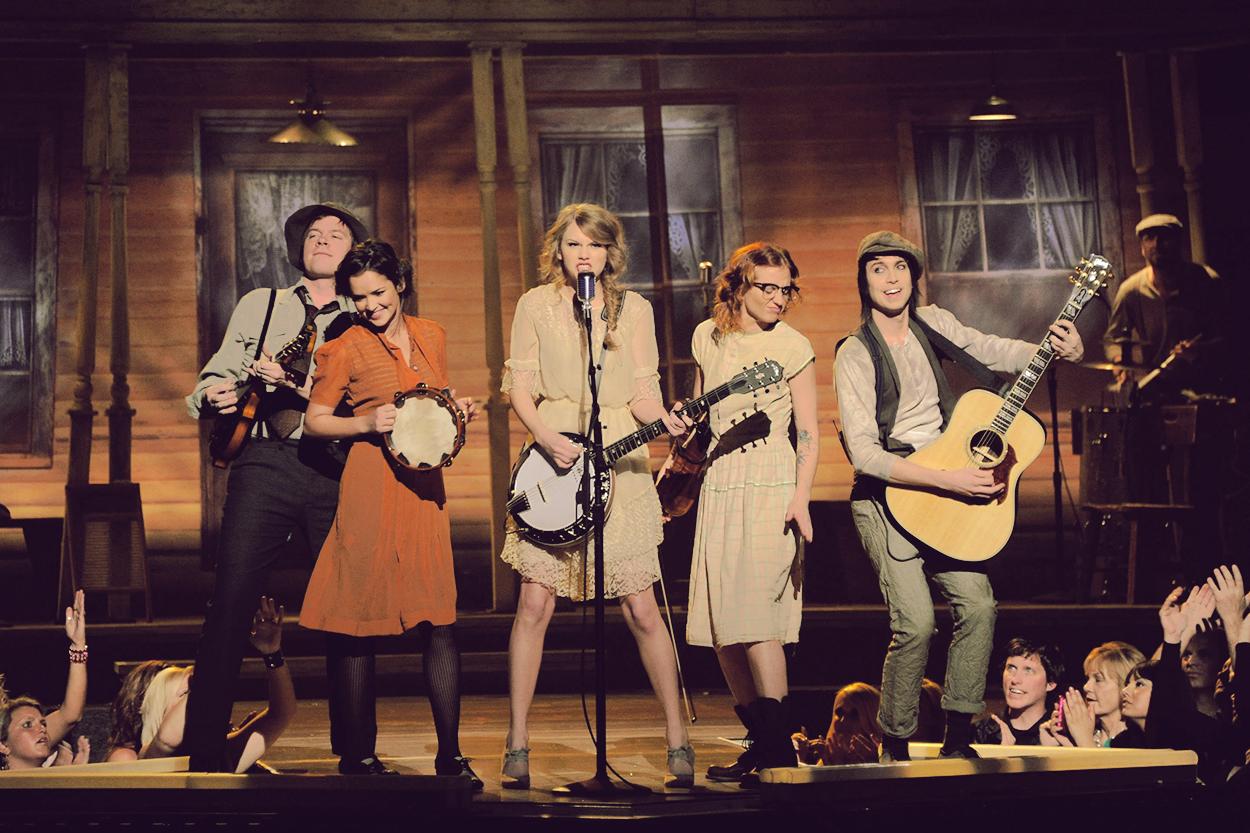
Swift performs “Mean” at the 2011 Academy of Country Music Awards
6
“Mean”
A cheerfully finger-wagging bluegrass tune aimed at a music writer who’d blogged that Swift had “consigned herself to the dustbin of teen phenoms” after a poor vocal performance alongside Stevie Nicks at the Grammys. Although Swift clearly sees herself as the story’s underdog, it’s a bit of asymmetric warfare she probably couldn’t have gotten away with if this song weren’t so plainly awesome.
What makes it: There’s value in word economy, and then there are the moments when a barrage is called for: “With your words like knives and swords and weapons.” Or better yet, “All you are is mean, and a liar, and pathetic, and alone in life, and mean,” the rant building with each compounding attack.
5
“Blank Space”
Once upon a time, Taylor Swift wrote songs about Taylor Swift, the young woman and all her experiences and feelings. Then one day, after growing both accustomed to and frustrated by seeing those experiences refracted through tabloid headlines and distilled into narratives, she tried her hand at writing about the idea of “Taylor Swift,” starting with this 1989 track. She nailed it on the first try, lampooning her own image as a serial dater by playing up the psycho man-eater role. It’s funny and savvy, a clapback without defensiveness, and so catchy you can’t help but wind up on her side, singing along.
One of Martin’s strengths is that he knows when to use a light touch—the arrangement of hip-hop drums and spare synthesizer lets each joke land. It leaves room for the click of a pen to be clearly audible before the last line of each chorus—“and I’ll write your name,” a musical punch line. It quickly vaulted to no. 1 and remains her most culture-piercing hit, in part because of its accompanying music video, the best of her career. It’s no wonder she’s been writing about both Taylors ever since.
What makes it: “’Cause you know I love the players, and you love the game.”
4
“Our Song”
“Our song is a slammin’ screen door.” On so much of the debut album, Swift and her cowriters play around with metaphor. The chorus of this single is the apex of that project. At first blush, it’s a song written for a boy. But at the very end, she grabs a pen and an old napkin and reveals that this is really an ode to her craft and the way a song can grab a feeling from thin air like nothing else. Two decades later, I’m still constantly asking whether we can play it again and again and again.
What makes it: I give a lot of credit to anyone who didn’t drop out immediately when Swift performed this song at her ninth-grade talent show. But at least they didn’t have to hear it all turbocharged by Nathan Chapman, who soups up the drums for some extra verve.
3
“New Romantics”
“He can’t see it in my face, but I’m about to play my ace,” Swift sings, before unleashing the crispest sigh ever delivered to a microphone. Yet she somehow kept this card in her hand until including it on the Target deluxe edition of 1989. A tingling dance-floor anthem for the Diet Coke generation, it’s her magnum opus to living for the thrill of it all.
What makes it: “The rumors are terrible and cruel / But honey, most of them are true.”
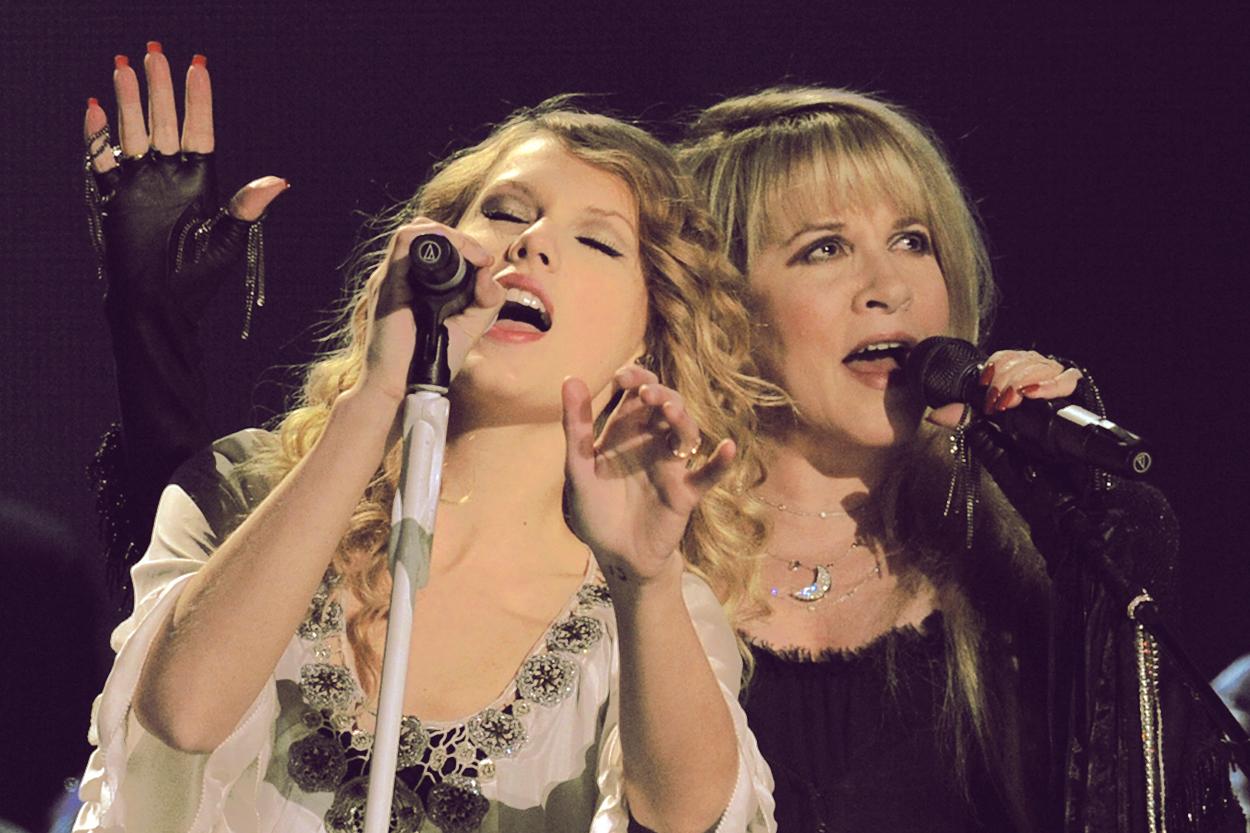
Swift and Stevie Nicks perform a medley of “Rhiannon” and “You Belong With Me” at the 2010 Grammys
2
“You Belong With Me”
Of Fearless’s two big singles, “Love Story” has carved out a slightly larger place in culture. It’s been streamed more. If you were to ask a random person on the street to name a Taylor Swift song, that’d likely be the first response, perhaps because of its ubiquity on wedding playlists. But “You Belong With Me” is the true apotheosis of Swift at the moment she first flooded mainstream culture: bursting with emotion, a little pick-me, and totally undeniable. If you ask a civilian to name a Taylor Swift lyric, they might land on “She’s cheer captain, and I’m on the bleachers.” For better or worse, that underdog posture has set the terms of Swift’s relationship with culture ever since. Especially since this song’s music video set up that infamous night at the VMAs, you could argue that “You Belong With Me” is the true sliding-doors moment of her career. But that’s the power of a stone-cold classic. (Give Swift credit for playing both the snooty cheerleader and the girl next door in the video—she actually did know that she wasn’t totally convincing as an outcast.)
What makes it: “Can’t you see-ee-ee, you belong with me.” Her favorite descending three-note motif, and the defining hook of her career.
1
“All Too Well”
Ask a Swiftie about their favorite songs, and “All Too Well” will come up, but that won’t tell you much about the person. It’s the obvious answer, the center of the bingo card, the one that defines the form of “Taylor Swift song.” And wouldn’t it be so fun—great for engagement—if I had some kind of swerve for you? A contrarian take? But no, this master class of narrative is canon for a reason, lodged in so many of our psyches like a scarf stuck in the back of a drawer. Swift doles out details in vivid scenes like an impromptu dance in the glow of an open refrigerator—you can just see the ceramic-tiled kitchen in your mind’s eye.
When she was beginning to write songs for Red, Swift called her old songwriting shepherd Liz Rose and told her she had some things to get off her chest. A lot of things. They got together, and Swift poured out verse after verse of weapons-grade memories about a relationship her ex tried to treat as something trivial once it had ended. She was mad—you can break up with Taylor Swift, but don’t ever undercut her feelings. Swift and Rose edited it down to the five-plus-minute version that appears on the original album, but the existence of the longer version took on a mythical status among fans until Swift finally released it as part of the Red vault in 2021. Those extra verses, particularly those that describe the relationship’s power imbalance, amp up the rage and catharsis, and Swift adds another layer near the end when she begins whispering, “Just between us” over and over between chorus lines—an ironic, almost taunting jab about a story that absolutely did not stay private. If I ranked the 10-minute version, it would go somewhere in the 20s. But it’s the trim, steadier original that remains the pinnacle. In some ways, its aims are lower. But it packs its punch with the unrelenting force of its central message: How dare you say this didn’t matter.
What makes it: “And you call me up again just to break me like a promise / So casually cruel in the name of being honest.”