Michael Che Is Still Trying to Get Away With It
The ‘SNL’ legend on his new Netflix special, why he’s not leaving ‘Weekend Update,’ and the joy of saying what you’re not supposed to say.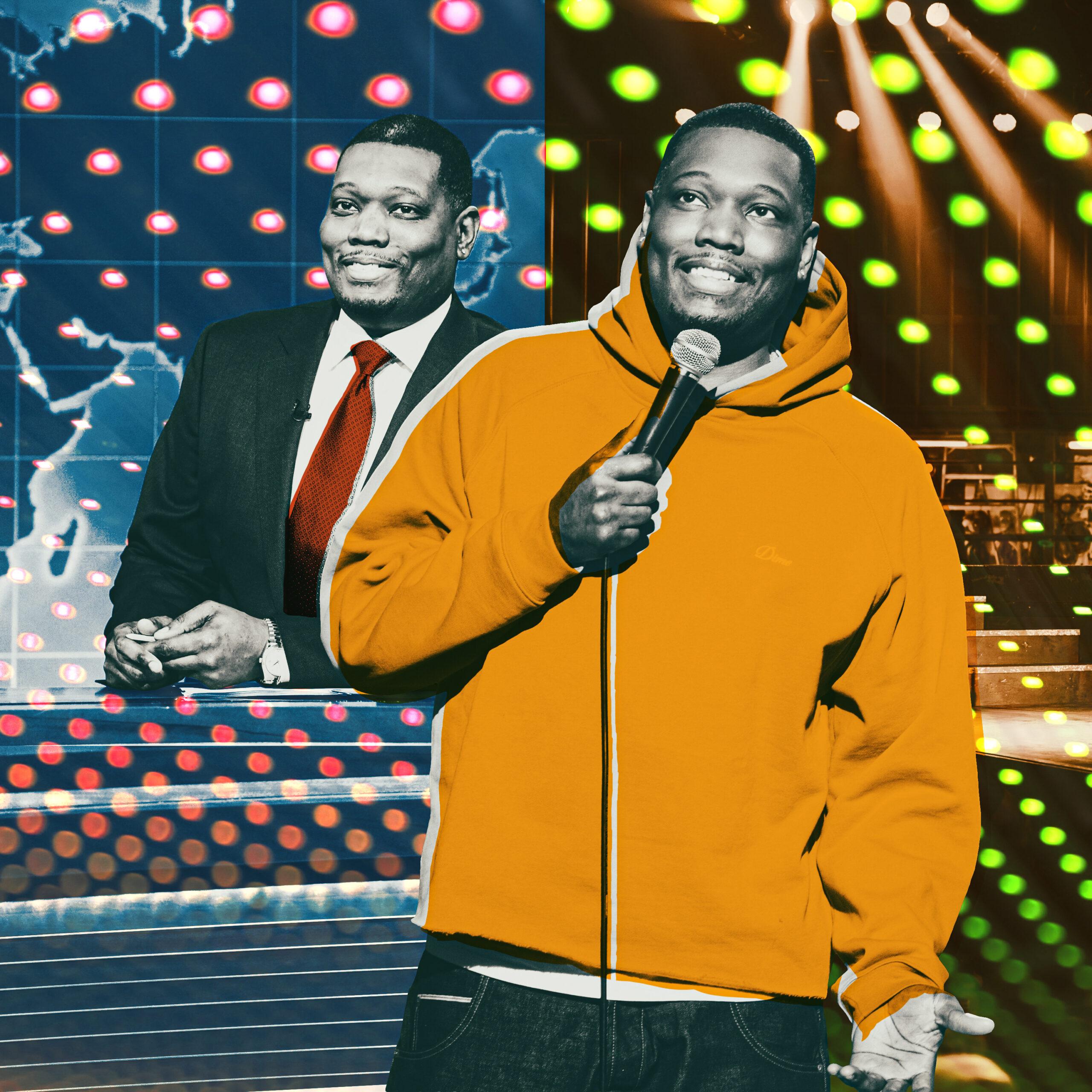
Michael Che has spent much of his career navigating two worlds.
One side of that dichotomy is on display on the eighth floor of 30 Rockefeller Plaza in New York City, where Che cohosts Weekend Update, Saturday Night Live’s longest-running recurring segment. There, he attempts to tell a mainstream audience about itself while displaying a more muted version of his comedic persona. He's become an institutional figure at NBC, a polished television personality who knows the boundaries of network comedy … and how far he can push them.
The other side lives on stand-up stages around the country, where Che uses the pulpit to speak for people who don't have access to the glamour of his day job. After growing up on the edge of poverty in a housing project in Lower Manhattan, he began working Gotham's comedy scene, cutting his teeth at the Comedy Cellar, New York's mecca of levity. Soon enough, he was booking late-night gigs on Late Show With David Letterman and spots on The Daily Show. He parlayed an opportunity as a guest writer on SNL into a perch as the first Black anchor of Weekend Update in 2014, eventually becoming one-half of its longest-tenured hosting duo. Away from the desk, he's released three Netflix specials and an HBO sketch comedy series, That Damn Michael Che. All the while, he's become a man simultaneously living and trying to make sense of the American dream.
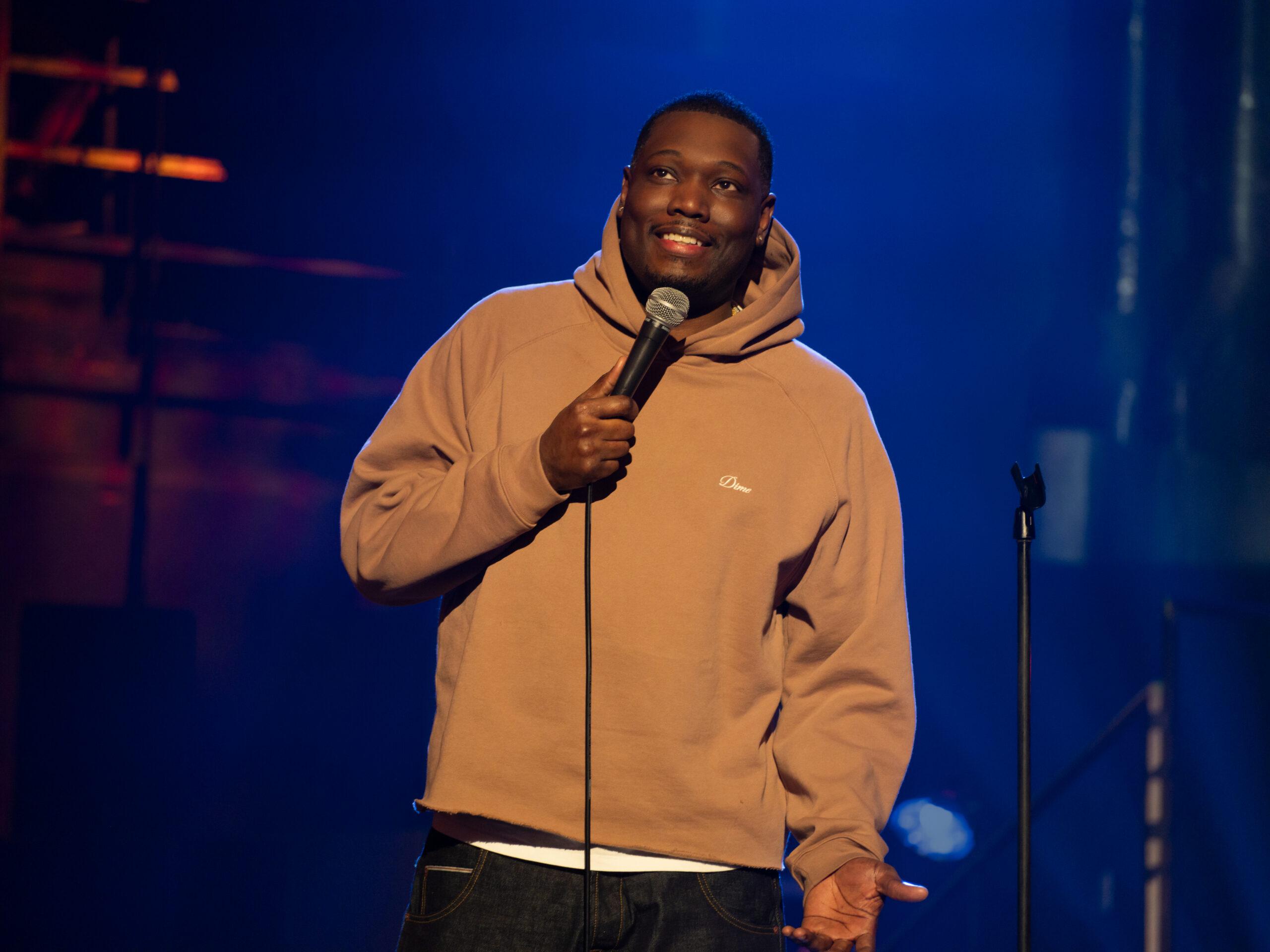
In his newest special, Shot in Minnesota (which releases Tuesday), Che turns in his most refined performance to date. Calm, cool, and arguably collected, he makes the case that legalizing sex work could curb gun violence, complains that he's getting so old he's starting to take Eminem's mother's side when listening to the Detroit rapper's music, and explains how intimidating it is to bring a woman over to the home of his best friend and Weekend Update cohost, Colin Jost, and Jost's wife, Scarlett Johansson, one of Hollywood's biggest stars.
Then there's the joke about a certain "R-word." Che suggests that if the word hadn't been banished from the politically correct lexicon, America might have avoided two turbulent terms of Donald Trump.
"I know you shouldn't use that word," Che says with a smirk, letting the tension build. "But I … do."
It's a line that captures the tension at the heart of Che's career: He’s a comedian who has spent more than a decade working within the confines of network television but still relishes the freedom to say what he's not supposed to say.
The special arrives at a stark time in America, and Hollywood in particular. The entertainment industry is still struggling to find its footing after years of labor unrest and consolidation. Meanwhile, the current administration's pressure on dissenting voices in television has placed Che's line of work under greater scrutiny than ever.
Recently, I talked to Che about fame, his much-discussed future at SNL, the freedom of stand-up, and the appropriate level of fear required for a Black comic in 2026.
How outwardly scary is it being a Black comedian right now relative to every other unsettling time in American history?
I think it's not scary at all. I think it's the least scary. I think this is kind of when people are looking to us more than even normal because we sort of have a grasp of articulating our feelings—our history of articulating our feelings and the collective frustration—I think better than anyone. So I think people look forward to it. You can kind of tell—there's times when you're funny and people say, "That was great," and then there's times when you're funny and people say, "Thank you." That means a lot, and that feels good.
It's nice and freeing to be in a space for an hour where you can just scream words that you're not supposed to scream and get that frustration out, and I think people like that.Michael Che
Do you think there's going to be a “thank you” when this special drops, or at least is that what you're hoping for?
No, that's not what I'm hoping for. I just make what I think is funny. To me, it always starts there. You never know what it's going to be. You don't know how it's going to hit people. You could try to make it where it feels like, "Oh, this is good. I'm glad I watched this." But I don't know how people are going to take it. I hope they like it. I hope they think it's funny, because that's what it was written for, to make people laugh in this crazy-ass time.
There was a joke that immediately made me go, "Huh," and I'm sure it's going to make everybody else go, "Huh": It’s when you start the “retarded” bit. Can you talk me through how a comedian toes a line of provocation that doesn't get into the way of the point that you're actually trying to make?
[Cackles] One thing that kind of gives me solace in this world is that I'm not alone. No matter what I think or what I believe or what I feel or what I see, I know I'm not the only one thinking it, I know I'm not the only one seeing it, I know I'm not the only one feeling it. I know there's somebody else out there that gets where I'm coming from. So it relieves the pressure of feeling alone, saying this thing that nobody's willing to say. And if you're kind of honest with yourself, you'll be honest to the audience. They'll be able to connect with it because they know I'm not lying. They could disagree, but they know I'm not lying.
What is it like to at least see the line or the cliff and just play double Dutch with it?
It's fun to watch the audience watch that. It feels freeing. It feels liberating. It feels like ... again, I work in an office, too. I'm in an office right now.
[Che looks around his office at 30 Rock]
There's definitely ways that you're supposed to behave, and there's things you're supposed to say, and there's a decorum about how you're supposed to act with people.
And some people do that for 40 hours a week; some people do it for a hundred hours a week, whatever it is. It's nice and freeing to be in a space for an hour where you can just scream words that you're not supposed to scream and get that frustration out, and I think people like that. I mean, I understand that this isn't a long-term solution, but I think for an hour, people like that sort of love it.
There's times where I just feel like my humanity isn't seen. But I'm also a Black man in America; there's times when my humanity's not seen in the opposite direction.Michael Che
There are two factoids that I find fascinating about you: One is that you're named after Che Guevara. The other is you're born on Malcolm X's birthday.
And [the former Vietnam revolutionary] Ho Chi Minh. How about that?
Ain't that something? How does that shape your outlook on the world, let alone comedy?
Well, it gives you a pretty decent idea of who my dad was and what his sensibility was. [Laughs] My mom probably doesn't know who Che Guevara is. She's a Christian woman raised in the church, evangelical, and that's not her bag, but these are two people that liked each other enough to make me and a bunch of other kids. So it's interesting. I get in trouble sometimes. He's a very polarizing guy, depending on who you ask about Che Guevara. It made me curious about why my father would pick a name like that. What is it about this guy? And learning about other guys as you learn about him. I don't know, it's something I appreciate a lot more at this side of my age than when I was a kid and people were saying “Che Che” or whatever.
Is there anything you learned from either one of those people that you apply to life, that you learned by researching them?
What can I say that's not going to ruin everything?
You see the line right now.
I think that there's a level of boldness with the truth and defending it, and not being afraid to. And accepting that what's going to happen has already happened. Again, that's liberating. Even just that is something. And I think Malcolm is a perfect example of being able to say exactly what he saw and stand on it. And I mean, damn, if anybody could ever be that brave.
As a Knicks fan, did Jalen Brunson's performance on SNL make you excited or pessimistic about this upcoming season?
It makes me very excited, man. Jalen Brunson can do absolutely no wrong in my eyes. Man, I love that guy. He's such a trooper, man. People don't realize how scary and how difficult this job actually is. And this guy, the way he plays, he eats, sleeps, drinks basketball. And the press about him out there, him being game and him having a good time, man, he's a legend. He's a New York City legend forever.
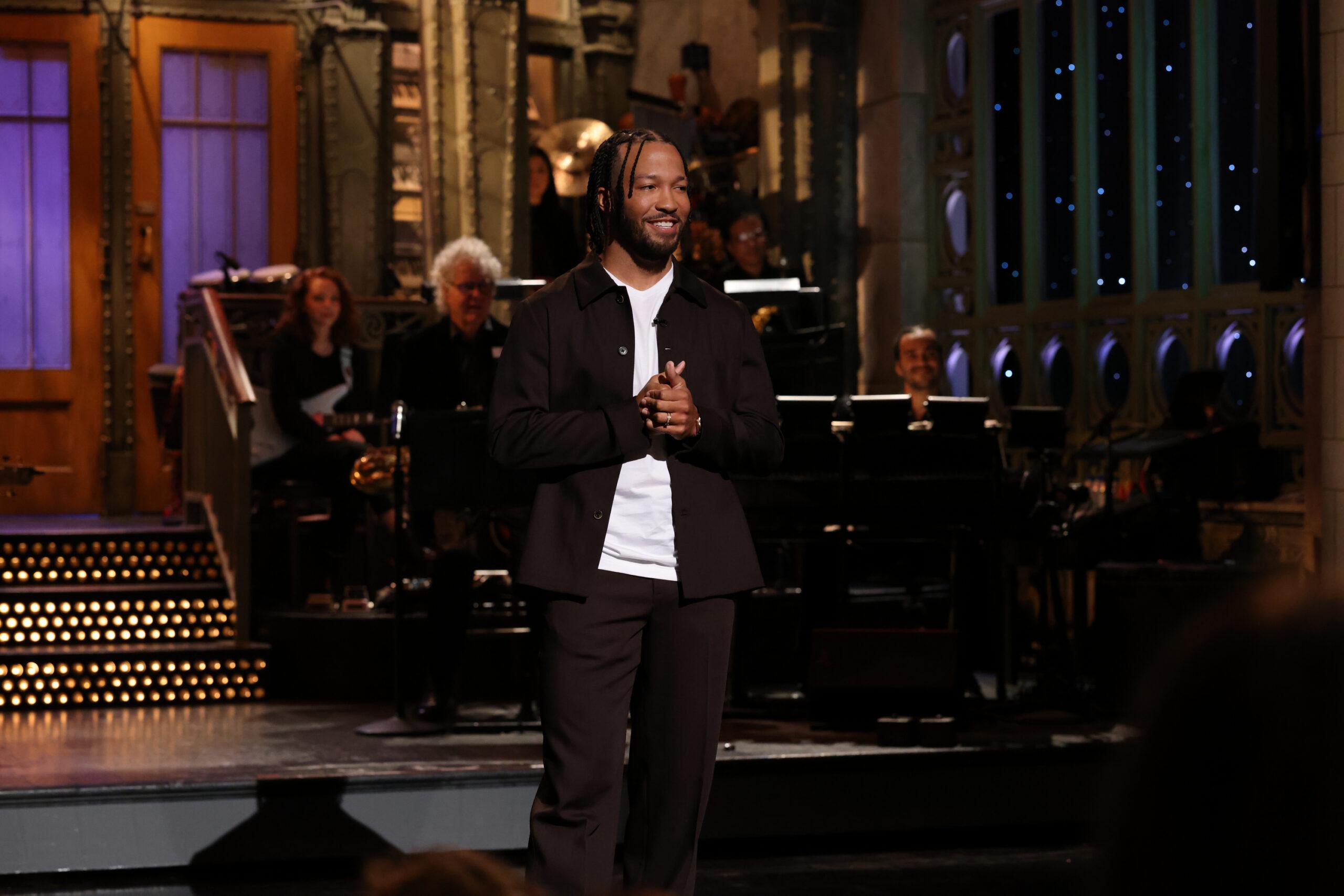
What skit from Brunson made you think, "Oh shit, he's actually going to do this. Oh my God, he's actually going to do this"?
I love the monologue, honestly. The monologue was my favorite part, just watching him with Josh [Hart] and [Karl-Anthony Towns] and those guys, OG [Anunoby]. They're just fun together. It's just cool to see the city embrace something. Between Brunson and [Mayor Zohran] Mamdani, to see New Yorkers just optimistic about something. It's a real, real moment in New York, man. We don't get many of these. We're one of the most cynical cities. It's kind of like, it's cool to be a dick, but I feel like everybody's walking a little taller after the Knicks won and we got a mayor that gives a fuck.
Why are you still doing SNL, and are you ever going to leave?
Are you my therapist? Goddamn.
Hell, yeah. I’m locked in.
You know what's funny? I've been doing it so long that it's comforting in a lot of ways. The special thing about SNL that I don't think people give credit to, the most special thing about SNL, is that it's live. And it's like the Knicks: We care about it. We want it to be good. We get frustrated when we don't like it. When it hit, it hit harder than anything. It's one of the only platforms that could really, really mean something at the right time. And we've had some special moments. It's hard to give up a captive live audience as a performer, as somebody that likes to think he has something to say.
And you can go through 10 bad episodes. You have one episode where you really connect with the country, and they'll remember that shit for the rest of their lives, and you'll remember it for the rest of your lives. And I think it's still special to people, and I think that it's hard to give that up. I get a live captive audience 20 Saturdays a year. Not a lot of performers have that, and it's really tough to give up.
I'm from poverty, man. We don't just give up jobs.Michael Che
I'd imagine now, with everything going on in Hollywood with all the studio stuff, and then also, every year now it feels like with Lorne Michaels’s age, this might be the last year [of the show]. Does that play a part in it?
At some point, everything ends. But I don't like to think about it being over. But let's say 50 years, 20 years, 30 years from now or whatever, it's not around anymore, I think people will miss it. And I was raised here. I was literally raised here as a performer, as a writer, as a professional. I learned how to be a professional comedian here. I met my heroes here. I've seen the best bomb, I've seen the worst kill.
I've seen everything. I've seen stars be made. I've seen stars be born. I've seen stars not be stars no more. I've seen it all. I've run the gamut of Hollywood just in this office, and it's really hard to leave. It's special.
It seems like during the early part of your career, the question after every season was “Is he going to go?” And now it feels like you're just comforted in the stability of the show. You're like, "This is who I am or a part of who I am, and we'll see where things go." As opposed to before, it felt like, "Oh, I'm here, I’m doing my SNL bid, and I gotta go."
I think as a performer, you're always thinking about the next thing—grass is always greener type situation. And I just feel like I've settled into a world where I could do whatever I want. And I can do my special, I could sell my projects, I could write, I could help people, I could produce, and I could also be here. Why not have my cake and eat it too for as long as I can, for as long as I'm useful? You're watching people develop. Like I said, you're watching stars be made, you're watching a lot of cool stuff, man. A lot of great opportunities. And I do genuinely like it at times. I'm from poverty, man. We don't just give up jobs.
Oh, I feel you.
Explain that to my mother.
Yeah, yeah, yeah. [Mimics a mother’s voice] "You quit a job?" No.
Bro, there's so many people with jobs that they've been working for 25 years that's killing them, and I'm going to just give one up because it's been too long? Relax.
What is SNL's relationship with the Black community in 2026?
SNL is a platform. First, let's set the table of what the show is. It's a platform. It's a place where you have a captive audience and you can say something to America, to the country, to the Black community, to the Latin community, to the white community, to Republicans, Democrats. Everybody is going to find it on that show. And I think it's more so up to the Black performers. I think it's also up to the Black community. It's up to the future performers. It's up to the writers, the Black writers. It's up to the Black hosts. When Dave [Chappelle] comes on and hosts, and he gives a crazy monologue that everybody's talking about. When Chris [Rock] comes on and gives a monologue, and everybody's talking about it. When Jerrod [Carmichael] or whoever it is, I think it's just a place where something special can happen, and we have to keep these doors open for those times when we need it.
It's different things for everybody. Some Black people might be like, "Ah, I don't watch that show since Eddie Murphy," whatever. It's cool to not like it. It's cool to not appreciate your parents until you need them or you lose them, and then we say, "Damn, we had it good, and we were lucky." And I think that this show sort of mirrors that in a lot of ways.
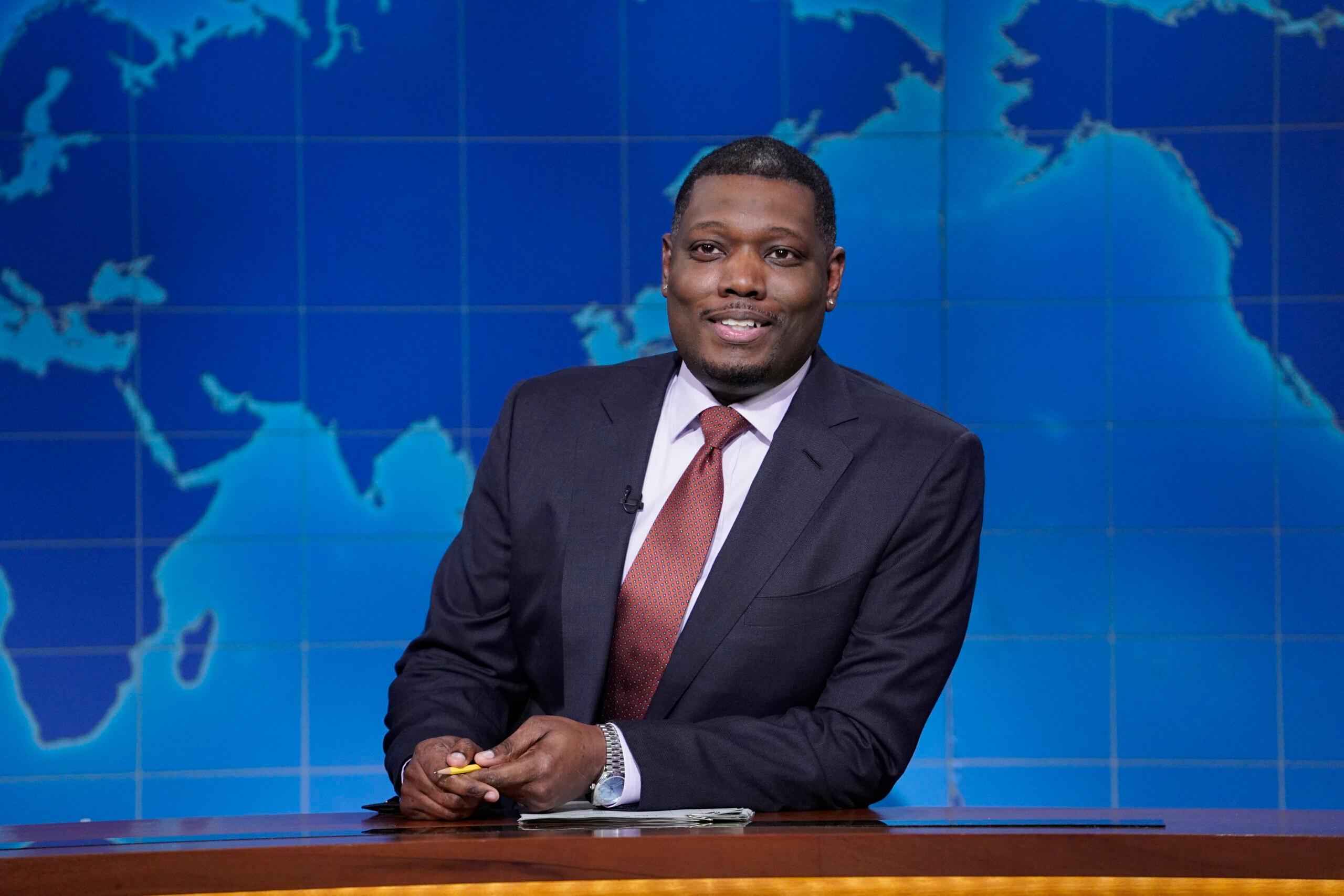
How do you feel about how Black comedians are portrayed now? You had comments criticizing the mostly white writing staff about the staffing of the Kevin Hart roast.
I mean, we kind of live in a world where negativity is incentivized, critiques are incentivized, and comments are incentivized, and so people are going to say everything. You can't think of it that way. I try not to think about that part of it. I just try to make people laugh, man. It sounds like I'm trying to get out of the question, but you really can't dwell on that part. I really don't know. There's going to be people that tell me it sucks, they don't like it, it's whack, it's ... and then there's going to be someone that says, "Thank you. That shit gets me through. I watched that with my dad" or "I watched that with my mom" or "I watched that with my wife," "I watched that with my kids." Whatever it is, you just do it for who appreciates it, and everybody else, there's so much other shit to watch.
I think as Black comedians, we got to know that there's room for all of us, there's space for all of us. You don't got to be funny to everybody. You don't got to be the spokesperson for all Black people. You don't got to be the spokesperson for all Americans or all comedians or whatever. You could do your thing in your little corner. Maybe that corner gets bigger, maybe that corner gets smaller, but you can do your thing. And I think we can't think about it in a macro. It's just hard to be funny that way. Did I answer that, or was that just long-winded nonsense?
A little bit of both. But I'm going to ask another question to get you to talk some more about it.
Sure.
What was the reason why you pulled out of the roast?
Oh, for one, it was during an SNL show week. I think it was right after. I would've had to fly to L.A. right after the show and then fly back right after the roast. It was just logistically—
Because optics-wise, it's like, “Oh, he talked about the white writers, and then he pulled out of the show.” And I just want to get clarification on that.
That's one part of it. The other part of it, I didn't know who the writers were, but the other part of it is, those roasts are hard to do. It's hard to sit up there and just let somebody tee off on you. And it doesn't feel fun to me. And people like it. People want to hear that dark shit, and people love—some people, it's a blood sport. I don't think I would have had fun doing it.
I didn't want to take the time to be that nasty about anybody on that day, to be like, "I'm going to spend 20 minutes saying the most horrific things to Pete Davidson” or some shit. Some of these guys are my friends, and it just didn't feel fun. The spirit of it is not my thing, but it's for who it's for.
So I wanted to do it, though. At first, initially, I wanted to do it for two reasons: because I really, really, really respect Shane [Gillis], and I really respect Kevin. I think Kevin's kind of underappreciated in this part of his career. I don't think people talk enough about how funny a lot of his stuff is, and I think he's done a lot for Black people in comedy, and he's definitely ran up the score. So I wanted to do it for that reason. But logistically, it just didn't make sense, and I don't know that I regret it.
Speaking of white people, where does Colin Jost and Lorne Michaels rank among the white people in your life?
Amongst the white people in my life? Oh, shit. Pretty high, man. Pretty high. And I'm going to give a serious answer. They're sort of like family, just for my profession. There's questions that I could ask them and advice I can get from them that I can't ask my dad, I can't ask my brothers, because they don't know this world. And I really appreciate a lot of the talks that I've had with them throughout my career and a lot of the help that they've given me, just becoming a professional. Like I said, this is Harvard for comedy. This is like X-Men school, mutant school.
What's the biggest or the best advice you got from them that you could not get from your father?
How to deal with my father.
[Mutual laughter]
No. No. Lorne is really, really good at show business de-stressing. He can talk you off a cliff. He could settle you. He could give you—this man, he has had a show for 50 years, he can tell you what to expect. He done seen it all, and he done seen it all double, triple times. And he's a really, really good person to talk to.
You said fame is something that you have to deal with to be a performer. Do you always feel like you're going to be reconciling with that dichotomy, or are you kind of cool with it now?
I'm cool with it, man. I'm lucky. It's a privileged position. Listen, you could give me 80 pounds of gold, and I'm going to complain that it's not shiny. You know what I mean? It's just part of me. You're going to find—I'm grumpy. I didn't buy that hat for myself. But yeah, people know that about me. I think fame is just tricky. The hard part about fame at any level is just sometimes you sort of become what you make someone feel like, as opposed to just being a human. There's times where I just feel like my humanity isn't seen. But I'm also a Black man in America; there's times when my humanity's not seen in the opposite direction. I'd much rather them see me as a famous person than see me as the other thing. So it's a tricky thing. It's hard to complain about. I don't love complaining about it, but it's just what I do.
Sure.
It's my reality. You just deal with it. But I do wish there were times where people know that, hey, I'm going to have a bad take sometimes. I'm going to have a bad day sometimes. I'm going to want to be alone sometimes. I'm not going to want to take a picture sometimes. I might be rude and then sorry later. Don't make my worst action my whole defined personality. So I feel like there's not a lot of leeway. "I met Michael Che, he was a dick." Well, damn, man, maybe I was just having a bad day. You have bad days and whatever. But that's not something that is—on the scale of people with problems, that doesn't rank very high, so I'm happy to have it.
What would current-day Michael Che tell the dude at the Comedy Cellar back in the day who doesn't know all of this is on the horizon?
Enjoy the entire ride, because all of the places that you're trying to run from and graduate from and "I can't wait until I'm doing duh duh duh." When you get there, you're going to miss a lot of those venues. You're going to miss a lot of those comedians that aren't doing it anymore, that started families and quit and got other jobs. And you're going to miss a lot of the anonymity, that you used to get away with saying whatever you want without having to read about it the next day. And you're going to miss getting paid in drink tickets. You're going to miss the nights with friends that are just not even alive anymore. Enjoy that shit. Enjoy every single part of it because all life is is just a collection of memories at the end of the day. So I wish I took more time to enjoy it as it was happening as opposed to reflecting and being like, "Damn, that shit was the bomb."
This interview has been edited and condensed for clarity.