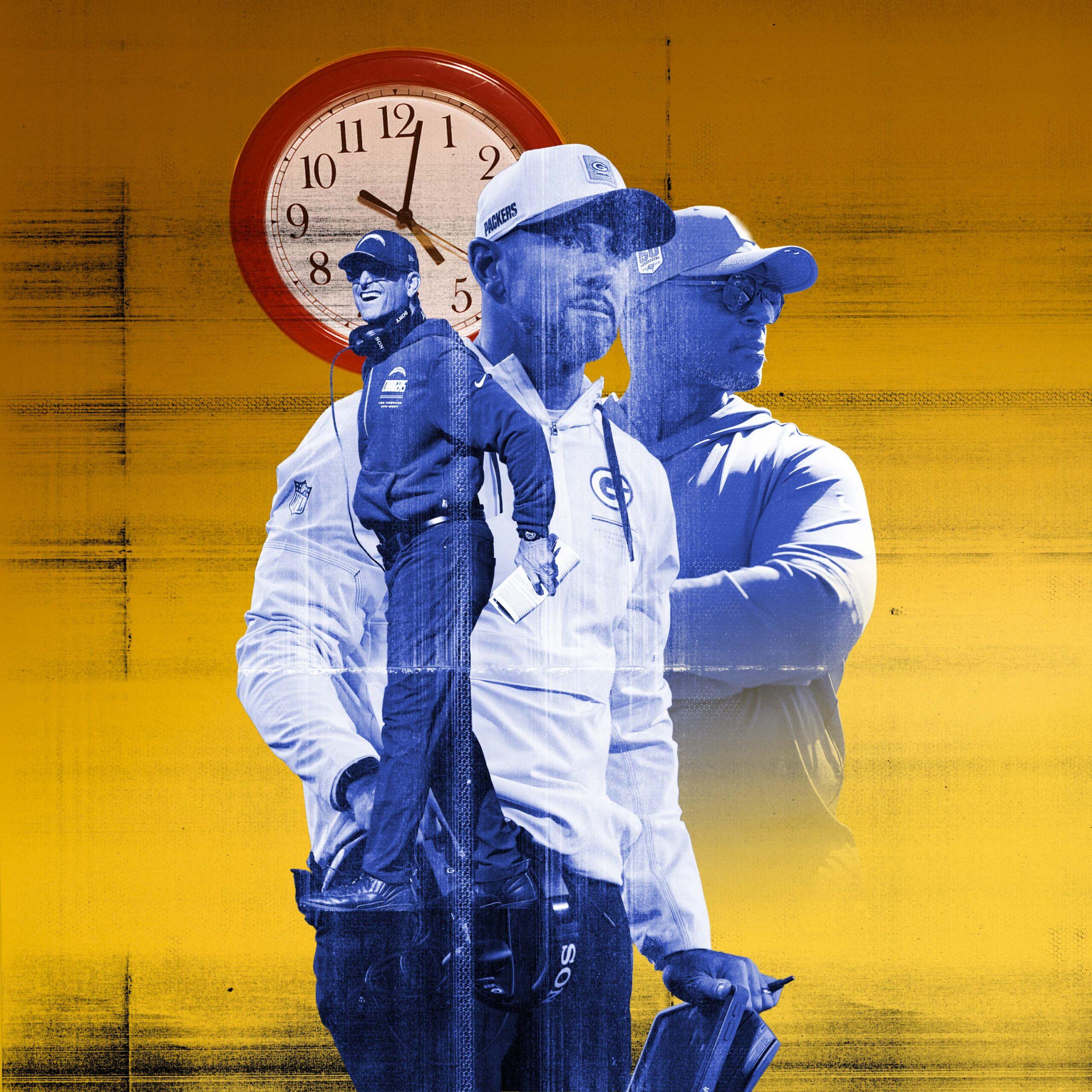

NFL teams are less patient than ever with head coaches, and with five teams having yet to record a win through the first month of the season—and pressure already mounting on a handful of coaches who entered this year with a lot to prove—the 2027 head coaching carousel is about to start spinning. The biggest question owners of these struggling franchises could have to answer over the coming months isn’t necessarily if they should make a move, but when. When do you give a coach a second chance? What if you’re too early to let them go? What’s the danger in being a year too late? How much losing can a fan base take before it insists on a change?
This past offseason offers a good lens through which to view those questions, as 10 teams parted ways with their existing head coaches. It was a weird cycle in part because of the name recognition of the coaches who were out of work: Super Bowl winners John Harbaugh, fired after 18 seasons in Baltimore, and Mike Tomlin, who parted ways with the Steelers after 19 years; Sean McDermott, fired after a close road loss in the divisional round of the playoffs; and Kevin Stefanski, fired by Cleveland with two Coach of the Year awards on his résumé.
Then there were a handful of teams that seemed like they were making a change simply for change’s sake. Fire first, figure out a plan later, like the Arizona Cardinals, who took nearly a month to hire Mike LaFleur after firing Jonathan Gannon, or the Bills, whose decision to fire McDermott seemed incredibly impulsive. Plus, I was struck by the trend that so many teams opted to make a change at head coach, but not at general manager, a potential signal of a shift in power dynamics around the league.



A few months ago, an NFC executive told me that many owners now believe the quickest way to go from disappointment to contention is via a head coaching change, because in one move, a franchise can, in theory, reset the culture and implement new schemes. And those things can happen almost immediately if they get the new hire right. It certainly worked for both of last year’s Super Bowl teams—Seattle won a title in Mike Macdonald’s second year, and Mike Vrabel won Coach of the Year in his first season in New England. It’s worked, too, in Chicago, where Ben Johnson, through his scheme and personality, has transformed the Bears into a contender. And it appears to be working in Las Vegas, where Klint Kubiak has the Raiders looking like a functional, professional football team for the first time in years.
So what does this all mean for the 2027 head coaching cycle? It feels unlikely that nearly a third of the league’s teams will fire their coaches by January, but recent history tells us we should expect significant turnover. Rather than strictly looking at which coaches might be on the hot seat, we instead came up with a taxonomy that will help explain the types of coaches who shouldn’t be too comfortable—even at this point in the season.
The “Can’t Get Over the Hump” Coach
Every year, there is at least one coach who gets fired who we can all agree is actually really good at the job. Maybe he’s won a lot in the past. Maybe he’s, to use one of my least favorite pieces of football jargon, a Leader of Men. Maybe he’s a respected and highly effective schemer. Maybe he’s got a reputation as a quarterback whisperer. Regardless, none of those things ultimately matter if that coach can’t win in the playoffs.
You could put a couple of last season’s firings into this bucket, notably John Harbaugh in Baltimore and McDermott in Buffalo. Both had taken many trips to the playoffs (though Harbaugh’s Ravens missed the 2025 postseason after a potential game-winning field goal in Week 18 game went wide) but never advanced to the Super Bowl with their MVP quarterbacks, Lamar Jackson and Josh Allen. (Harbaugh won a Super Bowl in the 2012 season with Joe Flacco.)
The Ravens and Bills didn’t bottom out. But because of their quarterbacks, they’re in the group of franchises that simply have higher expectations than many other teams. Would the Arizona Cardinals love to essentially be in a Week 18 play-in game? Absolutely. Would Browns fans be happy just to make the wild-card round, let alone the divisional round? For sure. But last season, that wasn’t good enough for Baltimore or Buffalo, and it cost two long-tenured coaches their jobs.
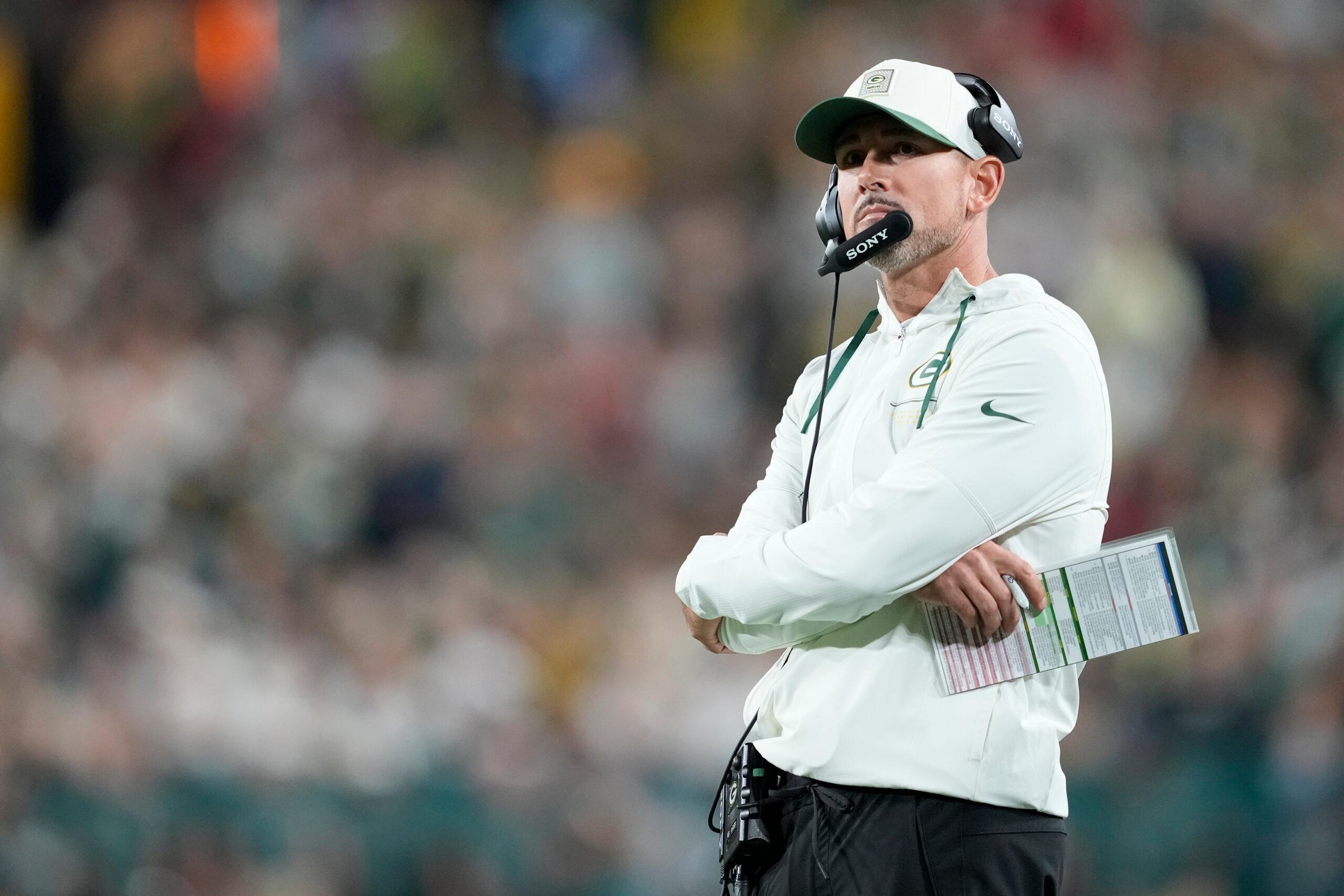
I’m keeping that history in mind when I watch Matt LaFleur and the Packers this year. Yes, LaFleur signed a contract extension in January, which kept him from being a lame-duck coach in 2026. And while a new contract should provide some job security, it’s impossible to ignore both (a) the perennially high expectations for a LaFleur-led team and (b) the team’s recent lack of playoff success despite having a very good young quarterback.
LaFleur has won 65 percent of his games since becoming the Packers head coach in 2019, and the Packers have made the playoffs in six of his seven seasons. He went to the NFC championship game in the 2019 and 2020 seasons, both with Aaron Rodgers at quarterback, but he’s won only one playoff game since—a wild-card thumping of the Cowboys in January 2024. The Packers lost in the wild-card round in each of the past two years—and last season’s exit was particularly ugly. Green Bay gave up 25 points to the Bears in the fourth quarter of a 31-27 loss. The defense struggled to get pressure on Caleb Williams without Micah Parsons (who’s on injured reserve with a torn ACL), the special teams were a mess, and the offensive line couldn’t protect Jordan Love in crunch time. Does any of that sound familiar?
Through the first four weeks of this season, the Packers defense (which is still without Parsons) is in the bottom third of the league in pressure rate and ranks 26th in total defensive expected points added (EPA). Love, meanwhile, has been pressured on 39 percent of his dropbacks (10th most in the NFL) and has the league’s shortest time to throw. The Packers cannot run the ball—they rank last in rush EPA per play—and have essentially stopped trying to have a balanced offense, with the league’s highest pass rate (69 percent). (But hey, at least they moved on from kicker Brandon McManus and seem to have found a steady replacement in rookie Trey Smack!)
The Packers are 2-2. But the losses have been ugly (remember when the Vikings blitzed Love on nearly 80 percent of his dropbacks in Week 1 … ooooof), and the wins deserve asterisks (they beat the Jets only because Aaron Glenn brutally blew some clock management, and they defeated a Bucs team that was quarterbacked by an undrafted rookie quarterback making his first start). The Packers seem like a team that’s regressing, not one that’s getting closer to getting over that postseason hump. And if that trend continues, even a contract extension might not be enough to save LaFleur.
Other coaches in this camp to watch: Zac Taylor, Cincinnati
The Implosion Coach
Sometimes, you’ve just got to sit back and watch the fireworks of a team that’s imploding on itself. Last year, that was the Las Vegas Raiders—a team with an intriguing coaching staff (Pete Carroll! Chip Kelly! Minority owner Tom Brady!) and a veteran quarterback and just enough hope that the pieces would all work together. Instead, it all failed … spectacularly. The Raiders beat the Patriots in Week 1 and then had only one win between then and Week 18. The offense in particular was a complete dumpster fire: The entire operation was disjointed, Geno Smith couldn’t stop throwing interceptions, the offensive line (coached by Carroll’s son Brennan) couldn’t block, and Kelly was fired after 11 games. Carroll was fired at the end of the season, and his Raiders year will be a miserable footnote on an otherwise Hall of Fame–worthy résumé.
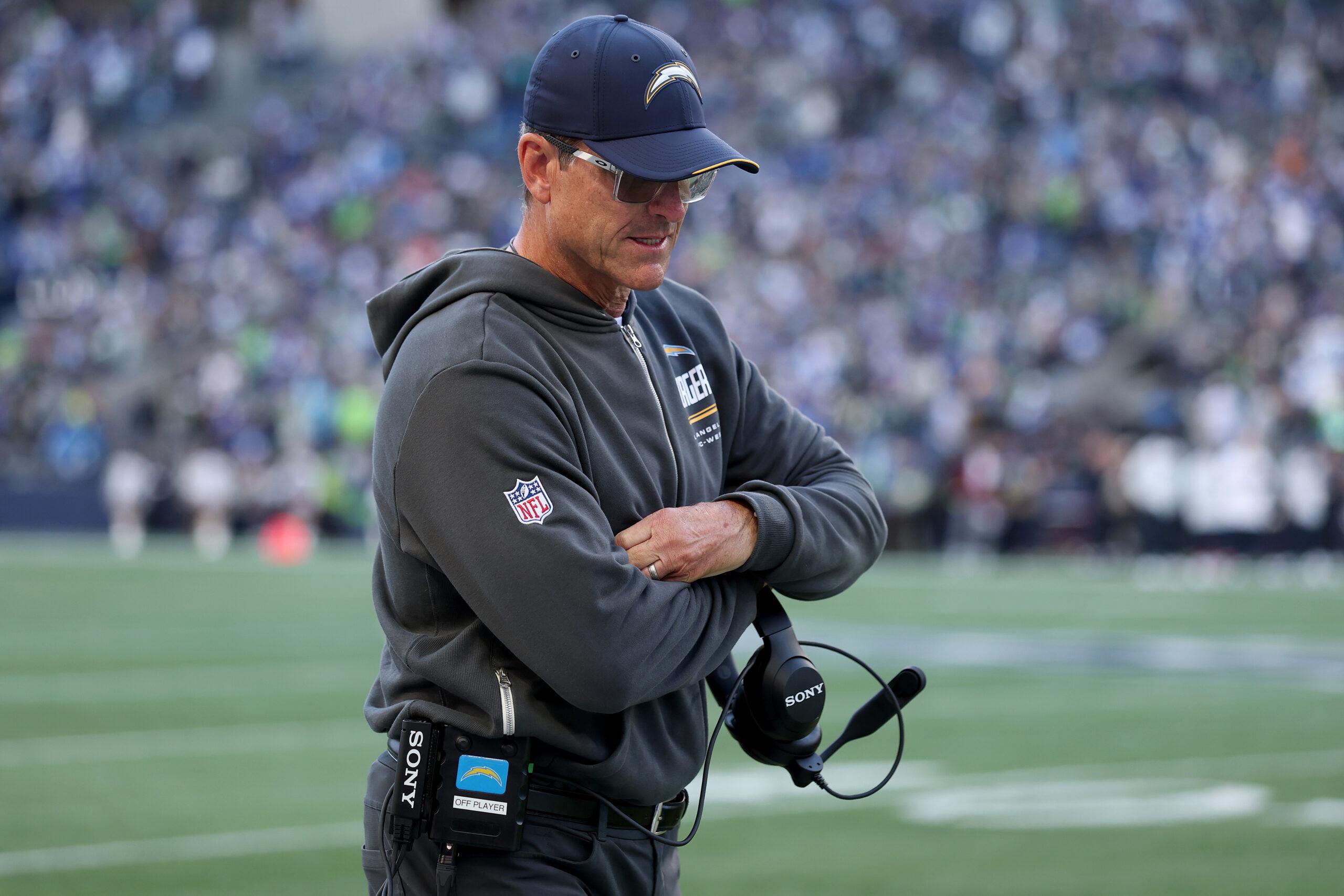
This year’s disaster is the Chargers, and none of their coaches might survive it. I will admit that before the season, I was in the camp of people who were fully bought into the greatest coaching experiment of 2026: Jim Harbaugh + Mike McDaniel, banding together to take Justin Herbert to new heights. I devoured the clips on social media of the awkward yet entertaining interactions between the two coaches. They were going to be the NFL’s odd couple! So charming! And I absolutely believed that McDaniel’s experience as a creative run game schemer would unlock something in the offense for Herbert, who is a far more physically gifted quarterback than McDaniel’s former pupil, Tua Tagovailoa.
We all know how it’s played out so far. The Chargers are 0-4, with home losses to the Cardinals and Raiders, and the offense has failed in every possible way. Herbert has been objectively bad, whether you’re going off advanced stats—where he’s 25th in success rate and 22nd in total EPA among qualified quarterbacks—or the good, old-fashioned eye test, which shows he’s under constant pressure and throwing horrible interceptions. There is no simple fix here. The offensive line was underperforming even when it was healthy, and now both starting tackles, Rashawn Slater and Joe Alt, are injured; the only trustworthy receiver, Ladd McConkey, has been playing through rib and foot issues; and the running game that McDaniel was supposed to overhaul has actually gotten worse (they current rank 22nd in rush EPA/play, compared to 17th by the same metric last season).
But it’s not just that the Chargers are bad. It would be reasonable to expect some growing pains after such massive changes to the offensive scheme and a pile of injuries. It’s how the Chargers are bad that could ultimately convince owner Dean Spanos to blow the whole thing up. The Chargers are sloppy (tied for the league high with 24 offensive penalties in four games), and they simply look like they have no idea what they are supposed to be doing out there. The famously chill Herbert is losing his cool after mistakes, and press conferences are becoming increasingly contentious. When the vibes are this bad, the whole thing might be beyond saving. Harbaugh’s first NFL stint in San Francisco burned bright and then flamed out after four years. His Chargers tenure might come to an end even faster than that.
Others to watch: Dan Campbell, Detroit
The Pre-Fired Coach
If things continue to deteriorate in Green Bay and the Packers fire LaFleur this season, it could be viewed as giving up on a good coach a year too soon. But is that worse than hanging on to a coach a year too long? How many times have executives considered firing a coach, only to bring him back and have him turn things around? It’s unheard of. A firing is like retirement—once you’ve started thinking about it, it is time.
My former Ringer colleague Kevin Clark coined the term “pre-fired”—when the proverbial coaching pink slips are all but written. So how does a coach become pre-fired? A franchise might be scared of change and more comfortable with the status quo. Perhaps there were injuries in the previous season, and with just a little bit better health, ownership believes the coach can turn things around. Maybe the coach could have promised sweeping changes to the rest of his staff, which is often the last-ditch move when he knows his job is in jeopardy.
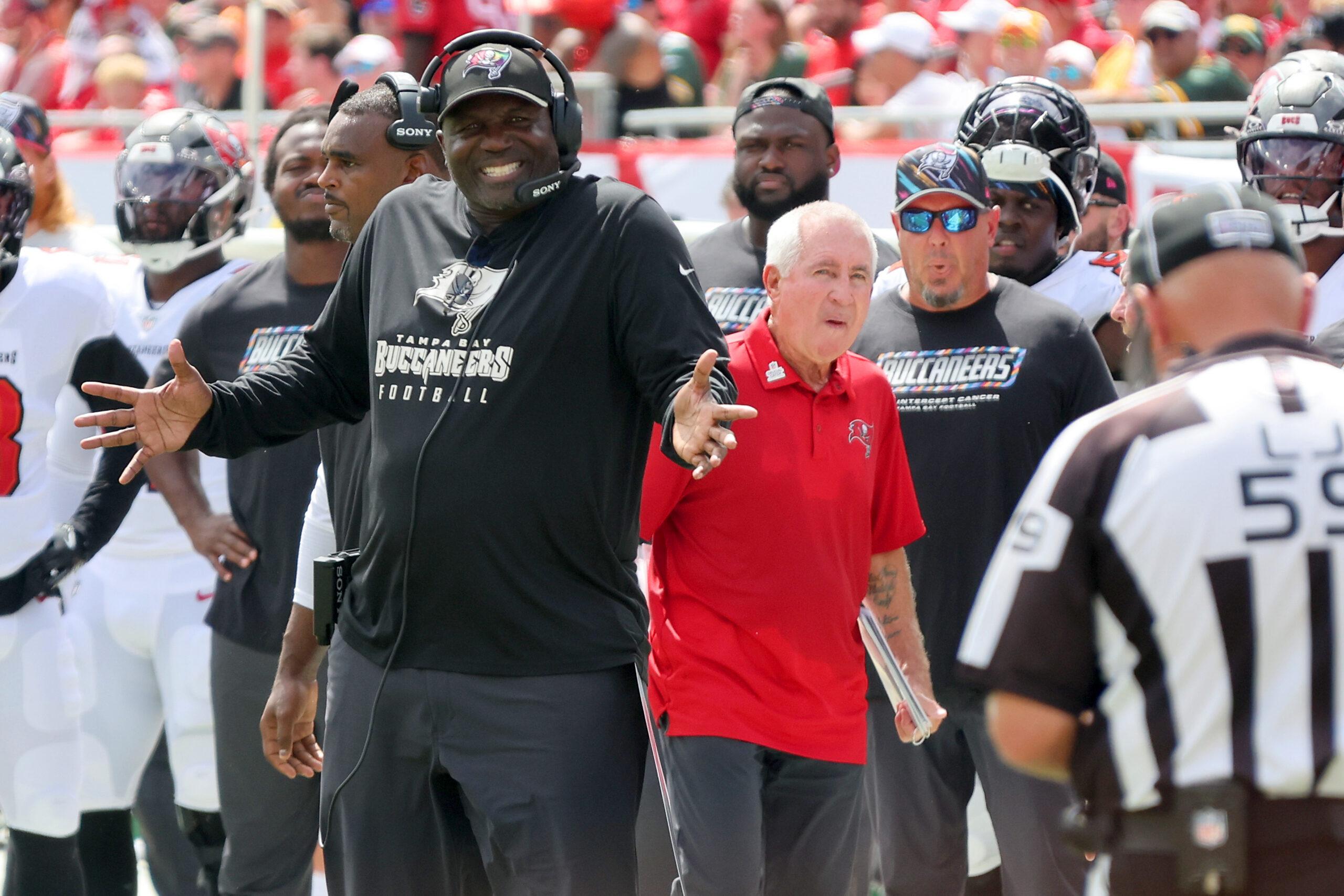
Todd Bowles’s situation in Tampa Bay checks each of these boxes. The Bucs are historically extremely patient with their head coaches, outside of an abject disaster like Greg Schiano. Bowles was a popular in-house replacement when Bruce Arians surprisingly retired in 2022, and the Glazers decided to retain him even after last season’s second-half collapse: The Bucs started 6-2, but with quarterback Baker Mayfield playing through multiple injuries, they lost seven of their final nine games and squandered a chance to win the dismal NFC South. As part of his plan to return in 2026, Bowles agreed to make changes to his coaching staff—the most important move at offensive coordinator, bringing in former Falcons play caller Zac Robinson to replace Josh Grizzard. Robinson is Bowles’s fourth OC in as many years, after prior play callers Liam Coen and Dave Canales left for head coaching jobs. Now, the Bucs are 0-4, Mayfield is injured once again (dislocated thumb), and the Bucs are playing some of the least watchable football in the league. If this was a prove-it year for Bowles, he’s not making a very convincing case to stick around.
Others to watch: Dan Quinn, Washington; Aaron Glenn, New York Jets; Shane Steichen, Indianapolis.
The One-and-Done Coach
It used to be exceedingly rare that a team would fire a coach after just one season. That’s not the case anymore. Eight coaches have been one-and-done since 2021—and three of those (Urban Meyer, Nathaniel Hackett, and Frank Reich) didn’t even survive the first full season.
Firing a coach after one season can be costly, particularly for franchises that make a habit of it, like the Raiders or Texans. Cycling through coaches puts a strain on the locker room as players are constantly asked to adjust to new schemes and leadership styles.
But there can also be a benefit to recognizing a mistake and moving on before things get worse. (Hello, Jets, WYD?) Recent history tells us that by the end of this season, one of the 10 teams that hired a new head coach in 2026 will be in the market once again. Who will it be? Here are my way-too-early power rankings of the 2026 head coaching class:
- Klint Kubiak, Las Vegas: Has quickly made the Raiders look like a professionally coached and competent football team
- Kevin Stefanski, Atlanta: Recovered from the early QB mess and now has an explosive offense that’s fun as hell to watch
- Jesse Minter, Baltimore: Declan Doyle looks like an A+ hire
- Joe Brady, Buffalo: A case where familiarity with the quarterback actually worked
- Todd Monken, Cleveland: Don’t love the QB process, but can’t argue with the W-L results after one month
- John Harbaugh, Giants: Lost his starting QB in the fifth quarter of the season but has kept things on track so far
- Jeff Hafley, Miami: Not sure a first-year coach has ever had lower expectations
- Mike LaFleur, Arizona: Will grade his first season as an incomplete; year two, when Arizona gets a new QB, is what matters
- Mike McCarthy, Pittsburgh: McCarthy and Aaron Rodgers should have stayed divorced
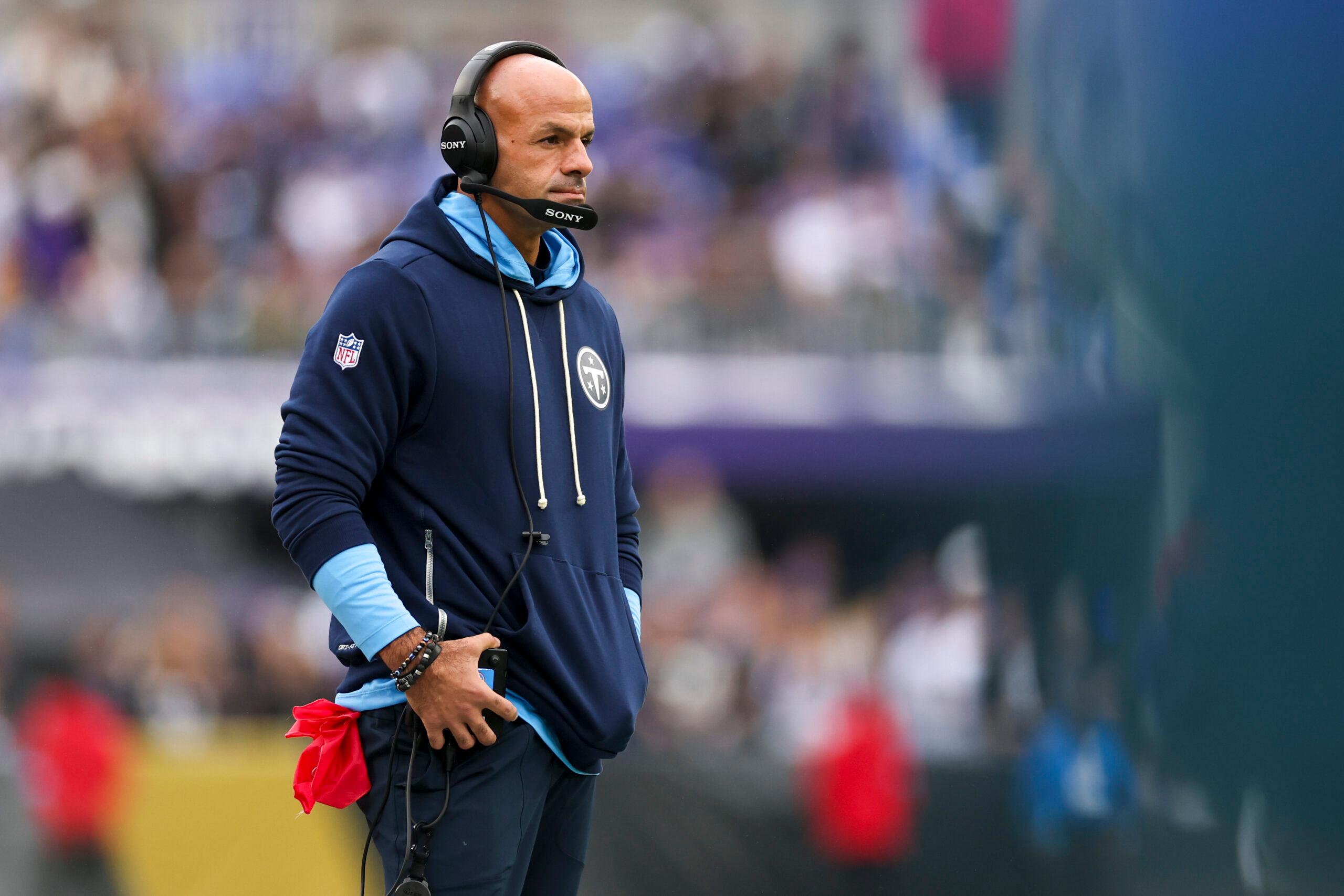
- Robert Saleh, Tennessee: Quick, name one thing the Titans do well
The Big Surprise
This is the opposite of the pre-fired group. These are the coaches who seem super secure, up until the very moment they’re not. Think McDermott last season, who was seemingly safe until owner Terry Pegula saw Josh Allen crying in the visitors locker room in Denver. Think Mike Vrabel in Tennessee in 2024, when he was on the wrong end of a front office power struggle, despite having taken the Titans to the playoffs three times in six years. The big surprise is typically a shock because of name recognition or timing—or often because of both. So while there are a handful of coaches we know we should be watching closely because they fit into one of the categories above, the team that ultimately makes the biggest move in January is probably sitting somewhere near the top of the standings right now.