
I. Mojo
There have been three Friday Nights Lights. Or would that be Lightses? Friday Night Lightses? And if it’s not Lightses, shouldn’t it be? The English language is a weird and unruly cow.
It’s the 20th anniversary of one of the Friday Night Lightses. Not the book. That masterpiece was published in 1990 and told the story of the 1988 Permian Panthers. Author Buzz Bissinger went down to Texas and holed up in Odessa for a year to get it right. This was before the Gucci addiction, before he yelled at Deadspin. This isn’t about the movie, either. That was adapted from Bissinger’s book in 2004, a fictionalized, based-on-a-true-story-type thing that was not married to the facts. Permian didn’t barely get beat by Dallas Carter in the state championship game; they got dogwalked by Carter in the semis. That’s not to say the movie’s bad. The movie’s good. The Famous Jett Jackson’s in it. Derek Luke says, “God made Boobie beautiful.” It features the best use of the word mojo since The Spy Who Shagged Me. And like all sports movies worth their salt, it gets the chills going, shakes awake the arm hairs. What this is about, though, is Friday Night Lights the TV show. Clear eyes, full hearts, etc.
Just two actors carried over from the movie to the TV show. The first was Connie Britton. In the film, she played Sharon Gaines, wife to Billy Bob Thornton’s Coach Gary Gaines. It was a thankless role. She didn’t speak until the 25-minute mark, and mainly spent her screen time looking nervous in the stands. Britton’s character on the show—the Tami Taylor—could not have been more different. [Raises goblet of chardonnay, toasts.] Because Tami Taylor was the sun, the moon, the stars. She was strong and wise and kind and warm, the heart of the show, like if spring were a person.
The other carryover was Brad Leland. In the movie, he played a well-mustachioed dude named John Aubrey whose vibe is maybe best exemplified by the fact that there is a YouTube video of one of his scenes titled “Creepy Boosters.” In it, Leland rolls up on Billy Bob, Britton, and their daughter in the parking lot of a Walmart. He’s driving a red Corvette, saying things like “We’re just out getting flowers for the ladies.” Fat wallet, this guy, and he more or less lets Billy Bob know that he needs to beat Dallas Carter in the state title game if he wants to keep his job. In the TV show, Leland plays another booster: former state championship–winning quarterback, current prez of the Dillon Panthers Booster Club, and West Texas motor vehicle titan Buddy Garrity. Like with Britton, the writers gave Leland a lot more to chew on the second time around. In the movie, he was asked to play one note. In the show, he had the whole piano at his disposal. Aubrey was just a rich shit with bad intentions. Buddy wasn’t sinless, but he wasn’t malevolent, either. He was fun, and human, a frequent dumbass, and his heart grew with the series.
Twenty years since its premiere, Friday Night Lights remains pristine. It maintains its luster because of its commitment to authenticity, the talent of its actors, and the depth of its characters. The cast-character list is chock full of beloved heavy hitters: Kyle Chandler as Eric Taylor, Connie Britton as Tami Taylor, Taylor Kitsch as Tim Riggins, Michael B. Jordan as Vince Howard, Adrianne Palicki as Tyra Collette, Zach Gilford as Matt Saracen, Gaius Charles as Smash Williams, Jurnee Smollett as Jess Merriweather, Jesse Plemons as Lance … we could be here for days. The point is, bangers. Each and every one of them, bangers. But of all the indelible characters that populated FNL’s fictional Dillon, Texas, Buddy Garrity might have been the most nuanced. In a show loaded with iconic performances, Leland brought a feisty, vulnerable magic to a character that went from supporting to vital by the end of the show’s run.
II. Panthera Leo
The first time we see Buddy, he’s in his kitchen. Enjoy the view. Smudged, windswept face like a well-greyed bulldog. It’s not time for the suit jacket yet. It’s breakfast. For now it’s a blue shirt, sleeves rolled into work pose, dark slacks, and a red tie that’s yet to be tightened. Buddy kisses his oldest daughter, Lyla, on the cheek. Apologies—first, he tells his son to nip it after Buddy Jr. jokes that Lyla’s going to spend the evening with Jason Street’s tongue in her mouth. Then Buddy Sr. gives Lyla a kiss on the cheek. It’s a calm start for a character who will come to be known as a kind of chaos agent, both in his own life and the lives of those around him.
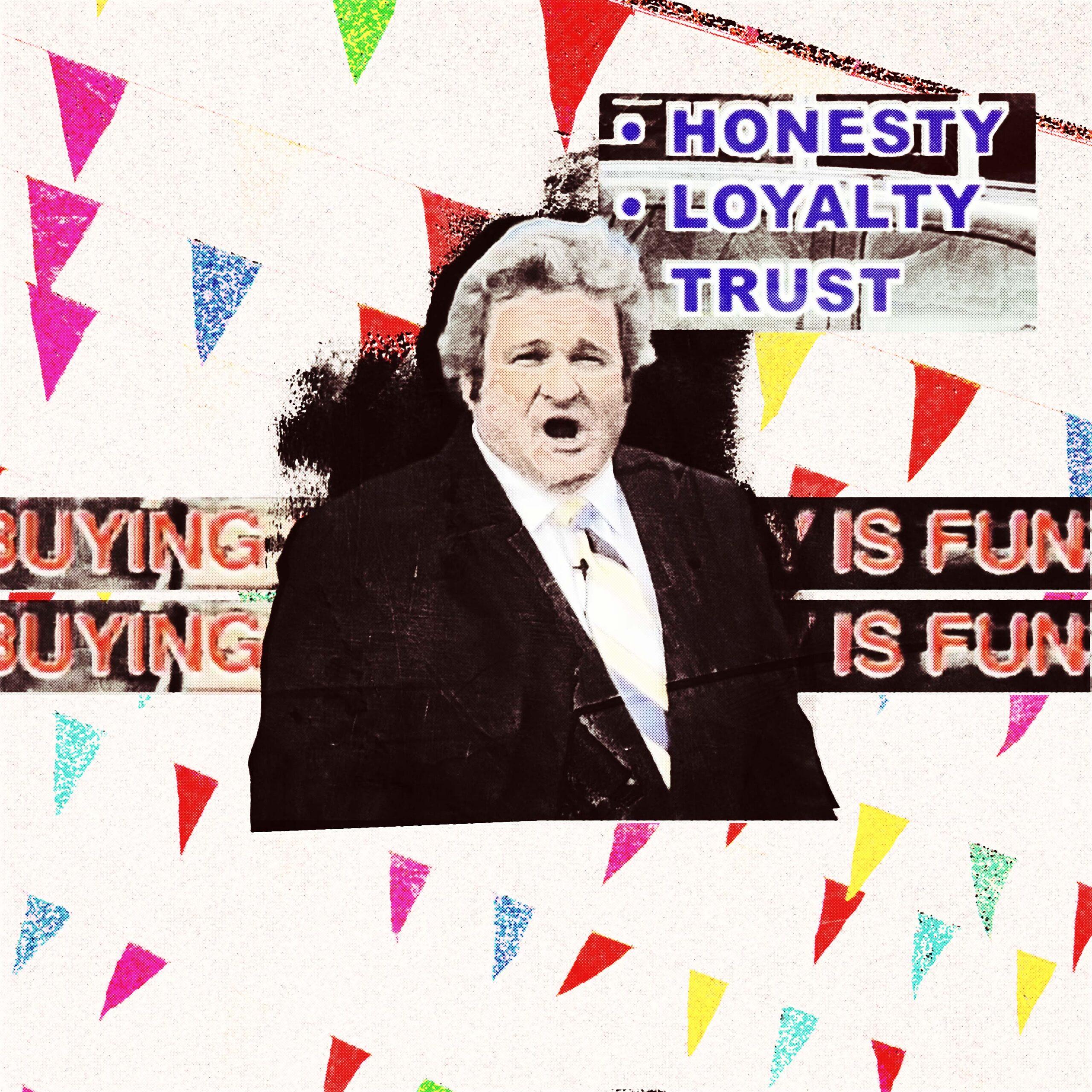
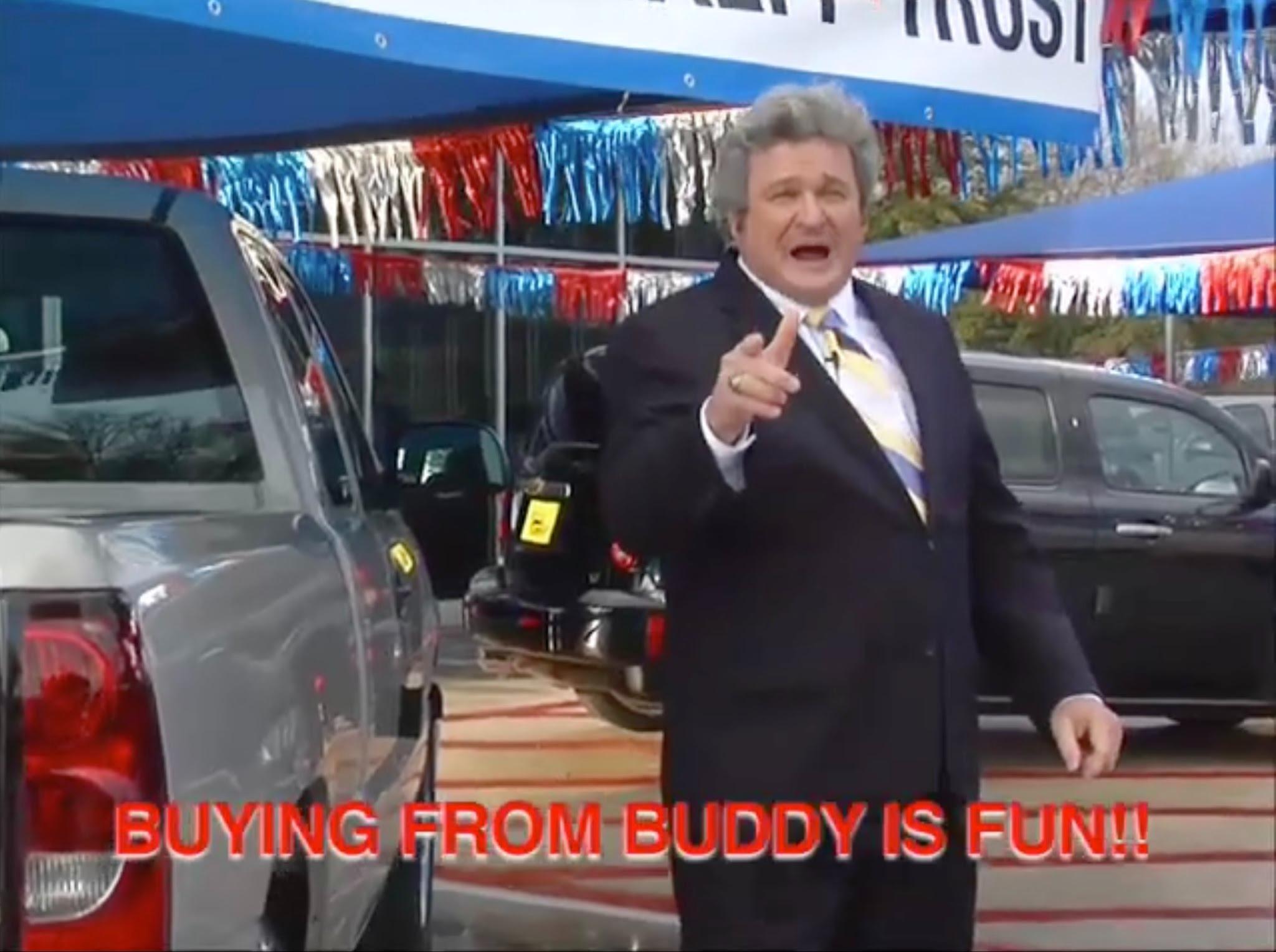
Buddy was complex and many-faceted. His essence was part evangelist, part hippopotamus, part Country Santa, part mesquite tree, part the greatest wrestler who ever lived. He had a great affinity for and deep connection with the microphone and could cut a promo with the best of them. If you take one thing from this, let it be this: at Buddy Garrity Automotive, they pride themselves on three pillars of prosperity—honesty, loyalty, and trust. If you take two things, take this too: Deep in the heart of Texas, deep in his heart, he’s your buddy. The ad should be hailed, along with the Philip Seymour Hoffman’s Mattress Man commercial in Punch Drunk Love and the Morrie’s Wig Shop commercial in Goodfellas, as an exemplar of the form.
Buddy Garrity’s arc over the course of the series was long and full of explosives. In the beginning he was, more often than not, a grating antagonist to the Taylors, a sometimes playful, always operating barbecued thorn, ready to poke anybody to get his way. A Big Fish, something freshwater. An alligator gar, a smallmouth buffalo, what have you. The wallet, it’s bursting. He’s having a drink. He’s bringing people together. He’s schmoozing, making connections. A real “Hey, there’s somebody I want you to meet” kind of guy.
Early Buddy was more or less the King of Dillon. He was also, frequently, an ass. He had an affair with his secretary. He pissed away tuition money. His wife left him and hooked up with a soul-patch. He lost his high school sweetheart to a flavor saver. Cold world. Garrity is brought down, but he learns. And so do we. We learn Buddy is a fighter. We learn he has a heart. He builds himself back up. He sees his Panthers morph into something ugly and tells Joe McCoy—a demon—to eat shit. Buddy becomes a Lion. Smart of the show’s writers to make East Dillon’s mascot another member of the felidae subfamily pantherinae. Panthera leo, baby. Fun to think about a guy named Pantera Leo. Probably a pretty good hang. Anyway, Buddy lives and dies with the Lions too. He watches them rise. He reconnects with his son. And in the end, he was a Panther again. To root for Garrity was to run the gamut. He was bad and good, weak and strong. He was annoying as hell and the best party in town.
Too many highlights to name them all. I liked when Buddy wore slacks and some kind of Tommy Bahama–looking shirt. You know, heavy on the palm fronds, maybe some bright Hawaiian flower, a yellow hibiscus, a heliconia, something that says yes, he is here but he is also fun. I liked when he was so sweaty he looked like he wore his clothes in the pool. I liked hearing him scream the word “quarterfinals.” I liked hearing him say the word “jumbotron.” I liked when he cooed to Coach, “There’s our new Toyota Tundra. I got 30 of those.” I liked when he hosted roasts: “You guys know I’ve been giving little Matt Saracen a hard time all year,” Buddy started. “He’s done a great job but I’ll tell ya, when he first started as quarterback, he was so shy he had to email his plays in.” As jokes go, this is, what, at best a gentlemen’s 6? A fool’s 5? Buddy laughs like he just uncorked an undeniable 10. And good. It’s important to love oneself.
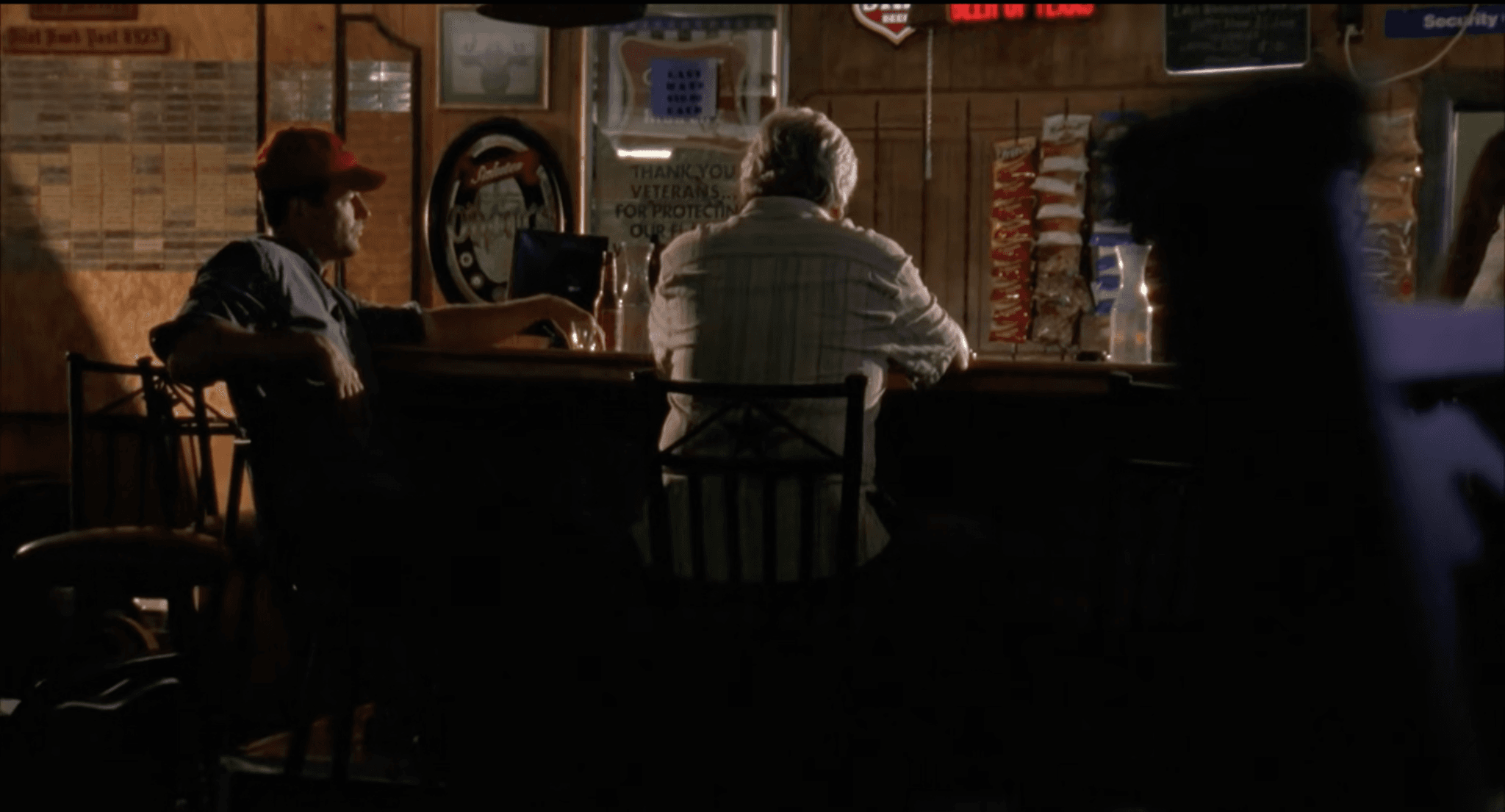
I liked when Buddy and Coach Taylor sat at a bar. I liked it every time. Applebees, Buddy’s, Cheers, it didn’t matter. If they were at a bar, I was into it. It gave us shots like this. Paint this on Big Tex’s chest.
I liked when Buddy played with his championship ring, how he twirled it around his finger like a fidget spinner, like it was helping him stay calm. I liked the way he held his hands together when he axed McGregor’s grumpy ass after two games. I liked his teeth. Great teeth. Great fingers. Check out those knuckles. Galaxies are contained therein. Looking at it more closely, I’m not sure he can even get that ring off. But Buddy wouldn’t have it any other way. Bury him in it. Screw it into the bone.
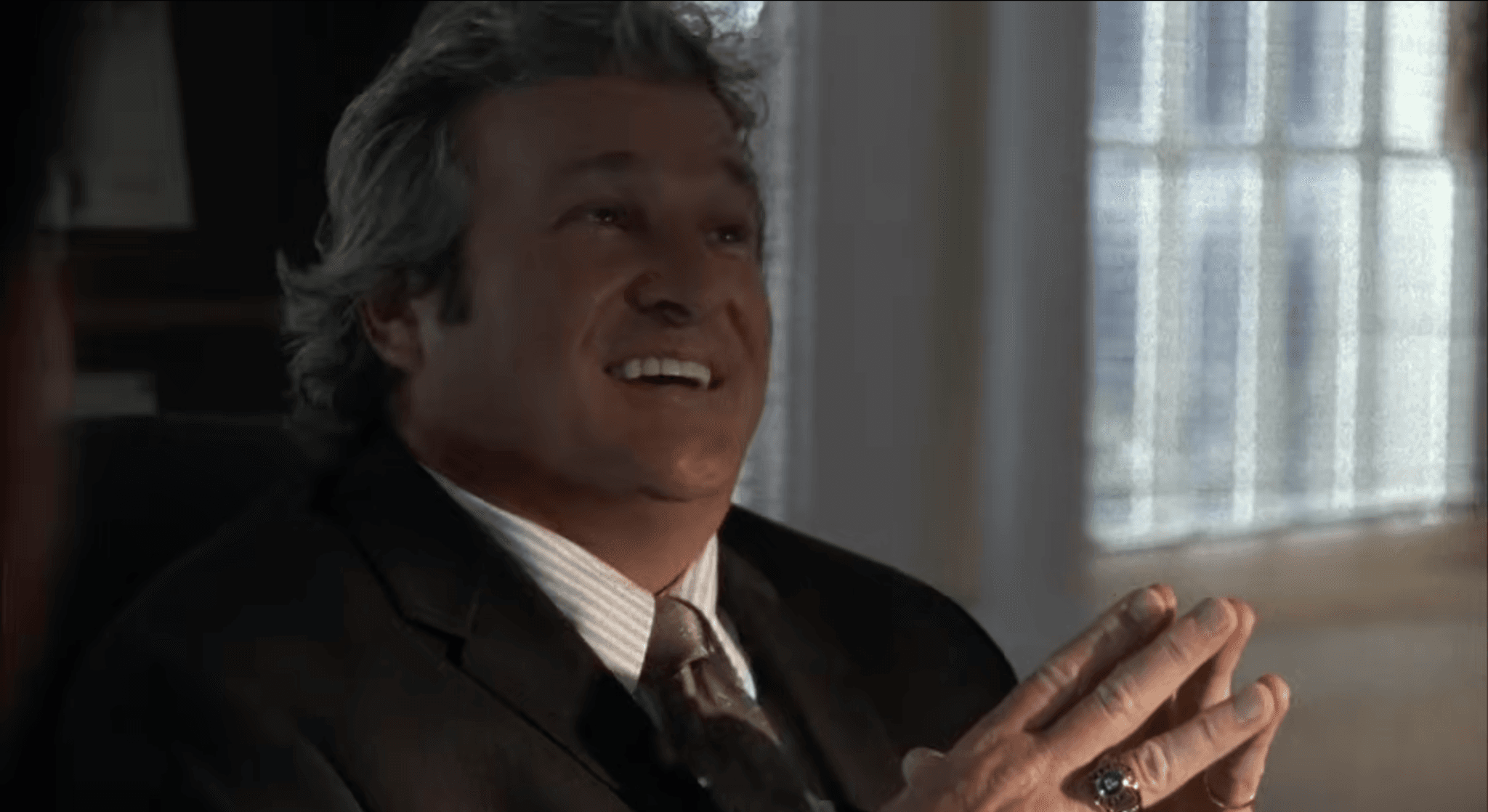
I liked the whole Santiago storyline. He had the goods, could put his hand in the dirt or start standing, gave them a lot of burst off the edge. I too would like to know where he went. I liked when Buddy took prime Nebraska angus steaks and threw them into the trees. I liked when he said, “You can’t fake boosterism, Eric. It comes from the heart.” That heart he wore in his mouth. It alternated between there and his gut. I think sometimes he carried it in his hips and then there were a few times he also carried it in his middle fingers. His body is a Texas temple.
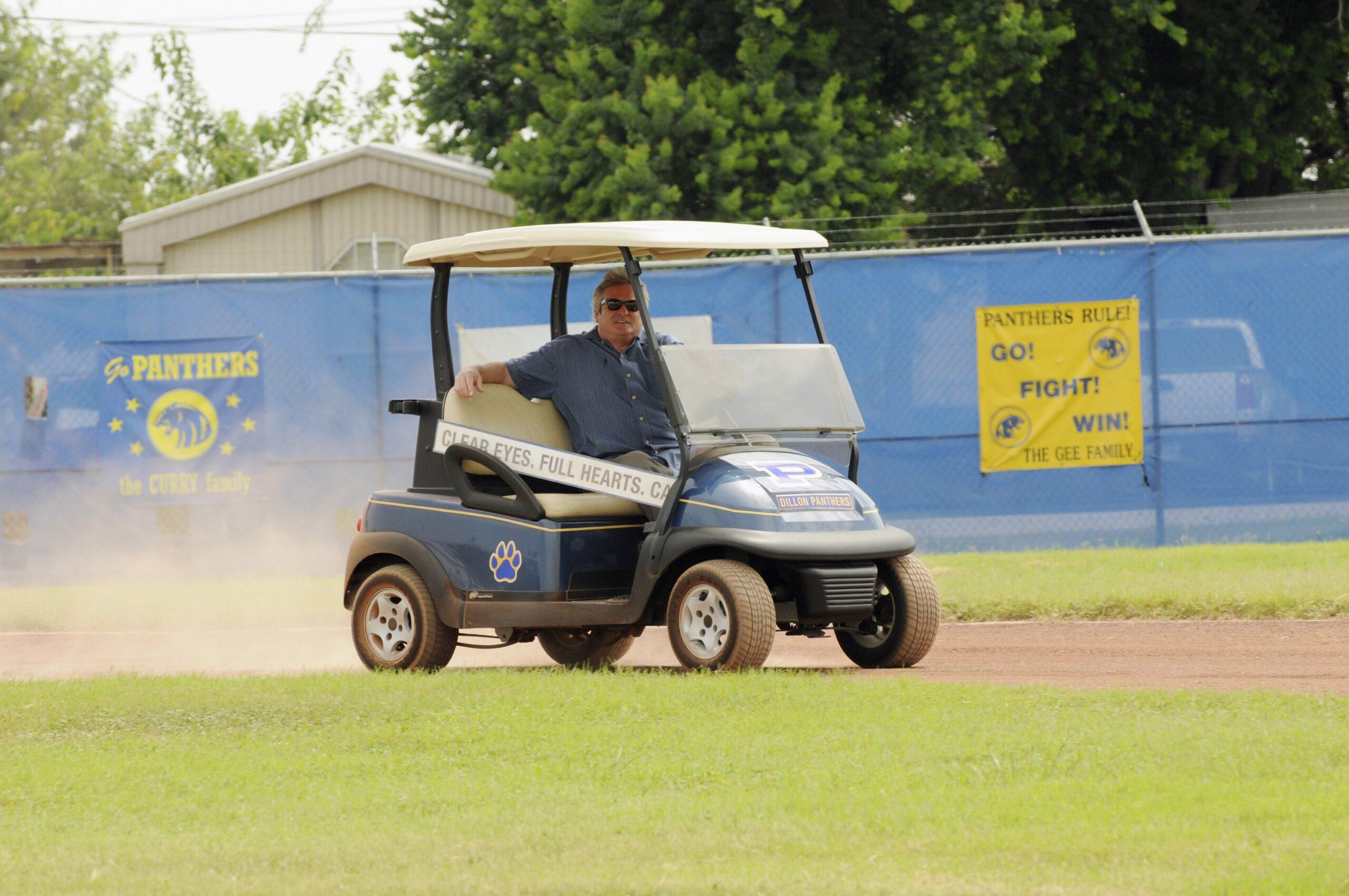
It’s important to understand that this man could, for reasons not entirely clear, charm the fangs off a snake. Sometimes, a sad sack. Other times, charisma in two boots. Raekwon once said the words “lemonade leathers” and I feel Buddy Garrity understands that. He’s on that same wavelength, the latest fleecewear and all that. Drink in his electric visage, behind the wheel of his own personal E-Z Go, pink-cheeked and heart bursting, cruising the sidelines, ready for some football.
III. Julie & Julia Should Have More of a Presence Online. It’s Great.
At the end of the children’s animal drama Babe—a perfect movie, a miracle—after Babe has baa ram ewe’d his way to victory, when the grandstand erupts? Some of the best cheering ever committed to screen. Elite, booming clapping. Old Irish dudes roar, chuck their derbies in the air. Women in delirium, moved by the spirit, hands raised in exaltation. The stands shake. Unhinged delight. Other great on-screen cheerers include Susan Sarandon in Speed Racer, and Meryl Streep and Stanley Tucci when they’re co-reading the Knopf letter near the end of Julie & Julia Leland belongs in their number.
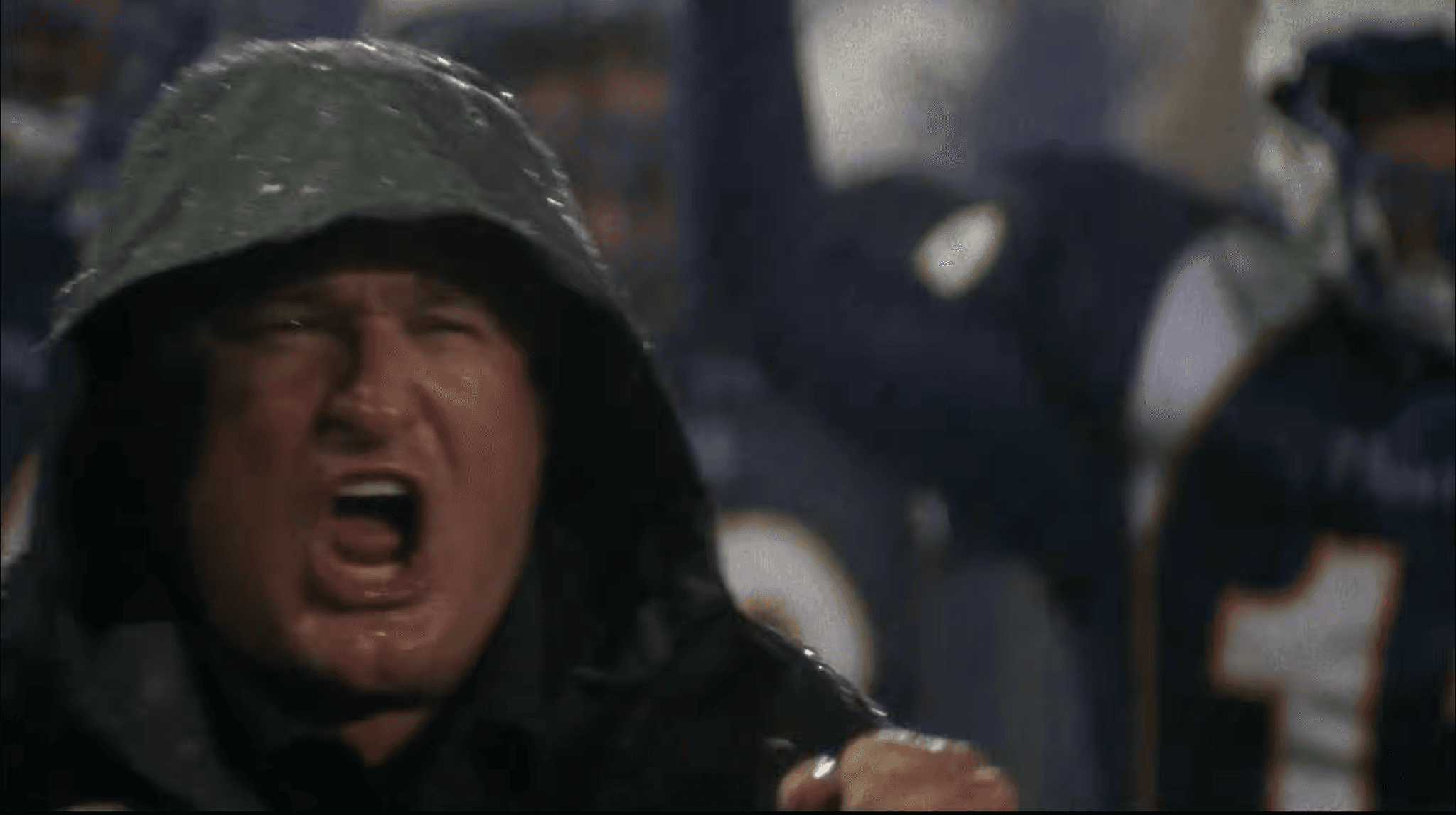
Sports fandom is a disease, one that makes us act foolish. We watch the play-by-play on an app because the comeback started after you turned the TV off and you don’t want to mess with the juju. We were sitting there. We weren’t sitting there. I was sitting on the left side of the couch, you were in the recliner, and Tanner was laying on the floor with his legs on the ottoman. Tanner, you lay your ass on the floor and put your legs on the ottoman right now or I will cut them off and put them there myself.
We are fans. We are sick. Few have portrayed that truth more perfectly than Leland. He was a member of the 1971 Plano team that won the Texas state championship. He knew the rhythms of this particular world—the way it makes you move, the way it makes you sound—and he was in the pocket from word one. When the Panthers or Lions found themselves on either end of a highlight play, Garrity’s reactions were unhinged, spiritual. Football moved Buddy. He stood in the stands, worked himself into a lather, and his soul would dance or deflate depending on which way the football gods decided to go. When his team was playing well he looked like he might spontaneously combust out of full-blown jubilation. When his team was playing poorly, he looked like he wanted to die.
The Panthers and the Dillon fans in the show did the same thing every other team/fan base does. When it’s time for the fourth quarter, everyone holds up four fingers. Early in Season 1, when Saracen’s struggling and Buddy wishes VooDoo were playing, Panther fans put up their fours. Garrity joins them but he’s not happy about it. You can see it in his hands: Leland’s four fingers droop like limp sausages. That he still takes part in the tradition even when his heart's not in it, that he couldn't imagine not participating, gets to the core of his whole being.
IV. Eric
I do not think, in the history of language, anyone has said the name “Eric” better than Buddy Garrity.
V. Dadgum
Buddy Garrity vacillated between sinner and saint with swiftness, and we watched him step into all kinds of shit over the course of the series. We saw him give a friend 70,000 smackers to invest in a strip mall that went belly-up almost immediately. The friend took him to The Landing Strip—Dillon’s premier gentlemen’s club—to break the news. When Buddy started screaming at him, one of the nearby customers told Garrity to keep it down. Buddy fired back: “I tell you what, Cowboy, you redneck son of a bitch, are you telling me you need silence to watch naked women?” The response satisfied the cowboy and sent him back to his seat so Buddy could focus on the man who’d lost his children’s college money. Nine seconds later, Garrity beat him senseless.
We heard him remix Muddy Waters. We saw him suited and booted. We saw him bare his soul at Applebees. We saw him save the day with the East Dillon alumni. We saw him in turmoil and ecstasy, selfish and selfless. We saw him meddling. Constantly meddling. The Meddler-in-Chief, really. Mister Meddles. Meddling with the roster, the funds, the town. We saw him in full dad mode, dropping everything to check on his daughter. We watched him seek redemption.
We saw him drunk as a skunk, festooned in sweat, leering out a window saying, “Working that hillbilly. Mmmhhmm. Work that ole ridge running hillbilly mouthbreather.” We saw him avoiding a party, besieged by the dead in a fellow booster’s taxidermied trophy room. We saw him try to fight the host. We saw Tim Riggins drive him home. If Riggo’s driving you home because you got too drunk, you have some things you need to figure out, some lifestyle choices you might need to reconsider.
We saw Buddy sitting on the Taylors’ front porch, looking for a place to sleep. Season 1, Episode 18, after his wife kicked him out of the house for cheating on her with his secretary/Tyra’s mom, Buddy took up residence on the Taylors’ couch. Halfway through the episode there’s a scene with Buddy alone at the kitchen table, eating pork chops he asked Tami to make special for him. While his attention’s on the television, Julie Taylor tries to tiptoe to the fridge in secret so she doesn’t have to get in a conversation with Garrity. She fails. Buddy sees her and asks, “You wanna join me in a pork chop?” which is actually, according to my research, the moment television peaked.
In the same episode, Buddy does the North by Northwest/Big Lebowski trick of rubbing a pencil over the top page to find out the most recent note on the notepad thing. “A little something I learned on Magnum, P.I. Works pretty dadgum well.” When Buddy checks out of Chateau de Taylor, he and Coach get into it.
“I think you hide your head in football a little too much, Buddy,” says Coach. “Cause I don’t think you should care about the semis. I don’t think you should care about who I’m having dinner with or who the hell is even coaching the team. I think you need to worry about your family. I think you need to worry about your family, man.”
“You know what, Eric?” says Buddy, “I’ll always care about the Panthers. Pam can cut off my head and stick it on a spike in the front yard. But I’ll always care. Always.”
Pretty graphic there, Bud, but point taken. About the Panthers, Buddy don’t play. And listen, this is obviously bananas and Buddy is unwell, but we’ve talked about this. Fandom is a disease. And the way Leland plays this, the feeling in his voice, you don’t doubt that Garrity means this with every fiber of his being. He’s a fan. He’s sick. It’s in his bones.
It would’ve been easy to turn Garrity into a cartoon. Leland never did. He imbued Garrity with bluster and warmth and humor, guilt and grace and sadness, his eyes always close to wet. Catch him on the wrong day, he could represent some of the worst things high school sports have to offer. There’s a deeply boring essay to be written about how quaint, in retrospect, Garrity is compared to the boosters that devour the world(s) of high school and college football today. You could draw a line between Buddy and the bullshit Save College Sports act, the evolution of the booster, and why players should get to make as much money as they want and that anything that hinders that is anti-labor and obscene. But I’m less interested in that. I’m interested in Buddy scouting a white kid who hoops in a beanie, sort of a proto–Devin Booker situation. I’m interested in Buddy telling Riggins he’s seen him play hungover plenty of times and he’s always played like a champ. I’m interested in him celebrating others. Because when you catch him on the right day, he’ll exemplify some of the best things high school sports have to offer. He was a piece of shit. He was a total sweetheart. He was a pain in the ass. He was a balm.
VI. Mountains, Beaches
Two decades later, Friday Night Lights and its characters remain beloved. It’s a testament to how lived-in, how authentic the town of Dillon felt, and how well the actors knew their characters. They seemed real. It feels like the characters are still there, walking the sidelines, packing the stands, doing their best.
It’s fun to think about what Buddy might be up to today. Oh, the possibilities. Leland has his ideas. He shared them at the ATX TV Festival in June, during an almost all-cast Q&A celebrating the 20-year anniversary of the show. “Well, Buddy, after three hard seasons, has finally had a date. A woman went out with him or his wife came back or something.” TV Insider asked him the same question and Leland said, “Well, ole Buddy is on the golf course, wherever he goes, and he’s going everywhere. He’s going to the mountains and he’s going to the beaches and he’s going to be playing golf.”
Maybe Leland’s right, maybe not. Buddy was capable of just about anything. He’s probably retired by now. Maybe Buddy’s Bar has multiple locations, maybe he wound up marrying Angela, maybe they take cruises together, or hell, maybe he’s destitute. Buddy was fun because anything was possible and everything was plausible. I could see Buddy living in an RV parked along the shoulder of the Pacific Coast Highway, near Will Rogers State Beach. In the mornings he takes his coffee to the water and watches the surfers. He’s working his way through every Zane Grey novel. He likes the descriptions. In the evening, he whittles miniature footballs that he sells on Etsy. His shop is called Pantherland.
I could also see him buying a ranch. You could tell me he was the mayor of Dillon for a decade-plus and I’d believe it. You could tell me he drove his truck off a bridge and I’d believe it. Understand, he wouldn’t die. I doubt he ever will. Guys like Buddy Garrity have 90 lives minimum and are, in most cases, immortal. He’s made of special materials, impregnable cosmic matter from long ago, before the oceans, before light. He could bathe in lava and come out singing.