How “Can You Bring Iced Coffee to a Job Interview?” Became Society’s Ultimate Litmus Test
America is divided. Generations are at war. Where do you stand on the most urgent debate of the past week?

Let future historians note that for several days in the early fall of 2026, as the seas warmed and billionaires waged their grim war on the rest of society, America was roiled by a furious debate about coffee. Specifically, iced coffee. On September 16, a TikTok user named Caitlin Wehniainen posted a video urging her viewers to stop bringing iced coffee to job interviews.
Wehniainen, who describes herself as a hiring recruiter for Fortune 500 companies, says in the video that Gen Z applicants have a habit of showing up to their interviews with Dunkin’ cup in hand, and that this “looks a little too casual” to convey the professional decorum a high-powered corporation wants from its prospective employees. “It looks like you went to Target,” she says, “then you went to Starbucks, now you’re stopping by your interview, then you’re on to the next thing.” You’re not a serious job candidate, in other words. You’re an errand runner. You’re someone who popped out for fish food and bananas, then made a quick pit stop to get hired as an executive vice president at Citibank. You’re an individual with a life outside your work. A dilettante. A loser.
The internet can handle many forms of provocation, but an inconsequential claim about a minor point of etiquette is not one of them, especially when it reveals a generational divide. Many people—so many people—weighed in. Some thought opposition to job-interview iced coffee was a symptom of capitalist spiritual decay. Others thought it was a noble struggle against the erosion of social norms in an increasingly selfish society. Still others thought iced coffees get furniture wet. This last group had a point.
Millennials got mad at Gen Z. Gen Z got mad at boomers. The New York Times put two reporters on the story. Print media no longer exists, yet somehow every career counselor in the nation was summoned to give a quote about “the competitive hiring landscape” and “being intentional about the image you project.” The debate ranged so far and became so heated that it was soon impossible to follow without caffeine and some way to keep yourself cool. Yet nowhere in this orgy of posting did anyone emerge as an authority who could definitively declare which side had won.
Friends, that changes now. I am that authority. It’s time to close the book on this argument, and what better judge could there possibly be than me, someone who hasn’t applied for a job in 27 years? Let’s break down both sides of the dispute, look at the cultural ramifications of each, and finally declare which side we’re hiring for the job of Ultimate Winner. The starting salary is low, but don’t worry! You’ll acquire so much valuable experience.
It’s time for FLASHPOINT: ICED-COFFEE DISCOURSE. Court is now in session.
POINT: Iced coffee makes you look unprofessional.
We’re not talking about a job shucking corn behind the Crab Shack here. We’re talking about corporate environments. Lanyards. Cubicles. Swipe an ID card every time you go to the bathroom, and don’t forget to add a heart emoji to the company-wide Slack message announcing a mandatory 7 a.m. seminar on fine-tuning your work-life balance. This is a world with its own codes. One of your top goals at a job interview is to convey to the hiring manager that you understand those codes and are capable of operating within them. Show up with an iced coffee, and you might as well be wearing a flashing neon sign that says, I don’t know the rules and cannot hang in this arena. Actually, showing up with the sign might be better. At least that way, when the interviewer asks about your greatest weakness, you can say, “Being shackled to this 200-pound sign makes me slow and unable to fit through doorways.”
COUNTERPOINT: Sometimes people get a little thirsty.
I’m so sorry that my normal human physiology renders me unfit to succeed in a corporate environment. That’s 100 percent my bad. I simply didn’t realize that receiving a signal from my brain indicating that the water volume of my body had fallen below the threshold for maintaining fluid balance would be a red flag for Merrill Lynch. Had I known, I would have gladly sacrificed the homeostasis essential to my long-term survival for a shot at moving on to the second of nine rounds of interviews for a job we both know is going to an internal candidate anyway. Here I thought I was enjoying a refreshing caramel-flavored treat that wouldn’t affect anyone else in any way, when actually what I was doing was signaling my total unfitness to participate in the economy. But hang on … I thought you wanted to hire problem solvers at this company???

POINT: The choreography of job interviews has been established for decades.
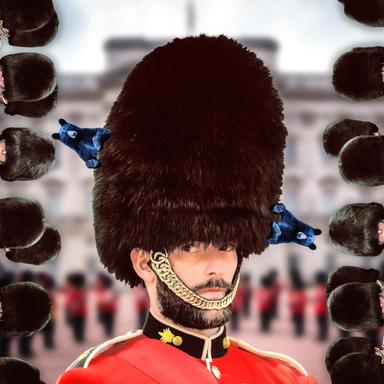
Wear a crisp, dark-colored suit and a white shirt. Keep your hair neat. Polish your shoes. You’re not here to express your individuality. You’re here to communicate your fitness to join a team, and like it or not, the rules of the game have been around since before Henry Ford was even a gleam in his father’s, uh, assembly line. This is etiquette on the level of saying “excuse me” when you sneeze. If you don’t know how it works, you either haven’t been paying attention or didn’t care enough to do a three-minute search. This isn’t about whether you think the rules are good. This is about whether you want the job. If you do—and it would be weird if you didn’t, since you’re applying for it—why on earth wouldn’t you do the stuff that maximizes your chance of getting it? Waiting 15 minutes for your $10 Frappuccino isn’t exactly a sacrifice that will live on in song.
COUNTERPOINT: The choreography of job interviews is stupid.
But the rules are so unbelievably dumb. Did you know that young married women applying for jobs in certain fields—academia is one—are routinely advised not to wear their wedding rings to interviews? Some interviewers will interpret a ring as a sign the applicant will want maternity leave within a year or two of landing the position and will then pass over the candidate. That’s illegal, of course, but you can get away with a lot of illegal shenanigans in hiring as long as you don’t ever state your real motives out loud. All this absurd prescripted theater serves only to make the whole job-seeking process more artificial and less human. Why can’t we just be people about it? You’re hiring me to fill in spreadsheets, something I can do perfectly well while sipping an iced coffee, as is evidenced by the 80 percent of your workforce that’s slurping an iced coffee every minute of every day. How are we ever going to improve this stultifying system if we don’t even try?
POINT: Job interview etiquette exists to filter out candidates who can’t adapt their behavior to workplace norms.
Oh, sure, and you’re the one who’s going to usher in this more humane new world, with your revolutionary soy-milk latte? To arms, comrades! I just hope you like being unemployed while you wait for utopia to arrive, because the job market is tight as hell right now, and you and your Liberty Leading the People to Dutch Bros act are going to lose the gig to someone with better impulse control. Working a corporate job means that one way or another, you have to adapt to the culture of the corporation, even when it’s annoying, even when you can’t see the rationale behind it. The job-interview etiquette checklist doesn’t exist because everything on it will factor into your work after getting hired. It exists to test whether you’re capable of adapting to the sometimes unintuitive norms of a professional environment. You’re not going to use much trigonometry as a dentist, but your dental school is still going to check your transcript when you apply, because your grades say something about you beyond “loves teeth.” Let’s hope they do, anyway.
COUNTERPOINT: Job interview etiquette exists to teach you to accept the arbitrary exercise of power.
Right, but as you say, the job market is tight as hell. The media talks nonstop about how “resilient” it is, but the number of openings keeps slipping—the most recent Labor Department stats, from July, show 200,000 fewer openings than economists had forecast—and both AI and the hundreds of thousands of people who’ve left the federal workforce in the wake of DOGE are intensifying the competition for the relatively small pool of available jobs.
And the tighter things get, the more employers feel entitled to demand from labor, and the less they feel obliged to offer. Expectations—for productivity, commitment, enthusiasm, availability—keep rising, and the pile of rewards keeps shrinking. People are at a breaking point. The idea that corporations would police something as tiny and harmless as a midday coffee—would literally turn it into a litmus test for whether you get to have health insurance—feels outrageous in a way that it might not have felt in 1959, when employees went home at 5 o’clock, had far greater job security than they do today, and could count on a pension after retirement.
This is a big reason the pro–iced coffee side got so worked up on social media: Interviews these days feel less like a process for selecting the best candidate and more like a preliminary exercise in compelling long-term supplication. (Has anyone ever been interviewed by an AI recruiter and not felt humiliated on some level?) Surely that’s understandable! What’s less understandable is why the thought of iced coffee in a job interview made people on the other side so mad. It’s just coffee!
POINT: People are forgetting how to live in society.
It’s just coffee, but come on. Have you been outside lately? Have you maybe noticed that the bonds that make life in society possible are unraveling faster than your favorite influencer’s latest crypto scheme? People are straight-up walking around playing their phones on full volume without headphones. They’re doing it in bars and in waiting rooms. Spend an hour on the road and tell me drivers still care about the social contract; you can’t do it. Plane passengers are going feral. (And they’re doing it barefoot.) Sporting events are being ruined by their own crowds. Everyone has main-character syndrome. The average American seems to feel that no one else is entirely real and that any minor inconvenience is an intolerable affront to their liberty. If you care about basic politeness and decency, this is a deeply disturbing social transformation to be living through, especially since it’s impossible to say where it will end.
Zoomers bringing coffee to a job interview is a tiny thing from one angle. From another, it’s a symptom of the larger derangement of American life. Is it really so hard to understand why people got worked up about it?
COUNTERPOINT: Society is forgetting how to work for people.
Well, no, not when you put it like that. But the flip side of all the assertiveness and inconsiderateness and hair-trigger rage in the American atmosphere right now is that people are living under extraordinary pressure. Even the worst rudeness—the phone volume in waiting rooms stuff—has a quality of aggressively compensating for an unfamiliar precarity. Food, gas, and childcare are unaffordable, the people in power are working to disenfranchise us, and remote oligarchs have more influence over our lives than we do, but fuck you, I can still play this video wherever I feel like it. I’m still important. I still count. Police are wearing body armor and driving terrifying assault vehicles down Peachtree Lane, which makes me feel small and powerless, but fuck you, I can still assert my power by being unthinkably rude to this flight attendant. In acting this way, we’re essentially emulating the people with real power in this country, the Trump family and the tech oligarchs and their allies, who are allowed to behave in progressively more freakish and antisocial ways without ever suffering any negative consequences. And there’s not a chance in hell any of them would ever be pressured by social norms into forgoing an iced coffee.
It’s as if we’re living these days on two separate levels. On one, we’re more hemmed in, anxious, supervised, and threatened than we’ve ever been. On the other, we’re more demanding and obnoxious in the spaces where we feel temporarily free from those constraints. How you feel about the iced-coffee discourse is probably determined by which of those two contexts you find most upsetting. But the discourse is triggering for both sides, because the simultaneous diminishment of our civic dignity and collapse of our civic courtesy makes questions about how to behave intensely stressful.
Are leftist podcasters allowed to make misogynist comments? Is Caleb Williams allowed to cry after hurting his hamstring? Can Senate candidates have Nazi tattoos? Can Kristi Noem shoot a dog? Can Lane Kiffin do … any of the Lane Kiffin stuff that Lane Kiffin loves to do? All these questions point to a culture in which instability and resentment are feeding each other in a sort of fearful, hostile doom loop. To stay afloat, we have to act in the way the powers that be tell us to act. This makes us mad, which makes us want to behave transgressively. But it also makes us more resistant to transgressive behavior in others, unless we identify strongly with them—say, if we’ve cultivated a parasocial relationship with them online—in which case we see their transgressive behavior as an outlet for our own fantasies, and love it on that basis.
At bottom, however, the iced-coffee discourse is about whether you view society as a place for regular people to live or as a place for regular people to be oppressed by the powerful. If you side with the anti-coffee forces, you are siding with oppression. I’m sorry, but that’s how it is.
POINT: Aren’t you the one who said “It’s just coffee” like 30 seconds before turning it into a whole dissertation about America?
COUNTERPOINT: FUCK YOU [Plays YouTube at full volume in the library]
And the winner is … no one. This entire argument rests on a faulty premise. There are no jobs! You’re not getting a job interview. What you’re getting is prescreened into a “No” pile by an AI recruiter that scanned your résumé and somehow concluded you were a ring-tailed lemur—endangered and beautiful, yes, but deeply unsuited to a career as a UX analyst at Squarespace. If there were any jobs, my verdict is that you should absolutely be able to take an iced coffee into the interview because, oh my God, who cares? However, you probably shouldn’t do it, because maybe the interviewer does. Morals and tactics aren’t always aligned in this world, unfortunately. It would be nice to be able to act like a person all the time, but it’s easier after you get health insurance.