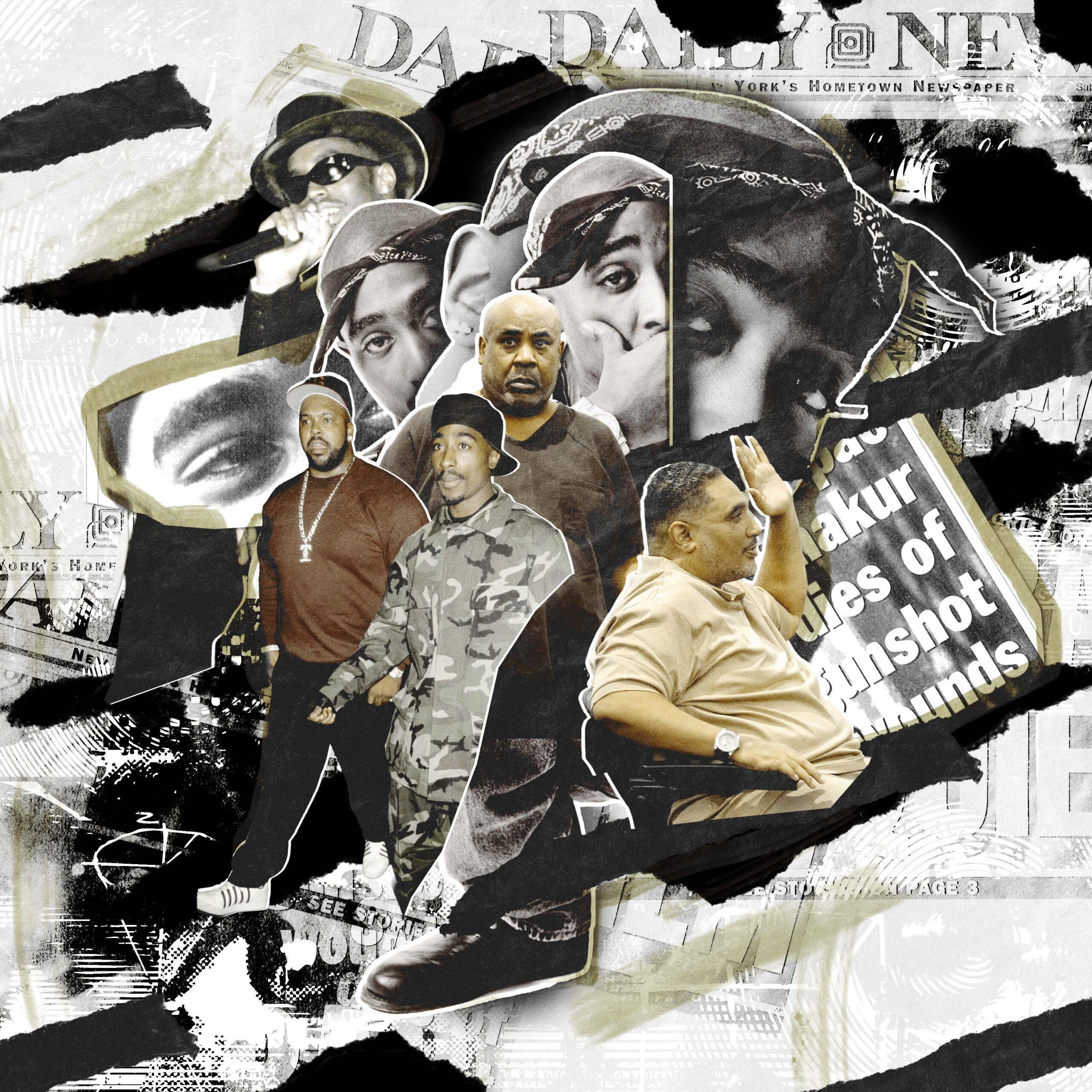
The Mystery of Tupac’s Death Didn’t End With a Verdict
Keffe D’s conviction of first-degree murder has only reignited interest in the conspiracies that have swirled around Tupac’s death for the past 30 years. That’s especially true among those closest to the case.The Mystery of Tupac’s Death Didn’t End With a Verdict
Keffe D’s conviction of first-degree murder has only reignited interest in the conspiracies that have swirled around Tupac’s death for the past 30 years. That’s especially true among those closest to the case.
When I reached Reggie Wright Jr. on the phone in early September, he had just finished uploading a nine-minute video about Tupac Shakur’s estranged father to his YouTube channel. “The phone rang right after I sent it,” Wright told me. “You know I’m gonna talk my shit.”
Wright, the former head of security for Death Row Records, was eager to discuss Billy Garland, a 77-year-old former Black Panther who had remained distant from his son for most of his life.
Garland had been posting regularly on Facebook to air his frustrations with the Las Vegas jury trial of Duane “Keffe D” Davis for his role in the shooting of Shakur. On August 31, Davis was convicted of first-degree murder with the use of a deadly weapon, although the prosecution did not accuse him of pulling the trigger. In many of Garland’s posts, he would make cryptic references to Wright, who testified during the trial that Shakur’s second security guard had called out of work on the night of Tupac’s murder. Garland’s implication was that Wright had knowingly sent Shakur into a dangerous situation without having enough security.
“KEEFE D WASN’T IT ….. DEATH ROW KILLED TUPAC SHAKUR,” read one post from Garland. “Reggie Reggie Reggie … roll your fat azz over there and sit next to Keefe you allegedly guilty shyster MF,” he wrote on August 26.
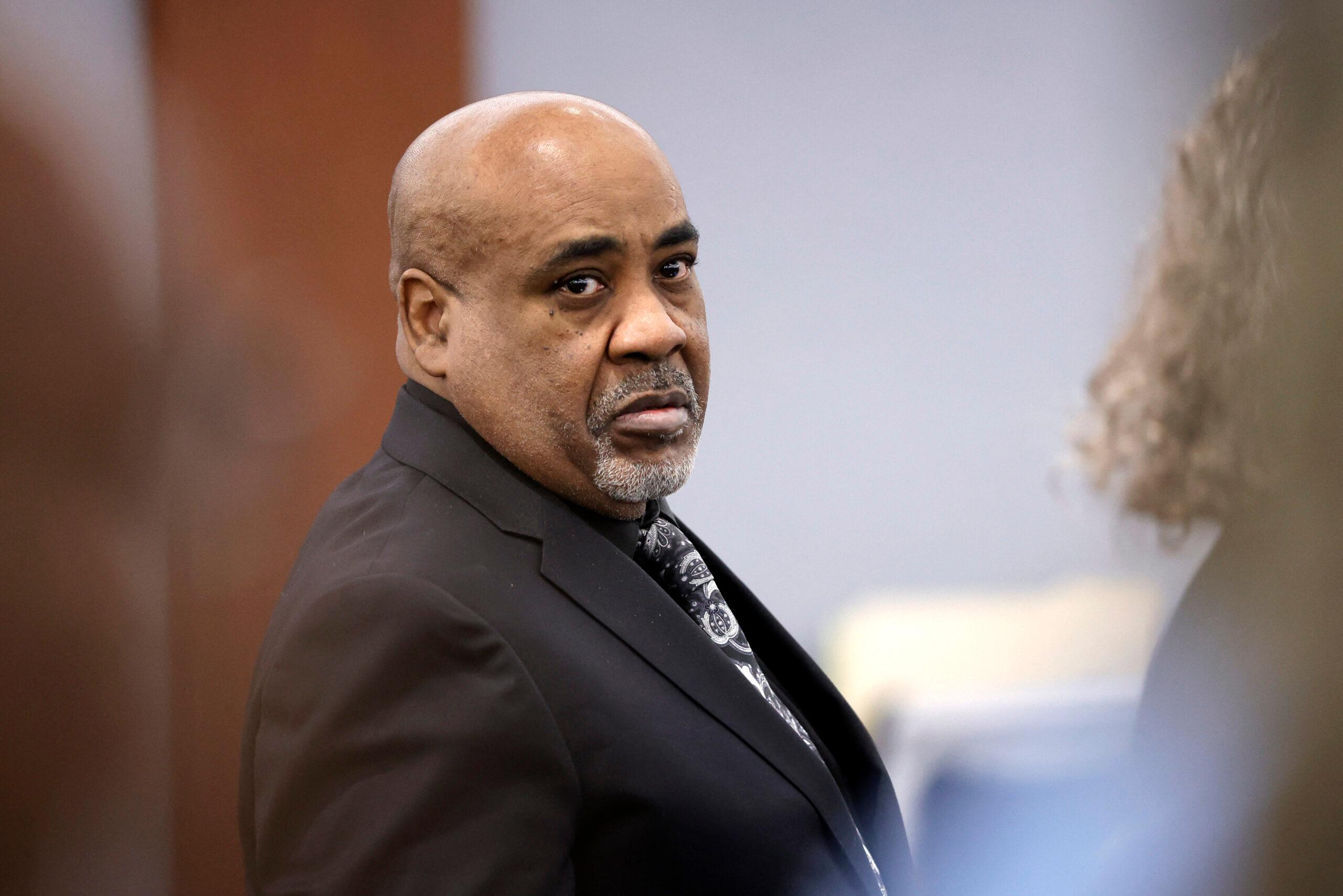
These sorts of decades-old accusations have long put Wright, a former Compton cop, near the center of many conspiracy theories about who wanted the iconic rapper dead. And Garland, seeing Wright in court testifying against Davis, brought those up again.
“Prosecutor presented questionable policemen, some corrupt some not, presented questionable individuals who made money off of the miss representation of the truth,” Garland wrote in a Facebook post on August 28. “WHERE’S THE TRUTH WHERE’S JUSTICE?”
Wright, who’s been running various websites and YouTube channels about his days with Death Row for more than a decade, has regularly clashed with people who’ve spread those accusations. He says it’s merely one of the costs of telling his own stories about Shakur and Death Row Records. In this case, of course he was going to respond.
In a video titled “Billy Garland’s Own Family Testified Against Him for Abandoning Tupac!” Wright focused on Garland’s failed attempt in 1997 to claim half of Shakur’s estate. “Why would you, you know, disrespect Tupac’s father?” Wright said, asking the question viewers might have for him near the start of the video. “Well, number one, he was the one who started it.”
“A sperm donor … that’s all he will ever be,” Wright continued in the video, echoing a description repeatedly used by Shakur’s mother, Afeni. “He’s always posting all of these negative, anti-government rants. … You’re just a conspiracy, ex–Black Panther that’s just with all the bullshit.”
I feel vindicated. You’ll always have conspiracies and people with their own opinions. But it’s not my fight no more.Reggie Wright Jr.
In spite of that sneering response to Garland, Wright told me that his days of publicly going back and forth with conspiracy theorists were over. “I feel vindicated [by Davis’s conviction],” Wright said. “You’ll always have conspiracies and people with their own opinions. But it’s not my fight no more.”
A day later, Wright posted to YouTube an interview with James McDonald, a onetime associate of Death Row Records boss Marion “Suge” Knight, who was in the same car as Shakur when the rapper was killed. In a video Wright posted the next day, he addressed a series of incendiary claims made by Gene Deal, a former bodyguard for Bad Boy Records, the primary competitor to Death Row in the 1990s. Despite what Wright told me, his channel remains as active as ever.
If people thought that a guilty verdict in the Davis case would mean that this story was over, they were wrong. I had suspected this long before the trial, given the accumulated years of grievances, beefs, and conspiracies that have flourished since that chaotic, bloody scene in Las Vegas on September 7, 1996.
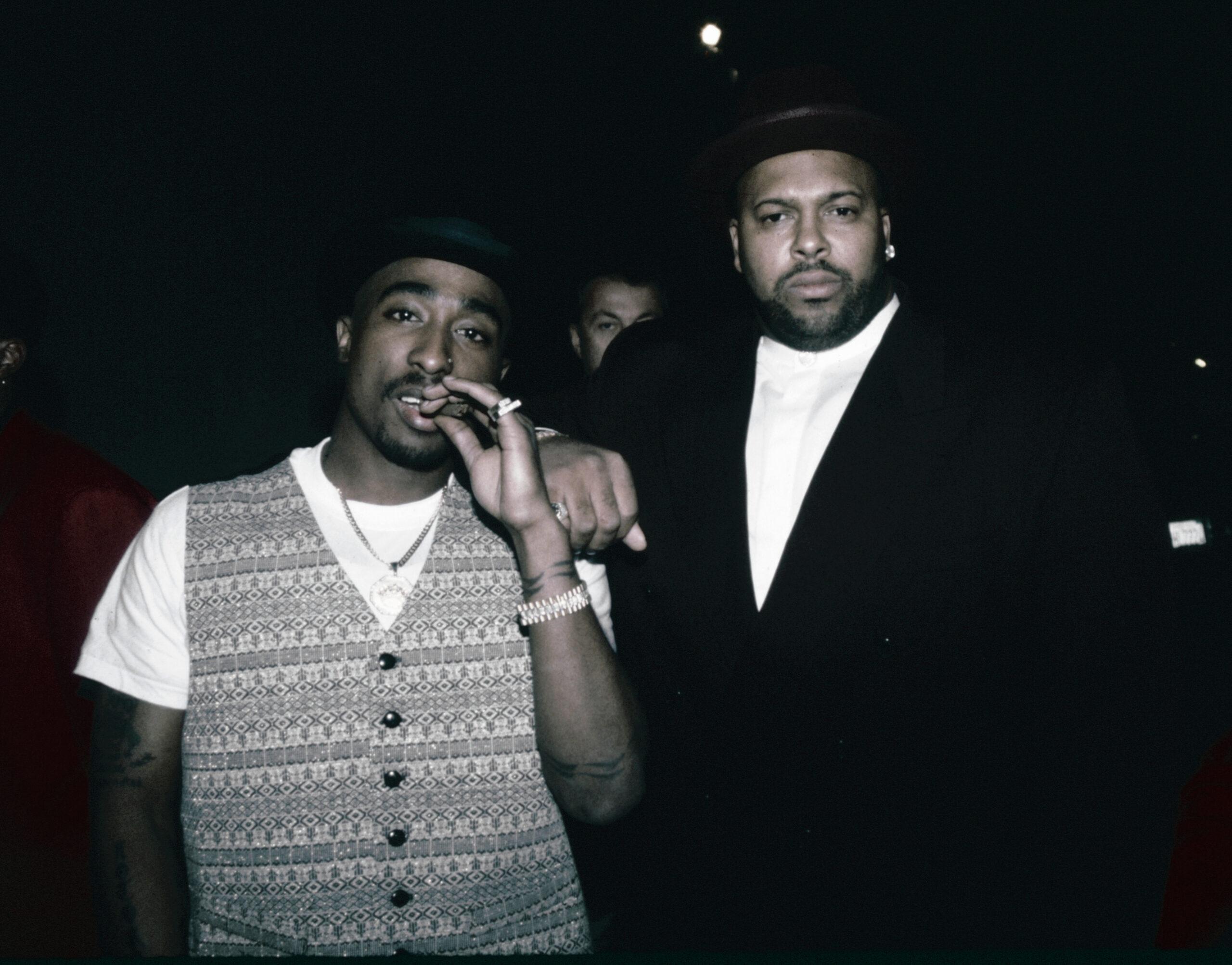
Speculating about Shakur’s death has been a steady and lucrative business for the past 30 years, elevating distant family members and bit players at Death Row and Bad Boy into authorities and celebrities in their own right. Over that time, dozens of books, documentaries, and movies have attempted to grapple with the death of Shakur—even the 2021 film City of Lies, starring Johnny Depp and Forest Whitaker, which Richard Roeper of the Chicago Sun-Times called “a valuable and somewhat illuminating look back” at the murder.
For many, the sight of the 63-year-old Keffe D—now fleshy and feeble, weakened by a recent bout with colon cancer—facing legal consequences after his brazen publicity tour about Shakur’s killing is the final chapter in one of the most enduring mysteries in hip-hop and American celebrity.
But for those like me, who have followed the case for years, it’s merely the latest inflection point in a tragedy that is poised to outlive everyone who still has a story to tell—and sell—about Shakur.
During an interview for Slow Burn: Biggie and Tupac, a podcast I worked on for Slate magazine, the former detective who got a confession from Davis in 2009 told me that “there will never be any judicial closure” in the murder investigations. That was in the summer of 2019.
I recently followed up with Greg Kading, who had retired from the Los Angeles Police Department in 2010 and released the book Murder Rap: The Untold Story of the Biggie Smalls and Tupac Shakur Murder Investigations a year later. “Obviously I was proven wrong,” Kading told me in early September. “That’s a good thing. … Anytime somebody gets convicted of a crime they probably committed, there’s a sense of justice.”
Now 63, Kading is as responsible as anyone for the explosion of the Tupac and Biggie media-industrial complex. His self-published book made evidence from the investigations into the rappers’ slayings public and put forward his belief that then–Bad Boy Records CEO Sean “Puffy” Combs had offered Davis $1 million to kill Shakur and Suge Knight. According to Kading, Combs wanted to end their bullying and threats following the November 1994 shooting of Shakur in New York, which Tupac blamed on Biggie, Combs, and Bad Boy. (Combs has denied that he was responsible for either shooting, and there is no known evidence other than Davis’s version of events to show that he was involved in Tupac’s death.) “In this escalating war of words and rhythm, dependable security was more than simply prudent. It was a matter of life and death,” Kading wrote in his book. “But Puffy might have inadvertently ramped up the risk … by reportedly choosing sides in another long-running gang conflict, this one between L.A.’s notorious Bloods and Crips.”
Kading’s book also stated that Davis, a longtime member of the South Side Compton Crips, had cooperated with investigators who were looking into the killing of Tupac’s chief rival, Christopher Wallace, a.k.a. the Notorious B.I.G. As part of government assurance for consideration of immunity in a 2008 drug case that could have sent him back to federal prison, Davis denied involvement in Wallace’s death but disclosed for the first time his role in the shooting of Shakur.
Davis has recited virtually the same story ever since: He says he went to Las Vegas to party with his wife and a crew of Crips, including his nephew Orlando “Baby Lane” Anderson, and to watch the Mike Tyson–Bruce Seldon heavyweight championship bout at the MGM Grand. Minutes after Tyson knocked out Seldon in the first round to reclaim the title belt, Shakur, Knight, and a group of Death Row affiliates and Bloods gang members confronted Anderson on the casino floor. A member of Tupac’s entourage pointed out Anderson as one of the Crips who’d recently robbed him of a Death Row medallion at a Los Angeles–area mall. Shakur burst into action, rushing over to Anderson and knocking him to the ground with a punch before the rest of his crew joined in the beatdown. They fled before anyone could be apprehended, and the beaten Anderson declined to cooperate with police or hotel security.
“We couldn’t let no record company studio gangsters do us like that,” Davis wrote in his 2019 memoir, Compton Street Legend. “Had they lost their fuckin’ rappin’ ass minds? On top of that Puffy had already talked to me about helping him out with the problem he was having with them niggas—that was a double whammy!”
Davis says that his crew decided to track down Shakur and Knight at a Death Row Records after-fight party at a club owned by Knight. Per Davis, they met up with a Combs associate—Eric “Von Zip” Martin, a powerful Harlem drug dealer and hustler—who handed them a .40-caliber Glock and said, “It’s time to get the money.”
According to Davis’s telling, he sat in a van with three other South Side Crips, including his nephew, as they went out seeking retribution. After waiting for more than an hour in the back parking lot outside Knight’s club, the group got tired and climbed into a white Cadillac to go buy some alcohol. Following their trip to the liquor store, Davis says they happened to see Shakur and Knight in a black BMW 750iL at a nearby intersection. Shakur, he says, was hanging out of the passenger side window and waving to screaming fans.
In some versions of the story, including in his book, Davis doesn’t name the shooter. But during interviews with investigators, including Kading, he said that Anderson was the one who took the Glock and shot into the BMW. Shakur was hit four times and died from his injuries a week later, on September 13, 1996. He was 25.
“The moral of the story,” Davis wrote in his memoir, “real Gangsters, are nothing to fuck with!”
For many, the most extreme possibilities were more acceptable than the alternative: Tupac couldn’t have died over something as trivial as street justice.
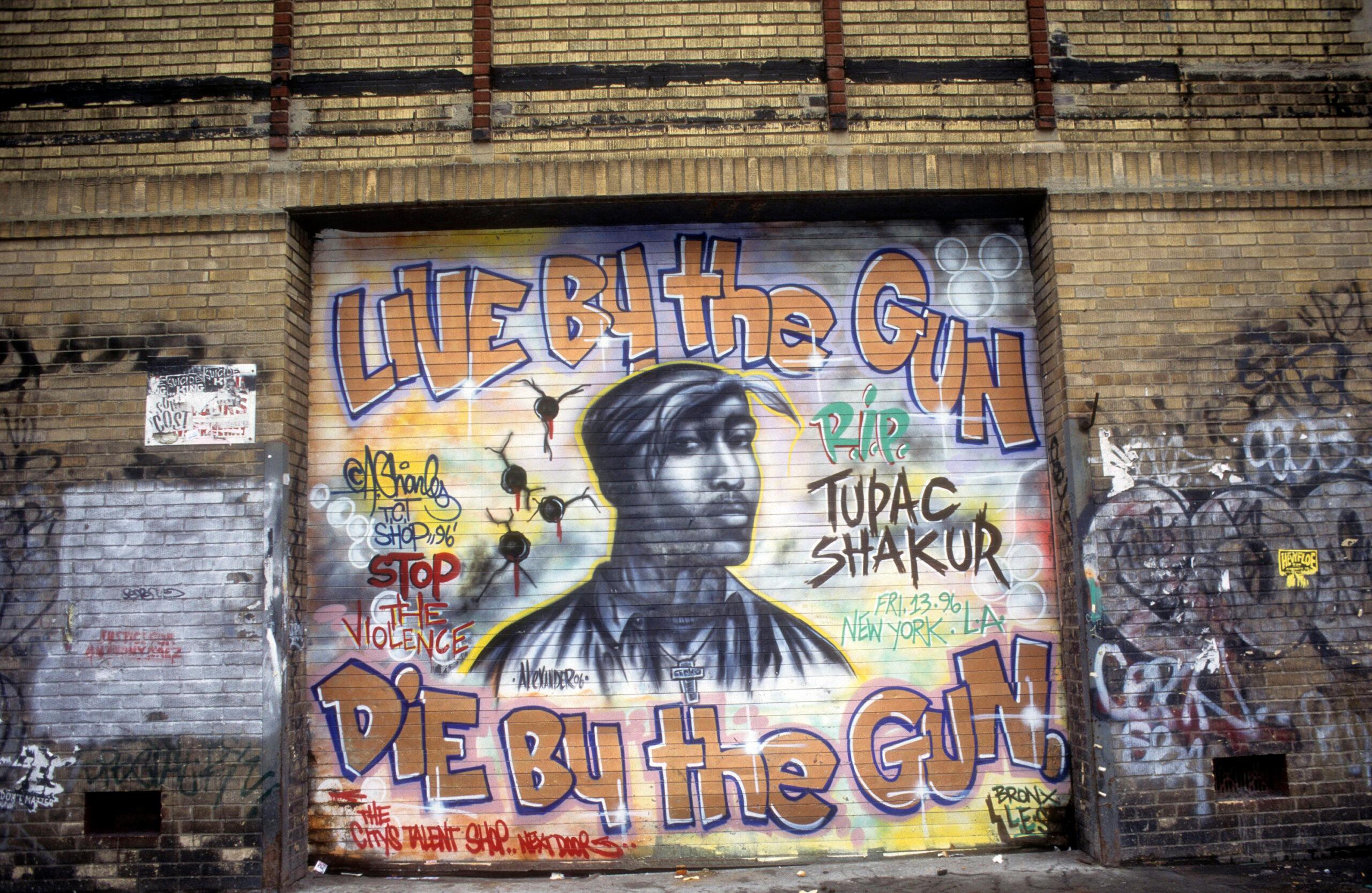
In the days, weeks, and years to come, conspiracy theories filled the information void as authorities failed to make progress on Shakur’s case and then Wallace’s death in a drive-by shooting six months later in Los Angeles. Some people believed that Knight had Shakur killed because he had recently fired Death Row’s attorney and was preparing to leave the record label, a suspicion that also implicated security chief Reggie Wright Jr. Others clung to more far-flung ideas about Shakur faking his own death and moving abroad or the government having him assassinated because of his growing public influence and his Black Panther roots. For many, the most extreme possibilities were more acceptable than the alternative: Tupac couldn’t have died over something as trivial as street justice.
At the time of his death, Shakur was one of the bestselling and most influential rappers ever. A handsome, charismatic star, he had already headlined a couple of movies—including 1993’s Poetic Justice with Janet Jackson—and was fielding more Hollywood opportunities. He had been regularly featured on the covers of newspapers and magazines, from The New York Times Magazine to Rolling Stone. He was briefly romantically linked with Madonna. He walked the runway for fashion designer Gianni Versace alongside his girlfriend Kidada Jones, the daughter of Quincy Jones, for Milan Fashion Week.
In only a few years, Shakur had moved far beyond his itinerant, poverty-stricken childhood. He was one of the most famous people in the world, and his career was still in its adolescence. And then, just like that, his life was over.
In a way, Davis’s two-week murder trial was a testament to the devastating mortality of people who once seemed larger than life. The downtown Las Vegas courthouse served as a reunion of sorts, where those who’ve nursed their share of this epic story—whether in books, documentaries, podcasts, or YouTube videos—came looking for the judicial closure Kading once said would never come.
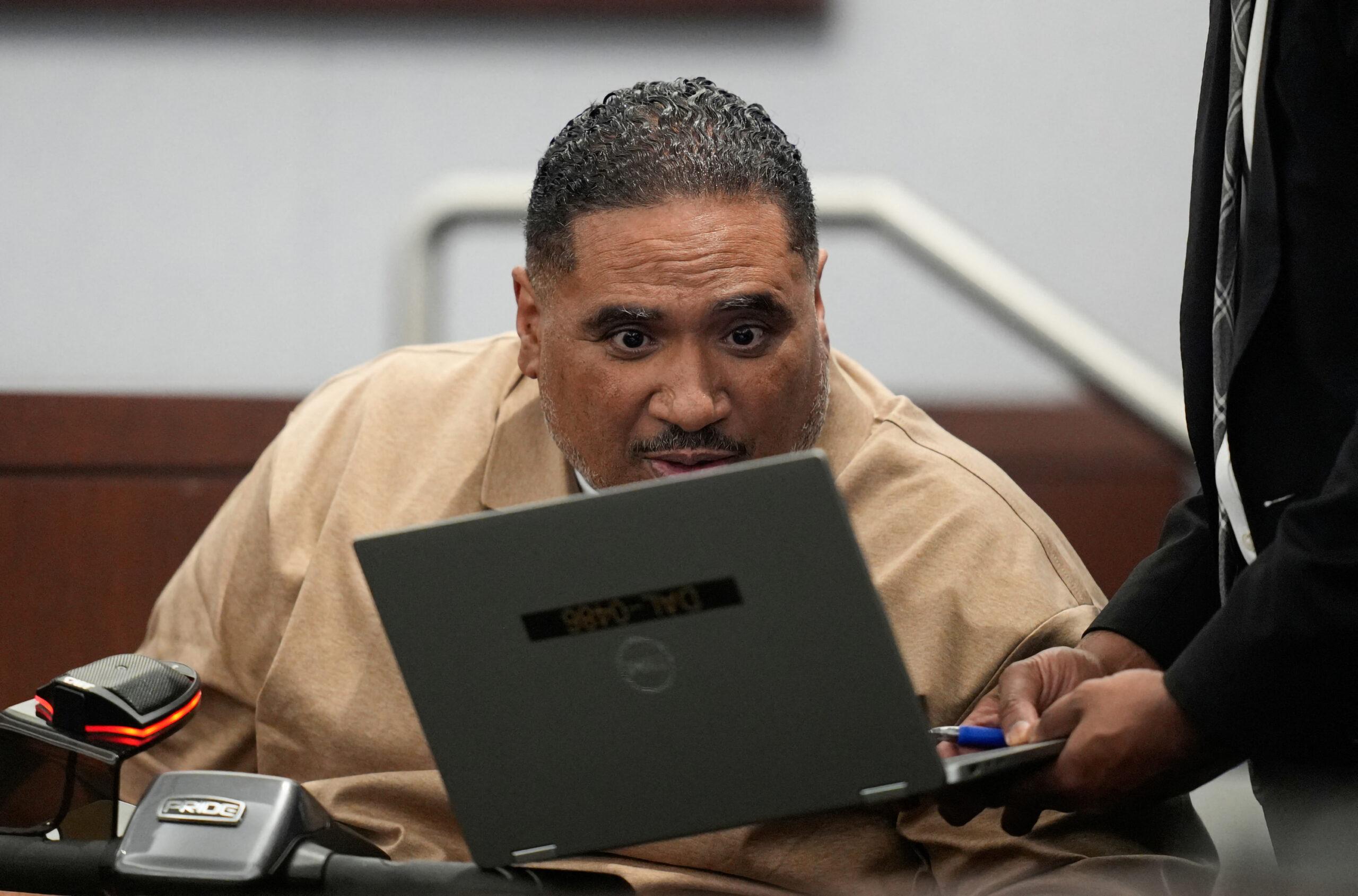
The fearsome gangsters who survived the Compton street wars of the 1990s are now spectacles-wearing grandfathers with gray streaks in their beards, some with rotting teeth. Many others were killed before they reached middle age. Most of the detectives who’d worked the case are long retired. Wright has been hobbled since a bout with long COVID in 2020; he testified from his electric scooter rather than from the witness stand.
And the main characters of this tragedy are all inarguably worse off now: The rappers have been dead for 30 years, their families never got to enjoy the substantial wealth they generated for music executives, and their record labels’ owners (Knight and Combs) are both serving time in prison on unrelated charges. Davis is the only person who was in that Cadillac who’s still alive today—and he’s also heading to prison.
“It speaks to the mundanity of the moment,” Dan Charnas, a professor at NYU and the author of four books, including The Big Payback: The History of the Business of Hip-Hop, told me, “that [Shakur’s] killing was not the result of some evil business machination of Suge Knight. That it was not the result of the FBI and the COINTELPRO program coming after him.
“That it came because Pac was acting like a knucklehead and he got real repercussions from it. Needless repercussions.”
Now retired from law enforcement for 16 years, Kading looks forward to moving on from the case that defined his life’s work. He told me that he paced around his living room when he heard that the jury had come back with a verdict in Davis’s trial.
“My son [was] standing there with a magnum full of Champagne,” Kading said. “The moment they said, ‘We find the defendant guilty,’ that bottle popped.”
Kading has no illusions that Davis’s conviction will answer all the questions—or quell all the conspiracies—surrounding the deadly rap beef. “It would be great to see closure in Biggie’s [case], too,” Kading said. “If it wasn’t a celebrity case, they would have closed it already based on what the investigators know.”
Finally, I asked Kading about Davis’s yearslong insistence that Combs had hired him to kill Shakur and Knight. Combs is currently serving a 50-month sentence at FCI Fort Dix in New Jersey for his conviction in 2025 on two counts of transportation to engage in prostitution. He’s scheduled to be released in February 2028. Could Combs, I wondered, ever face prosecution in the murder of Shakur?
“The family has to decide how far they want to push it—it’s really up to them,” Kading told me. “I think Vegas is pretty satisfied with the results they got so far.”
For Shakur’s family and friends, Davis’s conviction last month was an important milestone, but not an ending. After the verdict was read in court, members of Shakur’s family teared up and hugged one another and the prosecutors.
The family later posted a statement to social media saying they were “elated” and “relieved.” After thanking the jury, Tupac’s fans, and other advocates, they included the following, with the portion I’ve italicized in a red font: “While this verdict is decades in the making, this is not the end of the story.”
That part of the statement was left up to interpretation. Later that week, someone from the Shakur camp returned one of my messages seeking a comment about Davis’s verdict.
I answered the call and asked if there was a sense of closure. “That’s a bizarre take,” said the person, who requested not to be identified because the family is not making public comments at this time.
“This is the end of the chapter about Keffe D,” the source said. “But he made it very specific who put him up to doing it. Nothing in the trial indicates that he was the lone guy out on his own.”
The source declined to make further comment. There is no new information about whether prosecutors will ever pursue charges against Combs in Shakur’s death, and several messages left with the Clark County district attorney’s office went unreturned.
Kading says that he doubts prosecutors will ever bring charges against Combs, in part because of Davis’s weaknesses as a credible witness—his defense in court was that he was a prolific liar—and in part because there’s no known corroborating evidence that Combs ever had a relationship with Davis.
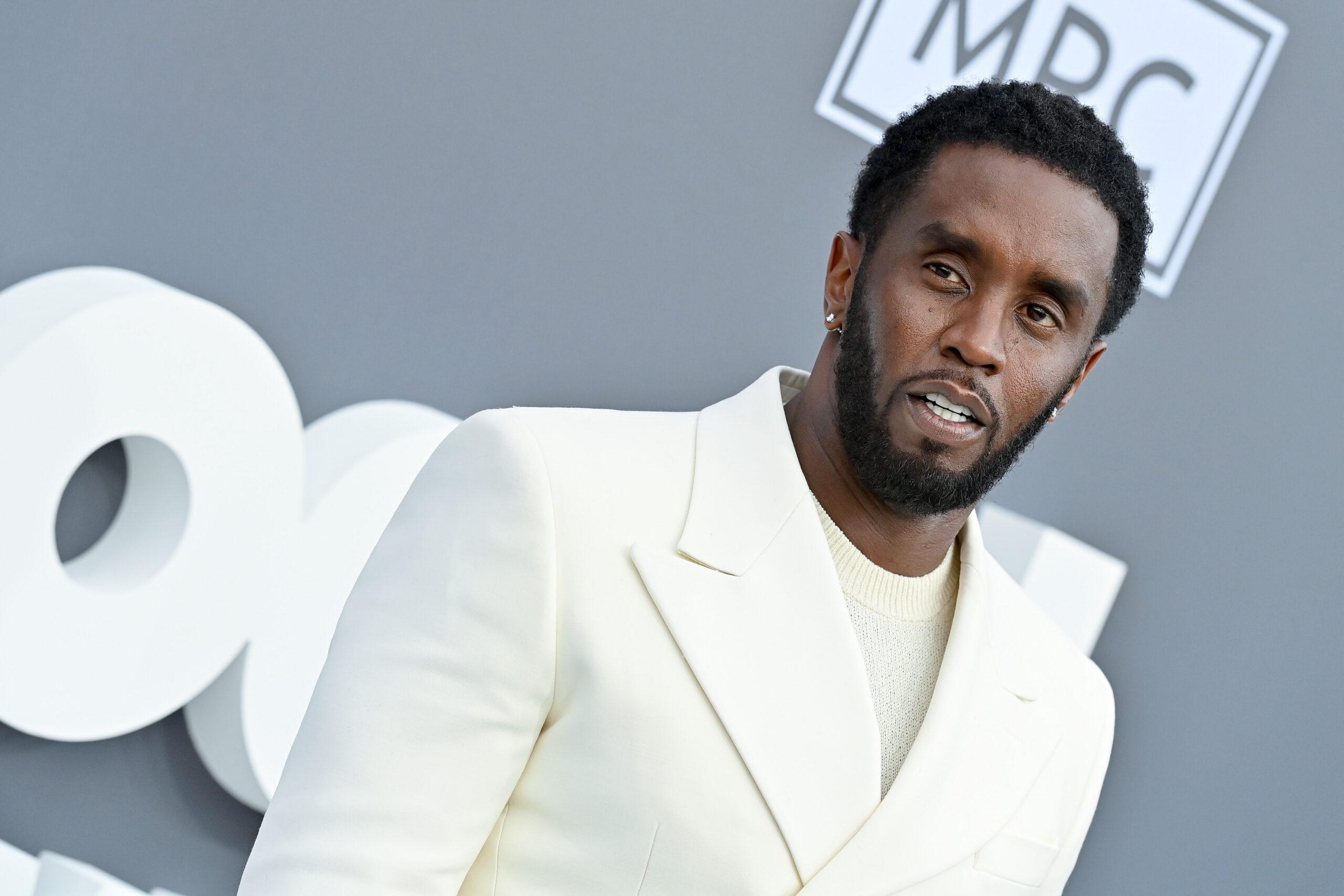
The best chance to get that evidence fell apart in 2009, when a meeting in New York between Combs associate “Von Zip” Martin and Davis—working as a confidential informant for a federal task force—didn’t yield any pertinent information. Martin died of cancer in 2012.
“I think Zip knew better than to talk to Keffe D,” Kading said. “That turned into a dead end for us, unfortunately. And nobody kept the ball rolling at the time when it probably could have led to something. The ball got dropped.”
Kading’s book about the investigation got turned into a documentary in 2015. The revelations in Kading’s work exposed Davis’s cooperation with authorities in a world where being a known snitch is dangerous. “Releasing the tape of our confidential session … jeopardized my life,” Davis wrote in his book, “and also put my family’s life in jeopardy.”
Faced with few other options, Davis decided to tell his own story. And he kept telling it over and over again. For pay.
When I called Davis for an interview in 2019, he politely declined, telling me that “I don’t do shit for free, homie.” Alex Alonso, a sociologist who studies gangs in Los Angeles and hosts the StreetTV YouTube channel, told me that Davis once asked him for $7,000 for an interview.
Davis gave his first public interview in 2018 for the BET series Death Row Chronicles. “I’m the only one alive who can really tell you the story about the Tupac killing,” Davis said on camera, also revealing that he had cancer. “I have nothing else to lose. All I care about is the truth.”
Davis kept up his media tour for the next five years, until September 2023, when authorities finally showed up at his new home in Henderson, Nevada, which is in the same jurisdiction as the murder. “You can’t be writing books and doing interviews—Clark County is getting calls about that,” said Alonso, explaining how Davis put himself in legal peril. “At some point, Clark County [had to] do something.”
In one of the final on-camera interviews used to charge him in connection with Shakur’s murder, Davis talked to YouTube journalist DJ Vlad about the possibility that his indiscretion might land him back in prison someday. He had already served 10 years in prison for two separate drug-dealing cases, plus other shorter stints in county jails. Going back, Davis said, would be no big deal.
“Whatever life got to offer me I’m going to handle it,” Davis said in 2023. “I’m a God-fearing man. … If they want to put me in jail for life, it’s just something I got to do. It ain’t like I’m scared of jail or nothing.”
Now Davis faces life in prison. His sentencing hearing is scheduled for October 13.
Even after his conviction, Davis is still talking. He’s done a number of interviews from behind bars, maintaining his innocence and expressing hope that he might get the conviction overturned on appeal.
“Shit, I ain’t worried. I’m getting out on an appeal,” Davis told The Hollywood Reporter on September 4. “I’m a good man, man. I’m a good person. I’m not no fucking killer.”
Instead of putting the case to rest, Davis’s conviction has reignited interest in it and the various conspiracies that have swirled around the shooting for 30 years. And it’s been the survivors who have had a hand in stirring those up.
In a recent sit-down interview with YouTube creator Mighty Bolton of The Art of Dialogue, Shakur’s father repeated claims about a government-led conspiracy driving the murder of his son. “I always believed it was Death Row and the people involved in Death Row, with the federal government’s involvement,” Garland said, “because they didn’t want Tupac to grow. They didn’t want him to become bigger than what he was.”
Instead of putting the case to rest, Davis’s conviction has reignited interest in it and the various conspiracies that have swirled around the shooting for 30 years. And it’s been the survivors who have had a hand in stirring those up.
In late August, the 61-year-old Knight called TMZ from the California state prison where he’s nearly a decade into serving a 28-year sentence for voluntary manslaughter. Knight claimed that Davis’s defense team offered him $1 million to testify during the trial that Keffe D wasn’t in the car that shot at Tupac, but he said he refused, explaining that his loyalty to Shakur “can’t be compromised.” (Davis’s attorney has denied Knight’s claim about bribery.)
Days later, the Las Vegas Review-Journal reported that new audio of Knight talking with an investigator about the case in 2024 had emerged. In that interview, Knight reiterated his unwillingness to testify but hinted that Davis wasn’t the only one involved in Tupac’s killing. Asked who else was, Knight laughed and said: “He’s a dancing dude, the guy who’s going around raping everybody right now.” That, of course, was a not-so-subtle reference to Combs. (While Combs has been named in dozens of accounts of sexual assault and has more than 70 civil lawsuits filed against him, he has not been criminally charged with rape.)
A couple of days later, Wright—once Knight’s right-hand man and security chief—was ready with a YouTube response of his own. “Who didn’t know that Suge was a rat?” Wright said. “This was the guy hollering Tupac was still alive. Suge is just a fucking clown … and just talking shit about everybody because he think he got a voice.”
As it turns out, a courtroom could never resolve a 30-year saga that now belongs to and sustains so many people. Davis’s conviction is just another chapter in a story about a generation-defining death that will be told forever.