How ‘Is This It’ Launched the Legacy of the Strokes
In an excerpt from his new book, ‘Is This It,’ Steven Hyden looks back on how the New York band’s debut, and the laudatory reactions to it, fit into the early-2000s rock landscapeHow ‘Is This It’ Launched the Legacy of the Strokes
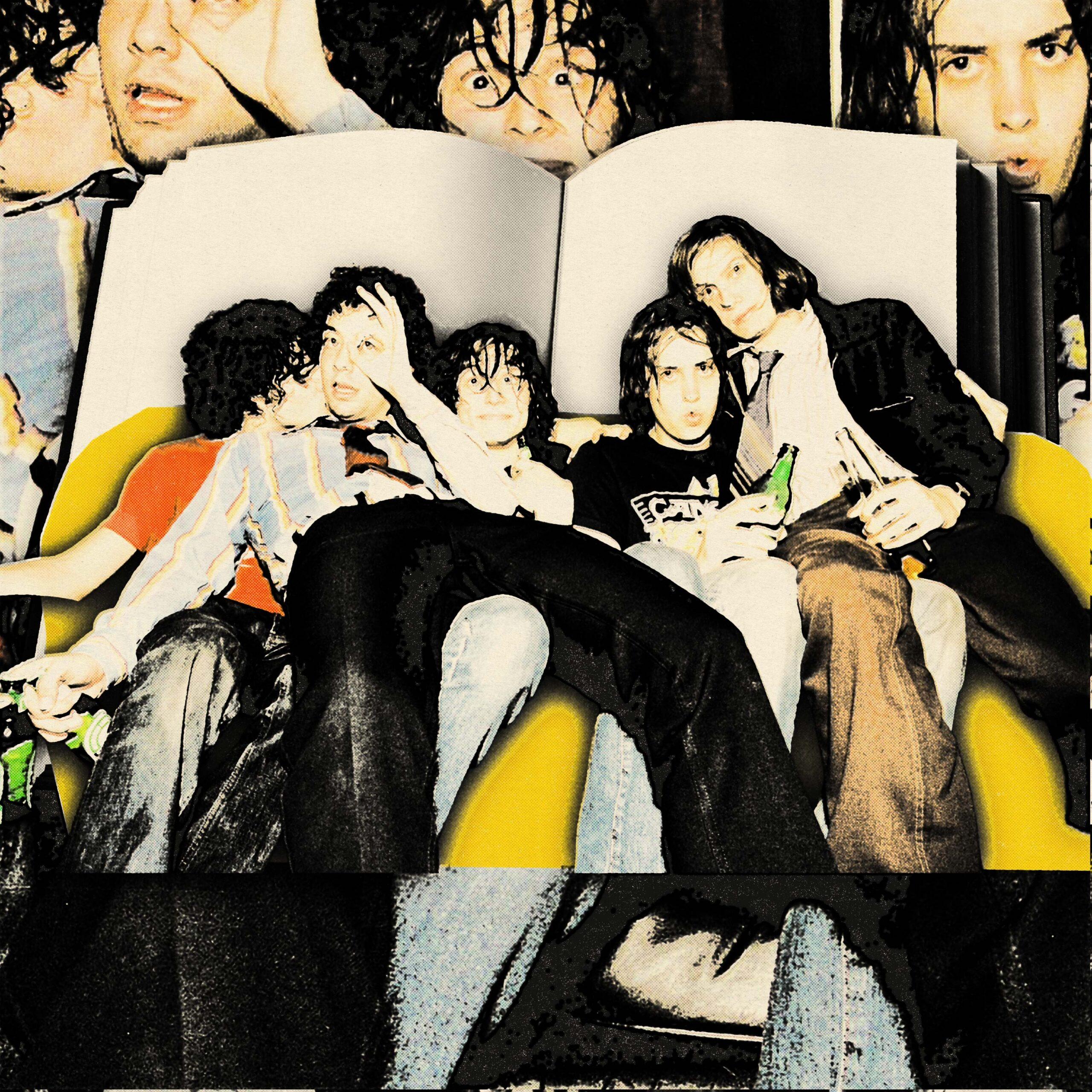
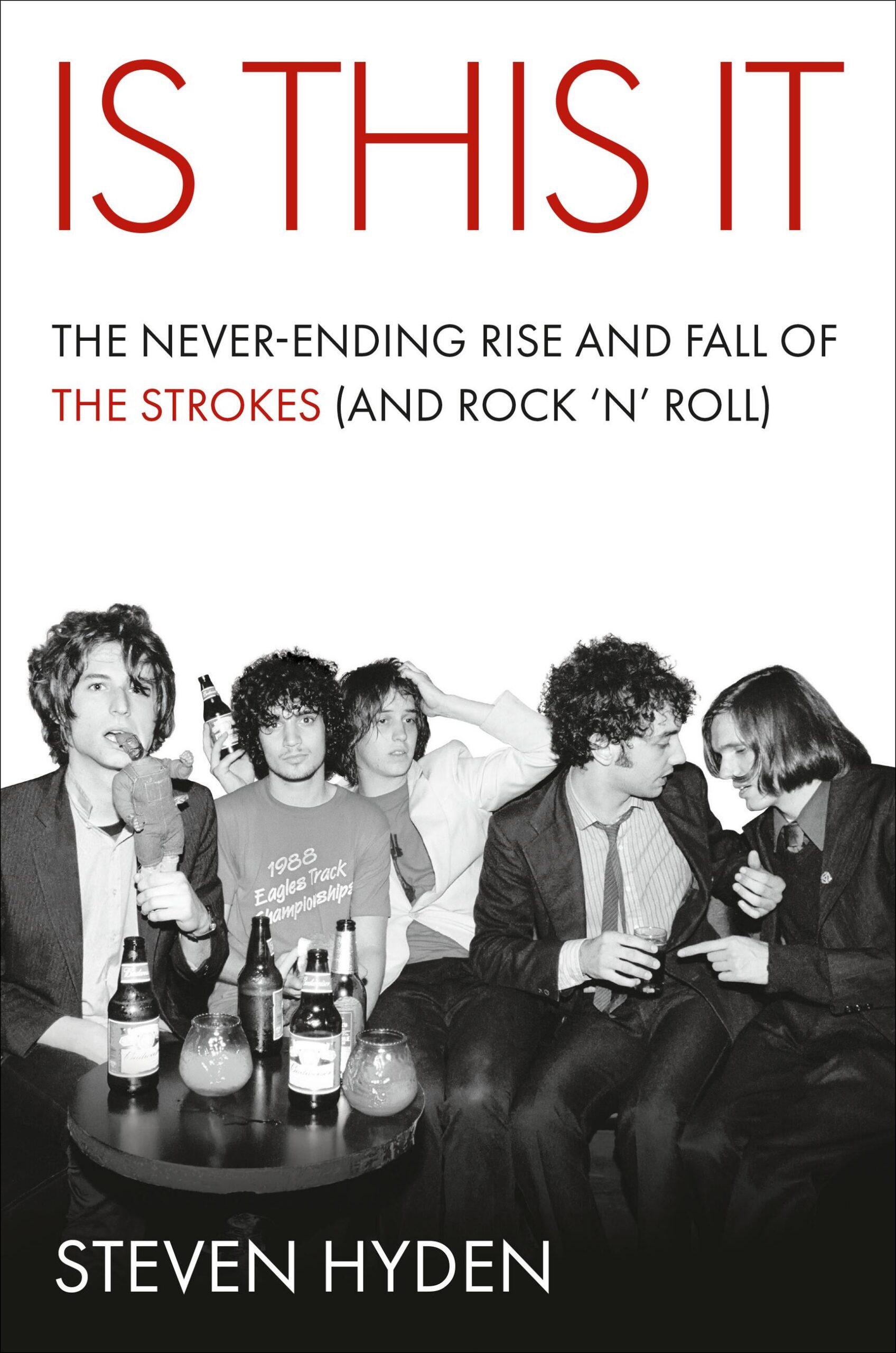
In an excerpt from his new book, ‘Is This It,’ Steven Hyden looks back on how the New York band’s debut, and the laudatory reactions to it, fit into the early-2000s rock landscapeThe Strokes were poised to become the next big American rock band, and although they never quite achieved the heights that many predicted they would, they still maintain an allure that few bands have been able to cultivate in the 21st century. In his new book, Is This It: The Never-Ending Rise and Fall of the Strokes (and Rock ’n’ Roll), out Tuesday, Steven Hyden examines the band’s longevity and where they fit in among their peers, as well as in the greater history of rock. In this exclusive excerpt, Hyden looks back at the initial reception of the Strokes’ debut album, Is This It, and the state of the rock landscape in the early aughts.
At the beginning of the 2000s, the people paid to professionally assess such matters agreed that the Strokes were the first culturally significant rock band of the 21st century. But by the end of the 2000s, that no longer seemed true. They were, in fact, the last significant rock band of the 20th century.
I don’t mean that literally, obviously. The Strokes are literally a 21st-century band. But they are spiritually part of the 20th century. They represent the values of that time, they take the form of a band that was relevant in that era, and they function as a capstone for that bygone culture. Their milieu (New York City, dive-bar culture, “the underground”), the way they dressed (leather jackets, Chuck Taylors, skinny ties), their recreational activities (smoking, drinking, smoking and drinking in the vicinity of beautiful women), their mode of musical attack (guitars, distorted vocals, songs about straight young white male ennui)—it all pointed to a set of values and philosophies that were on the way to being marginalized. But this, again, is only clear in retrospect. In 2001, it was still too early to know how (or even if) the world was changing. This was the case in profound and world-shaking ways, as well as minor and barely perceptible ones.
The fate of the Strokes falls somewhere between those poles. When we talk about their story—which is essentially about the release of Is This It and its decades-long aftermath—what we’re really discussing is the last moment in human history when it was possible for a band like the Strokes to be looked at as saviors for modern music. It was the last time when any rock band was talked about that way. “The beginning of the beginning of the end of the beginning” is how Robbie Robertson describes the Band’s final concert in The Last Waltz. For a certain sort of transformational, hegemonic rock music that subsumes the mainstream from the margins, the Strokes are the beginning of the beginning of the end of the beginning.
Music writers made their case in the most strident fashion imaginable. “This is the stuff of which legends are made,” Rolling Stone declared at the start of their Is This It review. By the third paragraph, they called the Strokes “the best young rock band in America.” Pitchfork, the ascendent and snarky online foil to Rolling Stone, mocked this sort of “messianic” praise in their Is This It assessment. But the site ultimately surmised that the Strokes had made “a great rock record.” Spin magazine, whose writers were closer to the downtown sensibility of Is This It than either the more corporate Rolling Stone or the Midwestern Pitchfork, naturally adored the Strokes the most, dubbing them the “skinny-tied fab five … heralding a new era of sexy, cool rock ’n’ roll.”
Looking back, it’s easy to classify the initial response to the Strokes as nostalgia—for the cultural prime of rock music, for the evocative filth and creative vitality of New York City’s past, and for the intersection of those concepts. But nostalgia is not the right word. Not quite, anyway. It’s true that after September 11, the idea of a band that represented a bygone era in the history of New York City appealed to many listeners, particularly music critics prone to romanticizing the chic artiness of ’60s NYC and the grimy punk of ’70s NYC. But the longing for an iconic “lost” era does not explain the hope (nay, the expectation) that the Strokes could transcend their trad-rock trappings and become a genuine pop phenomenon. Is This It was not considered fodder for merely record collector types. If it had been, adjectives like “cool” and “sexy” would not have been omnipresent in Is This It’s reviews. (“Bearded” and “pot-bellied” would have been more sufficient.)
The reality of life in 2001 is that nobody knew what the world was about to turn into. We knew that September 11 was a tragedy. That was easy to discern in the moment. And we assumed that the internet was going to affect how we consumed media and therefore influence how we saw and understood the world. But there was no way to know exactly how it was all going to shake out. Out of necessity, we were forced to rely upon traditions, even the ones we might have suspected were no longer relevant. And we did this because the things that were going to replace those conventions hadn’t fully arrived yet.
This was true of all institutions, in wildly uneven and predictable ways. I will give you an example: In 2001, I worked for my hometown daily newspaper in Northeastern Wisconsin. It was a corporate-owned publication with a circulation of 50,000. Monday through Friday, the paper was printed at 11 a.m., and delivered by hand via low-wage (and mostly teenaged) workers to readers’ doorsteps by 5 p.m. On the weekends, the paper was distributed by 9 a.m. By the time it was read, the information in the newspaper was inevitably dated and therefore at least slightly inaccurate. (Or, sometimes, wildly inaccurate.) This undermined the validity of the whole operation: The news was not new. But nobody cared, because that’s how it was.
My paper also had a website, but it was treated like a digital version of the print edition. Stories went up at the same time of the day, around the time it was printed, and breaking news was rarely updated. People simply could not conceive of a newspaper that wasn’t static and continually augmented with the latest developments. Local readers did not expect this, and the reporters in the newsroom were not equipped to work that way. Even though the technology was there to produce a more dynamic website, the humans in my small Midwestern community had not yet caught up to the concept of “a more dynamic website.” We had the tools for surviving the future but no idea how to use them.
Something similar could be said about how the Strokes were written about upon the release of their debut album. Only instead of a disrupted media distribution network, this conversation centers on the destruction of the old rock continuum. The assumption that the kids who loved Eminem and Limp Bizkit could be converted into fans of the Strokes upon hearing Is This It seems preposterous now. And it should have seemed preposterous then, too. When Julian Casablancas met Nick Valensi and Fab Moretti while they were students at the Dwight School, a private Manhattan academy that, according to its website, prides itself on “igniting the spark of genius in every child,” they were drawn to each other by their love of guitar music amid a student body predominantly obsessed with hip-hop. They were grunge-loving refugees coming of age in a post-grunge moment, when the melding of metal and rap along with proudly adolescent and unashamedly manufactured dance pop music were setting the template for the youth music of the future. This trio’s “spark of genius,” meanwhile, was ignited by the Velvet Underground.
What sustained interest in the Strokes early on was the belief in cycles. If Nirvana could overthrow Poison, the thinking went, then the Strokes could upend Limp Bizkit. This, again, only sounds irrational decades later. What’s apparent now is that Nirvana always had more in common with Poison than the Strokes had with Limp Bizkit. Kurt Cobain was a suicidal nonconformist from the state of Washington who tortured himself with Calvinist punk-rock ethics to which no successful musician could ever fully adhere. Poison singer Bret Michaels was a dry-humping hornball from Pennsylvania who wrote tender ballads about horticulture. They are unlike in almost every way save for one shared attribute: They both loved the fourth Aerosmith album, 1976’s Rocks, an extremely evident influence on the music of Poison and a more subtle but no less profound blueprint for Nirvana. And that connective thread was enough to get fans of the hair-metal band to cross the bridge over to the grunge one.
The shift from hair metal to grunge can be described as a transition from a glossier form of ’70s-inspired guitar rock to a grittier phase of ’70s-inspired guitar rock. It’s like if Black Sabbath had hired Ronnie James Dio first, and then replaced him with Ozzy Osbourne, rather than the other way around. What seemed like a dramatic change at the time now reads as far less seismic.
There is no equivalent to Rocks that could bond Julian Casablancas to Fred Durst. The former attempted to break into MTV’s regular rotation by emulating Lou Reed’s late ’60s era, and the latter became a star after he did a sarcastic, baby-tantrum rendition of George Michael’s “Faith.” They don’t exist on a continuum. They come from completely different worlds.
When three-fifths of the Strokes congregated at the Dwight School in the mid-’90s, they aligned themselves with variants of the classic rock continuum—Nirvana and Pearl Jam, their boyhood favorites, and then the Velvet Underground and the Doors. Limp Bizkit, meanwhile, personified the music that came out after the mid-’90s. They had no use for the traditional rock continuum; their Lou Reed figure was Jonathan Davis, the lead singer of pioneering nü-metal band Korn. And that appealed to the other kids at Dwight, the ones the budding Strokes were rebelling against, as well as millions of less privileged young people throughout the country.
Of course, not even Limp Bizkit thrived all that deep into the aughts. By the mid-2000s, Fred Durst already seemed like a signifier of a distant and frivolous pre-9/11 era. (Over time he segued out of music and into a career as a surprisingly not-terrible filmmaker.) Limp Bizkit’s crash-and-burn was not entirely his fault, nor did it have much to do with the Strokes. Larger cultural forces were at play. And those forces led to the end of bands as we once knew them.
As anyone who pays even passing attention to modern music will tell you, bands (or groups, if we’re talking collectives that don’t play instruments) no longer are part of the cultural zeitgeist. Now, I want to be careful about how I word this, because generalists often make the case that “bands do not exist.” This is annoying, because it is demonstrably untrue. There are more bands on the planet right now than there have ever been. In your town, on the day you read this, there will be musicians performing together for paying customers. Depending on the size of your town, it might only be one band. Or it might be 27 bands. But bands do exist and a small but not insignificant percentage of them sustain careers.


I am not saying “bands do not exist.” I am saying something we all intuitively know, which is that bands do not attract the same attention they did in the old century. Set rock music aside for a moment. As late as the mid-’90s, groups were dominant across genres. In country, there were successful duos (Brooks & Dunn), trios (the Dixie Chicks), and quartets (Lonestar). In hip-hop, New York City produced a steady stream of iconic collectives: the Beastie Boys, Wu-Tang Clan, A Tribe Called Quest, De La Soul. In R&B, the decade was a golden age of popular female vocal groups, from En Vogue to TLC to Destiny’s Child. And in pop, the deluge of boy bands—most notably the Backstreet Boys and ’NSync and less notably 98 Degrees and LFO—helped to propel the music industry to record album sales.
But in the 21st century, groups have lost their cultural capital in all genres, a shift symbolized by Beyoncé and Justin Timberlake leaving their respective ’90s commercial juggernauts, Destiny’s Child and ’NSync, for successful solo careers in the aughts and beyond. Solo artists are easier to market as brands, and they are also less difficult to manage than the multi-headed mass of egos that is the typical group. And they translate better to how modern audiences view musicians.
There are many reasons for this—economic, technological, musical, and so on. But for now I want to focus on a matter of popular music philosophy, and how it relates to collective cultural psychology.
We all know that technology designed to bring people together has actually isolated us, rendering tangible, real-life experiences as intangible, ephemeral stimuli flying by in our endless social media scrolls. Structures that encouraged in-person group identities have been diminished in favor of the constructed individual avatars we propagate in the digital space.
Pop stars used to be celebrated for their exotic otherness; now their most relevant attribute is relatability. And it’s easier to relate to a person who is expressing their individual desires and problems, rather than a collection of people who have assembled for a common cause. And that’s because most of us never spend time hanging out with three or four friends at the same time anymore. The rock band used to reflect our own communal spaces. And I don’t think it’s a coincidence that rock bands started to fade when our communal spaces also became less foundational.
The Strokes are a quintessential rock band that arrived at a time when the public was just starting to be conditioned away from caring about quintessential rock bands. At first glance, they looked amazing. No stupid backward baseball caps, no white-guy dreadlocks, no dopey DJ in the background doing the wicka-wicka-wicka-wicka thing for no reason in particular. And that played a significant role in how they ultimately seduced me, nearly as much as the barrage of bangers from Is This It.
I got my first glimpse of them in the “Last Nite” video, and it was amazing how much they looked like a band that had been together for 20 years. There were five guys in the Strokes, just like there were five guys in the Rolling Stones. Even better, they were all standing in the right place. Julian didn’t look at all like Mick Jagger, but he instantly evoked the essential ingredients of an iconic frontman—he had style, he was aloof, he was (probably) intoxicated, and yet he (definitely) appeared to be in complete control of his surroundings. To Julian’s left was his onetime roommate and former boarding school chum, Albert Hammond Jr., the guitar player, the Keith Richards figure, the man gifted with perfectly coiffed curly brunet locks and a talent for deftly applying downstrokes to his Fender Stratocaster. To Julian’s right was Nick Valensi, the other guitar player, a finely cheek-boned lady killer who resembled the other guitar player in another crucial five-guy rock band, Izzy Stradlin of Guns N’ Roses. Next to Valensi was Nikolai Fraiture, a stone-faced bassist straight out of central casting from the Bill Wyman School of Stoic Timekeepers. Finally, there was the drummer, the curliest-haired moppet of them all, the man who literally put the “Fab” in “skinny-tied fab five,” Fabrizio Moretti.
What I didn’t realize at the time is that my reaction to the Strokes was rooted (at least in part) in transference. And it wasn’t just me. They looked like a band you already loved because … they looked like a band you already loved.
As the beginning of the beginning of the end of the beginning of rock bands that were given a major-label promotional push, the Strokes were too late to the party and also known for being too late. Their reputation as the band that did not save rock in the early aughts is, at least, a reputation. They were famous for not becoming as famous as rock writers expected them to be. It created a mythos around the Strokes at a time when most bands can’t sustain a mythos of any kind.
This piece has been lightly edited to fit the excerpt format.
Excerpted from Is This It: The Never-Ending Rise and Fall of the Strokes (and Rock ’n’ Roll) by Steven Hyden, published on September 8, 2026. Copyright © 2026 by Steven Hyden. Used by arrangement with Da Capo Publishing, a division of Hachette Book Group. All rights reserved.