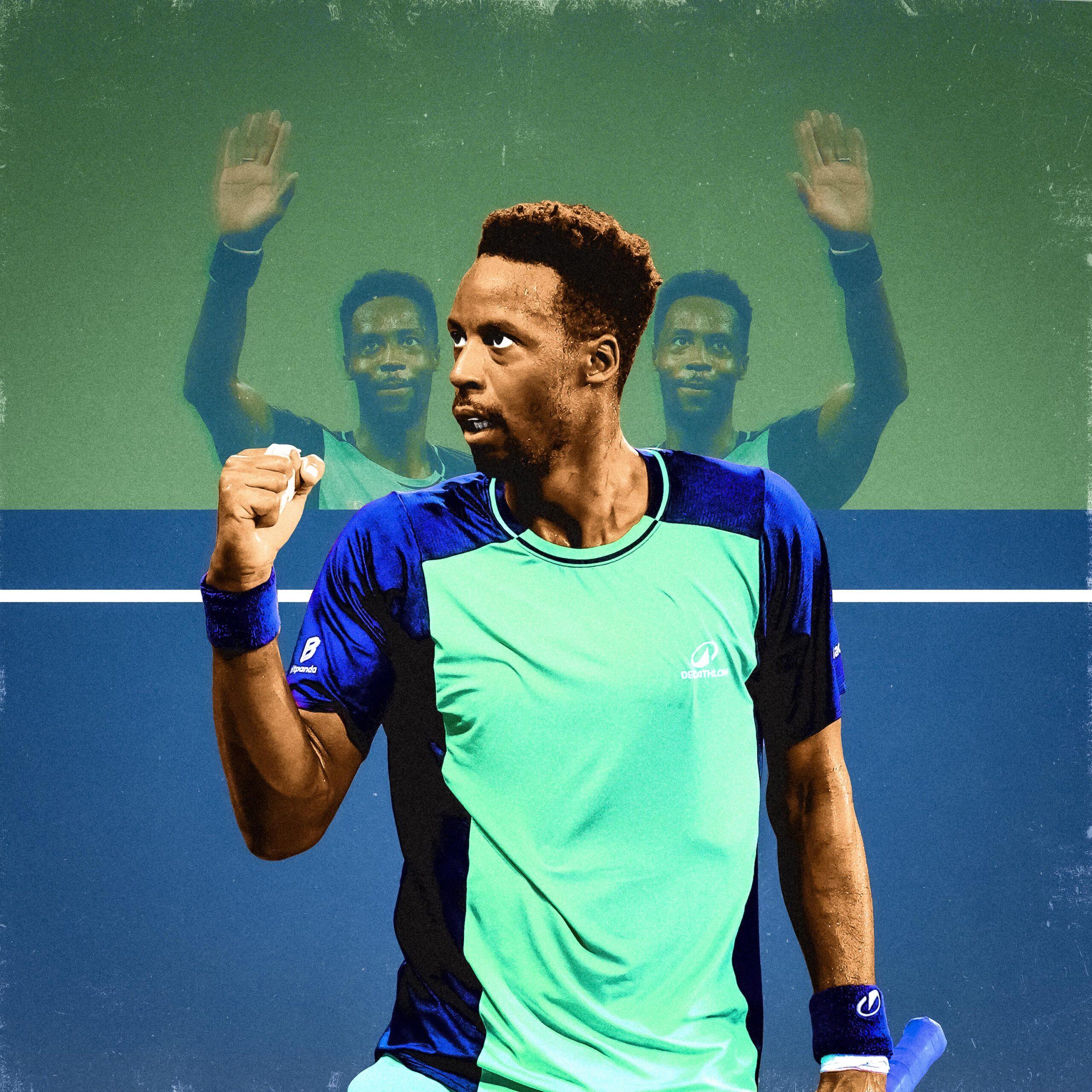

Gael Monfils stood at the center of Louis Armstrong Stadium as the New York crowd serenaded him with birthday wishes.
Monfils turned 40 on Tuesday night, which is an absurd age for any professional tennis player, let alone one whose career has been defined by athleticism and elastic movement. But that night at the U.S. Open, you couldn’t tell how old he was. In the opening match of his final Grand Slam tournament before retirement, Monfils gave the crowd a vintage performance. He tracked down impossible balls, unleashed sudden bursts of shotmaking, and theatrically played up his exhaustion between points. The match against Adolfo Daniel Vallejo was never particularly close on the scoreboard, but close matches have never really been the appeal of Monfils anyway. Rather, you watch him because of the feeling that any point of any match could become a highlight.
At one point during the fourth set, the camera found a fan holding a sign that said, in French, “20 years of chills … thank you for everything, Gael!” It then cut to Monfils, seated in his chair during the changeover with a soft smile on his face, absorbing the affection.
Monfils won that match, his 34th career U.S. Open victory, more than any other Frenchman. Two nights later, on Thursday, his Grand Slam career ended with a loss in straight sets to Learner Tien, a rising American who is half Monfils’s age. A month earlier, after beating him in Montreal, Tien had asked Monfils for his autograph.
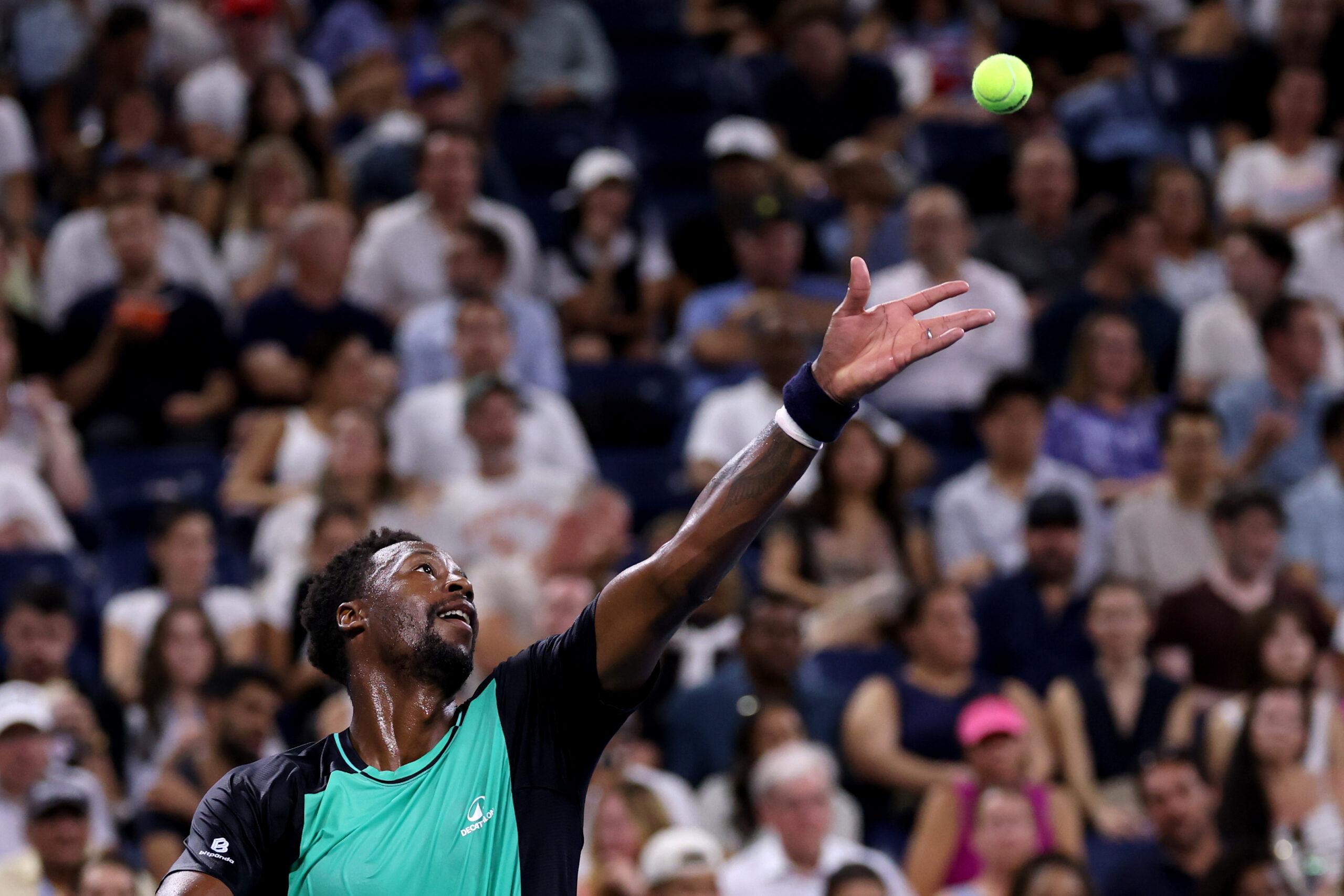
Gael Monfils serves against Learner Tien at the U.S. Open
Tien is one of many young players who have been inspired by Monfils. “When I was young,” 23-year-old American Ben Shelton tells The Ringer, “he was the only thing that I thought made tennis cool. I wasn’t into tennis, but I watched his highlights on YouTube.”
Monfils did plenty of winning throughout his career, but he will not be remembered as one of tennis’s great champions. He collected 13 titles, climbed as high as no. 6 in the world, reached two major semifinals, and recorded six combined victories over Roger Federer and Rafael Nadal. He never beat Novak Djokovic in 20 tries, but he frequently went shot for shot with the greatest players in the history of the sport—and lasted just as long on tour as they did.
Instead, he will be remembered for making tennis feel less predictable. He expanded the idea of what was possible on the court. He made individual points, shots, and moments matter almost as much as entire matches. Watching Monfils was never simply about the result. It was about the journey, the peaks and valleys. He may end up as the ultimate “you simply had to be there” player when we remember him decades from now, but in the more immediate term, the freedom and expression Monfils brought to tennis will be hard to replicate in his absence.
Monfils’s talent has led many people to wonder what his career might have looked like if he had been more consistent, more disciplined, or more willing to suffer in the pursuit of winning at the highest level. Or what might have happened if he hadn’t played tennis at the same time as Federer, Nadal, and Djokovic. Monfils believes playing against them made his career greater.
“I’ve been a great player because of those guys,” he tells me. “They’ve been very important in my career. When I played my prime, it was because of those guys, pushing myself to try to beat them. … I’m more than happy that I played in this era.”
Monfils retires having won at least one Slam match in 22 straight seasons—tied with Djokovic and Federer for most ever in the Open era. He is also one of five players to appear in a tournament final in 19 straight years. He talked over the years about his desire to win a Grand Slam one day, but in the end that day never came. Instead, he walks away from the game having won the hearts of tennis fans around the world, and with arguably the best highlight catalog in tennis history.
“Everybody can define success in their mind the way they want, and that's the beauty of life,” Monfils says.
I will never forget the first time I watched Monfils play in person. It was the 2014 U.S. Open’s second round. I was 15 years old, and I had printed out a copy of the daily schedule, folded it, and slipped it into my back pocket to carry around for the day. Only one match was circled.
Monfils was the 20th seed, and he was set to face Alejandro Gonzalez on the old Grandstand. Ask any U.S. Open lifer, and they’ll tell you that the old Grandstand was the best court for watching tennis. Wedged in the shadow of the two biggest show courts next to it, it has an intimacy that few courts in the world can match.
Monfils isn’t American. He’d never been a top-five player in the world. At that point, he’d made one Grand Slam semifinal. Injuries and inconsistency had prevented Monfils from living up to the conventional hype that had surrounded him after he won three junior Grand Slams in 2004. Yet the line to even get into the general admission court wrapped all the way around the stadium. I waited almost an hour to get in. And mere minutes after I finally found a seat behind him on the baseline, Monfils hit a leaping crosscourt forehand winner that drew every fan in the stadium out of their seats. He levitated above the court from that point forward.
Tennis is, at its core, a remarkably formulaic sport. From serves to patterns of play to the familiar faces at the end of each Grand Slam, it can become repetitive if you’re not following closely. But Monfils brought wonder. He didn’t conform to the usual patterns. He attempted ill-advised drop shots and winners from 15 feet behind the baseline. Often, he would miss. But sometimes he would do things that other people, other world-class athletes, simply could not—and wouldn’t even think to try.
Sometimes Monfils was thrilling, and sometimes he was maddening. He would follow up 15 minutes in which he looked like the greatest player to walk the earth with 15 minutes that left you wondering whether he even wanted to be on the court. Whether Monfils was matched up against Federer or some guy you’d never heard of, he’d be likely to find himself deep in a fifth-set battle.
But winning or losing, Monfils was always himself. He played fast, usually with a beaming smile, even when an opponent hit an incredible shot against him. He had a trademark tic in between points—he would bend down to adjust the tongue of his shoe as he tried to recover physically. He would attempt to rally the crowd at every opportunity. He would dive for a ball on a hard court, against the advice of any trainer. He might sip a Coca-Cola during a changeover.
Monfils’s singular style earned him fans wherever he played. At the 2013 U.S. Open, the New York crowd backed him against John Isner, the highest-ranked American man in the tournament. Thirteen years later, in Monfils’s final Grand Slam match, Tien received the same treatment. Even though Tien is a budding American prospect, the crowd chanted “Mon-Fils!” throughout the match and when he stepped to the service line for the final time.
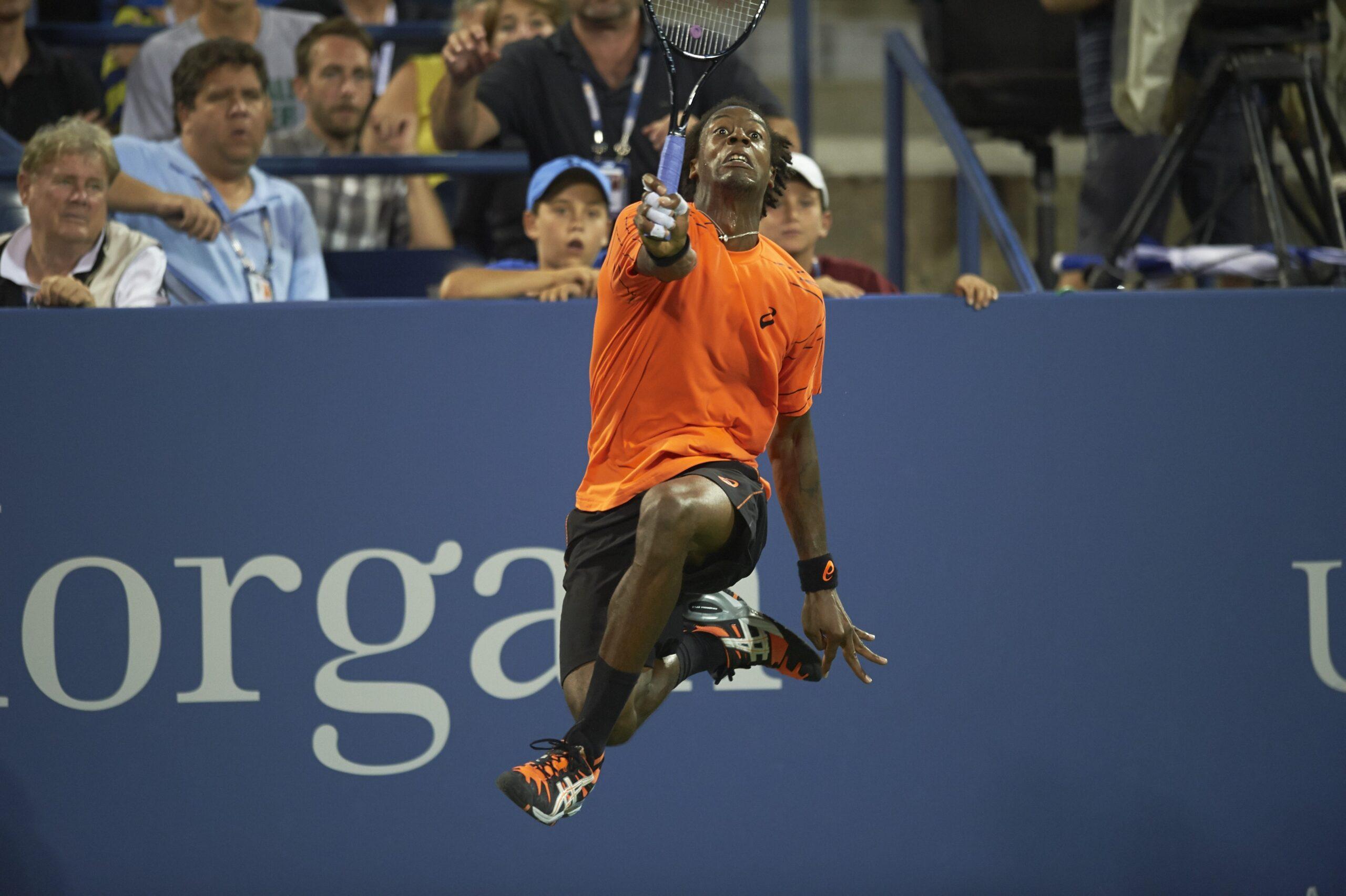
Monfils in action against John Isner at the 2013 U.S. Open
That affection extended to his peers.
“He’s a true crossover guy. Everyone knows who Gael Monfils is,” Frances Tiafoe tells The Ringer. “The swag is crazy. The athleticism. The showmanship. His ability to put asses in the seats, and play with the joy and a smile on his face, and still compete at the highest level. He’s special.”
Tiafoe is a 28-year-old American player who is currently ranked 12th in the world. He and many others in his generation saw Monfils play a version of the sport that was more expressive and less constrained. Monfils became proof that the grind of professional tennis did not require surrendering your individuality.
“He’s the most entertaining player who has ever played our sport,” Shelton says.
Monfils’s influence was profound for the young French players who followed him, too. Twenty-two-year-old Arthur Fils first met Monfils through the French Tennis Federation when Fils was 16. He had watched him for years, drawn to his unmistakable “aura” on the court.
“My phone is always on,” Monfils said. “If I can help them with experiences, with advice about past experiences that I had, I always try to give it to them.”
Monfils is slowly coming to understand his impact on today’s younger players. When I relay Shelton’s comments to him, Monfils laughs. Then he becomes reflective.
“I think it means I’m very old,” he says. “And I’ve been playing for a long time. I’m a little bit speechless because I haven’t had the chance to sit down and look back at how you can influence some kids and actual big players now that have been watching you.”
Monfils’s showmanship is so effortless that it could threaten to obscure the thoughtful person underneath it. He’s a human highlight reel, sure, but his peers also admire the way he treats them behind the scenes, when nobody is watching.
“He’s shown so much love,” Tiafoe says. “For a fellow man of color, he always came up to me and gave me encouragement. He’s a big brother to me. As much as he jokes, he’s a real dude.”
Monfils’s career is not without its fair share of close calls, heartbreaks, and collapses. He nearly pulled off a comeback down 2-0 against Andy Murray in the 2014 Roland Garros quarterfinals; he lost the fifth set 6-0. Later that year, Monfils had two match points in the fourth set of the 2014 U.S. Open quarterfinal against Federer; he let those slip and then lost an uncompetitive fifth set. Monfils waltzed into the 2016 U.S. Open semifinals without losing a set, but he didn’t put his best effort into a four-set loss to Djokovic. He came within two points of the semis during the 2016 Olympics, and then again at the U.S. Open again in 2019, but lost his final set tiebreaks to Kei Nishikori and Matteo Berrettini, respectively. Berrettini again denied him from another semifinal in the Aussie Open in 2022.
Those losses helped set one narrative of Monfils’s career. When the pressure was highest and the margins became smallest, his free-flowing tennis too often failed him. Every close loss became another reason to ask why such a talented player had not accomplished more.
But “potential” is an especially cruel way to evaluate an athlete. It allows everyone watching to invent a superior version of a person and then blame the real one for failing to become him. The imagined Monfils avoids injuries, never loses focus, and plays sensible tennis all the time.
There’s another way to view Monfils’s career. As sports discourse has become increasingly consumed by rings culture, Monfils represents its antithesis. His career cannot be reduced to the trophies he won or the opportunities he supposedly squandered. It’s a cliché, but Monfils is the kind of player whose career is more about how he made you feel.
“People have their own view, and I let them talk,” Monfils says. “At the end of the day, I’m happy. My view is the most important, and I’m not shy to say that.”
Near the end of our conversation, I ask Monfils what advice he would offer the 18-year-old version of himself.
“Nothing,” he says.
I ask again, surprised. “Nothing at all?”
“Nothing,” Monfils repeats, “because I couldn’t wish for better.”
For two decades, it was easy to get caught up in imagining what Monfils’s career might have been. It turns out he never really did the same.
And we should all be thankful for that.