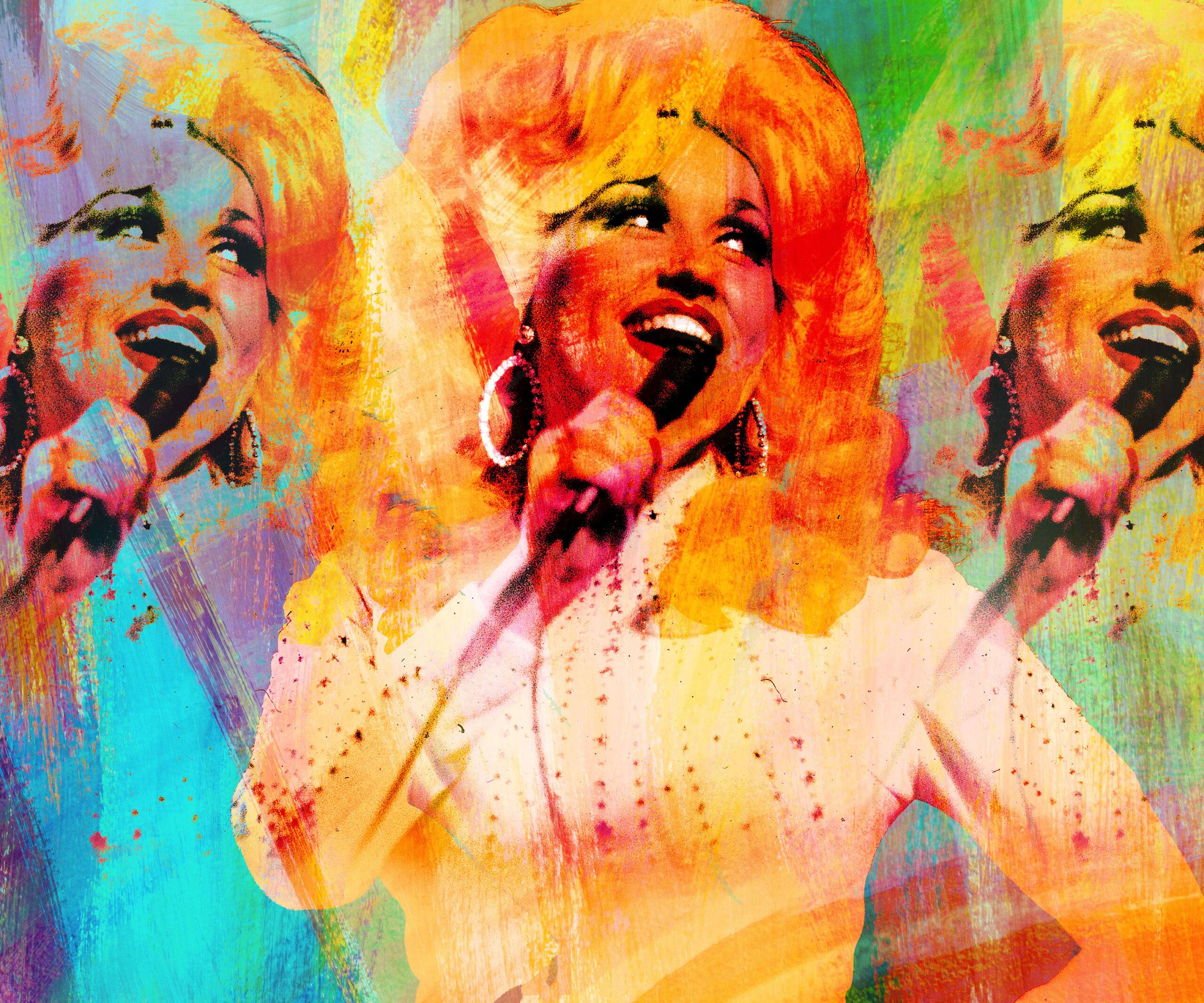

See the woman shining. Yellow dress, yellow rhinestones, yellow sequins. At least that’s the way it looks. The video’s elderly, and they’ve yet to convert The Porter Wagoner Show to 4K. Even if the rhinestones and sequins aren’t actually there, they’re there in spirit. They’re there in her heart. Diamond-shaped appliqués around the neck and the cuffs, maybe red, maybe black, definitely rad. The same pattern like Pendleton racing stripes down her torso. The studio light catches the fabric, makes it glitter. She looks like an intergalactic sunflower, a celestial bird, the rising sun.
Her hair’s tall. Her yodel’s strong. Her guitar’s at her side. She doesn’t need it for this one. She only needs her voice. What’s wild, all she ever really needed was her voice. That she had more than that—that she was also one of the greatest writers to ever live, a multi-instrumentalist who lit up the darkness with her overwhelming generosity and her otherworldly kindness—is how she became the Queen of Country. What a singer! What a life! What a person! F. Scott Fitzgerald once wrote that “an exclamation point is like laughing at your own joke.” All respect to Fitzy, but he croaked six years before Dolly Parton was born. Had he seen the Empress of Rhinestones in action, he’d have been firing off exclamation points in every direction. They’d spray from him like a Roman candle gun. “Mule Skinner Blues” live. Watch and melt.
Parton died on Tuesday, somehow. She was 80. It’s strange and does not feel possible. Someone with that much vitality, that much magic, I was always pretty sure she’d live forever. Death seemed too ordinary for her. I assumed that when the reaper came calling she’d just laugh, say, “Oh, sweetie, I’m fine,” and keep it moving. That she would be our first immortal, outlive the sun, and become our planet’s primary source of warmth and light. Even now, I’m not sold that death can hold her. Who knows, in a few days, she may be back and better than ever. Until then, we remember.
A genius writer of uncommon ability and even more uncommon grace, Parton was one of the greatest songwriters in the history of the world, rare to the point of being empyreal. She wrote “Jolene” and “I Will Always Love You” either on the same day or in the same week—she couldn’t remember. Writing just one of those would be enough to secure a place in music’s Valhalla. Writing both, holiest of cows. She had moves. She could be deep, funny, sad, joyful, sometimes all in the same song. She penned “Coat of Many Colors,” “Do I Ever Cross Your Mind?,” “My Tennessee Mountain Home,” “9 to 5,” so many more. It takes a creative behemoth to have range like that. Virtuoso, of course. Icon, absolutely. Chisel her face on the surface of the moon.
You can’t overstate Dolly’s importance. Her talent is staggering. Her résumé’s nuts. Impossible to do it justice. Eleven Grammys, six Golden Globe nominations, three Emmys. Twenty-five no. 1s on the Billboard Hot Country Songs chart, the most ever by a woman. She had 49 top 10 country albums. No other woman has done that. She’s sold more than a hundred million records. Her trophy case includes a National Medal of Arts, the Jean Hersholt Humanitarian Award, and a Kennedy Center Honor. She even had her own top 10 list.
There was no one else like her. Not just as a musician, but as a person. She had a decades-running dinner theater show in Branson, Missouri, and her old hometown of Pigeon Forge, Tennessee, that used to be called Dolly Parton’s Dixie Stampede. In 2018, she removed the word "Dixie" from the title. When asked why, she said, “There’s such a thing as innocent ignorance, and so many of us are guilty of that. When they said ‘Dixie’ was an offensive word, I thought, ‘Well, I don’t want to offend anybody.’ This is a business. We’ll just call it the Stampede. … But as soon as you realize that it is a problem, then you should fix it. Don’t be a dumbass.” She went on, “That’s where my heart is. I would never dream of hurting anybody on purpose.”
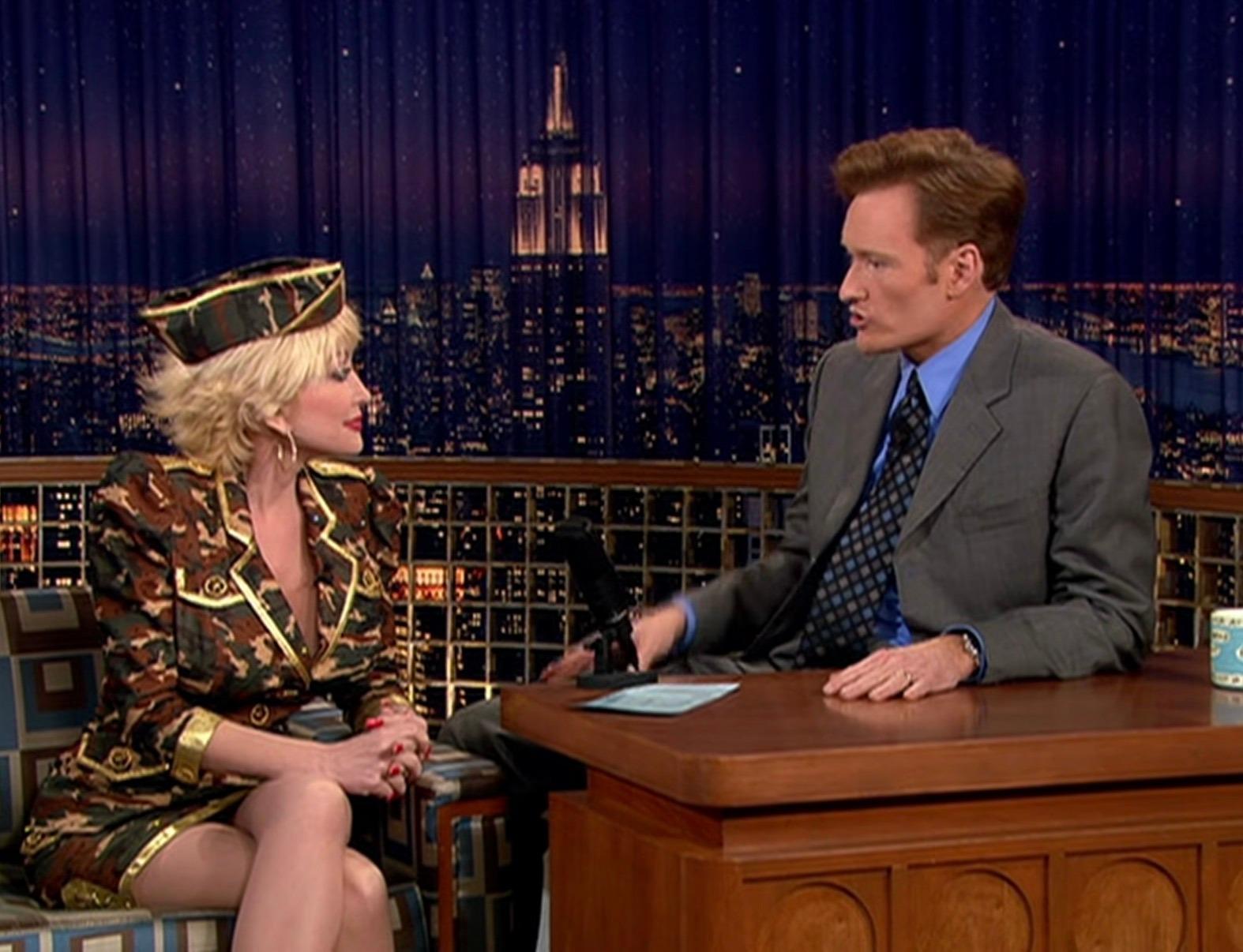
She would also go on Conan dressed like Realtree General Parton, like a camo’d-out flight attendant, and talk about swimming at the Ole Suck Hole.
Parton could’ve been a billionaire if she’d wanted to, but she was too unselfish for that. She cared about people too much. If you love her, you have probably heard of her Imagination Library, a program that sends a new book to kids every month from the time they’re born until they turn 5. It’s free and has been since its inception, in 1995, and it has gifted more than 300 million books. She also partly funded the Moderna COVID-19 vaccine. She was the best of us. She loved all and judged none, put her money where her mouth was, made the world a better place.
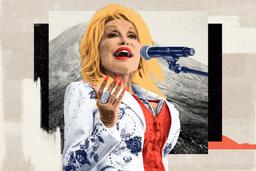
The Hollywood Reporter interviewed Parton in November 2023, the month she dropped her rock album Rockstar. They asked her about Tennessee passing anti-trans legislation earlier that year. She said, “I have some of everybody in my own immediate family and in my circle of employees. I’ve got transgender people. I’ve got gays. I’ve got lesbians. I’ve got drunks. I’ve got drug addicts—all within my own family. I know and love them all, and I do not judge. And I just see how broken-hearted they get over certain things and I know how real they are. I know how important this is to them. That’s who they are. They cannot help that any more than I can help being Dolly Parton.”
That’s what Dolly did: She told you it was OK to be yourself. There was a period of her career when people tried to make her a punch line. They underestimated her, made fun of the way she looked. It didn’t matter. She was who she wanted to be. If other people couldn’t appreciate that, their loss.
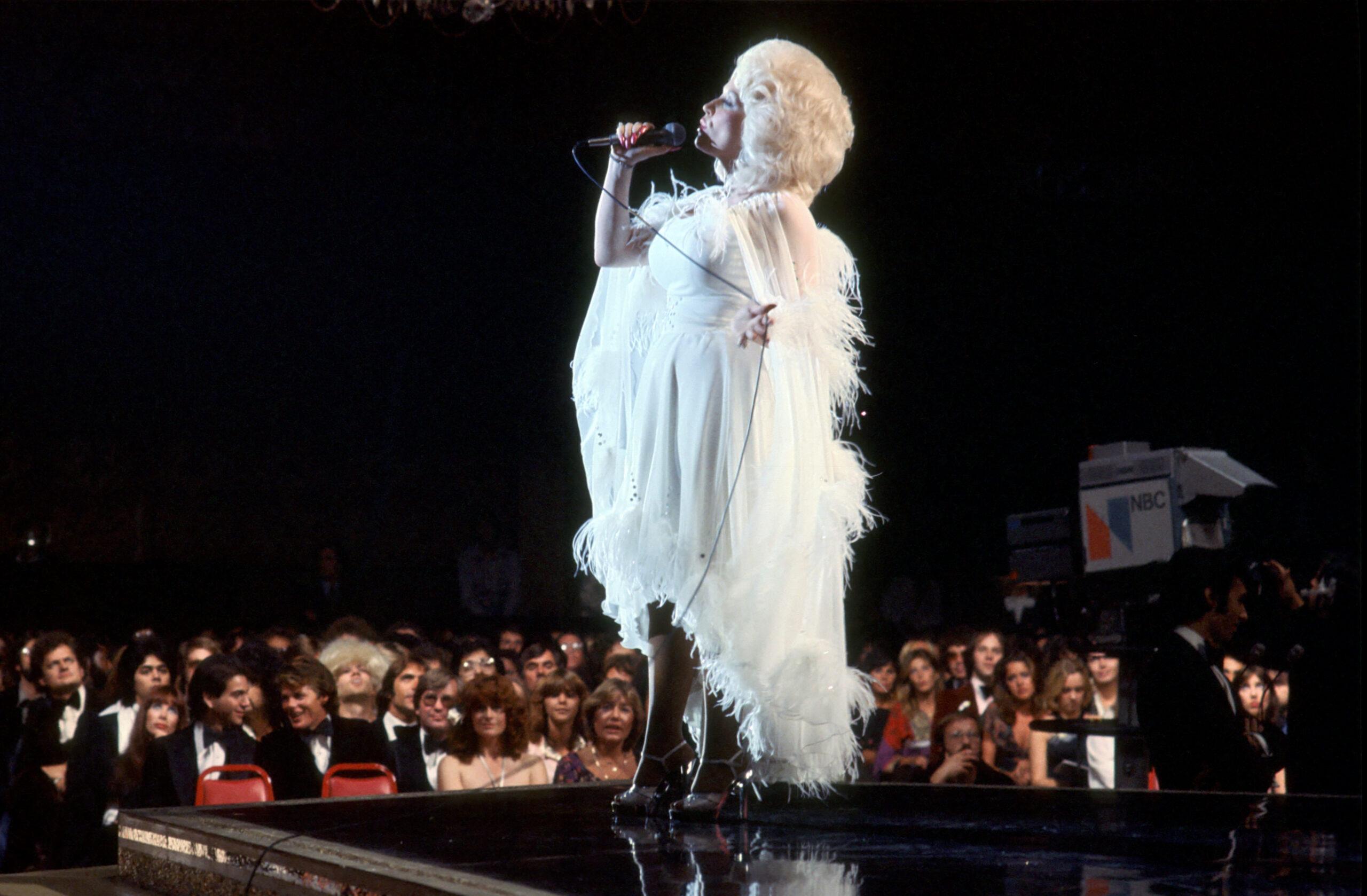
Dolly Parton performs onstage, circa 1977
It wasn’t necessary to be in the same room with her to feel that generosity of spirit. Her warmth was obvious whether it came over the radio, the television, or a quote in the paper. And those who did meet her in person came away beyond enchanted. In his book Life Itself, Roger Ebert wrote:
In Dallas for the premiere of 9 to 5, I had an uncanny experience, and on the plane home to Chicago I confessed it to Siskel: I had been granted a private half hour with Dolly Parton, and as we spoke I was filled with a strange ethereal grace. This was not spiritual, nor was it sexual. It was healing and comforting. Gene listened and said, “Roger, I felt the exact same thing during my interview with her.” We looked at each other. What did this mean? Neither one of us ever felt that feeling again. From time to time we would refer to it in wonder.
It is fun to think of those two hardened Chicago newspapermen, years removed from their one-on-ones with her, still taking a moment from time to time to look at each other and be like, “Dude, remember Dolly?” Big-time artists are praised all the time. For their authenticity, their talent, their eye, their ear, their energy, their mind, their sexiness, their coolness. But it’s a short list of folks who are called healing.
Parton moved to Nashville the day after she graduated high school. She had dreams, knew what she wanted, and went and got it. We’re all better for it. There was always something about how she sounded, like there was light in her voice. It could levitate, it could hammer, it could soothe, it could fly. She was playful and wise, gentle and naughty. She loved life. She loved you, always will.