The 26 Biggest Story Lines Ahead of the 2026 College Football Season
Everything you need to know about the upcoming season before games kick off

These final excruciating days before the kickoff of the 2026 college football season have heightened the kind of rampant legal and political maneuvering that dominated the rest of the offseason. More than any summer in recent memory, talk about the sport centered on matters that had little to do with the players, teams, or games to watch for in the fall.
Fans and observers waited to see whether the NCAA’s push for federal oversight was going to work (it hasn’t—so far). Or whether Texas Tech would be able to win the legal argument for inserting Brendan Sorsby into its $30 million lineup in spite of gambling problems that imperiled his eligibility (that also didn’t work). And mere days before the first Saturday of the season, the game’s power brokers are scrambling to come up with measures to prevent players currently in NFL training camps from returning to college (as of now, it’s unclear how that’s going to work wholesale).
But slowly and surely, we’re starting to get preseason polls and Heisman lists to debate, the conclusion of monthslong quarterback battles, and news about which injured stars will be ready to go for Week 1.
We’re almost there. So to get our heads around everything going on with the game, here’s a primer of the story lines to follow this season.
1. Indiana’s Title Defense
A year after the Hoosiers completed the first 16-0 college football season in 132 years, Curt Cignetti reloaded his team with another top-10 transfer portal class. That group is highlighted by former TCU quarterback Josh Hoover, a gifted but erratic passer. Hoover is the most productive returning QB in FBS, with 9,629 passing yards and 71 touchdowns across 36 collegiate games, but he’s also been responsible for 42 turnovers (33 interceptions and nine fumbles) in that span. Cignetti has promised to support Hoover with a consistent running attack and top defense, the kind of backing that turned Fernando Mendoza from a promising prospect into the Heisman winner and the first pick in the 2026 NFL draft. If Hoover can somehow split the difference between the first two signal callers of the Cignetti era (Mendoza and Kurtis Rourke, a seventh-round pick in the 2025 draft), there’s no reason why the Hoosiers couldn’t clinch their third consecutive CFP berth—and make a strong defense of their title.
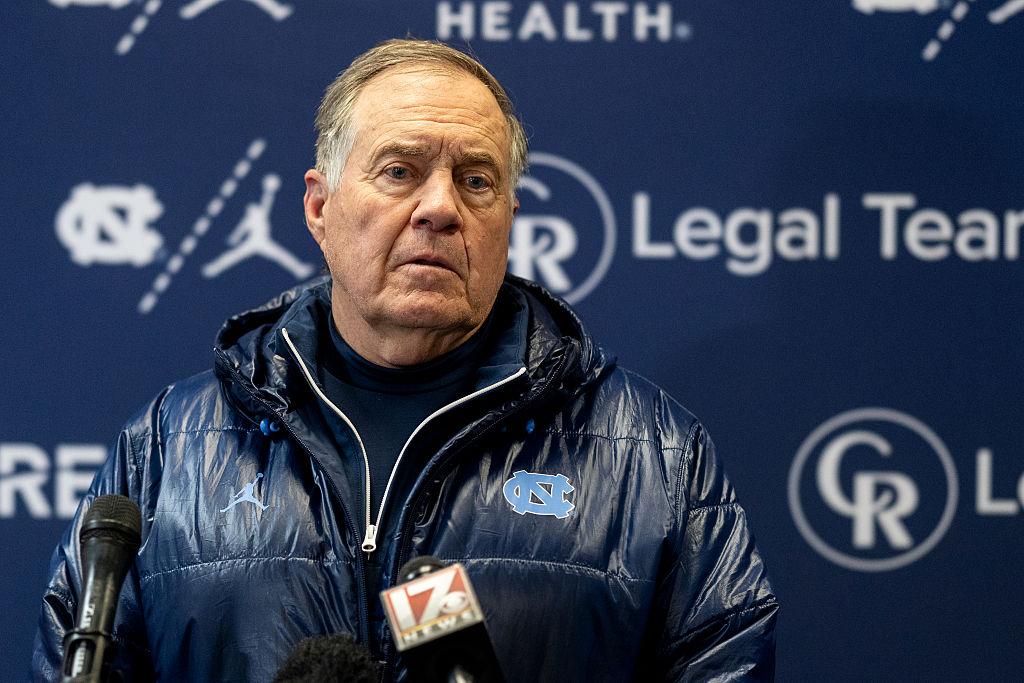
2. The Cloud Hanging Over Bill Belichick and UNC
If Belichick’s debut season at North Carolina wasn’t bad enough—with scandalous off-the-field headlines followed by a pathetic on-field product—his second year is already off to a terrible start. In July, his right-hand man, Tar Heels general manager Michael Lombardi, was placed on indefinite leave by the university pending an investigation into his conduct. It remains to be seen whether Lombardi, the highest-paid GM in college football, will return to the program. If he doesn’t, he’ll have left behind a very young roster that includes a 40-player recruiting class ranked among the nation’s top 20. There’s some talent in Chapel Hill, but probably not enough to meaningfully improve on last season’s 4-8 record. Then the question becomes: Should the 74-year-old Belichick just follow Lombardi out of town?
3. Oregon’s Best Roster Ever
Since Oregon alum and Nike founder Phil Knight started making it rain (figuratively, of course) in Eugene, the Ducks have been one of the nation’s most consistent winners. They’ve won 10 conference championships over the past 32 seasons—including one in their first year in the newly expanded Big Ten—but have never brought home that elusive national title. This fall may be their best chance to do it. Oregon is bringing back potential 2027 NFL no. 1 pick Dante Moore at quarterback, a bevy of skill position talent, the nation’s best defensive line, and a young, ball-hawking secondary. Head coach Dan Lanning lost both of his coordinators to head coaching jobs this offseason, but it’d be really hard to screw up with this much talent. Oregon’s biggest challenge will be finally playing in the postseason like it does in the regular season, a feat that’s eluded it so far in the 12-team playoff era.
4. Lane Kiffin’s $40 Million LSU Roster
This had all better be worth the chaos Kiffin caused on his way out of Ole Miss. Kiffin left Oxford like a fugitive, standing on a tarmac waiting for a booster’s private plane to take him to LSU as angry fans booed him from behind a chain-link fence. Of course, it wasn’t the first time Kiffin left behind an angry mob—ask him about Knoxville sometime. But he has provoked such strong reactions because he’s a game-changing head coach. He led both Florida Atlantic and Ole Miss to their best seasons in program history, and the hope is that he can pull off a similar feat at LSU—which signed him to a seven-year, $91 million deal in November, agreed to pay former coach Brian Kelly his $54 million buyout, and then reportedly spent $40 million on this year’s roster, which includes former Arizona State QB Sam Leavitt and former Colorado tackle Jordan Seaton. With this much invested in the program, expectations are understandably high for the Kiffin era in Baton Rouge.
5. Keeping Hope Alive at Ole Miss
Minus Kiffin, QB Trinidad Chambliss and new Ole Miss head coach Pete Golding will try to build on the team’s surprising CFP run last season, when it beat Tulane and Georgia and came up just short against Miami in the semifinals. The Rebels are bringing back 10 starters this season and are adding one of the nation’s best transfer portal classes, putting the team on the preseason short list of likely playoff contenders. But without Kiffin and his playbook, most of his offensive staff, and four promising players who transferred to LSU with him, Ole Miss will have trouble reaching the heights of the past few years. A much tougher SEC schedule, including road games at Texas and Oklahoma and a rematch against Georgia, will also do the Rebels no favors. But their Super Bowl will be when Kiffin and LSU come to Oxford September 19. Win that one, and anything is possible.
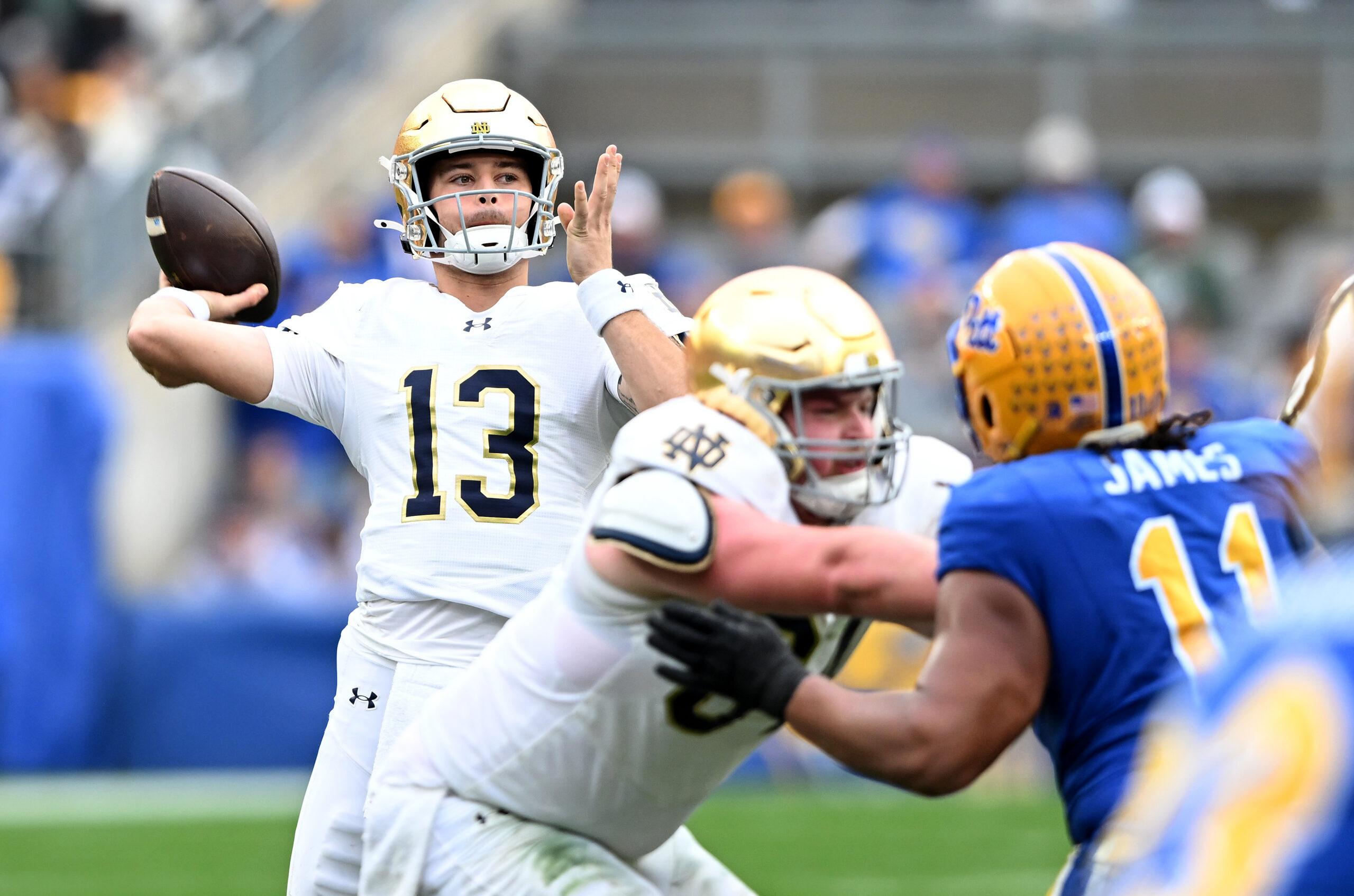
6. Notre Dame’s Revenge Tour
The Fighting Irish had all offseason to stew about their gutting CFP snub last fall. Head coach Marcus Freeman has been touting this season as the “Leave No Doubt” tour, reminding his players that they can’t risk leaving their destiny in the hands of the voters. It helps that Freeman has maybe the best returning collection of talent in the country outside of Oregon. QB CJ Carr earned rave reviews at the Manning Passing Academy over the summer, and he’ll be throwing to an improved receiving corps—which will hopefully make up for the loss of running backs Jeremiyah Love and Jadarian Price, both of whom were drafted in the first round this spring. But the Irish’s real strength is on the line of scrimmage, on both sides of the ball. They’ll be favored to punish everyone on their schedule—other than in their highly anticipated rematch with Miami on November 7. It’s the playoff or bust in South Bend this year.
7. The SEC’s Best Championship Hope
Now that three different Big Ten programs (Michigan, Ohio State, and Indiana) have won national titles in consecutive years, the vibes are very different around the SEC. It’s almost as if when Nick Saban left, the aura of the league went with him. But Georgia remains the SEC’s best shot at breaking the Big Ten title streak. Kirby Smart is bringing back lots of experienced players from last year’s 12-2 team, which won the conference, and he’ll have 21 defenders who played meaningful snaps for Georgia or elsewhere in 2025. If QB Gunner Stockton can take another step behind a line that’s returning three starters, the Bulldogs might finally break a two-year winless streak in the CFP.
8. Can Dabo Swinney Turn Nobodies Into Somebodies?
Things have gone stale around Clemson. The Tigers have lost at least three games in each of five consecutive seasons and at least four in the past three, including last year’s embarrassing 7-6 finish, which included defeats to Georgia Tech, Syracuse, and Duke. Longtime head coach Dabo Swinney has grown prickly answering questions about the state of his program. This offseason, perhaps with his tongue firmly in cheek, Swinney referred to his team as “a bunch of nobodies.” Joke or not, that’s what it looks like from the outside. Without generational quarterbacks like Deshaun Watson or Trevor Lawrence leading the program, Swinney and Clemson have looked awfully ordinary. Swinney overhauled the coaching staff this offseason in an effort to change that, but the roster still isn’t up to that old championship standard. The defense will bear a large burden if QB Christopher Vizzina can’t exceed very modest expectations.


9. The U Is Back!
Yes, the Canes haven’t won a conference title since they claimed the Big East championship in 2003. And their national championship drought goes back 25 years. But it’s safe to think that at least one of those streaks will come to an end this fall. Head coach Mario Cristobal and Miami have reloaded this year after coming up short in last season’s CFP title game. Out goes QB Carson Beck, in comes Darian Mensah, from reigning ACC champion Duke. Mensah will be surrounded by potential All-Americans at running back (Mark Fletcher Jr.) and wide receiver (Malachi Toney and Cooper Barkate), and the first month of the schedule (against Stanford, Florida A&M, Wake Forest, and Central Michigan) will allow the totally rebuilt offensive line the time it needs to jell. Replacing star defensive ends Rueben Bain and Akheem Mesidor will be almost impossible, but Mizzou transfer Damon Wilson is a great building block, and the Canes’ back seven could be among the best in the country. Miami has everything it needs to finally bring home a trophy—now it’s up to Cristobal to deliver.
10. Matt Patricia’s Defensive Rebuild
Bringing Matt Patricia from the NFL to run Ohio State’s defense last fall paid immediate dividends. Pick almost any statistical category, and the Buckeyes defense was at or near the top of it in 2025. They were first in the country in scoring defense, first in total defense, first in red zone defense, and first in passing defense. Virtually any encore to that will seem like a letdown—which might end up being the case since the unit lost players who went on to be three of the top 11 picks in this year’s NFL draft. But Patricia and Ohio State still have enough talent to field one of the nation’s best defenses. The transfer portal brought in some potential stars in defensive backs Earl Little Jr. (Florida State) and Terry Moore (Duke), and holdover defensive end Kenyatta Jackson Jr. (6-foot-6, 260 pounds) is NFL caliber. Those guys won’t have much time to settle in, though, because Arch Manning and Texas await in Week 2, and they’ll face maybe the nation’s toughest three-game stretch (at Indiana, at USC, and at home against Oregon).
11. Sky-High Expectations for Texas
If Steve Sarkisian somehow finds himself lobbying for the CFP inclusion of a three-loss team again, then things have probably gone off the rails in Austin. The Longhorns have everything they need not just to make the playoffs but to contend for their first national championship since 2006. No other team in the country can boast All-American talent at every level of the roster (Arch Manning at QB, Hollywood Smothers at RB, Cam Coleman at WR, Trevor Goosby at OL, Colin Simmons at DL, Rasheem Biles at LB, and Jelani McDonald at DB). See what $40 million can buy you? Of course, big expectations are “rat poison” in Austin—the Longhorns opened as the preseason no. 1 last year and missed out on the playoffs. This is Sarkisian’s sixth season at Texas, and he’ll need to win some sort of hardware to keep his job. One of the nation’s most difficult schedules will make that tough, but, hey, that’s what the money is for.
12. Oklahoma Needs More
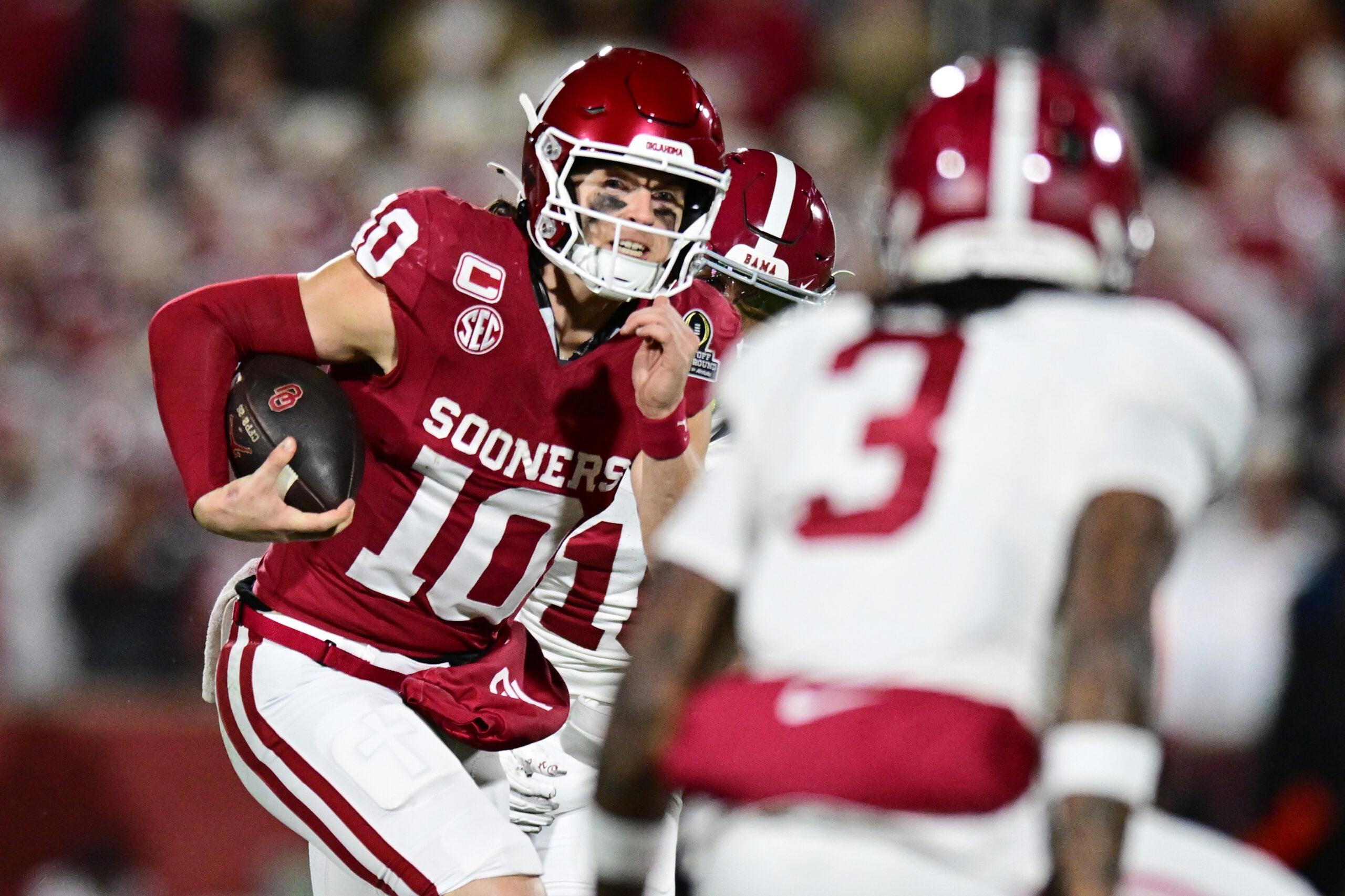
Check out John Mateer’s Instagram account or pictures from the Manning Passing Academy this summer, and you’ll likely find him shirtless or with his pythons on full display, a testament to an offseason spent packing on some muscle. The Oklahoma QB has come back for his senior year and seems determined to get through it without the sort of thumb injury that derailed his 2025 season. Time will tell whether the new weight room work will keep Mateer off the sideline, but regardless, he’ll need more support from the running game, which averaged 2.9 yards a carry last year, and at least one receiver to complement first-team All-SEC slot Isaiah Sategna. A stronger offensive showing, along with the support of the perennially strong Brent Venables–led defense, could get the Sooners to the playoff again. It’s time for everyone in Norman, not just Mateer, to carry their weight this fall.
13. The Next Big Star to Enter the Transfer Portal
The reality of the transfer portal and NIL—at least for the moment—is that every college football player is effectively a free agent, and no position has more value than a veteran quarterback. If reports are to be believed, they can make as much as $4 million a year in revenue sharing and NIL payouts. This past offseason, talents like Darian Mensah, Sam Leavitt, and Josh Hoover switched schools when they were offered lucrative financial packages and the promise of truly competing for a national championship. So who should we keep an eye out for in the next cycle? Cal reportedly had to hold off a number of suitors for Jaron-Keawe Sagapolutele. Can it do it again if new head coach Tosh Lupoi’s debut season is a disappointment? Same for Malik Washington at Maryland, where head coach Mike Locksley is under pressure to win in his eighth season. And only time will tell whether Michigan’s Bryce Underwood is a good fit in Kyle Whittingham’s system. Drake Lindsey at Minnesota? Mason Heintschel at Pittsburgh? Rest assured, their programs will have to pony up to keep them around.
14. The End of Prime Time in Colorado?
When Deion Sanders showed up in Boulder in December 2022, he compared his incoming class of players—which included former five-star recruit Travis Hunter and Sanders’s son Shedeur—to luxury-brand luggage. That crew brought a lot of hype and attention to the previously moribund program, and in 2024 they backed it up with a nine-win season, Colorado’s best in eight years. Hunter won the Heisman Trophy, and Shedeur finished as the Big 12 Offensive Player of the Year. But without those two in 2025, Colorado went right back to its old ways with a 3-9 season that ended with five straight defeats. There’s no longer any illusion that Sanders can consistently lure high-level talent to Colorado, and this year’s team will be the true barometer for the future of the program. It underwent another offseason roster overhaul, and Sanders didn’t call his new group Louis Vuitton, which is maybe a clue about where things stand in Boulder.
15. The Future of Florida State
Ever since Jordan Travis went down with a devastating leg injury near the end of the 2023 season, things have spiraled for head coach Mike Norvell and Florida State. The Seminoles were infamously left out of the playoff that season even though they were undefeated, and they have gone 9-18 since that costly win over North Alabama, including losses to Boston College, Duke, and Stanford. If Norvell can’t break their slide this fall, then he’ll almost certainly be ousted—especially after the program’s record-breaking fundraising year. The roster doesn’t look equal to the challenge: Auburn transfer Ashton Daniels might not be an upgrade over Thomas Castellanos at QB, and there’s not enough talent and depth overall to truly contend for the CFP. Their schedule is brutal, too, with SMU in Week 2, a game at Alabama after a bye, and a stretch of three straight tough contests in October before a home game against Clemson. Even getting bowl eligible isn’t a given.


16. Dave Aranda’s Hot Seat at Baylor
After an injury-plagued sophomore season at Florida, QB DJ Lagway entered the transfer portal. Lagway decided to head to Baylor, a school he was familiar with because of his father’s days as a running back there. And reports out of Waco say that Lagway finally looks healthy and has impressed on and off the field. Lagway will need to live up to the five-star billing he had coming out of high school to help turn around a program that has gone 22-28 since winning the Big 12 in 2021. And he’ll join a lot of new faces in Waco as part of a 29-player transfer portal class. Head coach Dave Aranda is on one of the hottest seats in college football right now, and the big-armed Lagway is almost certainly his last chance to keep his job.
17. Texas Tech Without Brendan Sorsby
Texas Tech went all in on building around QB Brendan Sorsby, including mounting a vigorous defense of his NCAA eligibility after gambling issues landed him in trouble. That defense didn’t work: Sorsby ultimately decided to accept his penalty and prepare for his professional career. But that left the Red Raiders without their pricey way to build on their historic 2025 season, which ended against Oregon in the CFP quarterfinals. Will Hammond, last year’s backup quarterback, has reportedly almost recovered from a torn ACL. But with the season now days away from kicking off, Texas Tech has also been looking into bringing in Florida State transfer Thomas Castellanos. But that acquisition would help with their postseason ambitions more than with the regular season, which should pose few problems for the loaded Red Raiders.
18. Moving On From the Sherrone Moore Era in Michigan
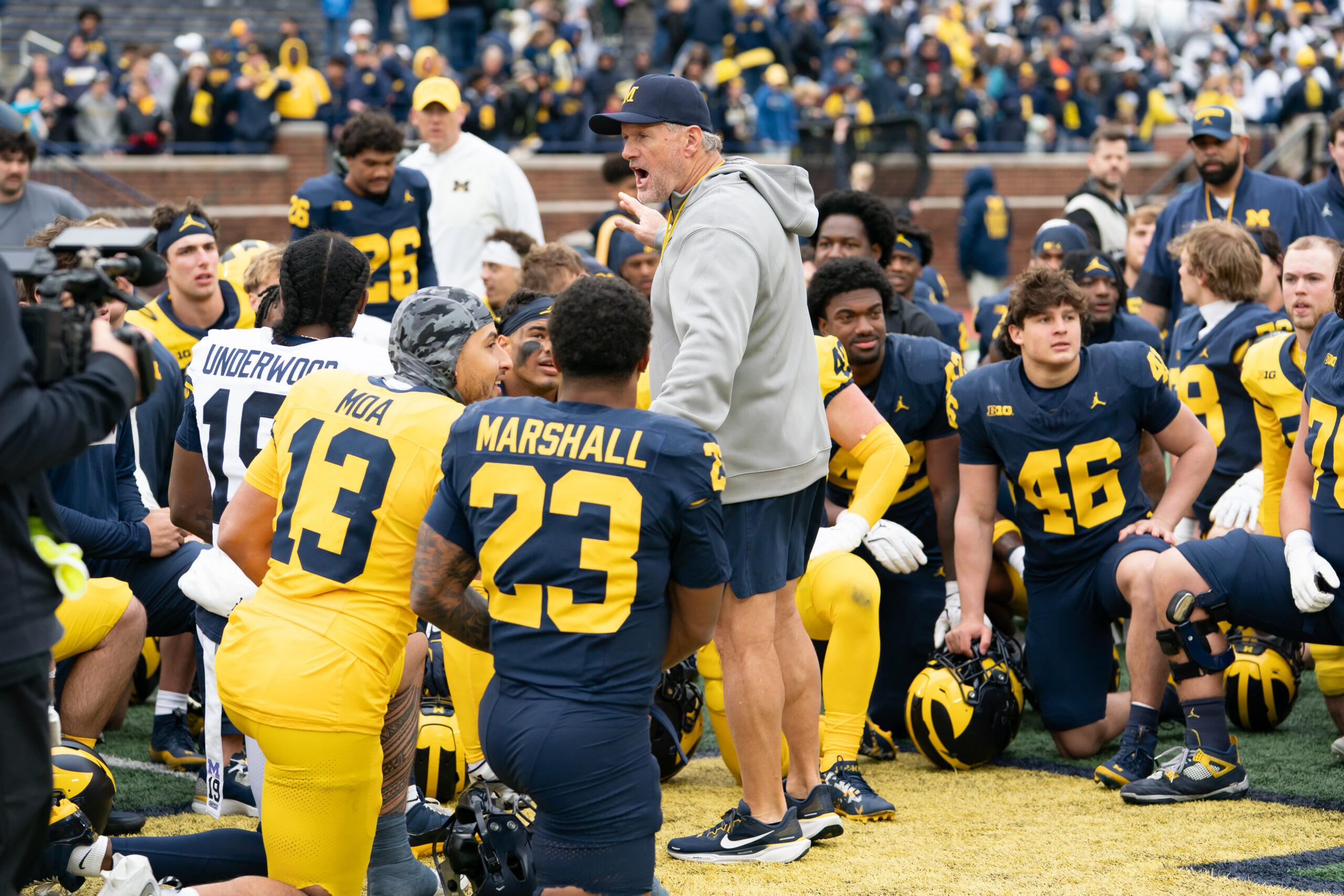
The Wolverines cut ties with head coach Sherrone Moore, the scandal-plagued successor to Jim Harbaugh, after reports that he was in an “inappropriate relationship” with a female staff member and after his arrest on home invasion charges. This saga also claimed the job of longtime athletic director Warde Manuel, who’d presided over national championship–winning programs in football and men’s basketball but also over a litany of embarrassing scandals. In December, the Wolverines hired coach Kyle Whittingham, who left Utah as the school’s all-time leader in wins. And now it’s up to Whittingham to get the most out of talented sophomore QB Bryce Underwood and help restore a program that’s fallen behind Ohio State, Indiana, and Oregon in the Big Ten. It’ll be a big leap for Whittingham, but he routinely got Utah to play above its resources. He’ll have everything he needs to make fans forget about the Moore era.
19. Demond Williams Jr.’s Awkward Return to Washington
In January, QB Demond Williams Jr. entered the transfer portal and seemed bound for LSU—despite having previously agreed to a revenue-sharing contract with Washington for the 2026 season worth about $4 million. But the Huskies refused to let Williams go without a fight, threatening legal action that included a "significant” buyout. Williams ultimately returned to the team, saying that he’d gotten some “bad advice.” And now, months after averting that ugly—and expensive—divorce, the Huskies are counting on Williams to improve on a sophomore season in which he had almost 3,700 yards of total offense and 31 touchdowns. He’ll play behind an offensive line that’s bringing back four starters, but it remains to be seen whether that’s a positive development given the group’s struggles last year. Head coach Jedd Fisch also expects contributions from one of the best recruiting classes in program history. Washington will need some of those freshmen to be playing like vets by the end of the regular season, as the team closes with a home game against Indiana and a road trip to archrival Oregon.
20. The Matt Rhule and Nebraska Reboot
So much of the hope for Matt Rhule’s rebuild of Nebraska centered on Dylan Raiola, a five-star QB recruit who is the son of former Husker great Dominic Raiola. Dylan showed flashes of serious talent over 22 games as a starter, completing 69 percent of his passes and throwing 31 touchdowns and 17 interceptions. But when the portal opened last winter, he left to be the backup at Oregon. It was a devastating blow for Rhule and the Huskers, who had to figure out a countermove. They’ve brought in QB Anthony Colandrea, who was the Mountain West Conference Player of the Year at University of Nevada–Las Vegas in 2025. Rhule also landed San Diego State defensive coordinator Rob Aurich, who oversaw one of the best units in the country last season. But at this point in the Rhule tenure, Nebraska wasn’t supposed to be merely hoping to reach bowl eligibility and still a long way from reclaiming its status as one of the nation’s powerhouses. Rhule might not have too many more seasons to get there.
21. Penn State Turning Into Iowa State East
At Iowa State, Matt Campbell was fond of saying he built the program with a “five-star culture”—a nod to the fact that he didn’t need blue-chip athletes to compete at a high level. That was a charming slogan in Ames, where fans had suffered through some of the worst play in the sport before Campbell’s arrival. The Cyclones’ historic winning percentage of .463 is fourth worst among Power Four programs (ahead of only Wake Forest, Indiana, and Northwestern). Campbell became the winningest coach in Iowa State history in his tenure there and even had the Cyclones playing for the Big 12 championship in 2024. But that record won’t cut it at his new school, Penn State, which fired James Franklin in October for not living up to CFP expectations. Penn State fans had grown tired of Franklin coming up short against top-10 teams—he went 4-21 versus that competition in his 12 seasons—and losing to unranked teams last season was a bridge too far. At lowly Iowa State, Campbell went 4-7 against top-10 teams. The hope is that now that he’s got resources and access to actual five-star recruits, he can take Penn State places that Franklin couldn’t.
22. The Early Leader to Nab the Group of Six Bid in the CFP
Tulane and James Madison were the bracket busters in last season’s 12-team CFP because of a rule that awarded automatic bids to the five highest-ranked conference champions. That left out the likes of Notre Dame, Texas, and BYU, who all predictably whined about it and forced the CFP to tinker with its formula again. Now only the league champions from the ACC, Big Ten, Big 12, and SEC will get automatic spots, and the fifth spot goes to the highest-ranked team from the Group of Six. And in a season in which the programs that were at the top of the American Conference last season (Tulane, Memphis, South Florida, and North Texas) are starting over with new coaches and massive roster turnover, that leaves an opportunity for the eventual champs in the Mountain West and the new Pac-12. The early favorite could be UNLV, which finished 10-3 during Dan Mullen’s first regular season in Las Vegas. Mullen signed Auburn transfer Jackson Arnold to replace star QB Anthony Colandrea and returns 1,000-yard rusher Jai’Den Thomas. Without Boise State, which is now in the Pac-12, on the schedule, Mullen and UNLV are poised for a breakthrough.
23. The PAC-12 Lives, Again
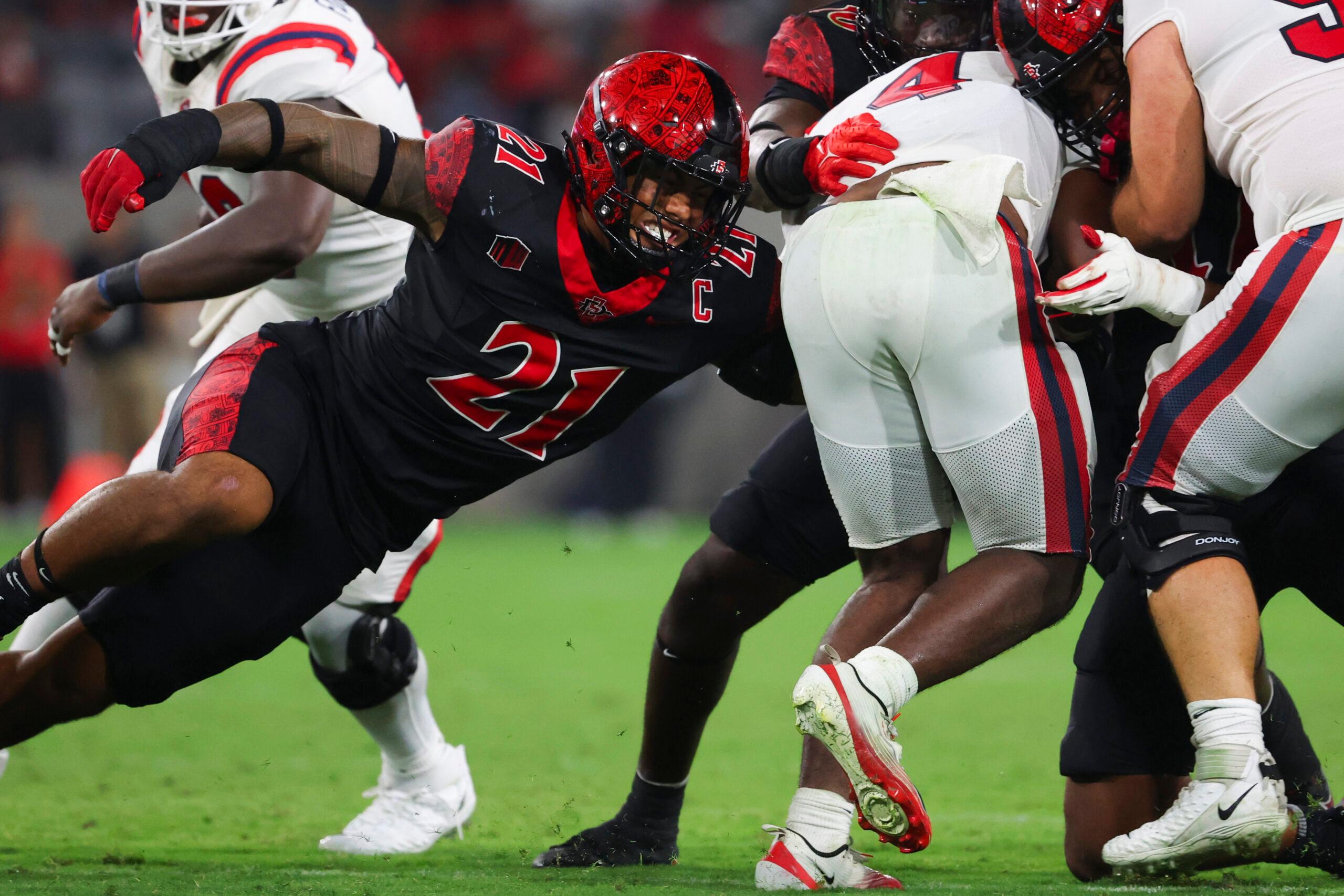
Washington State and Oregon State were left out in the cold after their longtime Pac-12 Conference mates abandoned them for the Big Ten and the Big 12. But smart legal maneuvering by the schools allowed them to keep the name and branding of the Pac-12 while they figured out next steps. And now the conference has lured away five schools from the Mountain West (Boise State, Colorado State, Fresno State, San Diego State, and Utah State) and welcomed Texas State from the Sun Belt. Gonzaga is also a new conference member, but only in basketball. This is obviously not the Pac-12 of yesteryear, particularly without its anchor programs in Los Angeles (UCLA and USC) and no presence in Northern California now that Stanford and Cal are playing in the ACC. But every school here has growth potential, and the league’s regional footprint (well, with the exception of Texas State) could help to build some new rivalries. At least until the next major conference realignment.
24. Billy Napier at James Madison
Billy Napier was once one of the hottest coaching commodities in college football. Before his arrival at Louisiana in late 2017, the Ragin’ Cajuns had won more than seven games in a season only four times in the previous 50 years. Napier matched that mark in his debut campaign, then reeled off seasons of 11, 10, and 12 wins. Along the way, he was mentioned for about half of the SEC’s job openings, including in-state LSU. But Florida was the lucky winner of the Napier sweepstakes, convincing him to take over its program in 2022. His four-year run in Gainesville came to an end last October the day after a win over Mississippi State. That’s how bad the Gator faithful wanted him gone. Napier was hired little more than a month later at James Madison, which has perennially been one of the best jobs at the Group of Six level. The question now isn’t how quickly Napier can return to the Power Four but whether he can follow in the considerable footsteps of Curt Cignetti and Bob Chesney. James Madison has become used to winning big over the past decade (110-22, with a FCS championship, two title game appearances, and a CFP berth in its second season at the FBS level), and Napier might face as much pressure to keep up there as he did at Florida.
25. The CFP’s First 9-3 Team?
Tired of three-loss SEC and Big Ten teams whining and complaining about being left out of the playoff because they faced a slate equivalent to the AFC West? Well, it’s only going to get worse as Ohio State, Oklahoma, Texas, USC, and the like embark on schedules that are considered among the most difficult in the nation. Expect the SEC faithful to join that particular chorus with more fervor as the league moves to nine-game conference schedules. Longhorns coach Steve Sarkisian has already picked up where he left off last fall, poking at the less formidable schedules of Texas Tech and Indiana before the season even begins. And rest assured that the loser of the September 12 nonconference showdown between Ohio State and Texas will bring up that they took an unnecessary risk playing each other, especially if they drop a few more games during the regular season. Of course, they probably have a point. But we can still admit that their lobbying is annoying.
26. College Football’s Marquee Event—Now in Las Vegas
Since the FBS moved to a playoff to determine its national champion in 2014, the setting for the title game has gone from quaint little bowl venues to NFL stadiums. The first championship game was held at the Dallas Cowboys’ AT&T Stadium, the glorious retractable-roof shrine dreamed up by Jerry Jones. It was a fitting change for a sport that had long since transitioned from a self-consciously modest amateur model to a game in which the coaches—and now some of the players—make millions of dollars. Since then, the game has gone to Tampa, Atlanta, Houston, and six other NFL venues. And now it’s coming to Las Vegas. In a world where sports gambling has become an accepted—if not overtly encouraged—pastime, it was inevitable that America’s Playground would get its chance to host the game. But after an offseason during which Brendan Sorsby’s gambling problems dominated college football headlines, the game’s marquee event going to the nation’s gambling capital is richly ironic. See you when we get there!