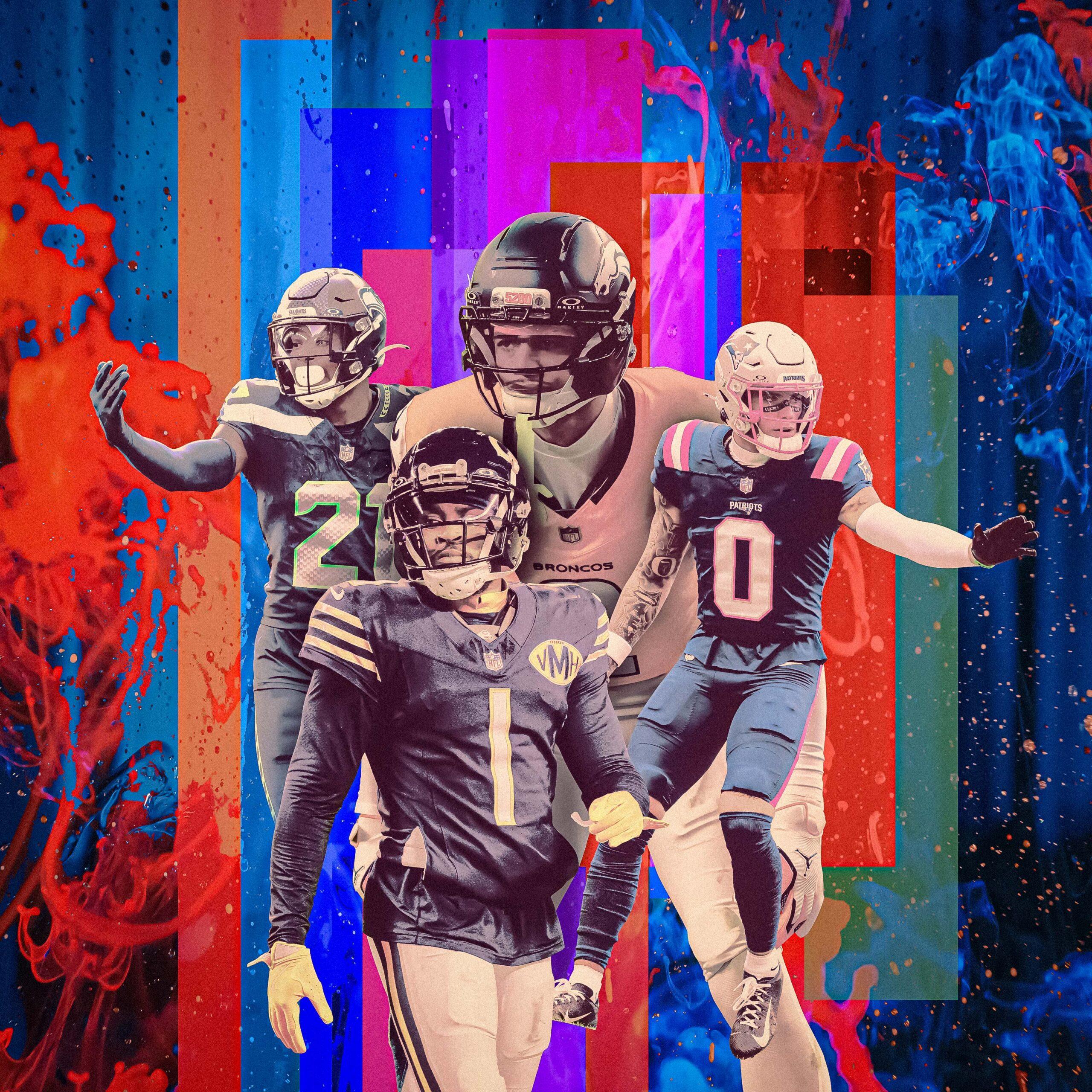

Each NFL team has its own view of what makes for a truly elite cornerback. While the ability to shut down a top receiver remains the primary lens for judging a cornerback’s performance, we can’t evaluate these players through passer rating allowed or interceptions alone. Corners can play at an All-Pro level by taking away passing windows in zone coverage, by being disruptive forces against the run, by blitzing quarterbacks, or by eliminating receivers in man-to-man coverage.
We can debate all day about who deserves to be ranked where—starting at no. 2, of course, because there’s one cornerback who sits in a tier above all his peers. But instead of quibbling about the differences among the rest of the league’s top corners, it’s more important to identify what kind of cornerback you’re watching on a weekly basis to better understand the nuances among different players at the same position.
This is your guide to the archetypes of NFL cornerbacks.
The Prototype
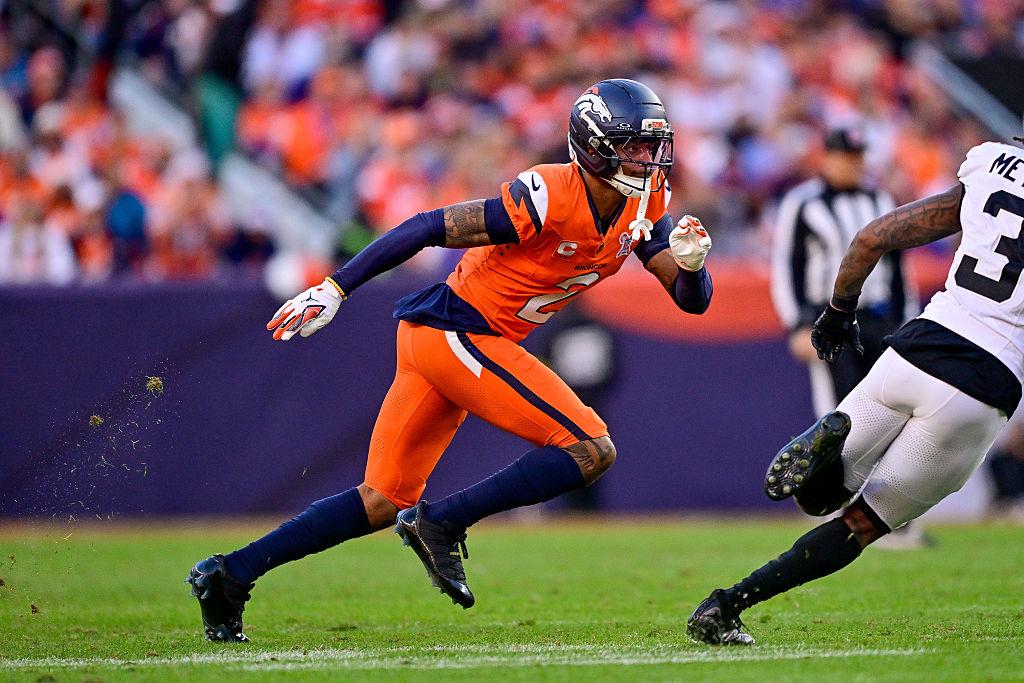
Patrick Surtain II, Denver Broncos
If this were Mortal Kombat, Broncos All-Pro Patrick Surtain II would be alone on the mountaintop, and you’d think the game was cheating with how often Surtain wins. He is 6-foot-2, with 32 1/2-inch arms, 4.4 speed in the 40-yard dash, and elite ball-tracking skills. He’s the reason a cliché like “built in a lab” exists.
He was the best cornerback in his high school class, he was the best corner in college when he played for Alabama, and he has been the best corner in the NFL for the past five years. He is only 26, but it’s not too early to talk about where Surtain will eventually land on the list of all-time greats.
Surtain checks all the boxes of an elite corner. He can play in off coverage (giving receivers room) and break on underneath routes. He has the poise to run with receivers deep downfield and still play the ball in the air, breaking up passes. If receivers get a step on him, he has the top-end speed and length to recover and get his hands on the ball. And he’s a great tackler out in open space. All of those traits are clear on his 2025 tape.
Surtain has the size and speed to line up in press coverage and still run deep with any receiver. He has the anticipatory skills and agility to break on the ball when playing zone, staying a step ahead of quarterbacks and seeing plays develop. Surtain led the league in tight-window throws forced last season, and he lined up against his opponent’s leading receiver at the fifth-highest rate.
He makes quarterbacks pay when they throw his way. Surtain has been targeted just 387 times in his five-year career, and he’s picked off or batted away 18 percent of those throws. Surtain's interception and deflection rate is above the NFL average (15 percent) in spite of how few and far between his targets are.
To be this consistent playing one of the most volatile positions in sports is to be the ultimate outlier, which is why Surtain belongs in his own tier.
The Island Dweller
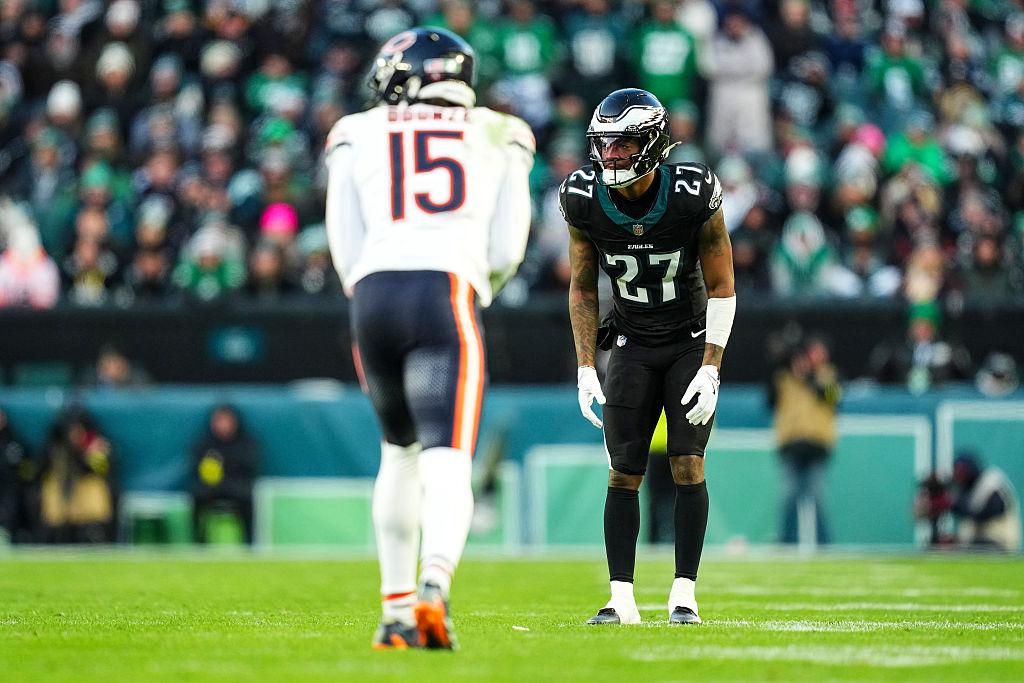
These are the corners who live for the challenge of bump-and-run coverage. They don’t want—and the best ones don’t need—help from a safety over the top, and they crave one-on-one matchups against the best receivers in football.
The idea of a “shutdown” cornerback is decades old, going as far back as the 1960s, and the definition has evolved over time to accommodate different play styles across eras. Hall of Famers like Willie Brown and Mel Blount are the original shutdown corners, the forefathers of “bump-and-run” coverage, a physical version of press man coverage intended to knock receivers off their routes. Few players did this better than Raiders cornerbacks Lester Hayes—infamous for using “Stickum”—and Mike Haynes, who were both part of the iconic 1983 team that went 13-1 and embarrassed Washington, who at the time had the league’s highest-scoring offense ever, in Super Bowl XVIII.
Hayes and Haynes are a great lens to view this archetype through, as they embody the early stages of evolution at this position and in the passing game. Hayes’s prime years came before the illegal contact rule existed, and Hayes would beat the hell out of receivers all the way down the field. Most of Haynes’s career came after the “5-yard chuck” area was established, and he became a star by using his speed to run with receivers and his ball skills to jump routes and pick off passes. Rule changes made passing easier for offenses, and speedy and agile cornerbacks became more of a priority for teams trying to cover modern passing games. In comes Deion Sanders in the ’90s, still the ultimate modern example of a shutdown man-to-man corner, and behind him were players like Darrelle Revis, Champ Bailey, and Patrick Peterson. These players were all famed for taking away an opponent’s best receiver and forcing turnovers—and none were able to benefit from the physical nature of the game that predated them.
As much as modern defenses have evolved to feature more zone coverage in hopes of preventing explosive plays, a coach’s top priority is finding a corner who can lock down one side of the field. But there is more than one style of lockdown corner. Here are some of the most notable names among active players in this tier.
Christian Gonzalez, New England Patriots
Gonzalez is a complete manifestation of the old-school press-man cornerback. He's 6-foot-1 and 205 pounds, and there is no receiver who is going to bully him at the line of scrimmage or at the catch point. And he has the recovery speed that makes it nearly impossible for a receiver to run away from him—even if an opponent gets a brief moment of separation.
His play reminds me of a young Patrick Peterson. Like Peterson during his Arizona days, Gonzalez is fluid and technically sound, and Gonzalez has a Peterson-esque feel for the game that lets him know when he can take chances. There are times when Gonzalez breaks on routes that most corners can’t (and probably shouldn’t even try to) get to. This doesn’t make him a freelancer or a gambler because he has a high enough football IQ to know how offenses want to attack him and how to goad quarterbacks into throws he can break up.
Gonzalez might have been the best player on the field during Super Bowl LX, and his pair of diving breakups against the Seahawks punctuated that point. In the clip above, Seahawks receiver Jaxon Smith-Njigba gets open, but Gonzalez is able to recover, using a rare ability to flip his hips and get to top speed while still focusing enough to get his hands on the ball. And in the play below, Gonzalez breaks up a deep pass against a much faster receiver (Seattle’s Rashid Shaheed) because he’s fluid enough to change his angle, leap, and get a hand on the ball over multiple players.
Gonzalez has just three career interceptions on 204 targets, and with an improvement in his ball production this season, he’ll cement his case as the league’s second-best corner.
Quinyon Mitchell, Philadelphia Eagles
Philadelphia does not play a man-heavy defense—its 24 percent man coverage rate last season was just above the league average of 22 percent—but Mitchell thrives when he does get the chance to be left alone on the perimeter. Mitchell spent a large part of last season following elite receivers like George Pickens, Davante Adams, and Justin Jefferson wherever they lined up—and Denver’s Courtland Sutton was the only one who tallied more than 15 receiving yards against Mitchell. The Eagles’ young star had multiple weeks without allowing a single completion on his coverage targets.
He’s yet to intercept a pass in his 32 regular-season games (but has picked off four passes in the postseason). That lack of ball production makes it hard to draw 1:1 comparisons across eras, but his closest comp is Stephon Gilmore, who played for six teams from 2012 to 2024 and won NFL Defensive Player of the Year in 2019. Like Gilmore, Mitchell doesn’t bait quarterbacks into risky throws; instead, he wants to take away space and erase receivers from the offense’s game plan entirely. Like Gilmore, Mitchell is surprisingly physical at the line of scrimmage, despite weighing under 200 pounds, and he is fluid enough to get in and out of his breaks without losing speed. And like Gilmore, Mitchell is a good tackler on the perimeter. He isn’t the type of player an offense will want to challenge in the run game.
These highlights from his two-interception performance against San Francisco last postseason show Mitchell at his best. You can see him play Brock Purdy’s eyes and take chances that resulted in turnovers. His second interception was the most impressive because he prioritized the ball over being in tight coverage, which is a change from his usual approach.
Denzel Ward, Cleveland Browns
Ward might be the most underappreciated defensive player in football, putting together an excellent career in coverage for a bottom-dwelling franchise. The fact that he’s never made an All-Pro team is more of an indictment of Cleveland for being irrelevant than a reflection of where Ward belongs among the league’s best, and in my eyes he’s been a top-five player at the position for the past half decade.
He’s lined up in man coverage more than anyone else on this list. Ward is truly alone on an island, totally by himself on the perimeter, running with the best receivers in the league and performing at an elite level.
Ward’s calling card is his speed and ability to change direction, which makes up for his sub-6-foot frame. In the clip above, he’s matched up one-on-one with Ja’Marr Chase—the best receiver in football. Chase runs a whip route, which should be an easy touchdown near the goal line, but Ward undercuts the route and runs untouched for 100 yards. Watch the angle Ward takes and how quickly he breaks on the ball, the perfect representation of his elite speed and the confidence that he can get to any ball.
He is twitchy enough to cover the entire route tree and recover when he ends up trailing a receiver. But he also has this Ty Law–esque effect on film; he looks much smaller than the receiver he’s covering, yet he never gets bullied in bump-and-run coverage. Ward has five seasons in which he's allowed a completion percentage below 60 percent, helping justify the Browns’ decision to make him one of the highest-paid defensive backs in the league.
Ward doesn’t get the shine and accolades someone with his ability deserves, in part because of players like Surtain, Gonzalez, and Mitchell, and in part because of Cleveland’s ineptitude. Perhaps at some point Ward will follow the Myles Garrett path and get himself traded to a contender where he’ll be able to play in more meaningful games and high-leverage situations. But if he’s stuck in Cleveland, try to enjoy watching his matchups against the best receivers.
Honorable mentions: Christian Benford (Bills), Sauce Gardner (Colts), D.J. Turner (Bengals), Joey Porter Jr. (Steelers), Greg Newsome (Jaguars)
The Zone Hawk
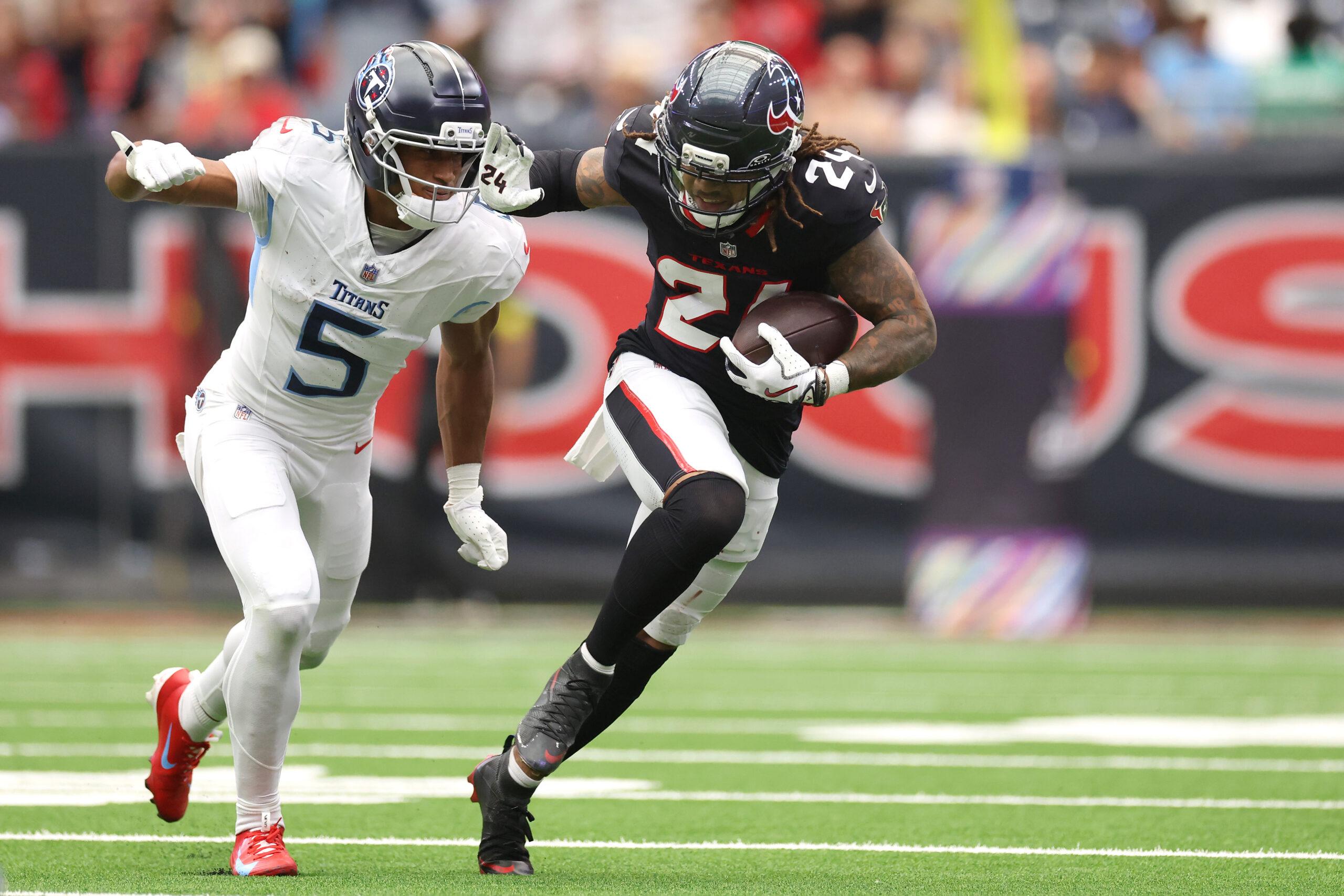
These are the cornerbacks you’ll find all over the stat sheet. The guys in this mold can handle themselves in one-on-one coverage, but they are at their best when they are baiting quarterbacks into making dangerous throws by jumping into passing windows and making game-altering plays.
Cornerbacks who play primarily in zone coverage—where they are responsible for guarding a certain part of the field, rather than a specific player—aren’t always compared fairly to their man-coverage peers. (Who can forget the great Darrelle Revis vs. Richard Sherman debates of the early 2010s?) Sherman didn’t play much man coverage during the heyday of Seattle’s Legion of Boom, but he would find himself in one-on-one situations because he was typically in a deep zone. One of the other great zone corners of this quarter century, Asante Samuel, thrived more as a route jumper when playing in an underneath zone.
What those two players had in common, though, was elite ball skills. They showed those off when they owned one particular part of the field. The best zone corners today take chances without leaving themselves vulnerable to explosive downfield passes.
Derek Stingley Jr., Houston Texans
Stingley didn’t just meet the expectation that he’d be one of the three best corners in football immediately after he was drafted with the third pick in 2022; with back-to-back All-Pro nods, he’s put himself on a trajectory to one day wind up on the list of all-time greats. Since overcoming early-career hamstring issues, he’s been the best ball-hawking corner—and arguably one of the most valuable defensive players—in the league because of how often he forces turnovers. In the clip below, Stingley undercuts an in-breaking route and makes the interception even though his coverage responsibility is meant to be over the top of the deepest receiver in his zone. That’s the kind of innate feel that made me believe he was a prodigious talent when he came into the league four years ago.
Stingley is always on the hunt for a chance at the ball, and that mindset has helped him get his hands on 66 balls—either interceptions or deflections—in just 54 career games. He is so fluid as a runner that he’s able to avoid succumbing to double-moves. Per Next Gen Stats, he had three games last year in which he didn’t allow a single receiving yard, and over the entire season, he had the lowest yards per target allowed in zone coverage. With 4.4 speed and a 6-foot-1 frame, he has the physical traits necessary to excel in press coverage, and his smooth feet make him one of the best at beating receivers to the spot on throws.
Quarterbacks have just a 55.1 career passer rating against him, so throwing Stingley’s way is a great way for a quarterback to lose games. As we head into the 2026 season, I would rank him as the league’s second-best cornerback behind Surtain.
Jaycee Horn, Carolina Panthers
Because of early-career injuries, Horn hasn’t quite entered the national consciousness like some other players we’re highlighting. But if you’ve watched the Panthers defense lately, then you know Horn has rare game-changing potential.
Horn could fit as either an island dweller or a zone hawk, depending on how Carolina chooses to play. The defensive scheme involves some one-on-one coverage on the perimeter—but mostly they’re running a Cover 3 scheme that allows Horn to play deep and hunt for the ball. His play style reminds me of Nnamdi Asomugha, who made four All-Pro teams in his 11-year career. Horn’s impact is most evident when opposing offenses are trying to create explosive passing plays. We saw this in Carolina’s matchup against the 49ers last season, when Horn had a pair of picks and seemed to teleport in front of receivers.
He doesn’t boast the same change-of-direction skills as some of the other elite corners, but he makes up for it with his raw strength in press coverage and his explosive speed to run stride for stride with any receiver. He’s made two Pro Bowls, and Horn can take a leap from underrated to heralded if he puts together another season in which he forces multiple turnovers.
Kamari Lassiter, Houston Texans
The Texans have two elite cornerbacks. Derek Stingley came into the league with the hype that comes with being a top-three draft pick, Lassiter’s development as a second-round pick is a credit to Houston’s coaching staff.
Lassiter’s mentality is what sets him apart from his peers. I’ve never seen a corner who seems to enjoy making football painful for his opponents the way Lassiter does. He is one of the most physical players in the league. What’s made him unique is his ability to combine that physicality with surprisingly good ball skills. He has had seven interceptions and 27 passes deflected in his two seasons, the kind of ball production that wasn’t so apparent during his college career at Georgia.
His in-game speed is better than his predraft workout numbers would suggest because receivers aren’t able to get behind him. He was targeted 97 times last year—and I’d bet that number stays high as long as he’s playing across from Stingley—and his passer rating allowed was a stingy 75.6. His 62 solo tackles speaks to his motor and would lead you to believe that he was a safety or slot corner instead of an outside corner. Lassiter is heralded as the best CB2 in football, and he’ll be paid like a CB1 after the 2027 season.
Honorable mention: Travis Hunter (Jaguars)
The Chess Piece
These are the players who blur the lines between cornerback, safety, and linebacker. It takes just as much work for offensive coordinators to figure out where these players will line up as it does to game-plan around their play-to-play impact. In either man or zone coverage, these players are able to defend the run or the pass. You want this style of cornerback as close to the line of scrimmage as possible.
What’s changed over the years is the context in which we view this versatility. When Pittsburgh’s Rod Woodson made the transition from corner to safety in 1993, it was because he had lost the foot speed to match up with receivers. The same was true for Charles Woodson and Aeneas Williams late in their Hall of Fame careers. Bucs great Ronde Barber, meanwhile, redefined what it means for an elite cornerback to play on the perimeter and as a nickel defender out of the slot.
The current players in this group are multifaceted defensive backs; all are good tacklers, blitzers, and coverage players. They may not check every box for prototypical size, but they’re complete players, and they allow their respective teams to put more speed on the field to defend modern offenses without being liabilities against the run.
(Note: We are not including players like Cooper DeJean, Derwin James, or Jalen Ramsey here because their primary position is safety.)
Devon Witherspoon, Seattle Seahawks
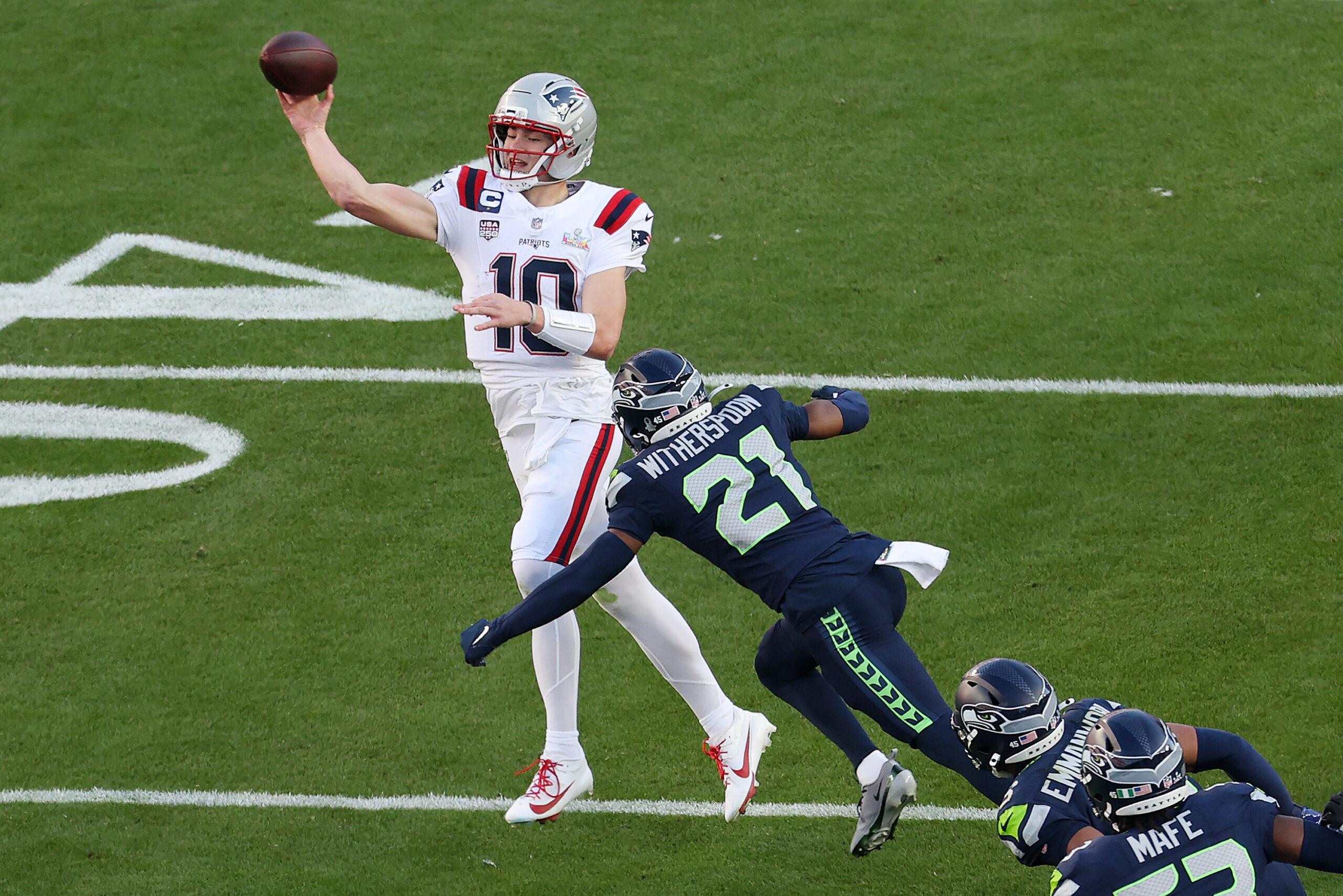
Witherspoon is this generation’s version of Ronde Barber. Seattle has changed up Witherspoon’s role in each of his first three seasons, and he’s performed at a Pro Bowl level no matter what’s been asked of him. As a rookie in 2023, Witherspoon was often used as a run stopper and blitzer out of the slot, and he finished the year with six tackles for loss and three sacks in 13 games. In Year 2, his first under Mike Macdonald, his role expanded beyond the slot. The Seahawks trusted him more in pass coverage on the perimeter, and by the end of the 2024 season, he had a relatively balanced distribution of snaps in the slot and outside. His role shifted again in 2025, when he had the fewest snaps of his career in the slot (226) as he planted his flag as a legitimate shutdown corner.
Toward the end of the NFC championship game last season, Seattle used Witherspoon to get two huge stops on pass attempts by Matthew Stafford. On both occasions in the clip below, Witherspoon locked down his man when Stafford tried to extend the play. With a performance like this in a high-stakes situation, it is no wonder Witherspoon recently became the highest-paid cornerback in the league.
Witherspoon is the tip of the spear for Seattle’s secondary. His ability to toggle between being an extra pass rusher, a run defender, and an aggressive coverage player makes his teammates better and unlocks Macdonald’s scheme. In Super Bowl LX, Witherspoon was Seattle’s best blitzer and tackler in space, and he was the linchpin of a defensive game plan that made the Patriots offense miserable all night.
Trent McDuffie, Los Angeles Rams
Before Witherspoon took the crown last season as the best inside-out cornerback in football, McDuffie was the top player in that role. Last season, the Chiefs asked McDuffie to do much of the heavy lifting to support his teammates, which may have prevented him from making as many game-changing impact plays as he’s capable of. In a cost-saving move for a rebuilding defense, the Chiefs traded McDuffie to the Rams in exchange for a package of draft picks, including a first-rounder.
This is a sampling of the type of production the Rams hope they’re getting in return:
McDuffie lives comfortably in press coverage on the perimeter, even though lining him up outside diminishes his impact as a blitzer. He allowed only 6.1 yards per target in 2025, the second-best mark of his career, and he still made the second-most tackles he’s had in a season so far.
His patience in coverage is as good as it gets, and he’s never afraid of being beaten over the top or losing a battle at the catch point. His signature performance was when he erased Deebo Samuel from the 49ers offense in Super Bowl LVIII, the culmination of a generational playoff run for a corner. The Rams are loading up for a Super Bowl run of their own and gave McDuffie a $124 million contract extension after the trade to anchor the back end of their defense.
More importantly, he won’t be asked to carry a star-studded defense in Los Angeles, which allows defensive coordinator Chris Shula to let McDuffie do what he does best as the textbook combination of blitzer and coverage player.
Honorable mentions: Marlon Humphrey (Ravens), Deommodore Lenoir (49ers), Alontae Taylor (Titans)
The Gambler
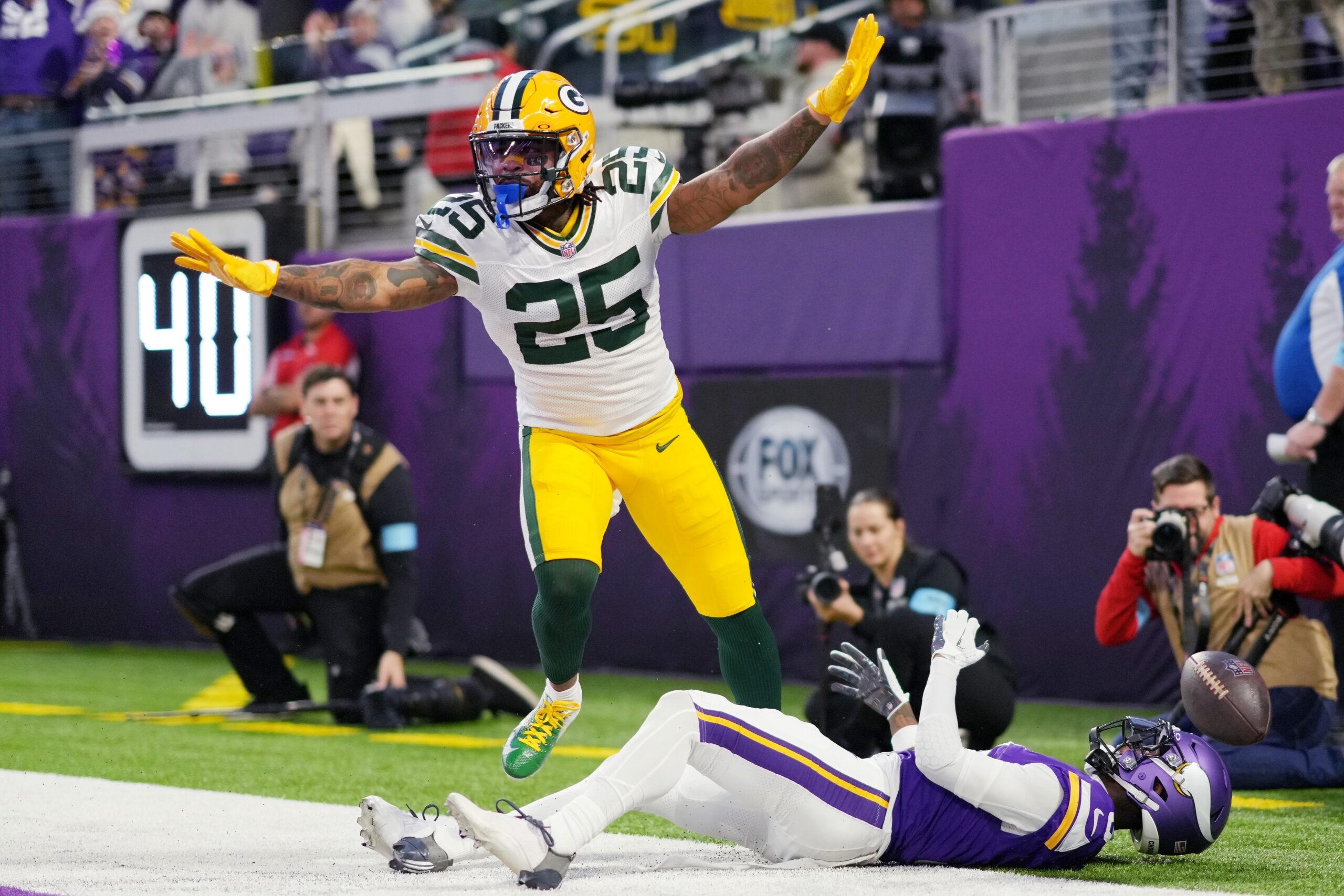
These are the feast-or-famine players. Imagine 2021 Trevon Diggs, when he had a ridiculous 11 interceptions (including two pick-sixes) but also gave up nearly 17 yards per reception on his 103 targets.
It’s not necessarily a backhanded compliment for a corner to be in this group. Rather, it’s an acknowledgment of the volatile nature of covering receivers in an era of explosive-play obsession. Although the risk outweighs the reward, some defenders are able to get away with playing aggressively. Others may only grab an interception or two and wind up giving up big plays, which can drive fans and coaches up a wall. The featured players in this tier are the best reflections of this style.
Jaylon Johnson, Chicago Bears
Johnson wants the ball in his hands—maybe more than he wants to shut a receiver down. When he was at his peak in 2024, he was just as good in one-on-one coverage as he was playing soft zones and trying to anticipate routes. He suffered tears to his adductor and groin muscles and missed most of last season, and after he spent so much time on the sideline, I'm fascinated in whether he’s retained his unique feel for where the ball is going. In the clips below, you can sense that Johnson knew exactly where the ball was going, how the quarterback wanted to throw it, and where the receiver planned to go next.
Johnson isn’t blazing fast (he ran just 4.5 in the 40-yard dash before the 2020 draft) and doesn't fit the physical prototype, but he’s able to win with technique and football IQ. His game reminds me more of former NFL cornerbacks Dre Bly and Sam Madison, players who made a living keeping an eye on the quarterback and jumping underneath passing routes. Johnson is disciplined enough to avoid getting beaten deep, but offenses can find completions against him in the intermediate area of the field because of how often he gambles. In all but one season in his six-year career, Johnson has allowed a passer rating over 90, and he has a career missed tackle rate of 13 percent—both far too high for a corner making nearly $20 million per year. Chicago needs more feast than famine from him in 2026, and he needs to up his turnover numbers to move into the conversation of the league’s elite corners.
Keisean Nixon, Green Bay Packers
Nobody defines a gambler quite like Nixon. He first climbed from being an undrafted free agent to one of the better kick returners in the league, and then he eventually earned a role as Green Bay’s top cornerback for the past three seasons.
Nixon’s highlights could convince you that he deserves to be on an island in one-on-one coverage, especially after he broke up 17 passes last season. His 4.4 speed shows up most when he’s breaking on the ball, but his technique and change-of-direction skills are too inconsistent for him to be a true superstar at the position. In two of the past three seasons, Nixon allowed a pass rating over 100—way too high for a true high-end corner—and now he’s on the clock to prove himself in a way no other starter on this list will be in 2026. The Packers drafted cornerback Brandon Cisse and signed veteran Benjamin St-Juste to compete for starting reps, and Nixon’s boom-or-bust play hasn’t translated into success during training camp.
Honorable mentions: A.J. Terrell (Falcons), Carlton Davis (Patriots), Riley Moss (Broncos), Riq Woolen (Eagles), Jack Jones (49ers), Tyson Campbell (Browns), Emmanuel Forbes (Rams), Mike Jackson (Panthers), Charvarius Ward (Colts)