How Hulk Hogan’s Heel Turn Changed Everything
When Hogan joined the nWo, he didn’t just rewrite his legacy. As this excerpt from David Shoemaker’s new book, ‘Why Hulk Hogan Matters,’ explains, Hulk’s shift to villainy recalibrated how fans watch wrestling—and what they expect out of storytelling on a much deeper level.How Hulk Hogan’s Heel Turn Changed Everything
When Hogan joined the nWo, he didn’t just rewrite his legacy. As this excerpt from David Shoemaker’s new book, ‘Why Hulk Hogan Matters,’ explains, Hulk’s shift to villainy recalibrated how fans watch wrestling—and what they expect out of storytelling on a much deeper level.
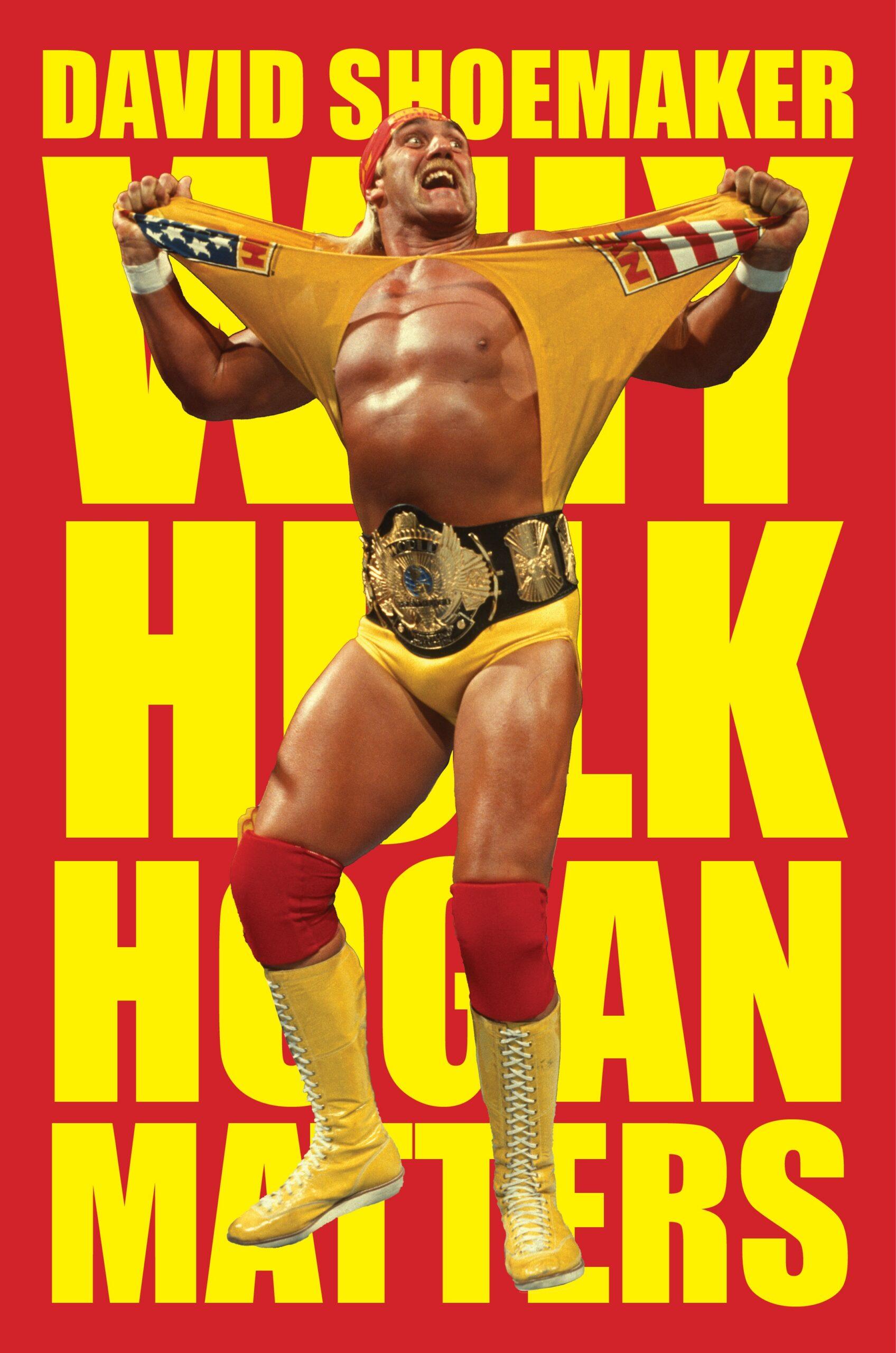
The following is a chapter from Why Hulk Hogan Matters. The book is out on July 28, published by Harper, an imprint of HarperCollins Publishers. You can buy it here.
Professional wrestling is built on promises it can’t keep. The biggest one—the one it sells to kids, advertisers, and occasionally itself—is that its heroes are immortal. That these athletes are gods, that the guy who taught you what right and wrong looked like will still be there when you come back years later, unchanged, muscles intact, morals preserved in amber. It’s an odd point of tension in pro wrestling; a lot of pro wrestling’s historical antecedents—theater, mythology, fables—are timeless in a way that its most straightforward precursor—legitimate wrestling, or boxing, or real sport in general—is absolutely not.
The issue is complicated by the fact that so many stars do seem to wrestle forever, and even the ones who don’t exist in our memories (and video collections) like our favorite superheroes, as ageless, symbolic golems. Any given wrestling broadcast will lean on both halves unthinkingly: that wrestlers are putting their bodies on the line at every moment, and that heroes last forever. Hulk Hogan himself, who looked relatively the same at his death as he did in 1983, was called “The Immortal One” right up until his last day, even as he was said to be in mortal danger in feud after feud.
Sometimes that false premise ends in tragedy. Sometimes it ends in a bit of creative genius. Wrestling needs that promise to exist, but it also needs to violate it periodically just to prove it’s alive. On July 7, 1996, at WCW’s Bash at the Beach, wrestling broke that promise in public. Loudly. And once it did, there was no going back.


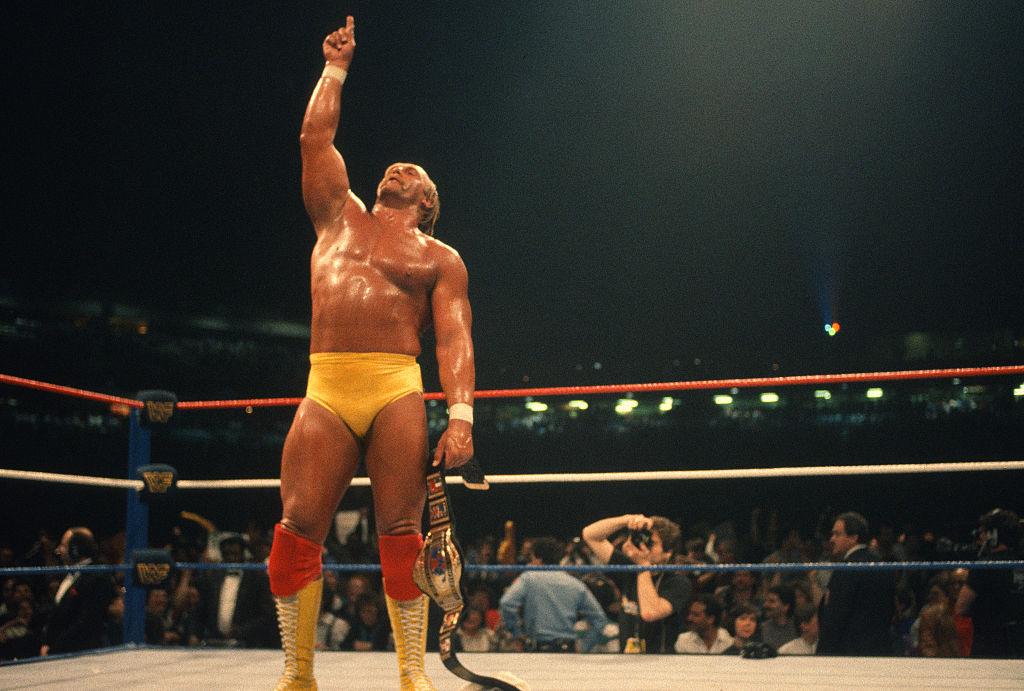
Hogan joining the nWo will be remembered as a heel turn. But it was more than that: a referendum—on nostalgia, on aging stars, on whether wrestling could admit that its audience had changed. Hogan didn’t betray the fans that night—he confronted them with a version of himself they already suspected was real.
The formation of the New World Order was shocking because the hero turned villain. It was more shocking because the villain sounded right.
To fully grasp why Hogan’s heel turn mattered, consider how long the lie had been wobbling. By the mid-1990s, Hulk Hogan was still wrestling’s eternal center, but at this point it was little more than a courtesy. Hogan was still famous, still physically imposing in a way that bent reality, but the culture that once needed him had moved on. Wrestling fans had changed, and wrestling had not.
Hulkamania wasn’t offensive; it was inert. It existed, but it no longer moved people.
The babyface ideals Hogan represented—clear morals, unambiguous triumph, performative patriotism—might have been meaningful in the 1980s, but they felt increasingly out of step with a post–Cold War, pre-internet America. Movies were darker. Television heroes were sarcastic and self-aware. Even sports had shifted toward personalities over institutions. Hulkamania wasn’t offensive; it was inert. It existed, but it no longer moved people.
Meanwhile, WCW was a company in search of relevance rather than stability. It had money, a national platform, and a roster full of talent, but it lacked the one thing wrestling needs most: urgency, the kind of creative electricity that, as they say in the business, puts butts in seats. The bare-knuckle vitality of the ’80s days of Crockett territorial programming was gone, and what was left in the national television era felt oddly small. The audience could sense that disconnect. They weren’t rejecting wrestling; they were rejecting monotony.
Then Scott Hall walked in through the crowd.
From the moment Scott Hall—known to that point as the WWF’s Razor Ramon—appeared on WCW television in May 1996, he felt like an immaculate programming error, a mistake that had wandered onto the wrong show. He was not in tights or ring gear; he looked like someone who wasn’t supposed to be there at all. No music. No introduction. Just jeans, a toothpick, and the implication of a hole in the space-time continuum. Most fans assumed he was still a WWF employee, and his appearance here did nothing to contradict that. He climbed into the ring, interrupting a match, and uttered the coolest, most menacing phrase in wrestling at the time: “You know who I am, but you don’t know why I’m here.”
Kevin Nash—“Diesel” in the WWF—followed soon after, bringing with him scale, menace, and credibility. Together, they weren’t framed as new signings (although they were—the latest Eric Bischoff acquisitions from the competition) so much as intruders. The brilliance of the Outsiders was that they exploited the one thing wrestling almost never lets itself exploit: the doubt that comes with an unreliable narrator.
Were they representing another company? Was this a storyline or a lawsuit waiting to happen? WCW didn’t answer those questions at first because answering them would have ruined the effect. The angle lived in the gray area between fiction and speculation, and that gray area felt thrilling because it mirrored how fans actually experienced wrestling. Everyone knew the results were predetermined, but every well-thrown punch instinctively brings that into question. Now, nobody knew how much of what they were seeing was supposed to be happening.
Hall and Nash didn’t need to cheat to feel dangerous. Their threat was existential. They weren’t trying to win titles; they were trying to hijack the narrative. Wrestling villains traditionally want power, but the Outsiders wanted control of the conversation. That distinction mattered.
From the beginning, the Outsiders angle demanded a third man. Not just for balance, but for legitimacy. Two invaders can be repelled. Three suggest infrastructure. A system. A future. Speculation ran wild. The third man was supposed to be a surprise, but it also had to be someone who could explain everything retroactively. Someone whose presence reframed the entire angle, not just advanced it. It had to be someone whose very existence raised the stakes.
In the end, according to Bischoff and the parties involved, it was either going to be Hulk Hogan or the babyface standard-bearer of WCW before Hogan’s arrival, Sting. Sting would have been interesting, but the inevitable next step—seeing this new faction endlessly feud with Hogan—would not. To fulfill the promise of the Outsiders angle, the only answer was the one person nobody could bring themselves to suspect. The third man had to be Hulk Hogan.
At Bash at the Beach 1996, WCW stalwarts Sting, Lex Luger, and “Macho Man” Randy Savage (it’s a stretch to call Savage a stalwart, sure, but he was famous enough for the role) were set to face off against the interloper team of Hall, Nash, and a mystery partner, with the soul of WCW on the line. No third man materialized, so the match was three against two. The Outsiders availed themselves well, considering, but the heroes had a slight upper hand when, during a melee, Nash deliberately hit Savage with an illegal low blow. The ref didn’t see it, so out came Hulk Hogan to defend WCW, and the rule-abiding order of wrestling. Or so it seemed.
The announce team included Bobby “The Brain” Heenan, a longtime foe of Hogan in the WWF who continued their beef through his arch commentary in WCW. The announcers were legitimately not privy to what was about to happen—management preferred to keep them in the dark and let them react organically. Falling back on his anti-Hulkamania shtick, Heenan accidentally presaged what was about to happen with what was meant to be a sarcastic question: “Whose side is he on?!”
Surprising everyone except those who took Heenan’s query seriously, Hogan leg-dropped Savage, tossed the referee out of the ring, and joined the Outsiders. Trash rained down from the crowd. For fans of my generation (and all following ones), this is the first time we had seen Hogan work heel; we may have favored other wrestlers over him, even his opponents, and he had not always availed himself as a moral icon, but he had always been presented that way. He had always been exactly the same character. Now he had turned our assumptions about him on their head. He laid into the fans and explained his thought process:
“These two men right here came from a great big organization up north. And everybody was wondering who the third man was. Well who knows more about that organization than me, brother? Well, let me tell you something! I made that organization a monster! I made people rich up there. I made the people that run that organization rich up there, brother. When it all came to pass, the name Hulk Hogan, the man Hulk Hogan, got bigger than the whole organization, brother!
“As far as I’m concerned, all this crap in the ring represents the fans out here. For two years, brother, for two years, I held my head high … I did everything for the charities … I did everything for the kids … and the reception I got when I came out here … you fans can stick it, brother, because if it wasn’t for Hulk Hogan, you people wouldn’t be here. If it wasn’t for Hulk Hogan, Eric Bischoff would be still selling meat from a truck in Minneapolis and if it wasn’t for Hulk Hogan, all these Johnny-Come-Latelies that you see out here wrestling wouldn’t be here. I was selling out the world, brother, while they were bumming gas to put in the car to get to high school.”
This is the part people forget when they talk about the shock of the turn: Hogan made more sense than anyone else. He was the only choice that completed the argument the angle was making. But, more important than that, everything he said was true, or at least true in Terry Bollea’s mind. For the first time, Hogan was leveling with the audience.
Hogan represented wrestling’s old power structure. He was the establishment that Hall and Nash were supposedly rebelling against. By joining them, Hogan didn’t just turn heel—he exposed the contradiction at the heart of that rebellion. The rebellion was the establishment. The future of wrestling was being dictated by the same people who had always dictated it, only now they were willing to admit it.
When Hogan came down the aisle at Bash at the Beach, the crowd still reacted on instinct. Cheers, relief, release. Hogan was here to save WCW from the invaders. That was the reflex. Then he dropped the leg.
Hogan’s post-turn promo is often remembered for the phrase “New World Order” (actually, he first called it the “New World Organization,” an uncharacteristic flub that let slip his anxiety in that epochal moment), but its real power came from its tone. It wasn’t cool. It wasn’t controlled. It wasn’t even especially articulate. It sounded defensive, resentful, and raw.
Hogan didn’t explain his betrayal in storyline terms. He didn’t claim moral superiority or hidden virtue. He complained. He scolded. He accused the fans of turning on him first. It was the speech of a man who believed, sincerely, that he had earned eternal loyalty and was furious to learn that fandom expires.
In another era, that could have killed the angle. Wrestling villains aren’t supposed to sound wounded. But in 1996, wounded confidence felt real. It matched the audience’s own cynicism. The fans booed because Hogan was telling a truth they didn’t want to hear.
The New World Order wasn’t introduced as a cabal of supervillains. It was introduced as a grievance. A shared resentment between performers who believed they’d been undervalued, misunderstood, or prematurely dismissed. Hogan didn’t turn evil—he turned honest.
Perhaps the most obvious—and enduring—question that spilled out of the Hogan turn: Why had Vince McMahon never tried this in the WWF? The most obvious answer is that he didn’t think it would work. Later in life, Hogan insisted that he had pitched Vince a heel turn at various points over his WWF career. It’s generally hard to believe Hogan on such matters, but at the same time it’s hard to imagine it didn’t cross Vince’s mind, since the turn is such an integral part of pro wrestling mythos. And after all, McMahon had turned André the Giant heel to get Hogan over. Why not turn Hogan to help the next generation? The most feasible answer to the question, though, is likely that McMahon didn’t want to. Both he and Hogan were creatures of habit. And by the time it was a good idea, he was ready to move on.
The immediate effects of the nWo were obvious and measurable. WCW’s ratings surged. Merchandise exploded. Their black-and-white T-shirts became cultural artifacts. Wrestling felt current in a way it hadn’t in years. Hogan undoubtedly extended the long tail of his cultural relevance by a decade or two. But the deeper impact was structural.
Before the nWo, wrestling storytelling, especially when it came to Hulkamania, was primarily episodic. Conflicts began, escalated, and resolved in neat arcs. Even long feuds were ultimately contained. The nWo rejected containment. It didn’t want to win or lose; it wanted to linger. Its victories didn’t feel like endings. Its defeats didn’t feel final. The matches themselves sat in the shadow of the revolutionary spirit.
This changed how fans watched wrestling. Attention became a currency. Continuity mattered. You were rewarded for remembering who had betrayed whom, who wore which colors, who hesitated for half a second too long during a run-in. Wrestling became more about the story you were tracking than the matches themselves.
The nWo also blurred the moral landscape. Babyfaces weren’t automatically virtuous; they were reactive. Heels weren’t just rulebreakers; they were provocateurs. The question wasn’t “Who’s right?” but “Who’s winning control?” That shift influenced everything that followed, across companies and eras. Wrestling learned that ambiguity—the very thing that Hulk Hogan had battled against for his entire career up to that point—wasn’t a weakness. Ambiguity was the hook.
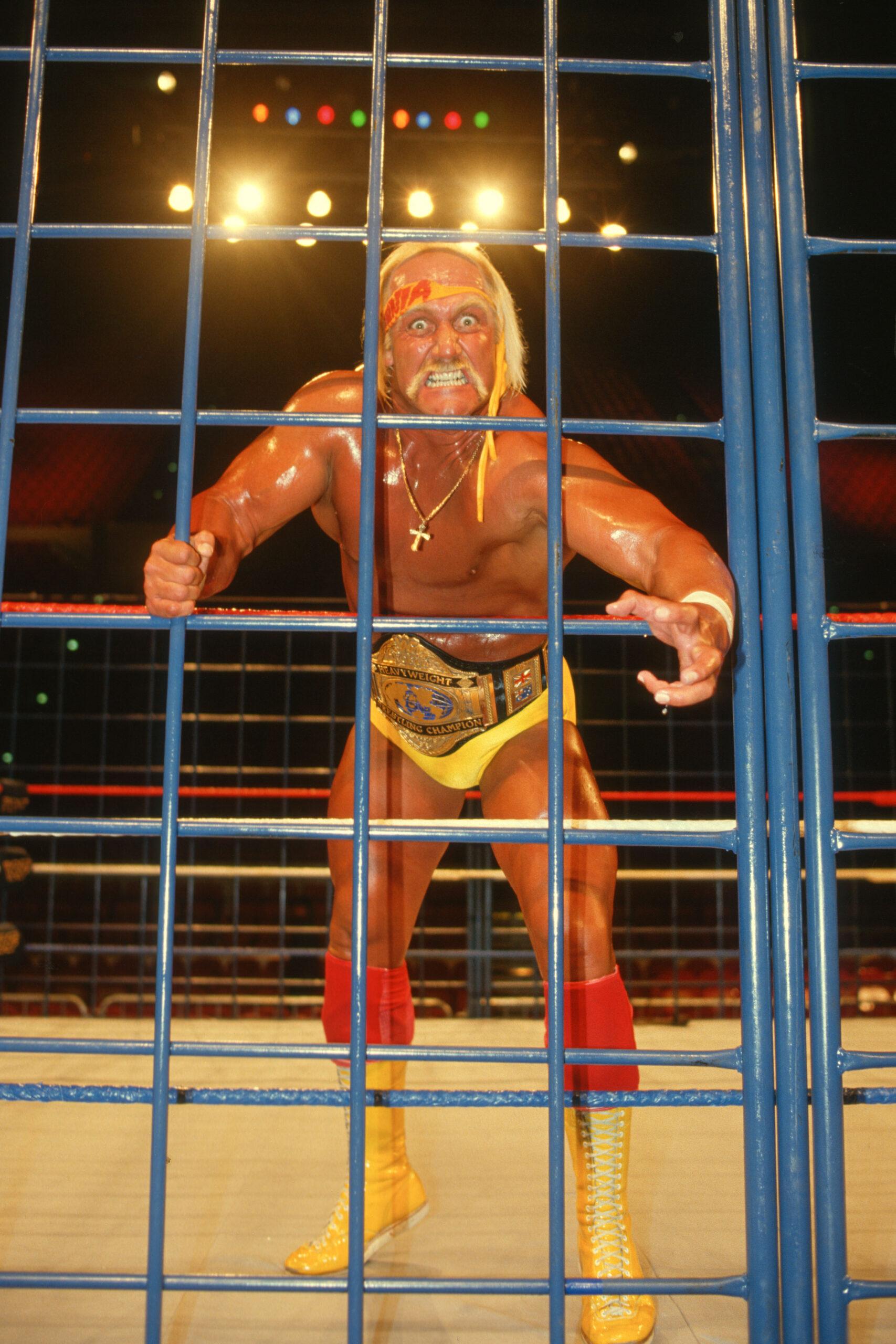
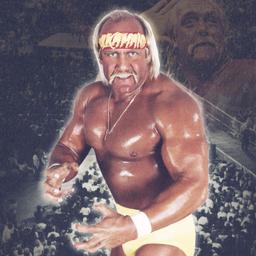
For Hogan personally, the nWo wasn’t just a reinvention. It was a recalibration of his entire legacy. “Hollywood” Hogan was not simply the inverse of Hulkamania—it was a commentary on it. He had a dense black stubble connecting his blond sideburns and mustache, sunglasses obscuring his baby blue eyes, and a slow, arrogant strut. These things seemed to mock the past as much as replace it. Hogan turned his famous flexes and poses into taunts. He weaponized his own iconography.
This allowed Hogan—finally—to age in public without pretending he wasn’t aging. He could be slower, lazier, more self-indulgent, and it all fit the character. The crowd didn’t demand moral clarity from him anymore. They demanded realism, or at least something that felt like it.
The cost of this transformation was permanence. Once Hogan acknowledged the transactional nature of his relationship with the audience, he couldn’t fully unacknowledge it. Every subsequent babyface run carried an implicit wink. Every patriotic speech felt conditional. But that permanence is what made the turn meaningful. Hogan accepted that his myth had cracks and chose to live through them rather than pretend they weren’t there.
Though the nWo revolutionized heeldom and led to the breakouts of several new stars like Goldberg, the Hogan nWo years weren’t entirely free of uncomfortable nostalgia. With him now ensconced as a heel, WCW brought in old (largely out of work) Hogan foes like Roddy Piper and the Ultimate Warrior to try to recapture their WWF-era glory. Needless to say, these did not come across as innovation. The nWo breathed new life into the sport, but the fallout was almost immediate: Hogan, reinvigorated by his villainy’s success and by the return of his centrality, became a backstage politician to a degree previously unfathomed, as if his on-screen heroism had been keeping his real-life baser instincts at bay.
More on Hulk Hogan
The lowest moment (or second lowest after the Fingerpoke of Doom, grievances vary) was the match between Hogan and Sting at Starrcade 1997. Sting—formerly a Technicolor babyface—had grown dark and despondent in the nWo era. He loomed in the rafters, a constant vague threat to Hogan and his partners. When they finally met in the ring for the WCW title, the anticipation was high—but the execution was terrible. The plan for the ending of the match was fine, if a little too cute: Hogan would pin Sting, the referee—paid off by Hogan (in an evocation of the Hogan-André Main Event match)—was to count to three in hyperspeed, illegally awarding Hogan the win. Then, new WCW hire Bret Hart would come out and demand the match be restarted (a reference to his own departure from the WWF in the infamous Montreal Screwjob), after which Sting would win the title. The only problem was that the referee didn’t count quickly. Hogan won the first fall with a totally normal one-two-three, and so he deserved to win the match, making Hart look like a fool for complaining, and Sting like a dupe for celebrating his eventual win. There has been much debate over the years about whether the referee just messed up, or whether Hogan had convinced him to do it to make Hogan look good. When we have reached the point that the most compelling (and disappointing) part of any Hogan story is litigating the part we don’t see on the screen, we’ve discovered rock bottom.
The kind reading of the situation from a macro view is that the New World Order eventually became too successful for its own good. As the stable expanded, it lost the intimacy that made it compelling. The original grievance gave way to bureaucracy. What began as a hostile takeover became a corporate sprawl. That overreach is often cited as evidence that the nWo “went too far,” but that misunderstands the nature of the angle. Revolutions don’t end because they succeed too much; they end because they become systems. The nWo stopped feeling dangerous once it felt inevitable.
Even in decline, though, its influence remained. Wrestling never went back to the pre-nWo world. Reality-adjacent storytelling became expected. Audiences became more comfortable booing their childhood heroes and cheering their former villains. They were in on the big lie now, and there was no returning to the status quo.
But the impermanence of Hogan and the nWo, or its success relative to its potential, shouldn’t have a bearing on the importance of Hogan’s heel turn. By turning heel, by embracing the uncertainty and thumbing his nose at the fans for the first time in years, Hogan realized that the only immortality in pro wrestling comes with adaptability. It comes with fluidity. It comes with taking your biggest weakness and making it your biggest strength. Pro wrestling provides a platform for that—you just have to get a little trash thrown at you sometimes.
Hogan realized that the only immortality in pro wrestling comes with adaptability.
Hogan joining the nWo endures not because it was surprising but because it was necessary. Wrestling had reached a point where pretending the past could carry the future was doing more harm than good. The turn didn’t destroy Hulkamania; it contextualized it. Hulk Hogan matters because he forced pro wrestling to admit that its audience had grown up—and that growing up didn’t mean abandoning the past, just interrogating it. Hogan didn’t ask for forgiveness. He demanded acknowledgement. The crowd responded with rejection—which, in wrestling, is all the acknowledgment anyone could ask for. Boos are as good as cheers; any reaction, any investment by the crowd is the goal. Wrestling got better for Hogan’s embrace of rejection.
In the end, the red and yellow didn’t die that night at Bash at the Beach. It became history instead of policy. And that distinction—between honoring the past and being ruled by it—is the line wrestling crossed when Hogan dropped that leg. Everything after has been wrestling trying, in one way or another, to live on the other side of that line.
This piece has been lightly edited to fit the excerpt format.
From the book Why Hulk Hogan Matters. Copyright (c) 2026 by David Shoemaker. Published on July 28 by Harper, an imprint of HarperCollins Publishers. Reprinted by permission.