‘House of the Dragon’ Episode 6: The Death We’ve All Been Waiting For
Was Criston Cole responsible for the Dance of the Dragons? Maybe not … but that doesn’t mean he was worth singing songs about.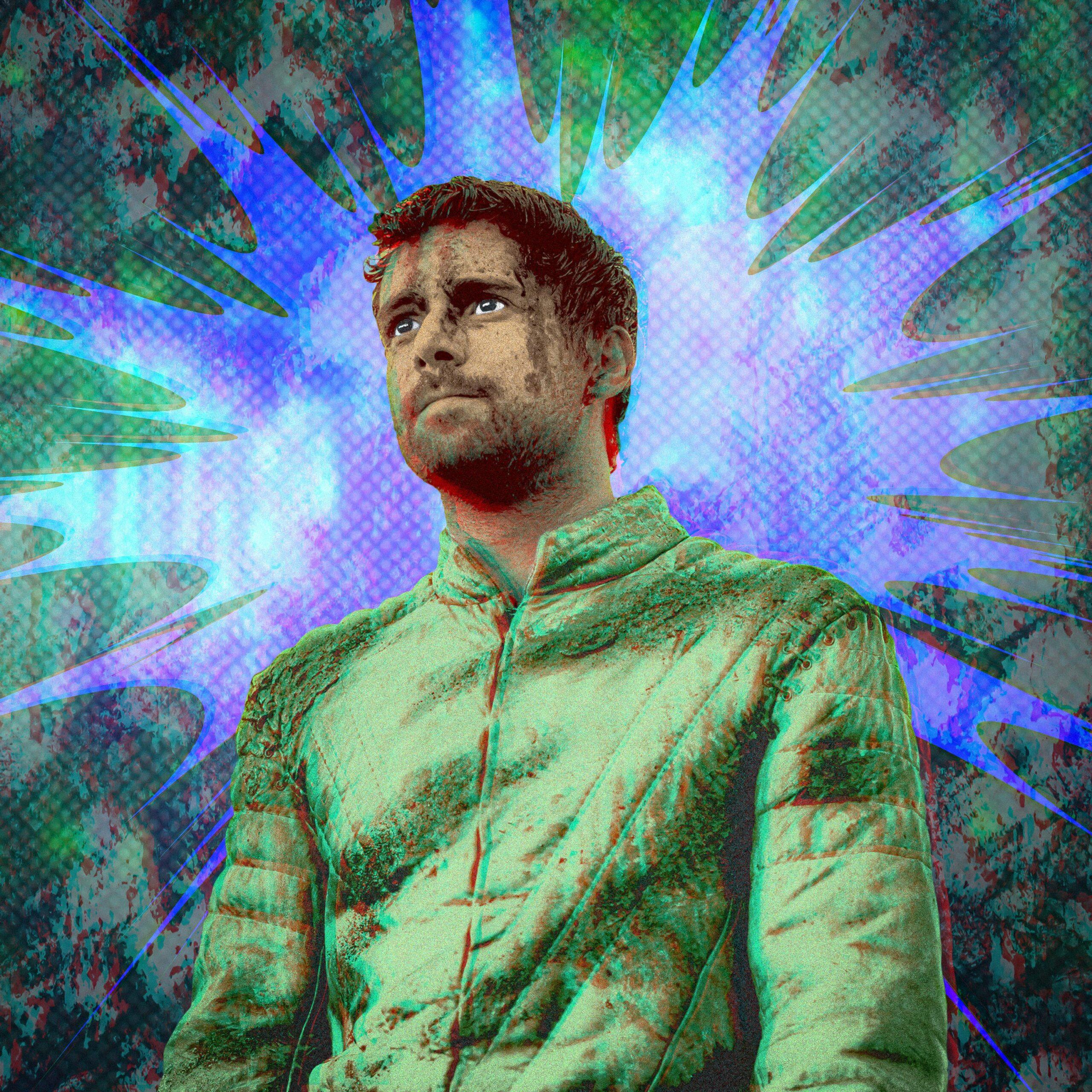


Last week, Criston Cole—the Kingmaker, Lord Commander of the Kingsguard, and hand of the king to Aegon II—told Gwayne Hightower exactly how he wanted to die. “I am the realm’s greatest warrior, and I will die as such,” he said. “Clear-eyed. Unbent. Glorious in battle. … And they will sing songs of it. And Queen Alicent herself will hear them.”
Well, if you’re a Criston Cole hater—as you should be—this was a most appropriate end for a knight who was always the picture of spite and hypocrisy. There was no glorious battle, and there will be no songs sung of it. Certainly nothing that will reach Queen Alicent, who at this point doesn’t seem to have thought much about Criston in quite some time. Just some arrows to the chest and face, and a group of men led to their deaths with little to show for it.
But I would be remiss if I didn’t mention that it happens just a bit differently in Fire & Blood. In the book, Criston is indeed shot down by arrows. But there are a few other characters, and one—Pate of Longleaf, who is called “the Lionslayer” because he killed Jason Lannister—delivers an epic line that book readers will be sad to see cut. Here’s how this scene goes down in Fire & Blood:
“I made my promise to the dead,” Ser Garibald replied. “I told them I would build a sept for them out of traitors’ bones. I don’t have near enough bones yet, so …”
Ser Criston answered, “If there is to be battle here, many of your own will die as well.” The northman Roderick Dustin laughed at these words, saying, “That’s why we come. Winter’s here. Time for us to go. No better way to die than sword in hand.”


Ser Criston drew his longsword from its scabbard. “As you will it. We can begin here, the four of us. One of me against the three of you. Will that be enough to make a fight of it?”
But Longleaf the Lionslayer said, “I’ll want three more,” and up on the ridge Red Robb Rivers and two of his archers raised their longbows. Three arrows flew across the field, striking Cole in belly, neck, and breast. “I’ll have no songs about how brave you died, Kingmaker,” declared Longleaf. “There’s tens o’ thousands dead on your account.” He was speaking to a corpse.
This quote from Garibald is given to Oscar Tully in House of the Dragon, while Roderick Dustin retains his lines about dying with sword in hand. I guess the showrunners didn’t want to give Oscar another quote from yet another cut character, as Pate of Longleaf’s famous line—“I’ll have no songs about how brave you died, Kingmaker”—is omitted entirely.
After the show seemingly built up to this moment last week, it’s a surprise to cut that line … but not necessarily a shame. Fire & Blood readers remember Criston Cole’s death for this smoking one-liner. But in skipping it, the show makes his death even more inglorious. He’s one of the major characters in the first two and a half seasons of this show, yet he dies in the first seven minutes of the sixth episode of this season and the episode immediately moves on to a Small Council meeting. Can you think of any major characters from Game of Thrones who die with less drama or fanfare? Omitting Pate of Longleaf and his iconic line may not be strictly true to the text, but it is in the spirit of it, when you think about it.
Flash forward about 150 years, and it’s true that there are no songs about Criston Cole. In A Song of Ice and Fire, he is mentioned only three times, all in A Feast for Crows. The first time his name ever appears is when Ser Arys Oakheart, a knight of the Kingsguard, is discussing the succession of the crown with Arianne Martell. Arys has been dispatched to Dorne to protect Myrcella Baratheon, and Arianne argues that Myrcella is more fit to rule than Tommen. In Dorne, firstborn children inherit authority, regardless of gender. Of course that’s not how things work in the rest of Westeros, leading to an argument:
“You twist my words. I never said ... Dorne is different. The Seven Kingdoms have never had a ruling queen.”
“The first Viserys intended his daughter Rhaenyra to follow him, do you deny it? But as the king lay dying the Lord Commander of his Kingsguard decided that it should be otherwise.”
Ser Criston Cole. Criston the Kingmaker had set brother against sister and divided the Kingsguard against itself, bringing on the terrible war the singers named the Dance of the Dragons. Some claimed he acted from ambition, for Prince Aegon was more tractable than his willful older sister. Others allowed him nobler motives, and argued that he was defending ancient Andal custom. A few whispered that Ser Criston had been Princess Rhaenyra’s lover before he took the white and wanted vengeance on the woman who had spurned him. “The Kingmaker wrought grave harm,” Ser Arys said, “and gravely did he pay for it, but ...”
A few pages later, Criston comes up again, with Arianne invoking him as a parallel to a character named Anders Yronwood, who, she alleges, is conspiring against her own succession. It seems that with a century and a half of hindsight, Criston is regarded as a kind of Wormtongue:
“Anders Yronwood is Criston Cole reborn. He whispers in my brother’s ear that he should rule after my father, that it is not right for men to kneel to women ... that Arianne especially is unfit to rule, being the willful wanton that she is.” She tossed her hair defiantly. “So your two princesses share a common cause, ser ... and they share as well a knight who claims to love them both, but will not fight for them.”
Finally, three chapters later, Criston Cole’s name surfaces again, as Jaime discusses Kingsguard knights of the past with Loras Tyrell. The two are flipping through the White Book, the tome where all the deeds of Kingsguard knights are recorded, talking about who history remembers and who it forgets:
“A lot of brave men have worn the white cloak. Most have been forgotten.”
“Most deserve to be forgotten. The heroes will always be remembered. The best.”
“The best and the worst.” So one of us is like to live in song. “And a few who were a bit of both. Like him.” He tapped the page he had been reading.
“Who?” Ser Loras craned his head around to see. “Ten black pellets on a scarlet field. I do not know those arms.”
“They belonged to Criston Cole, who served the first Viserys and the second Aegon.” Jaime closed the White Book. “They called him Kingmaker.”
That’s the end of that chapter and the final mention of Criston in any of the A Song of Ice and Fire novels. Loras is just a teenager in the books, but the fact that he hasn’t even heard of Criston—while others largely regard him as responsible for this civil war—is telling. No one thinks of Criston as “the realm’s greatest warrior,” as many other knights have been remembered. No one believes he died “clear-eyed. Unbent. Glorious in battle.” And no one sings any songs. At best they think he helped start a massively destructive civil war to defend “ancient Andal custom,” and at worst he did so out of personal ambition and vengeance.

But this brings up a good question: Is Criston Cole responsible for the Dance of the Dragons? I think he’s definitely not. Viserys’s succession crisis runs far deeper than Criston’s personal grievance against Rhaenyra, and in House of the Dragon’s telling of the story, he doesn’t really do much of the Wormtongue-esque advising that leads Aegon II to take power. Otto is the larger architect here, and Criston is more of a useful pawn.
But that doesn’t mean he’s innocent. Let’s not forget what a horrible person and knight Criston was. In fact, let’s recount his sins.
Shortly after becoming a knight of the Kingsguard, Criston breaks his vows and has an affair with Rhaenyra, the princess he is supposed to protect. He deals with his shame from that incident by murdering Joffrey Lonmouth after Joffrey implies he knows of the affair at Rhaenyra and Laenor Velaryon’s wedding. He encourages Alicent’s sons to bully and harass Rhaenyra’s sons, despite orders from King Viserys to train both sets of princes equally.
Hours after Viserys’s death, Criston kills Lyman Beesbury at the Small Council meeting in which the Hightowers and their allies officially usurp Rhaenyra. Beesbury’s death is the first blood shed in the civil war. Criston then immediately draws his sword against his Lord Commander, Harrold Westerling, when Westerling orders Criston to remove his cloak. When Harrold resigns his post, Criston becomes Lord Commander of the Kingsguard, and he places the crown on Aegon’s head.
Finally, Criston breaks his vow of celibacy again by sleeping with Alicent, an affair that later helps lead to the death of Jaehaerys Targaryen, Aegon and Helaena’s son, as Criston was supposed to be on the watch that night.
At every turn he is a self-righteous hypocrite, and the smallest justice that comes out of his death is that at least there are no songs written about him.