‘House of the Dragon’ Episode 5: Is There More to Power Than Dragons?
Rhaenyra lacks the love of the smallfolk, the loyalty of the gold cloaks, the devotion of the Faith, the strength of an army, the discretion of her advisers, or any gold to pay anyone off with. What does she have?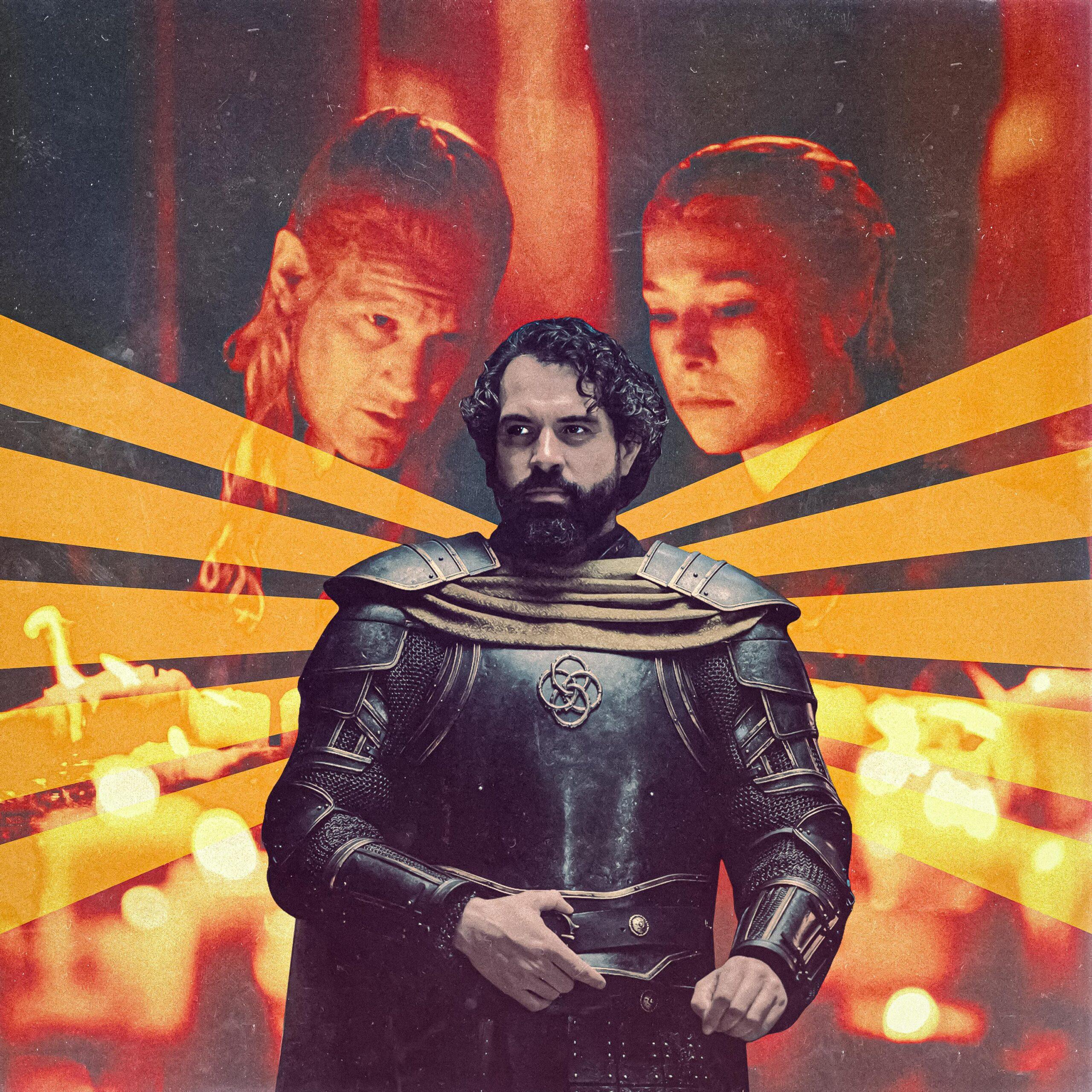


In Season 1 of House of the Dragon, Daemon takes Rhaenyra—then played by Milly Alcock—on a tour of King’s Landing. There, they catch a play about King Viserys’s succession.
“Who will it be?” says the actor on the stage. “The brother, the daughter, or the little princeling of three?”
The audience boos at the idea of Rhaenyra on the throne, and they cheer at the idea of her half brother Aegon succeeding Viserys instead.
“Many of the smallfolk are like to believe that as a male, Aegon should be the heir,” Daemon explains.
“Their wants are of no consequence,” Rhaenyra fires back.
“They’re of great consequence if you expect to rule them one day,” Daemon replies.
Two seasons and roughly two in-universe decades later, Rhaenyra is now ruling the smallfolk. And she’s finding out that their wants are of consequence—as are the wants of the nobility, the Faith of the Seven, the maesters … you get the idea. It takes more than dragons to rule the Seven Kingdoms, and Rhaenyra is light on soldiers, gold, and allies.
How big a problem will that be for her going forward? Let’s take a page out of Ormund’s playbook (regrettably) and look at history to see what Rhaenyra could learn about how to control the Seven Kingdoms now that she has the throne.


Rhaenyra’s first big headache in this episode comes in a conversation with Sabitha Frey, the ruling lady of House Frey after her husband, Forrest, died at the Battle by the Lakeshore. Jacaerys had promised Harrenhal to the Freys in exchange for allowing the Winter Wolves—the Northmen who have joined Daemon’s army in the Riverlands—to cross the Trident at the Twins. Now Rhaenyra is backtracking on that promise, as she’s put word out that anyone who brings her Aemond’s head will get Harrenhal.
Hmmm, a would-be monarch going back on a promise with the Freys after securing the use of their river crossing … sound familiar? We all remember what happened to Robb Stark after exactly such a transgression. But Robb didn’t have a dragon, and Rhaenyra does. Does that mean she can get away with spurning the Freys? For now, Sabitha is sitting on Rhaenyra’s Small Council, though she isn’t exactly doing so enthusiastically.
Sabitha is the latest example of Rhaenyra’s problems with Westeros’s nobility. While many have backed her claim to the throne, they didn’t do so for nothing—they all want to be rewarded in return. And Rhaenyra isn’t exactly going out of her way to make friends. In Episode 3, she served many of King’s Landing’s nobles rats for dinner as a statement to express her disgust at their wealth while the smallfolk go hungry. Meanwhile, she has the City Watch raid these nobles’ homes to redistribute their food and wealth.
“They’ll resent you for this,” Daemon warns her then. “It will help a certain number of people for a certain number of weeks and do nothing for the rest of them. It is a gesture only.”
Rhaenyra says that gestures matter, yet here we are just two episodes later, and the smallfolk don’t exactly seem to be in love with their queen. They are skirmishing with the City Watch, painting graffiti across the city with slogans like “Queen of Bastards.” There is even some sort of shadow insurgency going on, with multiple gold cloaks turning up dead with little explanation.
Meanwhile, the gold cloaks themselves are also upset—they aren’t being paid, and the streets of King’s Landing are more dangerous than ever. Mysaria and Daemon represent the two sides here. In this episode’s Small Council meeting, Daemon sarcastically remarks that they should’ve sent “bread and ladlefuls of stew” to the smallfolk after two gold cloaks were found slain that morning. Mysaria retorts that the City Watch should have shown restraint “by some miracle.”
Both sides are a problem. The smallfolk in King’s Landing and across the realm are largely poor and without any say over the mechanics of the realm. They are often an afterthought to the monarchs and nobility. But they do not lack in numbers and can be a force when acting together. Think back to Season 2 of Game of Thrones when a riot breaks out, resulting in the High Septon being torn limb from limb as Joffrey, Tyrion, Sansa, and the rest of the royal procession rapidly retreat to safety. That riot was downstream of the War of the Five Kings and the unrest it caused in the capital city.
Since the Crownlands can’t produce enough food to support King’s Landing’s large population, the city imports food from the rest of Westeros. That means war heavily impacts the city and quickly starves the smallfolk, leading to unrest. This, too, should sound familiar—the Dance of the Dragons has also been waging for some months now. Last season Rhaenyra sent some food to King’s Landing when she heard the smallfolk there were starving, but that was a small gift. Now she’s in charge, and every day people need food that she’s unable to fully deliver. Plus, if the smallfolk think hard, they will remember that it was Rhaenyra’s blockade of the city that caused the shortage of food in the first place.
Keeping order should be the City Watch, which, as we’ve seen, is still loyal to Daemon. But loyalty goes only so far. The gold cloaks are closer to being sellswords than knights—across the series, we’ve seen that their loyalty is won more with gold than with oaths. In Season 1 of Game of Thrones, when King Robert is about to die, Ned realizes that he will need men to oppose the Lannisters. He needs the City Watch, and he asks Littlefinger for help in securing them.
“When the queen proclaims one king and the hand another, whose peace do the gold cloaks protect?” Littlefinger asks rhetorically. “Who do they follow? The man who pays them.”
Littlefinger agrees to pay the gold cloaks on behalf of Ned, but actually does so on behalf of Cersei and the Lannisters, and we all remember how that ultimately turns out for Ned. Right now, with Rhaenyra, no one is paying the gold cloaks, and they’re facing a revolt that they seem ill-equipped to handle. “We depend on those men now to secure your rule,” Daemon tells Rhaenyra this episode. Then later, “at this moment, there is a disturbance in your city, and you yourself are its likely cause.”
Later, Daemon gives the City Watch a rousing speech in which he promises that they’ll be repaid double for the sacrifices they make now. It works … until the episode ends on a scene straight out of a horror film, with nine dead gold cloaks around a table and the words “a feast for traitors” scrawled in blood on the wall behind them. The dead include Ser Luthor Largent, the leader of the City Watch, who, unlike most of the young men that make up the rest of the ranks, got his gold cloak from Daemon himself, back when Daemon led this force.
We also learn in this episode that it is Ormund helping instigate this conflict. He’s paying the smallfolk—in coins with Daeron’s images on them, no less. But it’s also worth pointing out that Rhaenyra herself is making it worse, too. While she tells Daemon at one point that she didn’t ask Luthor to be brutal in putting down unrest, her vigor in giving the orders to hunt down this insurrection sent a different message. Daemon later tells Luthor to “temper” his queen’s orders, but it’s muddy leadership at best.
There is almost no one outside the City Watch to help keep order, by the way. When we last left off with Corlys Velaryon, he was screaming at Rhaenyra about her children being bastards after she refused to legitimize his. And the Velaryon fleet and armies are depleted anyway—Alyn informs Rhaenyra in this episode that it will take some time to rebuild their numbers. Meanwhile, Daemon’s army is stuck in the Riverlands, slowed by Criston Cole and his forces. Rhaenyra has to pull from her own household guard to send more men to the streets, which is what opens the door for Alicent and Helaena’s initial escape attempt. The lack of manpower has the situation looking dire.
Gold and food would go to tremendous lengths to help Rhaenyra now. But those are not the only things needed for a monarch to secure power and control in Westeros. Another is religion. In this episode, Rhaenyra spends some time praying at King’s Landing’s sept. Daemon laughs when he finds her there. “They require of me, perhaps, some show of deference, or regard,” she explains. “The people, or the Seven?” he asks. “Both,” she replies.
Remember last week, when the High Septon refused to anoint Rhaenyra? The High Septon—whose name hasn’t been confirmed—tells her it cannot be done because he already anointed Aegon. Rhaenyra says that Aegon is dead, but the High Septon disputes this because they haven’t seen Aegon’s remains.
“My gods do not deal in dragons,” he tells her. “They are a profane magic, created in darkness and pride and lust for power, for impunity. They destroy, but they do not create. There is no good that can come of them.”
He concludes: “With respect, I advise you, do not make an enemy of the Faith.”
The Targaryens have long had tension—to say the least—with the Faith. Aegon the Conqueror and his sisters converted to the Faith of the Seven as a political gesture, but uprisings of the Faith Militant were frequent during the successive reigns of Aenys and Maegor, as the Faith disagreed over the Targaryens’ practice of incest. This long war with the Faith is a large reason why Maegor’s reign eventually ended, and the bloodshed didn’t fully subside until King Jaehaerys created the Doctrine of Exceptionalism, explicitly allowing the Targaryens to continue their practice of incest (but not polygamy).
Ever since, Targaryens have worked to make sure the Faith is not their enemy, even if most Targaryens have not been particularly pious. Rhaenyra hasn’t done anything explicit to set the Faith off, but it’s worth noting that the Faith is based out of the Starry Sept in Oldtown, where the Hightowers rule. The Hightowers don’t control the Faith, but the two have a close relationship (hence the strong religious iconography seen in characters like Alicent and Ormund), and it makes sense that the High Septon is a bit more willing to back Aegon than he is Rhaenyra, given that context. Rhaenyra’s show of faith doesn’t seem to go far this episode either, as her conversation with Daemon in the sept devolves into an argument heated enough that even their switch to High Valyrian can’t hide that they aren’t exactly praying to the Seven. It’s hard to think she won over any septons or septas within earshot with that performance.
Finally, while it’s not at the same level of importance as these other elements, Rhaenyra doesn’t have the loyalty of the maesters, either. She let Orwyle keep his position as grand maester when she took King’s Landing earlier this season (in contrast to Fire & Blood, where she has Orwyle imprisoned), yet in this episode Orwyle delivers moon tea to Alicent, clearly without informing the queen. Like the Faith of the Seven, the order of maesters is also based out of Oldtown, meaning they have proximity to the Hightowers. But Orwyle hasn’t been shown to be particularly loyal to the Hightowers (in contrast to, say, Thrones’ Grand Maester Pycelle, who was always a Lannister puppet), so it’s odd he goes rogue to do Alicent this favor in this episode. What’s worse—Mysaria finds out and doesn’t inform Rhaenyra. Some advisers!
It’s starting to look quite dire. Rhaenyra lacks the love of the smallfolk, the loyalty of the gold cloaks, the devotion of the Faith, the strength of an army, the discretion of her advisers, or any gold to pay anyone off with. What does she have to maintain control of Westeros?
Increasingly just this: six dragons. That should be enough, right?
Between Game of Thrones and House of the Dragon, we’ve heard a lot about the great Aegon the Conqueror. The story we usually get on the screen is a CliffsNotes-style mythology. Aegon came across the Narrow Sea with his three dragons and rapidly brought the kings of Westeros to heel, uniting the continent for the first time in its history. Soldiers are simply no match for dragons, and so Aegon swiftly conquered all.
Only, the story actually isn’t so simple. In this episode, Ormund shares the story of Meria Martell, the yellow toad of Dorne. “The only woman to have been gifted with a truly military mind,” Ormund tells Daeron. As Ormund wants Daeron to understand, Aegon was not totally successful in uniting Westeros. Dorne held out thanks to some guerrilla warfare—they burned their own fields, poisoned their own wells, and hid their people in caves—which made conquering the territory as difficult as possible. The Dornish even ended up killing Aegon’s sister-wife, Rhaenys, and her dragon, Meraxes, after a scorpion bolt pierced the dragon’s eye. Eventually, Aegon had to abandon his campaign and recognized Dorne as an independent kingdom, which it remains at the time of House of the Dragon. Aegon the Conqueror, bested by a blind, elderly, overweight, bald woman. Not exactly what you think of when you think of Aegon the Conqueror, right?
“Is she a hero then, or a villain?” Daeron asks.
Ormund dodges the question, explaining that, in his view, the Targaryens conquered Westeros thanks only to their strength—their dragons. But Meria Martell outwitted her enemy. “A cunning mind can resist the most savage of beasts,” he concludes.
Rhaenyra still has that traditional Targaryen strength, the unmatched dragon power that can overwhelm whole armies. But as this episode showed, she has almost nothing else. Ormund thinks he can become another Meria Martell. Time will tell whether he’s right.