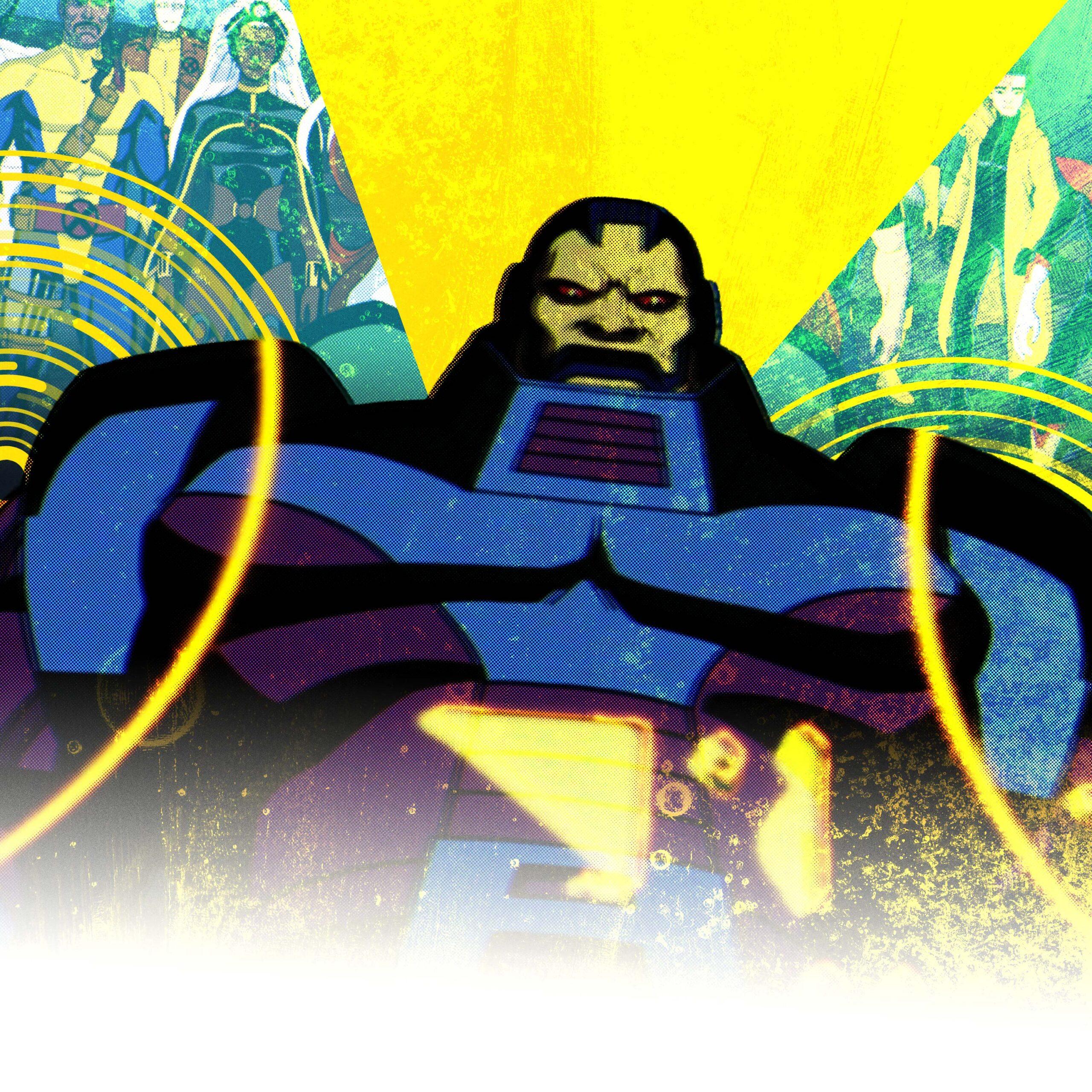

Even though the first season of X-Men ’97 arrived with plenty of fanfare when it was released in 2024, it exceeded all expectations. The revival marked the continuation of X-Men: The Animated Series more than 25 years after the bittersweet conclusion of its original 76-episode run. The 1990s Saturday-morning cartoon was a massive hit that forged a path for the mutants’ mainstream popularity to flourish and eventually translate to the big screen. And decades later, X-Men ’97 honored its legacy by further elevating its material.
With its excellent storytelling and dynamic animation, X-Men ’97 set a new standard for Marvel Animation. The series built on what worked in X-Men: TAS and injected it with fresh ideas and a refined focus on tight, emotional story lines that bled into one another. Episode 5, “Remember It,” earned an Emmy nomination for Outstanding Animated Program and remains one of the best episodes of television Marvel Studios has ever produced. And after a two-year wait, X-Men ’97 returns with a second season that builds on the show’s early success with a bigger and bolder story.
Season 2, which premiered with a three-episode release on Wednesday, picks up after the dramatic Season 1 finale, in which the X-Men prevented a hurtling Asteroid M from crashing into Earth and annihilating all life on the planet, but then the mutants were divided across time and space. One group is flung into the distant, doomed future, while the other is sent to the ancient past. And although they’re separated by many millennia, both X-Men teams face the same menacing villain who serves as the season’s central antagonist: Apocalypse.
X-Men: TAS heavily featured Apocalypse, the first mutant, in its fourth season, which aired from 1995 to 1996. The four-part “Beyond Good and Evil” arc was intended to be the show’s final run of episodes until Fox Kids ordered a fifth season on short notice and a lower budget. The show was produced before Marvel Comics had established the villain’s refined origin story in The Rise of Apocalypse, which ran from late 1996 through early 1997, so there was less source material available for showrunner Eric Lewald and his writers to use for the character’s background. But Season 4 of X-Men: TAS ended up inspiring one of the most popular X-Men comic book events of all time: Age of Apocalypse.


More on ‘X-Men ’97’
“When [Lewald] created the story ‘One Man's Worth,’ Marvel liked it so much that they went ahead and it inspired the Age of Apocalypse,” X-Men: TAS director and X-Men ’97 executive producer Larry Houston told Marvel in 2020. “I was able to take the Age of Apocalypse designs and incorporate it into Eric’s stories. So you got a chance to see those characters that they designed [for the comics].”
In a full-circle moment, X-Men ’97 is now adapting elements from Age of Apocalypse, along with other comic book story lines released since then (including the reveal of Apocalypse’s origins). There’s a symbiotic relationship between the comics and their animated (or live-action) adaptations, and X-Men ’97 is a prime example of how well that dynamic can work.
While 2016’s X-Men: Apocalypse struggled to bring the all-powerful Apocalypse—portrayed by Oscar Isaac—to life on the big screen, X-Men ’97 is taking a clever approach to reintroducing the villain in a medium that’s better suited for him. The X-Men sent back to the past—including Professor Xavier and Magneto—arrive in ancient Egypt in 3000 BC, just in time to witness the mutant known as En Sabah Nur evolve into Apocalypse. Meanwhile, the other group (featuring Cyclops and Jean Grey) is marooned in the Atlantic Basin in the 40th century, when the world has been transformed into a wasteland by Apocalypse and his followers.
Episode 1, “Days of Past Future,” focuses on the 40th-century timeline, in which Cyclops and Jean are reunited with their son, Nathan. Along with Wolverine, Storm, and Morph, these X-Men have been summoned to an era when young Nathan is being groomed to become Cable, the time-traveling hero who’ll stand up against the evil Apocalypse. Episode 3 is the first half of a two-part Rise of Apocalypse adaptation; Xavier, Magneto, Rogue, Nightcrawler, and Beast meet Nur before he’s made it his life’s work to reshape the world in his image. In a classic time-travel gambit, they’re faced with an opportunity to end the threat of Apocalypse before it even begins—and it should come as no surprise that Xavier and Magneto have opposing opinions on how to handle it. Although the X-Men don’t know why or how at the beginning of the season, both of these groups have been sent to pivotal moments in Apocalypse’s life, and they must be cautious in how they navigate every decision put before them.
But the season also focuses on a third era: the ’90s. Episode 2, “A Force to Be Reckoned With,” follows the team members who’ve been left behind in the present day, as the conflict between humans and mutants continues to intensify. After Forge and Bishop split up to save their lost friends across the timestream, Jubilee and Sunspot are aimless. And so the fully formed Cable recruits the teenagers to join his ruthless, covert paramilitary crew: the X-Force. Between the X-Force and X-Factor, a mutant faction that has aligned itself with the American government, this portion of the show focuses on how a divided world is moving forward without the X-Men—and how the remaining mutants are choosing to honor the team’s legacy. Both of these other X-groups have long comic book histories of their own, and even with characters like Psylocke and Archangel joining the fold, X-Men ’97 is still only starting to dip into the extensive roster of mutants.
Each of the three opening installments narrows its attention to one timeline, which allows X-Men ’97 to concentrate on individual characters and their relationships to one another across the episodes’ 30-ish-minute running times. With more space to reorient the audience into specific and distinct eras, the show wisely lets its abundance of rich material shine at a steady and even pace. The three periods represent dark times for humanity and mutantkind and come with their own individual conflicts, and as X-Men ’97 sets the stakes for each era, the series forms a collective image of Apocalypse. What with time travel, Apocalypse, and the clash of contrasting ideologies, the series has entered peak X-Men territory—and it’s executing its vision flawlessly.
With a generous three-episode premiere to kick off its nine-episode season, X-Men ’97 has returned with a bang. It continues to pair masterful storytelling with slick action sequences while conscientiously expanding its scope, taking advantage of decades of source material without getting too greedy and dispersing it all at once. The series hasn’t lost a step, and if this season is anything like its previous run, X-Men ’97’s Apocalyptic tale will only get better from here.