“A Collection of Exceptional F--kups”: How to Say Goodbye to ‘Jackass’
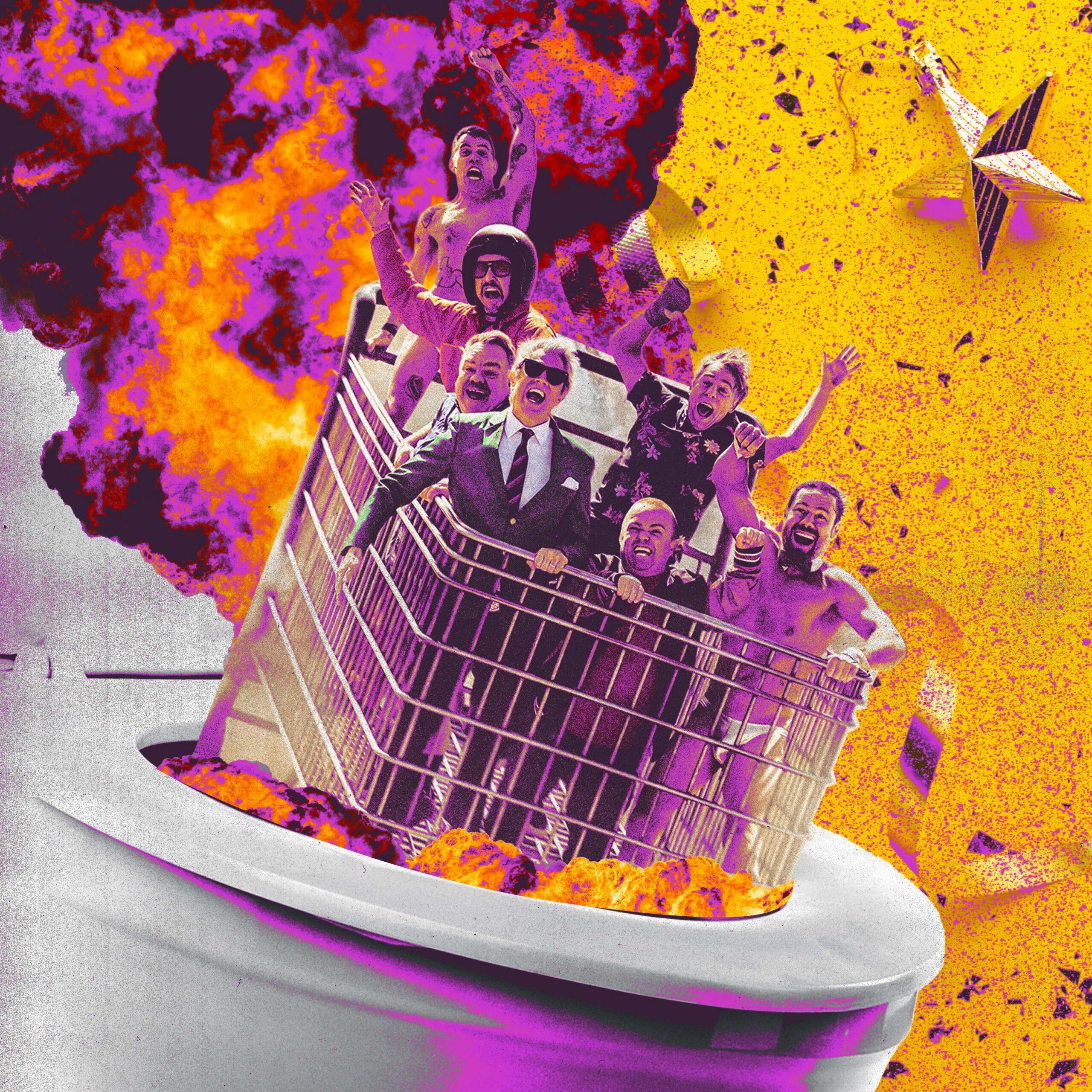
Johnny Knoxville, Steve-O, and the rest of the gang put their bones, stomachs, and crotches on the line for one last installment in a franchise that they never thought would become a franchise“A Collection of Exceptional F--kups”: How to Say Goodbye to ‘Jackass’
Johnny Knoxville, Steve-O, and the rest of the gang put their bones, stomachs, and crotches on the line for one last installment in a franchise that they never thought would become a franchise
The set of Jackass is not a place to be emotional. “When we’re shooting, I am not that,” Johnny Knoxville says. “I am in attack mode.” Hey, when you’re about to get into the ring with an angry bull, there’s no room for feelings.
But on the last day of filming on the fifth—and supposedly final—movie in the series, the crew’s fearless leader lost it. “I cried a few times that day because I realized this is it, this is the last time we will ever make Jackass,” Knoxville says. “And I was just extremely vulnerable. But appreciative.”
Jackass: Best and Last hits theaters on Friday, and Knoxville admits that he hasn’t quite figured out how to move on. “I’m still in the process of doing that,” he says. “It’s like putting down a dog you really love, but you know it’s time.”
The man born Philip John Clapp really does seem ready to hang up his rocket skates for good. It’s a reasonable decision. He’s suffered broken bones and brain trauma. And like most of the original skate punks and daredevils who’ve been putting their genitals on the line since the MTV series premiered back in 2000, he’s on the north side of 50. The question is: Why the hell is saying goodbye making us so weepy?
Well, something unexpected happened on the way to Jackass becoming a nearly half-a-billion-dollar franchise. The world started to realize there was more to it than just dumb stunts. It is the 21st century’s purest depiction of American male friendship. These idiots so clearly love one another, even when they’re smacking each other in the face with a giant hand.
“That’s what people connect to the most with us,” says Jeff Tremaine, who’s directed all the Jackass movies. “If you’re let inside this really tight family group, the longer you’re with it, you understand all the little idiosyncrasies of it and what everyone’s afraid of. There’s just nuance to it.”
Knoxville, Tremaine, and filmmaker Spike Jonze, who created Jackass together, have always resisted intellectualizing their prank show. Although these days, they do acknowledge that there might be something to strangers holding them up as a shining example of guys being dudes.
“People revealed that to us, and I’m proud and very grateful for that because there’s a lot of terrible examples of masculinity out there today,” Knoxville says. “We’re held up as a positive one. I think that’s meaningful.”

Early this month, the cast rode on a float in the West Hollywood Pride Parade. “We’ve gotten so much support from the LGBTQ+ community, and we’re very happy for that,” Knoxville says. “And also, we love to be naked with each other. And touching each other. And that’s OK. Really, who gives a shit? And why? It’s like, let people be however they want to be.”
Even if Jackass is accidentally profound, it’s profound nonetheless. Neither Knoxville nor anyone else saw that coming. “I know this is going to come as a surprise to you, but I really wasn’t riddled with foresight,” he says. “So everything is a surprise to me.”
The Jackass brain trust knows that it’s time to say goodbye. But the group didn’t initially envision what became Best and Last as the grand finale. “We weren’t writing it as if it’s the last movie,” Tremaine says. “We didn’t really even decide it until into the shoot.”
The title of the fifth big-screen installment of the gonzo docuseries is apt. It’s part clip show, part last hurrah. “It’s beautiful. It really is,” says Jackass veteran Stephen “Steve-O” Glover. “And just the way the movie’s put together, it represents so many different eras in our lives. You see us at all of these different stages, from being so young to literally in our 50s. And it’s so striking. What sticks out is that the constant is us howling laughing. Literally rolling on the floor.”
For the Jackass guys, it was a little strange trying to commemorate a franchise that no one, including them, thought would ever become a franchise.
“One of the fun things about collecting everything and putting in the old stuff was putting in things that maybe aren’t even the funniest or the best,” Tremaine says, “but the sort of things that were important to me or the franchise.”
One of those things was an infamous—even by Jackass standards—piece of footage. When Tremaine was the editor of skateboarding magazine Big Brother in the late ’90s, an aspiring writer pitched him a first-person story: In the name of journalism, he offered himself up as a guinea pig for self-defense equipment. That writer was Knoxville, who was still known as PJ. As part of that preposterous assignment, he tested a bulletproof vest … by shooting himself in the chest with a .38-caliber revolver. It might be the stupidest thing he’s ever done.
“It’s not really funny, actually,” Tremaine says. “It’s dark, right?” But while watching the video of the death-defying stunt, Tremaine knew that he had more than an article. The footage, Knoxville says, is “a look forward to the next 30 years.” Tremaine calls it the birth of Jackass.
“It made Knoxville a legend in the world of skateboarding,” Steve-O says. “And it made him such a legend in the world of skateboarding that it gave Jeff Tremaine the idea to subtract the skateboarding from the videos he was making.”
Knoxville was telegenic and great at talking to the camera. In other words, he was the perfect ringmaster. “It’s utterly unheard of that the leading man, the A-list movie star, puts himself in harm’s way,” Steve-O says. “You’re supposed to make sure that he doesn’t ever get in harm’s way. And that’s why I call Johnny Knoxville ‘The Captain,’ because in military situations, the military leader is the most respected when he puts himself on the front lines with the most expendable of soldiers. Not only does Knoxville always put himself on the front lines, he’s the tip of the spear facing the most danger.”
‘Jackass’ Through the Years
Big Brother back then was a bizarro circus full of, and associated with, unique characters. There was, among several others, clown college graduate Steve-O, professional nudist Chris Pontius, subscription manager and prankster Jason “Wee Man” Acuña, and CKY video stars Bam Margera and Ryan Dunn.
“I have a collection of all these sort of exceptional fuckups,” Tremaine remembers thinking. “And now I’ve got a leader of this group. I had no aspiration to be a television producer or a director. I was so happy just running the skateboard magazine, but it just dawned on me that it felt bigger than what we were doing. So I went to Spike with it.”
Jonze, who’d been friends with Tremaine since they were teens in suburban Maryland, saw something, too. At the time, Jonze was a prolific music video director. He helped bring their idea to Hollywood. Saturday Night Live and Comedy Central both reportedly expressed interest, but Jackass ended up at MTV.
So they had a TV show. The problem was, they didn’t know how to make one. “We’d sold it based on a little sizzle tape that I made,” Tremaine says. “When we were about to shoot the pilot, Knoxville and I were like, ‘Well, what do we do?’”
Tremaine wondered whether they should stick Knoxville behind a desk and have him introduce every bit. “We didn’t know,” Tremaine says. “We were just thinking, ‘Oh, it’s a TV show. It has to be a TV show like we knew.’”
Jonze suggested that they keep it simple. “That tape is what sold it,” Tremaine recalls him saying. “Let’s just do that. Don’t explain anything.”
It turned out to be good advice. When Jackass debuted 26 years ago, there was no plot, no narrative structure, and no explanations. Just bros making mischief, often in the grossest ways possible. The anarchy of it all was a big reason why the show was such a sensation.
But the mere existence of the series was always tenuous. And there are jaw-dropping reminders of that in Best and Last. Tremaine made sure to include a bit filmed for the pilot involving Knoxville posing as an escaped Los Angeles County Jail inmate who visits a hardware store with hopes of breaking his chains. It did not end well. “We got arrested,” Tremaine says. “MTV got mad, freaked out, and shut us down. So it seemed like the end to me before it was even going to go.” But the shutdown didn’t last. “The next day,” Tremaine adds, “we went and did the ‘Poo Cocktail.’”
The show was an immediate hit, and all of a sudden, Knoxville was famous. That, he says, was bewildering. “I went from doing production assistant work randomly to three or four months later being on the cover of the Rolling Stone.”
The Jackass honeymoon was short. By the second season of the show, it became a culture-war target. After a Connecticut teenager suffered severe burns in January 2001 by reportedly imitating a Jackass stunt, Senator Joe Lieberman called for the series to be canceled. MTV took the threats seriously, moving the show to a late-night time slot.
The network also began meddling in ways it hadn’t before. At one point, an OSHA rep showed up on set … and questioned the cooking temperature of a “vomelet.” “Going from really no rules to all of a sudden having an OSHA rep, which is designed to keep factories safe,” Tremaine says. “All of a sudden we can’t jump off a three-step ladder.”
In the summer of 2001, after three seasons, Knoxville quit. Jackass was over. Or so everyone thought. Toward the tail end of the show, MTV Films head David Gale had approached Tremaine with the idea for a movie. The director didn’t see it. “We never got a handle on making a TV show, to be honest,” Tremaine says. “It just felt like we were pulling it out of the fire every second. We never had a plan. … He’s like, ‘Yeah, this could be a movie for sure.’ I’m like, ‘What are you talking about?’”
When the show ended, Jonze brought up a potential movie. At that point, Tremaine started to warm to the idea. But he knew there was only one way to do it. “I’m like, ‘Well, if we made it R rated, it would sort of eliminate some of the younger audience that we have the problem with, so maybe we should,’” Tremaine says. “And it let us do even naughtier things.”
Jonze and Tremaine went to Knoxville, who was confused. “I quickly said, ‘Well, who’s going to play us? I don’t know if that’s a good idea,’” he remembers. “They’re like, ‘We’re not talking about that. We’re talking about doing everything we couldn’t do on television.’ I’m like, ‘Oh, that’s good.’”
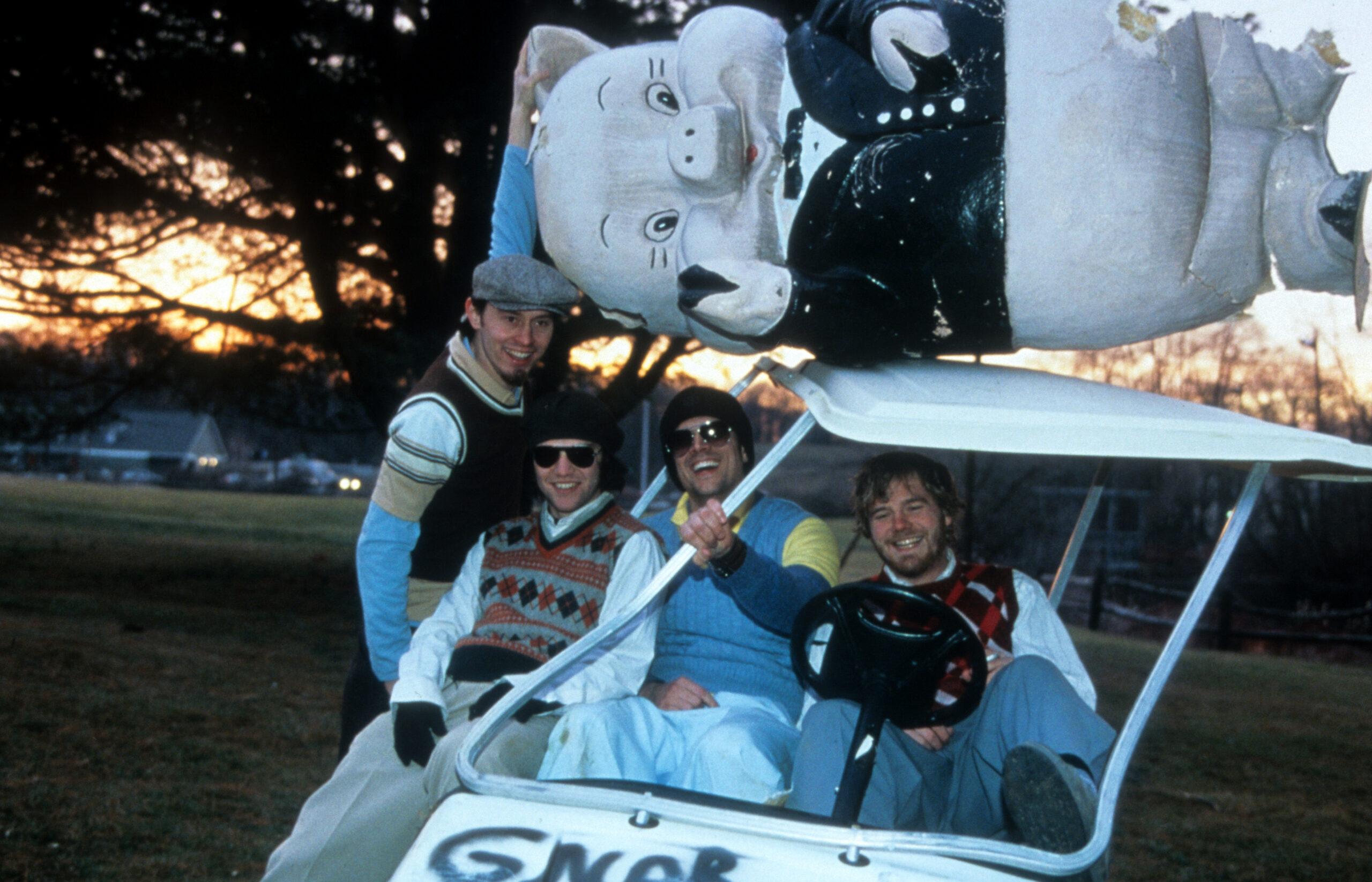
On October 25, 2002, the day Jackass: The Movie was released, I saw it in a packed cineplex near Washington, D.C., with my college friends. When Dave England used a display toilet at a hardware store, I did something I’d never done before and haven’t done since: retch-laughed. It was the best movie theater experience I’ve ever had.
Even if it was begrudgingly, the critics seemed to at least sort of get it. “This small tribe of young white men,” A.O. Scott wrote in The New York Times, “is motivated by extreme boredom and a playful, quasi-erotic sadomasochistic camaraderie.”
The movie took off like a bottle rocket. It cost $5 million to make and pulled in almost $80 million at the worldwide box office. And boom, Jackass was a franchise. Every successful sequel felt riskier than the last. By Jackass 3D in 2010, poor Steve-O was being flung hundreds of feet into the air in a ripe Porta Potty.
“It’s terrible, the things that we’ve gone through,” Steve-O says with a laugh. “But we’re such attention whores that we genuinely want these terrible things to happen. That’s what makes it so permissible to enjoy it.”
The franchise will forever be known for its biggest stunts, but there are small moments that I’ll always remember. Like the look of terror on Dunn’s face when he’s about to step into the ring with kickboxer Naoko Kumagai. Or the office worker who jumps out of his chair and sprints all the way down the street when Knoxville and Margera stage a fake jewel heist. Nothing captured true human vulnerability like Jackass.
“[Dunn] and Pontius were always my secret weapons. They didn’t have to even do this stuff,” Tremaine says. “They could just be right next to it because they were going to say the funniest shit. They can save a dud by just saying the most outrageous thing. And I can never predict what their brains were going to say.”
Sifting through old footage of Dunn, who died in a car crash in 2011, made Tremaine emotional. By now, the cast’s personal struggles have been well documented. As fun as it was, filming was hard on their bodies and minds. Yet somehow they’ve tried to stick together. (Even Margera, who had a bitter falling-out with the Jackass crew, is sort of back. He reportedly made a deal for unseen clips of him to appear in Best and Last.)
And now they’re old. So it’s only natural that Jackass has added new faces over the past few years. Zach “Zackass” Holmes, Sean “Poopies” McInerney, and Rachel Wolfson—a girl!—have looked right at home since their introduction in Jackass Forever. Throughout Best and Last, there are disgusting nods to the fact that most of the crew is well into middle age. Let’s just say that one gnarly stunt teaches men about the benefits of getting a colonoscopy.
Knoxville may not be up for taking punches from Butterbean anymore, but he’s still the most unshakable ringmaster on earth. While his buddies are puking in Best and Last, he just smiles. “The farthest I’ve gotten is lightly retching,” he says.
Ask the Jackass brain trust about their legacy these days, and they politely deflect the question. They’d rather not overthink it. In a long since deleted tweet, comedian Jaboukie Young-White summed up the franchise in a way its creators never would. “Jackass is a docuseries about the cis, straight, white, American male id and how it coped with and responded to suburban ennui in the death throes of its cultural monopoly,” he wrote. “It should be in the Criterion Collection.”
During a joint interview with Jonze and Tremaine four years ago, I read that paragraph to them.
“Amazing,” Jonze said. “I love it. Again, our intention was nothing highbrow at all.”
“There’s so little of that in the planning,” Tremaine added. “It’s really, ‘Is this going to make us laugh?’”
Which is maybe why saying goodbye sincerely has been difficult. Eventually, though, Knoxville figured it out. His idea was to play the bittersweet Rolling Stones track “Shine a Light” over the Best and Last end credits, which unspool over old Jackass footage.
“I would just drive around with that song in my head way before we even got the rights,” he says. Thinking about it now still makes him feel warm like the evening sun. “Thank God Jeff and Spike stood by me and said, ‘Do what you need to do. It’s going to cost a lot, but it’s worth it.’”
Knoxville even wrote Mick Jagger a letter. “Apparently that’s a really important song to Mick,” Tremaine says. “And he doesn’t let that one go easily.” Miraculously, Jagger approved. And Knoxville picked every clip included in the final montage.
“We never touched it,” Tremaine says. “I thought it was perfect.”