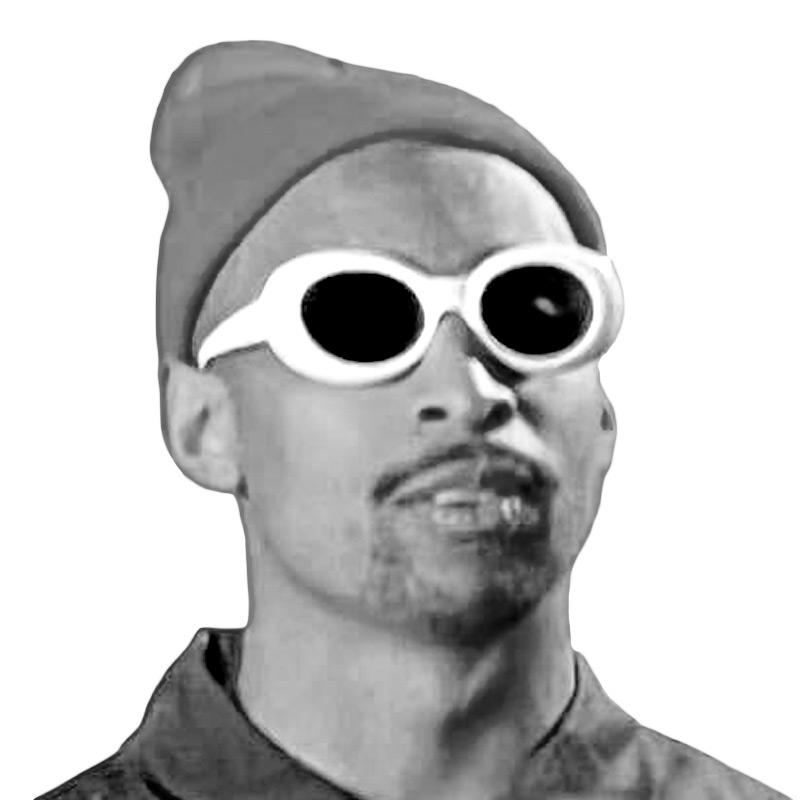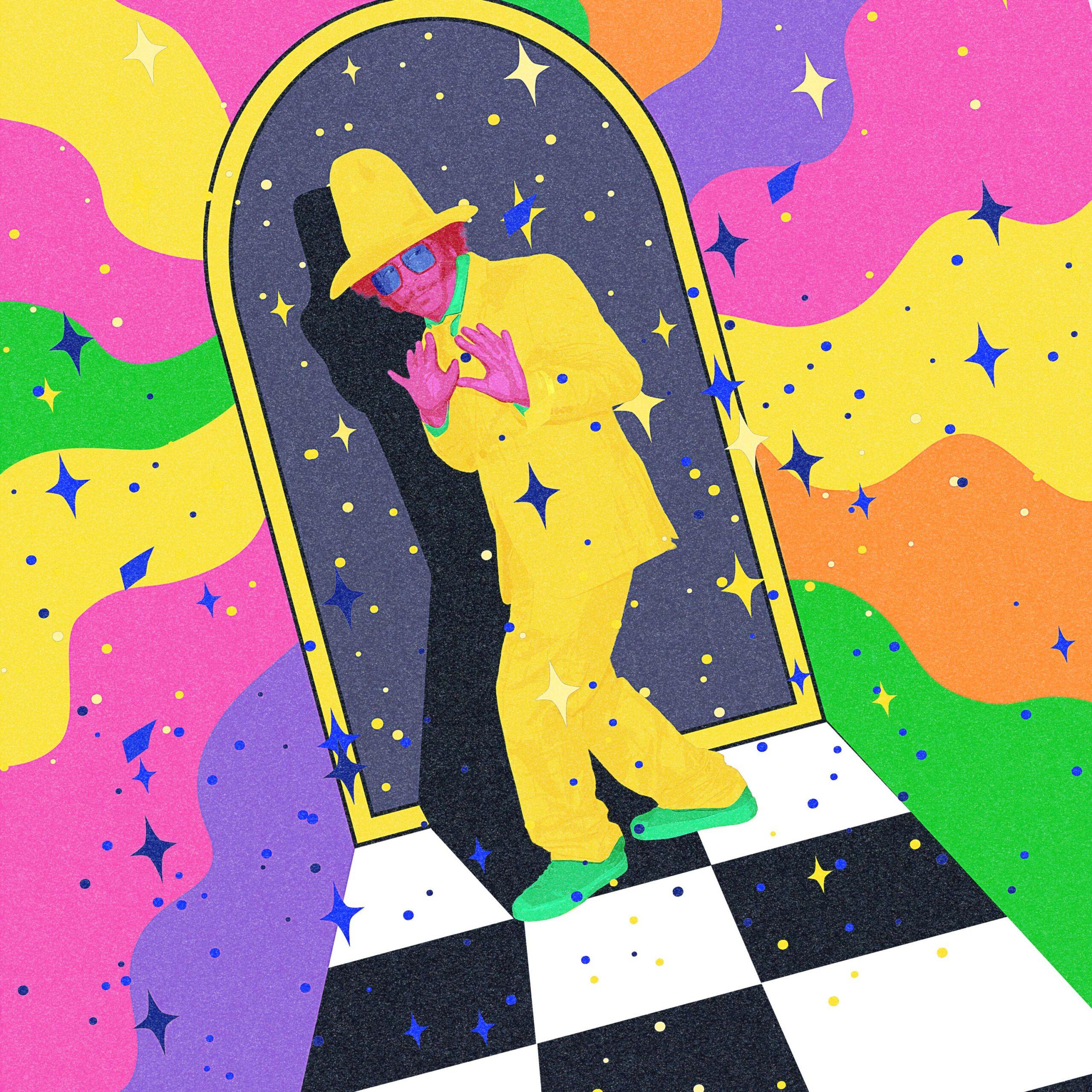

The spoken intro of the Coup’s “Pimps (Freestylin’ at the Fortune 500 Club)” depicts a young woman at a restaurant interrupting a conversation between fictionalized versions of J. Paul Getty and David Rockefeller. The two titans of industry are talking about getting into rap music, and as they get excited they begin to imitate the rappers, down to their voice and cadence. “Welcome to my little pimp school,” spits Rockefeller. “How you gonna beat me at this game? I make the rules.”
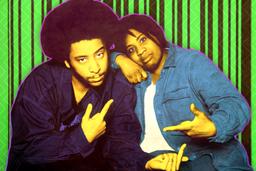
Written and performed by Eric “E-Roc” Davis and a 23-year-old Boots Riley, “Pimps” offers an early look into the way Riley uses art to critique the establishment.
The past three decades have seen multiple evolutions of Riley, but pointed satire and activism has been a through line. Riley is the son of a Bay Area civil rights attorney and a Jewish mother who fled Nazi-occupied Europe as a child. In the 1990s, Riley and his anti-capitalist rap group, the Coup, released three provocatively named studio albums: Kill My Landlord, Genocide & Juice, and Steal This Album. During a tour in 2002, Riley considered banning red, white, and blue at the Coup’s shows and said the American flag stood for oppression, exploitation, slavery, and murder. In 2018, he took his message to Hollywood with his film debut, Sorry to Bother You, an absurdist comedy about a Black telemarketer named Cash who adopts a “white voice” to sell products over the phone and then becomes enmeshed in a sprawling corporate conspiracy. The film was a critical success, catapulting Riley into the zeitgeist.
Now, Riley is back with his second film, I Love Boosters, which follows four women living on the edge of poverty who use boosting to make ends meet. Like Cash, they inadvertently find themselves tangled up in a vast, world-spanning battle between labor and capital. The film features all of the funk-filled surrealism that has defined Riley’s past work. It is funny, pointed, and always under control.
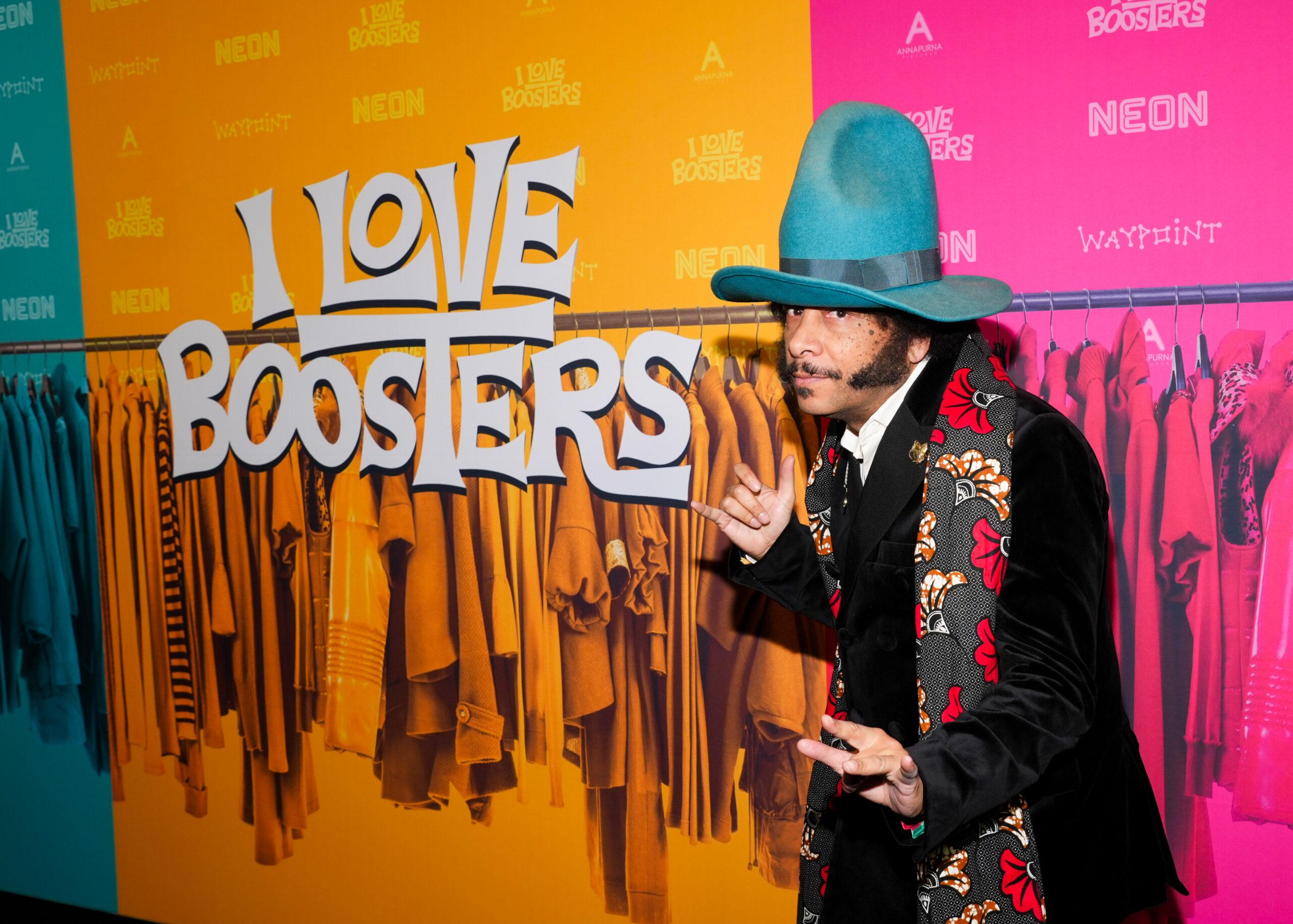
Last month, I Love Boosters premiered at Oakland’s Grand Lake Theater, earning a massive roar from the audience. It is Riley’s most ambitious and urgent project to date, and in his address to the audience after the film, the 55-year-old director highlighted the stakes of this moment.
“We need this to be big when it comes out,” he said. “With Sorry to Bother You, we were able to do 100 theaters, then 500 theaters. We got up only to 1,000 theaters. This is going to be wide, at least 2,500 theaters on day one.
“What that means,” Riley continued, “is it’s make it or break it.”
The next day, I met with Riley in San Francisco at the type of hotel restaurant the Getty and Rockefeller types might have patronized. We talked about the film, his relationship with Keke Palmer and Lakeith Stanfield, and the urgency of revolutionary art. Our conversation—edited and condensed for clarity—has been reproduced below.
You told Dregs One that you often feel caught between being an organizer and being an artist. Do you feel like you’ve threaded that needle of being both with this film?
I think it’s still two very different things. Being an organizer is about building a base with people that you interact with, that you’re taking to campaigns, things like that specifically. The connection to art is about asking the right questions. And in order for your art to be effective, a lot of that has to do with actually engaging with organizations and people that do organizing work.
Last night, you told the crowd at Grand Lake that this film was inspired by the female boosters that you grew up seeing in Oakland. You present these boosters as people who are just trying to find their way in a world that is against them in a lot of ways. How close did Keke, Poppy [Liu], and the rest of the female cast show the humanity in a group of people that society seems to cast off?
I think pretty close, because people are usually crying at the end. A lot of people love that connection that they had. That’s the thing. Often, even art that is sympathetic to folks in that economic position or doing illegal business, the approach it takes is more just mathematics. Like, “They got to do this and maybe they’ll be able to get on the right path.” But it’s not more complicated about the things they like, the things they love, and what they see themselves as in the world. And that they see maybe, “Hey, maybe I’m doing something that’s needed.” Because a lot of them do. They’re like, “People need this shit.”
I want to talk about Keke Palmer for a second. It seems like she’s a prodigy in a lot of ways. What was it like working with her and what did you want to bring out of her in this character?
Keke is a comedic genius, and a lot of people already know that. And what she got known for was this certain brand of thing that had a certain cadence to it, like a certain rhythm—that boom, boom, boom, and you get the laugh and it worked very effectively. When I met with her, I saw a different thing in her that still was just as funny, but wasn't that thing. And I thought that combined with the fact that she actually is really thoughtful about the world and people and very observant, I knew that there was a different place in this that we could go.
I wanted to bring out some of the more quiet things. For instance, after [Demi Moore’s character] Christie says, “Low-class urban bitches,” and we look at Keke, there’s something that she does right there that people kind of laugh when they see it. But part of the reason why they laugh has to do with this sort of real look-taking-in thing. She’s not like boom, boom, boom, boom. She’s just feeling how she would feel and not trying to show that she feels the thing—just feeling it. And that’s why I’m getting the camera close up in people’s faces because I want them to feel the thing and we’re going to pick it up.
Ryan Coogler has Michael B. Jordan as his creative muse. Spike Lee has Denzel. Is Lakeith Stanfield going to be yours for the next 20 years?
I mean, we’re always going to be working together, so yeah.
What attracted you to each other through the first two films together? What is your partnership like?
He’s a strange, awkward person. I’m a strange, awkward person. And I think for actors, having that not smoothed out of you gives people an insight into the humanity of a character because they’re acting like a person. They’re acting like a real person. Sometimes people go through the Hollywood thing and they figure out how to make their voice very smooth and it doesn’t have a hint of where they’re from. And in real life, that happens, but being able to have something where you’re just not sure about how things are in the world and where you just let yourself be, makes us see him as a person and it feels more real. Even if it just feels specific to a certain kind of person, it feels real as opposed to just this thing that could be anybody.
What is required of an actor in your world?
I want them to have experiences that they can draw from, so they can feel what their character is going to feeI. I want them to be not so much performing as just being there.
Is your goal to make them do something we’ve never seen from them before?
Yeah, that’s part of the casting choices. A combination of having them do something we’ve never seen before and how I think they’ll interact with the other parts. Me casting Naomi [Ackie] was after I already cast Keke and so knowing how and seeing Keke on other stuff and seeing what that sort of performance style would do, what Keke would bring out in Naomi and what Naomi would bring out in her. It’s just like, you put musicians together and they’re about to vibe off each other and the vibe is going to be different depending on the different combinations.
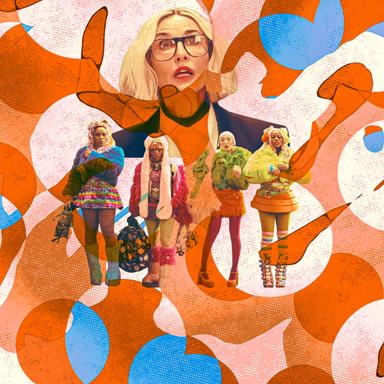
I Love Boosters shares a title with a song you wrote back in 2006, but one of the things I was struck by watching the film was all the ways it seemed inspired by the pandemic. Did COVID influence the film at all?
I don’t think so. I wrote the song 20 years ago and I started writing this in 2018, 2019. I took a break from it and then I finished writing it in 2021. So I did finish writing it during the pandemic, and I think the pandemic just accelerated certain things. It just heightened the conflict.
And also what you’re seeing in the film that did happen in the pandemic is something that was exposed by The Intercept. In the wake of the George Floyd protests, apparently documents were found where all of these police unions got together and hired publicists with the stated intention of, instead of defending themselves against the police murders due to police brutality, they would instead focus on saying that crime was rising. The idea was to get people to be like, “We need to fund more police.” So this is a stated thing. It’s a conspiracy theory only because there was a conspiracy. People conspired. That’s how we do shit. I conspire to make a film. Some people conspire for power.
So you had all these stories and Instagram accounts saying crime was rising. At first, I followed them because they were showing sideshows and stuff like that. Then it started turning into like, “Oh, this person broke into a car, they need to be shot.” It was calling for vigilante violence.
And then one time, they talked about an event that I was at and they mischaracterized it. And so I was like, “What? Why is this happening?” And then it got into an argument. And so I’d be on there and there was a dude on there and based on his profile picture, supposedly a Black guy. And he was just saying, “The working class of East Oakland, we’re working, we don’t want any of this crime and we’re blah, blah, blah. And nobody wants Boots Riley here.” And then I just took the picture and put it in Google Image search and it was somebody in England. It wasn’t him, he had just used the picture. And then when I pointed that out, the account disappeared.
More From the Boots Riley Canon
Funny how that works.
A lot of that is similar to what I talk about in the last episode of I’m a Virgo. To say poverty and crime just has to do with the bad decisions of those impoverished, and that society is fucked not because of the system we’re in, not because it demands poverty, but because of people’s bad decisions? It's a racist idea of how the world is going.
You have a lot of social critique in this film—including of several Black characters who admonish the boosters. What do you want people to take away from those critiques?
What ends up being clear about my critique is that representation is often used to put forward right-wing ideas. And so the critique of the folks on this, it’s not just a blanket critique, it’s saying they’re putting forward right-wing ideas and they’re using their identity as cover for it. And so it’s more just about if people are putting forward right-wing ideas that are about allowing there to be more oppression and exploitation of Black folks, especially if they’re using their identity as supposedly as a way to make it seem like it’s not right-wing—as it’s somehow organic, more organic because they’re Black—to say, “We need to have police on every corner,” that’s part of a right-wing movement.
Part of the reason I ask is because several years ago you had a critique of one of your heroes, Spike Lee. You wrote that Lee’s film, BlacKkKlansman, “made a cop the protagonist in the fight against racist oppression” and misrepresented the story of Ron Stallworth, whom the movie is based on. Looking back on that, how do you feel about what happened and what did you learn from that experience?
I wish I had been more thorough, because what happened is I actually put out two things in a row. The first thing is what gets talked about and really, in that first thing, the first two-thirds of it are me regaling the movie with how technically great it was. But I made that critique when I only read half the book it’s based on. Then I read the other half of the book and I followed up with that. The other half of the book was even worse, because that’s when I found out that even Stallworth, in his own book, doesn’t claim to have actually infiltrated the Klan. His friend infiltrated the Klan like they have in there, but he infiltrated the organization that I used to be part of called the Progressive Labor Party. And the reason, even stated in the book, that he infiltrated them is because they had the slogan “Smash the Klan.”
And what was happening is that PLP, they were like antifa, but without the masks. So they would show up at Klan rallies and beat the shit out of the Klan. And so the Klan was like, “We shouldn’t have a rally because they’re going to come.” So what he would do is go to the PLP meetings, act like a radical, find out how they were going to attack the rally, tell his friend in the KKK so that they could shift how the rally was going so they wouldn’t get stopped. So that’s what he did, was make it so that Klan rallies could keep going. And as a matter of fact, there was a point in the book where the Klan leader was going to leave for family reasons, he needed to get out of there, go to California. He was just going to retire from the Klan. And this dude convinced him to keep the Klan going.
But even further in the story, it’s very interesting because I think that what I did was following in the footsteps of my hero, Spike Lee, because Spike Lee used to shit on so many Black directors. Part of the reason why he’s a good filmmaker is his ability to just call it like it is, right? Whether they’re his heroes, whether they’re his elders, whether they’re under him, he’s doing that at all times. He’s never holding back. So it was surprising to me that instead of just answering me back and being like, “I don’t agree with that,” He was like, “I’m not going to talk about that.” And he made it like he was the victim.
Now, that being said, we have since had a couple interactions, one where he was like, “You’re Chet Baker, I’m Miles Davis” and all that kind of stuff. Then I saw him at the DGA and he was like, “Let’s squash it, let’s squash it,” and we gave each other a hug. And then I heard that he had his whole crew of one film watch I'm a Virgo.
After the premiere, you spoke to the audience with a real sense of urgency. Where does that come from, and why do people need to watch this film?
The sense of urgency comes from the fact that we got two governments saying, “How dare you say we would commit genocide in Gaza” and “we’re about to commit genocide tomorrow” at the same time. And the reason that they can do that, knowing that we know that yes, they were committing genocide and yes, they would commit genocide again, is because they know that we feel justly that we don’t have any power to do anything about it. And the truth is we don’t until we build a mass militant, radical labor movement that can use the withholding of labor as a tactic and strategy to affect policy change by going after their base of power. Because their base of power is not votes. Their base of power is not shame.
Their power comes from capital, and the working class can affect that. There’s been a movement over the last five years that is growing. We’ve seen the biggest strike wave since the '70s. This thing is building and we’re seeing people more and more being ready to do something. Because this shit is going to get worse until we make a movement that can stop it—and this kind of movement needs cultural things that organizers can use to get people more involved.
Sorry to Bother You was one of those things that during the strike wave, 2020 to 2024, I got dozens of messages from people saying, “We were trying to organize a strike,” or, “We were trying to organize a union on our job, and we were really thinking like there was forces working against us. We were really pessimistic about it. We got everybody to watch Sorry to Bother You, and everybody voted for a union, or everybody voted to strike.” So that’s where the urgency is.
In the film, the characters strive to change the world and even start to actually do so. For the labor movement, that seemed like a utopian vision. Do you believe in humanity’s ability to create the world you depicted on screen during your lifetime?
Well, one, it’s not a utopian vision because they don’t have all the problems fixed right there. They do have a large thing. And those demonstrations that I showed in the film, a couple of them are from long ago, but some of them are from recently. There’s shit going on right now, stuff that the news doesn’t talk about. Like I said, 2020 to 2024, there were thousands of strikes and work stoppages in the United States. In Minnesota, we had hundreds of thousands, maybe millions of people doing a symbolic one-day strike. It was symbolic only because it was one day and it needs to be longer, but that’s a first step toward people striking on behalf of other people.
So it’s not far off from happening and it’s not utopian, because even in there, they’re still in the midst of a big fight. Do I think it can happen? Yes, humanity has done that. And I think the main thing is when people see how they can do something, then they’re down to do it. I think most people in the world are like, “If we could have it, I’d be down for socialism or communism,” but they don’t think we can do it. And that’s because they haven’t seen a movement that actually has a program of these steps that could take it there. So yeah, it’s just a matter of people connecting to organizations and that movement growing. And there’s been plenty of places where whole revolutions—if you look 15 years before they happen, people are like, “Oh, nothing like that is ever going to happen here.”
And we could say that about so many things. I think if we would’ve said, I don’t know, six years ago, like, “Oh, there would be a livestream genocide and people will let it happen”—we think that wouldn’t happen. But that’s just some evil movie shit that would happen. So possibilities in both directions are there. It’s really up to us.