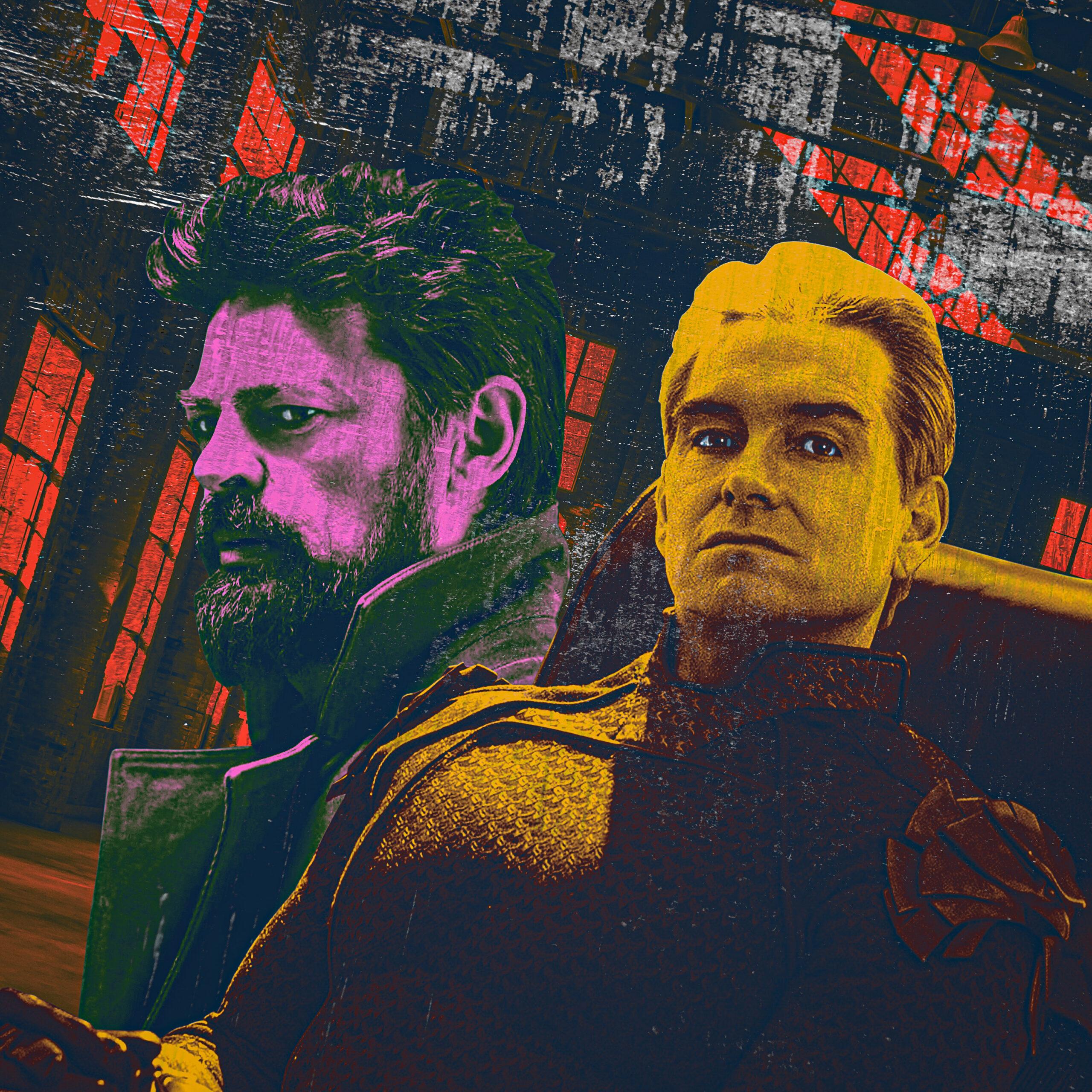


The first season of The Boys premiered on Prime Video in July 2019, just a few months after Marvel Studios released Avengers: Endgame, the second-highest-grossing film of all time and the peak of superhero cinema in mainstream popular culture. With its explosive, gory violence and raunchy yet often cutting sense of humor, The Boys provided a new type of superhero TV programming that took the piss out of the lucrative genre and celebrity culture at just the right time. But the hit series also offered a more realistic, if cynical, perspective on what our world would be like if superhumans truly lived among us. It held up a dark mirror to our society that gave the show substance behind its absurd spectacles.
Seven years, five seasons, and a few spinoffs later, The Boys has reached its end. And Wednesday’s finale is about as bloody, outrageous, and messy as we’d expect this series to be. Yet as it rushes through the final chapter to cleanly conclude its story, The Boys—beneath all the blood splatter and dismembered body parts—also shows how much it’s lost its edge in recent years.
“Blood and Bone,” directed by Phil Sgriccia and written by Judalina Neira and David Reed, features the grand conclusion to the series-spanning conflict between Butcher and Homelander—and by the end, neither is left standing. With an assist from Kimiko and Ryan, Butcher finally gets the best of the show’s central villain. But before long, Butcher meets his demise as well. While showrunner Eric Kripke and his team retain many of the broad strokes of the ending of Garth Ennis’s namesake comic book series, the TV adaptation also makes some pretty notable adjustments to its source material, as the series has done since its inception.
“I'm a huge fan of Garth Ennis's comic,” Kripke tells The Ringer. “It's brilliant. But it's a different medium, and things that work in the comic don't translate as well to live action.”
Late in the comic’s run, the Seven’s Black Noir is revealed to be Homelander’s evil clone, designed by Vought as part of a contingency plan if the corporation ever loses control of Homelander. The readers thus discover that some of Homelander’s most dastardly acts were actually committed by a clone. Ultimately, Noir is the one who kills Homelander.
Even before Wednesday’s finale, The Boys had made it clear that it wouldn’t be taking the story in this direction; Black Noir and his replacement (who was decidedly not Homelander’s clone) both died well before Homelander. In fact, Kripke—along with executive producers Seth Rogen and Evan Goldberg—decided early in the show’s development that the adaptation would aim for a different ending.
“It might have even come up in my very first conversation with Seth and Evan, when we were even just talking about the show, that we didn't want to end it with the reveal that Homelander didn't even do any of the bad things he's been doing all along,” Kripke says. “It was his clone disguised as Black Noir. At least when you're doing it in live action, it just felt unsatisfying. It's like you're asking someone to follow a villain, and then at the very end, you say, ‘No.’ That's not fulfilling at all.”
Instead, the finale centers on a more fitting, climactic duel between Butcher and the Trumpian Homelander in the Oval Office. When Kimiko’s newfound abilities strip Homelander of his godlike powers, the villain is reduced to little more than a sniveling, frightened coward who shamelessly begs Butcher to spare his life while being broadcast live for all the world to see. In a nod to Butcher’s execution of Black Noir in the comics, the leader of the Boys kills Homelander with a crowbar, prying his head open right against the Oval Office desk.
The Boys has never exactly been known for its subtlety. After it drew so many direct parallels between Homelander and Donald Trump over the past two seasons in particular, both by design and by eerily accurate forecasting, it’s hard not to view this fateful confrontation as the culmination of a story that has been stripped down to a revenge fantasy aimed at the current American president and his associates. (An Elon Musk analogue gets executed in the finale when he’s carried into space without a spaceship.) The series’ sharp satire has lost some of its bite as its central Trump takedown has become more pronounced, yet as Kripke attests, those threads have been woven into the show’s fabric since the beginning.
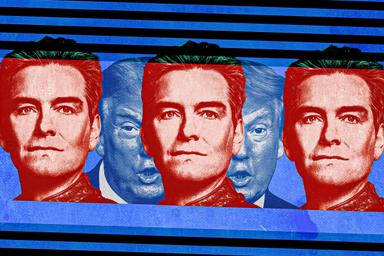
“We realized very early on in making The Boys that it existed at this intersection of celebrity and authoritarianism, the sort of very unique mix of being a social media star, but also having fascist instincts, which is what all of our superheroes do in this show,” Kripke recently told CNN. “They're obviously all bad superheroes. And we realized it reflected the moment we're living in in a very strange way [that] made our superhero show maybe one of the most current shows on television.”
Although much of the action leading up to Homelander’s demise falls flat, the supervillain’s final moments do afford Antony Starr one last chance to flex the incredible range he’s shown in portraying a menacing man who has always hidden his weaknesses behind his powerful facade. The death of the former leader of the Seven arrives two episodes after he supposedly became immortal from taking a much-coveted last dose of V-One. Thus, the evolution of his powers doesn’t make much of an impact on the season’s stakes, even though preceding installments dating back to Season 4 had hinged on the search for this ominous, Vought-manufactured MacGuffin.
Granted, Homelander’s empowerment did force Butcher’s team to switch strategies, which led to Frenchie’s death in the penultimate episode. But the quest for V-One served more as setup for the upcoming prequel series Vought Rising than it did as an impactful plot point for this season—the kind of cardinal sin sometimes committed by the blockbuster superhero franchises that The Boys used to roast so pointedly. At any rate, Homelander checks out with 20 minutes remaining in the finale, which leaves ample time for another fatal confrontation as Butcher faces off with his ally, protégé, and pseudo–baby brother: Hughie.
Unsatisfied with stopping Homelander, Butcher plans to unleash the supe virus at Vought Tower in the hopes of spreading it across the world and wiping out any remaining traces of Compound V. It’s a ruthless choice that would doom Starlight, Kimiko, and so many other innocent superheroes to painful deaths right as it seems like the hard-fought battle against evil has been won. Hughie tries to stop Butcher and is quickly outmatched by his mentor. But Butcher—seeing the spirit of his dead brother in Hughie—hesitates, and Hughie shoots him. Although the surrounding context is very different in the comics, in which Butcher has already killed Frenchie, M.M., and the Female (all of whom had previously been exposed to Compound V), this final twist is carried over pretty faithfully to the TV series.
“We always loved the intimacy of that moment [in the comics] when Hughie and Butcher have their final scenes together, and we used a lot of that dialogue,” Kripke says. “To the best of our ability, we created a reasonably accurate moment of that. And so we always knew from the beginning, too, that Butcher was gonna turn himself into this monster to take down Homelander and that, like [Joe] Kessler says in [Episode 7], he's never gonna stop. But Butcher's most noble act is knowing that about himself. And so first he brings on his little brother, and then ultimately Hughie, to be his external conscience because he knows that he doesn't have one.”
Like Starr as Homelander, Karl Urban delivers one last captivating performance as Butcher, the foulmouthed antihero who can’t help taking things too far. But as tragic and emotional as Hughie and Butcher’s final moments together are (and as cathartic as Butcher and Homelander’s were before that), The Boys speedruns to a mostly happy ending that feels uncharacteristically optimistic for a series that was once so boldly adept at pointing out the many flawed pillars that hold up our society.
Former president Robert Singer restores stability at the White House, M.M. reunites with his family and adopts Ryan, Kimiko moves to Marseille to live out her and Frenchie’s fleeting dream, and Hughie and a now-pregnant Starlight begin a new life together. Before his death, Butcher raised some valid concerns about the prospect of another superhero eventually filling the void left behind by Homelander, particularly as Stan Edgar leads Vought into a new era. But after Ryan conveniently loses his powers and Gen V’s Marie Moreau flees to Canada, The Boys doesn’t linger too long on that intriguing, disturbing possibility.


Still, it’s hard not to blame Kripke and Co. for wanting to deliver a more hopeful message to their audience at the end of such a dismal period for this world, which in many respects looks more and more like our own. “The show's always been—and especially this season—about hope, and what does it mean to hold on to hope even in the darkest of circumstances,” Kripke says. “And we wanted to say that nothing's gonna be perfect. Things are always gonna be messy, and it's gonna take incredible sacrifice and failure. But you can be happy. That's just how it works in the real world. And we just wanted an honest depiction of, it is possible—it's just really, really hard.”
The Boys often faltered in its later seasons, but the series leaves behind a legacy of disrupting the crowded superhero media landscape with a singular brand of entertaining chaos and wit. The franchise, which has grown into the same blockbuster beast that it once deconstructed so successfully, will live on through the upcoming releases of the prequel series Vought Rising and the spinoff The Boys: Mexico, even after the recent, unfortunate cancellation of Gen V. Superhero stories may not be as popular as they were when The Boys debuted, but they’re not going away. And although there are plenty of lessons to be gleaned from where things went wrong for The Boys, the irreverent spirit of the show will continue to be needed to keep other superhero properties in check.