
With the NBA’s second round finally behind us and the conference finals tipping off tonight, it’s time to go wide and take a look at a whole bunch of different topics currently on my mind.
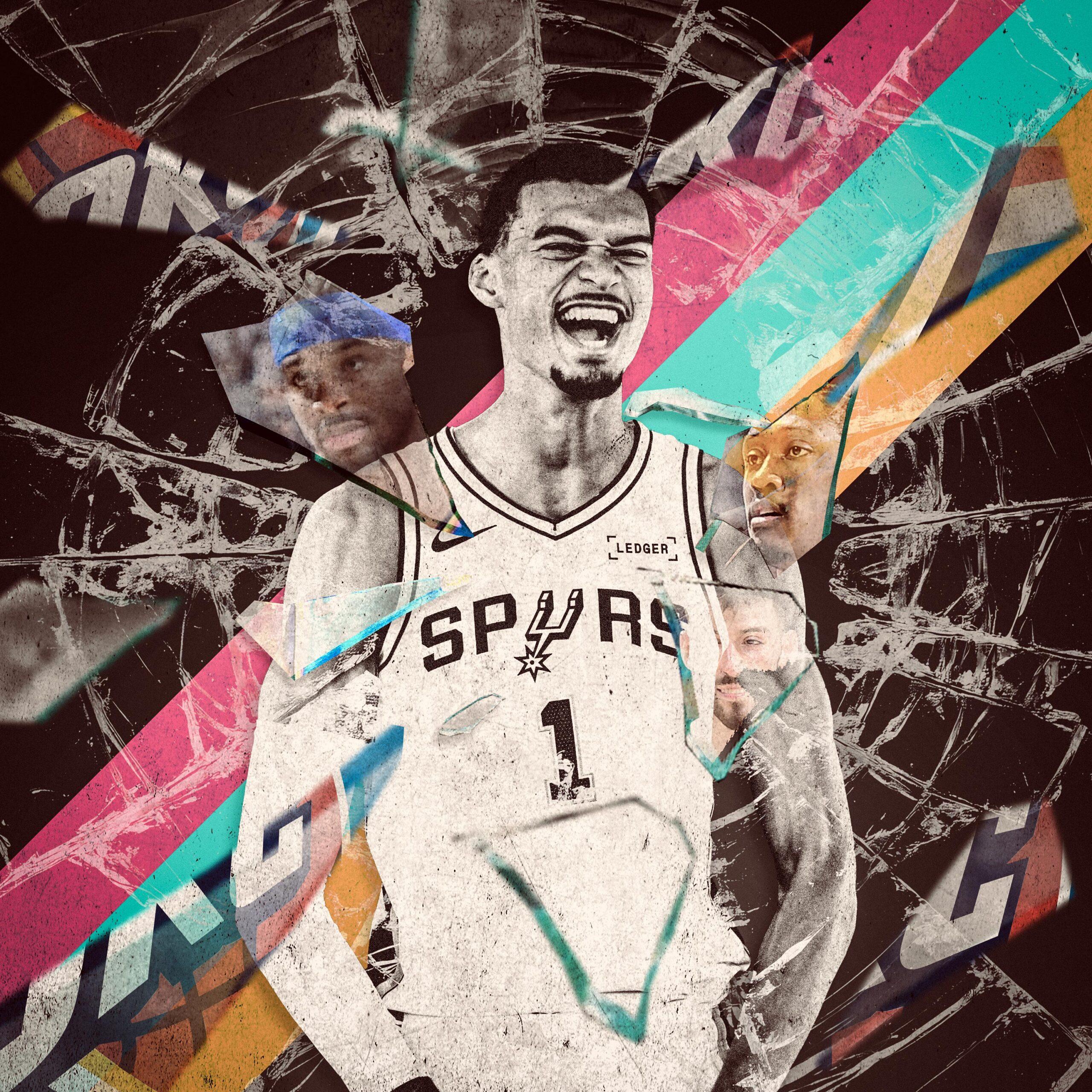
Woo, boy. The phrase “instant classic” is trite, but I will go out on a limb and say that this year’s Western Conference finals have the potential to be one. But unlike what we saw with 2016’s league-altering showdown between the Oklahoma City Thunder and Golden State Warriors or 2018’s war of attrition between the same Warriors and the Houston Rockets, the loser here will not be cast into an abyss. The 64-18 Oklahoma City Thunder and 62-20 San Antonio Spurs boast a pair of unfathomably young and talented rosters that are on track to butt heads repeatedly for the foreseeable future. And the sparks will fly tonight.
It’s a moment of truth for two potential dynasties that already kinda despise each other. Both organizations are loaded with star power, depth, preternatural equilibrium, and an embarrassment of prospects and assets in reserve, all but guaranteeing long-term sustainability in a league that’s now designed to prohibit such a thing.
Both teams can play big or small and have an identity that shines even when their franchise players are on the bench. Neither team is reliant on 3-pointers. (The Thunder and Spurs had the two highest winning percentages during the regular season in games where teams shot below 35 percent from behind the 3-point line—69.7 and 61.1 percent, respectively.) The basketball, in other words, should be incredible.
There’s real weight here, too. The early chapters of Victor Wembanyama’s legendary story are still being written, and Shai Gilgeous-Alexander, who won his second straight MVP on Sunday, is already claiming massive plots of land on hallowed ground. So much about the series is unprecedented, filled with surreal talents who are doing things we’ve never really seen before.
Doing justice to a matchup preview could take a month. Where do you even start? How about here: In five meetings this season, the Spurs beat the Thunder four times. OKC lost just 14 other games against the rest of the league. The Thunder are a regenerating beast of the highest order—cut off one of their limbs, and another will immediately replace it. But this matchup neutralizes that advantage. Not only do the Spurs have Wemby, but they’re also athletic, fearless, disciplined, and selfless in all the right ways. For OKC to be confronted by a brick of kryptonite this soon is a gift for people who enjoy competition and loathe predictability.
There are so many different subplots, but I’m most fascinated by how the Thunder’s defense will deal with Wembanyama. Seeing Wemby's all-around offensive growth since these teams last met in February has been like watching a chestburster turn into a full-blown xenomorph. He scored 39 points on just 18 shots in a Game 3 win over the Timberwolves, then followed it up in Game 5 with 18 points in the first quarter. When Wemby has it going, there are no answers.

More on the NBA
Zooming out, watching him dominate in the first two playoff series of his career reminded me of the old Jay-Z lyric “difficult takes a day, impossible takes a week.” Who was the last 22-year-old who was genuinely the best player in the world? (Derrick Rose won MVP at that age, but everyone on planet Earth knew that LeBron James was the NBA’s best player at the time.) Has it ever happened before? There are no constraints, and there is no hyperbole.
In his regular-season showdowns against the Thunder, Wemby spent most of his time boxing a patch of cumulus clouds, whether he was guarded by Jalen Williams, Alex Caruso, Chet Holmgren, Isaiah Hartenstein, Lu Dort, or any combination of the above. Even SGA’s brilliant shotmaking could not save them: Oklahoma City’s offensive rating was 99.6 with Wemby on the court. Even the Brooklyn Nets would see that number, point, and laugh.
Making this all the more concerning for OKC, Wembanyama averaged just 25.1 minutes in those games. He never played more than 29 minutes, and the Spurs were a combined plus-50 when he was in the game. What will OKC’s answer be? Will it guard the 7-foot-4 Wembanyama straight up with a wing (Jalen Williams is vital) and force shots over the top? Will they switch every screen he sets or receives? Will they front him in the post with help from the backside? Will they instantly double-team him on the catch? The good news for OKC is that it’s fully equipped to execute all of those tactics. The bad news is that San Antonio has basically solved all of them already. Wemby is surrounded by smart, fearless, powerful guards who can space the floor, burrow through holes, and quickly digest what the Thunder are trying to do.
In the play below, watch how they’re able to anticipate OKC’s switch, short the pick-and-roll, and then have Dylan Harper flick a lob up where only his exceptionally tall center can get it:
It is nothing short of a paradox to call the Oklahoma City Thunder an underdog. They are the defending champs, and they have a historically stingy defense and the reigning two-time MVP on their roster. But Wembanyama can melt common sense, one block or dunk at a time. If we’re lucky, this series will go the distance. And if the Thunder are lucky, Wembanyama will be taken down by food poisoning before Game 7.
Three Things I Can't Stop Thinking About
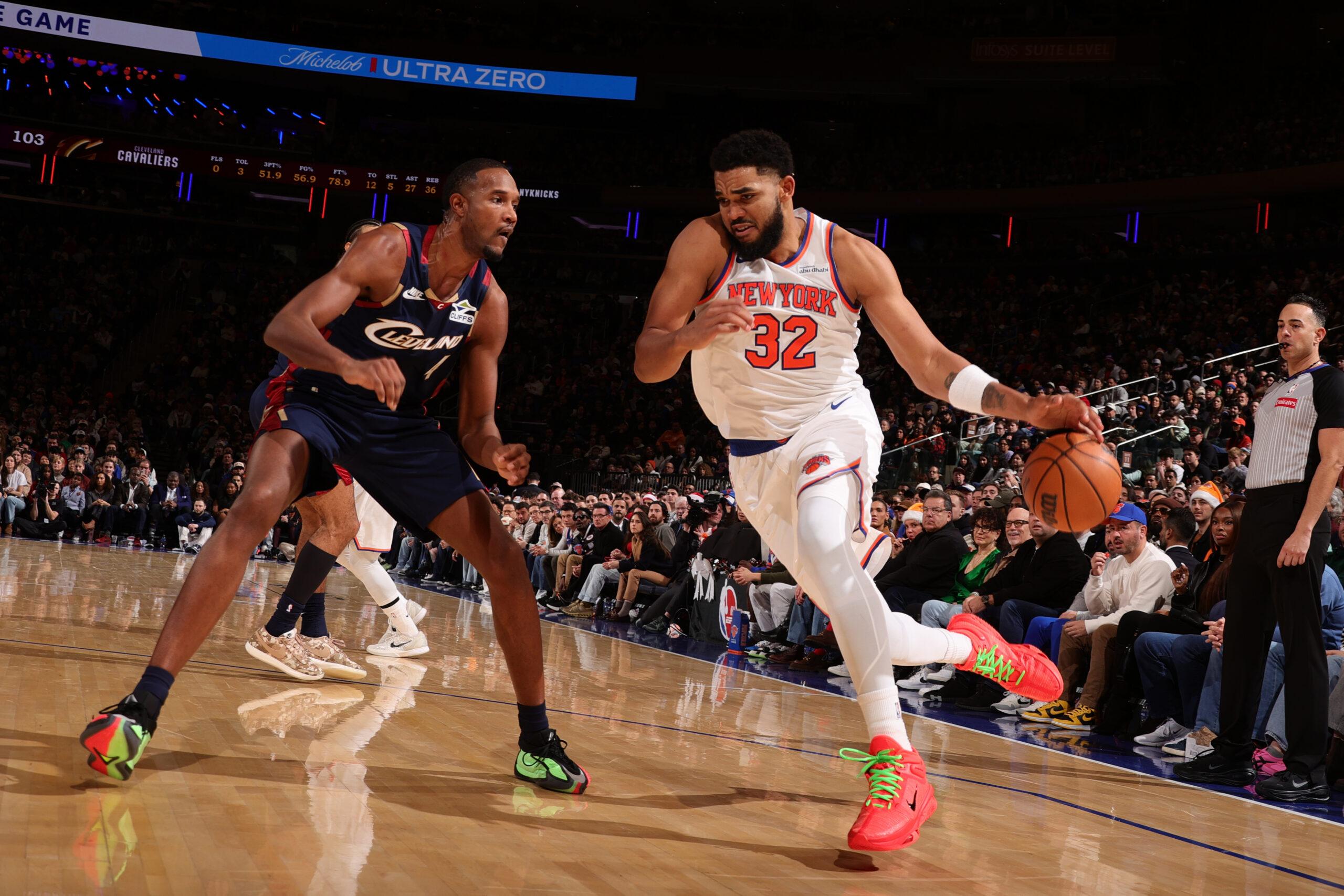
1. Evan Mobley vs. Karl-Anthony Towns will decide the East.
Knicks-Cavaliers should give us so much to chew on, but I’m most looking forward to the clash between two hyper-skilled big men who are currently playing the best basketball of their playoff careers.
It’ll be interesting to see how often Karl-Anthony Towns and Evan Mobley guard each other in this series. During the regular season, Mobley spent quite a bit of time on Towns, while OG Anunoby tracked Mobley and Towns hung out on Jarrett Allen. Mobley is one of the best defenders alive; he has enough length and mobility to limit KAT’s drives, handle him in the post, and bother his outside looks. If Dean Wade is the primary defender on Jalen Brunson, having Mobley on Towns would let Cleveland easily switch the Brunson-Towns two-man game without ceding any of the upper hand.
The counter to that case is everything we just saw in the last round, when Mobley completely dominated the Detroit Pistons as a help defender off Ausar Thompson. Will Kenny Atkinson switch things around and try to re-create a similar advantage by letting Mobley roam off Josh Hart? It’s possible, although Hart can’t be ignored as dramatically as Thompson was. Hart’s made only 27.5 percent of his 3s in the playoffs, but he shot 41.3 percent during the regular season. It’s a different type of gamble.
When the Cavs and Knicks play Mobley and Towns at the 5, who will KAT guard, especially if the surrounding pieces are all knockdown outside threats? If Mike Brown simply puts Towns on Mobley, there’s a good chance we’ll see a heavy dose of the inverted pick-and-rolls that were so successful against Detroit, with James Harden and Donovan Mitchell setting ball screens for their star big man and letting him either run downhill or attack a mismatch.
This series doesn’t bring the same level of anticipation that we have out West, but it’s an appealing chess match nonetheless. Mobley and Towns are the biggest reasons why.
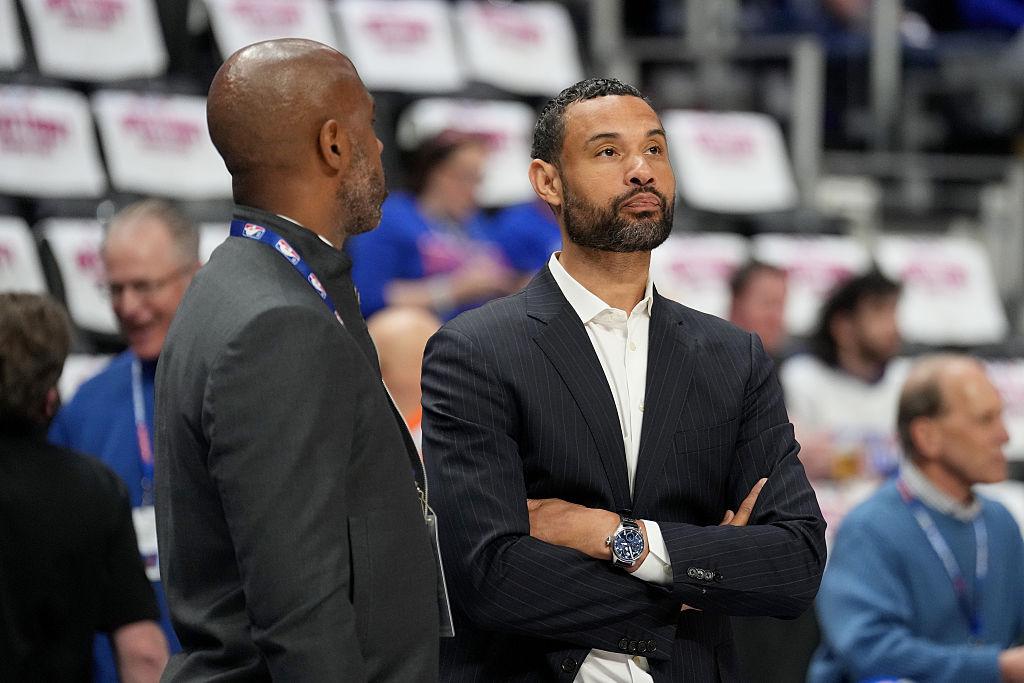
2. Trajan Langdon deserves a big piece of Blame Pie.
Look no further than Detroit for evidence of the sizable gap between the NBA’s regular season and the playoffs. The Pistons went 60-22 this year. They went 7-7 in the playoffs, ending with a devastating clunker at home in a Game 7 loss to the Cavaliers last night.
I don’t want to spend too much chastising a very good general manager who’s helped oversee one of the great turnarounds in NBA history, but it didn’t have to end this way! Long before this season started, we knew that Detroit’s offense could not function properly in the playoffs. And then, lo and behold, it sputtered throughout the playoffs. During the first round, when the top-seeded Pistons shockingly found themselves down 3-1 against the Orlando Magic, J.B. Bickerstaff lamented all the attention Cade Cunningham drew from a defense that didn’t really have to worry about anybody else: “They’re sending a lot of bodies to him. We’ve gotta help him by giving him more space so that he has room to operate.”
We knew during the regular season that the Pistons didn’t have enough 3-point shooting and needed more shooters to spread the floor. (The Lauri Markkanen dream is long dead, but I will go to my grave believing that he would’ve been a sublime fit on this team.)
Toughness, defense, and rebounding will get you only so far. Whether Langdon believed that this roster already had enough to make a Finals run or was content using this season as a stepping stone and then making revisions this summer, his apathy was a gut punch in real time. He’s a big believer in chemistry, and his rationale was based on a desire “to see our guys continue to grow, give them room to grow. I didn’t want to do anything that could impact that.”
What he did do, though, was essentially swap Jaden Ivey for Kevin Huerter (who played 45 total minutes in 14 playoff games). Langdon knew his team’s various weaknesses, from their lack of playmaking behind Cunningham to the fact that they finished the regular season 29th in 3-point rate and 20th in 3-point accuracy. He had all his first-round picks (and 14 second-round picks!) to trade before the deadline, along with some movable salaries. Coby White ended up being dealt to Charlotte for Collin Sexton, Ousmane Dieng, and three second-round picks. Ayo Dosunmu was acquired by Minnesota for Rob Dillingham, Leonard Miller, and four second-round picks. Detroit could’ve beaten both of those offers.
Maybe the Pistons will lick their wounds, improve around the margins, and win the title next year. It’s not impossible. But nothing is promised in the NBA. Every opportunity should be seized. If Langdon thought that no trade could push his team over the edge and that forking over draft picks just to get obliterated by the Oklahoma City Thunder or San Antonio Spurs would be foolish, fine. But this was a 60-win team with an MVP candidate at the helm. Cunningham deserved the help his GM didn’t get him.
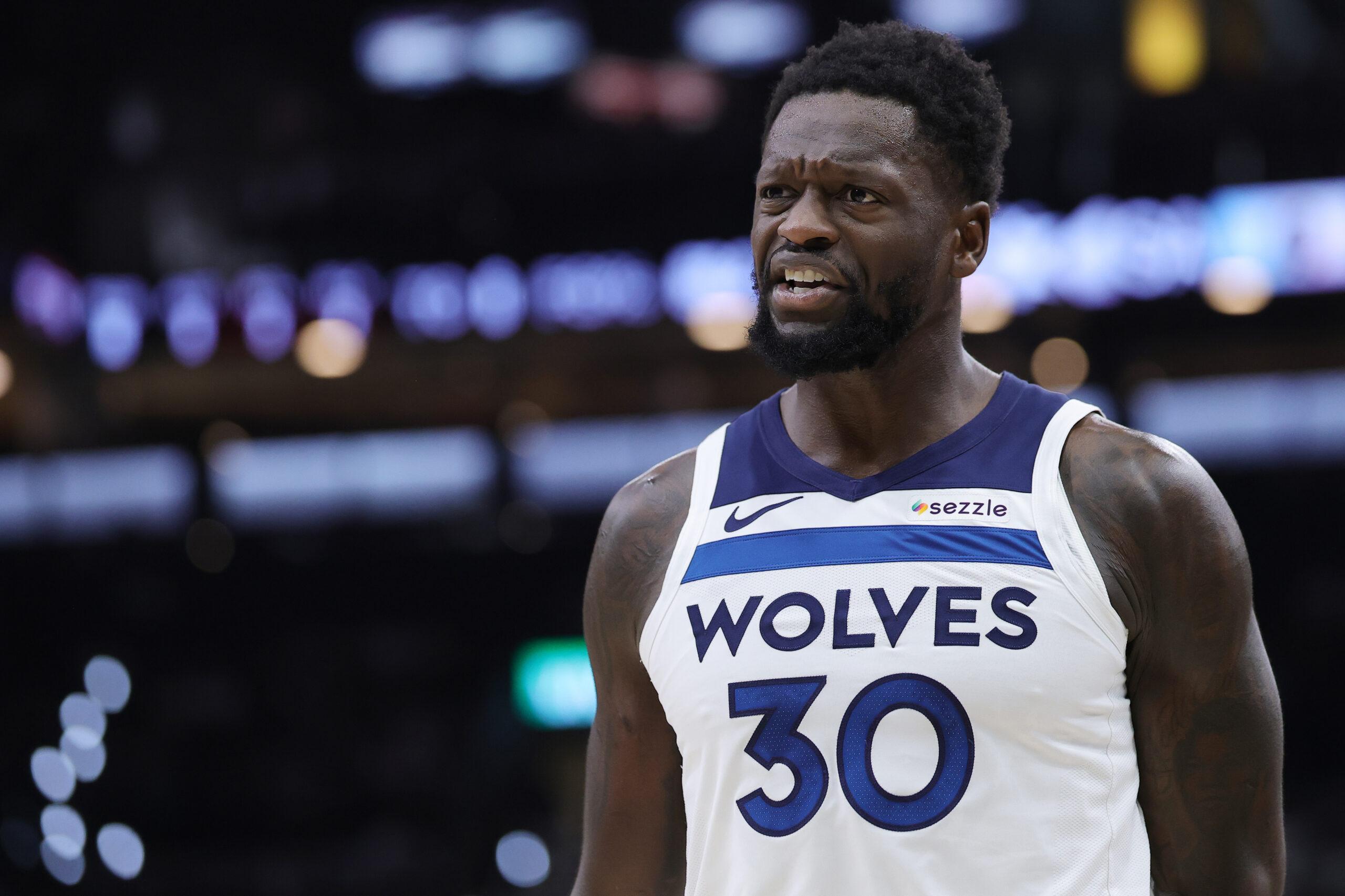
3. Julius Randle has to go.
Randle has been the most disappointing player in these playoffs; he wilted when his team needed him the most. His series against the Spurs was a disturbing callback to his no-show with the Knicks in the 2021 playoffs. With Minnesota’s entire season at stake in Friday night’s Game 6, Randle took eight shots and scored three points. In the 24 minutes when he was on the court, the Spurs outscored the Timberwolves by 34 points. Brutal.
In a dozen playoff games this year, Randle averaged just 16 points and made only 10 total 3-pointers. He shot over 50 percent from the field just one time and frequently made decisions—inane turnovers, defensive miscommunications, or consistent failures to punish guards and wings after a switch—that spawned fresh white hairs on Chris Finch’s head. Randle had as many turnovers as assists, he couldn’t stop fouling, and the Timberwolves’ offensive rating was a whopping 13.1 points per 100 possessions worse when he was on the court.
This was catastrophic for several reasons. First, we now have enough evidence to deduce that Anthony Edwards needs a different right-hand man. It’s an obvious, existential problem with no simple solution. Randle is guaranteed about $69 million for the next two years and just torpedoed his trade value. He’s the third-highest-paid player on this roster, and Minnesota will have to cut salary if it wants to re-sign Ayo Dosunmu without going into the first apron.
The Wolves have two first-round picks (and two swaps) available to trade at the draft. What will be feasible if they attach them to Randle and another contract? The Wolves have aimed for Kevin Durant and Giannis Antetokounmpo in the past. The million-dollar questions related to those targets haven't changed: (1) What else would the Wolves be willing to surrender, and (2) why would anyone be interested in their offer?
Unless Giannis or KD publicly declares a desire to link up with Edwards, the Wolves may need to find a Plan C. What about Ja Morant? A straight-up swap would add about $8 million to the Timberwolves’ cap sheet, but if Morant’s market is as dry as it was this past February, they could potentially convince Memphis to throw in one of its nine tradable first-round picks.
It’s too early to know how exactly the Timberwolves will shake things up. But rest assured: Under a front office that was willing to move Towns, change is coming.
(Random and Hot) Take of the Day
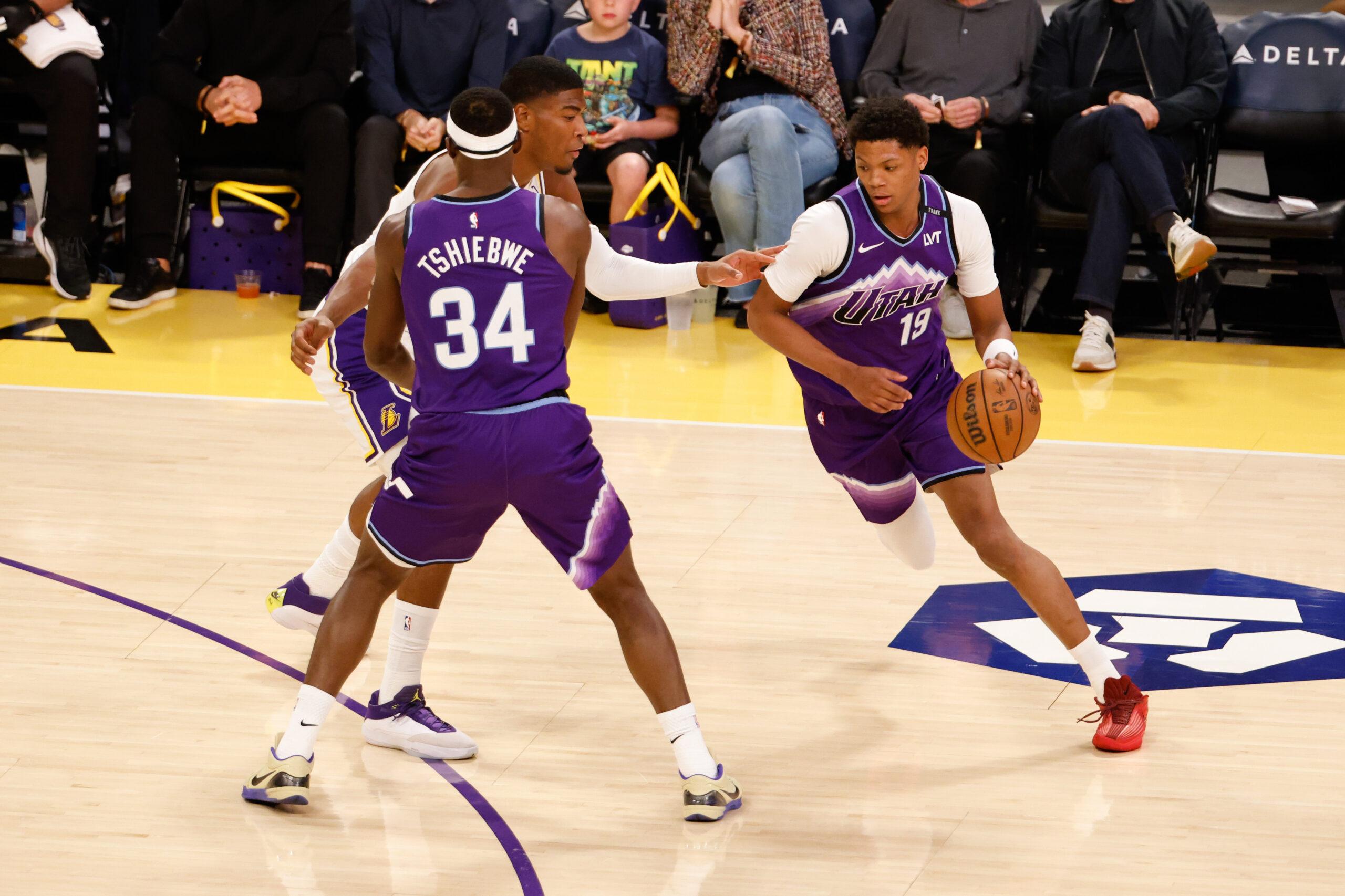
I know it’s mid-May, but I’m all in on next season’s Utah Jazz. If they re-sign Walker Kessler and strike gold in the draft, I think that they will not only make the playoffs but also win a playoff series. Depending on whom the Ainges and Ryan Smith land with the second pick, Utah will be either massive (AJ Dybantsa, Cam Boozer, and Caleb Wilson are all at least 6-foot-9) or … borderline unguardable?
Could Keyonte George, Darryn Peterson, Lauri Markkanen, Jaren Jackson Jr., and Kessler be one of the league’s most formidable starting fives next season? Just think about that 3-point shooting, one-on-one play creation, rim protection, and defensive versatility! Utah’s bench is questionable, but I like the upside. Ace Bailey, John Konchar (still underrated), and Brice Sensabaugh should all be in the rotation, and the Jazz aren’t currently anywhere near the luxury tax, should they want to upgrade via a trade or free agency. Will Hardy is a creative thinker who should be a popular pick for Coach of the Year.
The Western Conference is full of thorns, but by opening day, Utah should be more than equipped to flourish among them.