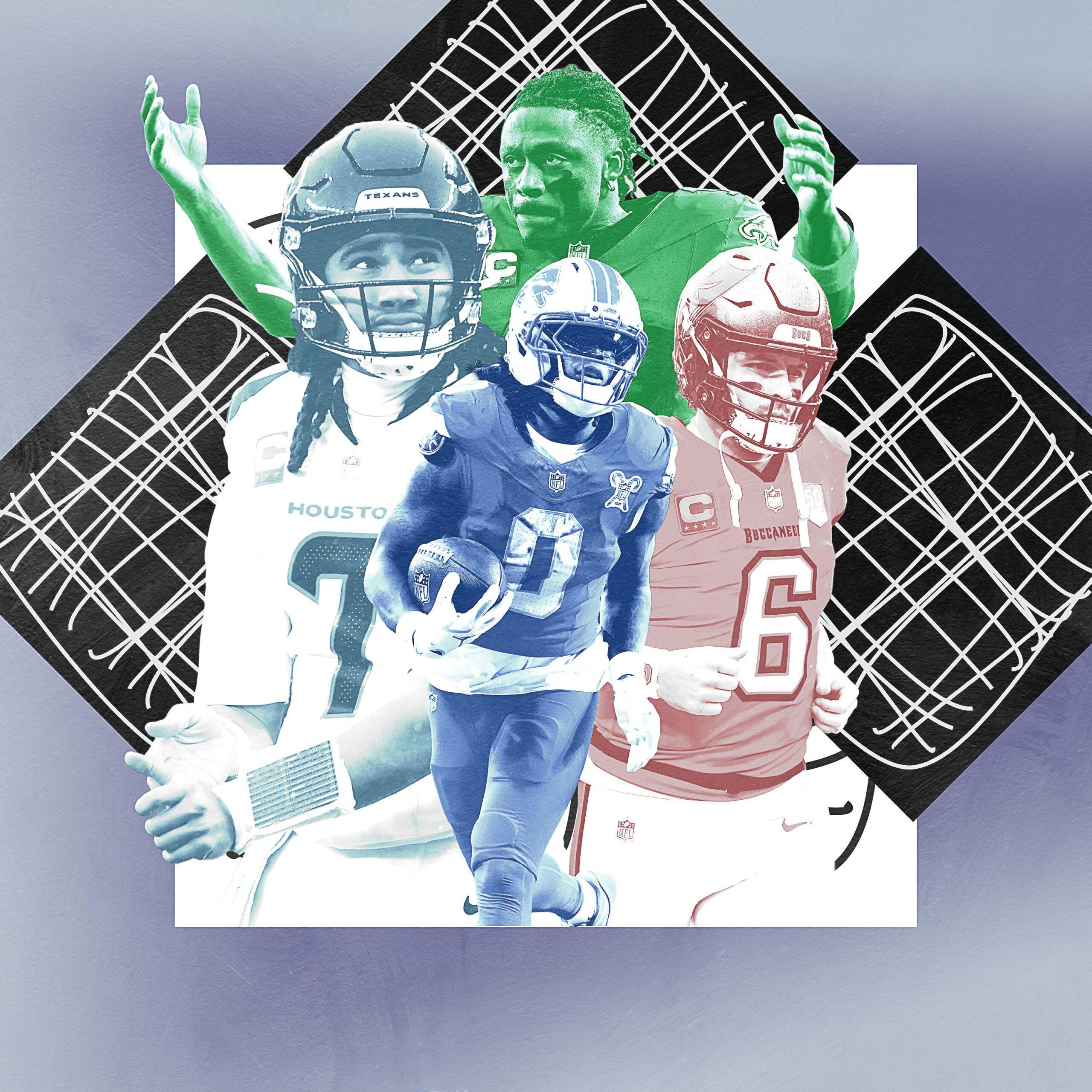

The NFL offseason has seemingly hit its dead period, but by now, we should know there’s really no such thing. Even if the big tentpoles of the league’s silly season—free agency and the draft—are behind us, there are still a number of loose ends that will need to be tied up between now and the start of camp in July. With the draft over, teams are clear to sign free agents without worrying about how those deals will affect their compensatory pick formula. That typically brings about another wave of signings; for example, the Chargers inked tight end David Njoku to a one-year contract on Monday. We’re also getting close to June 1, when dead cap penalties for trades and cuts are essentially halved, which often leads to another flurry of roster moves. The NFL calendar may appear light at the moment, but we should get plenty of league-altering news over the coming weeks. Let’s take a look at some of the bigger offseason plots that still need to be wrapped up.
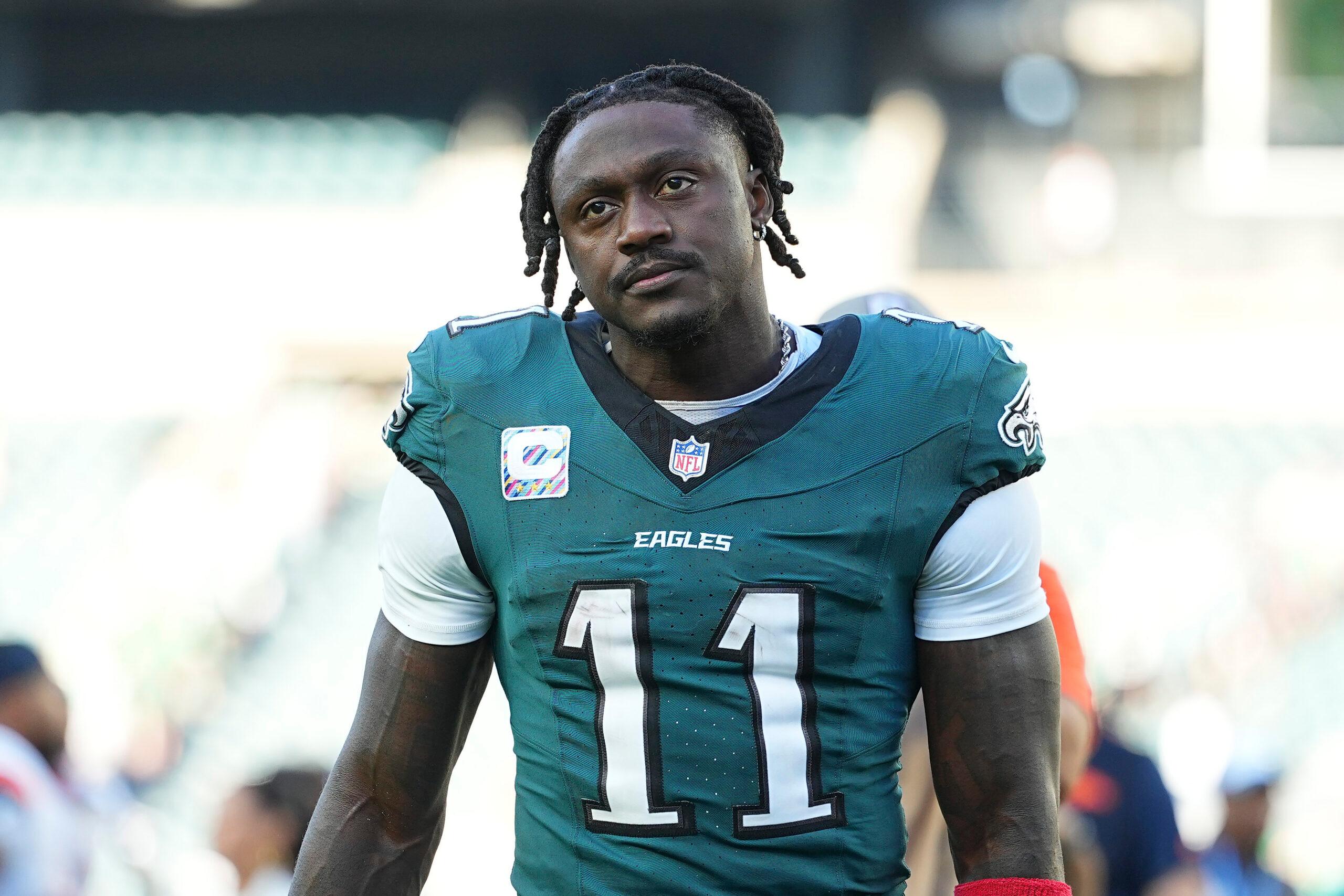
The Eagles still need to trade A.J. Brown.
I don’t know whether a player has ever been more pre-traded than Brown, who is still a member of the Eagles even though we’ve known for weeks that Philly will send him away as soon as it becomes financially feasible to do so. That will happen on June 1, when the dead cap number for a Brown trade will drop from $43.4 million to a more reasonable $16.3 million; a trade would then free up around $7 million in cap space, per Over the Cap. There haven’t been any updates on this front since ESPN’s Adam Schefter reported that a deal with New England was already in the works in late April, and both teams have been operating as if Brown will be in a Patriots uniform next season. New England hasn’t made any significant additions to its receiver room since signing Romeo Doubs at the start of free agency, and over the past few months, the Eagles have used a first-round pick on Makai Lemon, signed Hollywood Brown, and traded for Dontayvion Wicks. Even if the Pats don’t ultimately land the star wideout, it’s clear that the Eagles have decided to move on.

The one thing left to sort out is compensation. Schefter believes Philadelphia will get a first-round pick for Brown, but that feels rich given the trade interest—or the shocking lack thereof—in the 28-year-old. The Rams reportedly talked with the Eagles about a possible deal but were apparently “scared off” by Brown’s chronic knee issues, which have bothered the receiver since his time in Tennessee. Outside of that, the Pats have been the only team publicly mentioned in trade talks. Philly doesn’t have a lot of leverage here, having already reshaped its receiving depth chart. And I don’t know whether it can even afford to keep Brown if the “wink-wink understanding” with the Pats falls through. General manager Howie Roseman still needs to extend Jalen Carter and some other players who are nearing the ends of their rookie contracts. Quarterback Jalen Hurts will also be looking for an extension, and while the team is reportedly undecided on whether to give him one, Roseman will have to budget for the possibility regardless.
With the Eagles changing their offensive scheme under new coordinator Sean Mannion, who’s bringing a play-action-heavy attack to Philly, Brown may no longer be as valuable to the team as he’s been the past few seasons. Mannion’s offense will focus more on attacking the middle of the field and less on those deep perimeter targets that Brown devoured. And that might be for the best. The Eagles have likely reached the point of diminishing returns on a passing game built around Brown’s vertical threat. From 2022 to 2024, Brown’s first three seasons in Philadelphia, only George Pickens generated more EPA on “go” routes, per TruMedia. In 2025, 33 pass catchers ranked ahead of Brown in the same stat, including nine tight ends. While the trade talks have been framed as the team capitulating to a disgruntled star that it would prefer to retain, Roseman and the front office could see this as an opportunity to sell high on a player whose best days are behind him.
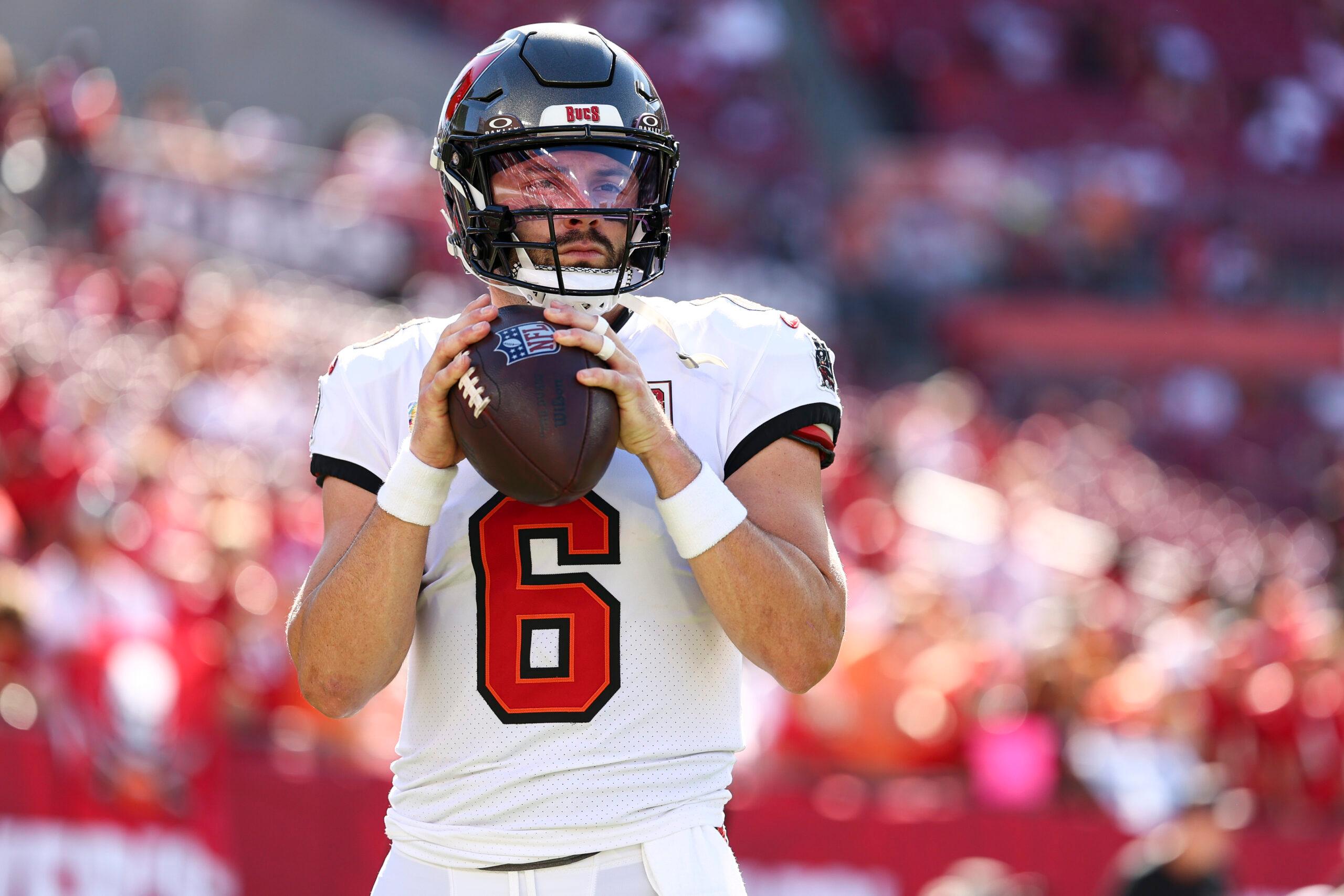
Baker Mayfield is still entering a contract season.
It doesn’t sound like Buccaneers general manager Jason Licht wants to get out of the Mayfield business anytime soon. He’s assured the media several times throughout the offseason that Tampa Bay will get a deal done with its quarterback, and he has even gone so far as to say that Mayfield “is at the forefront of our mind at all times.” (That quote reads more like something ripped from a Nicholas Sparks novel than something said by an NFL GM, but I digress.) Interestingly, Licht doesn’t have much, if any, financial leverage over Mayfield, as Mayfield’s in a position to demand a top-of-the-market deal. And that’s despite the fact that he had a shaky end to the 2025 season. After spending the first two months of the season in the MVP discussion, Mayfield (predictably) regressed in the second half as his turnover luck flipped. The Bucs quarterback turned it over 11 times from Week 10 on, tying him with Shedeur Sanders for the second most in the league over that span. He also fell to 17th in EPA per dropback and 13th in success rate, per TruMedia. Those are decent numbers considering the context—Mayfield played through an injury and didn’t have much help from his banged-up supporting cast—but it felt like a massive drop-off after a hot start to the season.



More in the NFL
Clearly, the Bucs are better off with Mayfield in the fold, and he’s been one of the better bargains in the league since arriving in Tampa on a one-year, $4 million prove-it deal in 2023. Mayfield earned a three-year, $100 million contract the following offseason and then agreed to a restructure last offseason that guaranteed him $30 million for 2026. To get that deal done, Licht tacked three void years to the end of Mayfield’s contract, which is set to expire after next season. If it does, it will trigger a dead cap penalty of over $22 million. The Bucs can avoid that charge if a deal is made before then, so you can see why Licht is talking about the new contract as if it’s a foregone conclusion. Tampa Bay doesn’t really have much of a choice unless it wants to sabotage its cap situation and enter into quarterback purgatory. Now it’s just a matter of how much the Buccaneers will have to pay.
The quarterback market is constantly evolving. Several quarterbacks have entered extension talks this offseason, and the cap is taking another big jump. Dak Prescott currently holds the title of highest-paid quarterback based on average annual value at $60 million per year, and there are four quarterbacks all tied for second place at $55 million, including Trevor Lawrence and Jordan Love, whose résumés aren’t better than Mayfield’s, even if they’re more talented. So $55 million per year is probably the starting point for any negotiations. But even when accounting for cap inflation, that’s a significant investment. As we saw the last time Mayfield and the Bucs came to an agreement, Licht loves void years, so I imagine that Mayfield’s new contract will include some of those to help spread any signing bonuses or other guarantees over a longer period. That would help the deal age better as the cap continues to grow, as well as allow Tampa Bay to give its quarterback the payday he probably deserves after playing for a below-market rate over the past three seasons. There’s a better-than-good chance that Mayfield will end up as the highest-paid quarterback in the league at some point in the next month or two, a remarkable come-up for a player who was let go by two teams in one calendar year and available for punter money just three seasons ago.
The Lions still need to extend their 2023 draft class.
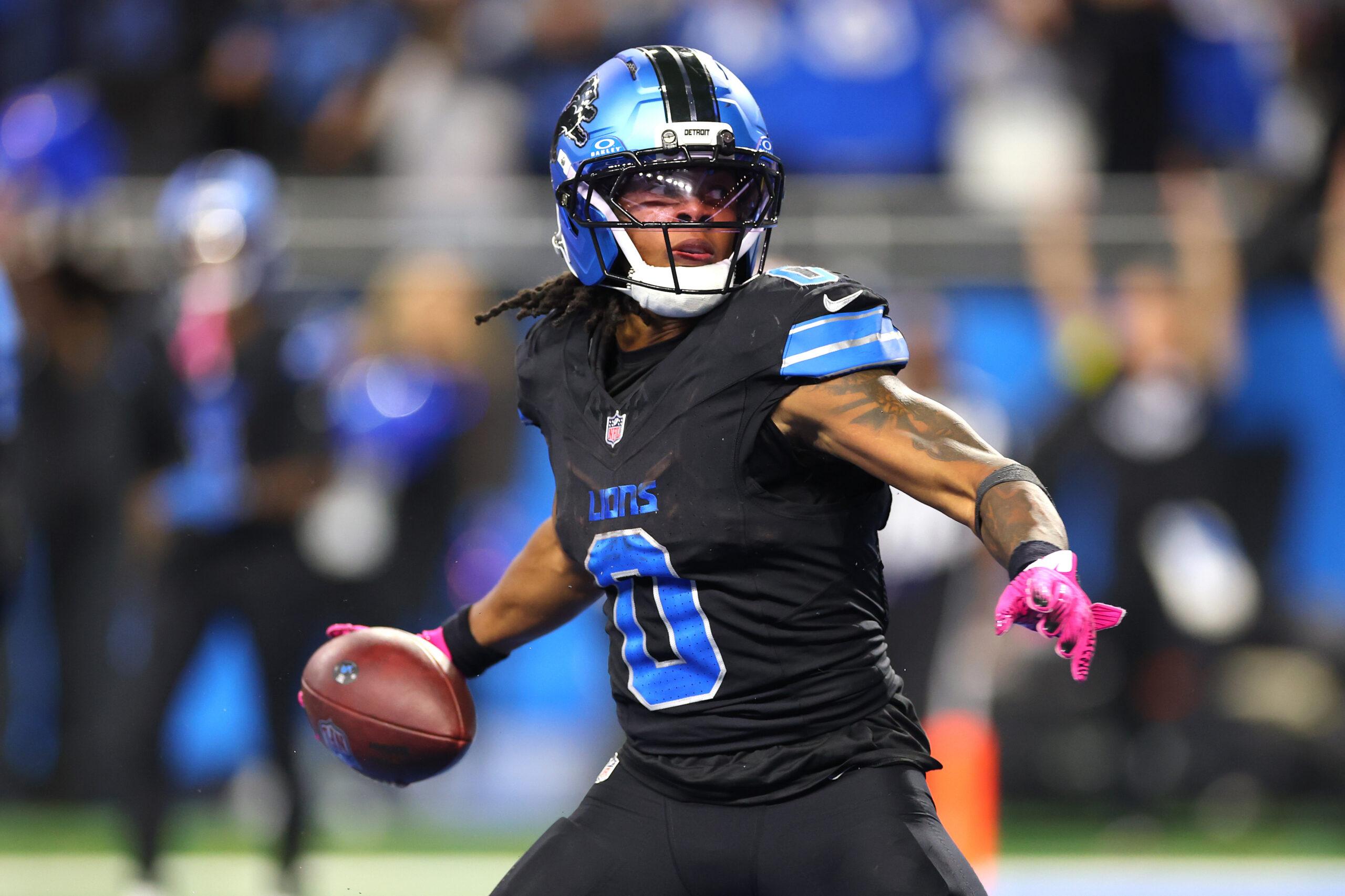
The offseason work is just getting started for the Lions front office, which has a lot to deal with before camp, including extensions for pretty much the entire 2023 draft class. Jahmyr Gibbs, Jack Campbell, Sam LaPorta, and Brian Branch are all eligible for extensions, and general manager Brad Holmes said back in February that those discussions had already started.
Those four players are viewed as key cogs that Detroit will want to keep around, but these won’t be straightforward deals. We already saw that with Campbell when the team declined his fifth-year option, which would have guaranteed him $21.9 million in 2027. That would have made Campbell the highest-paid linebacker in the league, and it appears that the team isn’t interested in resetting the linebacker market for the 25-year-old who can at times be a liability in coverage. Extending Gibbs should be a priority after he carried the offense for stretches last season, but contract negotiations with running backs are always tricky. The same goes for safeties, and Branch is coming off an Achilles tear that ended his 2025 season, so don’t expect Holmes to just fork over a big-money deal. With the league falling back in love with tight ends this offseason, LaPorta should have no problem landing a new contract, but deals for Kyle Pitts and Tucker Kraft are looming, so that number could be inflated if the Lions don’t act quickly. That also applies to Gibbs, who will be competing with Bijan Robinson this offseason to become the league’s highest-paid running back.
Even if Detroit wants to bring back all four guys, it might not be able to. The Lions have added a lot of young talent since Holmes took over the front office in 2021, and those players have gotten expensive. In the past two years alone, the Lions have signed Aidan Hutchinson (four years, $180 million), Amon-Ra St. Brown (four years, $120 million), Penei Sewell (four years, $112 million), Alim McNeill (four years, $97 million), Kerby Joseph (four years, $86 million), and Jameson Williams (three years, $80 million) to massive extensions. And that’s not to mention the fact that they’re paying Jared Goff $53 million per year. There are only so many dollars to go around, so, as well as the 2023 draft class has performed, Detroit may have to let one or two of them go just to keep its cap situation tenable.
C.J. Stroud is still on his rookie contract.
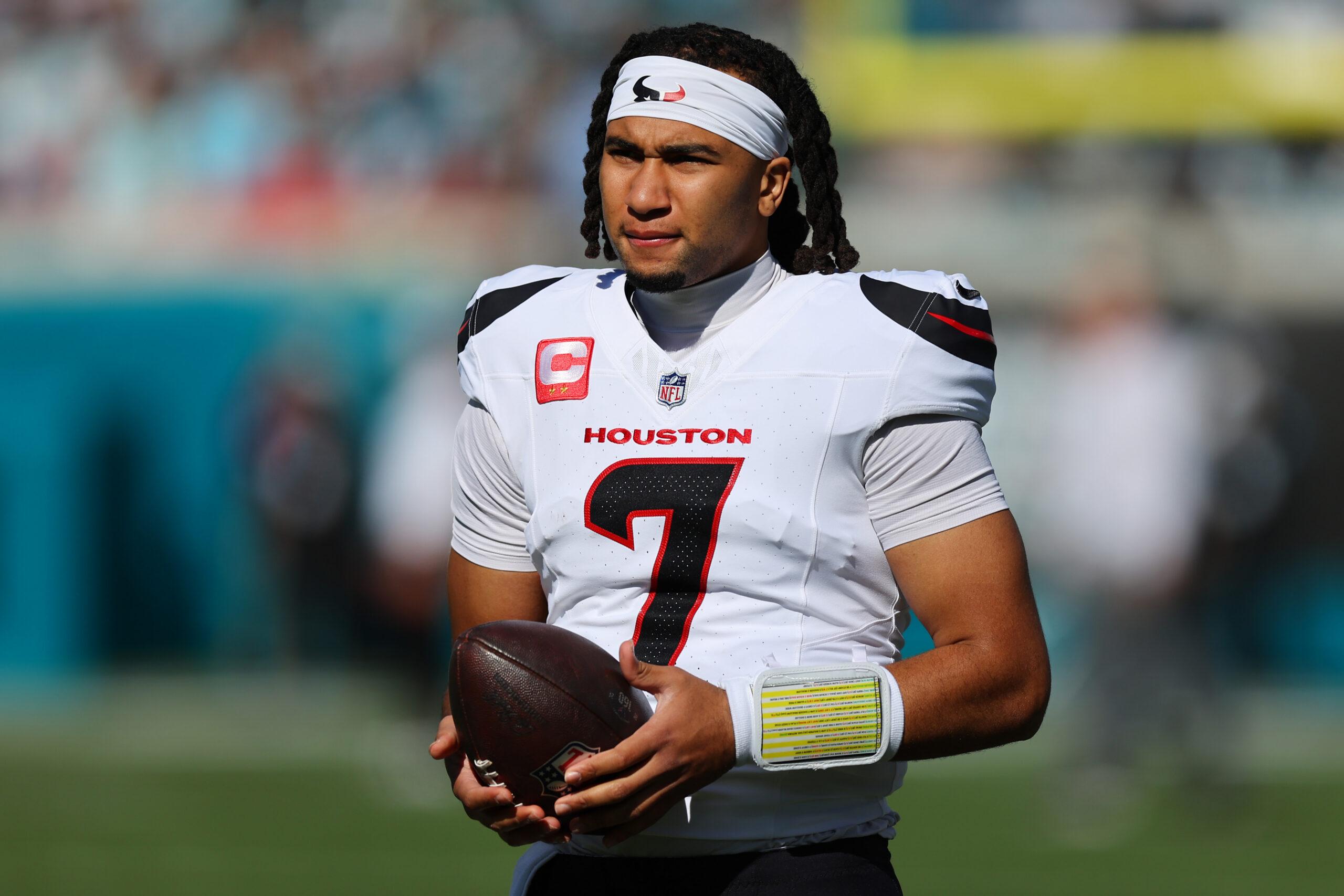
It’s difficult to have a rational discussion about Stroud’s value after that playoff performance. The third-year quarterback just had to be Trent Dilfer on the 2000 Ravens—staying out of the way and letting a ridiculous defense shoulder the load—and he couldn’t even manage that, throwing four interceptions, including a pick-six, in a 28-16 loss to the Patriots. That disaster class led to some discussion about whether Houston could move on from the NFL’s 2023 Offensive Rookie of the Year, but that was promptly shut down by general manager Nick Caserio.
"It's moronic. We're not trading the guy," Caserio said at the combine in February. "He's our quarterback. He's gonna be playing quarterback for the Houston Texans in 2026. Anything beyond that, that's your world. You guys can speculate on that. But we're not trading C.J. Stroud."
Since then, Caserio picked up Stroud’s fifth-year option, which should keep him in Houston through at least 2027. But until the Texans give him a second contract, we’ll be left to speculate about how long he’ll stick around beyond that.
Based on the words of all the important parties—like Caserio, head coach DeMeco Ryans, and team owner Cal McNair—the team still views Stroud as its future. And extending the former no. 2 pick should be a no-brainer. The playoff horror show notwithstanding, Stroud’s game passes any sniff test. He’s produced three seasons of good film, which looks even better when you consider the context of Houston’s offense. The run game has been useless since the start of Stroud’s career, and the offensive line has been horrendous—so much so that when it was merely “bad” last season, it felt like a massive upgrade. Stroud has been playing on hard mode for the past three years, so while he hasn’t lit the league on fire statistically, his numbers are still impressive. Last season, he finished 11th in QBR while playing in a brand-new system that gave him more responsibility before the snap. And after some early growing pains in that new scheme, which coincided with an 0-3 start for Houston, he finished the season sixth in the league in EPA per play, ahead of Patrick Mahomes, Josh Allen, Lamar Jackson, Joe Burrow, and Justin Herbert.
The idea that Stroud was bad last year is based solely on that game in New England. And while that loss did expose some of Stroud’s weaknesses—inconsistent accuracy and playmaking under pressure—it is not an accurate representation of his talent. The Texans should still view Stroud as their future at quarterback and should be rushing to get a deal done before the season kicks off. The price will only go up from there.
The Chiefs still desperately need a wide receiver.
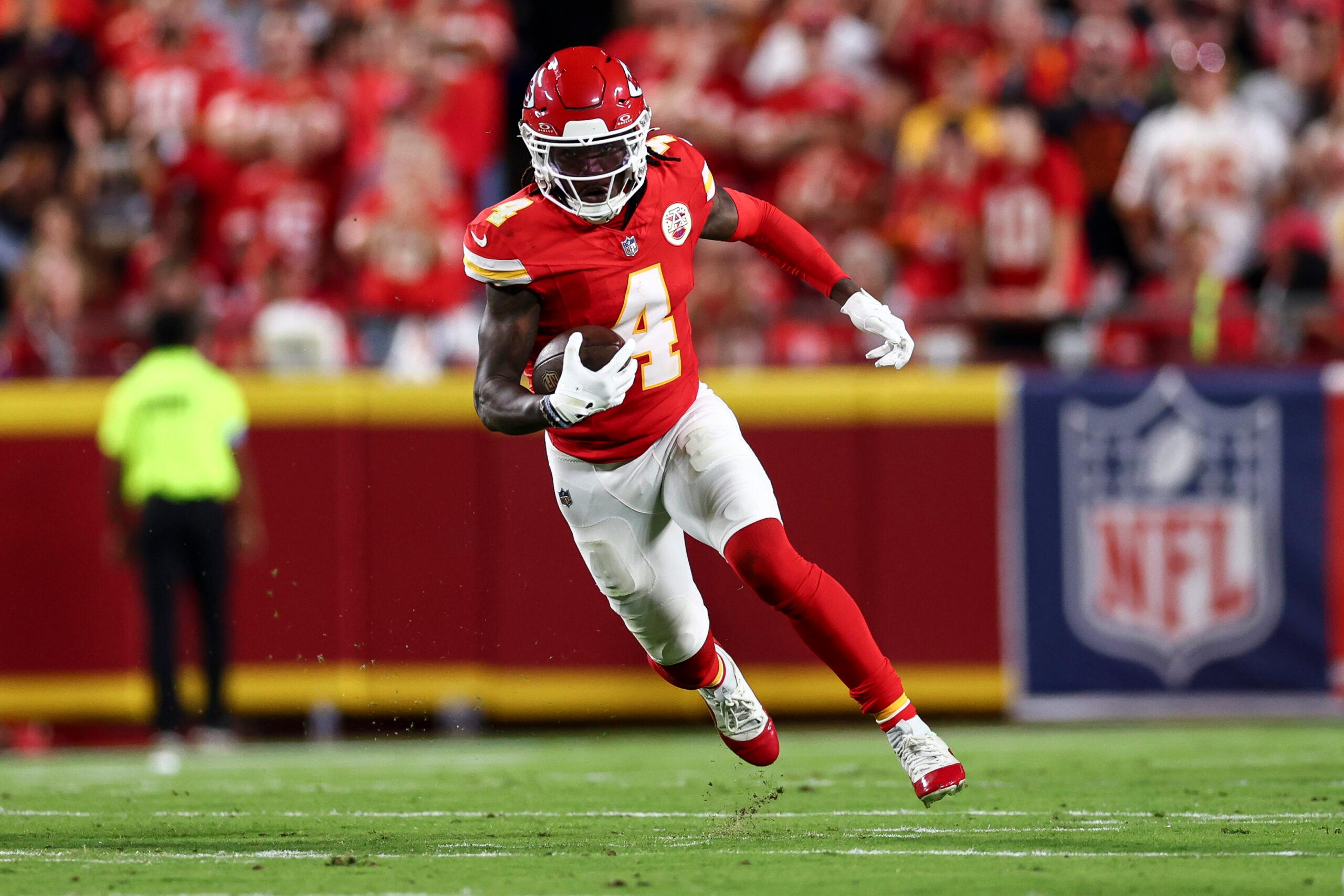
It’s been four years since the Chiefs traded Tyreek Hill to Miami, and the team still hasn’t managed to replace him despite its best efforts. The idea of trying to fill the void in the aggregate with multiple undersized speedsters has not worked out (Hollywood Brown, Skyy Moore, and Xavier Worthy all failed to establish themselves as threats for which opposing defenses had to game-plan). Rashee Rice has been productive—when he’s been available—but he’s not a vertical route runner like Hill was. No one on the team is, frankly, and before Kansas City signed Kenneth Walker III in free agency, their skill group was devoid of players capable of consistently producing explosive gains.
Nobody is going to feel sorry for Patrick Mahomes, who spent his early seasons surrounded by explosive talent and one of the league’s greatest play callers, but watching him try to carry this offense the past few seasons has been tough. And it’s frankly a crime against the sport that he’s now a fixture at the bottom of league aDOT charts. Andy Reid and general manager Brett Veach should be thrown in football jail for what they’ve done to their quarterback, who finally buckled last season under all the weight put on him by suspect roster management and an offensive scheme that grows increasingly stale every season. Reid’s play calling—specifically his insistence on a run game built around RPOs—hasn’t helped, but the lack of talent has been the main issue holding Kansas City’s offense back.
As things stand, the Chiefs’ offensive depth chart will look awfully similar to 2025's in 2026. Walker is a welcome addition, but the group of pass catchers is still painfully thin after the team used its first three draft picks on defense. There’s still time for that to change. Hill is available if the Chiefs don’t want to try anything new, but he’s also coming off a nasty leg injury and two consecutive down years. Stefon Diggs is a free agent but has lost a couple of steps and is mostly a possession receiver at this point in his career. A trade for A.J. Brown is still possible, but … well, I don’t really have a good reason why the Chiefs shouldn’t be pursuing one. Brown isn’t a speedster, but he has been a dominant vertical threat for most of his career. As I covered earlier, his numbers were down in that regard last season, but that may have been the product of a flawed Eagles passing game rather than a decline in his ability. There were still moments when Brown looked as solid as ever, including in Philly’s Week 3 win over the Rams, when the star receiver took over the game in the second half. There may not be any obvious answers to Kansas City’s issues at receiver, but they do have options.