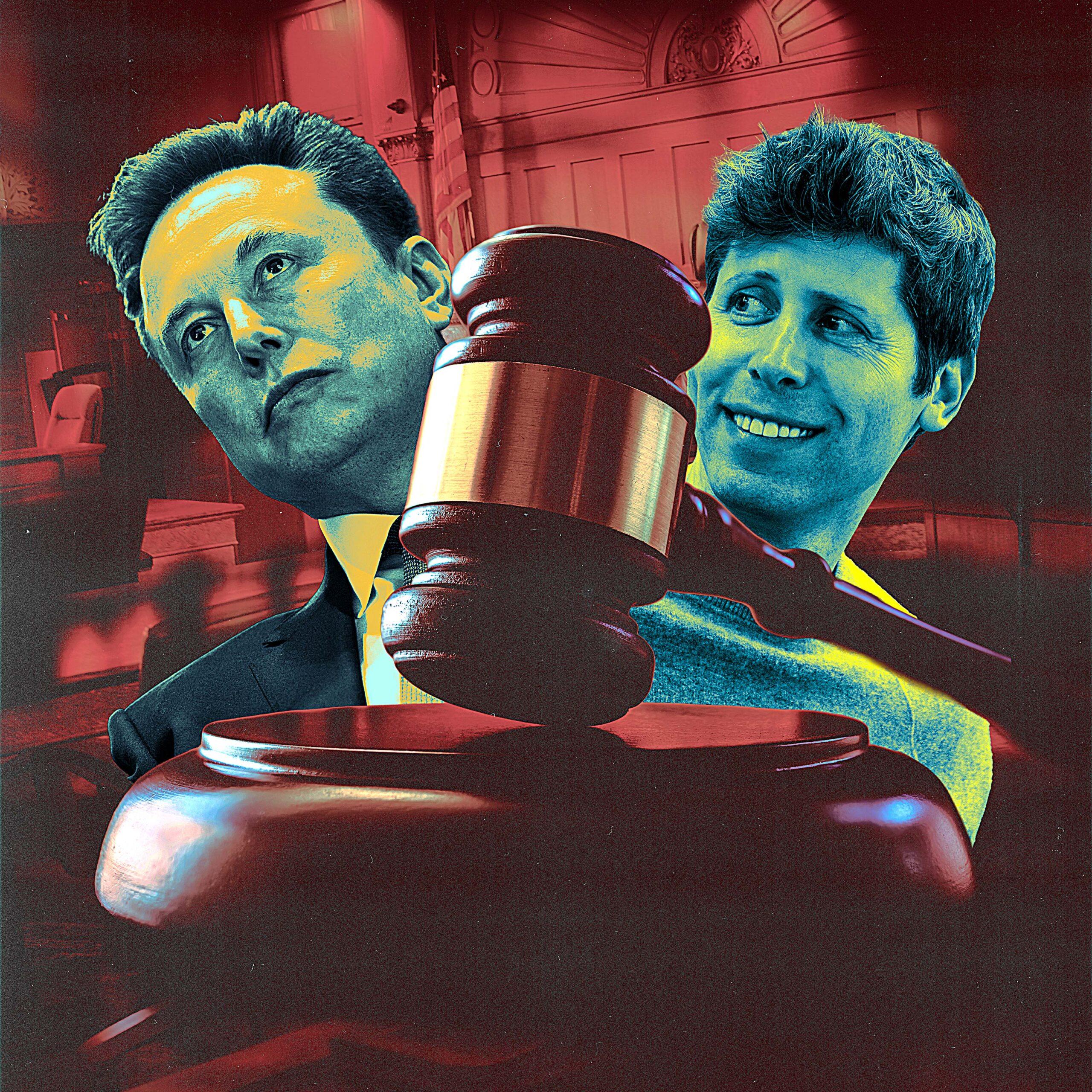

AI approach the bench, Your Honor? There’s still more than a week until Elon Musk, et al. v. Samuel Altman, et al.—the civil trial placing the past, present, and future workings of the artificial intelligence company OpenAI into the consideration of a judge and jury—is slated to convene at a federal courthouse in Oakland, California. Already this dispute has been pitting eccentric hypertech execs (and their AI frontier lab concerns) against one another, and its outcome could leave billions of dollars suspended somewhere in the legal ether. The subject matter at hand here—the research and development of superintelligence, with all its attendant promises and dangers—is bold, newfangled, and decidedly futuristic. But the whole spectacle also has that lived-in feel of ancient human history.
I’ll get to the particulars of who’s suing whom and why in a moment. But first allow me to proffer a few representative items of interest related to Musk v. Altman, all revealed thanks to the many preliminary hearings, depositions, and discovery data dumps since the suit was filed two years back:
- Legal sparring related to the meaning of the word “relationship”
- Legal sparring related to the relevance of “rhino ket” usage at Burning Man (which apparently does not refer to “ketamine earmarked for rhinoceri”—disappointing!)
- Dueling releases of private communiques, diary entries, disappearing messages, and text messages—which revealed, among other things, a savvy let’s maybe not have this convo in writing zag from Mark Zuckerberg and (separately) some light shit-talking about Jeff Bezos
- A Ronan Farrow opus in The New Yorker (obligatory)
- A literal clown
Clearly this ain’t your typical dry Silicon Valley litigation over equity points or patent law! Elon Musk, et al. v. Samuel Altman, et al. is one of those battles that fuels its own growth and kicks up its own storm. Sure, its judicial technicalities are nitty-gritty, involving interpretations of Section 8 of the Clayton Antitrust Act of 1914, emails about B-corp capital structures, and phrases like “interlocking directorates” and “equitable disgorgement.” But the personalities and implications at the center of this dispute are larger than life. To hear one side tell it, this case is one more distracting instance of “a harassment campaign that's driven by ego, jealousy and a desire to slow down a competitor.” Per the other side, it’s more of a courageous moral struggle against “perfidy and deceit” of “Shakespearean proportions.” You be the judge!
During a hearing last year, the actual judge presiding over the case, the Honorable Yvonne Gonzalez Rogers, put it most succinctly: “I have billionaires versus billionaires here,” she observed. Once the trial gets going, these billionaires—and their grudges and motivations and machinations—will be on full, fascinating display. (Well, maybe not full display: sadly, Judge Gonzalez Rogers ruled that no questions about rhino ket are allowed.) Here’s a look at who and what we might see when this techstravaganza begins—and how this whole mess came to exist in the first place.
The Lore
It was 9:10 p.m. on a Monday night 11 years ago when startup impresario Sam Altman emailed Elon Musk: “Been thinking a lot about whether it’s possible to stop humanity from developing AI,” he wrote. “I think the answer is most definitely not. If it’s going to happen anyway, it seems like it would be good for someone other than Google to do it first. Any thoughts on […] a Manhattan Project for AI?”
Two hours later, Musk sent a four-word reply: “Probably worth a conversation.”
The rest has been history. A December 2015 post introducing Musk’s and Altman’s joint AI venture began: “OpenAI is a non-profit artificial intelligence research company. Our goal is to advance digital intelligence in the way that is most likely to benefit humanity as a whole, unconstrained by a need to generate financial return. Since our research is free from financial obligations, we can better focus on a positive human impact.”
Launch memos: always so darn hopeful! Fast-forward to now, and it’s fair to say that OpenAI—which recently raised another 12-figure chunk of change at an implied valuation of more than $850 billion, and is tethered directly to Microsoft, and has floated the idea of a trillion-dollar IPO in late 2026—is no longer “free from financial obligations.” Altman and Musk stopped teaming up on the effort long ago. (Musk left/was pushed out of OpenAI’s inner circle back in 2018.) And the company isn’t particularly “open” anymore, having ratcheted down public access to its models years ago. (“Change your name to ClosedAI and I will drop the lawsuit,” Musk wrote on social media in 2024.)
As for the positive human impact? Well, the jury’s still out on that one, huh. Which brings us to the present.

More From the World of Tech
The Allegations
Is Musk v. Altman a legit philosophical fight over the future of the human race—or is it the legal equivalent of a fleeing thief overturning fruit carts behind him? The answer is unequivocally: Yes.
To hear Musk’s side tell it, he (and, like, society) was led on by an opportunistic showman whose initial fundraising pitch targeted real fears about what end-stage AI might mean for the world. “Altman assured Musk that [OpenAI’s] non-profit structure guaranteed neutrality and a focus on safety and openness for the benefit of humanity, not shareholder value,” reads the plaintiff’s complaint, filed in August 2024. “But as it turns out, this was all hot-air philanthropy—the hook for Altman’s long con.”
At its essence, this trial will hinge on Musk’s ability to make the case that his crucial early investment in OpenAI was based on a not-for-profit founding ethos. His team will have to prove the existence of an implied contract (in the absence of any actual paperwork) establishing the firm’s structure; that Altman and other defendants meaningfully and fraudulently departed from that bargain; that Musk suffered harm as a result; and, procedurally, that he didn’t miss various statute of limitations windows—most of which aren’t longer than a few years—in filing his complaints.
The defendants’ task, meanwhile, is to paint Musk’s outrage as selective and retrospective; to present evidence that he was aware for years that the company was seeking to bust out of its nonprofit constraints for its own good; and to note that damaging OpenAI would be a convenient tailwind for xAI (Musk’s own competing enterprise, which is also a plaintiff in the case). They’ll also remind the jury that none of this matters anyway if Musk didn’t initiate legal proceedings in time.
The Plaintiff(s)
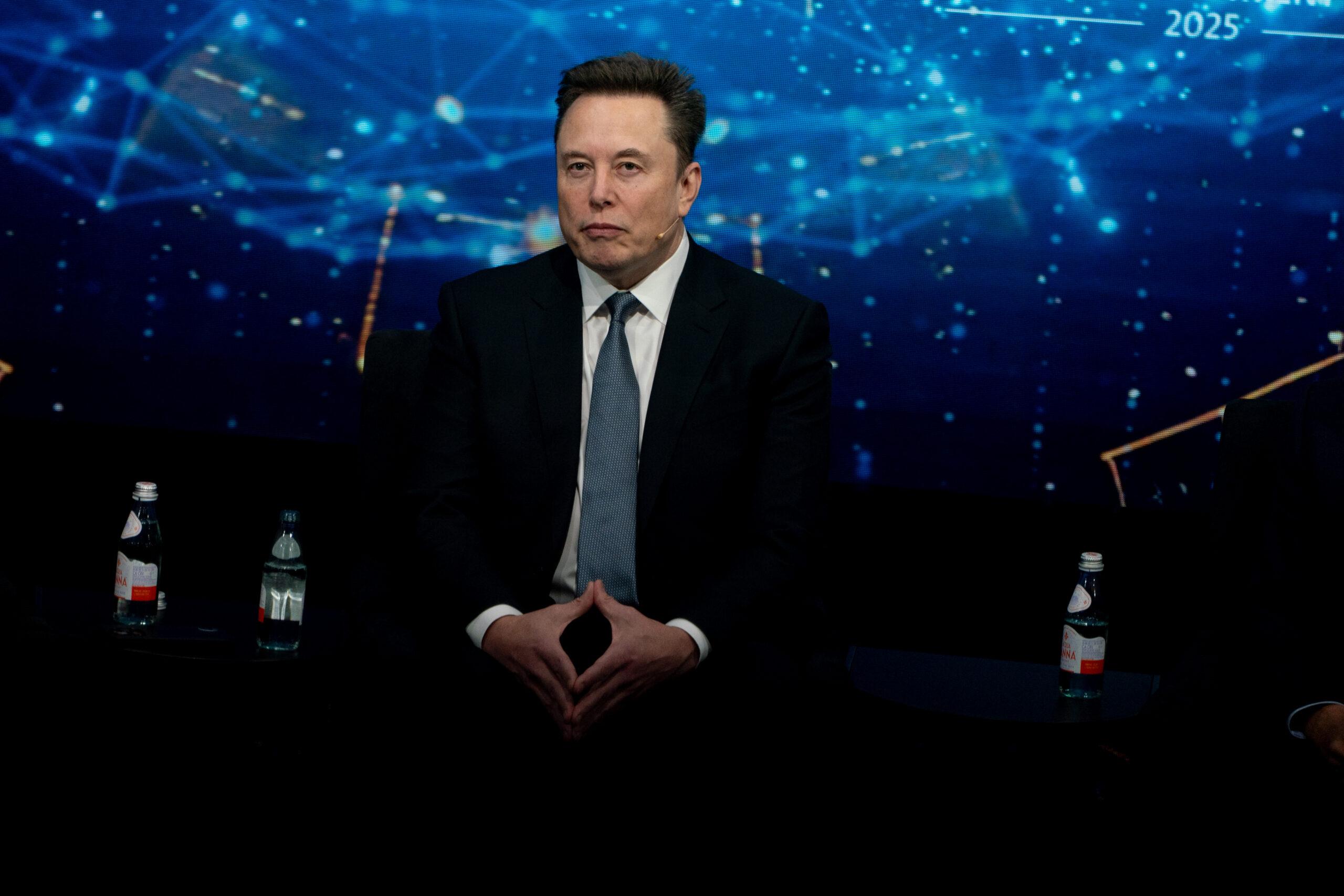
One inspirational thing about Elon Musk—chainsaw-wielding DOGE poobah; Tesla faux-founder; Boring Company failbaron; Zambian emerald mine scion; dorkus malorkus supreme—is how he just does not stop adding new line items to his résumé. Like, it was only while writing this that I learned of the existence of one of his newer ideas, an AI initiative called—and I’m sorry to encourage him but I did laugh pretty heartily at this—Macrohard. (Get it, the opposite of Microsoft? This is the tech industry version of that time The North Face inspired a cheeky startup named “The South Butt.”)
Which is all to say that if you’ve been thinking, “Huh, I feel like Elon Musk was just in court for something else?” you’ve been correct! In between running Tesla, SpaceX, X, Neuralink, and xAI (and running sections of the U.S. government into the ground) Musk spends a good deal of time running from one lawsuit to the next. He’s been sued by the SEC and by Tesla shareholders; he’s gone to court in Texas and Delaware and Tennessee.
But all that was just business. Musk v. Altman feels pretty personal. And not just because of the personality conflicts between the two men. In the same way that President Trump really just does love CATS the Musical and Supreme Court Justice Neil Gorsuch really just does respect the constitutional case for tribal sovereignty, Musk really just does fret about the fearsome power of superintelligence, and he’s been fixated on it for quite some time. “We need to be super careful with AI. Potentially more dangerous than nukes,” he tweeted in 2014 after having read the Nick Bostrom book Superintelligence: Paths, Strategies, Dangers.
Nearly a decade later, in February 2023, Altman sent Musk an emo email. “i dont think openai would have happened without you—and it really fucking hurts when you publicly attack openai,” Altman wrote. “I hear you and it is certainly not my intention to be hurtful, for which I apologize,” Musk responded, “but the fate of civilization is at stake.”
The Defendant(s)
There are several entities named in Musk’s suit, ranging from individuals to corporations. They include:
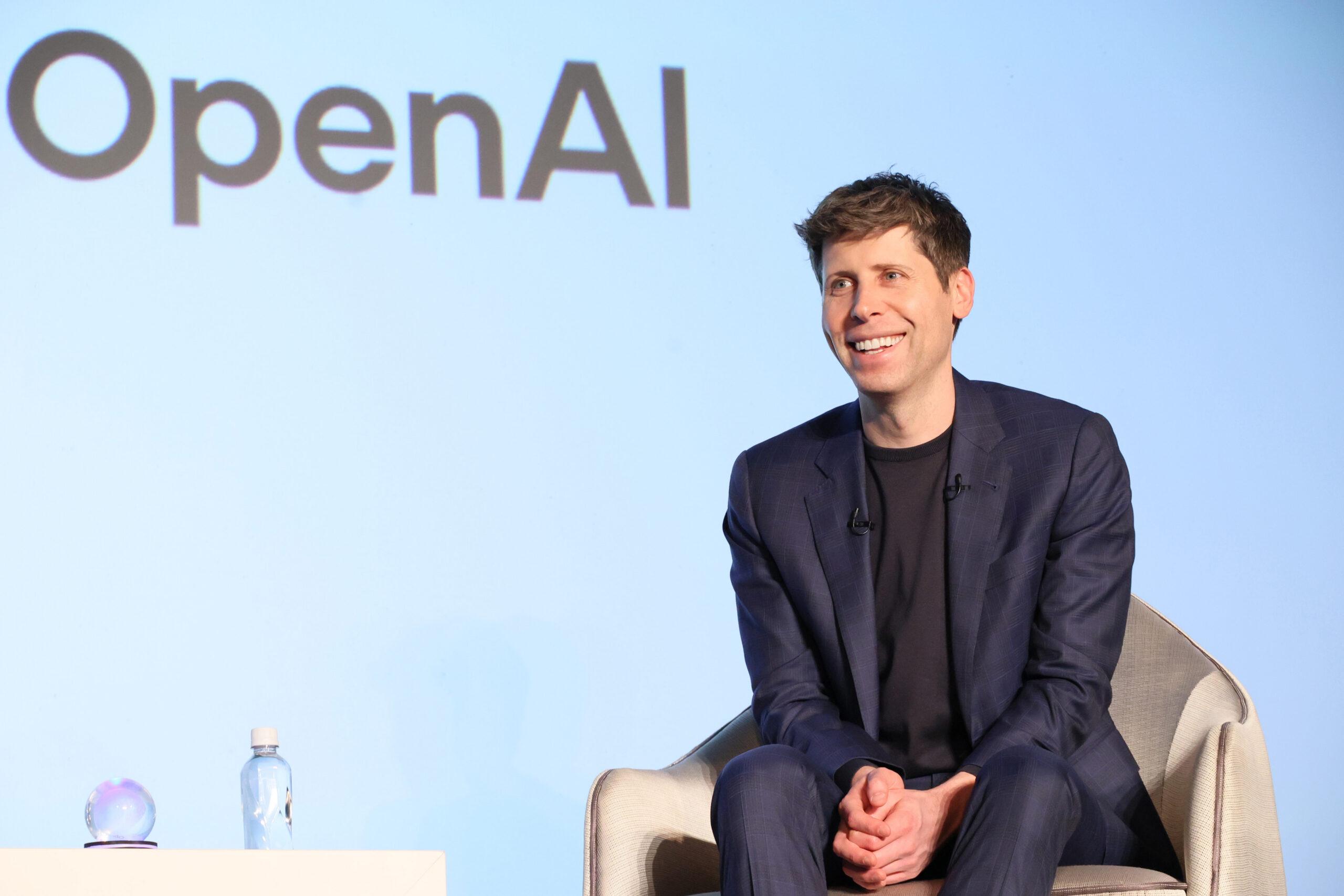
Sam Altman: What distinguishes Altman from other tech leaders is his ongoing ability to really ruffle Musk’s feathers. (In early 2025, Musk was so annoyed by Altman’s recent chumminess with President Trump that he retaliated by trying to spite-buy OpenAI. Game recognize game, I guess!) As a result, no matter whom or what else Musk piles onto his arguments, this entire endeavor all comes back to Altman.
Through a combination of his control over a unicorn, his own mythmaking/promotional efforts, and his flat-out lies, Altman has become something of an avatar for the entire amorphous AI industry—not to mention a load-bearing cog in the national digital infrastructure. Lately, though, AI has had a pretty massive image problem (turns out people don’t love it when you tell them it’s cool and/or lucrative that they’re doomed). And Altman’s notoriety has grown increasingly mainstream and fraught.
Last week, there were two different attacks on Altman’s San Francisco compound. In the wee hours of Friday, April 10, a 20-year-old carrying an anti-AI manifesto lobbed a Molotov cocktail at Altman’s gate; two days later, a man and woman who were driving by his house doubled back around and fired a gun in the direction of his property. (In both cases, no one on-site was injured and the suspects were located and arrested.) In the aftermath, Altman published a new blog post that included a picture of his husband and baby, in hopes of dissuading others from similar attacks.
“Words have power too,” Altman wrote in the piece. “There was an incendiary article about me a few days ago.” (Farrow’s New Yorker story, no doubt.) But also in the post Altman managed to get some light lobbying in: “The fear and anxiety about AI is justified; we are in the process of witnessing the largest change to society in a long time, and perhaps ever. … We urgently need a society-wide response to be resilient to new threats. This includes things like new policy to help navigate through a difficult economic transition in order to get to a much better future.” It’s hard to imagine that Musk, et al. v. Altman, et al. could have come along at a more inauspicious time for the OpenAI head.
Greg Brockman: Do journaling, they said. It’s part of a healthy mindfulness stack, they said. Poor Greg Brockman: The OpenAI cofounder and president was just trying to offload his deepest hopes, dreams, fears, and mental blocks onto the page—only to have his damn diary entered into court records.
“This is the only chance we have to get out from Elon. Is he the ‘glorious leader’ that I would pick?” Brockman asked himself in one entry, according to discovery documents unsealed by the court and parsed by online enthusiasts. “What would take me to $1 billion?” It all reminded me of similar note-to-self musings that made their way into another big court case involving a different wunderkind named Sam.
OpenAI and Microsoft: The businesses of the new kid on the block and the old guard protector are quite intertwined: Microsoft owns an estimated 27 percent equity stake in OpenAI, which in turn relies on Microsoft for a whole lot of computing power and infrastructure—now and into the future.
Reid Hoffman and Deannah Templeton: The names of Hoffman—a PayPal mafioso (like Musk) who went on to found LinkedIn—and Microsoft exec Templeton weren’t in Musk’s initial filing but were both added into a later, more ambitious iteration of his lawsuit. In Musk’s telling, their proximity to the boards of both Microsoft and OpenAI created governance conflicts that were entangled enough for a jury to hear about. Needless to say, the defense does not agree.
The Judge
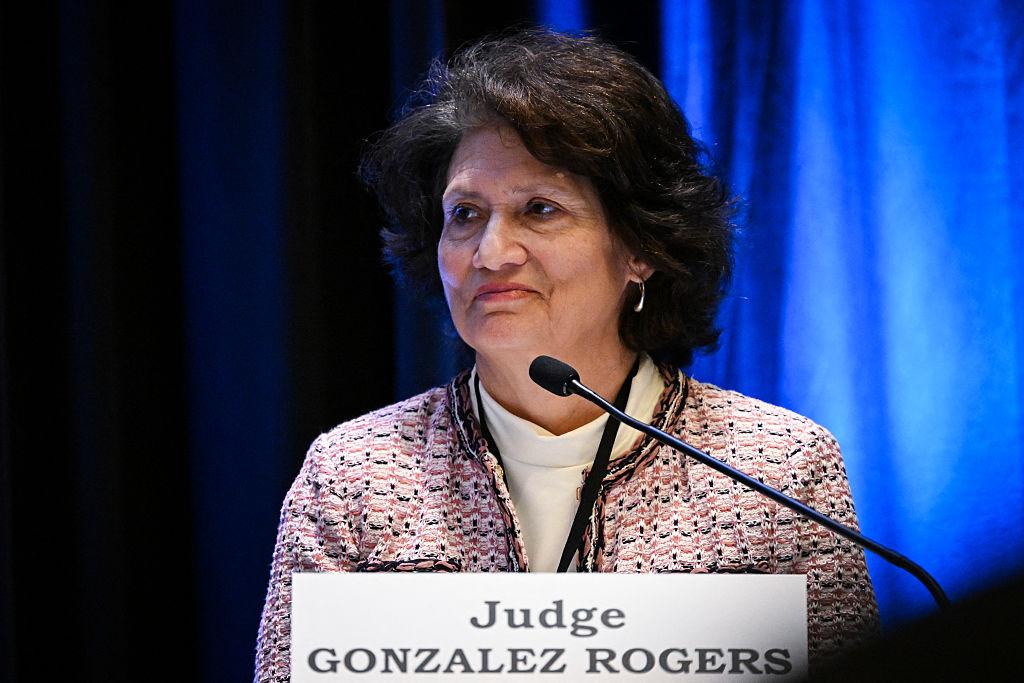
The Honorable Yvonne Gonzalez Rogers has questions! “Is ‘Fortnite’ as big a deal as they’re saying it is?” she asked lawyers in a 2019 exchange related to the Epic Games, Inc. v. Apple, Inc. lawsuit over which she was presiding, according to The Wall Street Journal. (She went on to add that she was glad she’d told her son “no” about video games back in the day, because the kid went on to become an aeronautical engineer.) In February of last year, during a hearing for a preliminary injunction related to Musk v. Altman, Judge Gonzalez Rogers wondered about the wisdom of executing eight-figure investments sans contract. “Forty-five million on a handshake and what do you end up doing?” she asked, then answered: “You end up in court.”
The 61-year-old judge was named to the Alameda County Superior Court by then–California governor Arnold Schwarzenegger in 2008 and earned a federal appointment from President Obama in 2011. Her docket has included multiple Apple-related litigations over the years, as well as cases related to the online trading app Robinhood. (And to employee discrimination by Abercrombie & Fitch. Not everything has to do with the apps!)
Recently, Gonzalez Rogers demonstrated a low tolerance for tech exceptionalism. “This will be a public trial; I am assuming you are going to have some witnesses with high profile,” she reminded one room in mid-March during hearings related to a different tech industry case in which schools are suing social media apps like Meta and Snap for being deliberately addictive. “There are no special privileges. They have to walk through that front door.” It’s perhaps worth noting that during an unrelated trial of his own a couple of weeks earlier, Musk had deployed a decoy Tesla to the courthouse to confuse the press upon his arrival, a move that wound up drawing more attention than it deflected, which was probably the point.
This will likely be a rather lively trial, considering the personalities involved and the judge’s noted willingness to jump in during an examination with questions of her own for the witness. “What’s your backup plan?” she asked the Epic CEO at the tail end of his testimony, catching him off-guard with such an open-ended inquiry. If she ever gets sick of the whole jurisprudence thing, she could have a bright future in podcasts.
The Lawyers
Where to begin? I guess the easiest place is Elon Musk’s legal team—which was notably not his legal team back when the world’s richest man filed his original lawsuit against Altman in February 2024. “The prior case was a goldfish,” one of Musk’s current lawyers, Marc Toberoff, said regarding the switch, which took place a few months after the initial filing. “This one’s a great white.” (Honestly, all of this just makes me miss watching The Good Wife.)
For his part, Toberoff is swimming in slightly different waters than his natural habitat. The Malibu-based attorney—who briefly worked for director Robert Altman; has producer credits on such works as Beetlejuice Beetlejuice; and is described in this platonic ideal of a Vanity Fair profile as “a Curb Your Enthusiasm character” named after the artist Marc Chagall—typically takes on cases revolving around Hollywood IP and copyright disputes. He will no doubt make for a colorful courtroom presence, if his written prose is any indication.
Also on Musk’s team: Steven Molo, said to be a “great cross-examiner”; Jennifer Schubert, once the acting chief of the Eastern District of New York’s organized crime and gangs division; and Jaymie Parkkinen, attorney-at-law—and widely respected clown?
On the other side of the docket are the various clusters of legal eagles retained on behalf of OpenAI and Microsoft. Representing Sam Altman, Greg Brockman, and their family of OpenAI sub-entities are teams from both the whiteshoe firm Wachtell, Lipton, Rosen & Katz and the Bay Area outfit Morrison & Foerster. I’m curious whether it’s a salve to get to type “at mofo dot com” when emailing one’s attorney—or if it just feels like salt in an expensive wound?
Wachtell barrister William Savitt, a guitar aficionado who cochairs his firm’s litigation practice, has encountered Musk before, when he represented Twitter in the lawsuit compelling Musk to follow through with his purchase of the social media company. Savitt’s colleagues include Bradley R. Wilson—who early in his career clerked for the Honorable Maryanne Trump Barry—and Sarah K. Eddy. As for those MoFo mofos: Jordan Eth is your favorite lawyer’s favorite lawyer, William Frentzen battled some darkweb pirates of Silk Road, and David J. Wiener was named to the San Francisco Business Times’ list of 40 Under 40 … which hopefully has a better track record than the Forbes 30 Under 30.
Finally, there’s the team from Dechert LLP, which is representing Microsoft as well as Hoffman and Templeton. Notable names on that front include whiteshoe lifer Russell Cohen, former LinkedIn in-house counsel Nisha Patel Gupta, and Andrew J. Levander—a Columbia lecturer with Bob Balaban–esque spectacles whose résumé includes this mesmerizing one-two-three punch: “Mr. Levander has been integrally involved in the management of headline crises for many diverse clients such as Michael Steinhardt (three year investigation of ancient art collection closed in 2022 without criminal charges), Takata Corporation (airbag recalls); [and] Twenty-First Century Fox (multiple sexual harassment claims).”
The In-House Media Empires
Earlier this month, many jaws dropped around the tech industry when OpenAI acquired TBPN, the techno-optimist AV enterprise that was started by entrepreneurs Jordi Hays and John Coogan. While there were a lot of Yeah! Get that bag, boys! reactions to the reportedly-nine-figure deal, the transaction also raised eyebrows—especially when it was revealed that TBPN will now be reporting to fixer-lobbyist-type Chris Lehane at OpenAI. (“Bringing them in as the equivalent of a marketing agency for this era and this audience is an incredibly important aspect for us,” Lehane told Puck.) One recurring question: How will the supposedly still-editorially-independent Technology Brothers manage to cover, say, a splashy and contentious trial involving their new patron, Altman, in real time? Smash that subscribe button to find out.
Anyway, all that jazz will be facing off against Elon Musk’s Grokist troll army and the buzz saw that is the social media network formerly known as Twitter. Choose your fighters!
The Witnesses
While it’s not yet confirmed exactly who will be called to testify during the weekslong trial, all indications are that the roll call of witnesses will be an interesting one indeed. In addition to Musk, Altman, and Brockman, we could hear from CEOs, founders, famously estranged colleagues, one strange wealth adviser, and one former Yale hockey goalie. Here are five of the notable people who may (or may not!) wind up under oath—if their texts, emails, and depositions haven’t already done enough talking for them.
Jared Birchall: The 50-something-year-old wealth manager/right-hand-man/“fixer” is at the helm of entities ranging from Musk’s company Neuralink to Musk’s family office, Excession LLC. “Mr. Birchall is an Eagle Scout and practicing Mormon who doesn’t smoke or drink and grew up traveling California as part of a song-and-dance troupe called ‘The Birchall Family Singers,’” explained The Wall Street Journal in a rollicking 2022 article about Musk’s ever-shifting inner circle of advisers. If Birchall testifies, I hope the defense inquires about his alter ego, “James Brickhouse.”
Satya Nadella: The Microsoft CEO played a huge role in getting Altman reinstalled at the helm of OpenAI after he’d been dramatically ousted by his board in November 2023, an interregnum that came to be known as “the Blip.” Given Microsoft’s intertwined business with (and big equity stake in) OpenAI, Nadella may be summoned to answer a few questions. (Maybe one will be the ole “What’s your backup plan?” from the judge.)
Shivon Zilis: A former netminder for Bulldogs women’s hockey, Zilis has a résumé that includes positions at Tesla and Neuralink and a board membership at OpenAI. She is also the mother of four of Musk’s umpteen children. When Musk visited with Indian Prime Minister Narendra Modi during his brief DOGE era of Trump admin esteem, he chose Zilis and kids to accompany him to the meeting.
Already, Zilis has made headlines for her Musk v. Altman contributions. One slew of discovery documents included her sending strategizing texts to Musk in 2018, asking: “Do you prefer I stay close and friendly to OpenAI to keep info flowing or begin to disassociate? Trust game is about to get tricky …” And in a 2025 deposition for the case, she haggled with attorneys over the meaning of the word “relationship”:
Attorney: Have you ever been in a romantic relationship with Elon Musk?
Zilis: “Relationship” is a relative term. But there have been romantic moments.
Attorney: And when did you first have a romantic relationship with Elon Musk?
Zilis: I don’t know that I agree with the term “relationship.”
Attorney: What term would you use?
Zilis: Well, a relationship describes some sort of discussed structure and so I don’t know how to answer that question.
Now that’s the good stuff. We can only hope to get more where that came from in a few weeks’ time.
Ilya Sutskever: There are a handful of OpenAI employees who will likely take the stand over the course of the trial. Altman’s ex-colleagues Mira Murati and Helen Toner are among them—but the gold-medal spot on the must-see witness podium definitely belongs to former OpenAI chief scientist Sutskever. (Musk, who was instrumental in recruiting Sutskever away from Google Brain in 2015, called his hiring “the linchpin for OpenAI being successful” and sided with him during “the Blip.”) Sutskever’s methodical documentation of Altman’s various acts of corporate subterfuge during his time at OpenAI came to be known simply as “The Ilya Memos,” according to The New Yorker. In 2024, Sutskever founded a company of his own, naming it Safe Superintelligence, Inc.
Dr. C. Paul Wazzan: First and foremost: I know making this comment demeans us both. But! Can you imagine having this guy’s name during the Budweiser Frog era??! WazzzzzzzzZZAAAAaaaaan, a specialist in quantifying and calculating damages in hazy cases like these, has already made his mark on Musk v. Altman. His extrapolation that Musk’s initial $38 million investment in the company could correspond to anywhere between $79 billion and $134 billion in value today drew protests from defense attorneys and a cool rebuke from Judge Gonzalez Rogers: “Do I find it convincing?” she wondered aloud. “Not really. Not particularly persuasive.” Even so, she ultimately ruled that Wazzan’s figures could be presented to the jury, so expect to see him argue his funny-money mathematics in their midst.
The Future
One phrase you might be hearing more of in the weeks to come is “equitable disgorgement,” which is one of those sets of words that I’m unable to encounter without stopping to whisper it out loud. If it seems like just some other way to say “unconscious uncoupling,” that’s kind of true: After all, “equitable disgorgement” in Musk, et al. v. Altman, et al. does have to do with the post-splitsville distribution of money.
On April 8, Musk’s team filed a document updating their desired set of outcomes if the jury were to rule on their behalf. Their asks:
- To force Altman and Brockman to step down
- To direct all monetary restitution not to Musk—but back into the nonprofit side of OpenAI (how very Robin Hood!)
- For all of OpenAI to return to its roots as “a bona fide public charity that operates as the nonprofit it was intended to be, consistent with its founding charter and mission”
In response, OpenAI suggested that this was all an eleventh-hour flail from a sinking ship, a sideshow intended to bolster Musk’s image and ego and boost his own xAI biz.
“Will Elon win his case against OpenAI?” is something you can bet on on Kalshi. Earlier this year, the odds were close to a coin flip; lately, they’ve drifted lower, and betting on a YES outcome currently costs around 34 cents on the dollar.
With the trial itself beginning in just more than a week, it’s one hell of a time to be a citizen of Alameda County, California. Imagine showing up all bleary-eyed for jury duty on a Monday morning in April and being informed that you may not discuss this case with the other jurors, and you must base your verdict solely on the evidence provided, and, oh yeah, by the way: In this courtroom, you’ll be shown exactly how the very future of humanity itself is at stake. Bathroom’s down the hall.