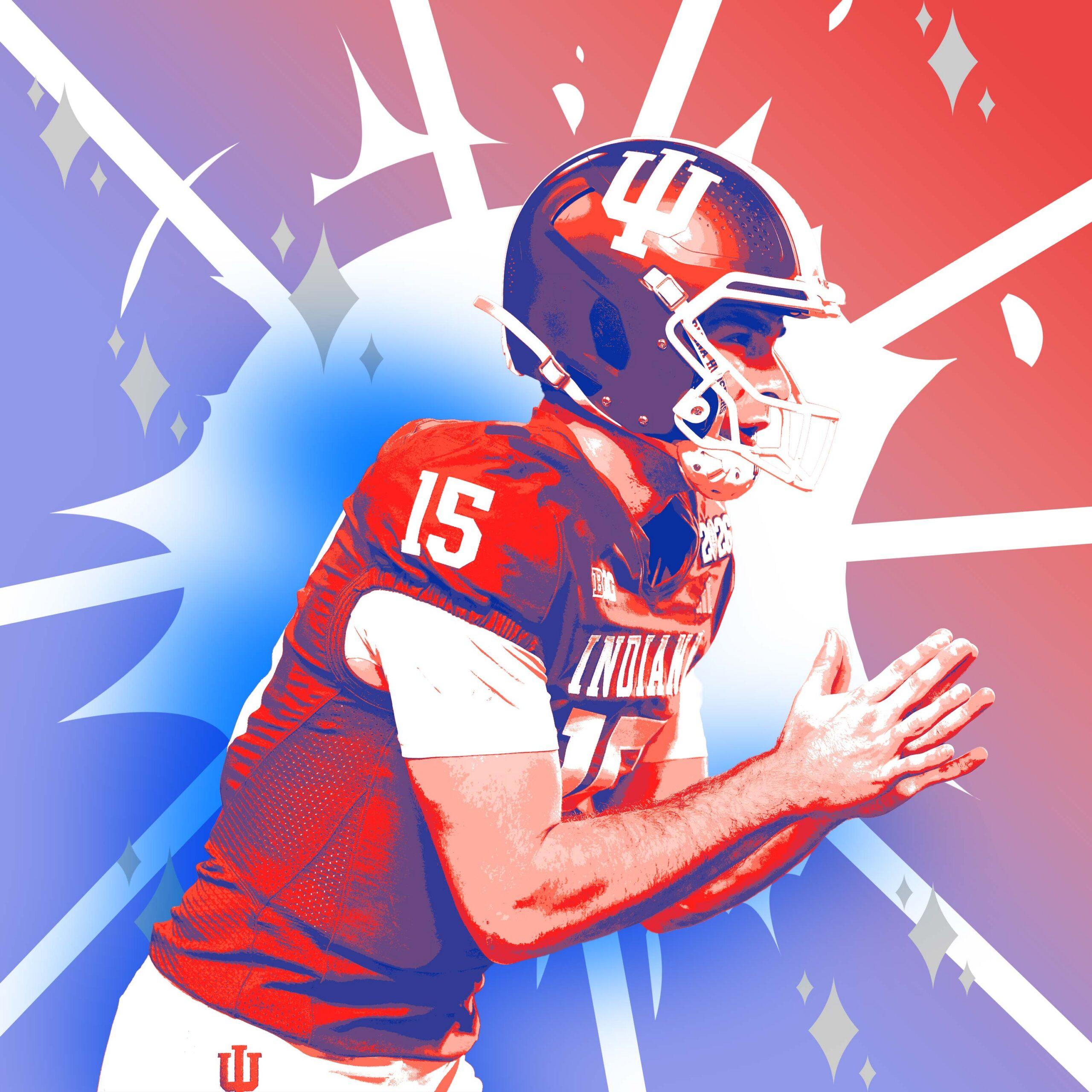

Fernando Mendoza will be the first player taken in the 2026 NFL draft, ostensibly for no reason other than that he's just good enough at the most important position in football—and the best quarterback in his draft class.
The Las Vegas Raiders appear set to draft Mendoza and attempt to get out of the wilderness, but he doesn’t appear to have the profile of a future All-Pro. He’s a quarterback who might be the worst starter in the AFC West next year even if everything in his initial development goes perfectly. Still, there’s a nearly unanimous expectation that Mendoza will have the best career of any quarterback in this relatively shallow draft class.
Mendoza has a college résumé befitting a no. 1 overall pick. But his ascension to the top of this draft is also a testament to the current state of quarterback evaluation. Polish is taking precedence over potential, and prospects who enter the draft with what's perceived to be a high floor, from Jaxson Dart in 2025 to Michael Penix Jr., J.J. McCarthy, and Bo Nix in 2024, are more desirable than the boom-or-bust prospects with a potentially higher ceiling. The just good enough tier of QB prospects reaches far enough back to include guys like Kenny Pickett, Mac Jones, Tua Tagovailoa, and Mitchell Trubisky, all of whom were first-round picks within the past decade. None of those players came into the league with special arm talent or other hyper-athletic physical traits, but they had just enough good tape in college to make a team believe that any one of them could’ve become the next Matt Ryan—a long-term starter with MVP potential when everything goes right. So it makes sense that the most optimistic NFL comparison for Mendoza is Ryan, one made by The Ringer’s Todd McShay, among others.
It’s time to do a deep dive into Mendoza’s college tape to try to predict what sort of NFL quarterback he’ll become, whether he can live up to those Ryan comps, and where he ranks among top quarterback prospects in recent years.


Mendoza’s Draft Pedigree and Background
Mendoza was the biggest star in college football last season—a consensus first-team All-American, the FBS leader in passing touchdowns and passer rating, the Heisman Trophy winner, and national champion. He wasn’t just the most efficient and productive quarterback in the sport; he led Indiana to wins over Oregon (twice), Ohio State, Alabama, and Miami. He’s lost only one game since November 2024—and that was when he was still starting at Cal (where he played his first two seasons before transferring to Indiana). He has 36 college starts and over 1,000 passing attempts under his belt as he enters the NFL, and his breakout season came as a 22-year-old junior. He’s not an old NFL prospect, like Penix or Nix were in 2024. But he’s hardly inexperienced like Anthony Richardson was. Also working in Mendoza’s favor is his prototypical size—he's 6-foot-5 and 236 pounds—and clean injury history.
He wasn’t particularly sought after as a high school recruit, landing outside the top 100 quarterbacks in 247Sports’ rankings as a senior, and he had more interest from Ivy League and private liberal arts universities than FBS programs. Mendoza’s time at Cal helped get him national recognition, and he ultimately transferred to Indiana to play with his younger brother Alberto and play for coach Curt Cignetti—forgoing an offer from SEC power Georgia in the process. That gamble to pick a Big Ten also-ran over a surefire title contender paid off and catapulted Mendoza to the top of college football and everyone’s mock drafts. That leads us to his tape.
Mechanics and Raw Arm Talent
It is necessary to start with Mendoza’s pure ability as a passer, because to predict his ceiling as an NFL quarterback, we need to know how evaluators view his arm strength.
On tape, I see a passer with functional but not excellent velocity, and that should be good enough for any team that isn’t directly comparing him to guys with rocket arms like Buffalo’s Josh Allen or the Chargers’ Justin Herbert. Mendoza can make any throw on the field as long as he has a clean platform, and because of his big frame, he’s able to make long throws outside the numbers look simple. In the clip against Oregon below, he delivers a well-timed pass on a deep comeback route along the far sideline. This is the kind of throw that defensive coaches dare opposing quarterbacks to make because of the high degree of difficulty, but Mendoza doesn’t have to strain or crow hop like a baseball player to deliver it. This throw gives me confidence that Mendoza can manage to make those big-time throws on occasion once he reaches the NFL.
Mendoza has surprisingly compact and efficient throwing mechanics for a taller quarterback prospect. Some taller passers struggle to transfer their weight or generate torque through their core quickly enough to get the ball out on command, but Mendoza doesn’t have that problem. He is tall, but his shorter, 31-inch arms allow him to whip passes to receivers underneath when they find soft spots in coverage to settle in. Against Iowa in the clip below, Mendoza quickly works through his progression in the pocket and slings a pass into a tight window. When he gets time to plant and throw, you see a good arm angle, the core and lower-body power necessary to make a good throw, and enough velocity to get the ball into his receiver’s hands quickly. This isn’t an example of an earth-shattering throw, but it’s what evaluators want to see from a first-round quarterback prospect, and it assures me that there are no major problems to address in his throwing motion.
The one problem I do find at times in Mendoza’s tape is on his deeper throws, when his lower-body mechanics break down, affecting the quality of the pass. In the clip below, he missed an opportunity for a touchdown against Iowa on a post route. This was simply a bad throw. The IU receiver has more than a yard of separation from the nearest defensive back, and there’s no safety over the top, either. Mendoza left the ball short and allowed the pass to be contested at the catch point.
What I notice on this miss and others like it is Mendoza’s front shoulder flying open and his trail leg whipping out and landing near his front leg as he completes the motion. That’s something you see from baseball pitchers, but there are reasons this works in one sport but causes problems in another. When the shoulders fly open like Mendoza’s do here, it puts more stress on both the throwing shoulder and elbow to control the trajectory of the ball, because the body is moving away from the intended target. A baseball is small enough that the pitcher can grip and manipulate the ball to produce an accurate throw while generating enough torque from the elbow to generate the necessary velocity. But in football, this results in an overextended throwing motion, one that comes without the weight transfer needed to control the ball’s flight. Grip the ball too hard and the placement will suffer; grip too lightly and there’s no way to get enough velocity on the ball. This is something Mendoza will need to fix to find consistent deep-ball accuracy. Peyton Manning is one of the few quarterbacks in modern NFL history who could be consistently accurate downfield with that throwing motion—and even the Hall of Famer had some awful wobblers because of those mechanics.
Overall, Mendoza’s arm is good but not exceptional. At the next level, he probably won’t be pushing the ball vertically downfield too often, but there’s a chance he'll develop into a highly efficient thrower in the intermediate areas, especially when we consider his ball placement.
Grade: B+
Decision-Making and Ball Placement
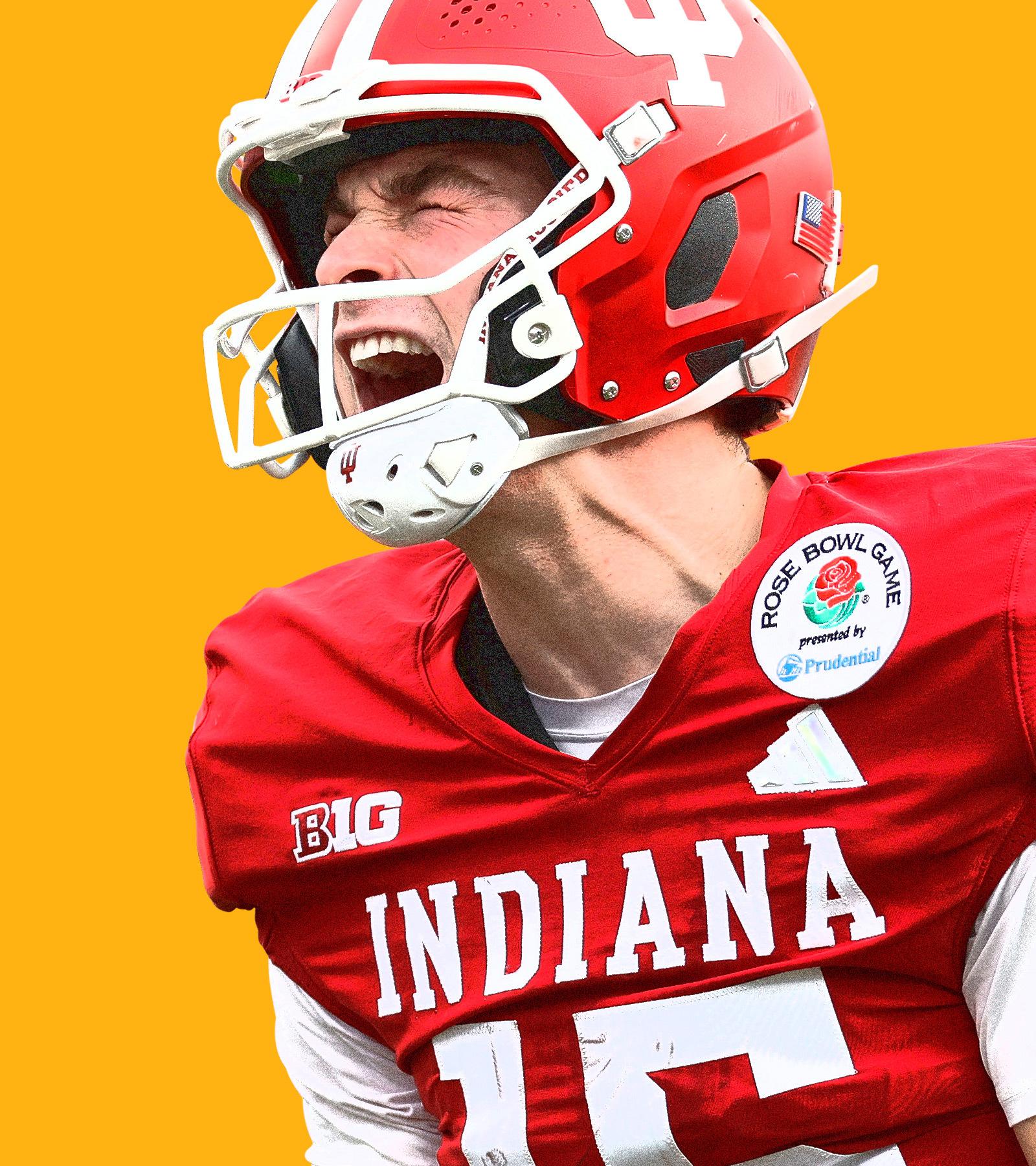
Nothing in a quarterback’s evaluation requires more context than “accuracy.” High completion rates can be a function of risk-averse or simplistic offenses; low completion rates could be a result of aggression or inconsistency. With that in mind, I find myself shrugging off Mendoza’s 72 percent completion rate in 2025, even with several statistically impressive games against very good defenses.
What I care about in the evaluation process is the timing of each throw and the quality of the pass as it reaches a receiver.
This is the easiest part of scouting Mendoza’s film. His passes consistently go where he wants, especially when he’s unpressured. It seemed at times last year like Indiana was winning games exclusively with back-shoulder fades and deep out routes, Mendoza perfectly placing the passes for his receivers to snag away from a defender’s prying hands. His accuracy on those high-difficulty throws made Indiana difficult to stop on third downs and in the red zone because Mendoza could punish any defense on the perimeter, as he did against Illinois in the clip below.
When Mendoza’s dialed in like he was in that game, there’s nothing defenses can do to stop him in the red zone. In this next clip, he has the perfect combination of touch and ball placement to get this pass over the arms of a leaping safety—and still keep it away from a corner trying to pry it loose. Mendoza will be drafted with the top pick in large part because of how proficient he was in this area of the field, where he makes throws like these consistently.
Grade: B+
Mobility and Pocket Management
That red zone marksmanship is a reminder of why Mendoza was such an electrifying player last season and is a tantalizing prospect now, but there are things to nitpick. Most of those concerns come from his lack of elite mobility and how he manages the pocket. While on the whole, Mendoza does a good job of seeing what defenses are trying to hide before the snap and he typically makes the right decision, you could count on a few head-scratching choices in each game last season.
He has some burst as a scrambler and a long enough stride to find hidden yardage when he uses his legs, but he does not possess the kind of slippery agility or elite strength to shake free from pass rushers as you’d like to see from a no. 1 pick. Mendoza doesn’t always react well when pass rushers are looping around him in the pocket, even if the defenders aren’t in position to hit him or make an attempt at the ball. Whether he’s trying to avoid strip sacks or simply reset the pocket to find a new platform to throw, these unnecessary moves can cost him opportunities to attack downfield.
In the clip below, Mendoza bails instead of trusting his pocket, and it costs him a chance to push the ball downfield to an open receiver running a dig route at the top of the screen.
Mendoza will want to work on being a bit more subtle in his movements in the pocket so that he doesn’t miss opportunities to be aggressive. This was a problem for him in the first half of the Big Ten championship game against Ohio State, as well as in the first half of the national championship game against Miami, and you can see it below on this play from Indiana’s game against Iowa. His eyes drop and suggest that he wants to escape, causing him to miss a chance to either get the ball to a receiver in the seam at the top of the screen or wait for the running back to shake loose for the checkdown. Most concerning to me here is that this wasn’t a third-and-long or end-of-game situation, when a quarterback is asked to take a bigger risk or be aggressive. This is a standard second-and-medium play, and by leaving the pocket, he's choosing to skip easier throws that are part of the designed progression. Decisions like that let defenses off the hook.
Mendoza’s biggest supporters would probably point out how well he tends to adjust and course-correct against his own tendencies in the game, and indeed, we see evidence of it on tape. Later on in the same game against Iowa, Mendoza worked through his progression against another soft zone coverage shell, and this time he did a great job of evading pressure and looking to scramble after exhausting all the options in his progression. And while I hope none of his scrambles in the league get him hit as hard as did on this play, plays like this make it much easier for me to believe he can consistently handle the duress of navigating messy NFL pockets.
Quarterbacks that are not elite athletes make things work in the pocket by studying and counteracting their own tendencies. Bengals quarterback Joe Burrow has improved in this regard over the past two seasons, as have pocket passers like Cowboys quarterback Dak Prescott and Buccaneers quarterback Baker Mayfield. If Mendoza can consistently find effective answers when he faces pressure, he’ll be fine. We just don’t always see it on display in his college film as much as I'd like.
Grade: C
Reaction Against Pressure
The RPO has been part of college football for more than a decade and continues to make evaluating a quarterback prospect’s decision-making difficult. Indiana ran a healthy amount of RPOs that were built to attack defender alignments, potential blitzes, and anticipated voids in coverages. Doing this at a high level requires a mentally sharp quarterback, but being able to successfully diagnose defenses after the snap isn’t a skill that necessarily translates to the NFL, where so much of a quarterback’s mental load is before the snap. Here is an example of a perfectly executed slant off an RPO; it’s a great highlight for Mendoza—he read the defense and executed the play perfectly—but it should not be a big part of an NFL evaluation because it’s not something he’d be asked to do at the next level.
So I went through the instances from last season when Mendoza was in a true dropback passing scenario against the blitz. Those are the situations he’ll face more often in the NFL, making them more helpful in evaluating his potential ceiling as a pro passer. The tape showed plenty of cases in which he made the kinds of throws fans wish their quarterbacks would make more often. In the clip below, with an all-out blitz bearing down on him, Mendoza delivered the ball in the seam between a corner and safety for a first down. Mendoza has a reputation for being tough enough to take the big hits that come along with standing tall against the blitz. His NFL coaches will love that. And if he can consistently make throws like this with defenders in his face, those coaches will probably accept that he isn’t exceedingly mobile.
But the film shows other times when that steely resolve isn’t there under pressure, and his impulse to get the ball out quickly and avoid the big hit has led to mistakes. One of his worst throws of last season—and maybe in his career—came in the first matchup against Oregon in the clip below. There was no immediate free rusher, but Mendoza immediately seemed concerned about the interior pressure from the Ducks defensive line. With four rushers closing in, Mendoza makes a late decision to float the ball underneath, where it gets picked off and returned for a Ducks touchdown.
It felt out of character; Mendoza is typically polished and unfazed. That throw was a reminder that in spite of his pro-ready game, he’s still prone to the same back-breaking mistakes as any young quarterback. I’ve thought about this throw a lot as I’ve considered the things that could go wrong for Mendoza early in his NFL career. Still, it's hard to find quarterback prospects who make the kinds of good throws against the blitz that Mendoza did so often at Indiana, especially when it means standing in the pocket and staring down the pass rush.
Grade: B-
Ranking Mendoza Against Recent First-Round QBs
My prevailing thought about Mendoza is that today’s NFL is being built specifically to accommodate quarterbacks just like him. I don’t see a potential All-Pro or MVP-level quarterback, but I see a player who’s just good enough to eventually win plenty of games as a starter, provided that Las Vegas can build a quality roster around him.
Ultimately, I’ve given Mendoza a true first-round grade, but one that’s more in line with a player who should be selected in the mid-to-late first round rather than at no. 1. Still, I feel slightly better about his skill set than I did about Cam Ward’s last year.
Diante Lee’s QB Grades for First-Round Picks Since 2020
My Mendoza Comp: Healthy Sam Bradford
Jared Goff or Kirk Cousins would work here, too, but everything I’ve said about Mendoza’s tape would’ve applied directly to Bradford when he came out of Oklahoma in 2010. Their size, arm talent, and athletic traits are similar, they're unafraid of getting hit to make a big throw, and they're totally capable of putting the ball wherever they want. I would argue that Bradford had a bit more velocity on his throws than what I’ve seen from Mendoza. And the concerns are the same, too, particularly that players like this can have concrete feet in the pocket.
I’d advise any Raiders fan against hoping for a Matt Ryan–level impact right away because that’d require a perfect set of circumstances. Yes, there are things working in Mendoza’s favor if he lands in Las Vegas: He’ll get a new head coach in Klint Kubiak, who has a proven track record as a play caller for Sam Darnold in Seattle, along with a veteran QB mentor (Cousins) and his own idol, Tom Brady, in the Raiders building. But I’m dubious about whether the franchise is on the right trajectory and ready to win with Mendoza just yet. Mendoza clears the bar of being good enough as the first pick, as a future above-average starter, and maybe someday as definitive proof that the league is better than ever at identifying and developing quarterbacks.