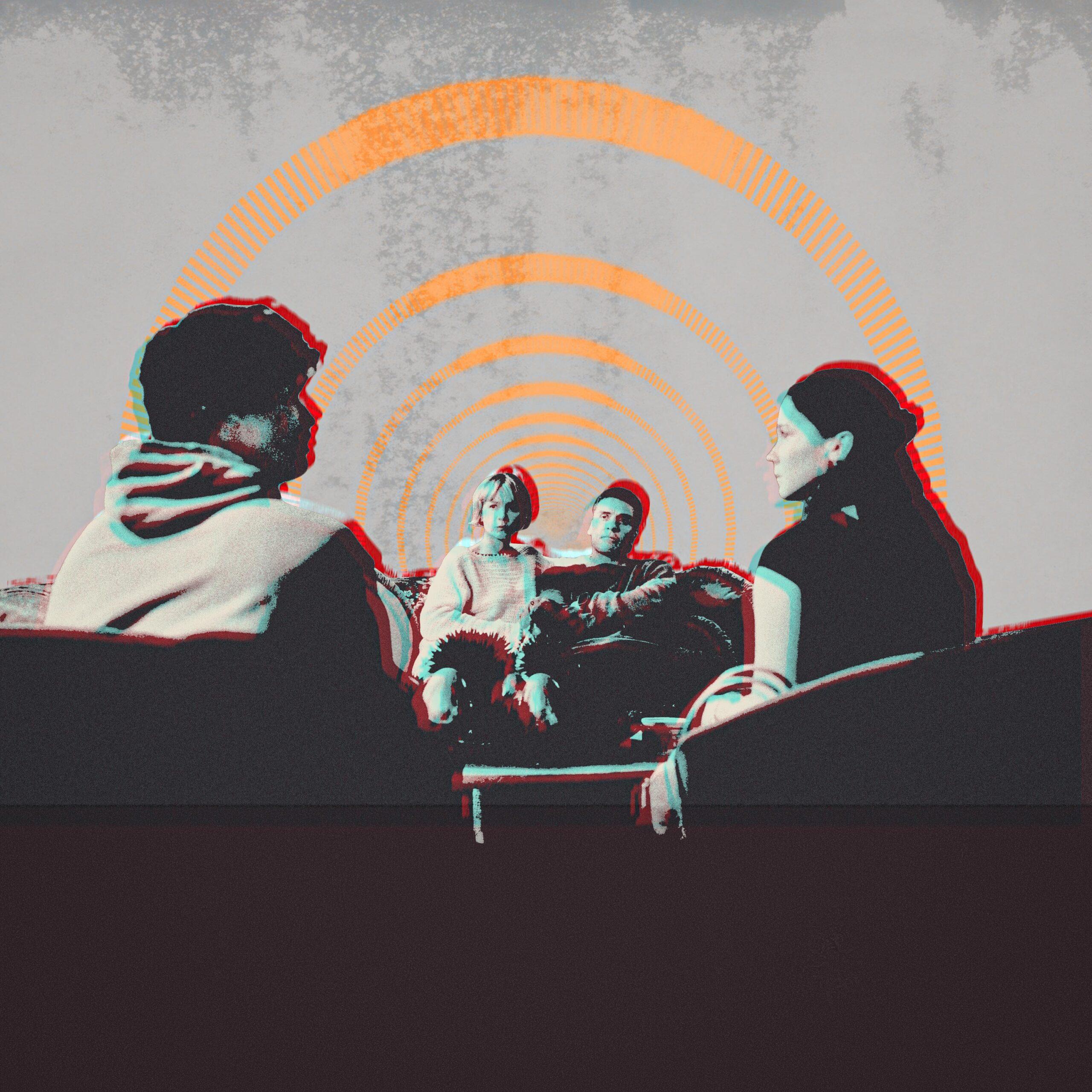

In the opening minutes of Beef’s Season 2 premiere, two romantically entwined employees of the Monte Vista Point Country Club—Austin (Charles Melton) and Ashley (Cailee Spaeny)—are driving together through a quiet neighborhood in Ojai, California. They’re en route to their boss’s house to deliver his wallet, which he left at the club during a fundraising event the same night. The young, lovestruck couple gawk at the mansions and extravagant properties they pass by, in awe of (and somewhat disturbed by) how the other half lives. And as Austin takes his eyes off the road, he nearly crashes into a driver who’s exiting his driveway, promptly earning himself a warning honk.
For any viewers who are returning to Beef after watching the Netflix anthology series’s first season, the moment will immediately evoke the confrontation that triggered the episodes-spanning feud between its two main characters, Danny (Steven Yeun) and Amy (Ali Wong): a near collision in a parking lot that spiraled into a chaotic road-rage chase. But instead of Austin or Ashley reacting to the honk by unraveling in an insatiable fit of fury, they’re sheepishly apologetic. Both Austin and the unnamed other driver are so submissive and courteous in the encounter that they almost collide again as each tries to cede the road to the other.
“[That scene] was in the first draft that I even showed the writers room because I was just imagining Ashley and Austin doing that drive, and they’re such passive, anxious characters,” Beef creator Lee Sung Jin explains to The Ringer. “Sure, [for] Season 1, I was inspired by a road-rage incident, but I’ve also been that passive driver where, ‘No, no, no—you go, you go.’ And that felt like a perfect microcosm of who they are. But then this is pretty great because it’s also a wink and a nod to Season 1.”
Although Lee was initially worried that the callback might be “too cutesy,” the moment made the final cut and now serves as a crucial piece of the introduction to two of the new season’s main characters. Not only does the awkward exchange reveal what kind of people Austin and Ashley are, but it also provides a clear message to the audience: This isn’t going to be the same Beef.
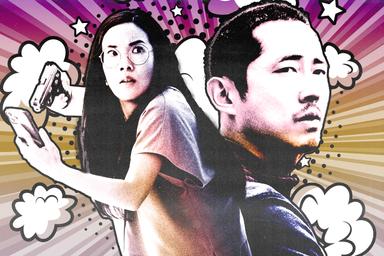
Three years after the release of its series premiere, Beef returned on Thursday with a new binge-dropped, eight-episode season, featuring a fresh cast and story. Since the show was originally presented as a limited series, the first season is fully self-contained. Even in the midst of the 2024 awards season, during which the series swept the Emmys with eight wins (including Outstanding Limited or Anthology Series), Beef still hadn’t been picked up for a victory lap. Lee had pitched numerous ideas to Netflix executive Jinny Howe, yet nothing was landing.
“But then, of course, the universe slaps me in the face with another real-life incident, just like it did with Season 1,” Lee says. “I overheard in my neighborhood—and I’ll speak vaguely since I still live in said neighborhood—a very, let’s call it, heated debate coming from a couple’s home. The incident itself wasn’t that interesting to me, but what I found fascinating was everyone’s reactions to the incident. Because I would tell the story to my Gen Z peers, and they would all react like, ‘Did you call 911? Oh my God, I can’t believe that. He said what? She said what?’ And I would tell my Gen X and millennial peers, and they would just shrug and be like, ‘I mean, it’s not that big of a deal.’
“I thought that dichotomy was so fascinating,” Lee continues. “And so, I started to reflect on our expectations and ideals of love and marriage at different stages of life. What began as a young-love-versus-older-love beef eventually becomes—as we unfold the season—more about these four couples who represent the spring, summer, fall, winter of life. And once we had that, Netflix was in, and they gave us the green light.”
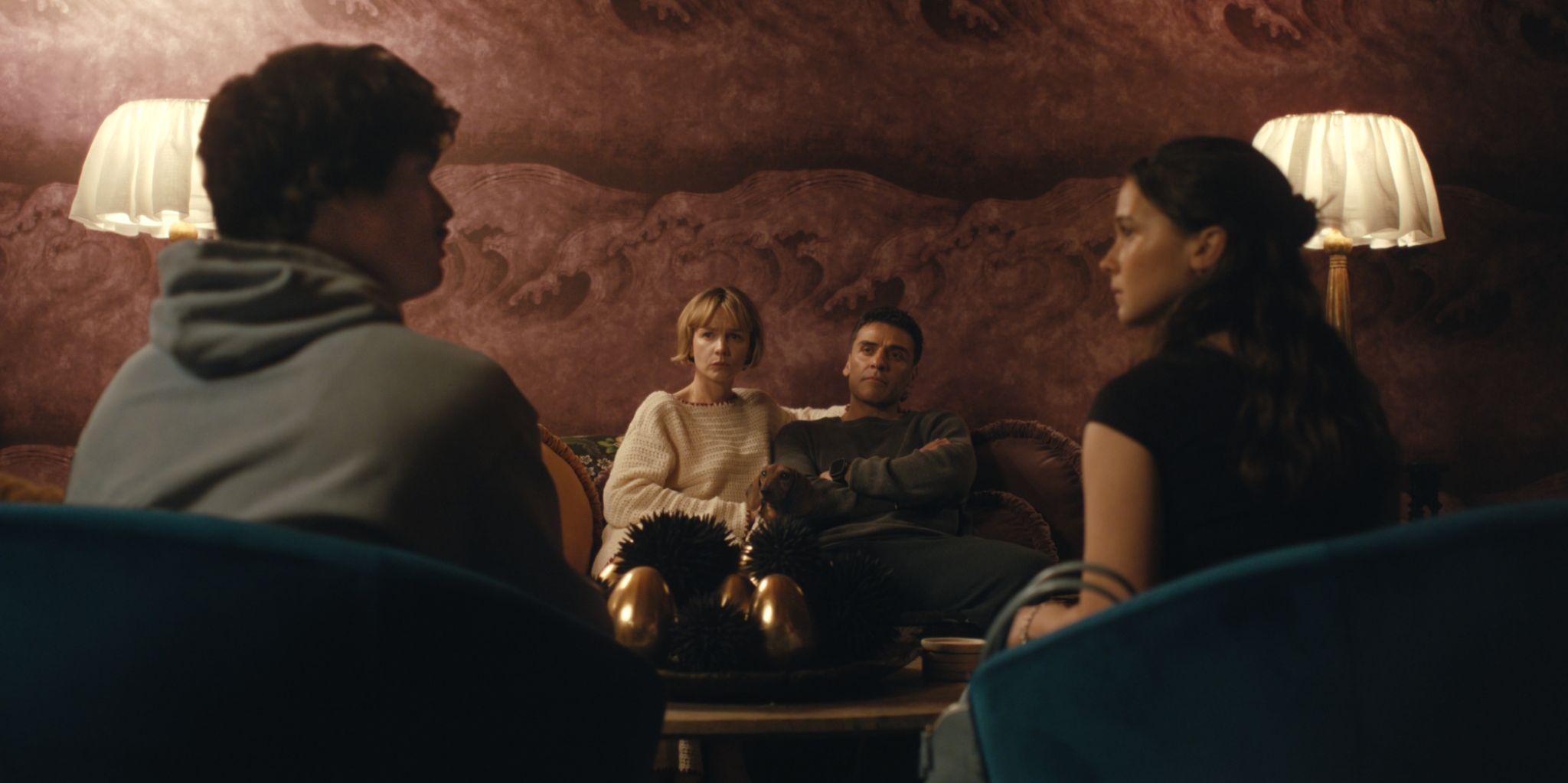
Season 2 begins with Lee’s reimagining of that “heated debate,” with Monte Vista Point Country Club general manager Josh (Oscar Isaac) and his interior designer wife, Lindsay (Carey Mulligan), standing in as the contentious couple. And just as Josh and Lindsay’s argument is starting to turn violent, they see Austin and Ashley standing in their yard, watching them. Oops. The Gen Z couple may have been innocently following orders to return Josh’s wallet, but the chance encounter with the millennial couple soon ensnares them in their boss’s crumbling marriage and the wider machinations at play with the country club and its new billionaire owner, Chairwoman Park (Youn Yuh-jung). A new rivalry is born between these two couples, which are divided by a generational gap yet united in their struggles against a capitalist system that always seems to be working against them.
Regardless of the medium, any follow-up to a successful opening act will always be accompanied by new expectations and pressures. There are plenty of returning figures behind the scenes of Beef’s second season, including director Jake Schreier and production designer Grace Yun, but there are also some notable additions, such as cinematographer James Laxton (Moonlight) and composer Finneas O’Connell. For Lee and his team, it was imperative to build on what worked in Season 1 while still pushing the series further.
“Early on, something that I talked a lot about with the writers and my [department heads] and the other directors was just looking at our favorite bands and musicians,” Lee says. “When you compare debut albums to sophomore albums, if the sophomore album is just a repeat of the debut album, you start to lose a lot of interest. But my favorite bands, there's an evolution that takes place. You look at Is This It to Room on Fire for the Strokes. You look at Pablo Honey to The Bends and then The Bends to OK Computer [for Radiohead]. And so how can we as creatives in television try to aim for the same thing, where you're taking big swings, big risks, not repeating yourself, while somehow still retaining the core of what people loved about the first season?”
One of the essential ingredients in the first course of Beef was the show’s distinct tone, which balances irreverent, dark humor with poignant ruminations on the human condition. Lee, who sought to follow that storytelling recipe in the second season as well, cites two primary influences who are masters at infusing comedy into their drama: Park Chan-wook and Bong Joon-ho.
“They’re the GOATs, they’re the biggest inspirations for me, and their films defy genre,” says Lee. “Memories of Murder is not just a tense crime thriller; it’s a comedy. Song Kang-ho jumping from the top of the hill and drop-kicking the other investigator is one of the funniest scenes of all time. So that is also a North Star for us that we don't feel boxed in by ‘Oh, this scene is super serious.’ If it naturally lends itself to a comedy button—like life does all the time—then let’s chase that.”
The first season of Beef starts with a direct, explosive conflict between its two protagonists that only escalates as the story progresses. Danny and Amy’s petty pranks descend into dangerous, life-threatening acts of sabotage that eventually pull their families into the cross fire. Yet by the end of the season, they see reflections of themselves in each other, finding solace—and even companionship—in their shared feelings of loneliness and depression. In crafting new characters and a new story line for the second season that wouldn’t retread familiar territory, Lee and Co. aimed to change that trajectory, beginning with the nature of the central feud and the people involved in it.
“We wanted to start with a much more passive-aggressive beef, which is just truer to the workplace—that’s just passive-aggressive beefs all day long,” Lee explains. “And also playing around with different aspects of Asian identity. We explored so much of the Korean American diaspora in Season 1. One thing we didn't get to explore is the experience of someone who’s half Korean. A lot of the writers on the show are either half Korean or half Asian. My daughter’s half Korean. And so when I saw May December and Charles’s incredible performance in it, I knew that that was the first piece. He was actually the first person we attached. I knew that he would be the tug-of-war when it comes to identity between wanting to start a family with Ashley but then being pulled by native Korea and the upper echelons of Korean society.”
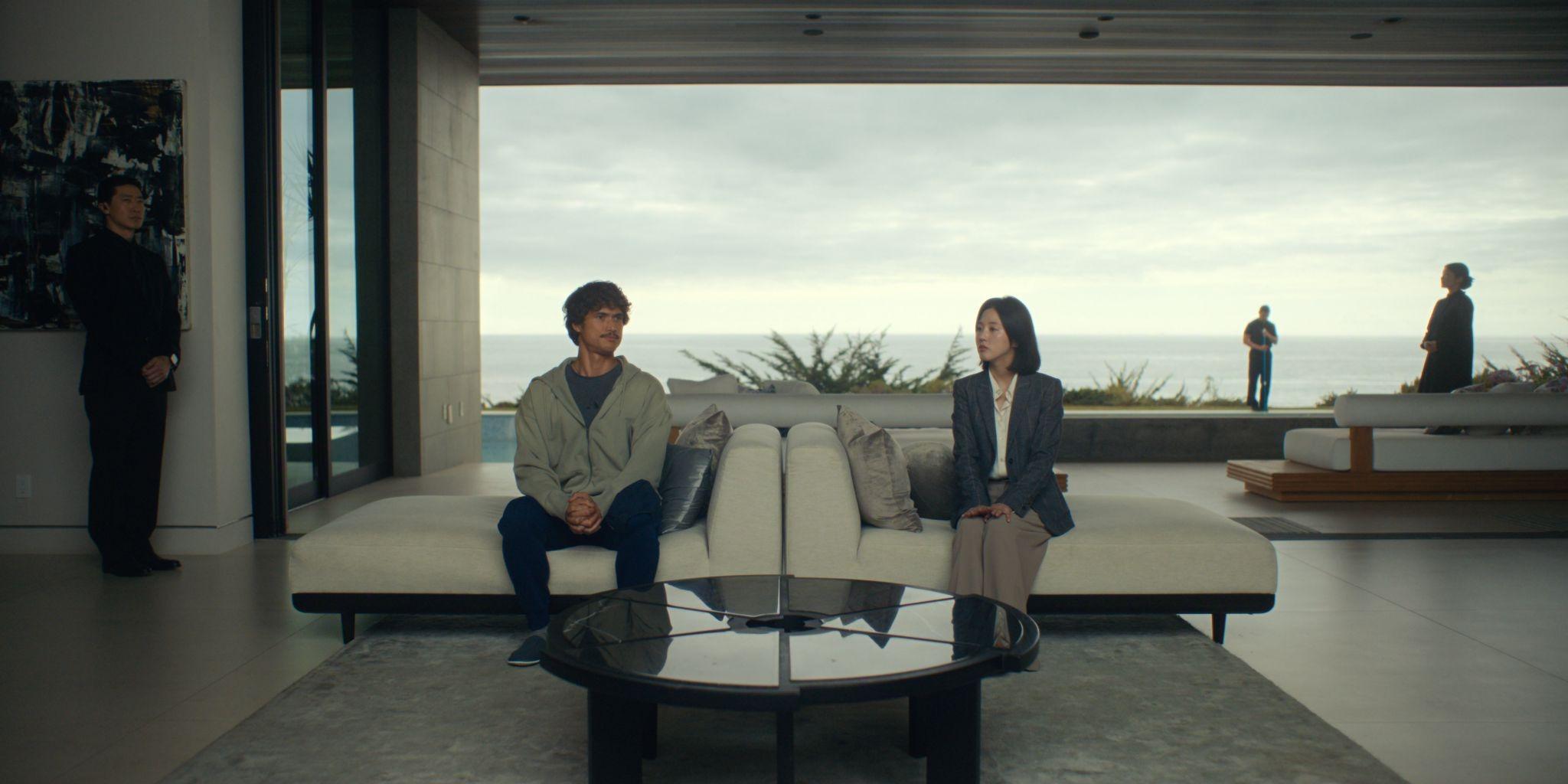
Melton’s Austin provides a path for Beef to explore a new dimension of the Korean American experience, but the series also goes a step further by bringing in native Korean characters—and even taking a trip to Seoul. Chairwoman Park and her assumption of Monte Vista Point Country Club’s ownership add an intoxicating dynamic to the growing drama between the Gen Z and millennial couples, particularly as she navigates a scandal of her own stemming from her husband, Dr. Kim, played by none other than Song Kang-ho. Youn delivers a commanding performance as Park, who’s immediately the most powerful and menacing figure to enter the series—and a far cry from the charming, spunky granny Youn played in her Oscar-winning turn in Minari. With Park serving as a bridge to Korean high society, the world of Beef expands beyond the confines of Southern California.
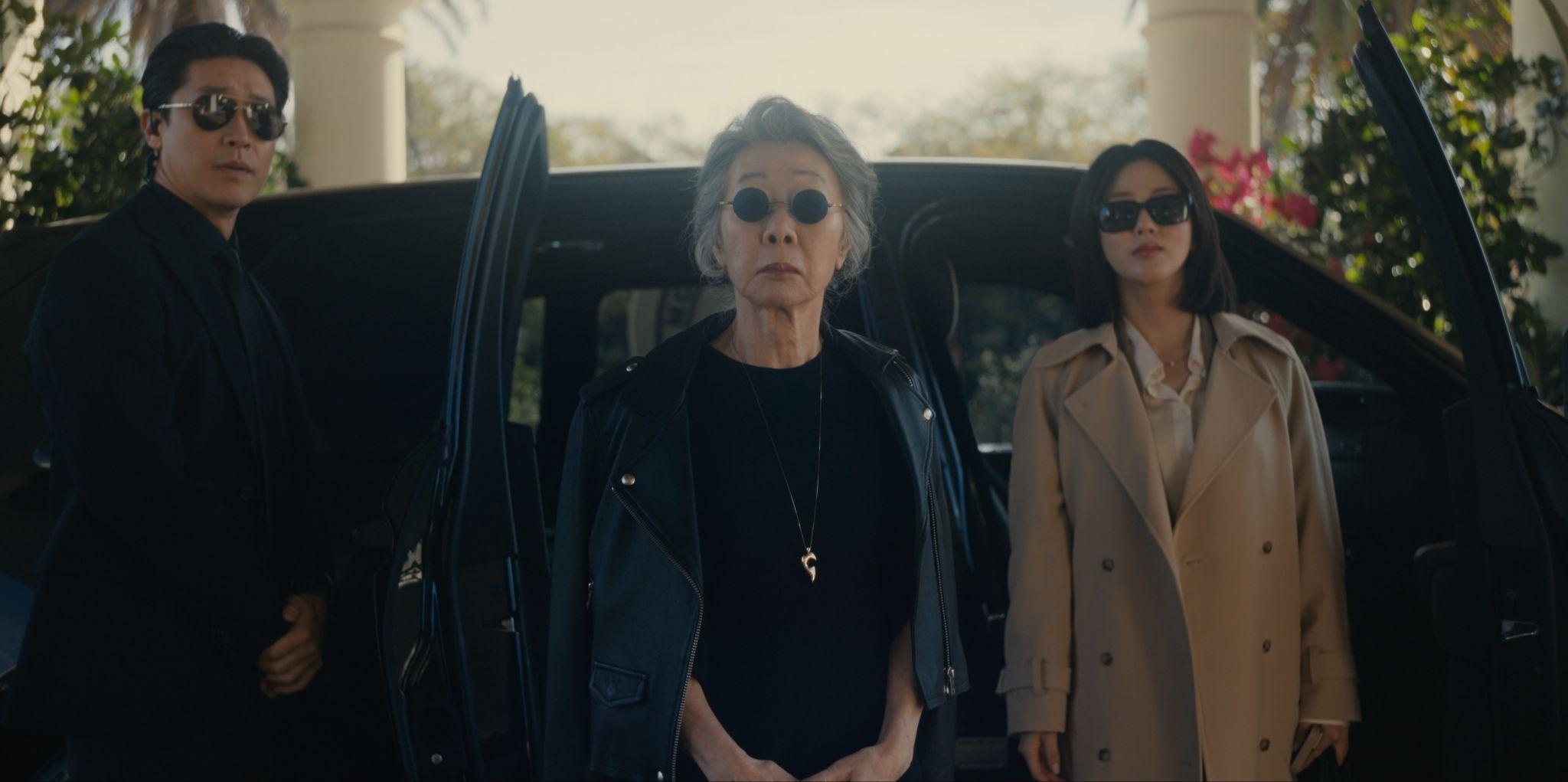
“I knew early on that I needed Korea to be a part of this season, specifically the Korean conglomerate, chaebol arena,” Lee explains. “I had met YJ through Steven Yeun—obviously, they worked together on Minari. And so I set a Zoom, and I pitched her her character, and she was just cackling with laughter because she said that no one in Korea would ever write her a part where she would have a 20-year-younger husband. And then I told her that I had my eye set on Song Kang-ho, and she cackled even harder.”
While Lee’s recruitment of Youn was a success, landing the Parasite actor proved to be a more difficult task. Lee had previously crossed paths with Song and knew that he was a fan of Beef’s first season, but when he sent him a few early scenes he was working on for Season 2, the answer was no. Song didn’t know how to approach the character. However, after some convincing from Youn, Song ultimately changed his mind and joined the stacked ensemble cast.
“I’m so thankful because I think for a long, long time, the peak of my career will be shooting in Seoul, at Amorepacific—which nobody ever gets to shoot at,” Lee says. “I'm directing the great Youn Yuh-jung and the great Song Kang-ho and the first scene that they’ve ever been in together in Korean cinema history. And in the middle of shooting that, director Bong Joon-ho shows up on set to surprise us. And he comes up to the monitor, and he elbows me, and he jokes, ‘Oh, are you sure you want to frame it like that?’ And I was just like, ‘Anything you want. I’ll reframe all of this.’
“But when we were shooting the scene, I looked over at video village, and he had his headphones on, and he was just doubled over in laughter,” Lee continues. “And that’s the best I’ve ever felt on set. It was a true pinch-me moment.”
For a story that’s so invested in examining generational divides and the seasonal cycles of life and love, it’s only fitting that Lee would get to experience this kind of full-circle moment. After being inspired by Bong’s filmmaking for so long, here Lee was watching the legendary director find joy in his work, in a project with Song and Youn attached to it, no less.
Much like the first season, the second serving of Beef is a thrilling journey that finds humor and pathos in characters who are struggling against each other as much as they’re struggling within themselves. Even as the series continues to create absurd, heightened situations that make for great TV, it still carves out space to offer an insightful window into our reality and our experiences.
After overhearing that fight in his neighborhood and observing how the people around him reacted to the story, Lee reflected on how he once viewed older generations in the hubris of his youth. When he was a young staff writer on TV shows in his 20s, he would silently judge his senior, 40-something colleagues for making everyone work late instead of returning home to their families. And now he’s leading a show in his 40s with a kid at home, doing the same thing to his writers. “That experience of time passing and humbling you, I find so potent in my life currently,” Lee says. “So I just wanted to chase that feeling.”