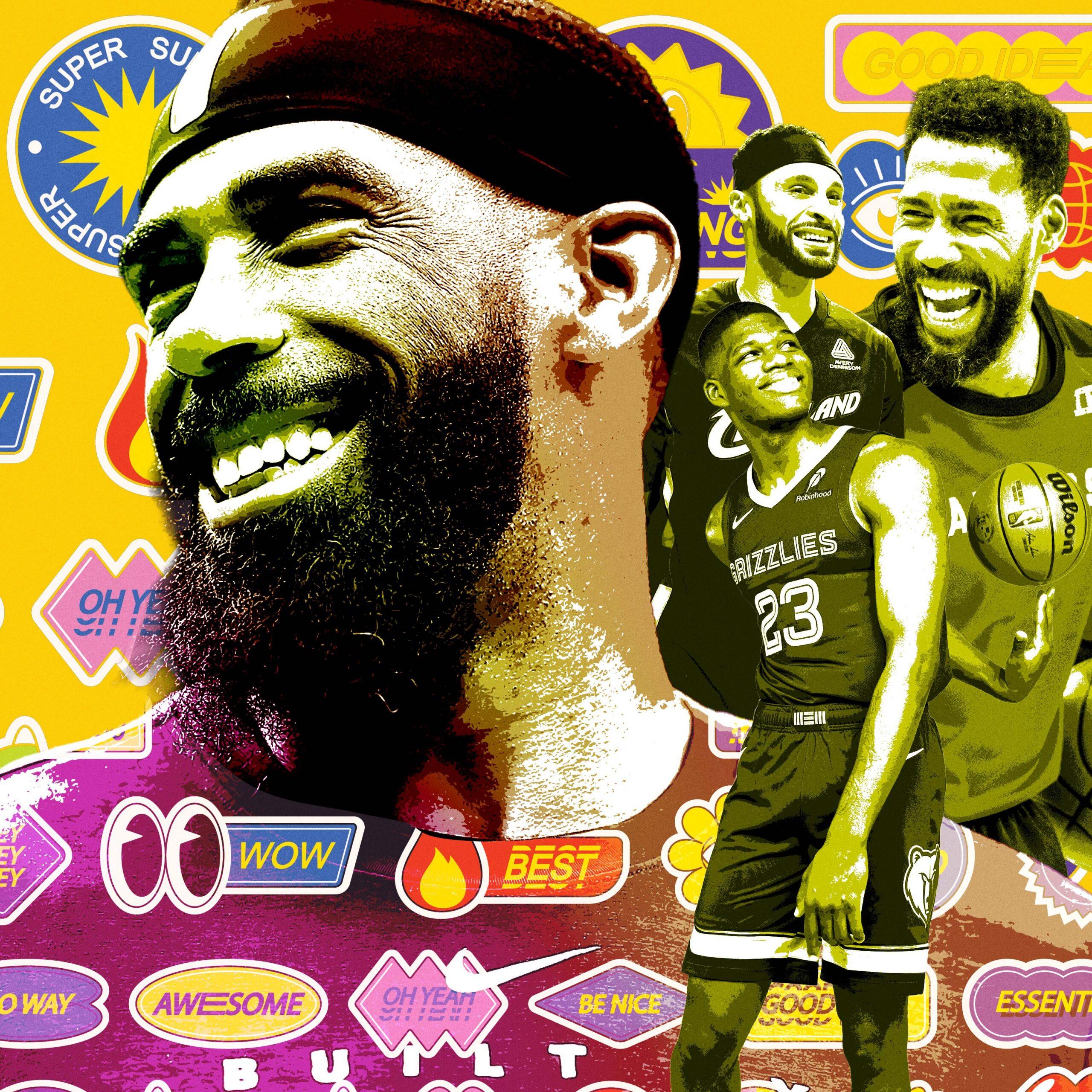
The Radical Necessity of the NBA Nice Guy
Many people equate niceness with a lack of killer instinct, but the league’s kindest players say (politely) that’s bullshit. “I find it a competitive advantage,” says Larry Nance Jr.The Radical Necessity of the NBA Nice Guy
Many people equate niceness with a lack of killer instinct, but the league’s kindest players say (politely) that’s bullshit. “I find it a competitive advantage,” says Larry Nance Jr.
As a word, “nice” has come far. It started out ignorant, literally, from the Latin nescire, meaning “to not know.” It then fell on hard (or fun, depending on how you look at it) times, shifting to mean “wanton” and “dissolute” in the late 13th century. The next few hundred years were a roller coaster. Nice became fainthearted, then fussy. It sharpened into a term for precision, describing care and effort, then came to mean delightful (18th century) and, later, thoughtful (19th century).
It’s a bit of a letdown, then, that nice is now less memorable than it’s ever been: an affable buffer of a word, reached for when someone or something is just sort of … fine. Or when we can’t think of anything, well, nicer to say.
In the world of the NBA, nice’s etymology has forked again. An athlete’s game can be nice—as in Cade Cunningham’s midrange stepback or Stephen Curry’s no-look 3—but being called nice is a bit of a backhanded compliment, even taboo. One agent warned me, as I was reporting this story, that there was something about the concept of “nice guys” that might turn players off.
Nice is vanilla. To call someone nice is to blunt the teeth of the dog in them. Entire marketing campaigns have been built around players not being nice. Mamba Mentality, which redefined Kobe Bryant’s image and influenced a generation of players, was based on being a solitary, selfish, singular asshole. Nice, we hear over and over, is antithetical to winning. It won’t get you a signature shoe, and it’s not going to get you paid.
But Mike Conley calls bullshit (in probably the nicest way possible). “People grow up thinking you have to have this certain type of edge in order to be labeled whatever star you wanna be or whatever type of player you need to be, to feel success,” Conley says. “But I find it quite the opposite.”
Conley has been in the NBA since 2007, when he was drafted fourth by the Grizzlies. He played 12 seasons in Memphis, becoming the anchor of Grit ’n’ Grind; spent four seasons with the Jazz as the glue between Donovan Mitchell and Rudy Gobert; and has been in Minnesota since 2023, a stabilizer beside Anthony Edwards’s at-times volatile variety of superstardom. This season, Conley’s 19th, is the first since his rookie year when he hasn’t been a starter, but another part of his role hasn’t changed a bit.
Conley is unanimously the nicest guy in the league—the person whom players, fans, and anyone orbiting the game will point to as the most considerate, thoughtful, and generous with his time. And, of course, he’s also the most principled; he has zero career technical fouls in over 1,200 games, which speaks for itself.
The only person who might quibble with the designation is Edwards, who gave Conley the nickname “Bite Bite” because when he’s locked in, he looks “ready to bite something.” Conley isn’t a huge fan of the moniker, but it does capture something important alongside his niceness: his competitive drive.
“It's a false narrative, in a sense, that people think you have to be the asshole,” Conley says. “In my mind, inside every bone in my body, I want to go and score 40 points and dominate you and be as ruthless as I can on the court.”
Conley and several other Nice Guys around the NBA are changing the rules for how players can act. They’re competitive, but they’re also considerate and empathetic, and their self-awareness allows them to maintain a presence without taking up all the oxygen in a room. They lead, but they adapt to the situation and toggle their role on demand. They’re warm, they’re friendly with the media, and everyone seems to have some memorable story about their niceness. These players disprove the idea that nice is boring, flat, and one-dimensional.
If you want to spot an NBA Nice Guy, look for the person whom players gravitate toward, whom they drift over to in warm-ups or find on the floor, who claps them on the back first when they get to the bench. Their careers are long, they tend to stay with winning franchises, and they’re highly sought after by the smartest front offices. When you talk to people around the NBA, you realize that Nice Guys aren’t just the heartbeat of their own teams but, quietly, of the league at large. And consistently, they act as a conduit of kindness on and off the court.
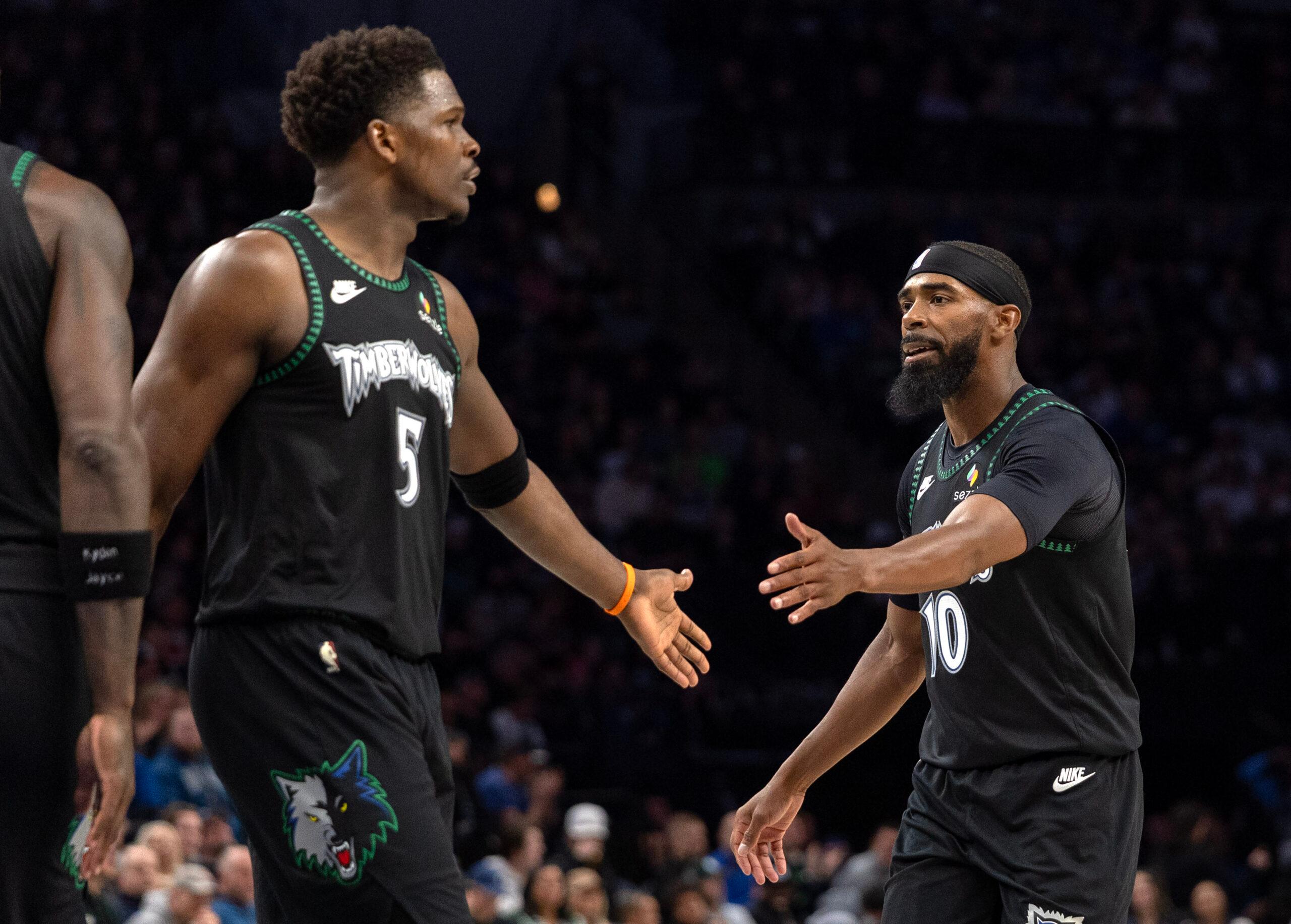
Is it possible to kill with kindness? Garrett Temple thinks so.
This season marks Temple’s 16th in the NBA. After four years at LSU (where he holds the school record for minutes played), Temple went undrafted in 2009. He’s since played for 16 organizations across the NBA and G League, and he’s been with the Toronto Raptors since 2023, outlasting all but four NBA players from that 2009 draft class.
Temple came up in an era when fraternizing with opposing players was considered verboten, but he always felt that idea was outdated. “Just because I’m kind to somebody—we go out to eat the night before, we’re in chapel together talking—that doesn’t mean I’m not going to do everything in my power to beat your ass on the court,” he says.
“Ask anybody that played against Mike Conley, when he was with Memphis for all those years, if his fourth-quarter scoring was nice for the opposition,” Temple continues, smiling. “Ask anybody when Larry Nance Jr. dunks on ’em, if it’s nice. You can ask people that I’ve defended in my career, the pressure I put on ’em, [that] wasn’t me being nice.”
That name-dropped dunker, Larry Nance Jr., agrees (after apologizing for calling later than scheduled because his agent forgot to forward my number). Nance was taken 27th in the 2015 draft, has since played for five different NBA franchises, and is currently on his second stint with the Cavs.
“I think I'm one of the most competitive guys in the league, honestly. You don't stay in [the NBA] 11 years without being competitive. But you can be competitive without being an asshole,” Nance says.
Nance, Temple, and Conley all say their niceness has boosted and prolonged their careers. Once you dismantle the false construct that being nice and being competitive are mutually exclusive, you begin to see the former quality as a virtue, even in professional basketball.
It turns out that nice is like a nesting doll, and within are intelligence, social awareness, compassion, and a host of other qualities that facilitate interpersonal relationships. These are also traits that require close reads of the room at all times, whether that room is a locker room, a sold-out NBA arena, or out in the wider world.
“If you're able to be that nice person and control the emotions and do all that,” Conley adds, “I feel like you are way mentally stronger and tougher than a lot of these guys. Because you are comfortable with who you are, you're comfortable with knowing you can do both.”
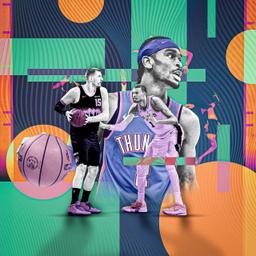
“I find it a competitive advantage, honestly,” Nance says, “to be able to lock in and out of what's needed.”
The traits that allow Nice Guys to moonlight as unsung role players—although they wind up being much, much more—are the same ones that let them endure long after hotter heads have burned up and dropped out.
Temple saw players who were “offensive gems” fall out of rotations and eventually the league because they were rigid, unable to adapt when they didn’t get the exact role they wanted. It was the players who were “unselfish, kind, thoughtful” who stuck around. Whether the Nice Guy is the 10th man or the star, Temple says, these traits “breed more contracts.”
Conley says that the correlation between kindness and professional longevity has never been more evident. “I'm not any more talented or better than some of these guys that played 10, 11, 12 years and are retired right now. But I know that as far as my mindset and my professionalism, the way I approach every day, the people that I have relationships with and how I treat them, that has played a huge role in me having more opportunities.”
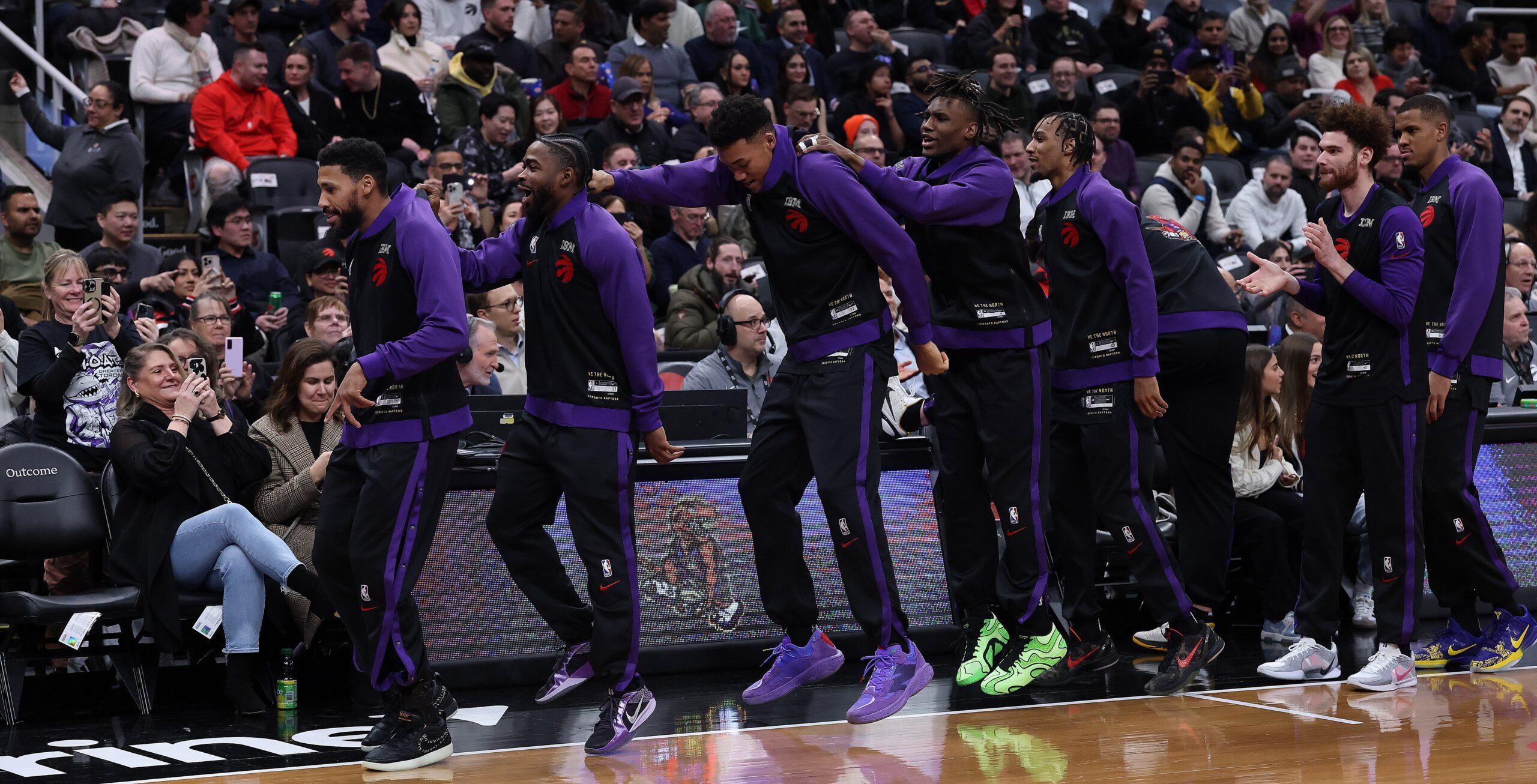
Garrett Temple leads the Raptors’ conga line
It's not a novel suggestion to say that cultivating these traits can help anyone, NBA player or not. But because we're pummeled by bad news that seemingly ratchets up the cruelty with each headline, it may seem that way. Wars spring up on imperialist whims; late capitalism pushes us toward isolation rather than community. To act with kindness—to even set out with the intention of acting with kindness—now seems like a contrarian, almost radical, choice. To choose that path is to choose to go permanently uphill, and it exacts a heavy mental toll. So while it might seem quaint to zero in on niceness at the hyper-insular level of the NBA, Conley, Temple, and Nance are evidence that these qualities can ripple through a team.
Temple leads the Toronto Raptors’ conga line. He has a tendency to dance on the sideline, and one night last winter, when Toronto’s vibes were in the gutter, Jamal Shead just put his hands on the veteran’s shoulder and started to trail him. Since then, it’s become a pregame ritual that makes the whole roster feel more connected.
“This team has, like, the most handshakes I've seen,” says Raptors wing RJ Barrett, who says that Temple's attitude has rubbed off on the rest of the roster. “Everybody cares about each other.”
Temple takes pride in this part of his role, and his impact has not gone unnoticed in Toronto. The Raptors just nominated him for the Twyman-Stokes Teammate of the Year award (which Conley, incidentally, has won twice).
For Nance, the fruits of his niceness can be traced back through the young players whose development he had a hand in: Ivica Zubac, Darius Garland, Colin Sexton, Trey Murphy, Herb Jones. “I just take incredible pride in teaching the young guys,” he says.
Nance says that being kind has always been important to him. “I think oftentimes that's as important as basketball, especially in locker rooms. You wanna teach these [young] guys how to live the rest of their lives as men.”
Those lessons are particularly lucid in dark times. In late January, before a Monday night game against the Magic, Nance wore a T-shirt with knockoffs of Donald Duck’s three nephews, sneering and framed by white capital letters that said: ALL MY HOMIES HATE ICE. Alex Pretti had been killed by federal immigration agents in Minneapolis two days before.
At face value, wearing a T-shirt is not radical—or nice, per se. But in those painful, simmering days when Minneapolis spiraled into federally sanctioned violence, Nance’s shirt was a quiet signal of solidarity. Being nice isn’t just conga lines and levity, and it isn’t a naive, shallow position to operate from.


Where Temple’s a culture keeper and Nance is a champion of development, Conley’s like locker room gravity. He keeps things ticking on the floor as the point guard, but he’s also a caretaker off the court, where his emotional IQ and depth keep the team together.
“None of the success we’ve had the last few years happens without him,” Wolves head coach Chris Finch says. “Just an incredible person, such a beautiful temperament, outstanding for our young core.”
“You're holding a lot of other people's emotions, and you're holding a lot of your emotions in,” Conley says. “You're trying to keep everybody steady and levelheaded through it all. It requires a lot of resiliency.”
Some of Conley's earliest memories are of helping on the court. In elementary school, he’d literally dribble the ball to kids he saw struggling and say, Go, lay it up. He credits his parents—his dad, Mike Conley Sr., an Olympic athlete in track and field—with teaching him that empathy could be a practical, interrogative tool that informs one’s work and life writ large.
“I just think a lot about, in most situations, what would I feel like if I was them right now? What kind of emotions would I have?” Conley says.
“He can just get on the bus and sit next to you,” says Wolves teammate Donte DiVincenzo, “and you feel a calming presence, you feel at ease.”
When it comes to building a lasting, winning team, Conley points to the alchemy of different personalities. A Nice Guy like him who “thinks about all the right things to say” needs to be paired with a teammate who is a little louder, more direct. “It becomes less about basketball and more about the family aspect that you share, the respect that you share, the trust that you've earned over time,” he says.
That’s one of the big differences between an NBA Nice Guy and the more traditional, recognized role of the Locker Room Guy. The Locker Room Guy shows up with the same mandate, on paper, as the Nice Guy: to set team culture. But the Locker Room Guy is on duty only when he’s under the team’s roof.
“There is a difference,” Conley says. “There's the guy who clocks in and puts on what he needs to do for the team, the locker room, handling situations, being present and doing what they do. And then when they go home, they may not live by the same lifestyle. But those who truthfully are that type of person, you can tell in the way they handle their life at all times. It's not something that you just do and put on for four hours or five hours. It's a constant thing.”
In other words, all Nice Guys can be Locker Room Guys, but not all Locker Room Guys are Nice Guys. Nice Guys have an added emotional elasticity. They can tell what’s needed and adapt, filling the gaps on any given day. They become metronomes, beloved for their stability. They don’t just decode a team for new or younger teammates; they help translate the entire league—they’re expansive with their advice, where Locker Room Guys might keep it to the game.
And in a small, extremely competitive league, while Locker Room Guys come and go, Nice Guys tend to stick. Teams want to keep them around, and fans love to root for them. An on-the-nose example: Temple sat for this story after being the last person to leave the floor on Raptors Fan Day. He lingered to give high fives and autographs, the cheers of thousands of kids on their first day of March break trailing him from the court and ringing in our ears.
Framed in this way, Nice Guys are more than just nice to have—they're necessary for a team's success. So if value contracts, a face-of-the-franchise star, a winning coach, and an excellent medical staff are necessary for sustainable team building, where should niceness factor in?
“We’d all rather be with fountains of energy as opposed to drains of energy,” Nance says, pointing out that in an NBA season players spend more time with their teams than with their families and that Nice Guys “keep the vibes high and keep guys in a positive headspace.”
The downstream benefits of having a Nice Guy (or Guys) on your team are plentiful. In today's NBA, where the necessity of continuity and depth—and not just the soulless accumulation of star talent—is increasingly recognized, softer skills like chemistry, cohesion, and identity become more important. “We as players, there's not many of us. We all talk. We know how certain organizations are handling players,” Nance says. Teams and players who cultivate a stable and healthy environment have a real advantage, whether it's a young roster trying to grow together or a contender trying to integrate a new player after a trade.
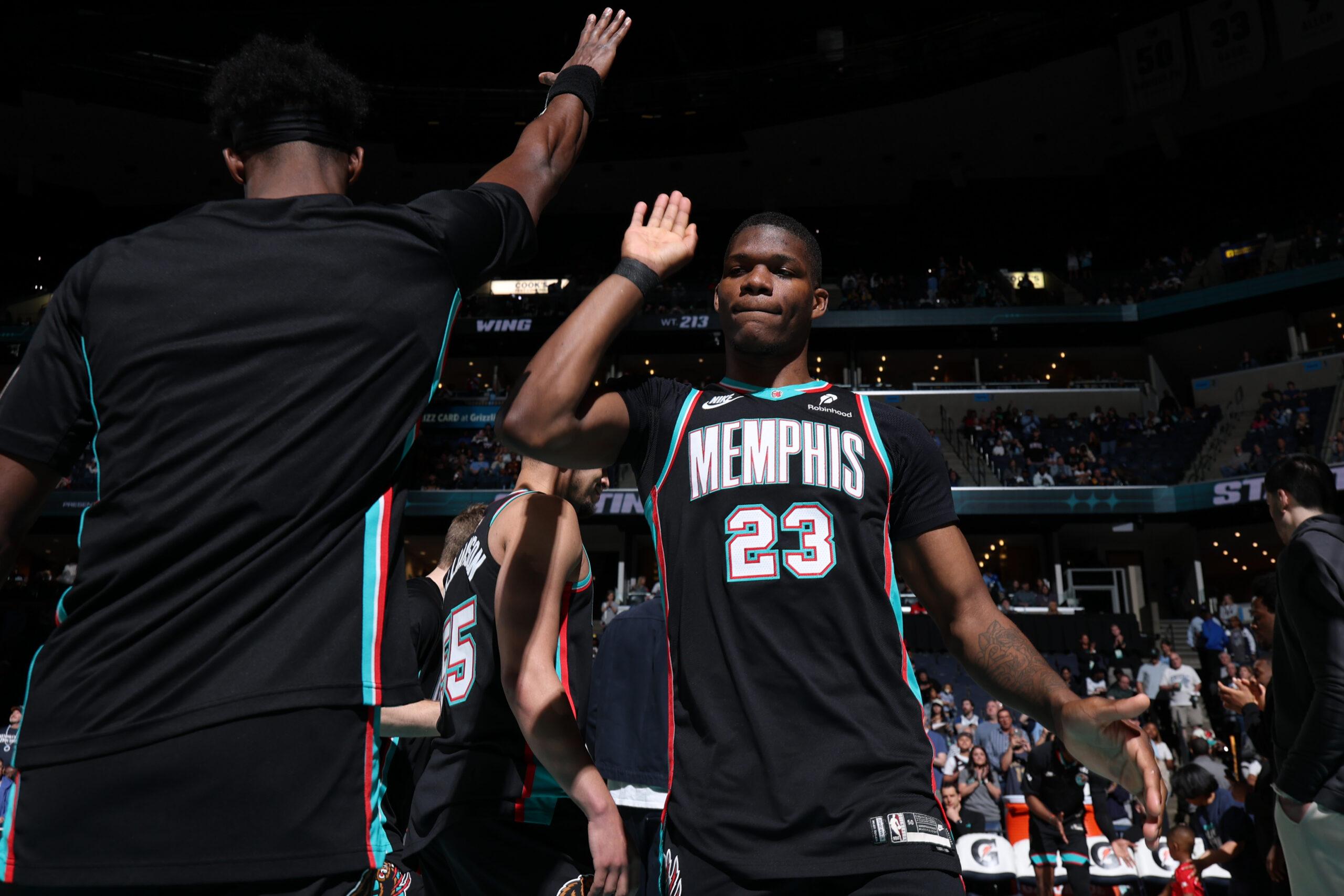
Cedric Coward had a nice rookie season. He distracted the Memphis Grizzlies from the shock of the Jaren Jackson Jr. trade, the ongoing saga of whether Ja Morant is fine or not fine in the West, and the unfortunate shadow cast by Zach Edey’s absence. Coward’s consistent production and adaptability made waves around the league. But his teammates and people close to the Grizz got a front-row seat to a Nice Guy in training.
When I asked draft experts about young players who stood out for traits like kindness, curiosity, and emotional IQ—their niceness—Coward’s name kept coming up. He didn’t have a straight shot to the pros; he started his college career at a Division III school and suffered a season-ending shoulder injury right after he transferred to Washington State for his senior year.
Coward’s mix of thoughtfulness and empathy in interviews conjures the picture of an “old soul.” He says that his parents and grandparents impressed on him the value of emotional maturity. It’s why he comes across as so grounded and why, even as a rookie, he’s been such a mood stabilizer for the Grizzlies.
“For me, I’m always conscious of being emotionally aware but, at the same time, not forcing anything to happen,” Coward says.
Coward sketches out the example of a goofball versus a stoic teammate, how important it is to be aware of both personalities and how to toggle between them, not forcing either into a false mold. “You have to be aware and have the intelligence to know who you’re talking to, what your relationship is with them, how are they emotionally, how are you emotionally, at this time of the day—like, there’s a lot of factors that go into it,” he says.
Asked whether he can recall a time when he didn’t feel so emotionally level, Coward takes a beat before landing back in the fourth grade. He remembers losing his cool during a game, slamming the ball on the ground, getting a technical for it, and having to watch his team lose from the bench. His mom immediately took him to his grandpa, and they “had a long hour-and-a-half talk about emotional stability and security,” Coward recalls. They talked about how it didn’t matter what people thought or said about you, only how you handled yourself. Since then, Coward says, he’s been pretty aware of his emotions at any given moment.
Conley says that this is a skill that typically comes with many years of experience. “In all sports, anything that's physical, everybody leans more towards the aggressive side, which is normal,” he says. “So growing out of that, not necessarily growing out of the work mentality or the competitive mentality, but growing out of the idea of, ‘Oh, I gotta knock you down and stand over you and show you I'm tougher than you to make you understand that I'm that guy.’”
But the 22-year-old Coward’s self-awareness seems in line with his generation. Todd Ramasar, Coward’s agent and the CEO of Life Sports Agency, says that the past two draft classes—in other words, the first real post-pandemic classes—may be shifting more toward niceness. They may be able to see levity and joy more readily, since basketball and the world were seized from them at a seminal time, when most of them were still in high school.
Recent studies have shown that social friction—the tension and conflict that result when diverse groups of people, with varying cultures, values, and beliefs, interact—is key to developing and maintaining empathy. While these studies are primarily concerned with the impact of AI systems on our cognitive and emotional capacities, social friction is pretty much what NBA locker rooms are made of, and these recent draft classes may be particularly hungry for it.
Plus, the next generation of NBA players is entering a league that has already shifted, in part because of guys like Conley, Temple, and Nance. In today’s league, traits like emotional IQ and camaraderie are more appreciated and celebrated. Young players like Coward can embrace those traits without reservation.
“I honestly do think the league as a whole is becoming more aware of their feelings, of themselves, of the business as a whole and how to handle it as a professional athlete and how to handle it as a young pro,” Conley says.
Vulnerability, which Conley says is powerful for young players, means seeking out the team’s psychologist or speaking up when your body hurts instead of staying quiet and fighting through it.
The obstacles to kindness are the same in the NBA as in society writ large. Because of a shift toward individualized and isolated lives—“main character thinking”—looking out for others and embracing social friction have come to feel like radical acts. “We're not around each other a lot anymore,” Conley says. “We're on our phones and learning everything through our phones, and not really being able to be in the world like we used to be.”
Ramasar says that he’s heard from front offices that want to cut off phone data in certain areas of team facilities to promote conversation.
Conley finds it more important than ever to double down on kindness. To start at the individual level, with the understanding that actions oscillate outward. To do better each day by deciding, as difficult as it may be, not to react or put people down, even if our online echo chambers encourage it. As Conley sees it, the effects are cumulative. “The more positive we are as a whole can hopefully start opening people's eyes to a better them, and a better, hopefully, community around them.”
It can be tempting to flatten kindness. Even reporting this story, I felt the urge to treat established, enormously kind athletes as static, certainly when it came to people like Conley, who has been turned into a monolith of niceness at the expense of other parts of his personality.
“I tell people this all the time, when somebody introduces me and they're like, Hey, this is Mike, he is a super nice person. And I always say, Man, you just don't know me yet,” Conley chuckles softly, when I ask whether he feels eclipsed by the idea that he's the "nicest guy in the league."
Conley admits that it's hard to be on all the time. To hold on to other people’s problems. “It's a tough road, but at the same time, there is another person, there's another guy in there,” he says.
That guy, he says, is cutthroat, “just this ultra, ultra, ultra competitive, do anything outside of cheating—like I'll get close to the line—but I'm trying to win this so bad. … That person is itching to come out all the time. It's fighting its way through and trying to get out as much as it can. And I'm trying to keep that person from exploding out and taking over the light of who I view myself as and who I believe myself to be.”
It takes work, Conley says, and he contextualizes it through basketball—for now. When that framework falls away and the real world comes calling, he’ll be prepared. All the Nice Guys will—in large part because of the way they perceive and interact with the world and the people around them.
“We're only athletes for so long. The rest of our lives are gonna matter way more than what we do in these five, 10, 15 years that we get to be athletes,” Nance says. “You're gonna be an average Joe for a lot longer. You're gonna need to be nice a whole lot longer than you need to be good at basketball.”