
For the past few months, it’s seemed increasingly likely, bordering on inevitable, that Timothée Chalamet would hoist the Best Actor trophy for his performance in Marty Supreme. The one-two punch of a hugely showy role and an actor prone to crowing about his commitment to excellence made for an open-and-shut case. And why not? Marty Supreme is a movie about a character who’s willing to do anything, including abasing and embarrassing himself in front of a crowd, to have his moment on the podium. “It’s only a matter of time before I’m staring at you from the cover of a Wheaties box,” he tells his lover, who can’t help but believe him. Marty’s “Winning isn’t everything; it’s the only thing” worldview gives Josh Safdie’s film its charge; it also places Chalamet’s self-aware, scorched-earth awards season shtick—feigning megalomania in staged Zoom calls; slinging tofu from a Chinese food cart in China; giving blow-by-blow accounts of his decision to eschew a stunt butt; podcasting with LeBron James—in a specific (if not sympathetic) context.
Of course, there is such a thing as being on too much of a heater. The question: Did Timmy blow all of his painstakingly accrued karma points when he decided, however jokingly, to “denigrate” opera and ballet? (The latter is the one with the bear in the little car; the t is silent.) For those keeping track: Jamie Lee Curtis thinks so, and she already has an Oscar, so you know what she’s saying is serious; the paper of record, meanwhile, thinks Chalamet has a point even if it’s sort of disrespectful to his own classically trained mother (shades of Marty Mauser, who never met a family member he wouldn’t throw under the bus). Kudos to the Seattle Opera for reconfiguring the erstwhile Lisan al-Gaib’s faux pas as a discount-ticket promotion. If only there were an opera about the scope and depth of man’s hubris that we could use to allegorize the situation. But all kidding aside—and not just because we live in a world where chopping it up with Matthew McConaughey can serve as a flash point for an entire media cycle—the Oscar that has been Chalamet’s to lose since September appears to be slipping away.



Make the Case
The main beneficiary of the perceived backlash—which has at least as much to do with the controversy swirling around Marty Supreme as it does with its star’s obvious overexposure—is Michael B. Jordan, who was tapped for Best Male Actor in a Leading Role by the Screen Actors Guild and has seen his odds shorten considerably as a result. It is, at minimum, a two-horse race, with Leonardo DiCaprio lurking as the potential beneficiary of a One Battle After Another sweep. The common denominator among these three performances—and you can also throw in Ethan Hawke in Blue Moon—is that each nominee is, in some way, doing the proverbial most. Chalamet’s pumped-up intensity in Marty Supreme is the work of an actor who’s clearly feeling himself, but so is Jordan’s double-barreled triumph in Sinners, in which he evokes no less than Jeremy Irons, Jake Gyllenhaal, and Nicolas Cage by holding his own against himself. You wouldn’t know it from reading the reviews, but DiCaprio’s frazzled girl dad act in One Battle After Another is almost as over the top as Sean Penn’s General Jack D. Ripper cosplay, which is one reason the movie’s Pynchonian tone holds; Leo’s excellence is predicated as much on pratfalls as pathos, and his best moments—like his apoplectic phone call with Comrade Josh—are the ones where he flies off the handle. Speaking of which, that register is where Hawke’s Lorenz Hart lives in perpetuity. Ever loquacious in his collaborations with Richard Linklater, Hawke seizes on the late Broadway lyricist’s well-documented reputation for a rapier wit to deliver a logorrheic tour de force in Blue Moon, navigating an endless series of run-on sentences—some directed at friends and rivals, others sotto voce—without getting winded.
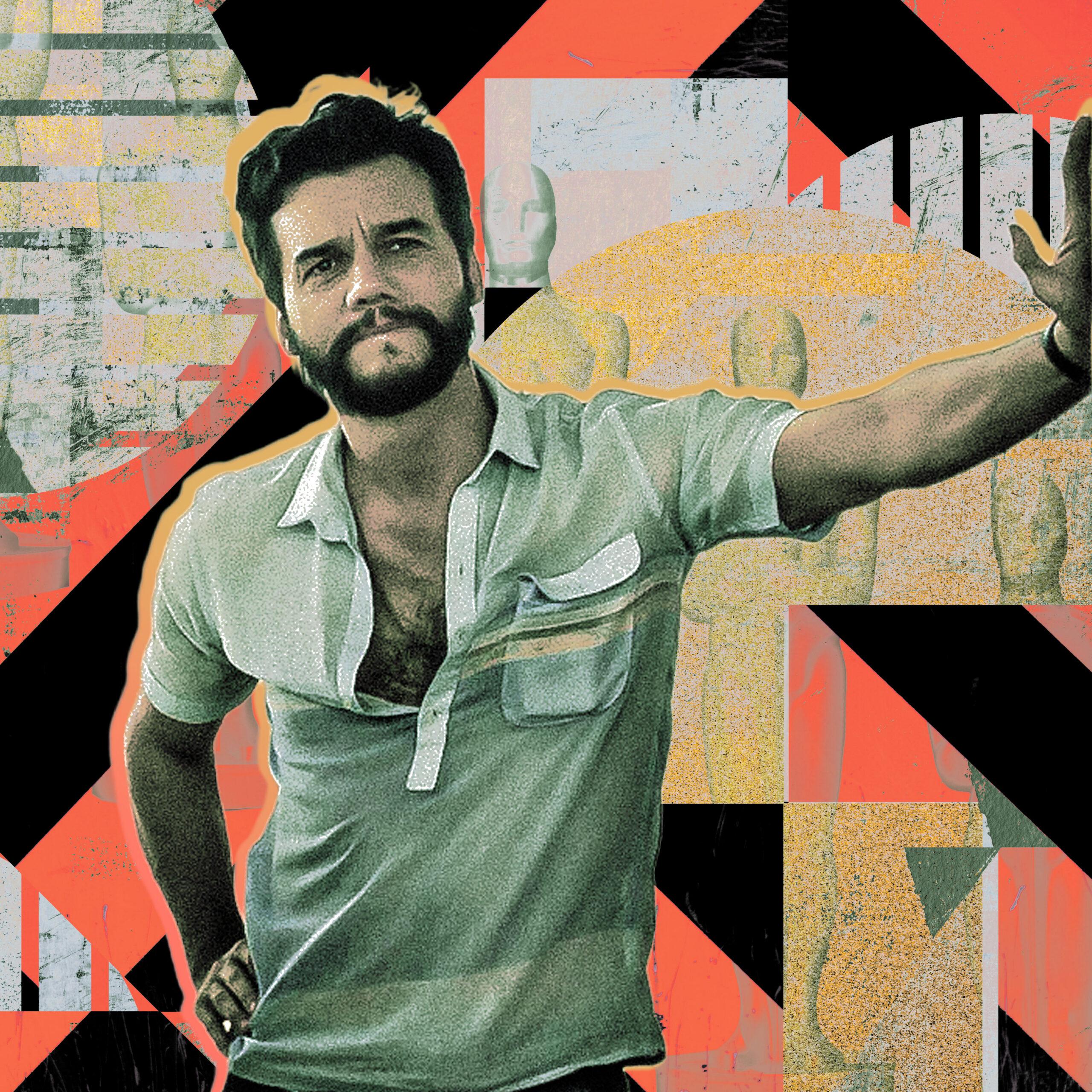
These are all fine performances, and probably better on average than any other batch of Best Actor nominations from the past decade. The one that stands out from—and slightly above—the field manages to strangely synthesize elements from every competitor while existing in a completely separate space. Instead of going over the top in The Secret Agent, Wagner Moura is one of one—it’s the performance of the year. Like Ghetto Pat–slash–Bob Ferguson in One Battle After Another, Moura’s Marcelo is a dissident dad living under a pseudonym; his real name is Armando, and he’s on the run from a powerful businessman with a lethal grudge. Like Marty Mauser and Lorenz Hart, he’s a figure caught somewhere between history and allegory—a tragic avatar for a very specific social and cultural moment. And like Jordan, Moura is playing a double role, albeit one that serves less as a flashy, CGI-assisted visual gimmick than a conceptual twist hiding brazenly in plain sight.
Moura’s excellence in The Secret Agent is already a matter of official record; earlier this year, he was feted with the Best Actor prize at Cannes, joining his director, Kleber Mendonça Filho, in that particular and rarefied winner’s circle. There’s a small but significant precedent for actors parlaying recognition on the Croisette into Academy glory: Jean Dujardin in The Artist and Christoph Waltz in Inglourious Basterds are the most recent examples; see also the Best Picture wins for Anora and Parasite, which sufficiently split the difference between cinephile excitement and mainstream enthusiasm (or at least acceptance). The Secret Agent isn’t a Parasite-sized phenomenon, or even a scrappy underdog like Anora; still, savvy marketing from its tastemaking distributor, Neon (which flooded the art-house zone this fall with Sentimental Value, Sirat, and No Other Choice), combined with the unstaunchable flow of posts from movie-crazed Brazilian social media users has helped to scare up more than $4 million at the American box office, an extremely solid number for a limited release. To get back to bellwethers: Last month, Moura beat Jordan for the Golden Globe, making history in the process and maybe positioning himself for what would be the biggest upset in the Best Actor category since Roberto Benigni clambered over all those chairs to accept his statuette for Life Is Beautiful.


Moura isn’t as assiduous a campaigner as Chalamet, but he’s done well to pick his spots and subsume self-promotion into a sense of political engagement befitting his film. Where an A-lister like Leo fretted about “alienating half his audience with politics” while Hawke awkwardly equivocated about the need to speak out at this year’s cursed Berlinale, Moura opted to go on Pod Save America and spend time discussing ICE and the perils, past and present, of military dictatorship. “When I was doing Civil War, I was constantly thinking about how differently Brazil reacted to our insurrection,” he told Vanity Fair. “In a better way than you guys did, because Brazil was quick to do the right thing and send the message that you can’t mess with democracy. We sent people to jail. Bolsonaro is in jail.”
Brazil’s 38th president—last seen blaming his medication for compelling him to try to remove his ankle monitor—is inescapable for a Brazilian artist; back in 2020, Mendonça and his Bacurau codirector told anybody who would listen about the existential threat Bolsonaro’s far-right government posed to the country’s entire filmmaking ecosystem. The “Trump of the Tropics” infamously accused DiCaprio of funding the forest fires that destroyed vast swaths of the Amazon; the 2021 blaze that burned through the archives of Sao Paolo’s 80-year-old Cinemateca Brasileira—shuttered and left to decay under the Bolsonaro regime—was, among many things, a symbol of authoritarianism’s collateral damage.
It’s under the signs of despair and defiance—combined with a highly ambivalent sense of nostalgia that enshrines Brazil’s past without beautifying it—that The Secret Agent unfolds. The on-screen text at the beginning of the film identifies the dateline (Recife, 1977) as “a period of great mischief,” and the opening sequence underlines this playfulness by way of a morbid sight gag: a pair of legs sticking out from underneath a sheet of cardboard in the driveway of a roadside gas station. The man attached to them is long since dead; the idea that this makeshift corrugated shroud makes the moldering corpse any less conspicuous is grimly funny. Enter Moura’s Armando behind the wheel of a yellow VW Bug, who not only clocks the body but understands that asking too many questions about what happened—especially once the local cops pull up to the pump—would be a bad idea. Moura’s weary, wary energy sets the tone for not only his character but the entire movie around him: He’s an emblem of repressed skepticism and disgust, alert to the “mischief” in his midst and determined to keep out of trouble.
What’s at stake for Armando is a reunion with his 10-year-old son, Fernando, who’s been living in Recife with his grandparents following the tragic (and mysterious) death of his mother. The mystery of why Armando has been in hiding—and why he needs to bide his time under a false name while waiting for forged passports—is a plot point that The Secret Agent unravels languorously, leveraging the pleasure of its time-traveling set and costume design against a wonderfully pressurized sense of suspense. It’s not just Recife’s ruling class of crooked police officers that is mischievous; from its title on down, Mendonça’s film deploys cloak-and-dagger tropes with tongue in cheek. Armando—now going by Marcelo and working at the city’s identity office—isn’t a secret agent, or a spy, or even a revolutionary. The point is that in a surveillance state, anybody who’s not corrupt or complacent becomes a secret agent of sorts, and Armando, whose special set of skills is limited to scientific research and pedagogy, is a vulnerable target for a pair of a contract killers who couldn’t care less about what he’s done (or hasn’t), as long as their grudge-holding boss pays up.



Academy Awards Predictions
Mendonça is a very smart filmmaker, and he gets serious mileage out of the contrasts between his protagonist’s mild-mannered modesty and the rumpled movie star charisma of the man playing him—the latter turned up to 11 by Armando’s proclivity for both chest-baring shirts and vintage hipster tees. Moura is a magnetic camera subject, but there’s no vanity in his acting; his generosity opposite Enzo Nunes, the child actor playing Fernando, and nonprofessionals like the instantly iconic Tânia Maria as the self-styled den mother harboring an apartmentful of dissidents, goes a long way toward keeping the proceedings taut and plausible. Because The Secret Agent is so distended—and digressive, with subplots drawn from historical fact and urban legend—there’s a risk of boring or confusing the audience; it’s easy for an enigma to become an alienation effect. Moura’s genius is to illuminate the inner life of a man who has to keep his head down and his guard up—and whose lapses, however fleeting, are volcanic. It’s hard to reduce a performance this skillful and consistent to a “For Your Consideration” clip, but the moment when Armando unveils his animus toward the deep-pocketed mediocrity hunting him down is chilling. “I don’t consider myself a violent person,” he explains, choosing his words carefully, “but this man … I would kill him with a hammer.”
There is violence in The Secret Agent: Mendonça is an avowed admirer of John Carpenter, and when it’s finally time for the film to shift from furtive character study into genre mode, it’s superlative, pulse-racing stuff. But that doesn’t mean Armando gets to go all Kill List on his enemies or that Mendonça indulges in wish fulfillment. It’s hard to talk about the final act of the film—or the wonderful twist in Moura’s performance—without talking about the character’s fate; suffice it to say that in the parts of the movie set in the present tense, which center on a pair of students trawling through newspaper and audio archives to study ’70s resistance movements, Armando is conspicuous because of his absence. But while Mendonça may be unsentimental, he’s not afraid of emotion, and he grants Moura an extended, resurrectional cameo that not only ties together the movie’s plot but cements its themes of identity and inheritance. The circumstances that conspired to keep Armando apart from his son, and forced him to sublimate his tenderness as a father beneath layers of survival instinct, can’t be undone, but they can be exposed. The cardboard coffin of the prologue has blown away.
Not only will Armando be remembered for what he was—a decidedly non-big-screen sort of hero—but he lives on in a way that might grant his soul some peace. The closing scene of The Secret Agent is moving for the way it filters the lifeblood of cinephilia through a more literal form of care. It’s hard to think of a better metaphor for Mendonça’s practice than an old-school movie theater being reconstructed into a hospital, and it’s Moura—at once somehow stalwart and sweetly, necessarily changeable—who serves as the living bridge between a past with something to teach us and a present that would be wise to heed its lessons.