

Technically speaking, Jayson Tatum’s first taste of the 2025-26 NBA season came on the opening possession of the Boston Celtics’ win against the Dallas Mavericks on Friday night. Seconds into the game, he caught the ball on the left wing and then rifled a crosscourt pass to Sam Hauser, wide open for a 3 that didn’t go in.
To me, though, the first time it felt like I was watching the Tatum of old—in sync with a Celtics team that’s evolved into a near-dominant outfit without him—came with a little over nine minutes left in the third quarter.
In the clip above, Tatum generates two points for the Celtics without even touching the ball. As soon as he cuts to the middle of the floor off a flare screen set by Neemias Queta, the Mavericks panic. Instead of having Khris Middleton and Max Christie execute a peel switch—in which Christie would come off the corner to pick up Tatum and Middleton would rotate over to Derrick White in the corner—Christie and Dwight Powell both track Boston’s star forward out to the wing.
It’s hard to know exactly what the Mavericks’ intended coverage was—Christie could’ve been calling for a scram switch with Powell—but, rest assured, they didn’t want to leave White wide open at the rim. Nearly a year since he last played in a real game, Tatum can still draw attention like a megastar.
Tatum did endure some understandable hiccups as he readjusted to the velocity of NBA action. He finished 6-for-16 from the floor in his debut and missed his first six shots. There were moments of indecision and some embarrassment: Tatum got hung on a wide-open dunk early in the second quarter, airballed a pull-up 3, and was called for a moving screen—uncharacteristic stuff. But every mistake, tentative half step, and arrhythmic decision fell in line with the tempered expectations rightfully reserved for someone who ruptured their Achilles tendon just 10 months ago.
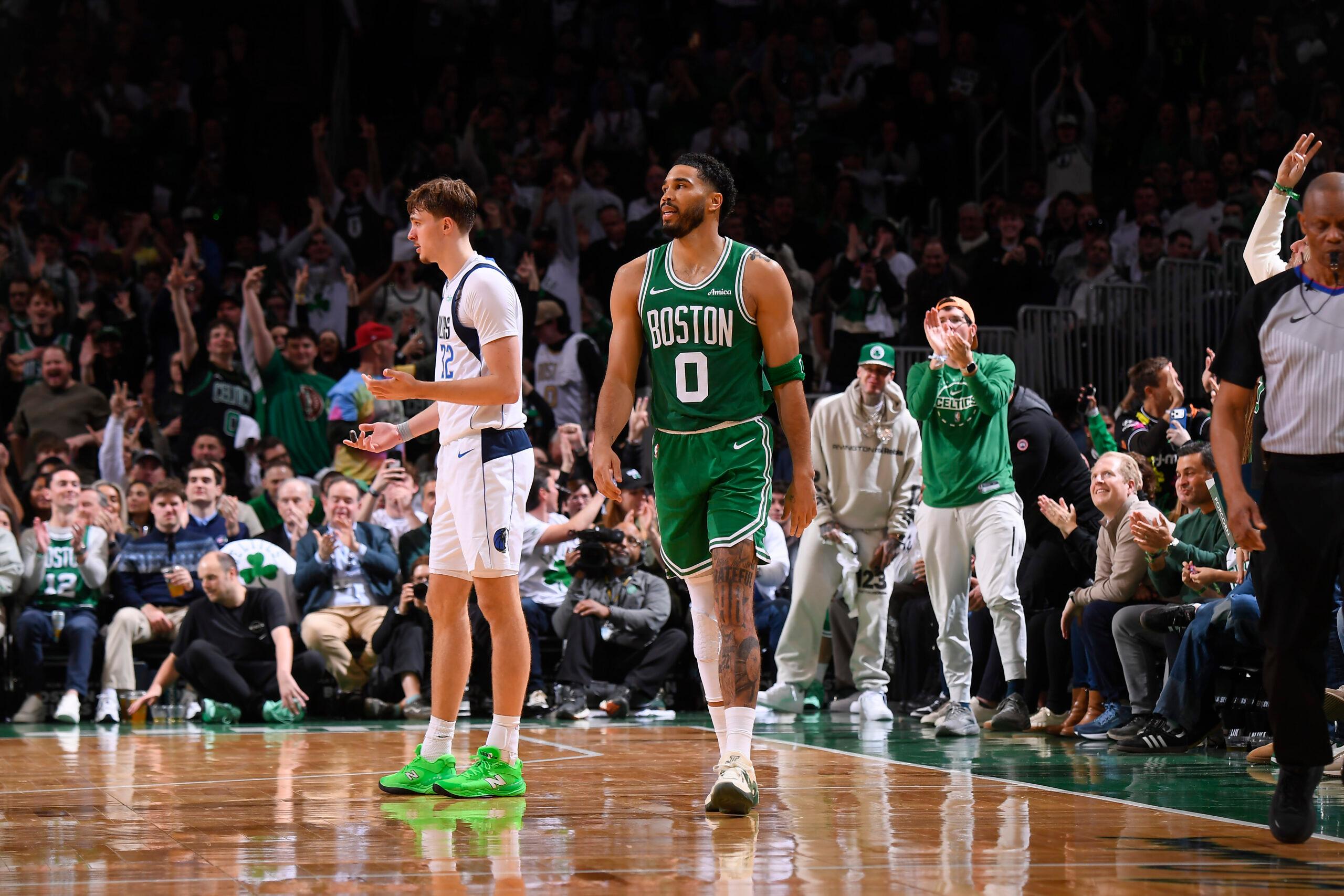
Jayson Tatum during his 2025-26 debut
“It's been 42 and a half weeks since I played in an NBA game,” Tatum said after the 120-100 win. “So just trying to get caught up on the speed and everything. I just kind of felt like I was a step off or moving too fast. But, you know, the game started to slow down as I relaxed a little bit.”
These are uncharted waters. No perennial MVP candidate has ever made his season debut this late in the year, after suffering a cataclysmic injury, to rejoin one of the best teams in the league. Would Tatum retain his explosiveness or be a step slow? Would he possess an attack mentality or avoid contact? Would he be a traffic cone on defense or check multiple positions with relative ease? Would he stick out like a sore thumb or blend into Boston’s modified style of play?
It’s too early for any declarative statements about how the rest of his season will unfold, but the early answers to all these questions could not be more positive. The implications for the Celtics are as obvious as they are significant. They were very good before Tatum returned. If he continues to build on his first two games, the Celtics can absolutely win the title.


You could see Boston’s ceiling rise in real time during Tatum’s second game, against the Cleveland Cavaliers on Sunday afternoon. His rust looked more like a beam of noncorrosive steel. In a fairly comfortable win, Boston’s best player scored 20 points in 27 minutes, attempted seven free throws, and opened the contest with a vintage barrage of isolation buckets for which the Cavs had no answer.
Tatum crossed over Evan Mobley for a pull-up 3, punished Sam Merrill and Jaylon Tyson on a pair of switches in the midpost, and, on defense, stayed in front of James Harden and Donovan Mitchell when both tried to test him one-on-one. He blasted into a pair of driving layups that should make the rest of the Eastern Conference shudder:
Tatum is the league’s most amenable superstar, but his presence will still demand an adjustment from the Celtics. Across the board, responsibilities will simplify; minutes and touches will shift; sacrifice will be necessary from just about everyone on the team, including Jaylen Brown, an All-NBA candidate who currently leads the league in shots per game.
A Finals MVP who’s now played 603 basketball games with Tatum by his side, Brown’s life will be easier with another All-Star back in the fold. He’ll face less competent defenders with more space and time to operate—meaningful when you realize Brown’s true shooting percentage is below league average. The Celtics offense has steamrolled opponents whether Brown is on or off the floor this season, but Tatum and Brown need each other, and the Celtics need both Tatum and Brown to sustain that type of efficiency for 48 minutes in the playoffs.
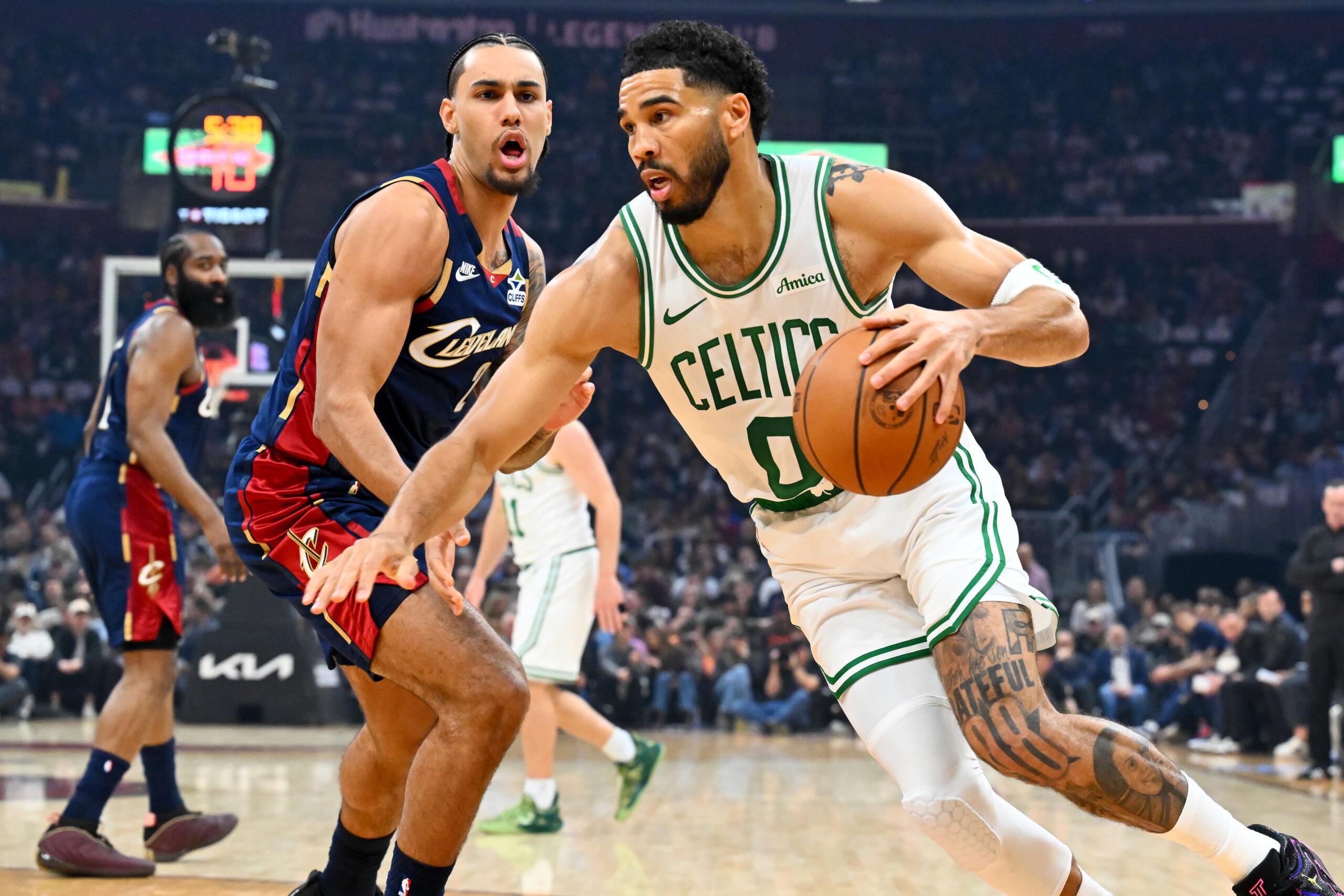
As Brown and Tatum went through their pregame warmup together in the lead-up to the opening tip in Cleveland, it was a stark reminder of how beneficial it can be to have two physical forwards who know how to complement each other on both ends. For Brown, the reduction in shots, touches, and usage will be inevitable. Only Luka Doncic has a higher usage rate than Brown this season; in Brown’s first 20 minutes next to Tatum, his usage rate dropped by 13 percentage points. (It’s unknown how dramatically Celtics coach Joe Mazzulla will stagger Brown and Tatum, but they’ll spend a decent amount of time alone, too.)
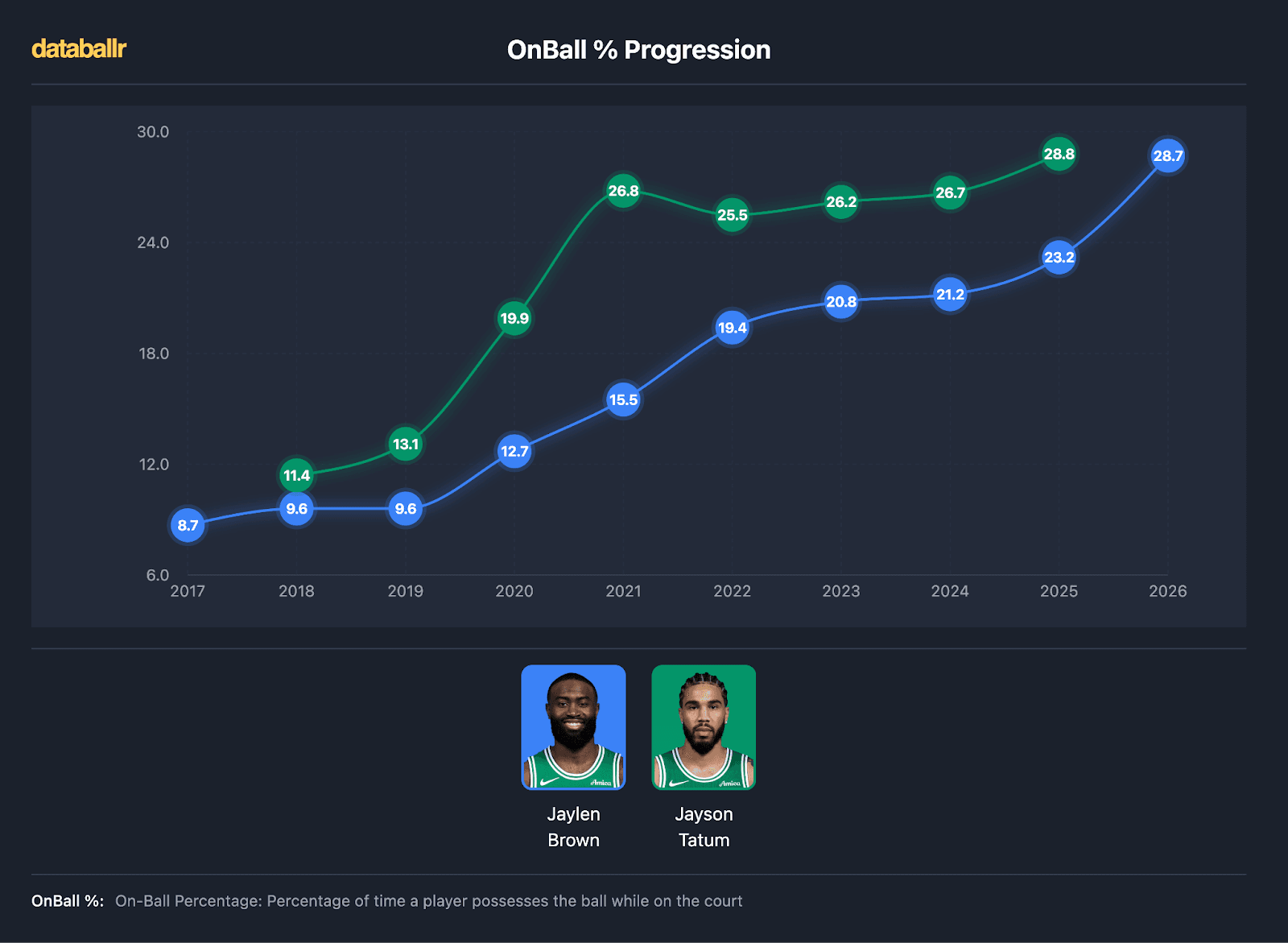
To boot, the career-high on-ball percentage Brown has posted this season was almost exactly what Tatum finished with last season.
There’s also a trickle-down effect. The Celtics were deep before Tatum was activated on Friday night. With him in the starting lineup, they get to enjoy the luxury of bringing someone like Baylor Scheierman off the bench. In Tatum’s absence, Boston increased its athleticism, aggression, and youth. With all its high volume 3-point-shooting centers no longer around, it discovered a new winning formula by crashing the offensive glass and increasing off-ball actions to free shooters up on the perimeter.
Tatum shouldn’t disrupt any of what’s made these Celtics so good, and his skill set will be necessary in the playoffs. Overall, injecting that much playmaking, shotmaking, and size into a rotation that could already generate a ton of 3s and defend at an elite level is terrifying. If, in three weeks, Tatum looks like the player he was exactly one year ago, one of the biggest questions hovering over this entire season will finally have an answer. It’s the one Boston was praying for and exactly what every other championship hopeful did not want to see.