For 30 Years, Pokémon Has Caught Us All
Three decades into its reign, the world’s highest-grossing media franchise is still perfecting its formula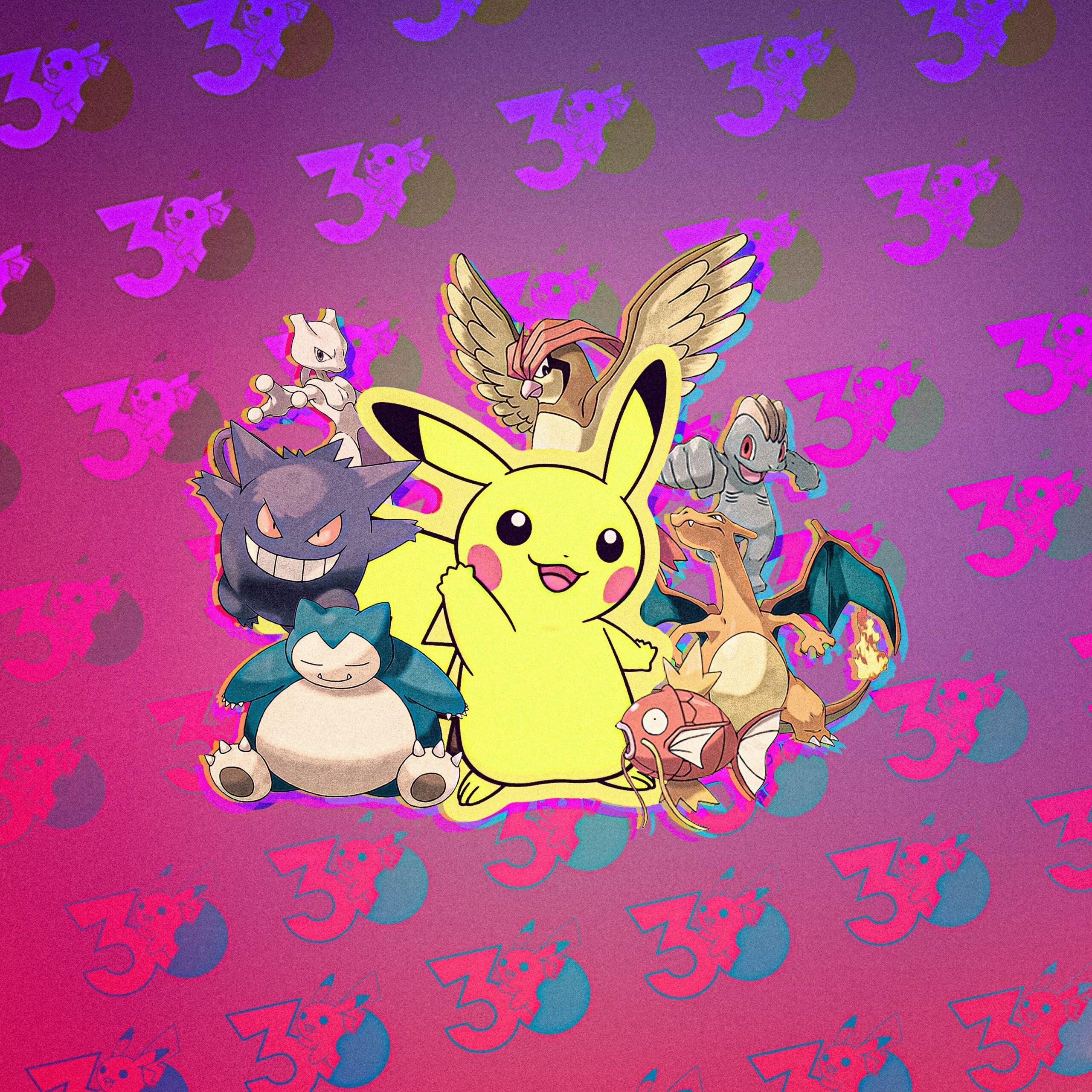

Satoshi Tajiri was raised in the Tokyo suburb of Machida in the late 1960s. Like many Japanese kids at the time, Tajiri would spend his days combing through fields and forests, and dipping into ponds, in search of insects and other pocket-sized creatures to add to his collection.
“As a child, I wanted to be an entomologist. Insects fascinated me,” Tajiri told Time in 1999. “Every new insect was a wonderful mystery. And as I searched for more, I would find more. If I put my hand in a river, I would get a crayfish. Put a stick underwater and make a hole, look for bubbles, and there were more creatures.”
These formative memories would become a pivotal inspiration behind the video game franchise that Tajiri is best known today for creating. “Everything I did as a kid is kind of rolled into one thing,” Tajiri continued. “Pokémon.”
Last week, Pokémon celebrated its 30th anniversary. Turning 30 is a major milestone in life. It’s the perfect time to look back and celebrate your achievements, learn from past failures, and assess how you can continue to grow as you move on to the next chapter. Pokémon has come a long way since the revolutionary Game Boy title modeled after Tajiri’s childhood passion, yet there’s still plenty of room for the franchise to evolve (so to speak).
In February 1996, Pocket Monsters Red and Pocket Monsters Green were released on the Nintendo Game Boy in Japan. The handheld games were developed by Game Freak, the video game magazine-turned-developer that Tajiri cofounded with artist Ken Sugimori in the early 1980s. It took a couple of months, word of mouth, and one very successful promotional campaign for the games’ popularity to really grow in Japan. But within the next two years, Pocket Monsters Red and Green—rebranded as Pokémon Red and Blue for international release—began shipping to other countries. It wouldn’t take long for “Pokémania” to spread across the globe.
Over the past 30 years, Pokémon has become the world’s highest-grossing media franchise, with an estimated lifetime revenue that exceeds $150 billion. What with the trading cards, long-running anime, movies (animated and live-action), merchandise, mobile apps like Pokémon GO, and theme parks, Pokémon’s tremendous success and enduring popularity encompasses much more than its video games alone. This eclectic range of offerings has provided new entry points into the franchise for generations of fans, with each one of these mediums or products becoming hugely popular in its own right. The Pokémon Trading Card Game, which launched in Japan the same year as the original Game Boy video games, is in higher demand than ever. Last month, influencer Logan Paul sold a rare Pikachu card for the absurd, record-breaking price of $16.5 million. In January, a pop-up exhibition at London’s Natural History Museum sold all of its 105,000 tickets in under five hours and had its duration extended by four weeks.
The Pokémon Company—established as a joint venture by Game Freak, Nintendo, and Creatures Inc. in 1998 to manage the brand and its growing success—could likely continue to thrive even if it never released another game. But Pokémon began as a video game. And while the company’s ongoing 30th anniversary celebrations have looked back at the franchise’s black-and-white, pixelated origins, they’ve also looked toward its future.
On Pokémon Day (February 27), the company used the milestone anniversary to showcase its strategy of mixing nostalgia-infused products with new enterprises that reflect recent shifts in creative direction, particularly on the gaming front. Miniature Game Boy jukeboxes featuring music from Pokémon Red and Blue went on sale for $70 (and quickly sold out), while Pokémon FireRed and LeafGreen were re-released on the Nintendo Switch eShop. However, the biggest announcement put a spotlight on the next generation of mainline games: Pokémon Winds and Pokémon Waves.
The trailer teases the three starters leading the 10th generation of Pokémon, along with the games’ tropical, Southeast Asia–inspired setting (plus with a pair of Pikachus who look suspiciously like they’re vacationers from Florida). Although no gameplay was revealed, the early look signals another entry in the franchise that’s geared toward an expansive region for players to explore as the games’ open-world experiences adapt to better fit the modern gaming landscape.
Since Nintendo launched the Switch in 2017, the Pokémon series has shifted away from its classic, linear gameplay style and tinkered with new elements with each release. With 2018’s Pokémon: Let’s Go entries, traditional random encounters—which players would trigger by walking through areas like grass or caves—were left behind as Pokémon became visible creatures living in the game’s overworld, which created more immersive environments. Pokémon Sword and Shield, released in 2019, thrust players into vast “wild areas” to catch Pokémon and battle in raids against massive “Dynamaxed” or “Gigantamaxed” monsters alongside other trainers. Pokémon Legends: Arceus (2022) introduced diverse biomes and a new catching system that called on players to aim and throw Poké Balls at their targets, streamlining the capture process. And Pokémon Scarlet and Violet (2022) provided the first fully open-world experience and a different art style that favored realism.

More on Pokémon
While each of these recent entries has had its merits, none of them has been flawless. Despite instilling exciting, fresh gameplay features that fans used to only dream of, these games have often fallen short in other crucial areas that ultimately left them feeling like unfinished products. Most notably, Scarlet and Violet were plagued by glaring technical and graphics issues that severely hindered its playability due to the limited processing power of the Switch. Another Japanese game maker, Pocketpair, capitalized on this seeming stagnation of the series in early 2024 by releasing Palworld, whose “Pokémon with guns” hook made the game a viral sensation—and eventually led to a lawsuit by Nintendo and The Pokémon Company over alleged copyright infringement.
Last year’s Pokémon Legends: Z-A was a mixed bag. Praised for its innovative, real-time combat system, Z-A has also been criticized for trapping players in a flat cityscape that lacks creative energy and attention to detail. “Critics have said for years that Game Freak seems to coast on success, doing just enough to keep the series moving forward year after year,” Gene Park of the Washington Post wrote in his Z-A review. “The studio took a bit more time to make this game, yet it comes with all these cut corners. If the transition to 3D worlds is this difficult, I almost prefer that Game Freak returns to two dimensions.”
It remains to be seen whether the upcoming Winds and Waves, which will end the longest-ever lull between mainline Pokémon game generations when they release simultaneously in 2027, will end this recent trend and create the franchise’s first open-world masterpiece. But the 30th anniversary also highlighted the debut of a spinoff game that quietly just tied 2013’s Pokémon Y as the highest-rated Pokémon entry of all time on Metacritic: Pokémon Pokopia.
Developed by Game Freak and Koei Tecmo’s Omega Force, Pokopia was released on the Switch 2 on Thursday. It’s a cozy life-sim game akin to Animal Crossing that incorporates construction mechanics similar to Omega Force’s Dragon Quest Builders 2 (or, for that matter, Minecraft). Players become a Ditto who, missing its former trainer, imitates a human and gets to work transforming a desolate land into a utopian paradise for other Pokémon. Pokopia is a true departure from the mainline games and their shared quest to catch ’em all, yet it’s filled with a charming personality and sense of wonder that some of the recent Pokémon entries have lacked.
Although Pokopia is a stylistic outlier in the video game series, Game Freak can still learn from its early critical success as Pokémon enters a new decade. Whether through future mainline entries or other spinoffs like Pokopia or next month’s multiplayer, turn-based strategy game Pokémon Champions, the developer should keep searching for ambitious, reinventive applications of the world’s most valuable intellectual property. And as Game Freak continues to improve its open-world gameplay with every mainline release, the company could perfect the formula as soon as Winds and Waves.
The Pokémon Company has been pulling out all the stops for its 30th anniversary, releasing celebrity-packed commercials (including one that features Lady Gaga singing Jigglypuff’s tune), logos for all 1,000-plus Pokémon, and much more to celebrate how far the franchise has come since its humble beginnings. Those celebrations will continue throughout the year as other major milestones follow: Pokémon GO will have its 10th anniversary in July, and the Pokémon Trading Card Game will also turn 30 in October.
Nostalgia is a powerful sales tool. Pokémon embedded itself in the consciousness of millennials and early zoomers around the world with the arrival of the iconic first generation of pocket monsters in the original games, trading cards, and anime, all released within the span of a few years in the late ’90s. (The original anime, focused on Pikachu and trainer Ash Ketchum, ended in 2023 after a 25-year run.) The Pokémon Company has maintained its stranglehold on popular culture by introducing new generations of Pokémon and diversifying its content across a wide range of mediums and products that communities have bonded over. But interest could eventually begin to waver if the mainline games lose the creative spark that Tajiri and Sugimori started with; even Pokémon can only feed off of nostalgia for so long. If the franchise can keep mixing in fresh ideas with its reverence for the past—like the concept that turned Pokémon GO into a global phenomenon in 2016, or that powers Pokopia—then Pokémon may continue to prosper for another 30 years.