
Dorkapalooza: The Oral History of the Sloan Sports Analytics Conference
This is how the revolution was quantifiedDorkapalooza: The Oral History of the Sloan Sports Analytics Conference
This is how the revolution was quantified

Editor’s note: For more on the history of Sloan, the big ideas that transformed sports, and the future of analytics, watch "Dorkapalooza: How the Nerds Won," hosted by Kirk and featuring reflections from Bill Simmons, Daryl Morey, Jessica Gelman, and more.
To understand how sports analytics became such an in-demand career, you first must go back to a time when it was barely one at all. In 2003, baseball writer Bill James participated in an ESPN online chat. That afternoon, people around the country logged on to have an audience with the godfather of advanced stats.
Five questions in, this happened:
Tim—Cohasset, MA
Bill, I’m very interested in your work and was wondering how a 20 year old college student would get in on the ground floor working for a team like the Red Sox.
Bill JamesLearn to throw 95.
The razor-edged response cut straight to the truth: It was really hard to break into sports. For a century, front offices were the playground of ex-pros, crusty lifers, and dynastic offspring. It was a closed system—extremely resistant to outsiders and innovation.
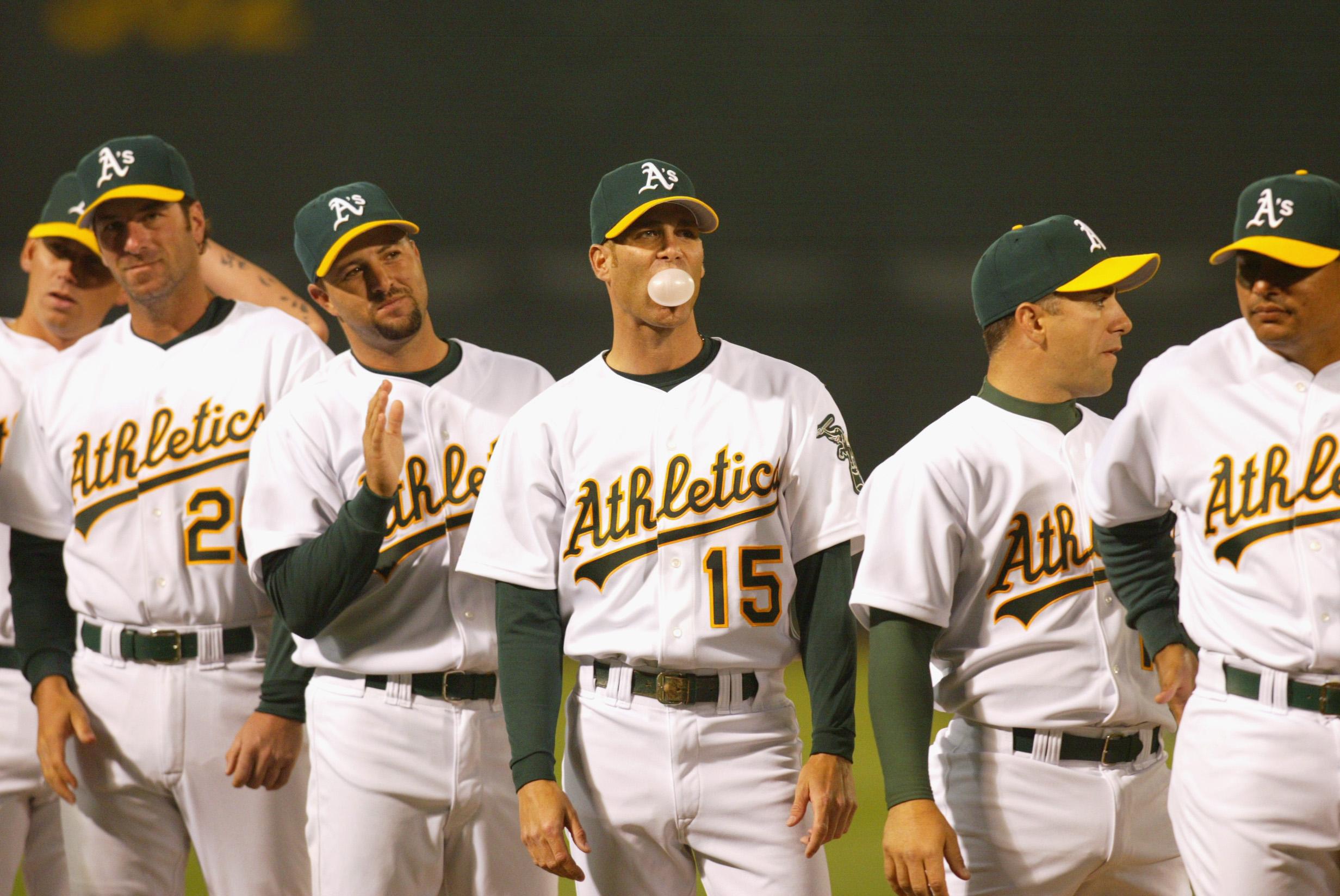
But things were slowly starting to change. The year that James crushed Tim from Cohasset’s dream, journalist Michael Lewis published Moneyball: The Art of Winning an Unfair Game. The book told the story of how rogue general manager Billy Beane and the Oakland Athletics built a winner by identifying and acquiring undervalued players. As innocuous as that sounds now, it challenged conventional wisdom and pissed off the old guard.
The bestseller helped reveal an alternate path to success in an industry that tended to avoid going in new directions. At the time, two young business school grads were also looking for their own way in. One was Jessica Gelman, a former Harvard basketball player who had taken a job with the New England Patriots as a business development manager. The other was Daryl Morey, an MIT stat head whom the Boston Celtics had hired as senior vice president of operations. Unlike most of their peers, the two friends were using analytics to find edges for their respective organizations.
“We were sort of the Wonder Twins to start,” Morey says.
“I was just trying to learn some things from him and steal ideas, really,” Gelman jokes.
For a short while, they even taught a sports analytics class together at the MIT Sloan School of Management. Then, in the spring of 2006, the Houston Rockets made Morey their new GM. The call up to the big leagues threatened to derail their working relationship. After going to a women’s Final Four game in Boston that April, they talked over their predicament at a bar.
When Gelman shot down Morey’s suggestion that he’d fly up from Houston every two weeks for class, she made a counterproposal. “Well, when I was in business school, we used to have these conferences,” she recalls telling him. “So maybe something like that.”
The idea, Gelman admits, could’ve died there. But a few months later, Morey called her. “I’ve been thinking about that conference idea, and I really think we should do it,” he said. “And I think we should have the students from the class help us.”
And that’s how the MIT Sloan Sports Analytics Conference was born. The idea was to create a space for people who thought about sports a little bit differently. The quants, the wonks, the contrarians—those typically ignored or looked down on by the establishment. The first gathering was small, but it quickly snowballed into one of the biggest nonsporting sporting events on the calendar.
Over the past 20 years, “Dorkapalooza,” as it was dubbed by Ringer founder Bill Simmons, has helped an underground movement go mainstream. One of its founders became a celebrity, sports analytics departments exploded, and coaches and athletes began incorporating more cold, hard math into their on-field decisions than ever. It also changed the way we talk about sports. Without Sloan, VORP and BABIP would never have ended up in an episode of Parks & Recreation, and there’s no way Kendall Jenner would have ever referenced DVOA in a Tonight Show bit.
This is how the nerds won.
Part 1: “Sports Analysis Was Medieval”
Where was analytics before Sloan? Thanks in part to the research and writing of Bill James and his disciples, baseball was light-years ahead of other sports. But in the 1990s and early aughts, the landscape was still pretty barren. That’s the world Gelman and Morey came up in.
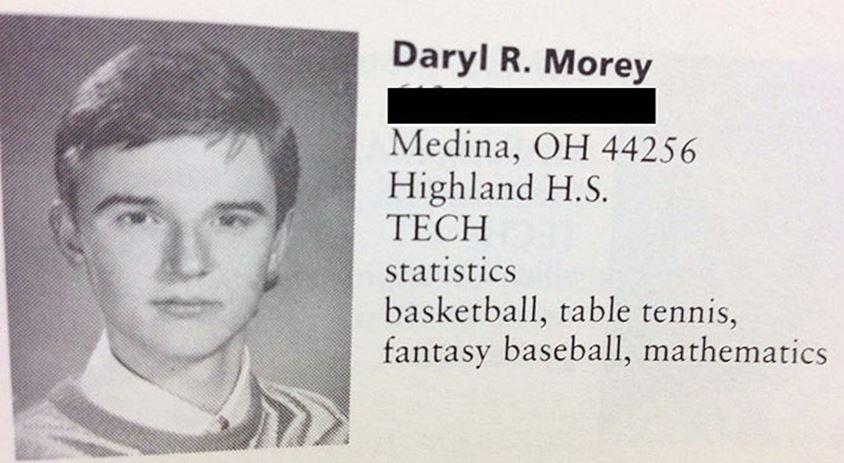
Daryl Morey (cofounder, MIT Sloan Sports Analytics Conference): I grew up in rural Ohio, just going to the Waldenbooks and getting Bill James’s Handbook. I played basketball, but I liked baseball better because I love data. The idea of adapting it to basketball didn’t seem intuitive. If you got The Plain Dealer or the Akron Beacon Journal like I did when I was a kid, it would be like, “Cavs won.” There were box scores, but not very detailed. And so I was also obsessed with beating my friends at all these games—we played Earl Weaver Baseball, Strat-o-matic, Pursue the Pennant. I knew data would help me win. So I was just destroying all the kids in my neighborhood. That’s the best motivation for any young, testosterone-laden boy.
Jessica Gelman (cofounder, SSAC): When I was in college, I studied psych. Psychology at Harvard was very stats based. For my thesis, I ran experiments on a local high school basketball team where I was trying to quantify performance under pressure. What were the qualities of people who perform well in pressure situations and those who don’t? I had a test and a control and did this experiment over the course of a season with this local high school. We found a couple of things that were statistically significant. It was actually published in the Harvard undergraduate journal of science.
Morey: I had a work-study job [at Northwestern] with this professor in the statistics department because that’s what I was interested in. I found out if you’re work-study, the professors really don’t want you. They’re like, “How can this freshman help me?” He was correct. I didn’t know what I was doing. I was stumbling around. I was miserable. So I went to look for a job. And at the end of Bill James’s Handbook that year was “Hey, we’re starting this firm STATS, Inc. It’s in Skokie, Illinois.” I was in Evanston. I didn’t know where Skokie was. I just had to look up a map, and it was just one town over.
I applied there, and I was lucky enough to get a job answering the phones for Bill James Fantasy Baseball. The internet was not a thing. So to make transactions and move players into your starting lineup and down, you had to make a phone call and say, “I want Ryne Sandberg up, and I want Eddie Murray down.”
Gelman: Once you’ve had a flow experience, you want to have it again. In life there’s all of these moments of pressure. So I felt that if I could learn that skill as an athlete, it would be helpful in other parts of my life. I mean, that was kind of my introduction to applying analytics to sports.
Morey: I was working a lot on baseball data because there wasn’t any basketball data. If you wanted to work on sports analytics, it was baseball. That was the only game in town. I was lucky enough that [STATS, Inc.’s] first basketball analytics book, they threw it to the intern. They said, “Hey, intern, see if you can look at point differential and how it affects the NBA.” That was my very first analytics project, which is in the ’93 Basketball Scoreboard.
It was small, but in the mid-’90s, there was a community of people pushing to get sports analysis to evolve past the Stone Age.
Matt Silverman (front office executive, Tampa Bay Rays, 2005-25): I mean, it was a shadow of what it has become today. At that time, you could count on one hand the number of people in a baseball analytics department.
Eric Tulsky (general manager, Carolina Hurricanes): We had to organize an effort of people watching games and writing stuff down by hand for hundreds and hundreds of games because the only data that existed was the NHL’s play-by-play.
Kevin Demoff (president, Los Angeles Rams): There were a bunch of us who were at the intersection of salary cap and football and personnel rising the ranks. But analytics was not something we talked about.
Nick Caserio (executive vice president and general manager, Houston Texans): You’re doing situational analysis, and you’re taking information and just trying to cultivate a game plan based on data and information. Nobody was calling that data analysis or analytics, but that’s essentially what it was.
Sports analysis was medieval. … It was the journalistic equivalent of 12th-century doctors bleeding patients when they had fevers.Mike Schur
Demoff: I worked for the Buccaneers at the time, and I can’t—neither in print nor in audio—say the names we got called in the office by Jon Gruden and others for what we would produce.
Silverman: It was also a competitive advantage. Those who were in it weren’t going out there and beating their chests talking about it. It was something that they tried to keep as quiet as possible.
Bill Simmons (founder, The Ringer): I remember writing this really passionate piece on my old website about Nomar Garciaparra versus Derek Jeter and A-Rod. It was about the three of them and the whole concept of somebody being a winning player and somebody having this secret sauce, and the stat people are coming and you can’t listen to them because it still matters that you’re a winner. It was just like your classic piece that the Fire Joe Morgan blog would’ve made fun of five years later.
Mike Schur (cofounder, Fire Joe Morgan): Sports analysis was medieval. The only way to praise an athlete’s performance was by the cut of one’s jib and the fire in one’s eyes. It was the journalistic equivalent of 12th-century doctors bleeding patients when they had fevers.
Simmons: But that was kind of the mentality in the late ’90s. It was the way we talked about sports. You didn’t have to really back up stuff with a lot of evidence. And in the 2000s, that shifted, and it shifted in real time. And for me, writing in my column, I had to shift with it.
Part 2: “A Different Way We Can Do Things”
Around the time they were becoming friends, both Gelman and Morey got their first big breaks. After one of Gelman’s Harvard Business School projects caught the eye of Patriots COO Andy Wasynczuk, the team hired her. Meanwhile, Morey was part of the team at Parthenon Capital that was trying to help locals Joe O’Donnell and Steve Karp buy the Boston Red Sox. The deal fell through, but Steve Pagliuca was impressed with Morey’s work enough to recommend him to his Celtics co-owner Wyc Grousbeck, who hired him. That was in 2002. Neither Gelman nor Morey had any idea how much the sports world was about to change.
Morey: I always thought my edge would be something with data and analysis because, look at me: I’m, like, the nerd. I fit every nerd stereotype. I like table tennis, I like chess, I like video games. So I knew that that would be my path.
Gelman: We would have these really deep conversations about basketball. He came with me to a Harvard women’s basketball game, and we were sitting in the stands. I don’t know if he will acknowledge it, but he did say this: “How come everyone’s taking these jump shots inside the 3s?” I was like, “Well, I mean, Daryl, that’s how you suck in the defense to kick it out to the 3-point shooters.” I guess he was maybe onto something.
Simmons: My history with Daryl was he was working for the Celtics. He was doing the advanced metric stuff. He was a little out there. He was an MIT guy. And at some point, you could feel the Moneyball revolution was going to trickle into other sports.
Michael Lewis (author, Moneyball: The Art of Winning an Unfair Game): The book came out, and it created a shitstorm. It was incredibly controversial. People were really, really angry. It threatened people’s careers. It was insulting to everybody who was running a sports team.
Simmons: You could feel things starting to change with how people were putting together sports teams. And I even remember I used to play WhatIfSports.com in the early 2000s, which was like this computer simulation game. And you could kind of see the computer favoring OBP and WIP. Something was shifting. Teams like the A’s and the Red Sox got into it and were succeeding.
I remember telling [Daryl], “I think you’re going to get a GM job one day.” And he was like, “No way.” And the Celtics people were like, “No way.”Bill Simmons
Dean Oliver (data analyst, author, and former NBA assistant coach): A friend called me and said, “You should listen to this guy on the radio. He’s doing exactly what you do …” It was Michael Lewis. That’s when I realized I could quit my engineering job. It was huge to me. Frankly, when I started my tour across America to try to talk to people in the NBA, everyone that I talked to was aware of Moneyball. Seattle hired me because Wally Walker was one of the owners, and he had read Moneyball, and he was a finance guy. There was a path. It just wasn’t the easiest thing.
Lewis: It was intoxicating to a whole generation of people who didn’t like the other options that the economy was offering them. They didn’t want to go trade on Wall Street, they didn’t want to go work for Microsoft or Google, and they were excited by sports. There’s a whole wave of these people. Farhan Zaidi, who went to the Oakland A’s as a little intern because he read the book, ends up running the Giants and the Dodgers, and who knows what else he’ll run.
Simmons: I remember telling [Daryl], “I think you’re going to get a GM job one day.” And he was like, “No way.” And the Celtics people were like, “No way.”
Gelman: We were going to grade some papers after class, and as we were driving, he’s kind of like, “I have to share something. I’m going to interview for a job in Houston as a GM.” And I’m like, “Oh man, you’re going to get that job.” And he was like, “What? How do you know?” I’m like, “[Rockets owner] Les Alexander, he’s a data guy.”
Morey: Very forward-thinking guy. He’s saying, “We need to change what we’re doing and run our franchise in an innovative way. I’ve got to go find someone who is native to understanding data.” He had hired folks like Sam Hinkie before into junior roles, but he also knew he needed to hire someone for the top job because he’s like, “If they’re not in the top job, it’s just going to get marginalized.” Michael Lewis writing that book so that people who own teams say, “This is a different way we can do things” was really important.
Lewis: I write Moneyball, the owner of the Houston Rockets reads Moneyball. He wants to go find his Billy Beane, he winds up finding Daryl.
Part 3: “Sports Analytics Jesus”
Gelman and Morey had to give up teaching their class, but in late 2006, they got to work planning the inaugural Sloan Conference. The first one, held on February 10, 2007, had a slightly different name than those that came after.
Gelman: It was definitely not called the MIT Sloan Sports Analytics Conference. I believe it was called the MIT Sloan Sports Business Conference.
Silverman: “Analytics” wasn’t part of the vernacular.
Gelman: We pulled the first conference together in about three months. We had it in different rooms all around MIT. Daryl will talk about the Infinite Corridor, which is a very famous part of the MIT campus.
Morey: We had red balloons that were in the hallway. So you had to find the balloons to know. You had to turn and then look for the next balloon. That was how crazy it was. People were getting lost.
Aaron Schatz (chief analytics officer, For the Numbers Fantasy, and ESPN NFL analyst): We were just in some classrooms at MIT, man. It wasn’t even the nicer classrooms.
John Hollinger (senior NBA columnist, The Athletic): You remember those old school desks where the desk part was attached to the chair and there was a little slot for the pencil? Even those of us on a panel were sitting in those.
Demoff: You would’ve had no clue that years later it would be probably the single-largest sports conference that’s not put on by a league.
Gelman: We brought food in from Così, and it probably cost like, $200 for the 120 people that we hosted. We had a cocktail reception that was boxed wine.
It is the only event in the world where Bill James has always been cooler than Bill Belichick.Katie Burke
Morey: I remember that we were scrambling so hard for speakers, and [one of] our marquee speakers that year was J.P. Ricciardi—who I got through Billy Beane—who was the Blue Jays GM at the time.
J.P. Ricciardi (general manager, Toronto Blue Jays, 2001-9): It was probably the only thing going based on any kind of analytical evaluations and thought process. It really was a cutting-edge-type thing.
Morey: Jamie McCourt was an MIT Sloan grad. So Dick Schmalensee, who was the dean at the time, was like, “Jamie could come do it.” She and Frank had just bought the Dodgers. It was a pretty big get for the conference, and … let’s just say it wasn’t the most analytical speech. It was about the joy of having a Dodger Dog. And all the nerds who came to this very first conference were like, “What did I just watch?”
Gelman: My biggest memory in terms of, “Wow, this is really incredible,” in the first panel or second panel, Bill James was on it. The godfather of sports analytics.
Schatz: It was like, he was our man. The fact that you could meet him in person was pretty awesome.
Hollinger: Bill James is watching us discuss analytics. What is wrong with this picture? It was a really cool moment because it made us feel a little bit like basketball analytics had arrived. That Sloan Conference was a rarity because it was more basketball people than anything else.
Katie Burke (MIT Sloan School of Management, ’09): It is the only event in the world where Bill James has always been cooler than Bill Belichick.
Lewis: When Bill James is walking through the place, that’s Jesus, right? I mean, he is sports analytics Jesus.
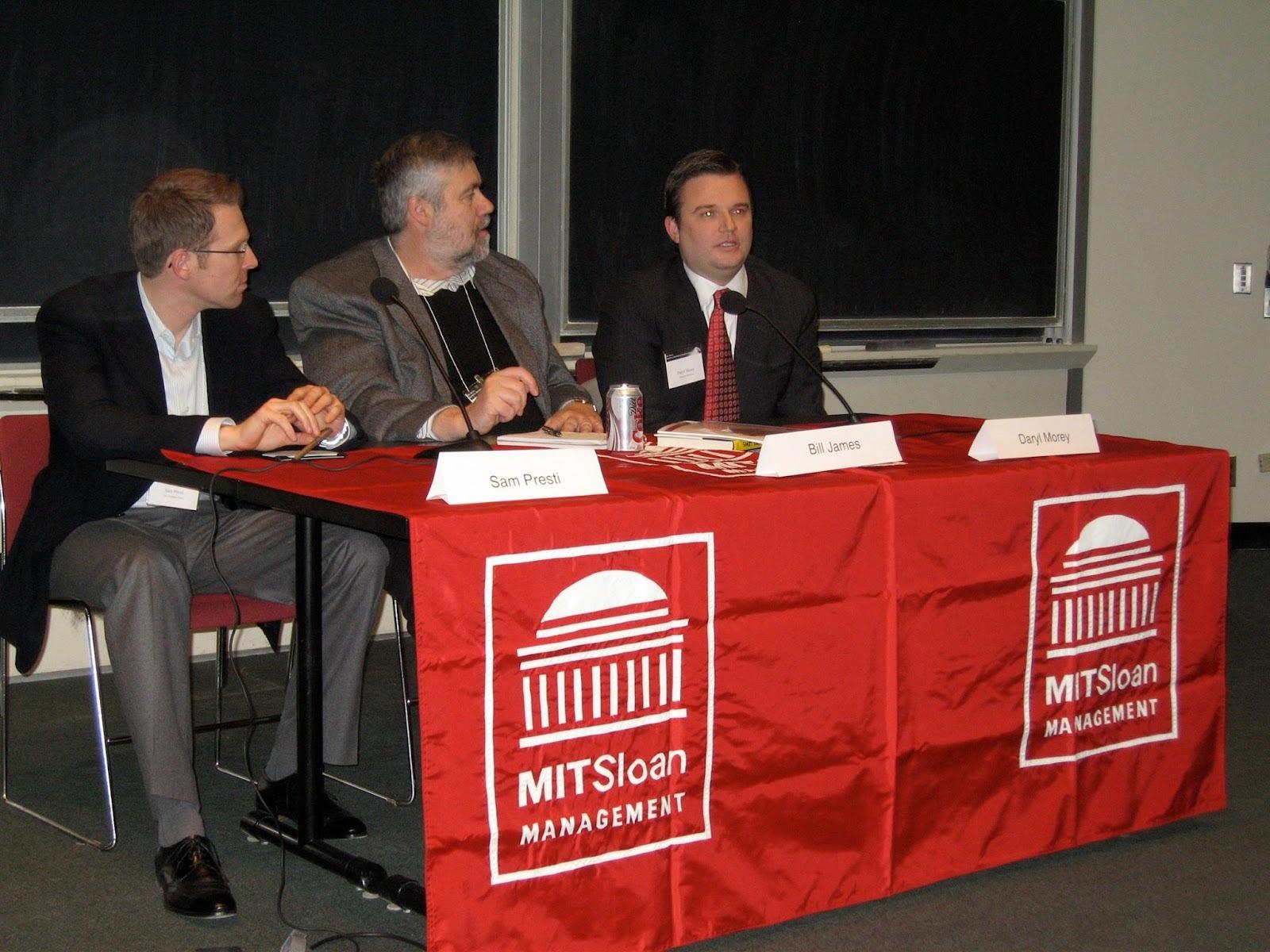
Gelman: The first real analytics panel was Sam Presti, Daryl Morey, and Bill James. Talk about a killer first panel. Can you even imagine having something like that today? It would still be a killer panel, but no one knew that those were the people who would literally change the face of sports analytics.
Oliver: Sam Presti was one of the first people that I met when I tried to get into the NBA. It was in the NBA predraft camp in 2004. Then I met him again at the Sloan Conference. And he was so humble. He really didn’t think that any of these kids would care what he had to say. He didn’t know if he had much to say. He was like, “I don’t know. Why am I here?”
Gelman: This is just to date us: In the middle of the panel, [James] stood up, and he wrote his email address in chalk on the chalkboard behind. I think that really highlights the intimacy of analytics and the people who were interested in analytics at that time.
Morey: The first year was Infinite Corridor, and we knew that wasn’t going to work. We moved to the Stata Center, which is this really funky building on MIT’s campus, for the next two years. The windows are on the floors. It was actually perfect for a nerdy conference.
Gelman: The heart of the conference is that it’s education—not only to educate people about sports and sports analytics but the conference itself as a training program for the students at MIT Sloan who are actually running the day-to-day of the conference. Daryl and I think of ourselves as the coaches.
Burke: My first call with Jess, she was like, “Why do you want to work in the sports conference, and what’s your idea?” Keep in mind, this is 2007. And I said, “My idea is, not many people are repeating championships back-to-back. I want to do a panel called ‘Defending the Title.’” And she was like, “Yeah, that sounds like a cool idea.”
Gelman: We had all of the sitting GMs who had just won the title. Bill Polian, R. C. Buford, Brian Burke, and Jed Hoyer.
Burke: R. C. Buford was taking notes. Mind you, this man is the defending champion of the NBA.
Morey: The “holy shit …” [moments]: the panel with all the sitting GMs and Adam Silver and Mark Cuban coming were two big ones.
Mark Cuban (minority owner, Dallas Mavericks, via email): I was there at the beginning but don’t have a ton of memories of it. Just being on panels. But don’t remember what they were about LOL.
Burke: Mike Zarren, who’s one of the assistant general managers of the Celtics, and Daryl really were the ones who had made it and broken through. There was a niche group of people who wanted to be like them.
Demoff: It was at the very beginning of trying to figure out: What statistics mattered? What was the holy grail that could help you find that silver bullet at the time? Even then, I remember starting my career thinking that we were going to find a formula or an idea that revolutionized football.
Schatz: I always knew there were people interested in it, but by going to the conference, you met people who were doing it. Not your readers, but people that were working for NBA teams, or wanted to work for NBA teams, or wanted to work for baseball teams. It gave you a much greater sense that it wasn’t just some people at home reading Bill James books.
Hollinger: It wasn’t that heavily attended, especially compared to now, where it’s like Woodstock. But it was a lot of influential people. You ask the old-timers, and they’ll say they miss that aspect of it, that it was just the biggest nerds in the business getting together. That part of it was really cool.
Part 4: “Obvious and Revolutionary at the Same Time”
As the Sloan Conference was growing, Morey was starting to make a name for himself in the NBA. His approach with the Rockets led him directly to the bard of the sports analytics movement.
Lewis: Daryl, at some point, not long after he got his job, reaches out to me and says, “I just want to thank you because your book is the reason I have my job.” And I was taken by just how the whole approach to decision-making in sports was changing on the back end of the book. It was going to change anyway, but the book sort of accelerated it.
I was having all these conversations with people in professional sports who were interested in it. There were dozens of people, in front offices mainly, sometimes owners, who wanted to talk about it. And I thought, “Maybe this is a seam I should mine some more. Maybe I could go and use it to get to other subjects in other sports.”
Morey: We didn’t actually really talk until the All-Star Game in New Orleans in 2008.
Lewis: I thought basketball was a great place to take on the subject of how hard it is to measure what a person does. It’s really hard. A lot of what they were measuring, like how many points you score, wasn’t really correlated with whether the team won, because you could score in really inefficient ways. And conversely, there were all these things people could do that didn’t get registered or counted that were really valuable. We started talking about this, and I asked him for the best example in the league of, effectively, the “No-Stats All-Star.” And he said, “We just traded for him.”
Shane Battier (Houston Rockets, 2006-11): My first day on the job is the first day that I met Daryl. All I knew was I got traded to the Rockets on draft night for the rights to Rudy Gay. That trade was not well received in Houston at the time—no one can understand why they’re trading for this guy. I was 10-5 on a middling team, and we’re giving up this lottery pick who looks like Adonis? I probably had some trepidation, too, to be honest with you. And look, when you get traded, your first thought is you feel rejected.
And in the first few weeks, Daryl said, “No, you do things that no one knows about.” And one of our first conversations was “In one of our first models, you were the best value in the NBA,” which everyone loves to hear, right? High production, low salary: I was a GM’s dream. And I said, “Thanks, Daryl, that’s great.”
It was weird at first, like, “Why does [Michael Lewis] want to write about me? I average 10 points a game.” He kept prodding me and trying to go deeper.Shane Battier
Lewis: I used the gratitude [Morey] felt to me to move down into the Houston Rockets organization for a bit and wrote a cover piece for The New York Times Magazine about Shane Battier.
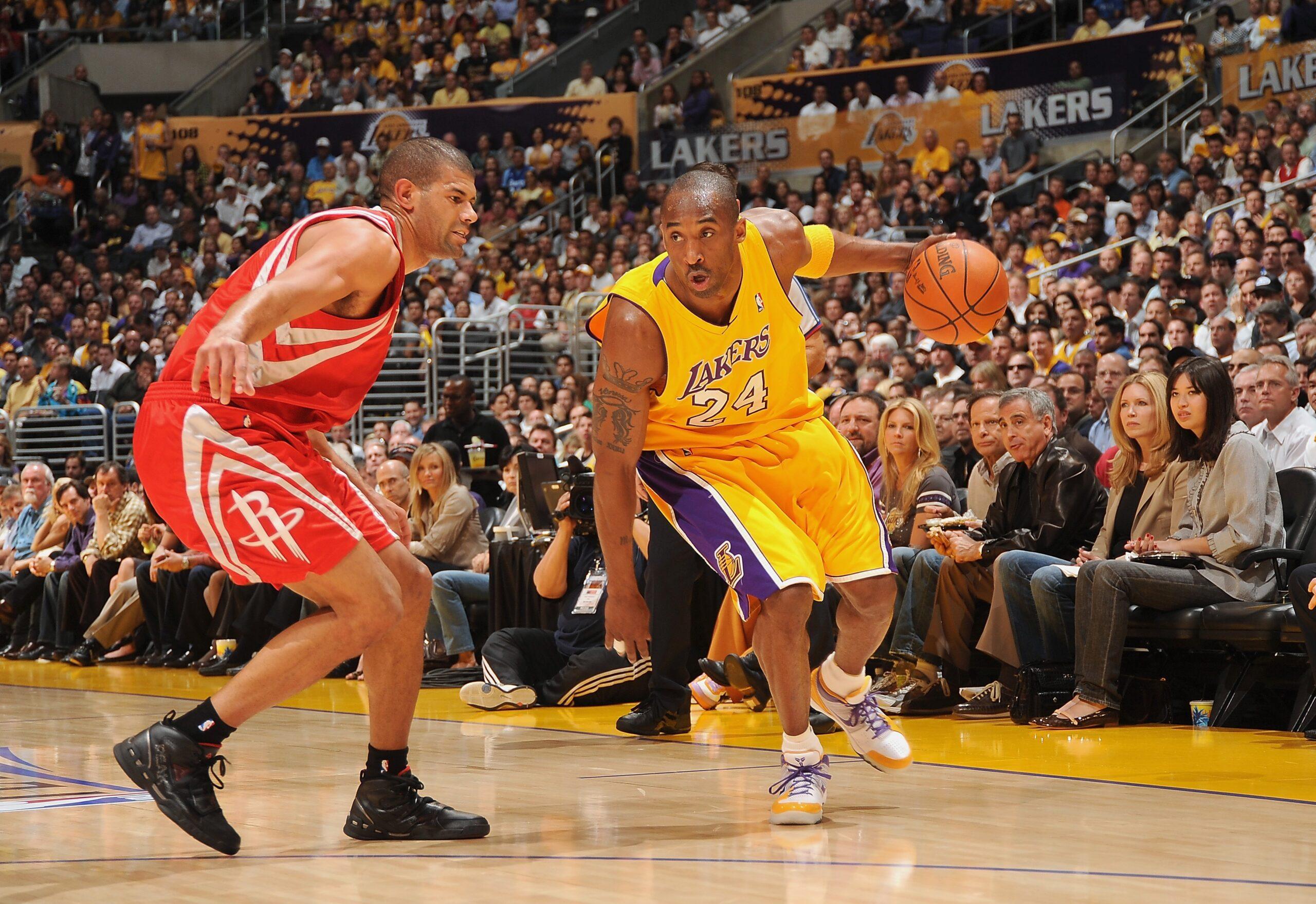
Morey: Anyone who approaches him and says, “I think you should do a story on X,” it’s almost like Michael wants to do Y. Michael has these penetrating questions, and he somehow finds the story so quick. And Sam Hinkie and I were both there at the same time. We just went over our roster, and I think Shane and Chuck [Hayes] were probably the two that he thought were the most interesting. But by far he felt like Shane was [the most interesting]—probably because of his battles with Kobe, which really brought that article alive.
Battier: It was weird at first, like, “Why does this guy want to write about me? I average 10 points a game.” He kept prodding me and trying to go deeper. I think he wanted something to come out of me, like I was looking for connection to my family through diving for loose balls. But when the piece came out, I’ll never forget this. It was during the All-Star break. I was in Cancún, and I was reading it on my BlackBerry, that long article, and I was really proud. I never consider myself anything special, other than I was a guy that guys and coaches like to have on their team. Even though the title was “No-Stats All-Star”—a great backhanded compliment—I really wore it as a badge of honor.
Zach Lowe (writer and podcaster, The Ringer): I remember loving reading it at the time because he had such great access. He’s sitting with Daryl Morey at games, he’s sitting with Sam Hinkie at games, and they’re watching Shane Battier do the things that make him a “No-Stats All-Star.” I also remember thinking all the great analytics stuff is some combination of obvious and revolutionary at the same time.
Battier: I had all the stats early on, but I didn’t know how to really look at them or think about them. So most of my knowledge really came from talking to Daryl and Sam before games. There was always that lull a half an hour before you had to go talk to the coaches and strategize. So I’d just sit down and talk to them, and we would talk about trade-offs and they quizzed me like it was Sports Jeopardy! And they would say, “OK, what do you think is more dangerous, Kyle Korver from the arc or Luol Deng from the corner?”
I’d go through the reasons why and they’d tell me the answer, but I finally started to understand trade-offs in the game of basketball. And I started to think about the game of basketball in a much, much, much different way. And basketball became one big decision tree, where there was an optimal choice and a suboptimal choice. And as long as you make more optimal choices than suboptimal choices, in the end, you’re going to give yourself the best chance to win. Now, that doesn’t guarantee you’re going to win, but you’re in the ballpark. And I’ll never forget those conversations.
Simmons: The funniest thing was Daryl blew it because he did that Michael Lewis New York Times piece. He just completely fucked up. I told him when it happened, “What are you doing? You had the secret sauce, and you just victory lapped in front of everybody about it. And all you did was make all of these owners that are reading this like, ‘Why don’t we have this stuff?’ And you just gave away your advantage.” I bet he would do that over.
Morey: There’s definitely some fuckup-ness there. Once you’re in Michael’s orbit, it’s hard to just not open up. I probably have the same answer Billy Beane does. I think I would’ve dialed it back. I would say we are an entertainment business. And I did know that many teams were already catching on with everything that was in the article, but it did probably speed it up. I’m going to say Shane Battier is very happy, though. Shane gets, I think, like 50 grand a speaking gig because of that article. So we helped out Shane, at least.
Battier: The fact that I get hired by Fortune 100 companies to tell the story of the “No-Stats All-Star” and to be the prophet of process over results, that was not in my bingo card growing up.
Part 5: “Dorkapalooza”
“The No-Stats All-Star” ran in the Times Magazine on February 13, 2009. And just like that, Battier—a percentage-playing lockdown defender who shared Morey’s affinity for corner 3-pointers—wasn’t a secret weapon anymore. Uncoincidentally, Sloan was also no longer a secret society. By then the conference was expanding rapidly in both size and scope.
Simmons: I was fascinated by this world. In 2009, I decided I had to write a magazine column about it. I was like, “What is this? I’ve got to figure out how to describe this.” So I came up with “Dorkapalooza” and wrote this 1,200-word piece about why I loved it, why I thought it was the future of everything.
Morey: Bill famously coined the conference name of “Dorkapalooza” and sadly then called me Dork Elvis, which has stuck with me and is a little frustrating. You don’t get to pick your nickname.
Gelman: I did ask Bill if I had a nickname. He called me Dork Joan of Arc.
Simmons: Something funny happens with Sloan, where all of a sudden these people are rock stars and they were the most unlikely people to ever be rock stars. But these were massive people in their fields. Two thousand people at Sloan, and somebody like Dean Oliver, who the average person wouldn’t have known, was an important person. It was like you’re at the Rock & Roll Hall of Fame, and there’s Paul McCartney.
I remember there was this one big football metrics panel that I happened to be in there for the beginning of. And Aaron Schatz came in and sat on the stage, and he had his hair in a ponytail, and he pulled the rubber band out of his hair and he dramatically did this thing. He was like a celebrity. I thought it was the funniest thing. I was like, “This guy is really feeling it.”
Schatz: I used to play records. I was a club DJ, I was a radio guy. All these things that people are sort of surprised are in my background. I called my site Football Outsiders for a reason. The joke was I was just some guy in my living room, like everybody else on the internet. People would call themselves insiders as if they were in the locker rooms. None of us were in the locker rooms. The timing just happened to be perfect because Moneyball came out right after I launched Football Outsiders, and everybody went looking for the Moneyball of fill in the blank. And there I was.
Simmons: It was the kind of thing I loved about Sloan. The comedy that came with Sloan, combined with actually learning stuff about advanced metrics in sports and trends. It was like a Star Trek convention crossed with some really fascinating sports stuff.
Bill famously coined the conference name of “Dorkapalooza” and sadly then called me Dork Elvis, which has stuck with me and is a little frustrating. You don’t get to pick your nickname.Daryl Morey
Lewis: When I first went, I tried to persuade Billy Beane, who’s a good friend now, to come with me. Like, “I’ll interview you onstage.” And I remember what he said: “It’d be like Captain Kirk going to a Star Trek conference. I don’t want to do that. It’s just going to be out of control.”
Morey: By our fourth year, the thing went viral. And I remember: I believe it was early January, Jessica and I are talking, and we have 1,000 or 1,500 people trying to sign up. And I am like, “This is crazy … we need somebody who runs conferences to help us.” So we reached out to someone who runs conferences, and they were like, “You’re going to have to move to either the Hines or the Boston Convention Center.” And that’s where we’ve been ever since.
In addition to leaving campus in 2010, the conference landed a big presenting sponsor: ESPN. Morey credits Gelman with fostering the partnership, which remains intact to this day. That year, Sloan also kicked off its groundbreaking research paper competition.
Joe Sill (data science consultant, Washington Wizards): I had been working for a hedge fund but didn’t really have a passion for it. So I quit, and they are so secretive that they will pay you not to work for a while, so I had six months where I was not allowed to work in finance. But I was getting a paycheck and had a sense that there should be something out there that I have a passion for. I didn’t know what that was and just started looking around and experimenting and reading about basketball analytics. I had some ideas for some analytics that were not publicly available but that I realized I could create if I downloaded the play-by-play and did some number crunching. I started reading about adjusted plus-minus and realized that there was a way to make it a lot better.
And so I put up a website, and I put a link to the website with my results on this message board. It’s called APBR.org. At the time it was a valuable resource in that it wasn’t very heavily trafficked, but some people who worked for NBA teams were on it. Dean Oliver, he noticed and said, “Joe, I get sent a lot of stuff that’s not really noteworthy. I think you really have something pretty good here.” I got inquiries from a couple teams and got an internship with the Trail Blazers from it. But then also just right around the same time, there was the Sloan Conference, and I realized that I should submit this as a paper.
Hollinger: Joe Sill made a presentation about how people were using adjusted plus-minus. It was totally eye-opening, and everyone in there was like, “Oh, we’ve been doing this wrong the whole time.”
Sill: The room was very crowded, but I had rehearsed the talk a lot, so it went pretty smoothly. Afterwards, several people, including Mark Cuban and Hollinger, came up and wanted to talk to me, so I knew I had done something significant.
Gelman: We had a student who was running the research paper competition, and it was our first one. I remember very clearly Daryl was reading Joe’s paper, and he was just like, “Oh man, this is really good.” And I think maybe if he could have put it in his pocket and walked away, he would have.
Sill: The moment that I was given the award, it really felt like some sort of fantasy daydream that was coming true. A few months earlier, I was just crunching numbers on my laptop, alone in my apartment, and I didn’t know anyone in the NBA, and then all of a sudden …
Oliver: Rajiv Maheswaran and Yu-Han Chang, they presented a paper using tracking data. They had the cameras to track things, but it wasn’t fully accepted. There were some teams that had it, some that didn’t, and teams were struggling to deal with the data. They gave a presentation about rebounding where they were able to look at the positioning of different players. It made people’s eyes just open up to all the possibilities of what you could do with that tracking data. It was a super popular talk. They couldn’t keep everybody out. It was really, really good. Those guys basically quit their jobs in the next couple years to start Second Spectrum.
Lowe: I would have stacks of papers from the Sloan Conference every year, and I would try to read as many of them as I could on the Amtrak back. I still probably have some in my desk because I felt like I had to sit with all of this information.
Cuban: It became an amazing source of talent and papers.
Lowe: Every time you would go, it’d be like, “Man, I’m falling behind.” There’s so much stuff happening here.
Burke: Jason Garrett, the former Cowboys coach, I have a very distinct memory of organizing his folder of notes from different panels. He was just there as a student.
When I first went, I tried to persuade Billy Beane to come with me. ... And ... he said: “It’d be like Captain Kirk going to a ‘Star Trek’ conference. I don’t want to do that."Michael Lewis
Sammy Gelfand (assistant coach, Dallas Mavericks): Sloan was a mythical thing for a lot of kids growing up, especially once you wanted to work in sports or analytics. You were told there were always two ways to get a job, right? For the NBA, you had to go to Summer League, or you had to go to Sloan. That was it.
Lowe: I met a lot of NBA people through Sloan because I was just starting in my career, and it was one of the first things I went to where everybody is there at the same time. I just remember going up and introducing myself to Masai Ujiri and just being like, “Hey, name to a face.” It became as valuable for the networking as it was for the analysis.
Tulsky: They would publish the list of all the attendees, and I would go through it and find the NHL employees who were there and try to reach out to them and ask if I could meet and chat with them. That opportunity to get 10 minutes with some team personnel and talk to them about who I am and what I did was the biggest value for me.
Gelman: I think a lot of the real insights are happening in the hallways, in the side conversations.
Gelfand: Before every Sloan, that was where all the basketball guys used to get together.
Lowe: One hotel had a bar called Champions, where all the games would be on, and all the nerds were convened like moths to the light to watch basketball and let their hair down, have a couple of beers. You’d have some people that their game was on, so you would be like, “You’re a little too intense for this gathering. I’m going to leave you at the table over here to vent at the refs.” Some of the serious discussion from the conference would seep into the beer and the basketball, but that always reminded you: This is why you do this. It’s sports. It’s still fun.
Gelfand: It was a great chance to meet people.
Lowe: I mean, I met Obama.
That’s right. In 2018, Sloan’s keynote guest was President Barack Obama.
Morey: You’re just waiting. You think it’s not going to happen. We were playing the Pistons when it came down in mid-January. He finally committed.
Gelman: I do want to give my wife a lot of credit—Corbin grew up in a political family. Her dad was the attorney general of Ohio. She had good perspective on how to make it happen.
Morey: MIT has a lot of rules when you have a politician come. So it was really hard to pull together. And without her, it definitely wouldn’t have happened.
Gelman: I remember Daryl and I were on the phone like, “Are we going to press send?” We were going to announce it on social media that he’s coming and then just await the floodgate of people wanting to come to the conference.
Morey: It was already sold out.
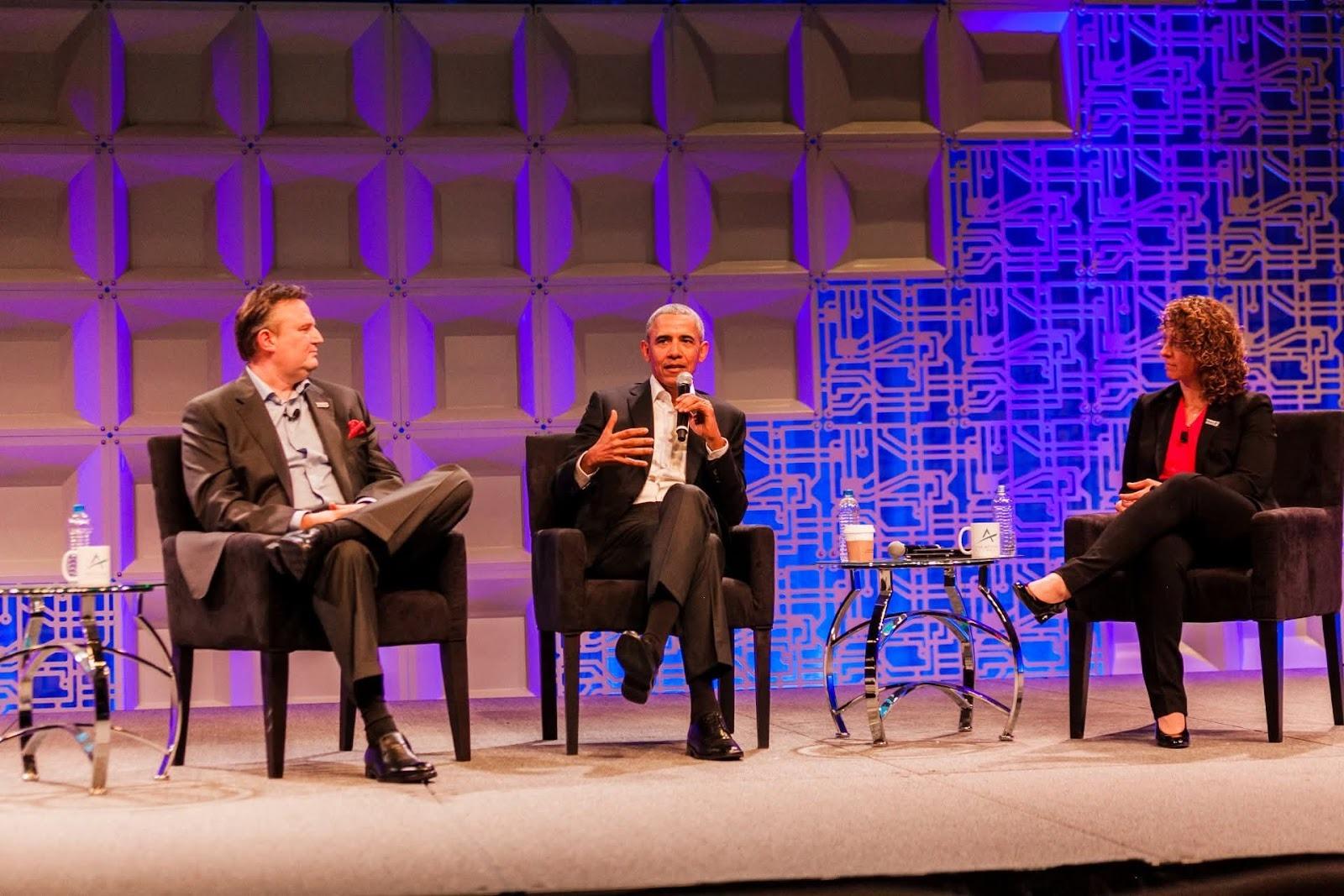
Lowe: They chose 200 of us—moderators, panelists. You get to meet Obama before he goes on and does his speech. We all lined up, and we had 15 seconds to shake Obama’s hand, make small talk, and get a photo taken. I get up there, and he is like, “Zach Lowe, Ten Things I Like and Don’t Like, must-read every Friday.” And I’m like, “He’s being coached, there's no way that he knows that I write a column called Ten Things I Like and Don’t Like.” And then his people were like, “No, he actually reads it.” And I’m like, “I still don’t know if I believe it, but I choose to believe it because it’s good for my ego.”
Gelman: Going back to performance under pressure, while we were interviewing him, I literally was doing my free throw routine to calm myself. And just kept saying, “Stay present, stay here, don’t think about anything else.” And he was incredible.
Part 6: “The Nerds Have Won”
The Sloan Conference has become Super Bowl week for nerds, a massive, multiday job fair, trade show, and networking event rolled into one. How far has analytics come since 2006? It transformed baseball so radically that MLB recently had to change some rules to make the game watchable again. In the last season of The Office, when Jim and Darryl—who have left Dunder Mifflin to launch a sports marketing startup—even attend Sloan.
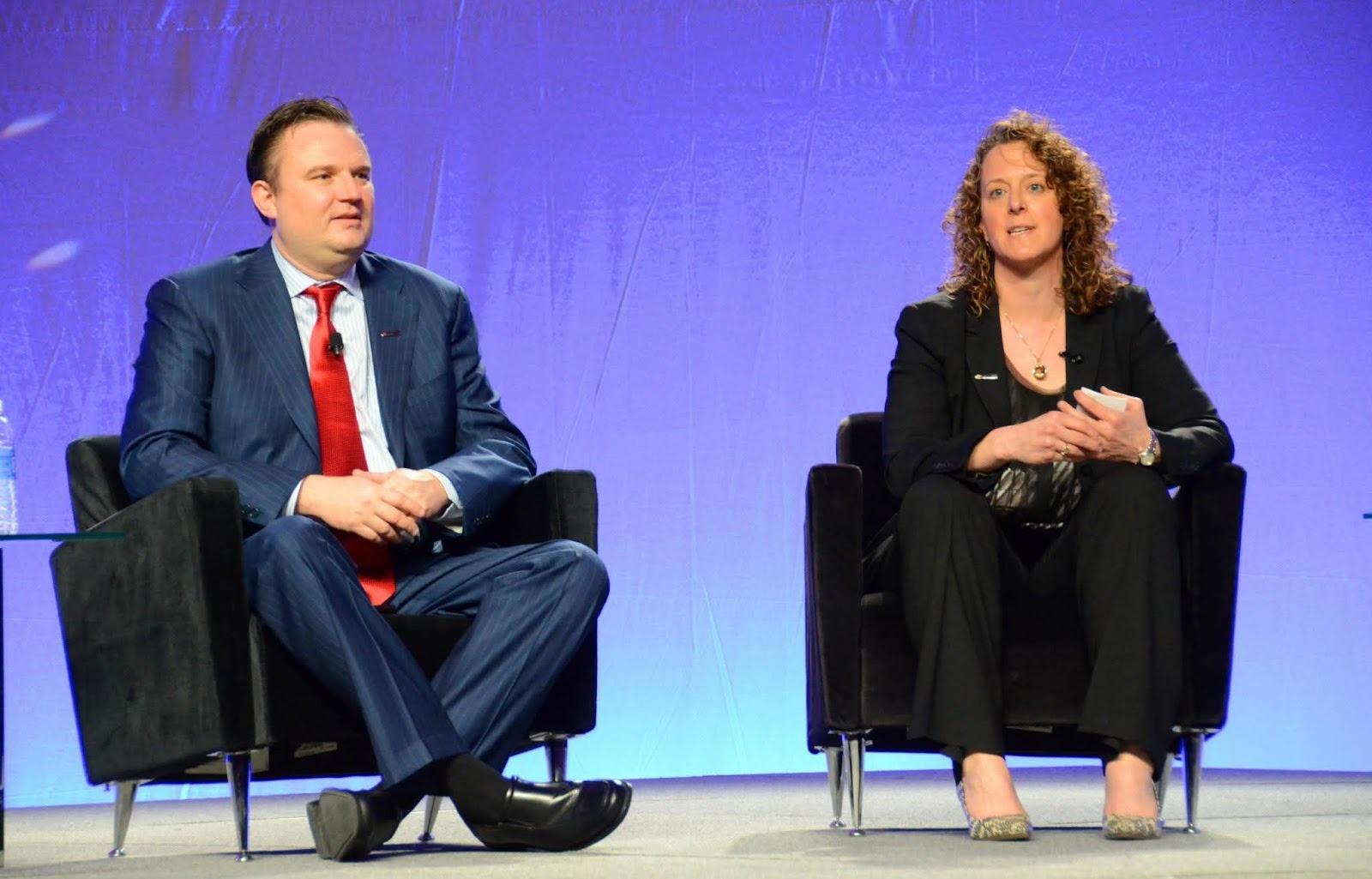
Heading into the 20th SSAC this weekend, Gelman, now the CEO of Kraft Analytics Group, and Morey, now the Philadelphia 76ers’ president of basketball operations, are both reckoning with—and celebrating—the fact that their movement has gone mainstream.
Schur: Moneyball and Bill James and Sloan felt like the introduction of vaccines to the medical profession.
Oliver: The nerds have won.
Morey: I would say the dorks were more inevitable. Like gravity.
Lowe: By 2012-13, if your team was not represented at Sloan, you were publicly shamed. The Lakers were publicly shamed for not having anybody at Sloan.
Gelfand: If you’re just trying to sell your boss on “Hey, I need more people,” they’re going to be like, “No, we’re not spending the money.” But when they go to a conference and they see a GM who is widely regarded and he’s talking about his analytics department, the owner’s like, “Well, why don’t we have that?”
Sill: The size and the flash of the conference and the people who show up, yeah, it’s a tremendous validation of the significance of analytics in sports.
Caserio: It’s a huge think tank.
Demoff: It is still freewheeling for most of us, but you recognize everything now that you say at Sloan can wind up throughout the universe. And so you’re probably a little bit more guarded. I also think you used to be more willing to share your secrets, right? The first rule of Fight Club is you don’t talk about Fight Club. The first rule of analytics is you don’t talk about analytics.
Last year I was—in the strangest moment of my career—telling the league office they need to fix the 3-point problem that was created by all the analysis from the conference, and they were arguing against me. It was like a full-circle moment.Morey
Oliver: Working for a team, I feel like I couldn’t say much. Mike Zarren, he’s on a panel every year, and he gets to talk about the same thing, which is nothing. He talks about nothing. He’s like the Seinfeld guy of the Sloan Sports Analytics Conference.
Silverman: It feels like the conference became more of a cult of personality and a great place for students and interested people to gain access to high-ranking executives and to league officials and to learn about what was going on with the teams. It got away from the hardcore analytics because that’s the secret sauce the teams are trying their best to protect.
Schatz: At this point, it’s like Audrey II.
Morey: I compare it to Metallica’s Black Album, once they crossed over. Jessica and I, every year when we get with the new student group, we have to just connect to mission. My connect to mission is always like, “We’ve got to keep it nerdy.” Sometimes we’ll get a little too showy, I’ll just be frank. President Obama, an amazing thing to have, but not the first thing you’d think of with analytics.
Burke: Nothing would be this successful without both of them at the helm. Jess keeps the conference grounded. She does a lot of the work in discussions with the school, with the students, the organization, keeps the trains on time—the COO of the operation. But the other thing is she brings Daryl back to purpose: Why are we doing what we’re doing?
Caserio: Jess and I go back to the Patriots. She has a good sense and feel for trends. I think she’s smart, she’s curious. She always wants to learn.
Gelman: That yin-yang of how Daryl and I see things differently, but really complement each other, is what makes some of the beauty and fun of the conference.
Lewis: It’s an important fact about Daryl that what he really wants to be is a Broadway musical producer and has spent an awful lot of time and energy there. He’s just broad. And he is not dismissive of emotion. The movement is generally dismissive of intuition, emotion. Daryl preserves an awareness of it, and I think that’s very important.
Gelman: Probably 12 or 13 years ago, Daryl took a photo of the men’s bathroom line at the conference and then made a joke that there was no women’s bathroom line, and he posted it on what is now X. And I, at first, was frustrated because I don’t know if I realized that I could have influence on changing that narrative. But I’m really proud of where we are today, which is 50 percent of the speakers are women or diverse.
Burke: The first panel I saw on trans athlete inclusion in sports, live, in front of a massive audience wasn’t at a conference about gender and sports. It was at a conference about sports analytics.
Morey: A big goal for us is to always, for both of us, have the first panel on the emerging key topics. How cable and streaming is going to change [sports], that was being talked about in 2009. All the top people could see that coming, and we’re still feeling those effects.
Demoff: I think what Sloan should teach you is: You should always be questioning common wisdom.
Oliver: Football, basketball, baseball, all the things that we said you should do from an analytical perspective, they’re getting implemented. They are conventional wisdom. Going for two, going for it on fourth down, shooting 3s out of the midrange. Now we can’t fight that conventional wisdom; we already are the conventional wisdom.
Battier: It affected the way I played. I’m not going to lie. If you look at the amount of 2-point jumpers that I took after that article came out, I bet you see a crater. I didn’t take a lot to begin with, and I was almost living the part. It was life imitating art in a lot of ways. It was. But once I saw what I saw, I couldn’t unsee it.
Morey: Last year I was—in the strangest moment of my career—telling the league office they need to fix the 3-point problem that was created by all the analysis from the conference, and they were arguing against me. It was like a full-circle moment.
Gelman: He finds the people that he likes and he holds them close. The impact that we’ve had on each other’s lives is really positive. We enjoy making fun of each other, and Daryl’s the uncle to my kids, and he married my wife and I. I love his kids. I love his wife.
Burke: They have a very deep friendship and admiration, and that hasn’t changed. They still goof around like a brother and a sister. They still play basketball with all the students.
Gelman: He makes up rules that favor him, which by the way, he does when we play the MIT Sloan students, which we’re now too old to do.
Morey: Here’s a tip for everyone listening. If you want to win something, step one, pick the game. Step two, pick the rules of the game. Those are way more important than, three, being good at the game.
Gelman: I joined his fantasy football league, and I’m still in it. I’ve won it twice, including this past year.
Lewis: I’ve always thought that there’s some companion piece to do with Moneyball. I have not found the thing to do, but I’ve always thought that if I were ever to find the thing to do, I would find it at the analytics conference. At Daryl’s conference.
Simmons: Twenty years seems like a really long time. I don’t know where it goes from here because I don't know what statistical edges we’re going to be able to find at this point. It feels like we’re moving now into biological stuff and DNA. Creepy shit. We’re headed toward Minority Report.
Morey: We’re making such advances in health that people aren’t going to die of natural causes very much over the next 20, 30, 40 years.
Simmons: Daryl will probably have figured out how to live until 120.
Morey: We’re all going to die in swarms of AI-enabled devices.
Gelman: He called me a couple of years ago and he was like, “Terminator, it’s real.”
Morey: Yeah, it’s happening. Just enjoy every day.
These interviews have been condensed and edited for clarity.