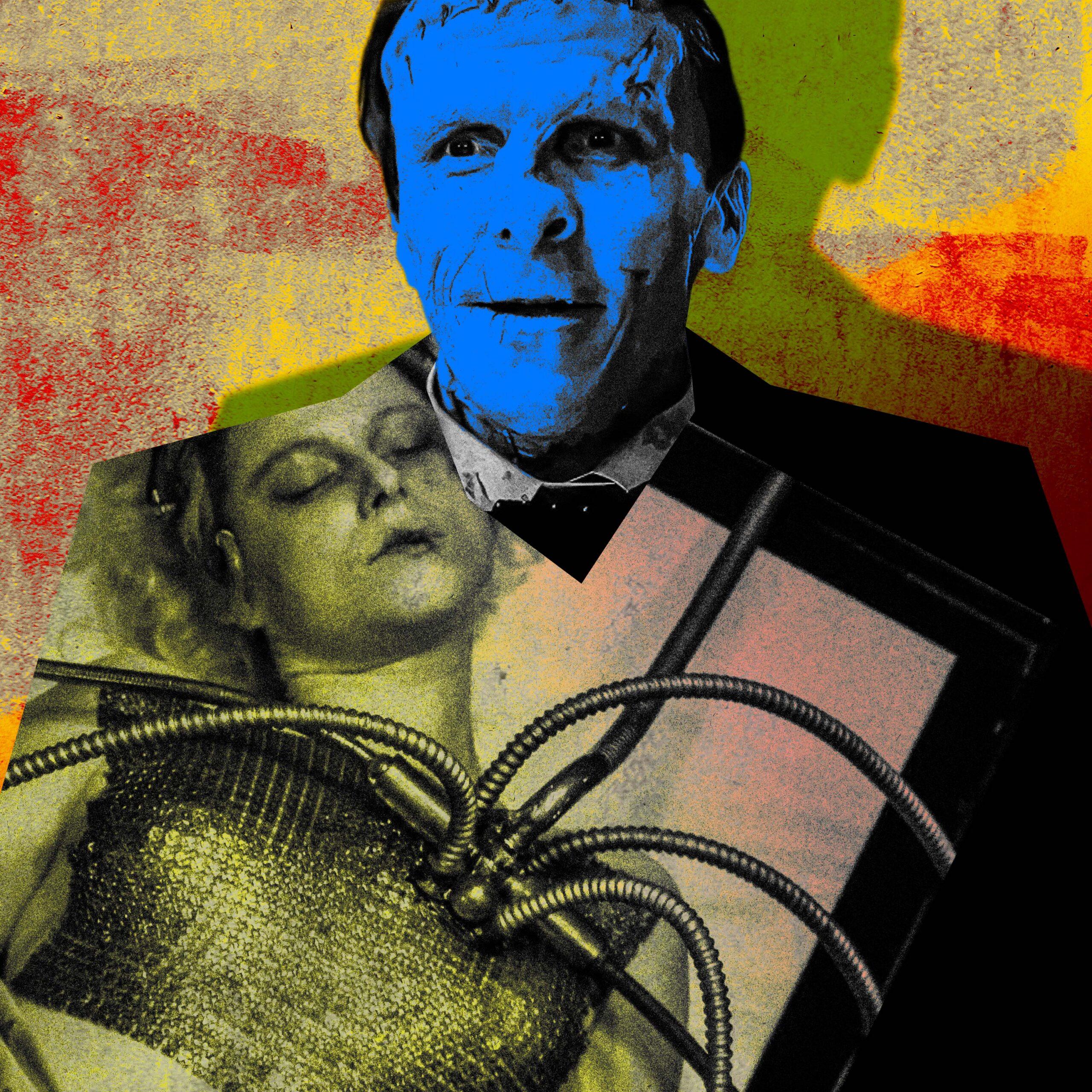
Early on in The Bride!, a bulbous, lumbering figure (Christian Bale) who is calling himself Dr. Frankenstein but is pretty obviously the late physician’s creation pays a visit to a different mad scientist: one Dr. Cornelia Euphronius (Annette Bening), a Chicago-based experimenter with her own ideas about creating life out of death. Euphronius, who writes under a male pseudonym in order to be taken seriously, has a word for her mandate as an amateur reanimator: “invigoration.”
Whatever else one can say about Maggie Gyllenhaal’s postmodern Prometheus riff—easily the strangest big-studio release of 2026 so far, and unlikely to find many rivals as the year goes on—it is a film written, directed, and acted under the sign of invigoration. Maybe to a fault: Just as Emerald Fennell’s Wuthering Heights actively cultivates the scare quotes around its title, The Bride! chases its exclamation point for two hours. It’s a joyride that’s only intermittently joyful, a movie on the verge of battery failure that’s been hooked up to a set of jumper cables.
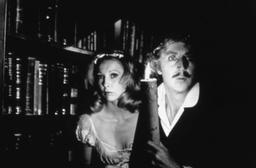
That coruscating electric charge—and resultant life force—has been essential to the Frankenstein myth ever since Colin Clive screamed “It’s alive!” in James Whale’s 1931 version, which brought the creature and its creator into the postindustrial age. Gyllenhaal knows that and has styled The Bride! accordingly. Where Guillermo del Toro’s recent deluxe treatment of the story peddled revision under the guise of reverence—including and especially in its reluctance to let Jacob Elordi’s soulful creature ever really get his pale hands dirty beyond murking some CGI wolves—her film represents something more ambitious: an attempt to test the tensile strength of the source material, to stretch and bend it in unexpected (and maybe ill-advised) directions. The Bride! is less an adaptation of Mary Shelley’s seminal Gothic novel than it is a meditation on her authorship—a focus that is surely fascinating in light of Gyllenhaal’s own freewheeling artistic ambitions. This strange, ungainly, genre-bending hybrid is not a movie that anybody asked her to make.
It’s also one that a lot of people will not like. Which is fair enough. Still, there’s something to be said for combining a lavish budget with a lack of ingratiation. It’s tempting to invoke Joker as a model here, but Todd Phillips’s film took itself (and its subversive agenda) so seriously that it became oppressive; Gyllenhaal, at least, seems to be having a good time. Drawing freely from a vast store of vintage and unofficial Frankenstein narratives—as well as from old Hollywood gangster pictures, Busby Berkeley musicals, and honeymoon-killer classics like Bonnie and Clyde and Natural Born Killers—she makes her own eccentric claim to well-trod pop cultural terrain. It’s nice to see a filmmaker trying to surprise her audience as well as herself. Her 2021 debut feature, The Lost Daughter, was moody, controlled, and faithful to the writing of Elena Ferrante; for these virtues, it was duly Oscar nominated for its writing and acting. The Bride! won’t be in next year’s awards season conversation, and it isn’t trying to be. Instead, it’s aiming for prefab cult status, which may not be noble either but at least has the benefit of splitting the proverbial crowd rather than pleasing it.
The common denominator between The Bride! and The Lost Daughter is Jessie Buckley, cast here in what amounts to a triple role. Her wisecracking version of Mary Shelley is introduced occupying her own chiaroscuro corner of limbo, seething about her truncated life and legacy while playfully rapping her knuckles against the fourth wall; she’s a vengeful figment of the popular imagination. From there, Buckley gets to play a pair of Mary doppelgängers: the exhibitionistic, Depression-era party girl Ida and her eponymous, posthumous alter ego. The idea—which is admittedly pretty novel for an arty, stylized studio genre movie—is that Mary seeks to possess Ida, Pazuzu-style, so she can engage with the present (in this case, the 1930s) and channel a sequel to the novel that made her world-famous. It’s a setup in sync with the famous framing device of James Whale’s 1935 masterpiece, The Bride of Frankenstein, which Gyllenhaal clearly admires even as she resists copying it outright. For instance, it must have taken considerable restraint not to outfit the Bride with Elsa Lanchester’s proto–Marge Simpson hairdo; instead, Buckley’s character has been modelled on Jean Harlow, platinum on top with smeared, bile-black lipstick.
Mary’s puppeteering of Ida doesn’t go according to plan; after getting drunk and frisky in public at the behest of some obnoxious mobsters, she ventures too far with her wild-woman act and gets offed at the order of the local godfather (Zlatko Burić). The big boss’s surname, Lupino, combines with Ida’s given name to pay tribute to Hollywood’s first (and toughest) actress turned auteur. The script for The Bride! has been stitched together, exquisite corpse style, out of such trivia, and the density of the references is impressive. Gyllenhaal leverages our familiarity with Frankenstein’s basic story line and metaphysical themes against a skeezy, fractured-fairy-tale style that’d be more engaging if it weren’t so obviously derived (or hijacked) from recent Yorgos Lanthimos; without fail, Buckley’s dazedly horny performance as the Bride, who can’t remember anything about her life before she got tossed down the stairs—and is suggestible enough to buy Frank’s story that they’re already an old married couple—evokes Emma Stone’s Oscar-winning, grasping-succubus shtick in Poor Things.
Because The Bride! is arriving in theaters a couple of weeks before the Oscars, it’s tempting to place Buckley’s strategically unhinged performance in the tradition of Eddie Murphy’s much-maligned turn in Norbit, which conventional industry wisdom suggests may have cost him a potential Best Supporting Actor statuette for Dreamgirls. But Murphy was great in Norbit, and Buckley is fine as the Bride, even if her motormouthed line readings and rapidly oscillating accents (variously British, Brooklynese, and unintelligible) occasionally suggest Kate McKinnon on Saturday Night Live. On the whole, she’s at least as compelling here as she was in Hamnet, and she frankly has better chemistry with Christian Bale than Paul Mescal.

More on the Unkillable Frankenstein Movie
Bale always gives 110 percent, but there’s a little more elbow grease in his acting here than in, say, Thor: Love and Thunder. He’s touching when Frank talks about his loneliness (“among other things,” he sighs when Euphronius asks him if he’s missed out on sex so far) and somehow survives Gyllenhaal’s most cloying conceit, which is that Frank longs to be a dapper song-and-dance man like the fictional musical comedy star Ronnie Reed. The latter is embodied by Jake Gyllenhaal, clearly chuffed to be doing his older sibling a solid in an extended cameo; meanwhile, the investigator charged with pursuing the monster and his bride as they joyride/murder their way across the United States is played by
Maggie Gyllenhaal’s husband, Peter Sarsgaard. His part seems beamed in from an entirely different movie, while, as his assistant, Penélope Cruz seems bemused and baffled by her own participation in the project.
The presences of these and other familiar faces in The Bride!’s large cast—why yes, that is Jeannie Berlin in pancake makeup as Dr. Euphronius’s deadpan live-in maid—give the movie the feeling of a fancy Halloween dress-up party, or maybe an extended in-joke that forces us to decide whether to laugh at it, with it, or behind its back. Such tonal ambiguity is captivating, but it only goes so far; the downside of Gyllenhaal’s wild toggling between modes and tones is that there’s no coherence to the proceedings. Like grave robbing and postmortem electrocution, invigoration is not an exact science, but, if anything, The Bride! could have been more shocking. It wants us to buy its (anti)heroes as both white-hot lovers and tragic, dangerous fugitives but then treats their sex scenes tepidly—like JV Cronenberg, with glimpses of scar tissue but hardly any skin—while their body count comprises only not-so-innocent bystanders and dangerous, hateful rapists. The subplot by which the Bride becomes a feminist trailblazer, complete with a Lady Gaga–style clique of vengeful, righteous copycats, pushes allegory bluntly rather than teasing it out; a bit where Buckley intones the words “me too” several times in a row lands sharply and clumsily on the nose. By the time the script has convened all of the characters, living and undead, for a boring apartment shoot-out, it’s as if the filmmakers have simply gotten lost. In looking for an off-ramp for her swerving, kamikaze movie, Gyllenhaal winds up taking the easy way home. Kudos, though, for the final needle drop, which is so ridiculous that it loops back around to being inspired.