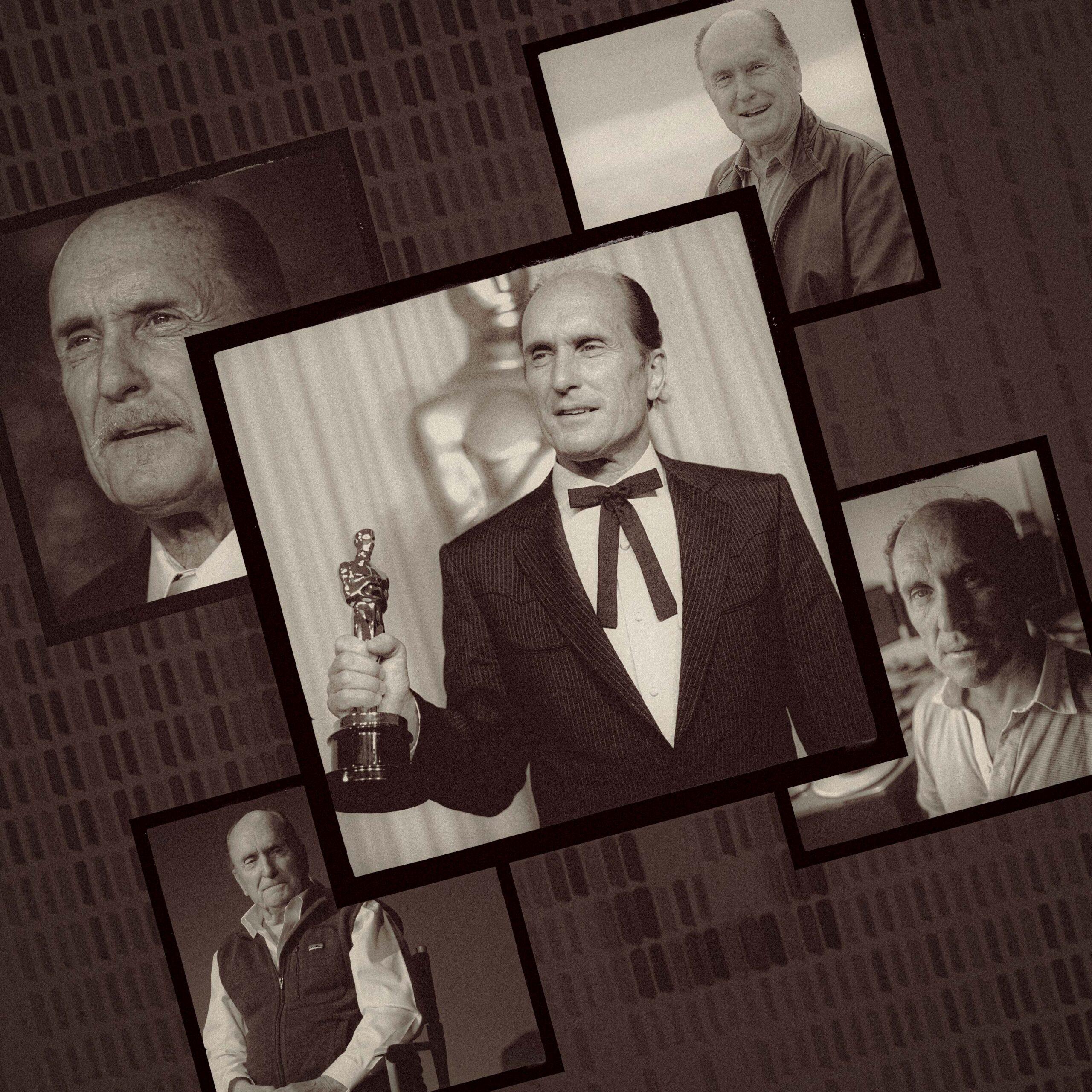

Maybe the most startling thing about the news that Robert Duvall died on Sunday at the age of 95 is that Robert Duvall was 95. On-screen, he was middle-aged for so long—like Meryl Streep, he seemed to spend about 30 years in his 40s—that it was hard to imagine him as an elderly man, even if, had you stopped to think about it, you must have known he was one. As an actor, he excelled at portraying a nuanced, complicated maturity, a quality poised between old and young. His characters were often strong, but with a strength chastened by experience; they were sometimes wise, but with a hard-won, private wisdom, one they themselves knew might fail them at any moment. They’d let people down in the past, and that was why you could trust them not to let you down now. (Although there were no guarantees; they might let you down anyway.) They’d been hurt and learned to live with it. They still had a twinkle in their eye, but it took some determination to keep it there. They were in process. Behind their mischievous smiles, there was complicated weather.
Like Jack Nicholson, Gene Hackman, and Dustin Hoffman, Duvall was an actor most associated with the 1970s, ’80s, and ’90s, but also like his three contemporaries, he was on the far side of 30 when he got famous. This gave him a strange quality of generational displacement: He was a month older than James Dean but seemed to belong to an entirely different era. He was born during Prohibition, in 1931, and would have been the right age to work at Mad Men’s Sterling Cooper, although he’d never have fit in. After growing up as a navy brat—his dad retired as a rear admiral—he got a theater degree from Principia College in 1953, then disappointed his family by enlisting in the army; he never made it past private first class, but he did get to act in amateur productions around the base.
After a year, he left the military and made his way to New York, where he studied acting via the GI Bill under the legendary teacher Sanford Meisner. His classmates included Hackman and Hoffman, both of whom he roomed with at one time or another, and also James Caan, his future Godfather costar. For money, Duvall sorted mail at the post office and clerked at Macy’s. For a while, he drove a truck. He did plays, first on Long Island, then off-Broadway, then on Broadway. In the late ’50s, he started getting TV work, and in 1962, when he was 31, he appeared in his first movie, To Kill a Mockingbird, playing Boo Radley opposite Gregory Peck’s Atticus Finch.
He worked steadily after that, although it was another 10 years before he really broke through. In Bullitt, he played a cab driver who gave Steve McQueen a lift. As a lowlife gunslinger in 1969’s True Grit, he got off one of the sickest burns anyone ever landed on John Wayne—“I call that bold talk for a one-eyed fat man”—before dying in the ensuing gunfight.
In 1970, he played an asshole major in Robert Altman’s M*A*S*H*. (Not the last time he’d excel as a power-drunk military officer.) In 1971, he starred in George Lucas’s first movie, the dystopian sci-fi drama THX 1138, made when Lucas was just 25.
And, yes, it’s transcendently weird that plainspoken, down-to-earth Robert Duvall ever did science fiction; it’s also fun to imagine what Star Wars might have looked like if Lucas had brought Duvall on board along with Harrison Ford, another early Lucas collaborator who seemed all wrong for the genre. (Duvall and Ford later appeared together in Francis Ford Coppola’s The Conversation; Duvall played a corporate bigwig, Ford his assistant.)
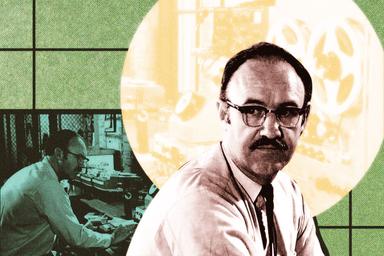
The pivotal moment in Duvall’s career came in 1972. As Tom Hagen in Coppola’s The Godfather, he found a part perfectly suited to his gift for conveying unsettled nuance. The consigliere of the Corleone crime family is an insider and an outsider, a powerful man and a supplicant, all at the same time. He’s high up in the family hierarchy, but only as an adviser, not as a leader; he’s a quasi-adopted son of Don Corleone, but he’s also an Irish orphan, not truly part of the Italian family. He’s a man of reason surrounded by men of violence. He loves Sonny Corleone as a brother while also clearly seeing Sonny’s shortcomings as a possible successor to his father. And Duvall’s quietly thrilling performance finds every contour of Hagen’s charged uncertainty. Watch how he clamps down on his own outbursts of feeling, the mark of a man who’s spent his whole life treading carefully; look at the calculation in every plane of his face.
The role brought Duvall his first Oscar nomination, and if you want a quick look at the absolute chaos that The Godfather brought to the acting categories at the 45th Academy Awards, consider that three of the five nominations for Best Supporting Actor, Duvall’s category, went to actors from Coppola’s film. Marlon Brando, despite having less screen time than Al Pacino, was nominated for, and won, Best Actor. Pacino, the clear star of the film, was nominated in the supporting category against Duvall and Caan; Pacino boycotted the ceremony in protest, and the award, inevitably, went to Joel Grey for Cabaret.
Duvall didn’t win the Oscar, but it didn’t really matter; he was acclaimed, and beloved, for the rest of his life. And the classic movies kept coming. He reprised Tom Hagen in The Godfather Part II. He played the frightening but iconic Lt. Colonel Kilgore in Apocalypse Now, where he delivered one of the most memorable speeches in movie history, the speech that included the line—well, you know what line I mean.
He played difficult men who knew they were difficult, were generally a little proud of being difficult, and either loved their difficulty, like Kilgore, or tried their damndest to rein it in. Jack Nicholson also excelled at playing difficult men, but Nicholson turned obstinacy and resentment into a protest: The world was stupid and corrupt, and the only way to keep your soul alive was to refuse to submit to it. For Duvall, the obstinacy and resentment came from within: The world might wrong his characters, but they wronged it in return. Surviving meant repairing the relationship, which in turn meant overcoming their own worst qualities. As the down-and-out former country music star in 1983’s Tender Mercies, for instance, he found a way to balance the longing for redemption with the unruly energies from which he needed to be redeemed. (The part won him his first Oscar, this time for Best Actor.) In the 1989 TV miniseries Lonesome Dove—his favorite of all his performances, and also mine—he played the aging Old West lawman Gus McCrae, an ornery, selfish, silver-tongued rascal who’s been around long enough to see the world change around him. Stick this clip out to the end; listen to the mournful irony he packs into the line “Here’s the sunny slopes of long ago.”
Like Gus, Duvall kept going; the world changed, Hollywood changed, but he never turned in a bad, or even a forgettable, performance. He’d show up when you least expected him: as Joseph Pulitzer in 1993’s Newsies, as Billy Bob Thornton’s abusive father in 1996’s Sling Blade. In 1997, he was nominated for another Best Actor Oscar for his portrayal of a charismatic preacher in The Apostle; he was up against his old friend Dustin Hoffman and lost to Jack Nicholson, for his role as the difficult man in As Good As It Gets. Duvall kept going, but time catches up with you eventually; he celebrated his 95th birthday on January 5 and then died peacefully at his home a little over a month later.
Every great actor brings a unique essence to the screen, one that distills a distinct aspect of human experience: Cary Grant’s graceful elegance, Humphrey Bogart’s slow-mouthed toughness. When a great actor dies, it’s hard not to feel, at least at first, that we’ve lost not just the person, but the whole principle of human nature they helped us understand. We haven’t, of course—it belongs to their work, which they left with us—but it seems that way for a while. Duvall’s essence was found in the flicker between mischief and sorrow, between the hope of overcoming the past and the longing to return to it. And maybe I’ve just been watching too many clips of his movies, but I’m torn between gratitude for what he showed me and sadness that he won’t do it again. Here’s to the sunny slopes of long ago.