
It doesn’t matter what a filmmaker’s résumé looks like: If they string together enough flops, they’re liable to land in “director jail,” the dreaded vocational abyss in which studios no longer trust them with projects. (Some filmmakers always seem to escape director jail, no matter how many times their movies bomb; what’s the secret, Robert Zemeckis?) While it’s possible to spring free from director jail, such an endeavor typically requires making the most of smaller budgets, as M. Night Shyamalan did with The Visit and Split. It’s an intriguing predicament, then, when a director accustomed to working with vast resources finds themselves on the outs.
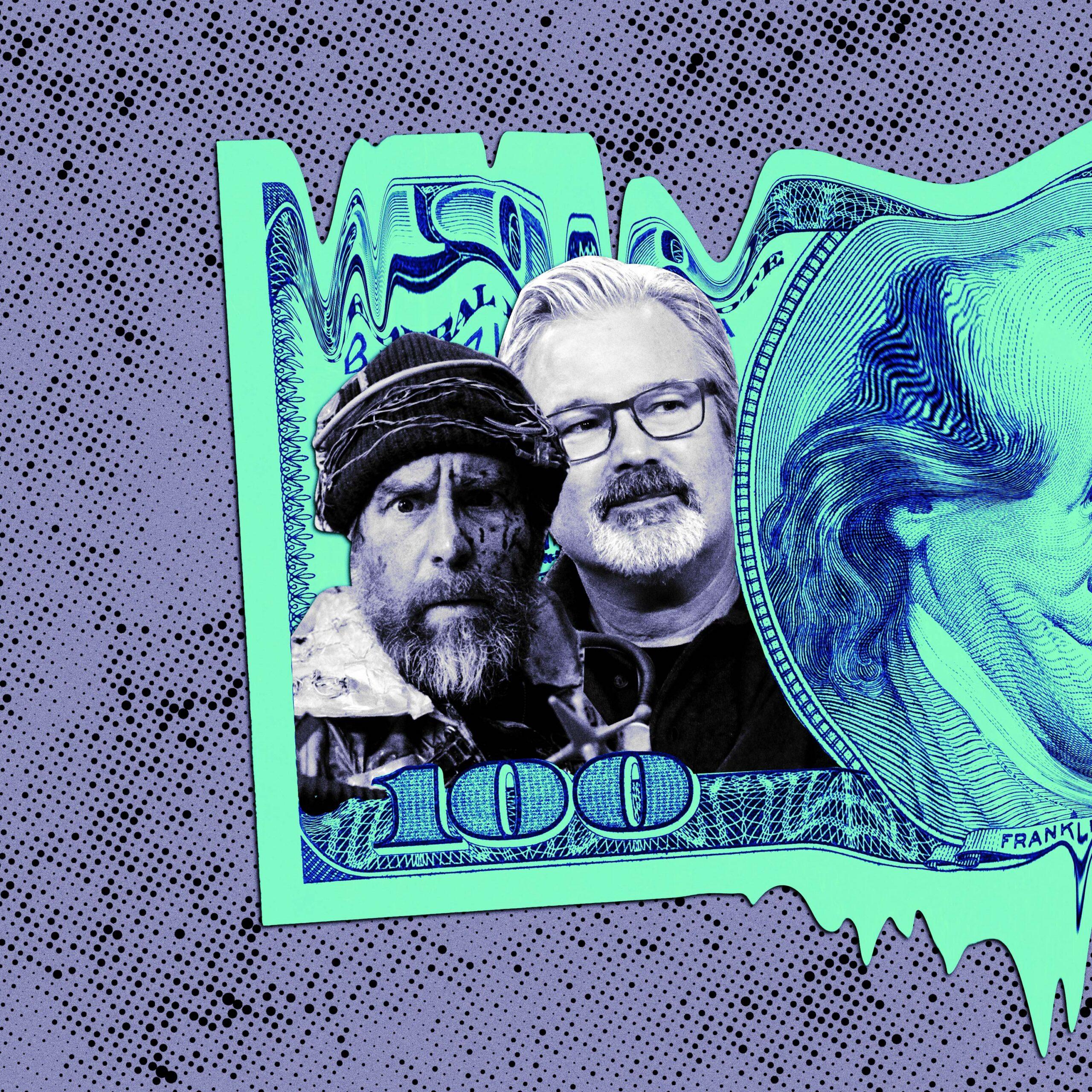
As one of the 30 highest-grossing directors of all time, Gore Verbinski was the architect behind a beloved Japanese horror remake, a successful Disney blockbuster trilogy, and an Oscar-winning animated Western. Over the past decade, however, Verbinski’s been MIA after the one-two punch of The Lone Ranger and A Cure for Wellness, both of which bombed at the box office. Now, Verbinski’s finally back with Good Luck, Have Fun, Don't Die, an absurdist sci-fi action comedy about a disheveled man from the future (Sam Rockwell) recruiting six patrons from a Los Angeles diner to stop a rogue artificial intelligence from taking over the planet.
With an irreverent tone cut from the same cloth as that of Everything Everywhere All at Once and the best of Black Mirror, Good Luck throws a bit of everything at the viewer: teens becoming literal zombies because of their phones, a burgeoning industry that allows parents to clone their children at a subsidized rate if they’re killed in a school shooting (score an even bigger discount if you’re willing to let the clone do a daily ad read), death by meat thermometer, and a giant CGI cat made up of [checks notes] a bunch of tiny kittens, glitter, and a very visible penis. It should come as little surprise, then, that Good Luck hails from outside the studio system—the kind of film that rails against AI by producing a WTF collection of images no algorithm could ever devise.
It’s not a flawless work of art, but Good Luck encompasses what makes Verbinski such a unique auteur, possessing the eccentric grandeur of someone who prefers to color outside the lines, even if it means provoking audiences. Unfortunately, that sentiment is increasingly out of step with a blockbuster landscape that’s become more homogeneous and market-tested since Verbinski’s heyday. That Verbinski is—for now, at least—plying his trade away from Hollywood raises a larger question: What happens to filmmakers whose big-budget ambitions remain intact even as the systems built to support them are on shaky ground?
Six years before Disney acquired Marvel, the studio took a gamble on turning a theme park attraction into its first PG-13 film. While Pirates of the Caribbean: The Curse of the Black Pearl can still be categorized as family-friendly entertainment, Verbinski, fresh off an acclaimed adaptation of The Ring, didn’t shy away from some genuinely frightful imagery, with the Black Pearl’s ill-fated crew transforming into skeletons in the moonlight. In these moments, The Curse of the Black Pearl pushed up against the boundaries of what a Disney movie could be, unsettling audiences as much as it entertained them. The fact that The Curse of the Black Pearl was expected to be another high-profile failure from Disney—to the extent that former CEO Michael Eisner wanted to shut down production after Mission to Mars and The Country Bears bombed at the box office—made its success all the more rewarding. It became the fourth-highest-grossing movie of 2003 and kick-started a multibillion-dollar franchise that, if we’re to believe recent rumors, still has some wind in its sails.
But while the first Pirates is the most celebrated film in the series, what Verbinski brought to the table is most evident in the sequels. Shot back-to-back as the most expensive movies ever made at the time of release, Dead Man’s Chest and At World’s End are, by Verbinski’s own admission, what happens when Disney doesn’t have much time for creative oversight. The result: Lovecraftian monsters devouring an entire ship’s worth of victims and shoving their tentacles in someone’s orifices, plus sequences combining state-of-the-art CGI with some old-school Buster Keaton slapstick. It’s the epitome of controlled chaos. Even a bar fight in Dead Man’s Chest has better staging than damn near every modern superhero movie—change my mind.
If James Cameron, another director accustomed to mammoth budgets, is akin to a technician always on the cutting edge, Verbinski is more like a mad genius who was handed the keys to the Magic Kingdom. Dead Man’s Chest and At World’s End might have earned mixed reviews, but if you vibe with Verbinski’s delirious cocktail of horror, action, comedy, and romance, there’s nothing else quite like them. Not for a lack of trying, though: After finishing the trilogy, Verbinski double-dipped in the Western genre with some Pirates-coded mayhem. The first effort, Rango, was an animated Chinatown homage by way of an anxious chameleon accidentally landing in the Mojave Desert. Freed from the constraints of live-action filmmaking, Rango sees Verbinski deliver jaw-dropping set pieces—none more memorable than a canyon run scored to “Ride of the Valkyries”—that unleash his cartoonish sensibilities onto an appropriate canvas.
Then, regrettably, came The Lone Ranger. Verbinski’s next—and ultimately final—Disney blockbuster, The Lone Ranger was saddled (sorry) with production setbacks due to its ballooning budget, and that bad buzz carried over into the film’s release. But while I wouldn’t blame anyone for not being eager to revisit a movie starring Johnny Depp and Armie Hammer, The Lone Ranger is better than its reputation would lead you to believe. The film is needlessly boated, and Depp’s casting as a Native American is inherently problematic. The extended train sequence at the end of the movie, however, is some of the most impressive action filmmaking of the 21st century and is worth the price of admission alone.
While The Lone Ranger has its champions, including Quentin Tarantino, the film’s commercial failure marked the end of Verbinski’s creative collaborations with Disney, which, with every derivative sequel coming out of the Marvel assembly line, feel more and more like wonderful aberrations. But if The Lone Ranger isn’t the kind of movie that’s typically destined for cult status, Verbinski’s last feature, A Cure for Wellness, couldn’t be anything but. A psychological-cum-gothic horror film about a sinister wellness retreat in the Swiss Alps, A Cure for Wellness is gleefully unhinged, testing audiences with its 147-minute running time, gnarly body horror, and social taboos. How anyone at 20th Century Fox thought that a movie in which Jason Isaacs plays a centuries-old baron pumping unsuspecting rich people with eels while planning to impregnate his own daughter would light up the box office is beyond me; the real winners are my fellow sickos reveling in its poor taste.
In the end, back-to-back flops appeared to push Verbinski toward a stint in director jail. He was still being attached to projects—an animated feature for Netflix, an X-Men spinoff movie centered on Gambit—but as more time passed without anything new to show for it, the fear that Verbinski had been tossed in a proverbial cell continued to grow. Obviously, there’s always going to be a push and pull between art and commerce: Verbinski’s eccentricities were indulged as long as his movies satisfied a studio’s bottom line. But it’s also hard to shake the feeling that filmmakers with Verbinski’s go-for-broke ethos are now struggling to even get a bite of the blockbuster cherry, replaced instead by yes-men tasked with shepherding IP instead of shaping it.
The alternative for directors like Verbinski, then, is pursuing projects outside the studio system. We’ve seen Paul Verhoeven, for instance, leave Hollywood behind following his experience on Hollow Man, after which he lamented the “uniformity of American cinema.” Verhoeven isn’t working with the type of budgets afforded on something like Starship Troopers, but his movies remain as caustic, provocative, and formally precise as ever. What’s more challenging is when a director doesn’t want to downsize despite no longer having studio resources. Michael Mann, the dictionary definition of a big-budget auteur, made his latest film, Ferrari, through independent financing and still managed to land a $95 million budget. That’s the exception rather than the norm, however.
For most directors of that ilk, the best option to keep commanding large budgets and creative control is to migrate to streaming, a path taken by directors such as Brad Bird, who will release his first film in eight years on Netflix later this year, and David Fincher post–Gone Girl. (Another iconic auteur, Nancy Meyers, should’ve been making her next rom-com at Netflix, but it pulled the plug over budgetary concerns; thankfully, she’s finally planning to start production on a new project this year at Warner Bros.) But streaming ultimately represents a work-around—not a solution—for filmmakers who once operated comfortably at blockbuster scale, especially those who cherish the theatrical experience.
Of course, not every director with big-budget ambitions is forced to choose between exile and adaptation. A select few can sell projects on the strength of their name alone—Christopher Nolan, Steven Spielberg, Tarantino, Jordan Peele, and, more recently, Ryan Coogler—and give hope that audiences are still craving something they haven’t seen before. In my ideal universe, Verbinski would join their ranks, but perhaps someone whose latest movie is marketing him like this was always going to fall out of favor with major studios:
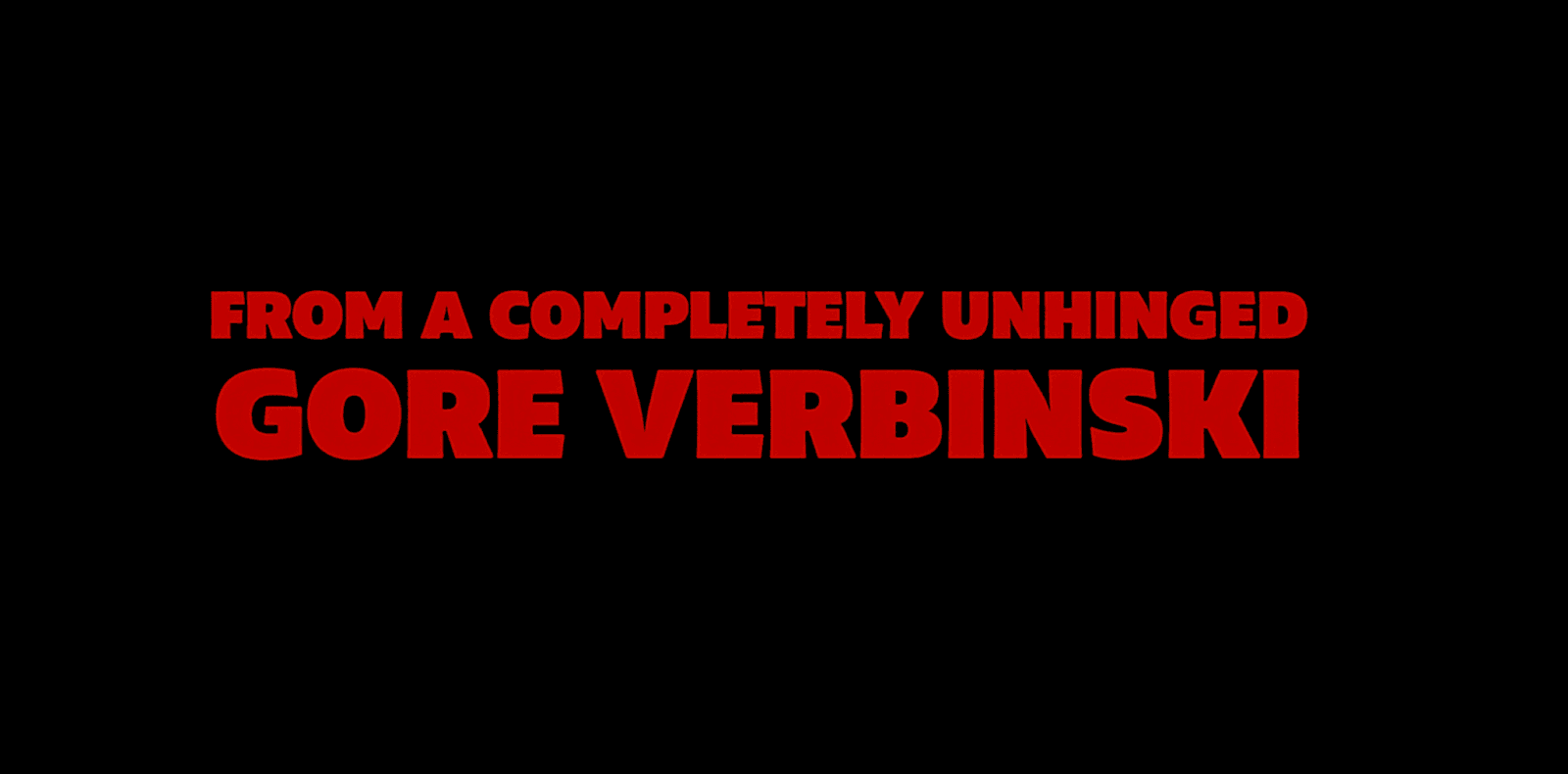
On the one hand, Verbinski’s return to filmmaking after a nine-year hiatus feels meaningful in its own right. But for a maximalist whose career is full of indelible imagery and daring set pieces, you can’t help but mourn the absence of the type of resources that allowed his “completely unhinged” imagination to run wild from Mouse Hunt to the House of Mouse. That’s ultimately what the characters in Good Luck, Have Fun, Don’t Die are fighting for; the film is concerned not just with defeating AI but with preserving human ingenuity in all its messiness, excess, and idiosyncrasy. If that sentiment is worth celebrating in a scrappy sci-fi oddity, it’s hard not to wish we made more room for it in our biggest movies, too.