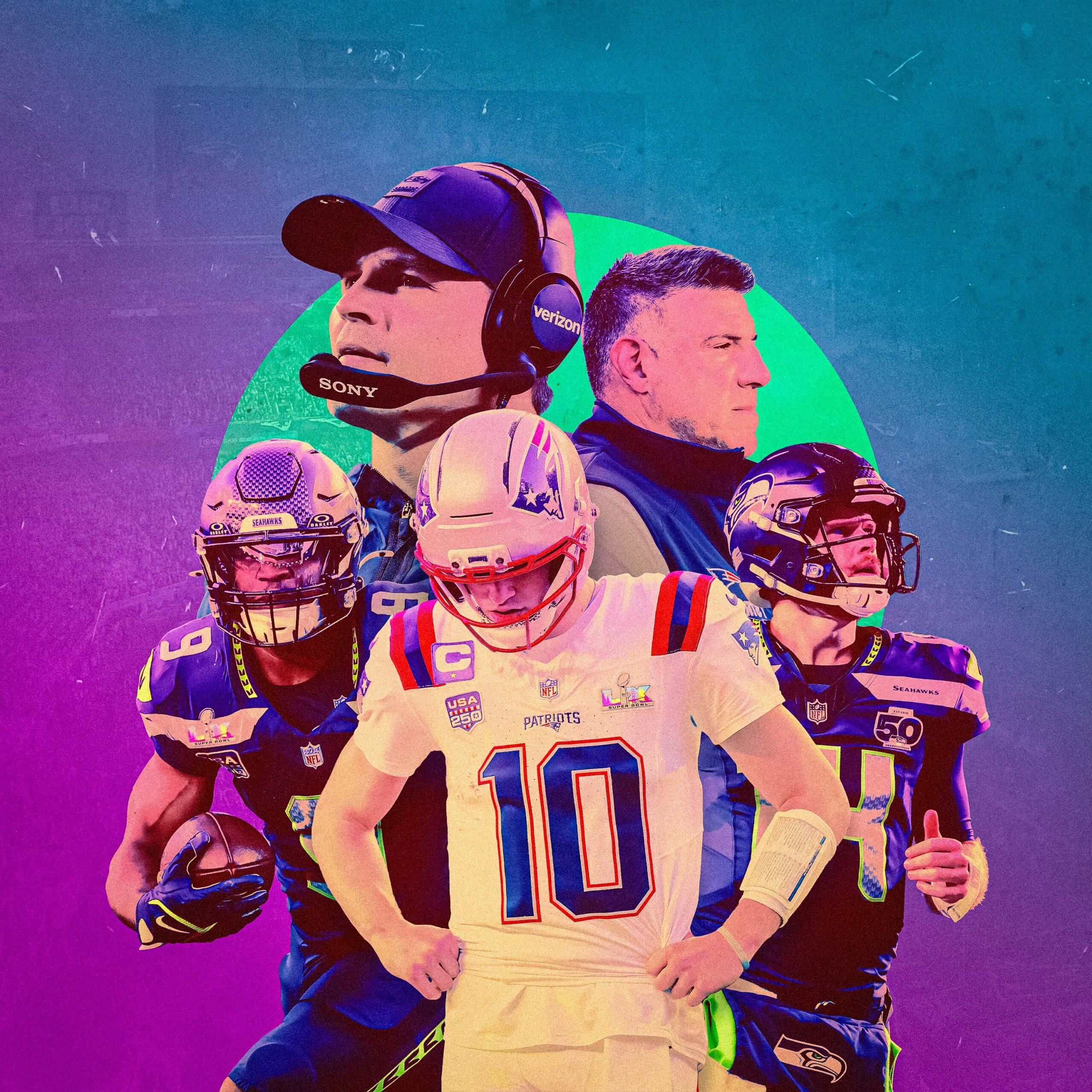

Every week this NFL season, we’ve broken down the highs and lows—and everything in between—from the most recent slate of pro football. In Super Bowl LX, Sam Darnold overcame his career demons, the Seahawks defense smothered Drake Maye, and the Patriots offense couldn’t find any answers. Welcome to Winners and Losers.
Winner: Sam Darnold
The talent gap between Seattle and New England was clear even before the two teams took the field at Levi’s Stadium on Sunday, but the Patriots had a clear path to victory: get Sam Darnold to mess up in typical Sam Darnold ways. Just about every piece of analysis entering the game included some version of the same line: The Seahawks should win comfortably, but if Darnold throws a pick or two …
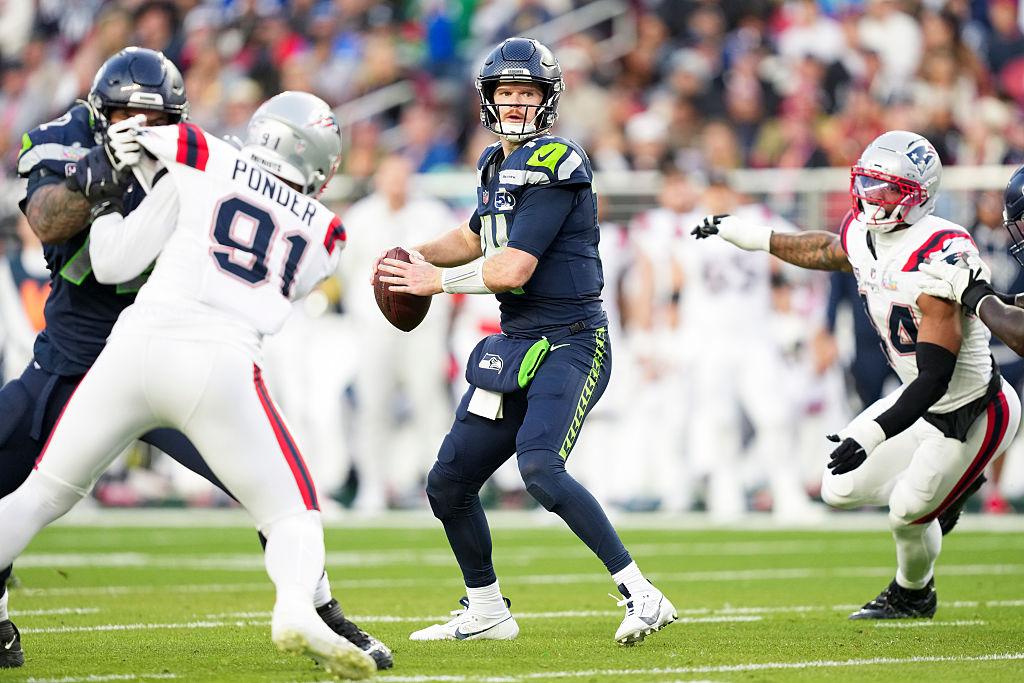
That’s been the line of thinking on this Seattle team for pretty much the entire season. The Seahawks checked every championship box outside of “trustworthy quarterback,” and during the back half of the season, the Darnold-based skepticism was justified. He led the NFL in turnovers and threw as many picks as touchdowns over the final nine weeks of the regular season. And only five quarterbacks ranked below him in EPA per game during that stretch, per TruMedia. The Darnold doubt wasn’t the result of stubborn thinking or clinging to priors. The Seahawks’ passing game was decidedly not good down the stretch, and Darnold played some shaky football.
It felt like Darnold’s first season in Seattle, which had started so well, was mirroring his breakout campaign in Minnesota—one that ended with two high-profile stinkers, including a nine-sack game in a wild-card round loss to the Rams that made it far easier for the Vikings to let him go in free agency. Sure, Darnold was productive playing in Kevin O’Connell’s offense and throwing the ball to Justin Jefferson, but the way things ended reinforced the feeling that Darnold would always be that same quarterback who flamed out with the Jets and Panthers—that if given the chance to implode, he’d take it.
The Seahawks made a $100.5 million bet against that theory last offseason, trading away starting quarterback Geno Smith and replacing him with Darnold. Even through Darnold’s late-season struggles, that looked like the right move—especially as Smith bottomed out in Las Vegas. And after this past month, general manager John Schneider’s gamble looks like a downright genius play. Darnold didn’t just lead Seattle to its second Lombardi Trophy; he did so while not throwing a single interception or losing a fumble, and he took only six sacks across three postseason games. It was a remarkably un-Darnold-like run through these playoffs.
Darnold had plenty of opportunities to make a game-altering mistake on Sunday. The Patriots sent pressure at him in waves early, blitzing him on 70 percent of his dropbacks in the first quarter, per Next Gen Stats.
The pass rush was effective, and the coverage was sound. Cornerback Christian Gonzalez may have been the best player on the field Sunday, and he helped ice Jaxon Smith-Njigba out of the game. Even when the Pats played zone coverages, the defensive backs stuck tight to Seattle’s receivers and forced Darnold to either take a chance on a tight-window throw or seek a safer option underneath. Darnold did a little bit of both, and he picked his spots well. Outside of one ball that Gonzalez got both hands on, the Seahawks quarterback didn’t put the ball in harm’s way on Sunday night. And even though Darnold didn’t light up the box score—he finished with just 202 yards, a touchdown, and a passer rating of 74.7—that zero in the turnover column was the deciding factor in the game.
Darnold has spent this season proving his remaining skeptics largely wrong, but the doubters were right about one thing in the lead-up to Sunday’s Super Bowl: The Patriots needed the old Darnold to show up to have any chance of keeping the game competitive.
Loser: Drake Maye’s Reputation
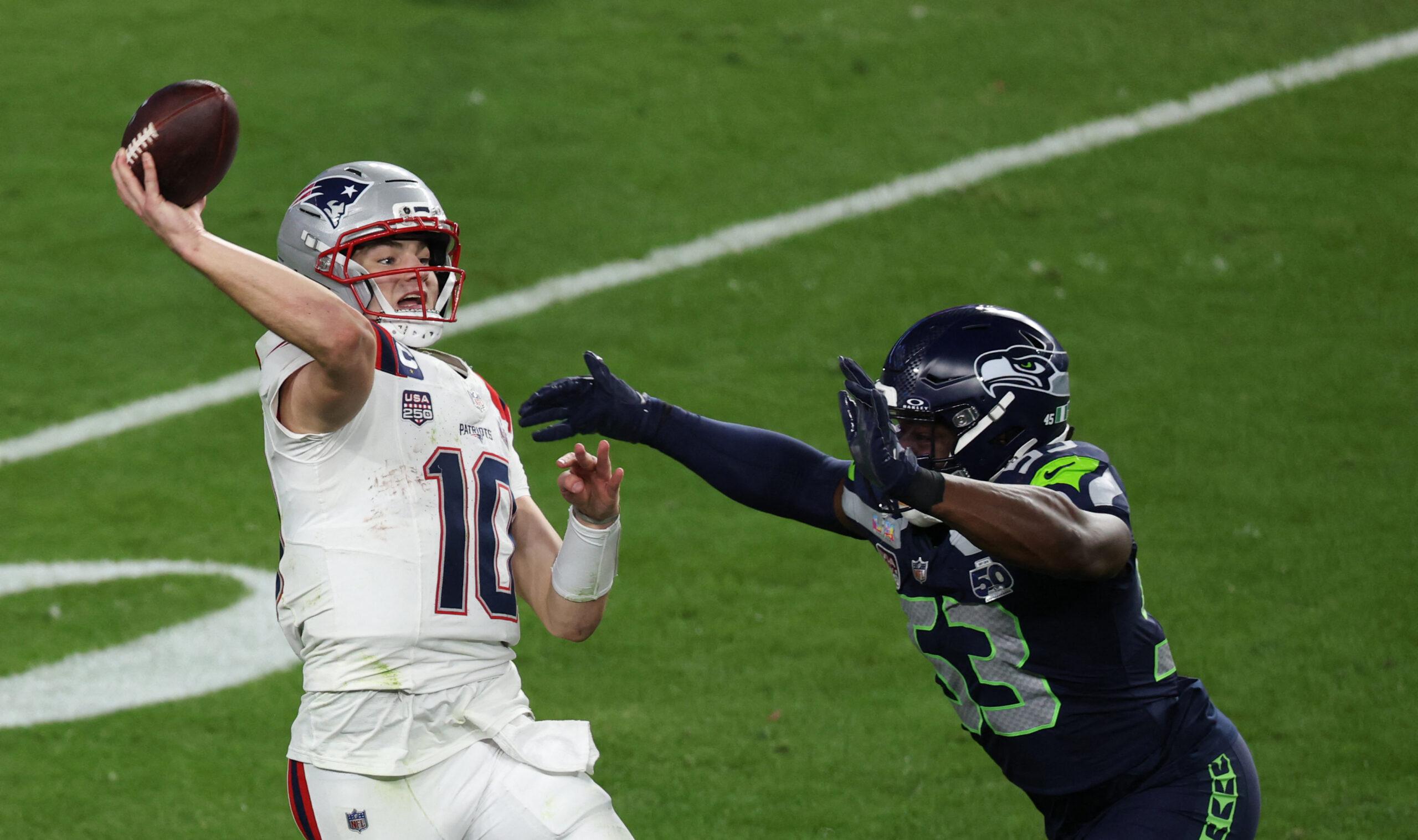
Can we stop for a moment and remember just how good Maye was during the regular season? It’s important we don’t lose sight of that despite the fact that Maye had one of the worst playoff runs of all time. Statistically speaking, it’s the worst of the 21st century. Across four games, Maye’s dropbacks lost a total of 29.6 EPA. That’s more than any quarterback with at least three starts lost during a single postseason and nearly seven points clear of Peyton Manning’s 2015 run, which, prior to Sunday, had been the worst since 2000, per TruMedia. On a more positive note, Maye’s Super Bowl output was only the third worst out of the 52 QB performances we’ve seen in title games this century, beating out Kerry Collins’s in 2001 and Rich Gannon’s in 2003.
We don’t often see a quarterback’s reputation get damaged by a run to the Super Bowl, but the perception of where Maye stands in the league’s QB hierarchy was a hell of a lot different about a month ago. Even if we give Maye some grace for struggling in miserable weather against the Texans and Broncos defenses, his performance in the Super Bowl will be enough to cast some doubt over what we saw from him during the regular season. Whether that’s fair or not, the young quarterback deserves scrutiny for his performance in the biggest game of his career.
Maye just couldn’t handle Seattle’s pressure. He may have been pressured on only 26.4 percent of his dropbacks, but the Seahawks made it count when they got home, sacking him six times. And Maye lost 43 yards on those sacks, with three that lost 10 yards apiece. He got just six passes off while pressured, completing only two for 39 yards, and averaged 0.5 yards per play. Maye was significantly better when New England gave him a tidy pocket, but he wasn’t as good as he needed to be.
Drake Maye vs. Seattle, Split by Pressure (TruMedia)
Those clean-pocket numbers probably flatter his performance. Maye consistently had trouble seeing the field against a Seahawks defense that can be tricky for quarterbacks to read. He turned down open receivers in order to throw into dangerous windows. His ball placement made things harder on his pass catchers. And he didn’t have a sense of where Seattle’s pressure was coming from—nor did he have a plan to beat it. Even if Maye had been given more support, that sort of effort would have wasted it.
Maye played poorly on Sunday and throughout the playoffs, but I’d push back against the idea that he’s been “exposed” over the past month. If anything’s been exposed, it’s the Patriots’ offensive depth chart. The offensive line is an issue, whether it’s being asked to protect Maye or clear out rushing lanes for running backs. The receiving corps was better than anyone expected, but it still lacks speed and playmaking after the catch. The holes weren’t nearly as obvious when New England played against teams like the Jets and Dolphins, but they were impossible to ignore against playoff-level defenses. The difference between the 13-win Pats and those crappy teams they beat up all season was the play they got from their respective quarterbacks. Outside of that, those were fairly even matchups.
Maye deserves criticism for his play during his first taste of the postseason, but we don’t need to relitigate the season he just had. Trust your eyes and everything you watched him do over the past five months.
Winner: Defensive-Minded Head Coaches
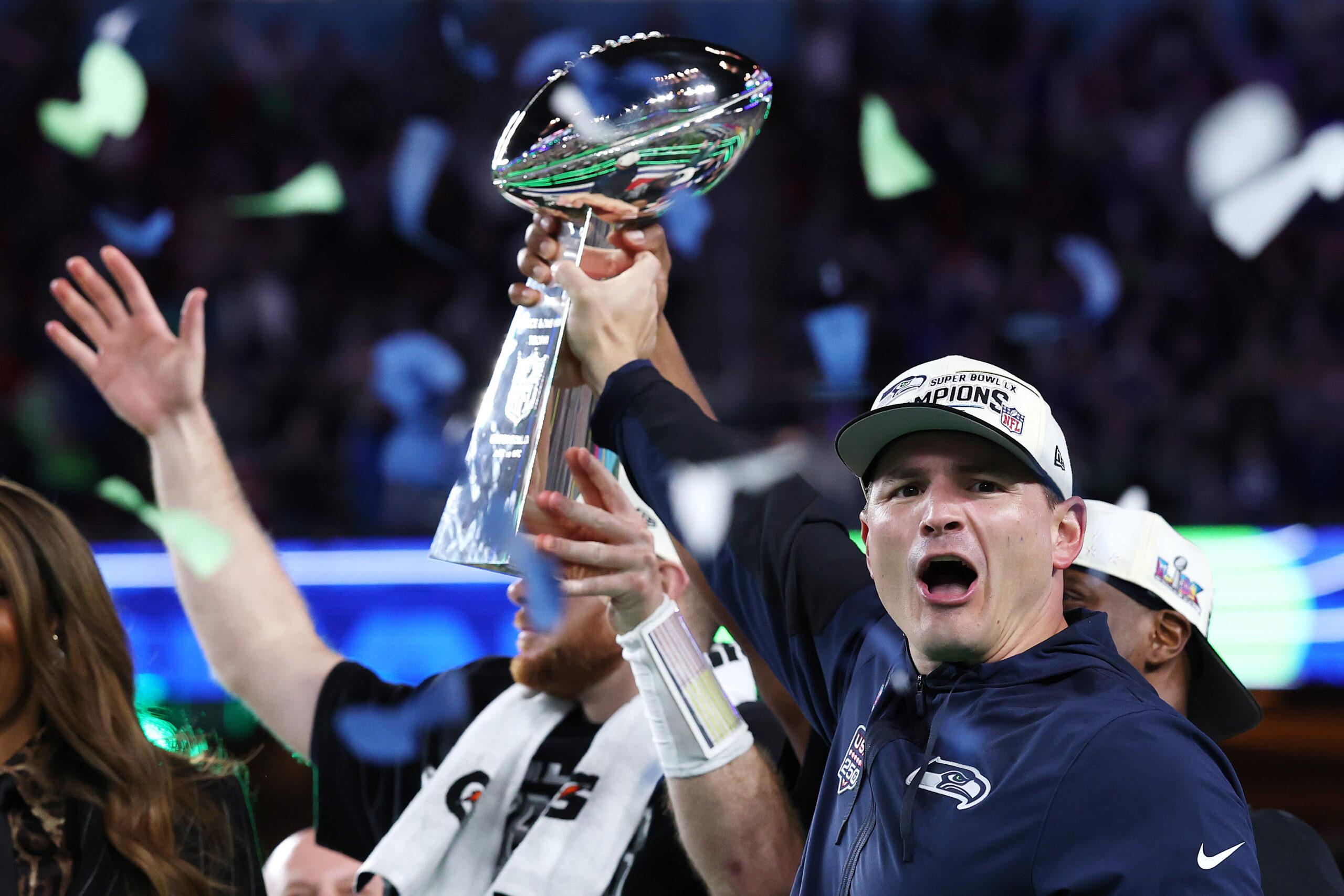
Mike Macdonald has been a defensive-play-calling head coach for only two seasons, and he’s already got a convincing argument for being the best to ever do the two-pronged job: After leading the Seahawks to a 29-13 win in Super Bowl LX, he became the first head coach to lift the Lombardi Trophy as his team’s primary defensive play caller. Even Bill Belichick split defensive game-calling responsibilities during the heyday of the Patriots dynasty.
It’s a remarkable achievement for the young coach, who first called plays as the Ravens defensive coordinator in 2022, and a win for defensive coaches across the league, who have been fighting for more attention in the head coaching job market over the past few seasons. It’s difficult to blame teams for passing over defensive-minded coaches, given the previous 59 years of Super Bowl results. Even if the NFL’s hiring practices aren’t completely merit-based, if something is working for a few teams, others will quickly try to replicate the winning formula. Before Macdonald led Seattle to a title, there was no proof that this model could work. And now there is.
Macdonald’s success will be hard to replicate, though. There isn’t a better teacher in the sport right now. The micro-level complexity of his defense requires intense attention to detail and constant communication between players before the snap. At the macro level, effort is the key to Seattle’s dominance. Getting players to lock in mentally and play hard physically after the snap typically requires a hard-ass approach that eventually wears on a locker room. Macdonald isn’t a drill sergeant, and he doesn’t come off as a Belichickian asshole, either. Seahawks defenders seem to genuinely love playing for him.
“If you have eyes on us in the locker room, at halftime on the sideline, we’re just—we love each other,” safety Julian Love said after the game. “We are constantly messing around. We’re not too serious; we don’t take ourselves too serious. But when that whistle sounds, when we step across those white lines, then it’s focus. And that’s kind of the message of it. It’s like, we’re allowed to have fun. Mike allows us to have fun.”
The locker room vibes are great, and the scheme is perfectly tailored to take on the challenges that modern offenses present. Boxing in the flawed Patriots offense didn’t provide much of a test on Sunday, but the performance from the defense was representative of what this unit has done all season under Macdonald’s watch. New England didn’t have a single explosive run, and Maye completed just one pass over 10 air yards through the first three quarters of the game before some garbage-time stat padding. Even when the Pats were able to move the ball early, they never really threatened to score.
“They might complete a pass here or there,” Love said. “They might break a tackle here or there, but that’s the nature of our defense. We swarm to the ball. We make them line it up and earn it each play. It’s a style thing.”
That’s pretty much how the game went when New England’s offense was on the field. Even when it felt like the Patriots were stringing something together, you’d realize they hadn’t even made it to midfield yet. It was a grind, and that’s a credit to Macdonald.
Loser: Mike Vrabel
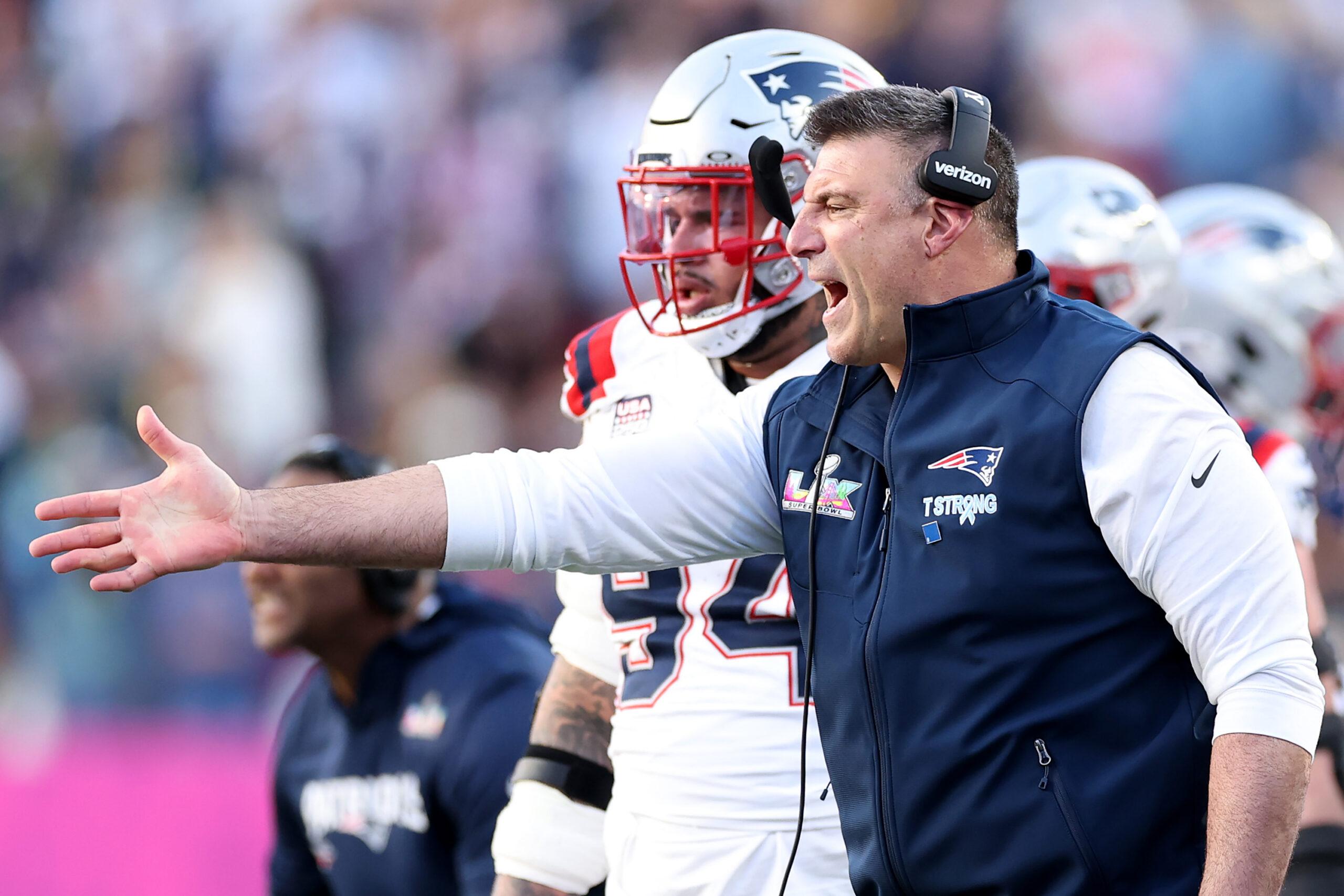
It’s hard to be too critical of Vrabel; his team was simply severely overmatched on Sunday. But Vrabel is the NFL’s king of finding small edges, and he made several tactical errors that would have stood out more had the game been closer. Vrabel’s first big error came in the third quarter with the Patriots facing a fourth-and-1 near midfield and already trailing by two scores. All of the fourth-down models, including those from Next Gen Stats and ESPN, had it as a clear go-for-it situation, but Vrabel sent out his punt unit. While brutally conservative, that decision is somewhat defensible given the mismatch in the trenches. The Seahawks defensive line dominated its matchup whether New England was running or passing.
But there’s no logical explanation for Vrabel’s second blunder. The Patriots scored early in the fourth quarter to cut the lead down to 13. Attempting a two-point conversion and cutting the lead to 11—so that a field goal, a touchdown, and a two-point conversion would have tied the game—wasn’t just the analytically sound choice there; there was no risk in failing on the two-point try. Whether down 13 or 12, New England would have needed two touchdowns with time for only two more offensive possessions remaining in the game. A successful two-point try would have given them a path to tie the game with a touchdown and a field goal. Instead, they elected to kick the extra point to make it 19-7.
The tactical choices reflected the overall approach on offense. The Patriots operated as if their primary objective was to simply survive Seattle’s defense rather than beat it. There were few downfield shots before the game got out of hand late, and there were several times when New England tapped out on a possession after falling behind the chains. The example that stood out most came early in the second quarter with the Seahawks holding a 3-0 lead. On third-and-5 near midfield, the Patriots elected to run the ball rather than giving Maye a chance to move the chains. Rhamondre Stevenson was predictably stuffed for no gain, costing New England 1.6 expected points.
Realistically, making the correct choices wouldn’t have changed the result. We’re talking about a few percentage points of win probability. But that’s not the point. It wasn’t just that Vrabel failed to make the most efficient choices that was so disappointing. It was the fact that the Coach of the Year winner went out so sad.
Winner: Kenneth Walker III
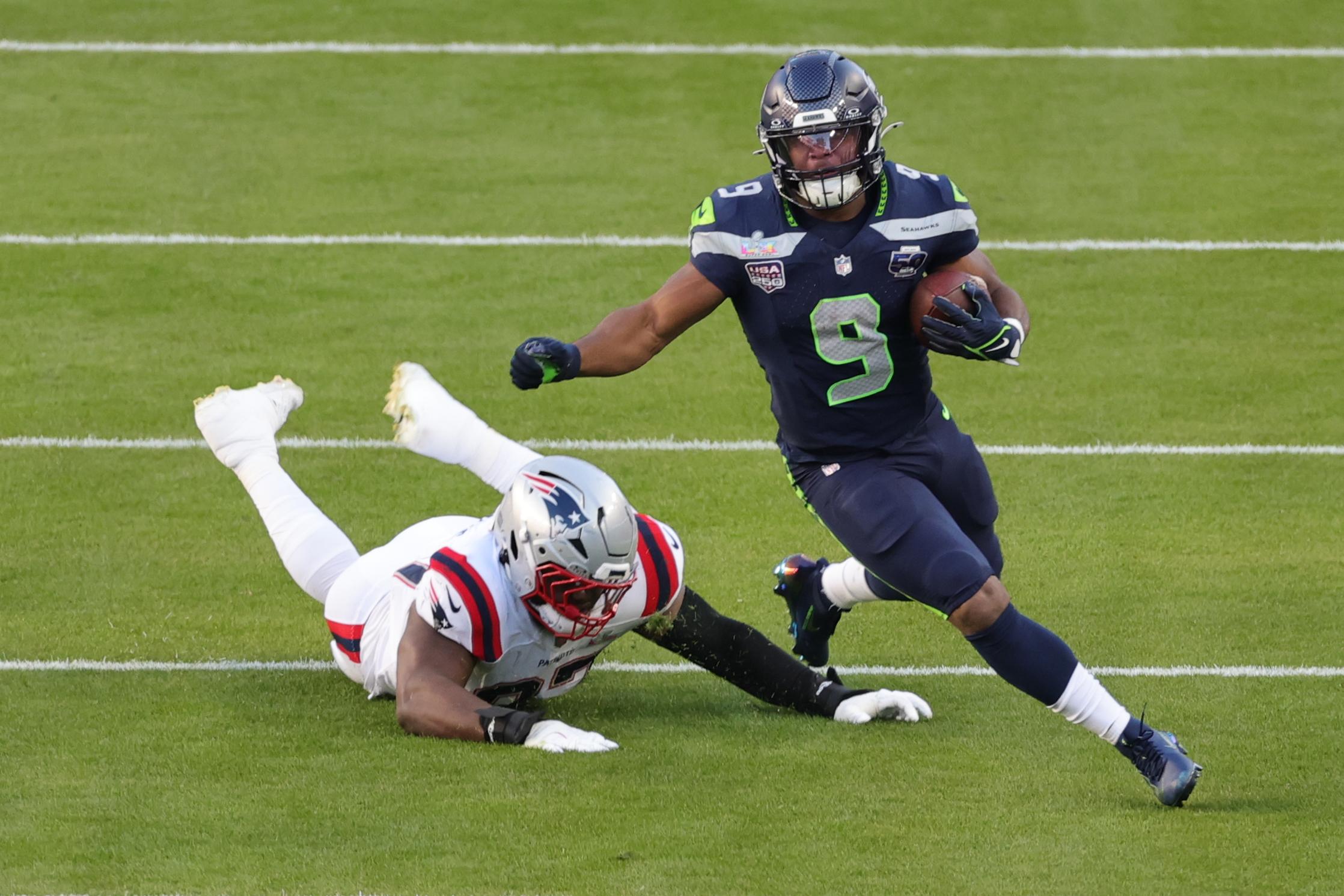
I suppose we should talk about the game’s MVP. It had been nearly three full decades since a running back had won Super Bowl MVP before Walker ended the drought with a 135-yard rushing performance that paced Seattle’s offensive attack all night. If you had never seen the Seahawks running back play before, this was a perfect introduction to Walker’s unique style.
Walker probably drives his coaches mad at times. He rarely takes a direct route to the hole, which makes him a bit of a boom-or-bust runner. Take Sunday’s game: Walker finished with a success rate of just 29 percent, but he had five runs of at least 10 yards, including gains of 30 and 29 yards.
Look at that run! The lateral quickness, the contact balance, and the creativity were all necessary for turning what should have been a drive-killing negative play into an explosive spark that led to one of Seattle’s early field goals. That’s why it’s difficult to keep Walker off the field.
Even if he doesn’t always run the play as designed, and even though he can be a liability in pass protection, he still can be the offense’s most reliable source of explosive plays. And with Darnold struggling to find a rhythm and Gonzalez turning Smith-Njigba into a nonfactor for most of the game, Walker was really the only source on Sunday. And with a handful of Seattle defensive players likely splitting some votes for Super Bowl MVP, it makes sense that Walker earned the honor.
Loser: Will Campbell
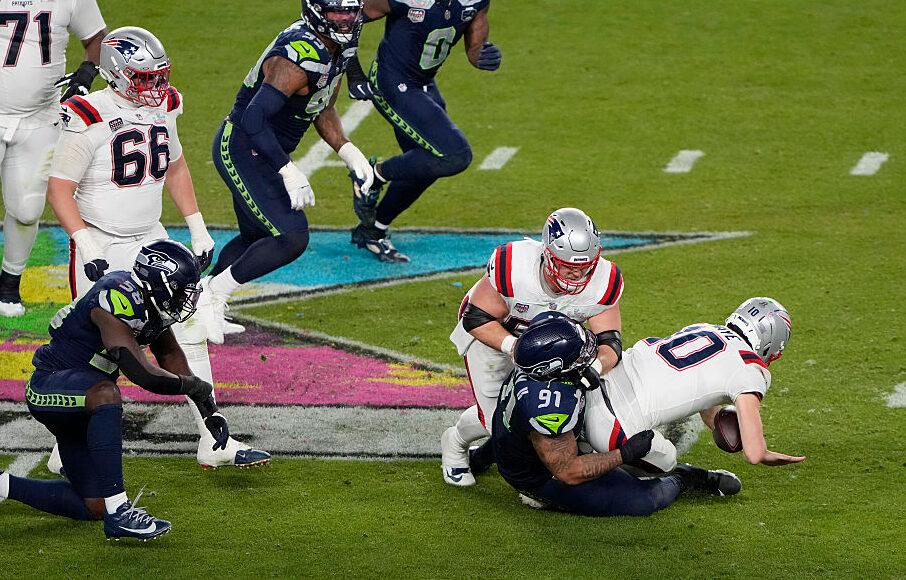
As bad as Maye was on Sunday, he wasn’t the weakest link of the Patriots offense. That would be rookie left tackle Will Campbell, who gave up a game-high 14 pressures, per Next Gen Stats. Campbell was charged with only one sack allowed, but he contributed to several others. And New England had to send more chip help to his side, which led to issues elsewhere. Knowing where the extra blocking help was headed, Macdonald could dial up pressures that hit on the opposite side and created numbers advantages. Attacking Campbell was one of the main pillars of the Seahawks’ defensive plan. That was apparent from the start, as Seattle sent numerous pressures to Campbell’s side over the first few possessions of the game. And Seattle defensive lineman Leonard Williams confirmed after the game that the rookie was a marked man.
Campbell finished off a rough playoff run with his worst game of the season—and perhaps the worst game for any pass protector this year.
The Broncos and Texans also had their way with Campbell, who gave up four sacks this postseason, per TruMedia. And, really, his play has been a problem going back to Week 12, after he returned from a midseason MCL injury. It would be easy to pin his issues on the injury, but Campbell’s capacity to hold up as a blindside protector was in question before he was taken by New England in April. The skepticism was based mostly on his arms, which are shorter than you typically see for an offensive tackle. His arm length measurement at the NFL scouting combine ranked in the 21st percentile, per Mockdraftable. His wingspan ranked in the 7th percentile. There’s a reason scouts obsess over those numbers in the run-up to the draft. Go back and watch Campbell’s performance on Sunday if you’re still skeptical about why they matter. He struggled to make first contact with pass rushers and to keep them from getting into his chest. And that was a problem throughout New England’s playoff run.
There had already been speculation that Campbell could move to guard next season, where arm length isn’t nearly as important as it is when blocking on the edge. His problems during this playoff run may be all New England’s coaches need to see to make that move.