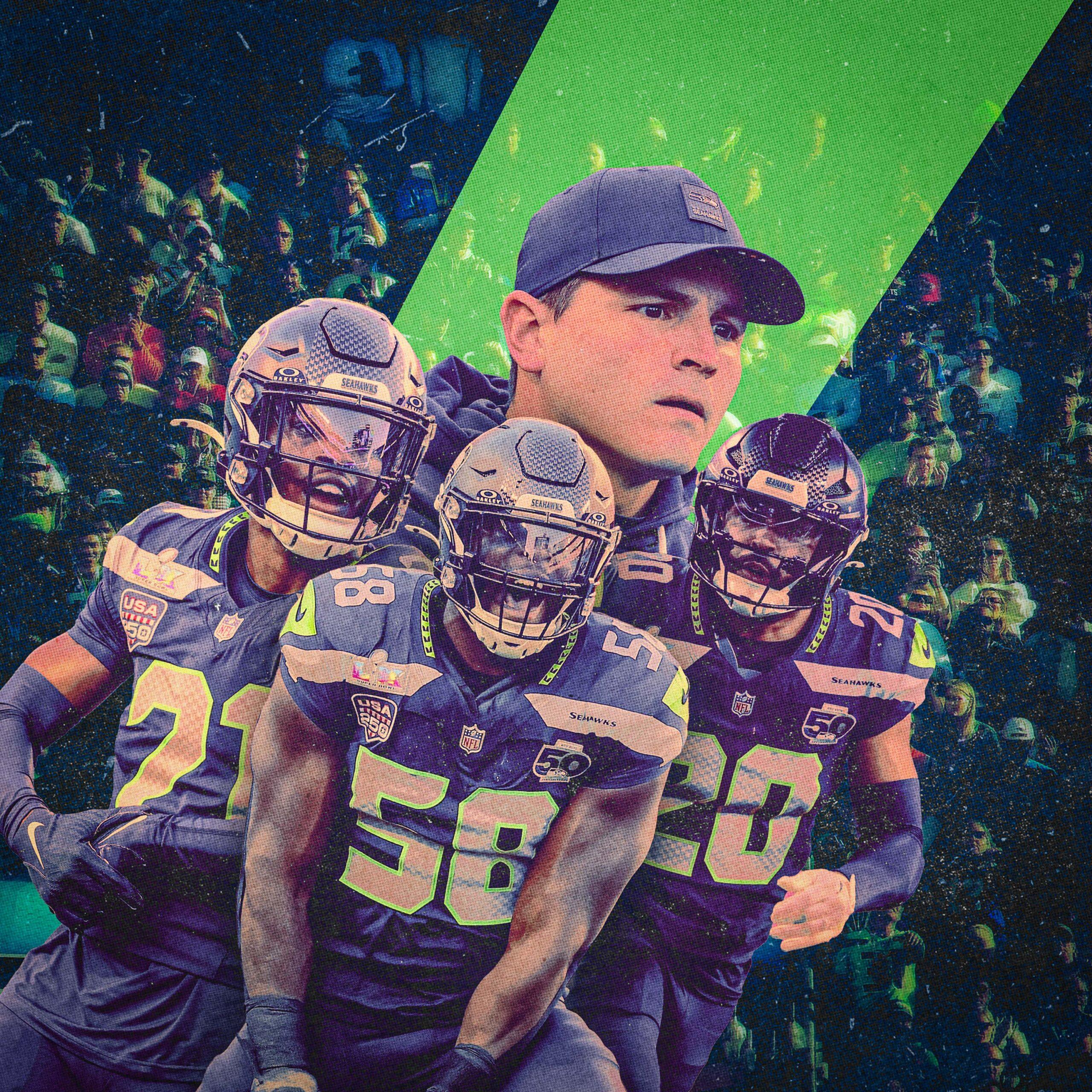

Seattle’s defense coined itself as “The Dark Side” under head coach Mike Macdonald, trying to build an identity that isn’t tied to the Legion of Boom era from a decade ago. And after smothering every bit of light, space, and movement from New England’s offense, its dominant 29-13 win will join the ranks among the best performances in Super Bowl history.
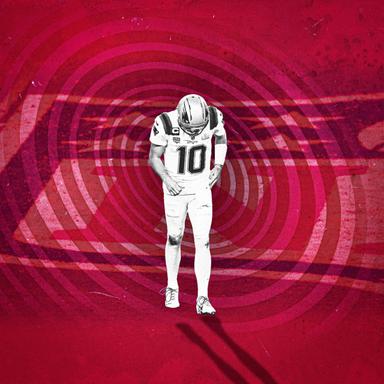
“We just want to bring pain to you in any way possible,” Seahawks defensive tackle Byron Murphy II said in the lead-up to Sunday’s game, and every snap for quarterback Drake Maye and the Patriots’ offensive line looked like it. Maye had been sacked three times and had just 18 yards passing at the half, two fewer than Patrick Mahomes had in the first half of last year’s Super Bowl—another historic drubbing.
The Seahawks had six sacks by game’s end, tied for fifth most in Super Bowl history. And from New England’s first offensive drive, it was clear that these two teams weren’t in the same weight class in the trenches, as Seattle edge rusher Derick Hall got an easy sack against rookie Patriots left tackle Will Campbell.
Campbell had a rough journey throughout the playoffs, and the Seahawks made it a point to target him and rookie guard Jared Wilson as often as possible. Seattle blitzed early to overwhelm Maye, sending extra rushers 37.5 percent of the time in the first quarter (tied for this defense’s fourth-highest mark of the season). And it wasn’t just that the Seahawks were blitzing—they were throwing the kitchen sink at this offense. In the clip below, Seattle rushed six and played zone coverage behind it. Most times, that kind of aggression would leave easy voids for a quarterback to exploit. But Maye never had enough time or space in the pocket to find the right throwing window, and his receivers never created enough separation to make his job easier.
Those early blitzes forced Maye to drop his eyes and anticipate pressure, totally derailing New England’s plan to push the ball downfield. And once the threat of pressure was established, it set up what ultimately won the Seahawks the game: playing dime personnel and using those extra defensive backs to fly around in coverage. Seattle used at least six defensive backs for 36 snaps on Sunday, the most it had all season.
Maye bracing for blitzes—and hoping to punish the Seahawks with deep passes—ultimately worked to his own detriment. As it has all year, Seattle held its two-deep safeties and played zone defense, blanketing deep throws and daring the Patriots offense to dink and dunk its way to a win. Maye held the ball too long, hoping someone would break open deep enough to change the flow of the game, and those opportunities never came. Coverage sacks wrecked drives in the second half, and Maye started pressing in the fourth quarter, leading to one of the ugliest interceptions we’ve seen in a Super Bowl. Even Cris Collinsworth was left speechless.
Running back Kenneth Walker III won Super Bowl MVP, but no one made a bigger impact on the game than cornerback Devon Witherspoon. He’s the best coverage player on the team, but he doubled as Seattle’s best pass rusher and most active run defender, finishing with a pressure on half of his six blitzes, a sack, and a tackle for loss. Murphy was the best interior force in the game, taking away the inside on every run coming his direction. Safeties Coby Bryant and Julian Love were all over the field, with Love forcing a pick and Bryant narrowly missing a couple turnover opportunities of his own.
Before some garbage-time Pats scores in the fourth quarter, Seattle’s defense was on pace for an all-time Super Bowl performance. By EPA, Seattle had the second-best defensive performance in the past 25 years—behind only the 2000 Ravens. It took a balanced effort, and Seattle got contributions from almost everyone who touched the field. Ten different players registered a pressure, and four different defenders had a sack, including a sack from rookie defensive lineman Rylie Mills (who’d had only one snap in the playoffs prior to the Super Bowl). Six different Seahawks had deflections on passes, and three defenders forced turnovers. There was no mismatch for New England to attack and no schematic weaknesses to exploit. The more talented team was Seattle, and we never had a snap in this game to suggest any differently.
Macdonald’s defense is designed for performances like Sunday’s, aiming to spread those playmaking opportunities out across several players. Including the postseason, 20 defensive players had at least 100 snaps for the Seahawks (10 that played linebacker or defensive line)—and that’s without having many injuries. His defense was often the faster, more physical, and more versatile unit on the field this season, and it beat up on every offense besides the Rams on its journey to a championship.
Building the unit up this well and this quickly is a testament to the team’s success in the draft. General manager John Schneider is on a hot streak with his early picks. First-round picks Murphy and Witherspoon had three combined sacks on Sunday, and second-rounder Hall had two of his own. Rookie defensive back Nick Emmanwori (another second-round pick) had a relatively quiet five-tackle performance but was one of the best defensive players in the league during the season. Schneider had a lot to prove as a talent evaluator after he decided to move on from former head coach Pete Carroll two seasons ago, and he responded by building a defensive roster that may rival the Legion of Boom in the years to come. He made a good bet on quarterback Sam Darnold, but he and this organization are champions again because the roster was built to win without an elite quarterback.
While it’ll always be true that the best passers are the most valuable assets in football, the past two Super Bowls have seen stars at the position get crushed by loaded defenses. Maybe New England can acquire enough talent in the next few months to get back to this stage, but it’s much easier to imagine Seattle’s current core staying near the top of the NFC.
Seattle took down Rams MVP quarterback Matthew Stafford and Maye (the runner-up) in consecutive games this postseason. Even Mahomes’s dynastic run was made possible by an elite defense suffocating MVP quarterbacks like Josh Allen and Lamar Jackson along the way. Quarterbacks may win games, but defense is winning championships in this era. And after Seattle’s performance on Sunday, maybe more teams around the league should embrace the dark side.