
The last Super Bowl matchup that absolutely no one saw coming was in 1982. The 49ers and the Bengals each had only six wins in the previous season, and in the preseason, neither team had better than 50-to-1 odds to win the Lombardi Trophy, a record that would stand for quite some time.
By the end of the regular season, both teams had double-digit wins and were among the best in the league, thanks largely to their quarterbacks. In San Francisco, a young Joe Montana had emerged as a star. In Cincinnati, veteran Ken Anderson had hit a mid-career stride. By the end of the postseason, the 49ers were the champions of Super Bowl XVI, Montana and receiver Dwight Clark had made an immortal play in the NFC championship game, and head coach Bill Walsh’s ideas about passing and offense were rapidly changing the entire league.
Surprises can be flukes, but they can also be history in progress.
“There was no way—the Niners were terrible the year before, the Bengals were terrible the year before. And then something clicks, and it happens,” NBC broadcaster Cris Collinsworth, who was also a rookie receiver on that Bengals team, told The Ringer. “But I think those are jumping-off points for the league.”
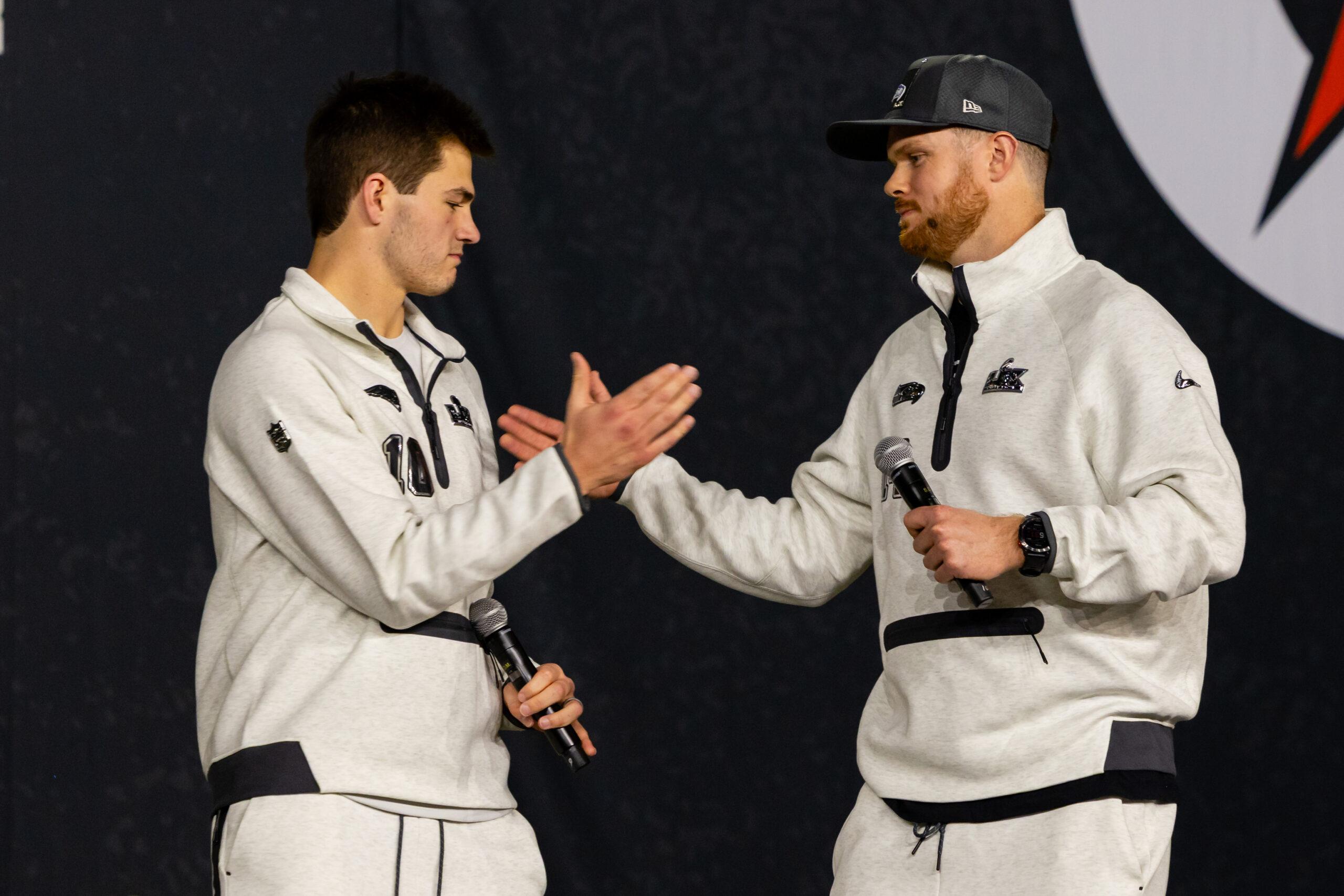
As you may have guessed, that record for most improbable Super Bowl was broken this year. The Patriots and the Seahawks each started the preseason with championship odds of at least 60-to-1. New England won just four games last season, while this season Seattle turned over quarterback duties to Sam Darnold, previously best known for seeing ghosts and having mononucleosis. This Super Bowl LX matchup is a fitting outcome for an entire season of subverted expectations—one in which the Bears, Jaguars, and Panthers made the playoffs while the Chiefs, Ravens, and Lions did not. The quarterbacks who have defined the upper echelon of the NFL for the past several years—Patrick Mahomes, Josh Allen, Lamar Jackson, Jalen Hurts, Joe Burrow—are all watching from home. A couple of seasons ago, the idea that Darnold—not Allen or Jackson, who have combined for three MVP awards—would be the first quarterback from the 2018 draft class to play in a Super Bowl would have been hard to fathom. It is still hard to fathom today.
The league cracked this year, but the people and teams that have taken advantage of the shifting competitive landscape aren’t the ones we expected. Teams desperate to get over the hump couldn’t do it, even with pathways that seemed clearer than ever, while forgotten franchises surged. Other teams responded impulsively to the chaos in ways that will matter over the long term. The 2025 season will go down as one of the wildest in NFL history. If there was something you figured would happen, odds are that it didn’t. The question now is whether those tectonic shifts will leave behind a whole new league.
It isn’t just the two teams playing on Sunday that have made this season unpredictable. The top seven teams by preseason Super Bowl odds had all been eliminated by conference championship weekend, while an NFL-record five teams that were coming off seasons of 11 losses or more made the postseason. Even on a game-to-game basis, huge swings were shockingly frequent. There was an NFL-record seven wins by teams that were down by 15 points or more in the fourth quarter, nearly doubling the prior record of four. Week 5 alone featured six double-digit comebacks, by the Jaguars, Broncos, Titans, Saints, Panthers, and Commanders. In one especially dramatic swing, the Panthers shut out the Falcons 30-0 in Week 3, then lost 42-13 to New England a week later. Part of what made this a difficult season to predict was that, more often than usual, teams that were winning had also recently been losing badly.
NBC analyst Chris Simms told me that he’s thought of this season as one with a larger than usual middle class of teams.
“A lot of years, you just don’t feel that way,” Simms said. “You can cancel out after Week 4 about a quarter [of the league]. ... This year it was the middle of November, and I’m going, ‘Damn, I mean, this team, I don’t know if they’re going to the playoffs, but they also might go to the Super Bowl.’”
Much of that sense of unpredictability came from the emergence of young teams. Both the Patriots and the Seahawks have newer head coaches; Mike Vrabel arrived in New England in 2025, and Mike Macdonald was hired by Seattle in 2024. Darnold is in the middle of his career but is new to Seattle. New England quarterback Drake Maye’s second-year leap has been big enough to put him in the MVP conversation, and his team is well ahead of schedule. Fellow 2024 draft pick Caleb Williams’s development in Chicago under first-year head coach Ben Johnson has changed the balance of power in the NFC North.
“I think with some of these young quarterbacks, we’re seeing a takeover,” Simms said. “The Aaron Rodgers, Tom Brady era, all that’s come to an end, and that’s been handed off to Mahomes and Josh Allen and Lamar. And now we’ve got the young whippersnappers that are like, ‘I’m coming to challenge you guys. You thought you were young, but you’re starting to be the old crew.’”
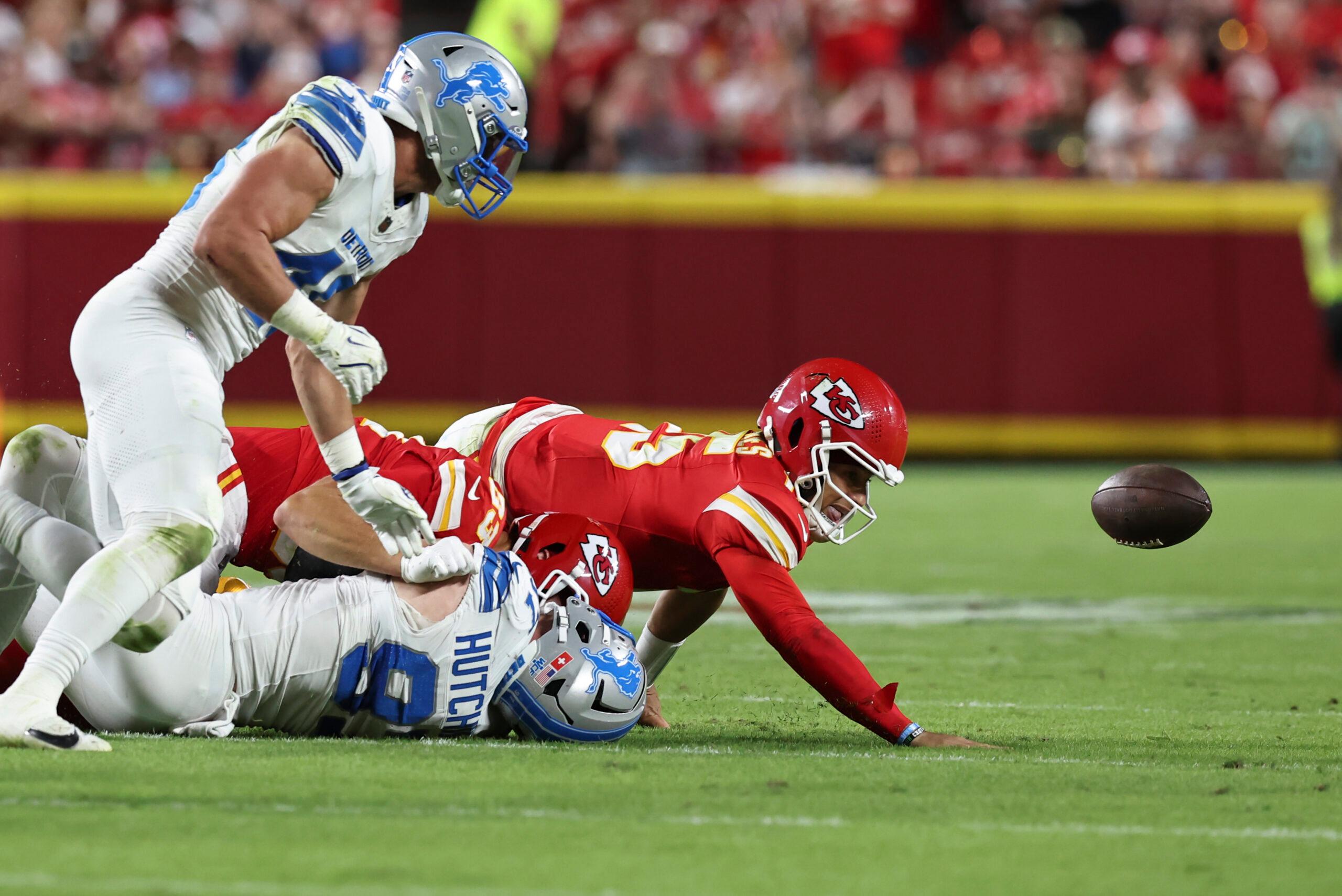
Still, the single biggest element of this season’s wide-openness has to be the downswing of the Chiefs, who had more losses by Week 5 than they did in all of 2024. This was the first season since 2008 without either Brady or Mahomes in the AFC playoffs, and the feeling that things may be changing starts there.
That is not to say that the Chiefs’ dominance is in the rearview, although they have more offseason questions to answer than ever before, given Mahomes’s ACL injury, their lack of cap space, and their aging stars like Travis Kelce and Chris Jones. Going forward, Kansas City will have to compete without the same air of invincibility that carried it to last year’s Super Bowl, where it was trounced by the Eagles. But even if the Chiefs return to form quickly, their absence from the postseason this year may have still changed the league because of the pressure their usual rivals felt to take advantage.
You can get the impression that the traditional AFC powerhouses crashed out a bit in the absence of the Chiefs and in response to their inability to take advantage. The Ravens’ firing of John Harbaugh has become a meme about randomness and impulsivity. I’m still convinced that Bills owner Terry Pegula decided to fire Sean McDermott because Pegula couldn’t handle seeing Allen cry. Those decisions were part of a record-tying 10 head coaching changes that will certainly shape the NFL landscape for the next several seasons, and they were clearly a response to the frustration of coming up short in a year when winning it all seemed especially attainable. The NFC corollary to these overreactions may be the Vikings, who suddenly fired general manager Kwesi Adofo-Mensah last week, a move that at least seems like it was caused by their displeasure in watching cast-off quarterback Darnold thrive in ways they likely didn’t see coming.
Major letdowns can often lead to riskier behavior.
John Yost is a psychology professor at John Carroll University. In 2008, he and two colleagues did a study on sports and disappointment that involved Browns fans, which, you must admit, is a good choice of subject. Some of their findings backed up what most fans intuitively know—that unexpected losses produce stronger reactions than ones that were easier to see coming.
“People tend to become more risk averse when they are facing gains, and then they become more risk seeking when they are losing,” Yost said. “And so teams that had unexpectedly poor seasons, they might actually become more risk taking and make impulsive changes.”
In a conversation in which he explained some of those findings and how they might translate from a fan base to actual team decision-makers, Yost brought up prospect theory. This is a foundational theory of behavioral economics that comes from a 1979 research project by Amos Tversky and Nobel Prize winner Daniel Kahneman and that explains how people process risk when making decisions. The core tenet of the theory is that people think about losses and gains asymmetrically, as opposed to in absolute terms, and they tend to accept greater risk to avoid losses than they would to potentially make gains.
In a year when so many teams genuinely felt like they had a shot, those failures and emotional responses could be at the heart of some extra impulsivity.
As an example, if offered the choice between getting $50 guaranteed or a 50 percent chance at $100, more people will take the guaranteed $50, even though the choices are equivalent in absolute terms. But if offered the choice between a guaranteed $50 loss and a 50 percent chance of losing $100, more people will roll the dice to preserve the chance of losing nothing. Kahneman and Tversky found that their study subjects weighted a given loss twice as heavily as a gain of the same size. Loss aversion, and especially an aversion to unexpected loss, is a powerful force. This could help explain why, for instance, a team like last year’s Chiefs, who won 15 games, made few changes heading into this season despite their evident roster holes, or why the Bills might have felt compelled to fire McDermott—despite his overall success—after their devastating AFC divisional round loss.
“In a nutshell, I would say that the teams that are highly disappointed might—and again, the highest disappointment has the highest expectations—I don’t want to say they get forced, but they feel the impulse to make a major change,” Yost said.
In the NFL, every team but one is disappointed by the end of the season. But in a year when so many teams genuinely felt like they had a shot, those failures and emotional responses could be at the heart of some extra impulsivity.
Big changes are coming to the NFL next season. There will be those 10 new head coaches, including in Pittsburgh, Baltimore, and Buffalo, which have been models of stability in the modern NFL. The success of defensive-minded head coaches like Vrabel and Macdonald, as well as bounce-back seasons for quarterbacks like Darnold, Jacksonville’s Trevor Lawrence, and even Carolina’s Bryce Young, should change how teams think about hiring and player development. It’s possible that the quick success of coaches like Vrabel, Macdonald, Johnson, and the Jaguars’ Liam Coen will only increase the rate of coaching turnover.
There are plenty of lessons like these every year, and not all crazy seasons create outsize change. In 2008, Brady tore his ACL and MCL in Week 1, opening up the AFC less than a quarter into the season. The Giants, the defending champion, hit a bump when wide receiver Plaxico Burress accidentally shot himself in the leg in a nightclub after Thanksgiving. The Titans, quarterbacked by 36-year-old Kerry Collins, unseated Peyton Manning and the Colts in the AFC South, and two 6-seeds, the Ravens and the Eagles, made their respective conference championships. The 9-7 Cardinals nearly won the Super Bowl! But even though the Steelers’ win solidified Pittsburgh’s status in the AFC heading into the 2010s, after that year the NFL landscape was still defined by Brady and Manning duking it out in the AFC and Rodgers, Drew Brees, and Eli Manning contending in the NFC.
But, to borrow a possibly misattributed phrase about the overthrow of capitalism, there are decades when nothing happens, and there are weeks when decades happen. The question of this season, the one posed by the two teams playing Sunday, is whether this is one of those weeks.
Of course, for now we can only guess—and until Sunday we have only incomplete information. Collinsworth made the point that, although the season is over for most teams, the Super Bowl really does shape the perception of a season and the direction of the next ones. The part of the game he’s most excited about when he’s on the broadcast Sunday is the opportunity to introduce two young quarterbacks to the biggest possible audience. But it’s only an opportunity. It’s up to Maye and Darnold to determine what kind of impression they leave.
“You can think of when you first saw Patrick Mahomes win a Super Bowl,” Collinsworth said. “You can think of when you first saw Caleb Williams do one of those crazy plays or when Tom Brady won that Super Bowl and Josh Allen and some of those guys had their moments in the sun, and all of a sudden we started talking about a new era.”
Maye or Darnold will hoist the Lombardi Trophy on Sunday, either one of them becoming the first passer from their much-heralded respective draft classes to do so. But will they—or other quarterbacks like Williams, Lawrence, or Denver’s Bo Nix, all of whom had breakthroughs in 2025—really be good enough to shake the stronghold that Allen, Mahomes, Jackson, and Matthew Stafford, the presumptive 2025 MVP, have in the hierarchy of the league? If this season is not a fluke, we may be at the beginning of the end for a generation of quarterbacks, especially in the AFC, who'd seemed destined to battle each other in the biggest games for several more seasons.
Essentially for this entire century, the AFC playoffs have been largely defined by two quarterbacks: first Brady and then Mahomes. You can see why the teams that got passed over for years might make emotional decisions now that they're getting leapfrogged again. The upstart teams, especially Maye’s and Williams’s, will also be aided by rookie contracts and healthy salary cap sheets.
“I kind of mark time with some of those starts, of those new quarterback years,” Collinsworth said.
On Sunday, one of the craziest NFL seasons in memory will come to an end. But something even bigger could be starting.