

Like many others, I watched and enjoyed the Netflix documentary Miracle: The Boys of ’80 over the weekend, a film about the life and times of the gold-medal-winning 1980 USA men’s hockey team. While the nuts and bolts of the story weren’t anything new to me—when it’s been 46 years since your countrymen last stood atop the podium, you can’t help but know all the lore—I appreciated how the film wove the fabric of the Lake Placid Olympics, letting viewers feel the full texture of a time and place.
Everything was different back in 1980, and also everything was the same. Compared with the more-is-more modern Games we’ve grown used to, Lake Placid looked downright make-do, quaint, a global athletic competition that situated the speedskating events just off the front steps of the local high school. But other aspects felt rather familiar. Like the juxtaposition of the Olympic spirit with the crushing inflation and unwanted escalation at home and abroad.
Whatever the decade, though, and whatever the weather, the promise of the Olympics remains: faster-higher-stronger. With that in mind, here are some superlatives to help you prepare for the 2026 Milan-Cortina Winter Games.
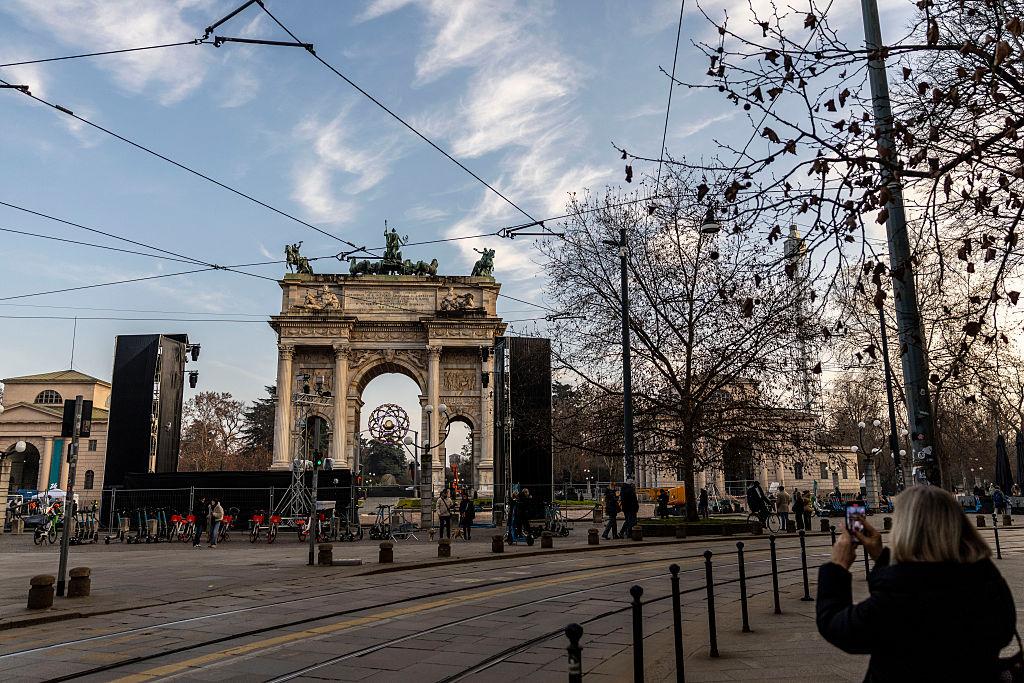
The Olympic Cauldron at Arco della Pace in Milan
Most Likely to Light the Olympic Cauldron(s)
You read that right: cauldrons plural! This year’s Olympics are more geographically sprawling than ever before, with a five-ish-hour car ride separating the urban hub in Milan (where the various rink-based competitions are featured) and the mountain town of Cortina (where the skiers and snowboarders will be sending it/spreading the stoke). So for the first time in Olympic history there will be two cauldrons lit at the conclusion of the opening ceremony, one in each venue and both inspired by the work of noted Italian Leonardo da Vinci.
During the Olympic torch’s journey from the OG Olympia to Milan’s San Siro Stadium over the past few months, carriers of the flame have ranged from footballer Zlatan Ibrahimovic to Heated Rivalry actors Hudson Williams and Connor Storrie. Who will be the ceremonial final two bearers? Possibilities include luge legend Armin Zoggeler, speedskater Enrico Fabris, and skier Deborah Compagnoni—though I’m personally rooting for Alpine icon Alberto Tomba on the strength of his “Tomba la Bomba” nickname and this racing fit.
Most Likely to Alter the Rotation of Planet Earth
That would be Ilia “Quad God” Malinin, the 21-year-old figure skater from Virginia with a blond mop of hair and a skill all his own: the quadruple axel, an effectively four-and-a-half-turn rotation that no one else has ever completed in competition. Malinin narrowly missed out on making the 2022 U.S. Olympic team—the powers that be opted to take veteran Jason Brown over him—affording him an exciting combination of having a little chip on his shoulder and now being the best in the biz by a lot.
At the Grand Prix Final this past December, Malinin landed a record seven quads, including the axel. He won by almost 30 points. The magnitude of rotational force he can generate has been studied for science; a recent profile in The Atlantic had the headline: “The Man Who Broke Physics.” Even if you set aside the quads—which, why would you?—Malinin has all sorts of other memorable flourishes, like his “raspberry twist.” And I haven’t even gotten into the backflips yet! Malinin is the real deal.
The U.S. figure skating team also has the outside potential to do something not seen since 2006: earn a women’s individual medal. Alysa Liu retired at 16 after her debut at the 2022 Olympics in Beijing, but she decided to return in 2024 and won gold at the 2025 World Championships. Amber Glenn arrives in Milan having won U.S. nationals. The front-runners for gold include three-time world champion Kaori Sakamoto of Japan and Russian standout Adeliia Petrosian, who’s competing as a neutral athlete. But the American women have a shot to spin things their way, too.
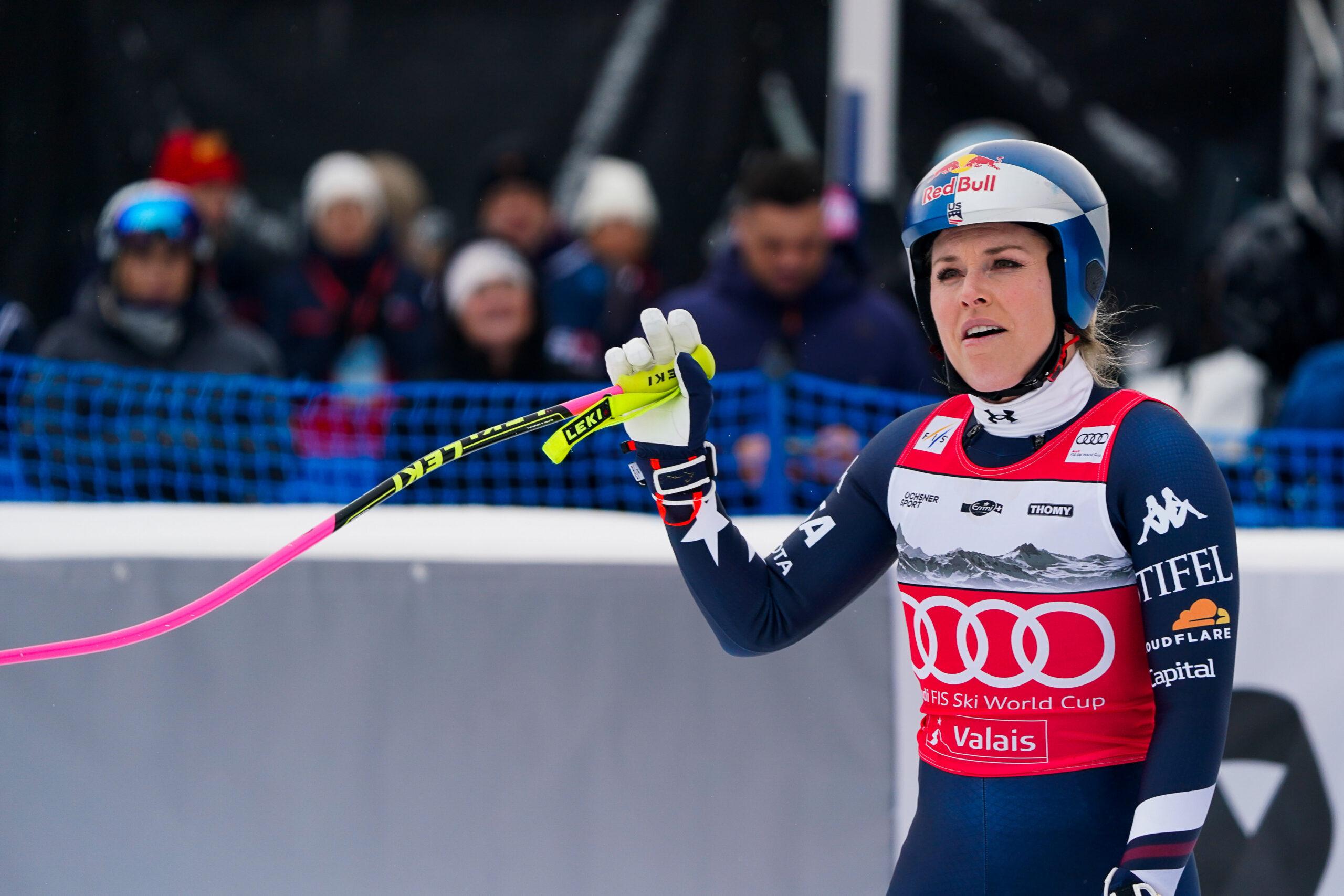
Lindsey Vonn at the Audi FIS Alpine Ski World Cup Women’s Downhill on January 30
Illest-Timed Injury
Last weekend, iconic ripper and multi-medalist Lindsey Vonn was on the verge of returning to Olympic skiing at age 41. Since coming back to the World Cup circuit in January—she tried to retire seven years ago—she’d made the podium in five straight races, including a win at St. Moritz that marked her 83rd career victory. Vonn planned to race the downhill, the super-G, and the team combined events in Milan-Cortina, seeking to become the oldest Olympic Alpine medalist in history.
But after a crash at Crans-Montana last Saturday—from which Vonn very gingerly limped away—her Olympic plans look very different. She revealed on Tuesday that she’d “completely ruptured” her ACL and withdrew from two of her events—but insisted she still intends to race the downhill on Sunday. That’s hard to fathom, but whether she actually winds up competing or not, visitors to Cortina can genuflect at a local monument to Vonn’s World Cup visits over the years—and to her wild persistence: A restaurant called 5 Torri renamed its Margherita pizza after her. That’s the spirit.
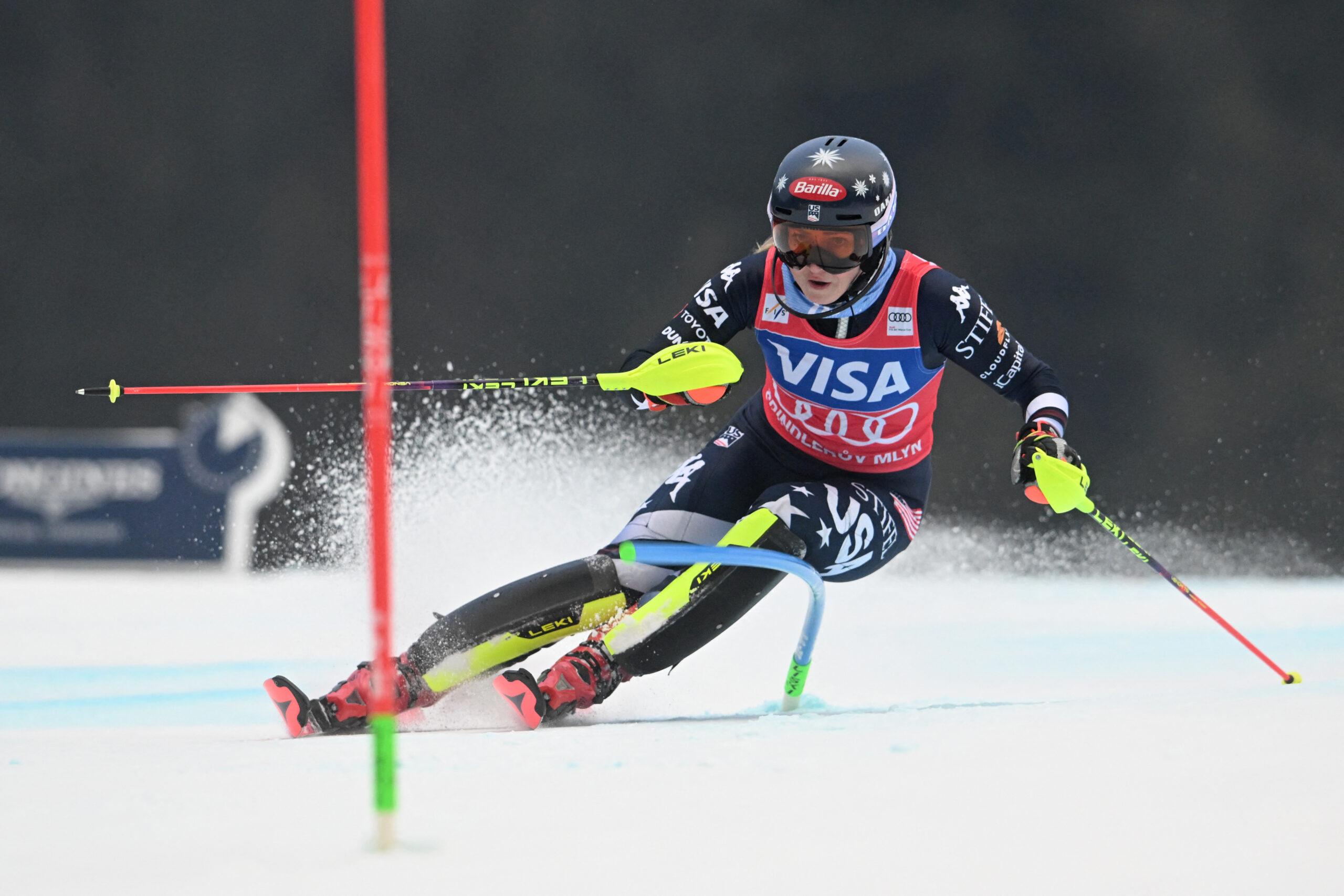
Mikaela Shiffrin competes at the FIS Alpine Skiing World Cup on January 25
Actual Most Fascinating Comeback Attempt by an American Women’s Alpine Skier
I know, it’s silly to call 30-year-old Mikaela Shiffrin competing in these Olympics a “comeback attempt,” considering she has won 108 World Cup races in her career, far more than any other racer in history. But other than Vonn—and to me, even more so than Vonn!—Shiffrin is probably the most must-see-TV athlete in ski racing at these Olympics.
For years, Shiffrin’s arc has reminded me of Simone Biles’s: Both were proven superstars who unexpectedly (and literally) tumbled to earth as the world watched in 2021 and 2022. Can Shiffrin (who has been open about her PTSD and who is just over a year removed from a 7-centimeter puncture wound to her right oblique during a chaotic crash) follow the path of Biles’s eventual Olympic re-apex? (“Mikaela and I have been friends for a while now,” Biles told The Wall Street Journal’s Jason Gay. “It might be a little trauma bonding as well.”) Already this season, Shiffrin has won six of her last seven slalom races. Surely there’s more where that came from this time around.
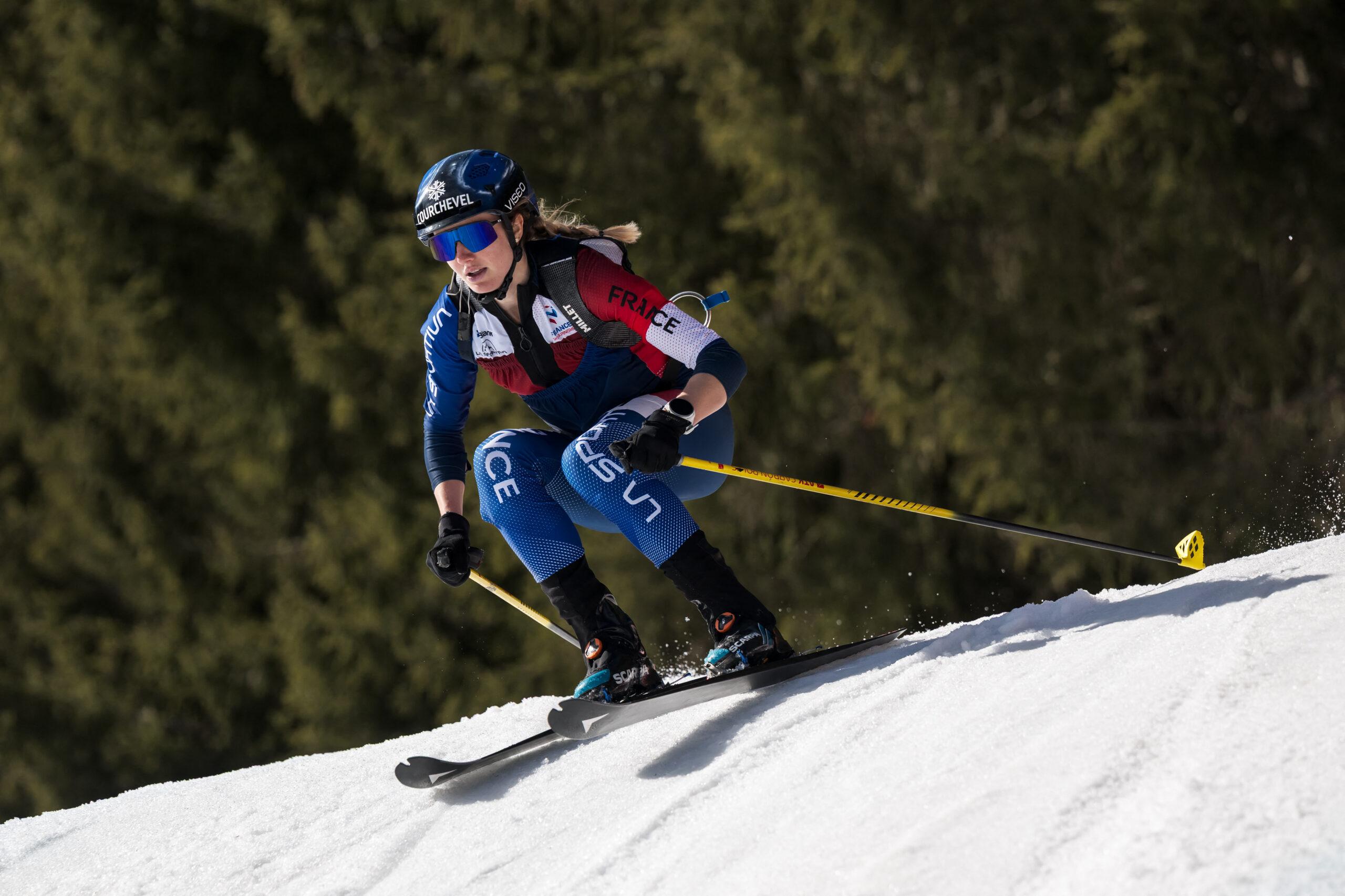
France’s Emily Harrop competes in the Ski Mountaineering World Championships on March 6, 2025
New Olympic Sport That Is Exhausting to Even Contemplate
There are several new Olympic events making their official debuts in Milan-Cortina, including dual moguls, mixed-team skeleton, and women’s large hill ski jumping. But the discipline most likely to make you (OK, me) need a nap just from watching on TV is “ski-mo,” which is short for ski mountaineering, which is short for: racing down but also up the mountain on Alpine skis, with nary a chairlift involved.
You know how you’re not supposed to pet a cat in the wrong direction? Well, ski-mo competitors affix “skins” to the bottom of their skis with embedded fibers that glide smoothly one-way (uphill) but dig in to help prevent backsliding. (They then remove the skins before the downhill segments, in what are “essentially F1-style pit stops.”) Here’s a taste of the sport that’s been described as a “blend of uphill suffering, technical descents, and frantic transitions”:
Ski-mo is popular in the mountains of Italy, which was part of the pitch for its inclusion in the Milan-Cortina Games. (Sorry, ski ballet: maybe next time!) But it’s the French who are expected to dominate the event, like Emily Harrop and her mixed-relay partner, Thibault Anselmet.
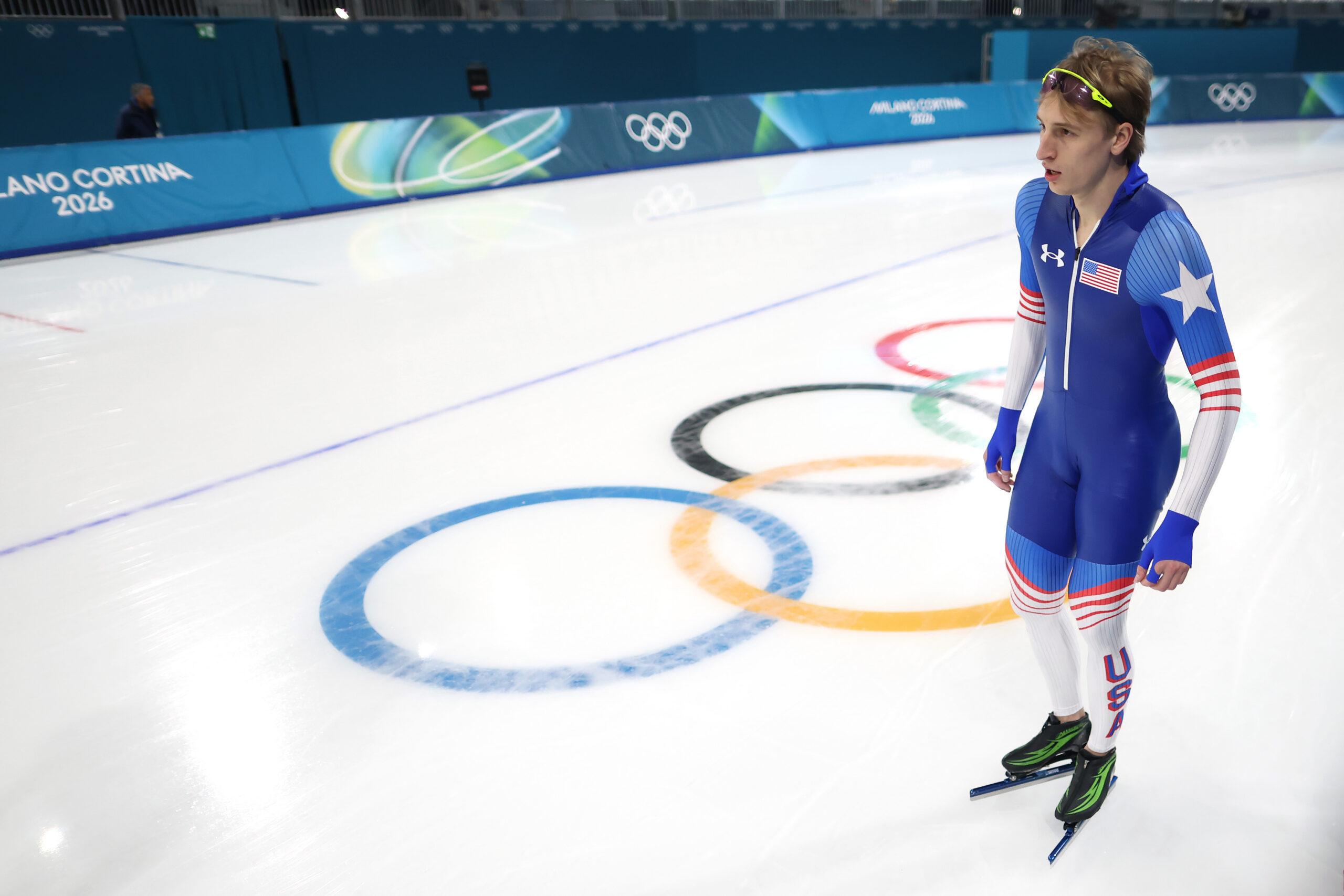
Jordan Stolz of Team United States warms up before training on day minus three of the Milano-Cortina 2026 Winter Olympic Games
Most Irresistible Comparison
During every Olympics, there’s a Today Show tranche of American athletes whose coverage gets cranked up to 11: your Chloe Kims and your Shiffrins. Twenty-one-year-old speedskater Jordan Stolz is about to become one of ’em, and for good reason: It’s not every day that an American athlete holds back-to-back world titles in three different long-track events ranging from 500 meters to three times that. To find comparable breadth, you basically have to go back to Eric Heiden.
The Boys of ’80, that Netflix doc about men’s hockey, points out that the real star of the show back in Lake Placid was the versatile Heiden, who won five speedskating gold medals. All of this was before Stolz’s time. He grew up getting hooked on Olympic speedskating by watching Apolo Ohno on TV, one of many facts that you’ll hear on The Today Show soon enough (some others: he eats lots of pizza; his dad, Dirk, built a long track in the yard; he claims he could beat Noah Lyles in a sprint). But with Stolz in the spotlight, Heiden will be back in conversation. In fact, the former champion himself recently described the young medal hopeful as "the best I've ever seen."
Nicest Sweaters
Bronze: The host nation’s hockey getups. Sure, Italy’s unis “are giving 1990s soccer goalie kits”—but yeah, that’s the beauty of them.
Silver: Dale of Norway’s classic look for the likes of Johannes Klaebo and Co.
Gold: Cccaaasshhhhmeeeerrreee!!!.
Biggest Days on the Schedule
- As some nice Super Bowl Sunday appetizers, Sunday, February 8, will feature the women’s downhill ski race—and, perhaps, Vonn—as well as the final event in a team figure skating competition that is predicted to pit Team USA against Japan.
- Malinin, the Quad God, will skate his short program in the individual competition on Tuesday, February 10, while his free skate takes place on Friday the 13th (gulp).
- On Valentine’s Day, viewers will be treated to nine different medal events, including a men’s 500m speedskating race in which Stolz is favored; Domen Prevc’s attempt to win the large hill ski jump for Slovenia; and Swiss ski racer Marco Odermatt’s best event, the giant slalom.
- The next day, February 15, includes the women’s giant slalom—one of Shiffrin’s signature races—and another of Stolz’s races, the 1500m.
- Might want to get ahead of any work deadlines before Thursday, February 19. That day will feature ski-mo’s debut; the gold medal game in women’s hockey; and the final free skate that’ll decide the women’s figure skating podium.
- Saturday, February 21, features 10 different medal events, including the Winter Olympics’ version of the marathon—the men’s 50-kilometer mass start cross-country ski race—the four-man bobsled final, and the culmination of women’s curling.
- And the grand finale: the men’s hockey gold medal game on Sunday, February 22.
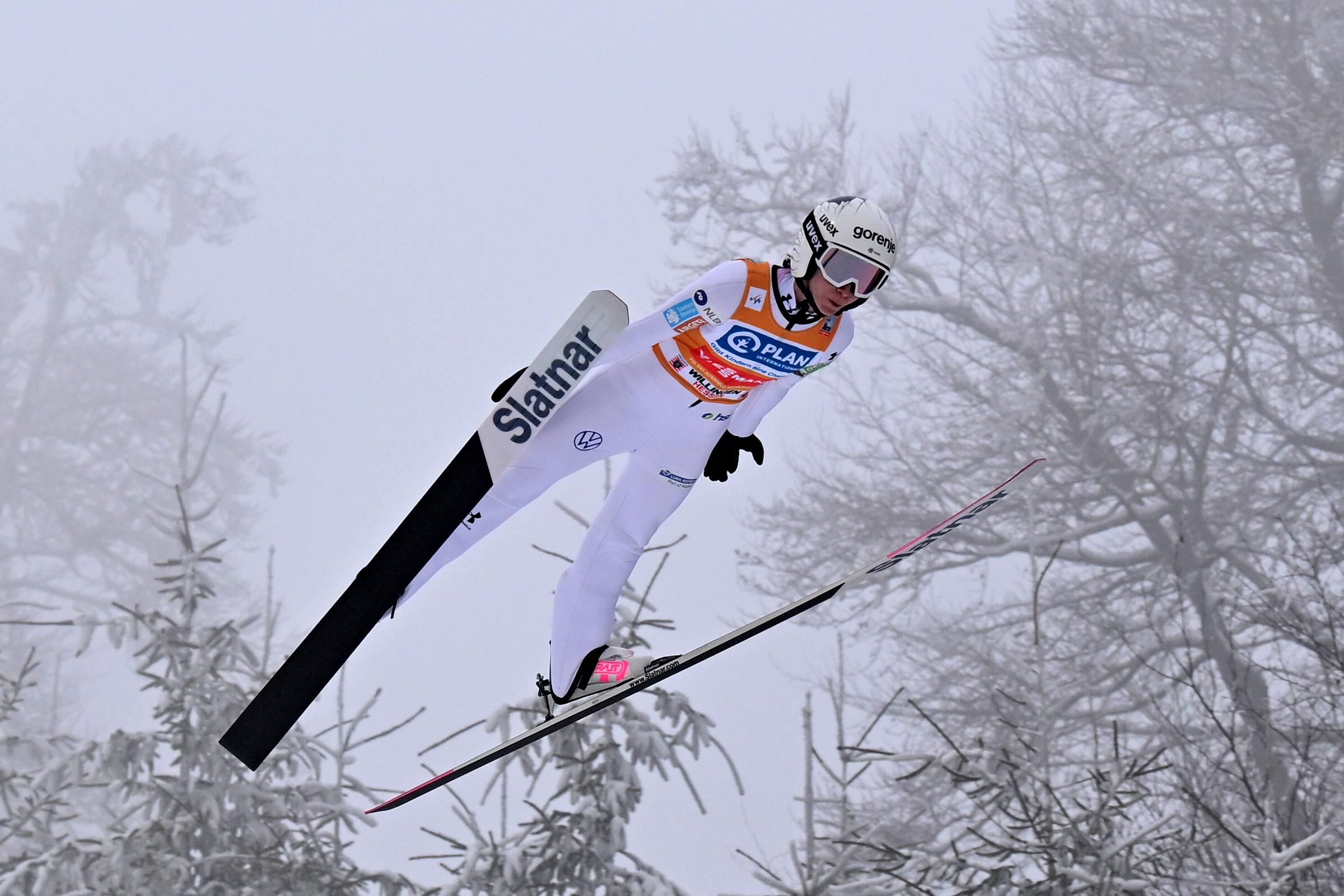
Nika Prevc at World Cup Willingen
Most Aerodynamically Optimized Genes
The great nation that brought us Anze Kopitar, Luka Doncic, and Tina Maze has done it again (and again, and et cetera): meet the Prevcs, the Slovenian family that has dominated the ski jumping—and ski flying?????!—world for years now.
Back in 2016, according to a Slovenian sports website that I Google-translated into English, one Croatian publication “began its article with humorous words that [the Prevcs are] a family of seven—or, as their comedian Željko Pervan would say, half of Slovenia.” Classic Željko! Anyway, at the 2022 Winter Olympics, older brother Peter took home a gold medal. This time around, it’s the brother-sister duo of Domen and Nika who are top podium contenders—and who will bear their country’s flags at the opening ceremony.
Olympic Sport I’m Most Excited to Watch With My Kids
I think they’ll be particularly into slopestyle—but I won’t be counting out the timeless appeal of curling. And come to think of it, they’re gonna love those short-track speedskating races where everyone except for one random guy completely wipes out.
Worst at Being “Best-on-Best”
You’d never dream of a Summer Olympics without NBA players involved. (Me, I’m old enough to remember being handed my McDonald’s soda in a Dream Team Chris Mullin cup.) And yet, when it comes to the Winter Olympics, it’s been some time since we’ve gotten the best men’s hockey players in the world all together on the ice. Not since Sochi a dozen years ago has there been a bona fide, all-sticks-in, “best-on-best” international tournament. And this February, there still won’t be!
This time it’s not because of any decisions made by NHL commissioner Gary Bettman, but rather because Russia is banned from the Olympics on account of their invasion of Ukraine. (Previously, Russia was banned from the Olympics on account of their systemic doping program.) What this means is that many of the most talented players in the game (Kirill Kaprizov; Andrei Vasilevskiy) won’t be competing, which is fine enough news if you’re a North American or Scandinavian seeking a medal, and/or a defender of the sovereignty of nations. But if you’re just a dirtbag completist hockey fan? It’s one more asterisk; one more not-quite-best-on-best-and-here’s-why conversation.

The Milano Santa Giulia Ice Hockey Arena in Milan on January 29
Rinky-Dinkiest Venue
I feel the same way about “Olympic venue won’t be finished in time!” headlines as I do about “Your cable provider is beefing with some of its channels!” news: It (almost!) always winds up working out just fine in the end.
I daresay (crossing self) that appears to be the case with the Milano Santa Giulia Ice Hockey Arena. After a flurry of reports late last year warned that there was “no Plan B” if the arena wasn’t completed before the start of the games—and after The Athletic’s Chris Johnston made an unsolicited on-site visit and wrote about unfinished locker rooms and holes in the ice surface—it’s been mostly quiet on the barn front.
So does that mean the rink is, like, nice now? No. Was it at least built to glorious Olympic-sized—or, hell, even standard NHL-sized—dimensions? Well, also no. (For reasons that we may never quite understand, this rink is more than 3 feet shorter than what just about any player is used to.) But is it finished? You know what: no. Still! But the important part is that hockey will be played. Which means all we can do now is wait to see which player takes advantage of the whole saga to blame the ice for his lack of hustle on the backcheck. My money’s on J.T. Miller.
My Most Un-American Opinion
I must speak my truth: I’m getting really excited to watch Canada’s men’s hockey team. Sorry! It’s just that I have a lot of worries about the Americans: There are too many New York Rangers on the roster, and not enough Jason Robertsons. Plus, it doesn’t help that Jack Hughes sliced his hand on a wine glass at a New Jersey Devils team dinner, or that brothers Brady and Matthew Tkachuk aren’t 100 percent. After last year’s incredible 4 Nations tournament, in which Canada needed overtime to beat the Americans in the final, I dread too-high expectations among the American public and the subsequent frustration. In short—and I’m happy to be wrong here—I don’t think this will end well.
And then there’s Team Canada, O Canada. Happy home of the merriest manchild in hockey: San Jose Sharks sensation Macklin Celebrini, age 19. He’s an emerging Bay Area legend whose father is the director of sports medicine and performance for the Golden State Warriors. None other than Sidney Crosby himself personally requested to play with Celebrini at the World Championships last spring, and they may wind up together on the ice in the coming weeks.
Did I mention Crosby, he of the golden goal? What about Connor McDavid, who between the TikTok wife and the Players’ Tribune essay is really putting himself out there of late? I haven’t even gotten to Nathan MacKinnon. … This kind of lineup is unfair. And since I don’t think we can beat ’em? I might as well enjoy ’em.
Strangest (but Also Funniest) Olympic Controversy
It wouldn’t be a proper Olympics without a scandal that you ought to tsk-tsk but in reality is very freakin’ funny. This year’s installment: Two former coaches and an equipment manager for Norway’s ski jumping team were accused of various methods of phallic enhancement so as to finagle a few extra inches (or, idk, millimeters?) of fabric on the team’s uniforms and elongate their landings. Come on, that’s good stuff!
Apparently “the crotch measurement [for the ski jumpers’ uniforms] is taken from the lowest point of an athlete’s genitals,” according to the New York Post. And “if you manage to move that point downward, you automatically get more surface area on the suit,” providing better aerodynamic lift. The result, according to a Google translation of an article in the German publication Bild:

It’s not the size of the page, it’s the motion of its notions. That’s where I hit the paywall, but never in my life have I been closer to subscribing to a German newspaper. In conclusion, I salute these people and their innovative ideas.
Most Typical Olympic Controversy Imaginable
American skeleton racer and five-time Olympian Katie Uhlaender filed an administrative grievance basically arguing that a dick move by the Canadians (I am not a lawyer!) cost her an Olympic bid. (Her claim: If Team Canada hadn’t withdrawn four different athletes from a race at the last minute, shrinking the size of the field, she would have earned more points in the ranking system.) She has since been denied, but I believe her, because I swear not an Olympic cycle goes by that I’m not hearing about those Canadian federations scheming up something or another! Give it a rest, will ya?
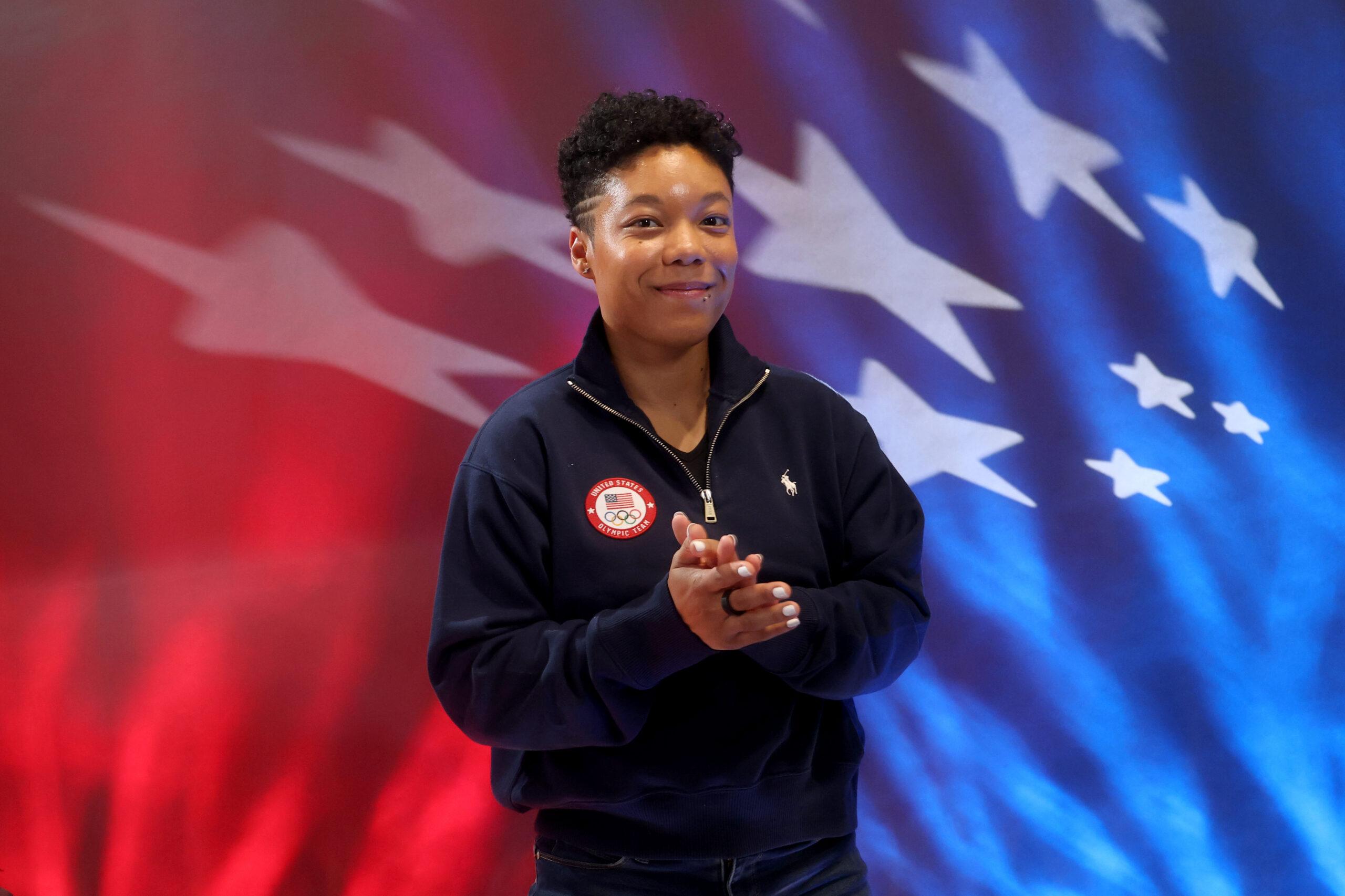
Mystique Ro during the Team USA Media Summit on October 28, 2025
Best Name-Event Combination
Mystique Ro, American skeleton racer!
Team USA’s Biggest Generational Gap
The Team USA contingent includes both a 54-year-old curler and a 15-year-old halfpipe skier; as far as I can tell there are no athletes from other countries who are older or younger than that. Curler Rich Ruohonen is a personal injury lawyer from Minnesota who quipped that he “was thinking about getting a shirt that says, I’m not the dad, and I’m not the coach.” (I also enjoyed this line from one of his fellow rock throwers: “He may be twice my age, but the maturity level is comparable.”) And he’s more than thrice the age of teen Abby Winterberger, who qualified for Milan-Cortina on the strength of an “unprecedented” breakout season—and whose little sister is in my son’s fourth-grade class!
Sentence I Least Expected to Read!
Minions-Related Content I Least Expected to See
In case you’re keeping track: U.S. snowboarder Chloe Kim rode a chairlift with a Minion in an NBC commercial, which was fine. But Spanish figure skater Tomàs-Llorenç Guarino Sabaté performed his short program to Minions-adjacent ditty “Papaya (Vaya Papayas)” while dressed in the telltale suspenders. Lo siento, mi amigo. Sabaté was scrambling to revise his routine just days before the Olympics due to a late-breaking musical rights dispute. (That it took place this close to Milan is some real Gru-level villainy.) But thanks to the power of the people, Universal Studios relented and granted him special permission. !Viva papayas!
Hockey’s Most Heated Rivalry
This is somehow not the HBO show/cultural phenomenon. No, the hottest rivalry on ice is, as ever, USA versus Canada women’s hockey, where reputations are won and zero love is lost. (All the nice things I said above about Team Canada do NOT apply to their women, just to be crystal clear.)
Ever since women’s hockey became an Olympic event in 1998, the two teams have met in the gold medal game six times, with Canada winning four (including a doink-y madcap game in Sochi that raises my heart rate just to think about). There have been cigars on ice; there have been marriages; there have been brawls. Amid a deepening international field, this year’s Canadians will be led, as ever, by captain Marie-Philip Poulin, while Team USA features veterans like Hilary Knight (competing in her fifth and final Games) and young talent like Laila Edwards (the first Black woman to make the U.S. senior national team). As three-time Olympian Kendall Coyne Schofield said to sum up the stakes: The expectation for Team USA is “a gold medal and gold medal only.” That’s right.
Highest Approval Rating in Broadcasting
The NBC Olympic broadcast will play the hits this winter (Tara and Johnny; John Williams’s perfect theme song) and also try out some new voices. (I’m excited to hear from Shaun White, fresh off his snowboard sesh in Central Park, and Lindsey Jacobellis.) But if Paris 2024 is any indication, the most beloved element of the Olympics on TV won’t be an announcer or an analyst—it will be a way of life, a state of mind. That’s right, I’m talking about THE GOLD ZONE on Peacock, the program that asks and answers the question: What if the NFL Red Zone, but for moguls and biathlon? I’ve yet to hear an ill word about it.
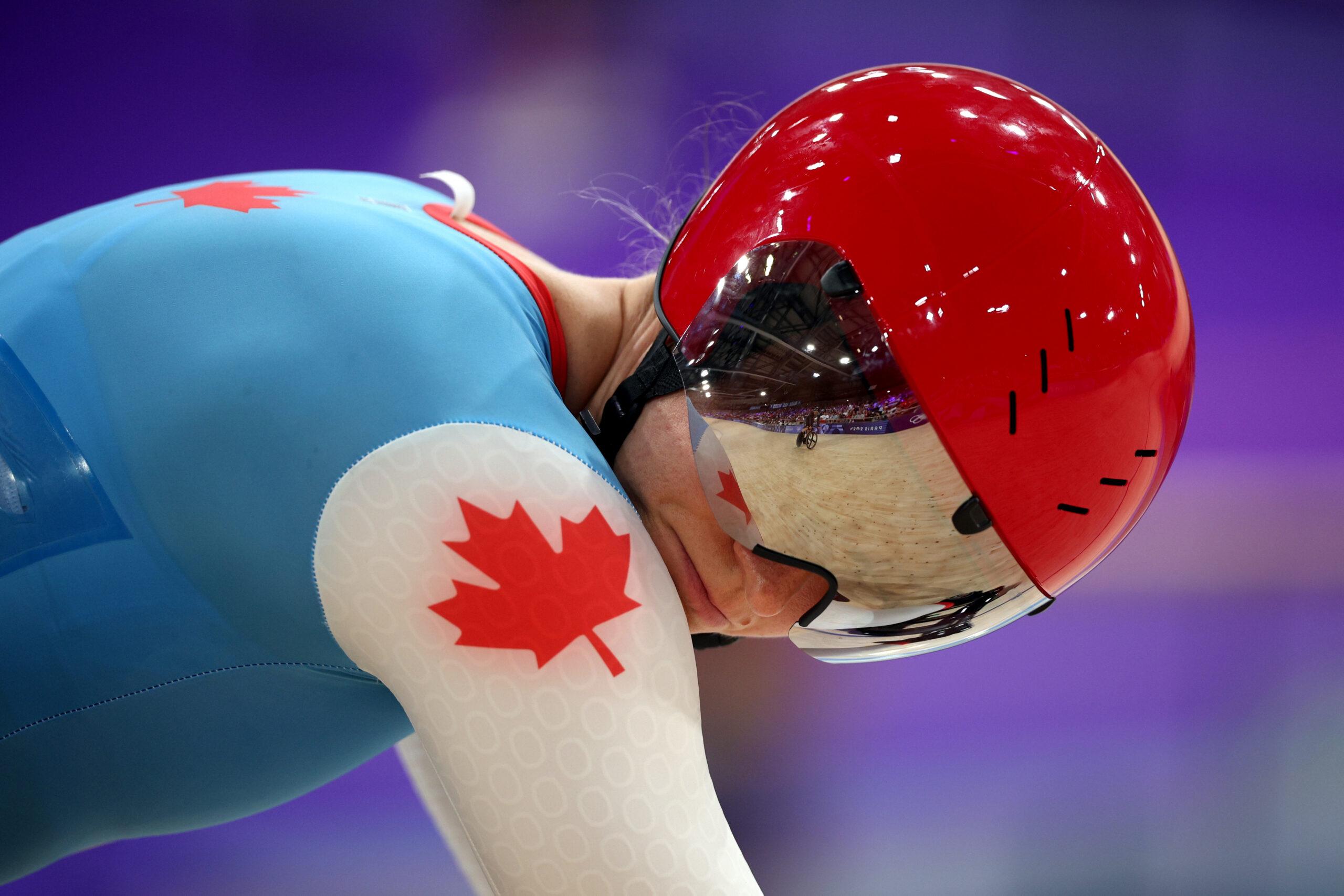
Kelsey Mitchell of Team Canada during the Olympic Games Paris 2024
Quickest on the Uptake
After winning gold in track cycling sprint at the Tokyo Summer Games, Canadian Kelsey Mitchell traded the bike for a bobsled and qualified for the two-woman team just eight months after first getting a DM asking whether she’d ever consider trying out the sport. As ever, that bobsled recruitment pipeline is strong.
Neatest Retirement Plan … and/or Savviest Marketing Strategy?
Every country supports its Olympians differently. Some athletes are paid by their governments; others rely on private funds. According to The Wall Street Journal, rewards for medaling range from diamonds (Poland) to military service exemption (South Korea) to, in one case, “100 thoroughbred horses and a Lexus.” (Kazakhstan.) In the U.S., some Olympians become household names, while others toil in expensive semi-funded obscurity. In either case, the earnings window afforded by athletic renown is brief, and stars and unsung heroes alike can face difficult financial outcomes, as Ryan Lochte was the latest to demonstrate.
Last month, though, financier Ross Stevens pledged a $100 million gift to the U.S. Olympic and Paralympic Committee that seeks to provide every current Team USA Olympian with a $200,000 nest egg—half to be distributed a couple of decades from now and the other half structured as a guaranteed death payout to an athlete’s beneficiaries someday. Is this a thoughtful deployment of capital? Or merely a clever branding exercise for a man who makes money peddling annuity products? I’m guessing the answer to both questions is probably yes.
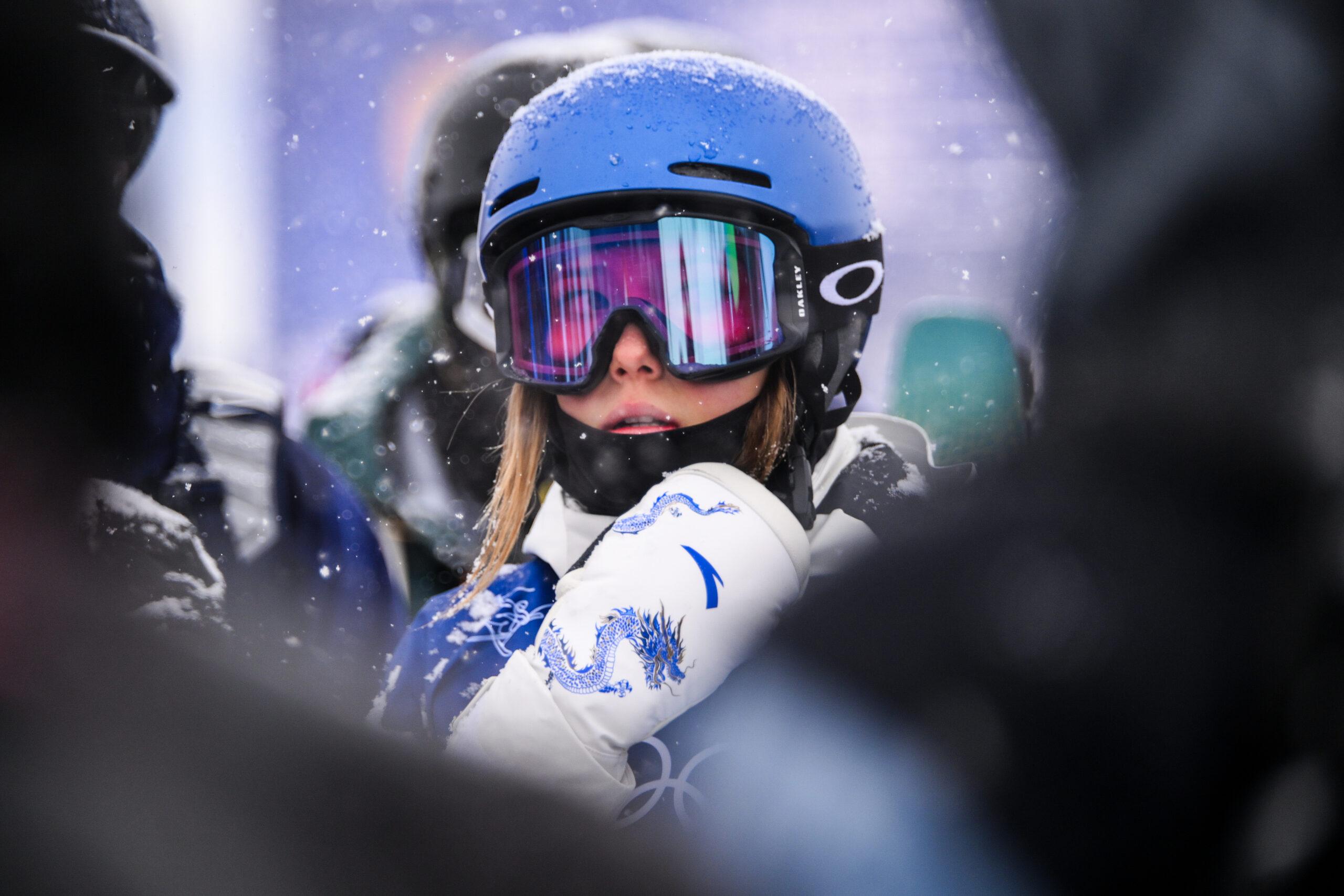
Eileen Gu of Team People’s Republic of China after a freestyle skiing slopestyle training session on day minus two of the Milano-Cortina 2026 Winter Olympic Games
Smallest World After All
International soccer has the transfer window. NCAA sports have the transfer portal. And depending on their ancestry, Olympic athletes have ways of shifting their allegiances, too. The most high-profile Winter Olympics athlete to cross borders and/or oceans is freeskier Eileen Gu, who grew up in California but has (controversially) opted to represent China in the 2022 and 2026 Games across halfpipe, slopestyle, and big air. And she’s far from alone. Team China also features Hungarian-born speedskating brothers Shaoang Liu and Shaolin Sandor Liu, who won gold for Hungary in 2018 and 2022 before making the switch.
There’s also Brazil’s Lucas Pinheiro Braathen, a former Norwegian star who is now trying to win the first medal for a South American country. Team USA’s best hope for its first-ever biathlon medal is Campbell Wright, a 23-year-old Kiwi who previously repped New Zealand at the Olympics in 2022.
Christania Williams, the Austrian bobsledder? She was once Christania Williams, the Jamaican relay sprinter. And speaking of Jamaica: Alpine skier Henri Rivers IV, a triplet who hails from West Babylon, New York, will represent the island nation in the slalom. Fun fact: I interviewed Henri and his family for this Powder magazine article back in 2016, when he was just 9 years old.
Best Bets
In summary and in conclusion, a few final predictions: The Germans will sweep various bobsled podiums. NBC viewers will experience Snoop fatigue but stay polite about it. The women’s hockey players (of all nationalities) will have the best Olympic Village social media presence. Jessie Diggins will win one more medal for old time’s sake. Taylor and Travis will have great seats for figure skating. Norway’s Johannes Klaebo will continue his reign of cardiovascular dominance.
And every so often, for the length of a photo finish here or an anthem there, there will be something old as time, something brand new to remember.