

For all of 2025, I had the Strokes on the brain. The result of that fixation will be out later this year, but for now, I’ll offer a quick preview of my premise: When people saw the Strokes for the first time in the early aughts, they weren’t “just” responding to an exciting young rock band from New York City. They also weren’t reacting “only” to a bunch of overhyped rich kids with guitars. They were seeing every other rock band that had ever captured the zeitgeist in the previous century. And they projected those archetypes onto Julian Casablancas and his compatriots. They did this unknowingly, although you would instantly recognize these “rock band” tropes if I pointed them out to you. Everything from the magnetically disheveled lead singer and the inevitable “guitarist with mystique” to the particulars of their meteoric rise (worshipful music critics) and crushing fall (those same critics turning on them).
Now it’s 2026, and I still have the Strokes on the brain. I keep seeing how certain patterns from rock history seem to repeat, over and over, even in our ongoing “rock music is diminished” era. I’ll give you an example: On January 19, 2002, the Strokes performed on Saturday Night Live for the first time. Jack Black was the host. He was promoting the film Orange County. They played two songs, “Last Nite” and “Hard to Explain,” and their debut album, 2001’s Is This It, subsequently rose to no. 33 on the Billboard albums chart, its highest position ever, before or since.
Almost exactly a decade earlier, on January 11, 1992, a different rock band that had recently ascended from the underground to critical and popular acceptance performed on SNL. It was, in fact, the band of this sort: Nirvana. The host was Rob Morrow. He was promoting the third season of Northern Exposure. Nirvana played “Smells Like Teen Spirit” and “Territorial Pissings,” which coincided with the band hitting no. 1 on the album chart. (Nevermind later regained the top spot in early February, after being usurped by Garth Brooks’s Ropin’ the Wind for two weeks.)
This brings me to the upcoming SNL episode, the one airing tomorrow, January 24. The host is Teyana Taylor. She is promoting the Netflix film The Rip (costarring Matt Damon and Ben Affleck), as well as the awards campaign for One Battle After Another. And the musical guest is Geese, which (like the Strokes back in 2002) is a critically lauded rock band from Brooklyn whose members come from privileged backgrounds. It was also, as of one year ago (like Nirvana in January ’92), just another underground indie-rock group completely off the map of establishment institutions like SNL.
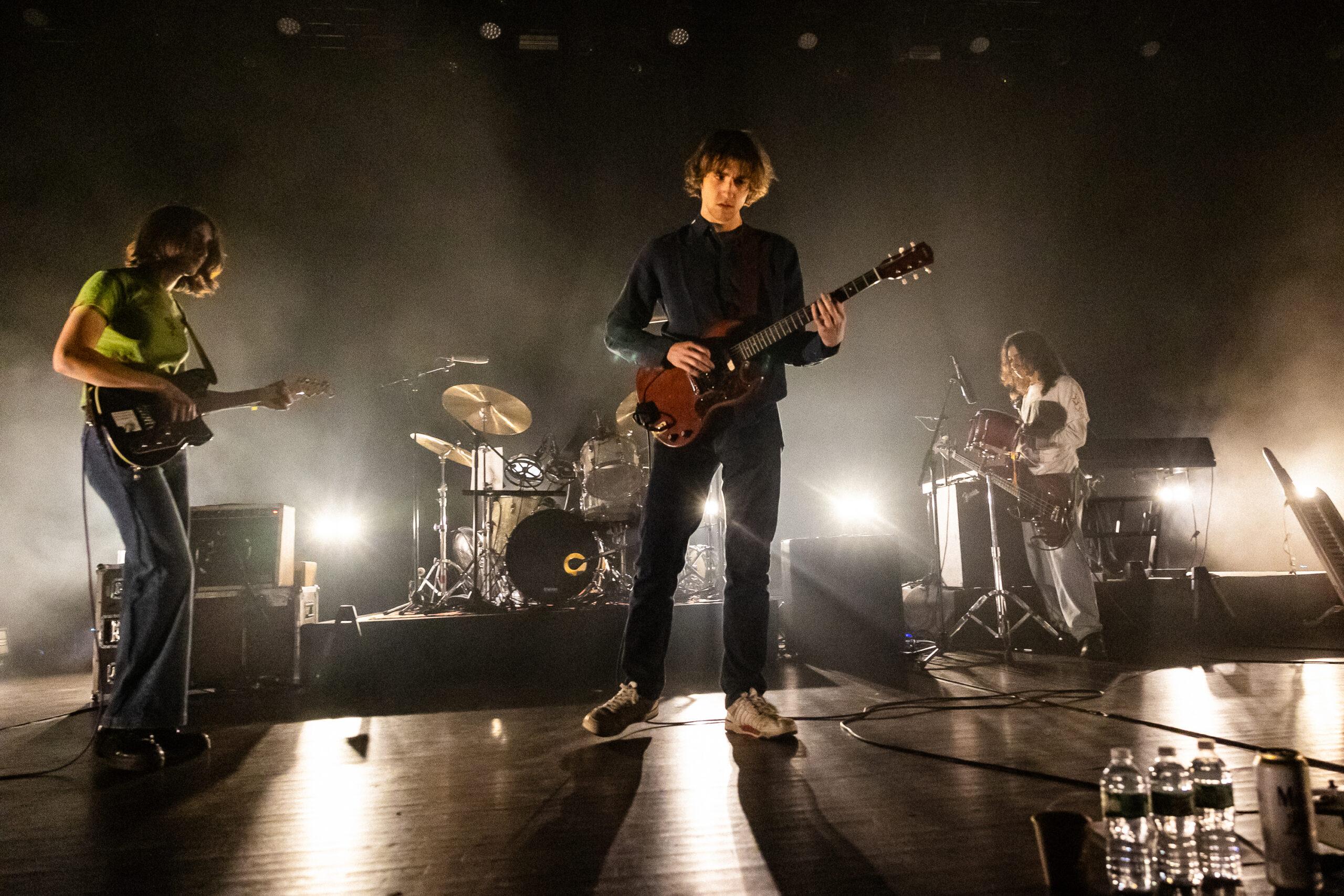
You see where I’m going with this. Now, I’m going to be very careful here. Because I know I’m playing with fire. There’s a decent chance that I have already pissed off two very excitable groups of individuals. The first demographic is people who were alive when the Strokes and (especially) Nirvana made those legendary TV appearances. They might think I am suggesting that Geese is already as good or as important as those bands, rather than drawing out an interesting parallel in service of a larger argument. (To be clear: I am not suggesting that. At least not exactly.) The second group is people born in the current century who are annoyed that I’m attaching Gen X and millennial nostalgia to something fresh and cool from their generation. (Not entirely wrong, perhaps, but stick with me; I think I’ll justify it in the end.) And then there’s the matter of talking about SNL on the internet, the realm that has extended the venerable show’s life (thank you, social media clips) while also constantly miring it in negativity (damn you, social media clips).
To that last point, I would just say that SNL obviously has less reach than it did in either 2002 or 1992. But as a sign of “making it,” particularly for an indie-rock band like Geese, it’s more significant now, given how the opportunities for musicians to perform for sizable audiences on television (late night or otherwise) have largely disappeared everyplace else. Unless Geese somehow ends up playing the Grammys or an NFL halftime show, this appearance will put more eyeballs on the group at a precise moment than anything it will likely ever do.
No matter what happens this weekend, it’s been a remarkable turnaround for a band that at this time last year was recording what became its breakthrough album under a cloud of professional and artistic uncertainty. Formed in 2016, when the members were music-obsessed prep school students—this period culminated with maybe the most accomplished teenaged prog-rock album I have ever heard—Geese eventually signed with the indie label Partisan Records and put out its official debut, Projector, in 2021. It was just OK. Music critics noted its musical resemblance to NYC bands of the past: the Strokes, LCD Soundsystem, Talking Heads, all the usual suspects. And they wrote “just OK” reviews. (Pitchfork gave it a 6.6, neither good nor bad enough for most readers to notice.) Geese’s next record, 2023’s 3D Country, was a shockingly bold and frequently exhilarating swing for the fences, the kind of record where the time signatures change dramatically and a wild conga solo might suddenly appear out of nowhere. But the star of the show was unquestionably Cameron Winter, the singer-songwriter, whose fearless vocal style veered from a choked low-end warble (like Leonard Cohen playing on a disintegrating cassette tape) to a swashbuckling sex-god howl (akin to Mick Jagger in Some Girls mode) and immediately distinguished him as a uniquely charismatic frontman. (In my own review, I likened 3D Country to “Mr. Bungle backed with the female singers from Gaucho,” which I swear was intended as high praise.)
But even fewer people cared about 3D Country. When Winter decided to funnel his latest batch of songs toward a solo record, which he called Heavy Metal, his label opted to put it out in early December 2024, the height of year-end list season, presumably because it thought critics weren’t going to care anyway. They were wrong. The oddly stirring ballads of Heavy Metal—which toned down the musical fireworks of Geese while amping up the ecstatic psycho-spiritual intensity—became a left-field critical hit and then a word-of-mouth sensation. By September 2025, upon the release of Geese’s third album, Getting Killed, Winter and his band were among the only indie phenoms to break containment this decade. That Getting Killed managed to combine the best of 3D Country (meaty classic-rock guitars forming a powerful fist with a muscular rhythm section) with the strengths of Heavy Metal (the marriage of Winter’s eccentric voice and the assured, heartrending classicism of his songwriting) signaled the arrival of a band fully prepared to meet its moment.
As a fan, I’m very curious to see how this all plays out in front of a national television audience. On social media, Geese is already a consistent talking point, with all the good and bad connotations that entails. I can’t verify this as fact, but I get the sense that the algorithm has been specially attuned to amplify anything remotely polarizing about it. Musically speaking, Geese certainly is not for everybody, mostly due to the confrontational contours of Winter’s voice. If you’re looking for engagement, listening to Getting Killed or Heavy Metal for two minutes and then proclaiming that it's like “listening to a chicken sing while being strangled” is an easy way to get it. Then there are the myriad “controversies” (if that’s the right word) that have popped up recently—Geese’s unconventional (and possibly mocking) covers of New Radicals’ “You Get What You Give” and the Bee Gees’ “Stayin’ Alive”; Winter’s New York magazine cover with Debbie Harry; Winter’s Carnegie Hall performance, filmed by Paul Thomas Anderson and Benny Safdie; James Austin Johnson’s expert impersonation of Winter on SNL last month; the revelation that Winter’s mother is a high-profile “polyamorous” memoirist who has written about her open marriage to his father; the constant confusion (performative and otherwise) with the jam band Goose; and so on.
But the loudest complaints of all are also the most familiar—the ones about Geese being nepo babies, a product of massive media hype, and basically just another flash-in-the-pan one-album wonder nobody will care about next week. But take it from me, a person who has already thought about this way too much: Around the time of their SNL appearances, Nirvana and the Strokes were also being hit hard with the “overhyped soon-to-be has-beens” accusations. None of this is new. It’s part of the same story that gets told time and again. If only Geese’s biggest haters could appreciate the irony—their dislike is part of what aligns this band with the very “generational phenom” narrative they loathe so much.
Every now and then, when there’s a band or an artist who is dominating the online conversation, I’ll hear from someone on the outside looking in. Depending on the subject, we have all been this person. And we have all been annoyed by this person. The one who says, with increasing and unresolvable agitation, I don’t get this. I don’t get this AT ALL.
Their hostility is always palpable. Explain it to me, they will say. They want me to explain it because I’m a music critic, which means that I’m part of the problem. It’s the least you can do, the person will insist.
I’m never sure how to reply in these situations. Explain why this thing you don’t like is actually good? If you’re coming to me, you probably read something I wrote, and if that didn’t explain it, either I’m a terrible writer or you’re a poor reader. Either way, I’m afraid I can’t help you.
I know this is an unsatisfactory answer. Their inquiry ultimately has nothing to do with music criticism. They don’t want a litany of enthusiastic adjectives presented in the shape of a record review. They want a real explanation, rooted in irrefutable evidence and logic. In short, clarity.
Here’s my best attempt: Setting aside the quality of the music, which of course varies depending on each listener’s subjective taste and experience, I think that there are two reasons Geese is now, presently, the band commanding all this attention. The first is related to the premise of my book, which starts with the Strokes evoking this “rock band” archetype for critics and music fans around the turn of the century and how they ultimately represented the end of that old continuum in mainstream pop culture. In the past 25 years, we have seen a gradual decline in the primacy of bands and groups. And not just in rock music—back in the ’90s, there were wildly successful collectives in all the major pop genres, from country (the Chicks, Brooks & Dunn) to hip-hop (the Beastie Boys, Wu-Tang Clan) to R&B (TLC, Destiny’s Child), not to mention that whole boy band business spearheaded by ’NSync and the Backstreet Boys.
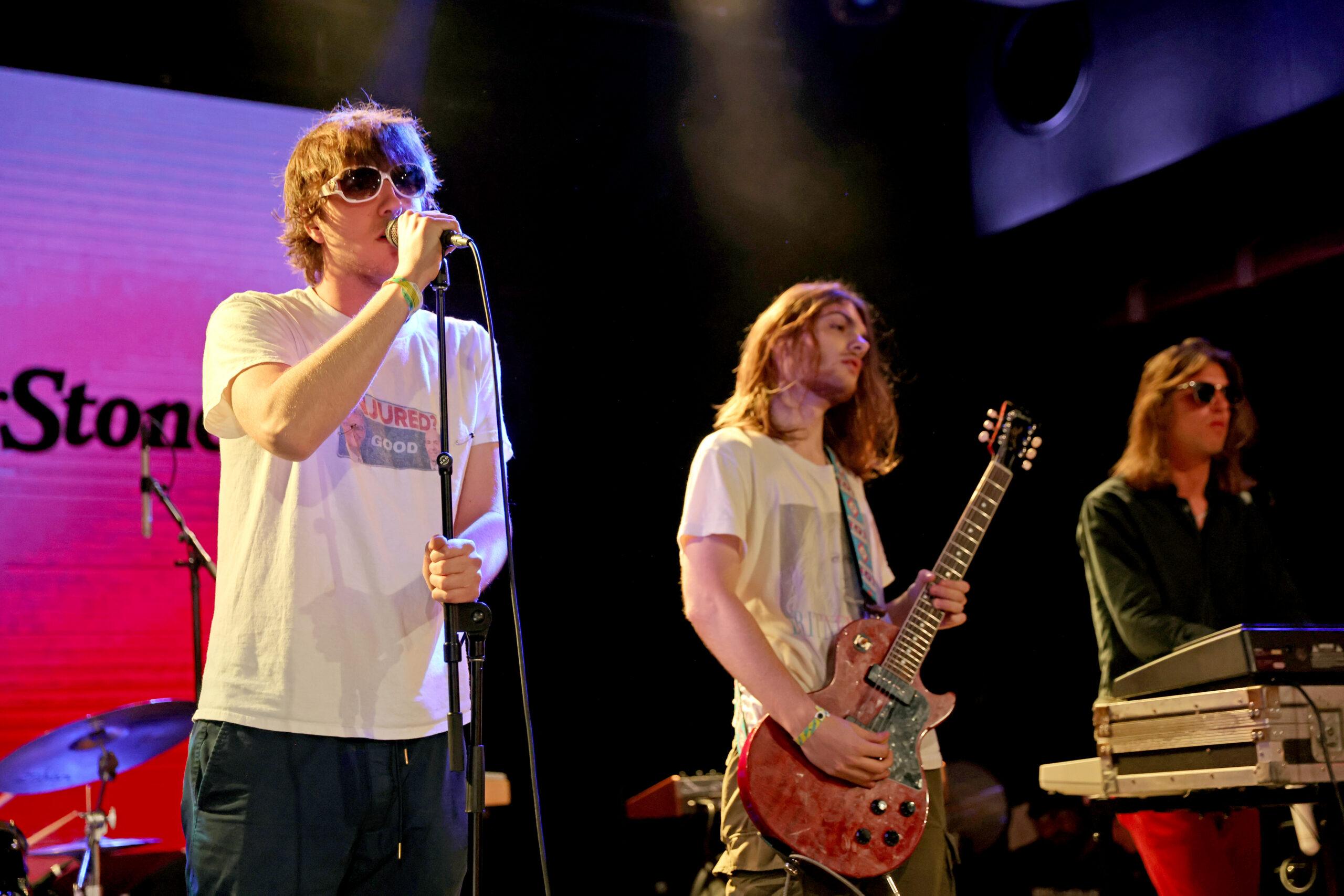
But now, outside of K-pop and J-pop, so much of the marketing in the upper economic echelons of the music industry is committed to promoting solo artists. And that, in a roundabout and counterintuitive way, has helped Geese, who didn’t really break through until Winter established an adjacent career as a stand-alone singer-songwriter. It’s what separates Geese from all the other great and worthy indie-rock bands that have garnered a fraction of the praise. Those other bands don’t have a Winter-type star in their midst. As far as the public is concerned, whether Geese is Winter’s main priority or a side project delaying the follow-up to Heavy Metal seems largely irrelevant. They are, essentially, one and the same. (To make a possibly heretical historical analogy: Heavy Metal is No Jacket Required, and Getting Killed is Invisible Touch.)
That’s the high-concept, chin-stroking, “I am making a book-length argument” explanation for why Geese currently is the cool band you keep hearing about. The other reason is simpler and, I suppose, more maddening: Geese looks the part. It seems exactly like the kind of band that music critics should love and reactionaries wary of hipsters (who could’ve guessed that word would reenter the lexicon?) should despise. Even for people who haven’t grown up seeing bands like this on major TV shows, its archetypal appeal feels intuitive. It’s like how Timothée Chalamet seems like a natural leading man because of how he synthesizes the best of Leonardo DiCaprio (the former teen idol with impeccable cinematic taste), Tom Cruise (relentless grinding), and Robert De Niro (extreme and well-publicized all-in commitment), even for audiences unfamiliar with The Wolf of Wall Street, Magnolia, or Raging Bull. The popular consciousness just implants this stuff in our brains whether we want it there or not.
If this bothers you, can I point out that the hype cycles for critically worshipped rock bands used to be so much more bombastic and overbearing? Upon the release of Is This It, the review in Rolling Stone began with “This is the stuff of which legends are made.” By the third paragraph, it was calling the Strokes “the best young rock band in America.” The British music press went even further—NME called it “a debut album on which every track is perfect,” coupled with a live show that is “equally spectacular.” The overall conclusion: “They look and sound like the band who are going to save rock.”
In comparison, the recent New Yorker headline asking whether Geese can “redeem noisy, lawless rock ’n’ roll”—which sparked some grumbles in my social media feed—is relatively muted. Nobody now is still talking about a band “saving” rock ’n’ roll, only “redeeming” it, a far more modest aim. Similarly, the expectation that any group from the cultural fringes can take over pop music the way Nirvana did has long since dissipated. If the boomer critics who originally chronicled the impact of Nevermind measured it against their memories of the Beatles and Sex Pistols, just as the reception of Is This It was informed by Gen X writers still pining for Nirvana, then the perspective on Geese (at least for a middle-aged scribe like me) has to be colored by the checkered history of the Strokes, who came in hot but were quickly overwhelmed by the long tail of nu metal (embodied by Linkin Park, whose sales dwarfed those of Is This It) and a pop audience disconnected from the canon of record-collector rock that the Strokes drew from.
That ingrains a certain unavoidable fatalism. As someone who writes about Geese for my job and loves the band as a fan, I worry less about it upholding the sanctity of guitar music in the marketplace than about the potential that my own enthusiastic words could derail it. When I wrote in 2024 about Manning Fireworks by MJ Lenderman, another indie critical darling I might personally love even more than Geese, I ended with a meta tangent about whether “raving about the greatness of MJ Lenderman’s songs [is] the biggest threat to the potential greatness of MJ Lenderman’s songs in the future.” For those of us who revel in these indie-rock comets entering the big sky of the mainstream, if only briefly, the fragility of such moments is viscerally felt. I sense it as a fan, and I think about it semi-constantly as a music critic. So let me make this abundantly clear: I don’t expect Geese to have the same impact as Nirvana or the Strokes. I just really look forward to seeing them stand in the same spot on SNL’s stage.