Indiana Football Did the Impossible
The Hoosiers were long the losingest program in college football history. Now, they’re national champions. After winning the most unlikely title in the sport’s history, Curt Cignetti may just be getting started.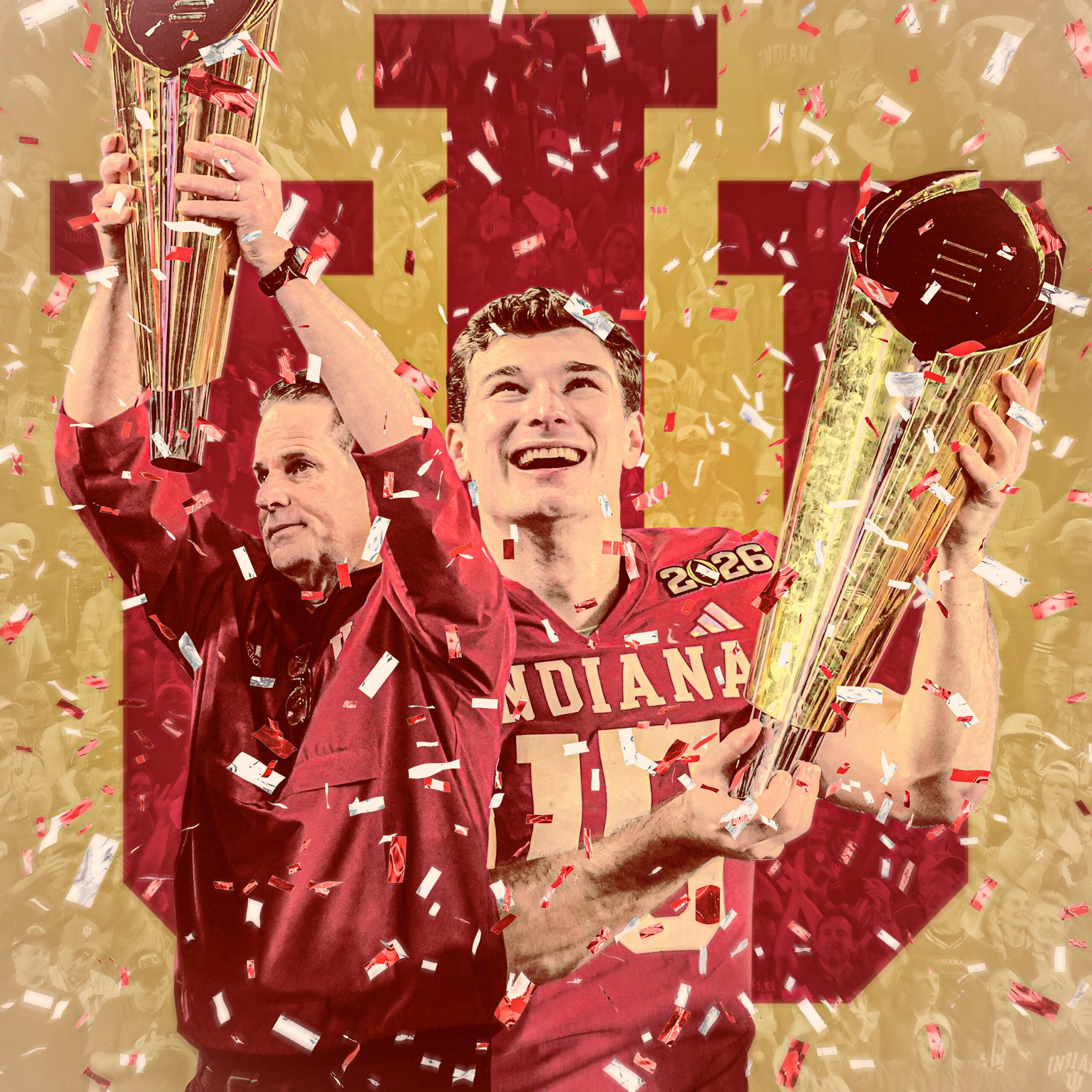

When Curt Cignetti stepped to the podium for his introductory press conference at Indiana in December 2023, he didn’t make any bold promises or predict that he would win a championship. He’d later make headlines for his viral quip about his pitch to recruits—“It’s pretty simple. I win. Google me”—but he said nothing particularly boastful that afternoon about claiming a Big Ten title or making the College Football Playoff.
Cignetti pointed to his record of success at his recent coaching stops, Elon and James Madison. He talked about instilling confidence as his biggest challenge in Bloomington—somehow convincing those around what was long the losingest program in college football history that it could be more than an automatic win for the likes of Michigan and Penn State.
“We’re going to change the culture, the mindset, the expectation level, and improve the brand of Indiana Hoosier football,” Cignetti told the media. “There will be no self-imposed limitations on what we can accomplish.”
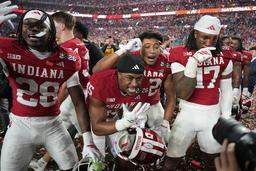
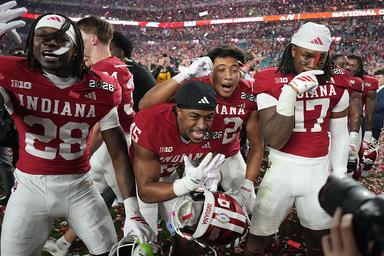
That sort of confidence was pivotal in building a winner, and the Hoosiers needed it in spades in Monday night’s 27-21 win over Miami in the national championship game. The victory capped the first 16-0 season in college football in 132 years.
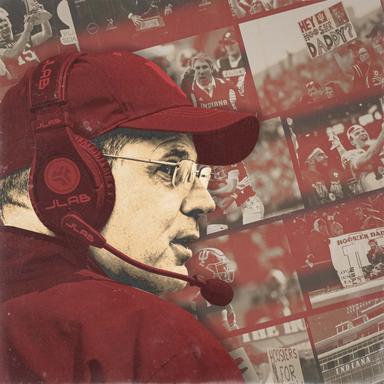
There was the fourth-and-5 from the Miami 37-yard line early in the fourth quarter, when Heisman Trophy–winning quarterback Fernando Mendoza found wide receiver Charlie Becker for a 19-yard back-shoulder fade. There was the fourth-and-5 from the Miami 12 a few plays later, when Cignetti sent out his kicker before calling his second timeout of the half. After the timeout, he elected to dial up a quarterback draw for Mendoza, hoping the Hurricanes would line up in a zone look that they had used earlier in the game.
Mendoza rewarded Cignetti’s faith in him and his offense, ping-ponging off Miami defenders, spinning, and leaping through the air for the touchdown that gave the Hoosiers a two-score lead against the Canes. It will go down as the most memorable highlight from this improbable championship run. “We were all putting our bodies on the line,” Mendoza said, “so it was the least I could do for my brothers.”
“We won the national championship at Indiana University,” Cignetti said afterward. “It can be done.”
Just think about how far Indiana has come. Not just in the past 140 years, but in the past four.
When star quarterback Michael Penix Jr. entered the transfer portal in December 2021, it seemed to signal the inevitable regression of the Hoosiers football program. By then, Penix had sacrificed his body to the historically futile project of building a winner at Indiana; he suffered season-ending injuries in each of his four years at the school. Still, he went 12-5 as Indiana’s starter, delivering the Hoosiers their only two winning seasons over a 17-year stretch. And then, suddenly, he was gone.
For Hoosiers fans, it was bittersweet to watch Penix go on to thrive at Washington, where he blossomed into a first-team All-American and a Heisman finalist. Penix led the Huskies to an appearance in the 2024 national championship game, where they lost to Michigan.
“It was tough thinking in the back of your head, ‘Why couldn’t that have been us? Are we ever going to catch a break?’” says Galen Clavio, director of Indiana’s National Sports Journalism Center and host of The CrimsonCast podcast. “Our answer was: ‘We’re never going to catch a break because we’re IU football.’”
On Monday, Clavio was among the tens of thousands of Hoosiers fans in South Florida witnessing the break of many, many lifetimes.
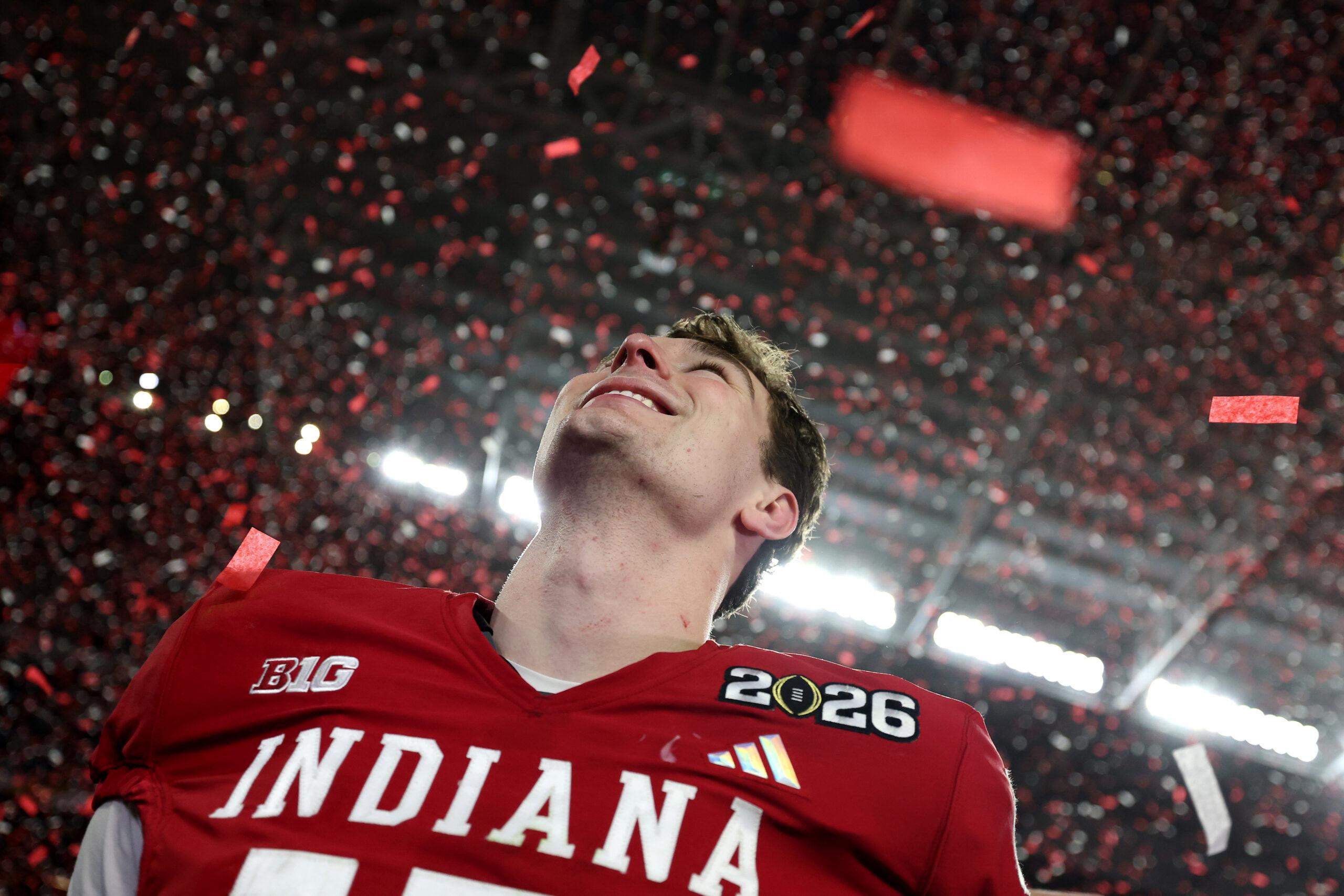
“The whole history of Indiana is Lucy pulling the football,” says Clavio, referring to a recurring gag in the Peanuts cartoon strip about repeatedly falling for the same trick. “I’m the most fulfilled I’ve felt as a sports fan, to watch that emerge out of nothingness to this level of dominance and prominence.”
The Hoosiers’ triumph was a culmination of a two-year sprint to the top of college football, an unprecedented turnaround that still barely makes sense. The rags-to-riches tale will surely inspire several rounds of fanciful—and expensive—attempts to recreate Cignetti’s wizardry in places from Austin to Los Angeles to Tuscaloosa. What’s your excuse, Steve Sarkisian? How long do you need at USC, Lincoln Riley? Look how far you’ve fallen behind at Alabama, Kalen DeBoer!
Meanwhile, Cignetti brought over many of his best players from James Madison, where he turned an FCS power into a surprisingly capable FBS program between 2019 and 2023. He won at least a share of the conference championship every season he was there. Upon arriving at Indiana, Cignetti invited former Dukes players like cornerback D’Angelo Ponds, who had five tackles and three passes defended in the national title game; running back Kaelon Back, who finished with a team-high 79 rushing yards against Miami; and defensive lineman Mikail Kamara, who blocked a punt in the third quarter that was recovered for a touchdown.
“I’ve played pretty much every single level of football, FCS, G5, now here in the Big Ten,” Kamara said on Monday night. “Just to really do this with guys like [linebacker Aiden] Fisher and all my other teammates … I didn’t think it was possible, I can’t lie. But to be here today, it’s surreal.”
In building his team, Cignetti also had to convince the Hoosiers’ holdovers to buy into his approach. Players like wide receiver Omar Cooper Jr., who was Mendoza’s top target Monday with five catches for 71 yards. Cignetti even managed to win back Louis Moore, a safety who transferred to Ole Miss after previous Indiana head coach Tom Allen was fired in 2023. Moore returned to Bloomington this fall and was named first-team All-Big Ten. He was the Hoosiers’ leading tackler against the Canes, with seven.
And, of course, there was Cignetti’s mastery in the transfer portal, plucking offensive lineman Pat Coogan from Notre Dame and quarterback Mendoza from Cal. Mendoza is now the presumptive top pick in the 2026 NFL draft, but when he got to Bloomington he was promising but unaccomplished.
Even with Mendoza, Indiana might be the most low-wattage champion in recent college football memory. The Hoosiers are the sport’s first new champion since Florida in 1996, and they did it without a spate of former four- and five-star recruits dotting their roster, unlike the teams they beat in the playoff: Alabama, Oregon, and Miami.
“Are there eight first-round draft choices on this team? Probably not, no, there aren’t,” Cignetti said. “But this team, the whole was greater than the sum of its parts.”
That the Hoosiers would reach the mountaintop would have seemed unthinkable even dating back to their inauspicious origins in the late 19th century. Indiana won only two of its first 24 games over the first eight seasons of the program’s existence, including a two-year stretch when it went on a hiatus because of a lack of player interest.
The Hoosiers weren’t much better in the next century, becoming synonymous with failure as they regularly finished near the bottom of the Big Ten, with only a few isolated bright spots—two conference championships in 1945 and 1967.
But that didn’t matter much as Indiana established itself as one of college basketball’s bluebloods. The menacing presence of Hall of Fame basketball coach Bobby Knight gave the school its identity, so football didn’t have to mean as much in a state that revered hoops more than any other.
“Basketball is so fully ingrained in the culture of IU—it became the sport,” Clavio says. “And with football, we rarely had any sustained success to get excited about. So the sport became less and less important.”
The preternaturally jovial Lee Corso was Indiana football’s head coach from 1973 to 1982, and operated in Knight’s shadow as the basketball team won two national titles during Corso’s tenure. (Knight won a third in 1987.) Corso mostly failed to build a winner at Memorial Stadium, and when he couldn’t deliver victories, he tried to win over fans with his self-deprecating sense of humor. Days after the Hoosiers lost 45-0 to Nebraska in 1975, Corso opened his coach’s show on local TV with a coffin surrounded by candles and flowers. He punctuated the gag by hopping up out of the casket and saying, “We ain’t dead yet.” Indiana finished that season 2-8-1 and in last place in the Big Ten.
Those were the sort of endearing stories that made it seem a little less sad to be one of the biggest losers in college football. At least the Hoosiers were lovable losers.
Not anymore. Cignetti has made good on his word to change things at IU, far beyond what anyone thought possible. And now that the Hoosiers have done the impossible, they are positioned to compete in a real way moving forward. Indiana has put enormous sums of money into its program, going from $23.9 million in 2021—the year Penix left—to $61.6 million in 2024.
If a nationally ranked transfer class that includes former TCU quarterback Josh Hoover can follow in the footsteps of Cignetti’s previous classes, Indiana should be a playoff contender next season again—or even more. “We’ve got a fan base, the largest alumni base in the country, Indiana University. They’re all in,” Cignetti said. “We’ve got a lot of momentum.”
The Hoosiers are the most unlikely champion in college football history. And their turnaround for the ages might just be the start.